Citrix has released a fix for three high-severity vulnerabilities discovered in two of its popular products, and is now urging users to apply the patch immediately.
The company has fixed three flaws found in Citrix ADC and Citrix Gateway. ADC is a load-balancing solution for cloud applications, apparently used by many enterprises to ensure uninterrupted availability and high performance.
Gateway, on the other hand, is an SSL VPN service that enables secure remote access with identity and access management features, and the linked flaw has been “widely deployed” in the cloud or on-prem company servers.
Abusable under specific circumstances
The flaws in question are tracked as CVE-2022-27510, CVE-2022-27513, and CVE-2022-25716. The former allows threat actors to bypass authentication measures using alternate paths and channels. To abuse the flaw, Gateway needs to be configured as VPN.
The second vulnerability is an insufficient data authenticity verification flaw, which allows threat actors to take over a desktop endpoint remotely, via phishing. For this flaw, Gateway needs to be configured as VPN, with RDP proxy functionality configured, as well.
The final flaw allows cybercriminals to bypass login brute force protection mechanisms. For the vulnerability to be used, the appliance needs to be configured as VPN, or AAA virtual server with “Max Login Attempts” configuration.
"Note that only appliances that are operating as a Gateway (appliances using the SSL VPN functionality or deployed as an ICA proxy with authentication enabled) are affected by the first issue, which is rated as a Critical severity vulnerability," Citrix explained.
"Affected customers of Citrix ADC and Citrix Gateway are recommended to install the relevant updated versions of Citrix ADC or Citrix Gateway as soon as possible," the company further added.
Here is the list of the affected software and its versions:
Citrix ADC and Citrix Gateway 13.1 before 13.1-33.47
Citrix ADC and Citrix Gateway 13.0 before 13.0-88.12
Citrix ADC and Citrix Gateway 12.1 before 12.1.65.21
Citrix ADC 12.1-FIPS before 12.1-55.289
Citrix ADC 12.1-NDcPP before 12.1-55.289
Get ultimate device protection with the very best antivirus
The entertainment giant revealed that its flagship streaming property, Disney Plus, attracted a whopping 12.1 million new subscribers between July and September of this year, taking the platform’s global total to 164.2 million. Hulu and ESPN Plus added more paying customers, too, leaving the House of Mouse heading into Christmas with an industry-high pool of 235 million subscribers.
For comparison, the entire WBD portfolio – which includes HBO, HBO Max and Discovery Plus – currently serves just shy of 95 million subscribers, having only accrued 2.8 million new customers in the previous quarter. Netflix added even fewer subscribers (2.4 million) during the same period, but the streamer’s global count still stands tallest at 223 million.
Of all the best streaming services, then, Disney Plus continues to grow at the fastest rate. Still, it has some way to go to usurp Netflix – which appears to have bounced back after back-to-back quarters of decline in 2022 – as the industry’s largest platform.
What’s more, subscriber growth doesn’t automatically equal profit. Despite the rosy reading of its customer numbers, Disney’s fourth-quarter results (the company works to a different fiscal year than Netflix and HBO Max) actually confirmed a year-over-year loss of $1.47 billion. That’s almost double the losses Disney endured in 2021.
Obi-Wan Kenobi drove millions of new subscribers to Disney Plus in June.(Image credit: Lucasfilm / Disney)
However, CEO Bob Chapek is confident that Disney Plus will become profitable sooner rather than later – and is rightly proud of how far the streamer has come in such a short space of time.
“The rapid growth of Disney Plus in just three years since launch is a direct result of our strategic decision to invest heavily in creating incredible content and rolling out the service internationally,” Chapek told investors. “We expect our DTC operating losses to narrow going forward and that Disney Plus will still achieve profitability in fiscal 2024, assuming we do not see a meaningful shift in the economic climate.”
Between June and September 2022, Disney Plus subscribers were treated to a host of new movies and TV shows that evidently buoyed the streamer’s appeal to prospective customers. In the last three months alone, the likes of Obi-Wan Kenobi, She-Hulk: Attorney at Law, Pinocchio, Hocus Pocus 2, and Andor were all released on Disney's streaming platform.
And with the company's selection of new Star Wars TV shows, top-tier Marvel movies, and other non-franchise offerings set to grow even more in the years to come, the Disney Plus faithful will be eating well for some time yet.
Ad-ding value
Disney Plus' back catalog is one of the best in the business.(Image credit: Marvel Studios/Disney Plus)
Disney anticipates that the imminent launch of an ad-supported subscription tier on Disney Plus will help maintain the streamer’s impressive growth. “By realigning our costs and realizing the benefits of price increases and our Disney Plus ad-supported tier coming December 8, we believe we will be on the path to achieve a profitable streaming business that will drive continued growth and generate shareholder value long into the future,” Chapek said.
According to the Wall Street Journal, Disney’s new, cheaper subscription package will cap ads at four minutes per hour of content, and restrict ads full stop when young children are watching via the platform’s kid-friendly user profiles.
Evidently, Disney bosses are making all the right moves to ensure that Disney Plus keeps pace with Netflix and continues to leave HBO Max in the dust (on paper, at least). The company’s recent acquisition of the overseas broadcast rights to Doctor Who will only serve to boost its fortunes, too.
Watch out, Ted Sarandos – the House of Mouse is coming for your crown.
from TechRadar - All the latest technology news https://ift.tt/xaCLPJI
via TechRadar - All the latest technology news https://ift.tt/uHc4qzt
We’re not expecting the Google Pixel 8 and Pixel 8 Pro to launch until October 2023, and yet we’re already hearing things about these phones, with the latest leak revealing their possible codenames and some potential specs.
WinFuture – via Phone Arena – has found some “publicly available code sources” that mention two new Google device codenames. These are "Shiba" and “Husky”, which are broadly in line with the codenames used by the Pixel 7 line; as the Pixel 7 was known as Panther and the Pixel 7 Pro as Cheetah. So big cats rather than dogs, but close enough.
That’s not the only evidence that these codenames might be attached to the Google Pixel 8 and Pixel 8 Pro though, as the code shows these devices running Android 14 and having a chipset codenamed “Zuma”, which has the same modem as the Tensor G2, used in the Pixel 7 line.
That rounds things down a bit, but there are also screen details, which all but confirm we’re looking at smartphones here. Apparently the Shiba has a 1080 x 2268 display, while the Husky has a 1344 x 2822 screen.
So, the Husky is higher resolution, and is probably therefore the Pixel 8 Pro, with the Shiba being the standard Pixel 8. Those resolutions are marginally lower than their Pixel 7 siblings, but in the same ballpark, and are the sorts of counts you’ll commonly see on current smartphones.
There’s one final spec here too, and it’s the same on both devices. Apparently, they’ll both have a hefty 12GB of RAM – though, of course, it’s possible there will be other configurations too.
We'd take all of this with a pinch of salt, and even if these devices are real, it’s possible they’re something other than the Pixel 8 line, but those phones seem the obvious fit.
The Tensor G2 chipset used in the Pixel 7 line(Image credit: Google)
Analysis: 12GB of RAM would be a big upgrade for the Pixel 8
While the Pixel 7 Pro already comes with 12GB of RAM, buyers of the standard Pixel 7 are limited to just 8GB, so a move to 12GB for the Google Pixel 8 would be a substantial upgrade.
It would also suggest that Google is perhaps putting more of a focus on power in its phones, which is sure to be welcomed, as while the Pixel 7 line excels in a lot of ways, the Tensor G2 chipset these phones use isn’t as powerful as its rivals.
Indeed, it’s the chipset that’s lacking more than the RAM, but a move to more RAM won't hurt, and there’s a chance that this is part of a wider strategy from Google to prioritize power; which might mean the Tensor G3 – or whatever the Pixel 8’s chipset ends up being called – is significantly beefier than the G2.
That’s just speculation for now, but it’s certainly a possibility. It’s also possible that – if the Pixel 8 does come with 12GB of RAM – there might be a version of the Pixel 8 Pro with 16GB of RAM, to help differentiate the models.
We probably won’t find out for sure until late 2023, but from what we’ve heard so far these are already shaping up to be some of the best phones of that year.
from TechRadar - All the latest technology news https://ift.tt/uHc4qzt
via TechRadar - All the latest technology news https://ift.tt/F54n28q
The product is called Link2, and it's actually the company's second-generation high-quality audio streamer, offering an instant upgrade to older setups.
How? The Link2 includes AirPlay 2 and Google Cast support, plus integration with Audio Pro’s multiroom platform, that's how.
And its multiple inputs (more than its predecessor, the company tells us) easily bring other sources, including some of the best turntables, CD players and top stereo speakers into the Wi-Fi streaming world (though note that an RIIA amp may be needed for some turntables).
To clarify, Link2 has four inputs and three outputs, including an RCA input and output, coaxial, toslink, ethernet, USB port and wireless connections via Wi-Fi and Bluetooth. It can also provide a multiroom solution using a three-pronged approach: AirPlay2, Google Cast and Audio Pro's own multiroom system.
Opinion: one small gray separate, one big difference to how you enjoy music
My advice (almost always, but especially now) is not to ditch old hi-fi, but to upgrade it as best you can – which is why I think this product is so refreshing.
Analog sources hooked up to the Link2 can be streamed to other speakers via the Audio Pro app, and because the Link2 itself is an AirPlay 2/Google Cast hub, it appears as a device to stream to and can grouped with other AirPlay 2/Google Cast speakers in a multiroom set-up. So, your vinyl or playlists, but in other rooms!
Also, the Link2 supports both Spotify Connect and Tidal Connect, so you can stream direct from those apps to Link2 and onto the speakers of your choice.
To make things even easier, you also get four preset buttons across the top of the Link2, so it'll be a breeze to select a favorite internet radio station or playlist.
Audio Pro's Link2 is available now, priced £300 / £280, which is around AU$465. Interestingly, the smaller, cheaper and more puck-shaped Audio Pro Link1 will remain available as an alternative product.
Know someone who loves music but has a CD or vinyl setup that could use a little refresh – and those early Black Friday deals don't seem to be bearing fruit? The Audio Pro Link2 could be a great shout…
from TechRadar - All the latest technology news https://ift.tt/F54n28q
NortonLifeLock has announced it has rebranded as Gen Digital following the completion of its merger with Avast . The company revealed the ...
NortonLifeLock has announced it has rebranded as Gen Digital following the completion of its merger with Avast.
The company revealed the acquisition of its fellow antivirus giant in August 2021 in a multi-billion dollar merger worth between $8.1 and $8.6 billion.
The newly formed company, which will have two headquarters, one in Prague, Czech Republic, and the other in Tempe, Arizona, is expected to have more than 500 million customers, uniting well-known brands including Norton, Avast, LifeLock, Avira, AVG, CCleaner and ReputationDefender under one new entity.
Comprehensive portfolio
As of today, Gen Digital will trade on the NASDAQ Stock Exchange, under the “GEN” symbol, although shareholders need not do anything.
The move should deliver more than $280 million in annual cost savings within three years’ time.
Avast was founded in Prague in 1988 before going public in 2018 on the London Stock Exchange, where it was valued at approximately $3 billion, making it one of the UK’s biggest technology listings at the time.
NortonLifeLock’s Chief Executive Officer, Vincent Pilette, is keeping his position at the newly-merged company, with Avast CEO Ondrej Vlcek joining as president and board member.
"Today, five billion people around the world are online; digital life is life," Pilette said. "We’re all a part of a new generation, regardless of age. It’s not Gen X, Y or Z, it’s Generation Digital. Gen’s family of trusted brands has a heritage of protecting the first digital generations and is united by a shared purpose to power Digital Freedom for the next generation of our digital lives."
Cybersecurity in the enterprise has become a growing challenge in recent times, even more so since the onslaught of the Covid-19 pandemic. Businesses are increasing their budgets as they try their best to protect against numerous risks, such as credential phishing, data, and identity theft, distributed denial of service attacks, business email compromise, or ransomware attacks.
While Norton focuses more on identity protection, Avast is more oriented toward antivirus solutions. Now, the two companies hope to provide “a more comprehensive portfolio” to their customers.
“Our day-to-day life is almost entirely connected; we bank, shop, learn, work and connect online.” said Vlcek. “While the advancement of technology has brought conveniences and connections we couldn’t have imagined, it also brings added complexities and new types of threats. At Gen, we're committed to bringing our passion, expertise and global presence together to innovatively tackle these challenges and ultimately power Digital Freedom for everyone.”
The very first set of Black Friday deals at Walmart comes with a cracking super-cheap Chromebook that's one of the best laptop deals we've seen all year.
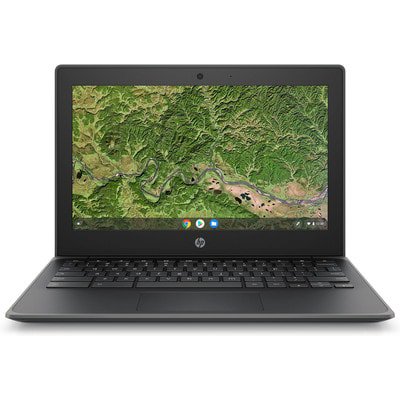
You can now get an HP Chromebook 11 for $79 (was $98) at Walmart. That's the lowest price yet and a bargain for those on a tight budget who need a very basic but long-lasting machine for simple school tasks or everyday browsing.
The last time we saw this Chromebook reduced in a previous sale it fell to $99, so it's a terrific saving if you want to get ahead of this year's Black Friday deals.
At any time of year, this would easily claim a spot in our guide to best laptop deals for the month. We also don't think this price is going to be beaten on a Chromebook this year, so don't worry about holding off for any Black Friday laptop deals later this month if you're hoping for something even cheaper.
Today's best Chromebook deal at Walmart
HP 11.6-inch Chromebook:$98$79 at Walmart
Save $19 – Laptops don't get much cheaper than this. Of course, you only get a very basic device for this sort of money, but this is a smart buy if you need a capable machine for light use or schoolwork. There's enough power to handle that, a robust shell to keep it protected and a 10-hour battery life that means it'll last the day.View Deal
While the HP Chromebook 11 isn't the most powerful laptop in the world, it will do the job for the most basic tasks and light work. It really excels as a laptop for school, as it's robust enough to handle a few knocks and bumps - as well as being taken in and out of a bag throughout the day. Plus, that 10-hour battery life will keep it going for a whole school day.
This isn't the only highlight available in the latest round of Walmart Black Friday deals. We've picked out even more of the top offers below and be sure to stick with TechRadar for the latest news on all of the retailer's sales events throughout the month.
The Nvidia RTX 4080 16GB will go on sale on November 16, and it has every chance of being one of the best graphics cards money can buy. Good luck getting one, though: according to YouTuber and hardware leaker Moore’s Law Is Dead, the stock situation for the new GPU looks pretty dire.
The flagship RTX 4090 sold out almost immediately when it hit retailers back in October, and a new video from MLID has claimed that anonymous retailers have confirmed that RTX 4080 stock will be between 20-40% less than that of the RTX 4090 on day one.
It’s purported that there will still be a fairly large number of cards for a non-flagship GPU launch, but there’s another kicker in the video: MLID adds that retailers are expecting fewer restocks than usual in the final quarter of 2022, less than for the 4090.
The obvious reason for the lower RTX 4080 stocks is that Nvidia wants to push consumers towards buying older Ampere-series RTX 3000 GPUs. These seem to still be readily available (after the months of scalping and scamming that followed the Ampere launch), and Nvidia no doubt wants to clear out its old stock before committing fully to the new Lovelace-series cards.
Analysis: Nvidia is being crafty with its supply of GPUs
This isn’t an entirely surprising turn of events, and it could actually benefit some gamers: with Black Friday swiftly approaching, many will be looking to upgrade their GPU, and we could see some great deals on graphics cards in the coming weeks.
The Ampere cards (especially the excellent midrange RTX 3060 Ti) are still solid choices if you’re rocking an older GTX GPU and want a bit more graphical oomph in your PC – so if you’re after a cheap graphics card, Black Friday could be the time to snap one up.
Of course, another reason why the RTX 4080 is allegedly languishing with lower launch stocks is likely Nvidia’s sudden cancelation of the 4080 12GB, which it admitted was “not named right”. We were actually relieved to see Team Green have a change of heart over the less powerful 12GB model, but it's likely caused fewer 4080 cards to be available for the day one release.
Nvidia is still in hot water over claims that the high-end RTX 4090 is actually a fire hazard due to issues with the power adapter, and the GPU giant has yet to release a statement regarding the problem. According to a dedicated Reddit megathread, 20 cases have been reported in the past two weeks. We very much hope the RTX 4080 doesn’t share these thermal issues.
from TechRadar - All the latest technology news https://ift.tt/Fxnabko
The Xiaomi 13 is likely to be a big upgrade over the Xiaomi 12 , and it could also sport a very different design if unofficial new renders...
The Xiaomi 13 is likely to be a big upgrade over the Xiaomi 12, and it could also sport a very different design if unofficial new renders are anything to go by.
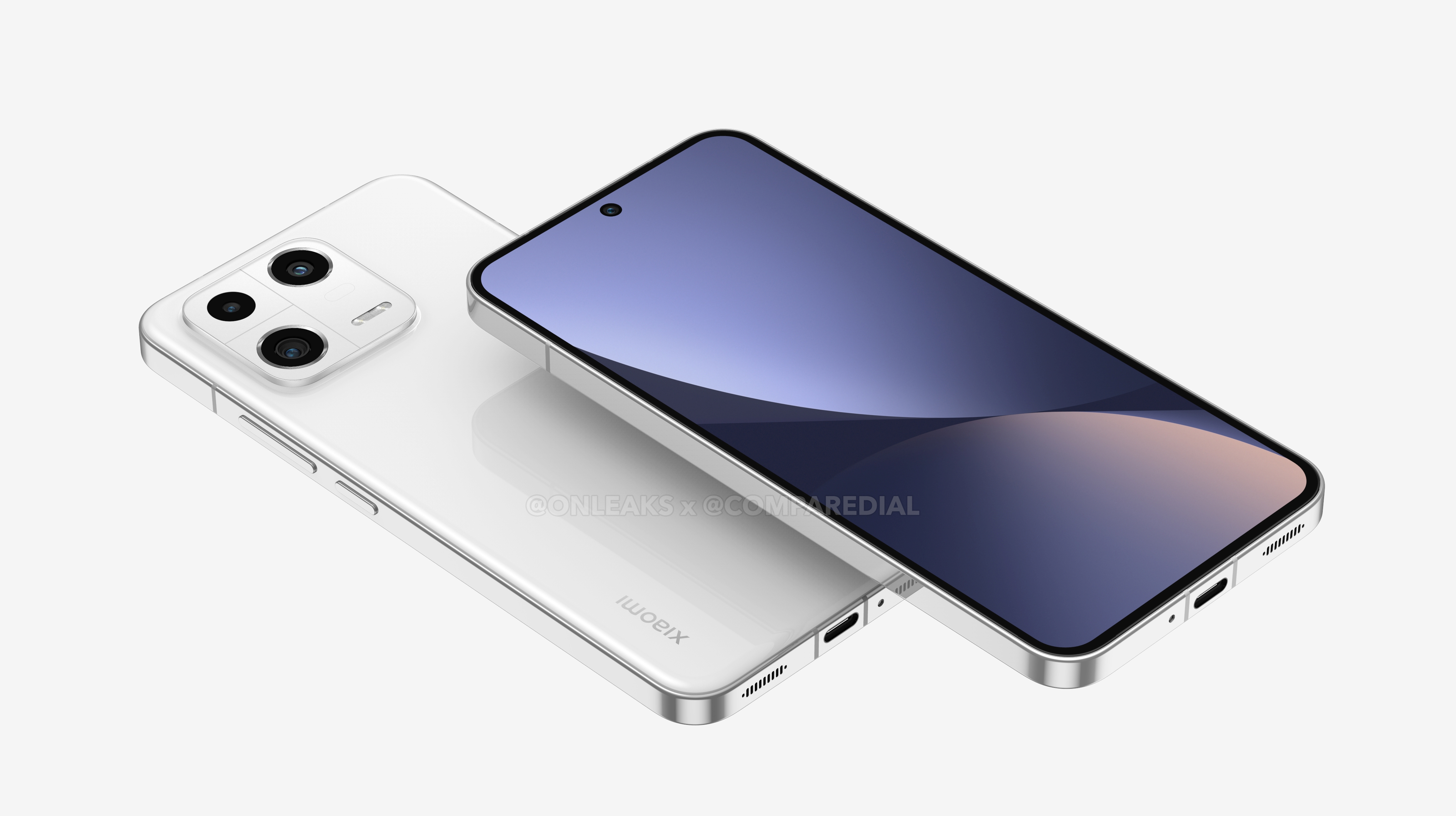
Shared by @OnLeaks – a leaker with a solid track record – on behalf of CompareDial, the renders show a phone with a flat screen, flat aluminum sides, and a square camera block on the rear, all of which are departures from the Xiaomi 12, and make for a device that looks similar to the iPhone 14 line.
That said, if these renders are accurate then Xiaomi hasn’t just copied Apple, as there are a lot of differences too. The 6.2-inch display has a punch-hole camera rather than a notch or Dynamic Island, the lenses in the triple-lens camera array on the rear are laid out differently, and the look of the camera housing is different too, with lines separating it into three distinct sections.
An unofficial render of the Xiaomi 13(Image credit: OnLeaks / Compare Dial)
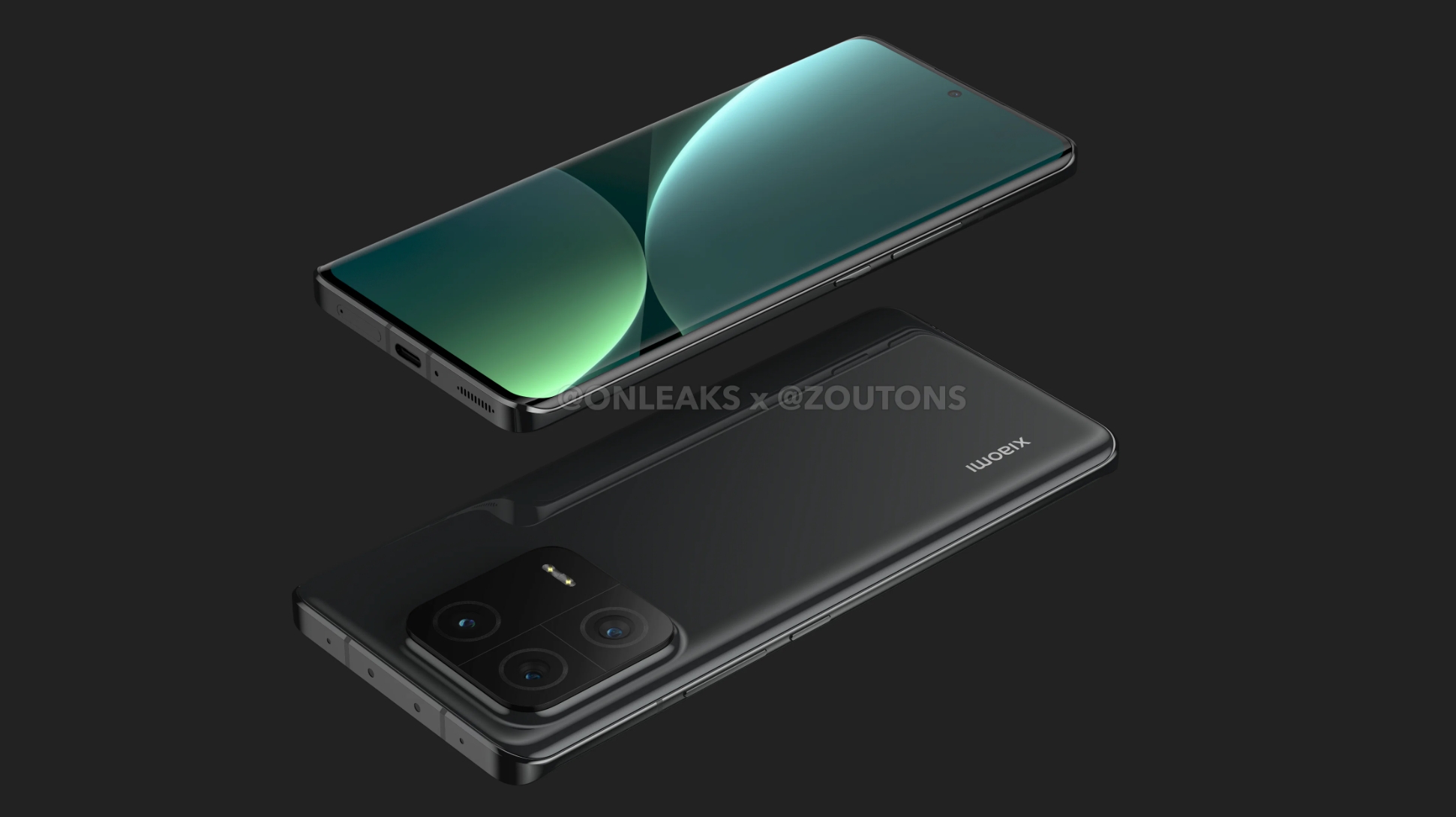
OnLeaks also shared unofficial renders of the Xiaomi 13 Pro – this time in collaboration with Zoutons – and this phone has less in common with Apple’s latest flagships.
The camera block is similar to the one depicted in the Xiaomi 13 renders, but the 6.65-inch screen is curved, and the sides of the phone are a lot narrower, leaving the device as a whole looking more like a typical high-end Android phone than a high-end Apple one.
We have some specs for this phone too, with the source claiming that it has a 50.3MP main camera, dimensions of roughly 163.0 x 74.6 x 8.8mm (rising to 11.8mm at the rear camera bump), and color options of black, white, pink, or green.
An unofficial render of the Xiaomi 13 Pro(Image credit: OnLeaks / Zoutons)
OnLeaks also claims that the Xiaomi 13 Pro will cost Rs 66,800 in India, which converts to roughly $820 / £700 / AU$1,250. We wouldn’t expect those converted prices to be accurate though, and if anything the Xiaomi 13 Pro will probably cost more than that, given that the Xiaomi 12 Pro starts at $999 / £1,049 (around AU$1,550).
Of course, we’d take all of this with a pinch of salt for now, but with the Xiaomi 13 line possibly landing before the end of the year we should know all the details soon.
Analysis: the Xiaomi 13 could be a gorgeous combination of the Xiaomi 12 and the iPhone 14
If these renders are accurate, the Xiaomi 13 could be a great-looking phone, with a distinctive camera block that combines the shape of the iPhone 14’s block with the distinct sections on the Xiaomi 12’s.
The overall shape of the phone could be similar to the iPhone 14 too, but the use of a small punch-hole camera will mean there’s less interruption in the screen. And – again assuming that these renders are the real deal – those who’d rather not have an iPhone 14-like design might prefer the Xiaomi 13 Pro, which going by the renders will look quite different thanks to its curved display.
These two upcoming phones are also likely to have some of the best specs of any late 2022 or early 2023 handsets, going by leaks and past form, which means they could be prime contenders for a spot on our best phones list when they land.
from TechRadar - All the latest technology news https://ift.tt/45z7dn6
Major spoilers for Stranger Things season 4 follow. Ever since the credits rolled on Stranger Things 4's final episode , fans of the w...
Well, after four months of relative silence – outside of some hints from the cast and crew – we've actually received some official Stranger Things season 5 news. Revealed as part of Stranger Things Day (which takes place annually on November 6), Netflix revealed the title for the first episode of the sci-fi horror show's last season: The Crawl.
season 5. chapter one. the crawl. happy stranger things day pic.twitter.com/xCdNLjD7YtNovember 7, 2022
See more
Unsurprisingly, the episode title's reveal has sent the Stranger Things fanbase into a frenzy, with many theorizing what it's teasing from a story perspective. We include ourselves among their number, too, as we have our own thoughts about what it could be literally or metaphorically hinting at.
Here, then, are four big theories we have about what the title for Stranger Things season 5 episode 1 means.
1. Run – or crawl – while you can, Vecna
Crawling in my skin...(Image credit: Netflix)
Let's get the elephant in the room out of the way first, which relates to Vecna, aka Stranger Things 4's primary villain.
In the final episode of season 4, Vecna was beaten by Nancy, Steve, and Robin in his Creel House lair. Well, kind of. Stranger Things' other heroes were inadvertently involved in Vecna's defeat, although Vecna's masterplan – to break down the barriers between the real world and the Upside Down – was realized. Hey, we did say Hawkins' heroes kind of beat him.
Anyway, Nancy, Steve, and Robin defeated Vecna by blasting him out of Creel House's top floor window using molotov cocktails and plenty of shotgun ammunition. When the trio raced downstairs to finish him off, though, he'd escaped.
Clearly, Vecna has ran – or should that be crawled? *hint hint* – away to heal. He was seriously injured by his opponents and, based on the damage he sustained, there's no way he could have used his legs or teleporting abilities to beat a hasty retreat.
So, could he have crawled away instead? If he did, maybe the opening episode of season 5 will be partly set around his escape – Vecna dragging himself to safety, tending to his wounds, and recovering before he goes on the offensive again.
2. More Dungeons and Dragons metaphors
Could the Hawkins gang embark on a dungeon crawl?(Image credit: Netflix)
Stranger Things has always had its roots in the tabletop game Dungeons and Dragons (DnD). Okay, it's also heavily influenced by 80s horror and sci-fi movies that the Duffer brothers, the show's creators, grew up watching, but DnD is arguably its most obvious inspiration.
Since the show's pilot episode, Stranger Things hasn't been shy about paying homage to DnD. Just look at Will, Mike, Lucas, and Dustin playing DnD in the very first episode. Or using the name Vecna to describe season 4's big bad, as well as giving the show's various creatures other DnD-inspired names, such as the Demogorgon. Or the fact that Eleven, the boys, and everyone else are a DnD-style group playing an actual DnD game in the real world. You get the idea.
The Crawl could be another classic DnD throwback: the dungeon crawl. In fantasy role-playing games (RPGs), such as DnD, a dungeon crawl is a scenario where players traverse a labyrinthine environment to battle monsters, solve puzzles, and earn treasure once they complete said dungeon.
Given how Stranger Things 4 ended, it's plausible that Eleven and company will head into the Upside Down (the dungeon), battle Vecna and the Mind Flayer (the monsters), and earn their rewards (save the world) by doing so. The Crawl, then, could simply refer to Hawkins' heroes drawing up their plan to take the fight to Vecna and his allies, before they carry out their mission throughout season 5.
3. Max-ing out
Season 5's first episode might be related to Max.(Image credit: Netflix)
This one is a bit of a stretch, but what if The Crawl somehow relates to Sadie Sink's character Max?
Fans won't need reminding that Max will be in a coma at the start of season 5. In the season 4 finale, Max was critically injured by Vecna and only survived thanks to Eleven's powers. However, Vecna's attack left Max in a comatose state. Eleven was also unable to locate her in The Void, meaning that Max's consciousness might have been lost forever.
Or has it? Sink previously suggested she doesn't know what Max's fate will be in Stranger Things 5, but The Crawl could give us some indication about whether she'll live to fight another day. Maybe it's a reference to her crawling through The Void to search for her friends. Max might do so through using her memories again, just like she did to escape from Vecna in season 4 episode 4. If she's successful, The Crawl could end with the crowd-pleasing reveal of Max waking from her coma, which would certainly be the pick-me-up we all need after that bruising and tension-riddled season 4 finale.
4. Eddie returns
Master of Puppets, you say?(Image credit: Netflix)
This one is an even more unlikely scenario than the Max one, but hear us out.
Eddie Munson's death in the season 4 finale was a hugely poignant moment for fans and the show's cast of characters alike. Stranger Things 4's breakout star was overpowered by Vecna's horde of demobats as he tried to buy his fellow heroes more time, eventually succumbing to his many injuries in Dustin's arms.
But what if that wasn't the last we've seen of our favorite metalhead? The Mind Flayer and Vecna have form for using people's memories against them. Heck, the pair have even possessed some characters, such as Max's brother Billy, and used them as puppets to carry out their nefarious deeds.
Could Eddie befall a similar fate to Billy? It's a possibility. After all, there's a telling (albeit tentative) link between Eddie potentially being the Upside Down's latest human puppet and that Metallica song – Master of Puppets – that Eddie played in the Upside Down in season 4 episode 9.
The iconic song's lyrics include the line 'Come crawling faster, obey your master'. Now, this could just be us reaching for a link between Eddie and the title of season 5 episode 1. But what if it isn't? What if the Mind Flayer/Vecna use Eddie as their next human vessel? It would make for some emotionally charged scenes in Stranger Things 5, not least those involving Dustin, who revered Eddie and will still be cut up about his death in the show's final season. Basically, just bring Joe Quinn back for another outing, please, Netflix.
If you’re one of the many looking to get your hands on the iPhone 14 Pro or iPhone 14 Pro Max – our pick for the best phone money can buy right now – you might be left waiting a while. That’s according to a new statement from iPhone-maker Apple, which reports significant impacts to iPhone production following a Covid outbreak at one of the company’s China-based production facilities.
“Covid-19 restrictions have temporarily impacted the primary iPhone 14 Pro and iPhone 14 Pro Max assembly facility located in Zhengzhou, China,” Apple says in its statement. “The facility is currently operating at significantly reduced capacity.”
That’s bad news and worse timing for consumers looking to get their hands on the latest iPhone model in the lead up to Christmas, with significant shipment delays expected in the coming months. Apple’s store suggests wait times for shipment of the Pro models is already 4-5 weeks, which might blow out even further if there are extended Covid disruptions.
“We continue to see strong demand for iPhone 14 Pro and iPhone 14 Pro Max models,” says Apple. “However, we now expect lower iPhone 14 Pro and iPhone 14 Pro Max shipments than we previously anticipated and customers will experience longer wait times to receive their new products.”
Zhengzhou, the Chinese city that’s home to the primary production facility for Apple's iPhone 14 Pro and iPhone 14 Pro Max, has been hit by an outbreak of Covid-19 in recent weeks, which saw the city reporting 167 cases in the final full week of October. Foxconn, which operates the Apple factory, is reported to have tried to enforce a lockdown of its facility late last month in a bid to slow the spread of the virus.
In the immediate aftermath, videos shared on Chinese social media showed factory workers attempting to flee the facility amid reports of poor conditions, and insufficient food and medical resources during the imposed quarantine.
Apple is not the first tech company to have its supply chains impacted by China’s notoriously strict Covid restrictions, which has seen the area of Zhengzhou housing the Foxconn facility in government-mandated lockdown until at least midday November 9.
The delays come only weeks following the iPhone 14’s launch in mid-September, with the iPhone 14 Pro and Pro Max proving particularly popular with Apple fans and experts alike. It’s unclear when production at Apple’s Zhengzhou facility might resume normal functionality, but the disruptions are undoubtedly a blow for both Apple and consumers at an inopportune time.
There's been a lot of activity at Twitter since Elon Musk took charge of the platform for a cool $44 billion – and the controversial change to the social network's verification system is now being tested in the Twitter app for iOS.
An iOS app update pushed out over the weekend (via Engadget and others) introduced the option of paying $7.99 per month for a blue checkmark. It's being sold as part of a Twitter Blue subscription, which already exists for $4.99 a month in some countries – though without the verification included.
After some users reported having problems with the new paid plan, a subsequent tweet from Twitter's Esther Crawford suggested that the feature was still at the "testing" phase, and hasn't yet been fully implemented.
To verify or not to verify
The new approach to account verification has already attracted a lot of negative press. Previously, the blue checkmarks – confirming genuine accounts run by actual people – were given out for free after a manual review process.
Another change in the latest Twitter iOS app update puts a Verified tab on the Notifications screen, which means replies from verified users appear before anything else. This may be to cut down on the impact of bots and spammers, though presumably plenty of bots and spammers will have the funds to pay the $8 a month anyway.
Also this weekend, Elon Musk has tweeted his intention to introduce the ability to attach long-form text notes to tweets, saving the need to screenshot large blocks of text. Creators will eventually be able to monetize this content, Musk says.
Analysis: Twitter is changing beyond recognition
We knew when Elon Musk took over at Twitter there would be a lot of changes, but few people could have predicted the speed with which they would be implemented. We're seeing major shifts in fundamental aspects of the platform after only a few days.
We've written before about how flawed the new paid verification system is: Many people who genuinely need to prove their identity online aren't rich, while many bad actors have plenty of money lying around to fund a blue checkmark. However, it looks as though the new system is now close to being implemented.
There's clearly a lot to fix at Twitter, and admittedly the current verification process is frustrating in its own way. The platform doesn't make enough money from advertising, and the majority of the content on Twitter is generated by a minority of users – not a healthy situation for an app that relies on engagement.
In other words, Musk has a huge challenge on his hands: sweeping changes are definitely needed, but whether the calls now being made are the right ones – or being implemented at the right speed – remains to be seen.
The Samsung Galaxy S23 leaks and rumors continue to come in at a rapid pace, and the latest chatter that we're hearing is that the flagship phone series is going to go all-in with Snapdragon chipsets in all (or at least most) of the markets that it will be sold in.
This comes courtesy of an earnings call from Snapdragon manufacturer Qualcomm (via GSMArena), in which Qualcomm chief financial officer Akash Palkhiwala said that Snapdragon chips would get a "global share" of the Galaxy S23 market – up from a 75% share with the Galaxy S22.
Traditionally, Samsung fits its Galaxy S series phones with either Qualcomm Snapdragon silicon or its own Exynos chipsets, depending on region – Europe usually gets Exynos, while the US usually gets Snapdragon, for example. Now, that might be changing.
Still to come
The particular chip in question would of course be the as-yet-unannounced Snapdragon 8 Gen 2, following on from the Snapdragon 8 Gen 1 that has been powering a lot of the high-end Android phones to appear on the market this year.
According to the rumors that have been swirling around, the Gen 2 version of the chipset could make an appearance in December 2022. The Galaxy S23 would then follow on shortly afterwards, probably in February.
It's worth bearing in mind that some sources are saying that Samsung does still want to use an Exynos processor in some Galaxy S23 models, so it may be that the "global share" for Qualcomm isn't a completely 100% deal.
Analysis: a returning rumor
The news that the Galaxy S23 phones might use a Snapdragon chipset in every region isn't particularly surprising: if you've got a long memory you might remember a similar rumor appearing around the Galaxy S22 handsets before they launched.
Back in July 2022, one of the most notable industry analysts in the business predicted that the Galaxy S23 series would be using the Qualcomm Snapdragon 8 Gen 2 chipset in every region that it was sold in, so this is a rumor that has a strong track record.
Not long after that, Qualcomm dropped a hint that it might be getting its chipsets into more Galaxy phones next year – which of course Qualcomm would be happy to see. It would also make life simpler for consumers too.
However, Exynos chipsets might not be off the table completely. Earlier this year we heard reports that Samsung was building a brand new and improved processor to be launched in a few years, with Qualcomm Snapdragon CPUs filling the gap in the meantime.
Logitech has revealed its new Logic of Work platform, a line of products and services geared towards improving collaboration and engagement between those working from home and those in the office.
The new launches include Sight, a 315-degree camera placed at the center of a conference table that can intelligently shift focus on individuals. It's is designed to be used in conjunction with Logitech's Rally Bar range of forward-facing cameras, connected via an ethernet cable and controlled through the CollabOS video conferencing software.
Other competitors already offer full 360-degree cameras for this purpose, but Logitech argues that these can distort perspective and still prohibit inclusion within a hybrid working environment. The company maintains that their multi-camera setup offers a more effective solution.
AI Director
At the heart of Sight is what Logitech dubs the AI director, which allows the camera to automatically shift focus onto those that are speaking around the table. The seven in-built microphones feature acoustic beams which calculate the time of attack of speech sounds to know who is talking when, and then adjusts the camera to capture them face on.
Sight can be fixed in place via a clamp, in a grommet, or elsewhere in your floor space thanks to the optional tripod. It also has a sliding lens cap to give you peace of mind from prying eyes when no meetings are taking place.
At a launch event in London attended by TechRadar Pro, Logitech was open about its R&D process, detailing the failed attempts leading up the development of the Sight. One of these made “uncanny valley” avatars of the people in the room, but thankfully this was scraped.
Another product part of this new vector for the company is Scribe, a camera that goes above a whiteboard and digitally converts scribbles in real time, resulting in tidy representations for others to see.
In addition to business, education was also highlighted as a new focus for Logitech, with the company believing that hybrid arrangements will soon be commonplace in schools and universities as well. The company’s Crayon, designed for the new range of iPads, is aimed at students of all age groups, offering a more competitively priced alternative to the Apple Pencil.
The Crayon and Scribe are both available now, and the Sight is expected to arrive summer 2023 with a price of $1,999/ £1,745.
Netflix has finally launched its new ad-supported subscription plan, ‘Basic with Ads’, and initial reports suggest that it’s far from being ready for public consumption.
Netflix first floated the idea of an ad-supported plan earlier this year, hoping to target lower-income users after a sustained period of subscriber decline. The step-down plan is notably cheaper than the pre-existing Basic plan, coming in at $6.99 / £4.99 / AU$6.99 per month, allowing you to stream in HD resolution (720p only) with a clear focus on smartphone and tablet usage rather than the latest 4K TVs.
The ads are already proving controversial, though – not just because part of Netflix’s allure over the years has been the lack of advertisers on the platform.
As reported by The Verge, Netflix’s implementation of ads is wildly inconsistent. Some shows force you to watch ads at the start, end and halfway through each episode – some shows don’t showcase any ads at all. Longer movies also vary hugely in the number of ads offered, making for a confusing potluck where viewers simply don’t know how many ads they’re going to be subjected to.
We know from a Netflix blog post last month that “At launch, ads will be 15 or 30 seconds in length, which will play before and during shows and films.” Another help page says that “You can expect to see an average of about 4 minutes of ads per hour (this may vary based on the title you're watching).”
But it makes little sense not to have ads consistently applied. One of the few saving graces of ad breaks in traditional television is that you know when they’re going to land.
An hour of cable TV viewing will have ads before a show/film starts, about 20 minutes later, and at the end before the next hour’s roster of programming begins. It offers reliable interruptions where you can – if you don’t wish to submit to the onslaught of advertisers’ messaging – go make a snack, take a walk around the house, speak to co-habitants, scroll on your phone, or whatever else. Variable ad spots are just jarring, and also sound like they must be more complicated on the back end than a standardized approach.
We’ve reached out to Netflix for more of an explanation, but in the meantime it looks like the mess of ads on this new, low-price tier – alongside many key shows being paywalled, due to “licensing restrictions” – may make some subscribers think twice about opting in. Around 5-10% of content on Netflix is unavailable on this tier, including some of the best Netflix shows – the likes of The Crown, Breaking Bad, Peaky Blinders, New Girl, and Arrested Development are all unavailable.
Don’t even think about trying this tier on the Apple TV 4K, either, as it isn’t yet supported on tvOS devices (via Variety).
The other Basic plan, without any ads, is $9.99 / £6.99 per month, if that sounds like less of a hassle and still within your budget.
from TechRadar - All the latest technology news https://ift.tt/0aOxBTr
via TechRadar - All the latest technology news https://ift.tt/jRtwCrA










Follow Us
Were this world an endless plain, and by sailing eastward we could for ever reach new distances