Apple has blocked an update to email client BlueMail, which added the ChatGPT chatbot into its software, requiring the developer first insert content filtering or age restrictions before it can be released.
This is Apple's policy for apps that produce some form of AI generated content. Apple's App Review division told Blix that as AI could produce content that may be unsuitable for younger audiences, one of the two above provisions must be applied before release.
However, Ben Volach, co-founder of BlueMail developer Blix Inc., disputed Apple's ruling, arguing that BlueMail already has content filtering, and that other apps on the App Store with similar AI capabilities do not have age restrictions in place.
'Unfairly targeted'
The new AI feature in BlueMail integrates OpenAI's ever popular ChatGPT chatbot into the email client, letting users automate the writing of emails. It makes use of previous emails and events in your calendar to make sure its content is appropriate.
“Apple is making it really hard for us to bring innovation to our users,” said Volach. According to the WSJ, a spokesperson told them that the App Review Board is currently investigating the complaint made by Blix.
Volach also claims that a test version of the updated version of the app was reviewed every day for a week before it was rejected by Apple. However, the Android version of the upgraded app was allowed on the Google Play Store with no age restrictions or content filtering imposed.
He believes that BlueMail is being unfairly targeted by Apple, and that age restrictions would impact their ability to distribute the app to new users.
Apple seems more concerned about the risks of AI than other big tech companies. It has been conspicuously absent from the current arms race between Microsoft - a large backer of OpenAI who have recently inserted its chatbot models into its search engine Bing - and Google, with its new rival chatbot Bard and its supposedly incredibly powerful LamDA AI.
It's perhaps only a matter of time before it joins in - in an earnings call last month, Apple CEO Tim Cook said that AI is a "major focus of ours" - but for now, it seems to be keeping a watchful eye on the AI on iOS apps.
Bing's new smartphone app with AI integration is restricted to 17+ on the iphone, whereas there are no restrictions for the Android version on the Google Play Store. Although a Microsoft spokesperson told the WSJ that has always been the case due to its ability as a standard web browser to show adult content.
“We want fairness,” said Volach. “If we’re required to be 17-plus, then others should also have to.”
One of the biggest changes arriving with the iPhone 15 handsets could be the physical button setup – and new leaks suggest that Apple is going to switch to a unified volume button and a new type of mute button, at least on the Pro models.
This comes from both ZoneOfTech (via MacRumors) and 9to5Mac, so it seems to be a rumor with some momentum behind it. The idea is also backed up by the unofficial renders we've seen appearing over the past few weeks.
Before these latest revelations, we had heard numerous reports that certain iPhone 15 models would do away with physical buttons in favor of solid-state ones that use haptic feedback to register a press rather than an actual mechanism. It does now seem more likely that this will be the case.
Almost 100% sure that the iPhone 15 Pro will LONG Unified Volume button, rather than 2 separate ones.While making our iPhone 15 Pro Concept, we’ve found that Apple uses 2 pins on each of the 2 volume buttons. The iPhone 15 Pro CAD only shows 2 pins on a longer volume button. pic.twitter.com/KzkpS9fYBBMarch 2, 2023
See more
Pushing buttons
On the current iPhone 14, there are two separate volume buttons – one for up and one for down – on the left-hand side as you look at the screen. Just above them is a slider switch that mutes and unmutes the device depending on the position its in.
According to these new rumors, as well as switching to solid-state, the volume buttons will become one single button. In addition, the mute button will also switch to solid-state and require a press to switch between modes, rather than a slide.
If Apple sticks to its usual schedule, then we'll see these new phones – including the iPhone 15 Ultra, possibly – at some point during September 2023. Expect plenty more leaks and rumors between now and then.
Analysis: the Pro models leading the way again
There's a running theme in the iPhone 15 rumors that we've seen so far, including this one: it appears to be the Pro models that are getting the most attention from Apple, which indeed follows on from what we saw from the iPhone 14 series.
In fact, the word is that the iPhone 15 Pro Max will be so souped up, that it's going to have a new name: the iPhone 15 Ultra. It appears that Apple wants to create another sub-tier within the existing two-tier iPhone range.
It's a strategy that would seem to be working for Apple, pushing people towards the pricier handsets where the most money can be made. However, it does leave us wondering what exactly the point of the cheaper iPhones are at this stage.
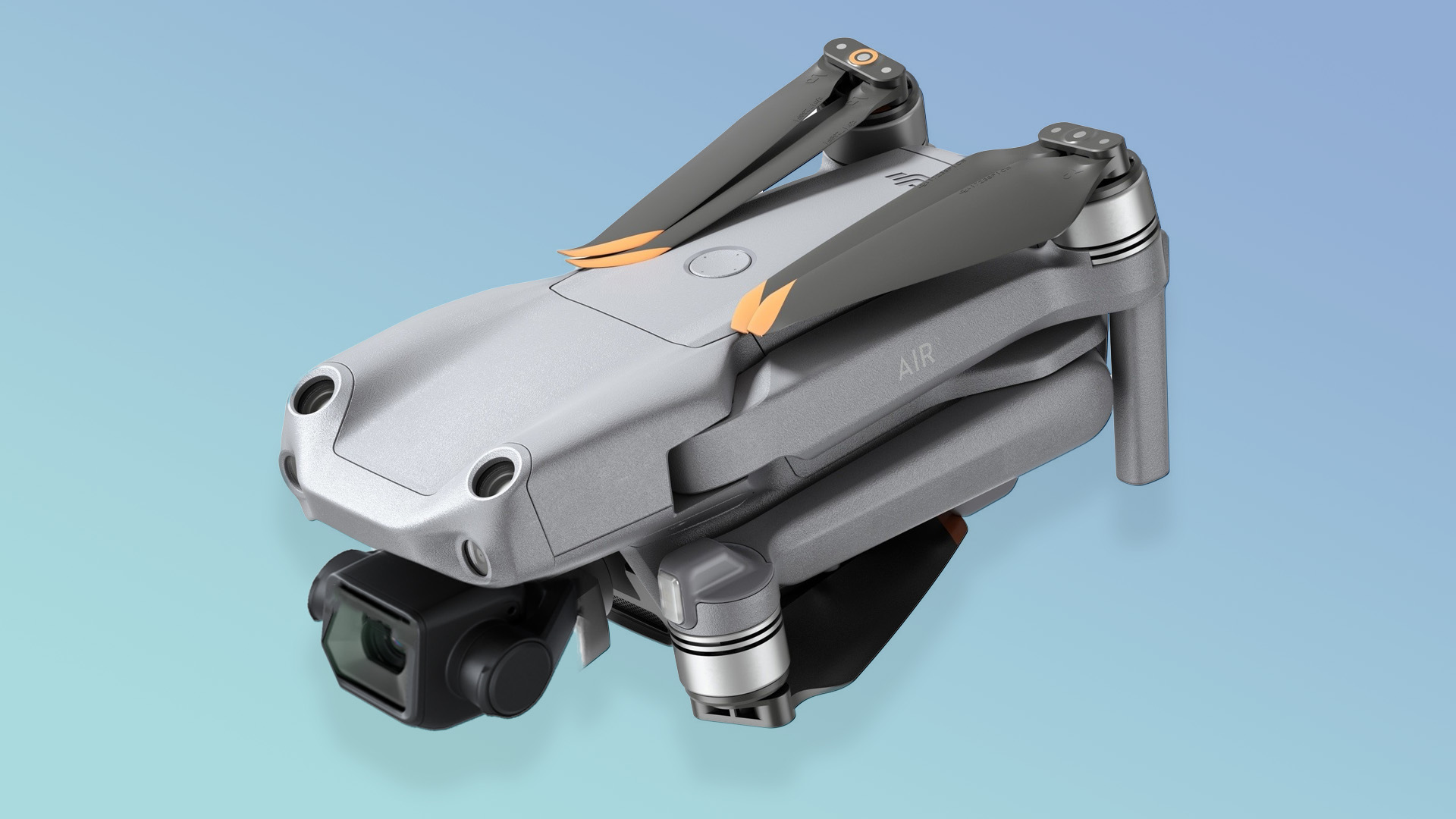
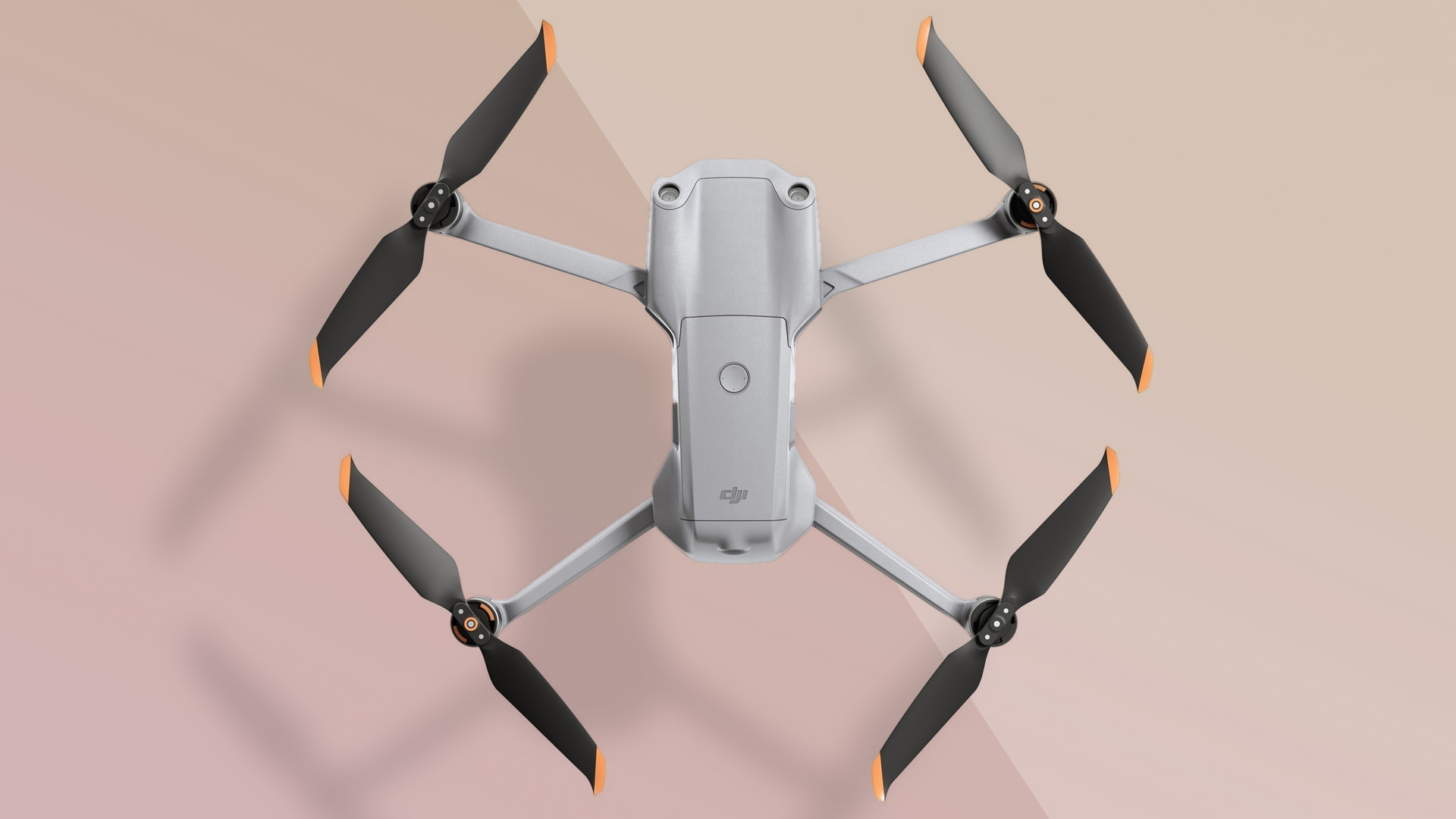
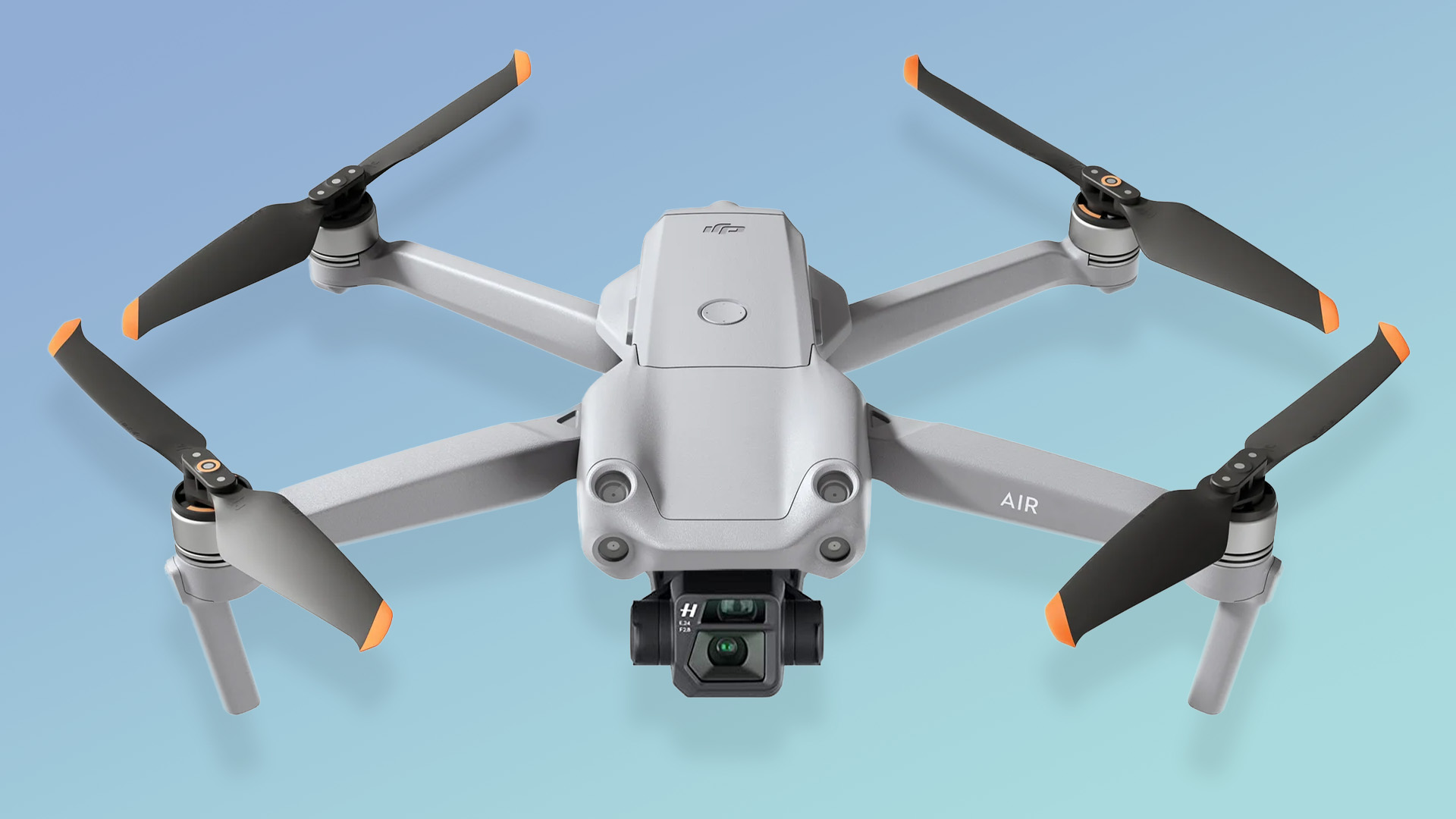
The DJI Air 3 is one of the key drones we expect to see in 2023.
If you’re new to drones, DJI’s naming system can be confusing. However, the latest models go some way to clear up the confusion.
You have Mavic drones right at the top, Air models in the middle, and then the Minis at the bottom - the ones we think most people buy. They are relatively affordable. The middle child Air range has had the least love of late. Perhaps it’s time for the DJI Air 3 to rise into view.
But what could, or should, it offer? We’ve dug into the wider DJI drone range and the tech available to manufacturers today to uncover the features we want, and the features that are the most feasible additions for a drone due this year. But let’s start with some estimates on the release date and cost.
DJI Air 3 price and availability
The DJI Air 3 will be a follow-up to the DJI Air 2S. That drone launched in April 2021 and was itself the successor to the DJI Air 2 from April 2020. This suggests the DJI Air Air 3 could arrive around April 2023. It’s no surprise that a 2022 release was missed given the component shortages and myriad other issues facing manufacturers these days.
However, a release schedule image posted recently by DealsDrone suggests The Air 3 may be released a little later, in May 2023. It also suggests April will bring the DJI Inspire 3 instead. Inspire is DJI’s range of pro-cinematography drones — the Inspire 2 was released years ago, back in 2016.
We may also see the Air series rise in cost considering there’s not a vast gulf in price between the mid-range Air 2S (from $999 / £899 / AU$1,699) and ‘affordable’ DJI Mini 3 Pro (from $759 / £709 / AU$1,119).
(Image credit: DJI)
New Micro Four Thirds sensor
The DJI Mini 3 and Mini 3 Pro saw reasonably large sensors introduced to DJI’s smallest drones. Is a 1-inch sensor going to be enough when the much cheaper models already have 1/1.3-inch chips?
We say no. The next step up is a MFT sensor — as seen in the DJI Mavic 3 Classic. The Sony IMX383 chip used in the Air 2S is also five years old, and there aren’t many newer successors bar the Sony IMX989, which has been “built for smartphones”.
The Micro Four-Thirds Sony IMX472 chip is the best fit for the job, and it may be the very sensor used in the DJI Mavic 3 Classic. That information does not appear to be available at present.
A larger sensor will mean better low-light performance, higher dynamic range and less noise. Sony’s IMX472 chip is a 20-megapixel MFT sensor with 3.3-micron pixels, and it was announced in 2021. It’s far newer than the sensor in the Air 2S. It also has some pretty eyebrow-raising capabilities.
Improved 120fps 4K (or 5K) video
One of these skills is a readout mode of 120fps at 12-bit color depth, using the full 5280 x 3956 pixels of the sensor. Will an Air 3 have the 120fps 5K mode this suggests? That would be nice. However, it would be conspicuously better than the fairly recent Mavic 3 Classic which offers 120fps 4K and 5.1K at 50fps.
Still, when you dig into the Sony IMX472’s documentation you find it might be easier for the drone to capture 120fps at 5K than 4K. It doesn’t have a native drive mode suitable for 4K capture, which — much as we are not software engineers — could surely cause a headache or two for DJI.
(Image credit: DJI)
Extended transmission range
An upgrade in transmission standards for the DJI Air 3 doesn’t see us go out on quite such a limb. The Air 2S uses Ocusync 3.0, and an Air 3 is surely due a bump up to Ocusync 3.0+.
This will give you extra range if you live in the right country — basically the US — of up to 9.32 miles / 15km. It also unlocks a 1080p, 60fps preview image when reviewing footage live using a DJI remote with a screen.
The DJI Air 2S only gets a 1080p, 30fps preview picture up to 12km thanks to O3.0’s lower bandwidth.
Faster charging times
Drone fans always need spare batteries. But fast charging really lowers the volume of battery headaches in our experience.
The DJI Air 2S’s battery can be charged at a maximum of 38W, whereas the newer Mavic models support 65W. Faster charging could potentially drop the Air 3’s charging time from around 95 minutes down closer to an hour, or even less.
Improved flight time
DJI has managed to pull off some fairly impressive increases in flight time in its sub 250g drones over the past 12 months.
An upgrade from Mini 2 to Mini 3 takes you from 31 minutes of flight time to 38 minutes. That’s a 22% increase, from just a 9% increase in battery capacity. And that suggests some pretty important efficiency savings are to be found inside.
We’d like to see a similarly healthy increase in the jump from DJI Air 2S to Air 3. A reasonable, if perhaps slightly over-optimistic, goal would be 40 minutes. While 36 minutes seems more likely, this is a “what we want” list after all.
(Image credit: DJI)
Better obstacle sensors
The DJI Air 2S has forward, backward, downward and upward sensors. However, something the Air system has never had is a true omnidirectional sensing system – additional left and right ‘lateral’ sensors – that the DJI Mavic 3 and Mavic 3 Classic offer.
Such object sensing allows for more dynamic forms of motion automation. And having it in a wider array of drones, like the DJI Air 3, would mean DJI could justify putting more work into the development of such modes.
There’s still plenty of room for the Mavic 3 Classic to retain an upper hand here too. The DJI Air 2S’s sensor cameras have a much narrower field of view than the Mavic’s. And where the Mavic uses a binocular, two-camera system in each direction, the Air 2S uses a time of flight sensor to judge the distance from the ground.
We think left/right object sensing in the DJI Air 3 is not an unreasonable expectation, although it won’t feel like that much of an upgrade unless there are new or upgraded automation modes.
We’ve laid out both optimistic and realistic expectations in a future DJI Air 3, let’s see if DJI plays it safe or pushes out the boat. Either way, it’s the final model in the range to be updated and its new name will complete a distinct range of DJI drones for 2023.
from TechRadar - All the latest technology news https://ift.tt/2V3Nclm
via TechRadar - All the latest technology news https://ift.tt/387zTuI
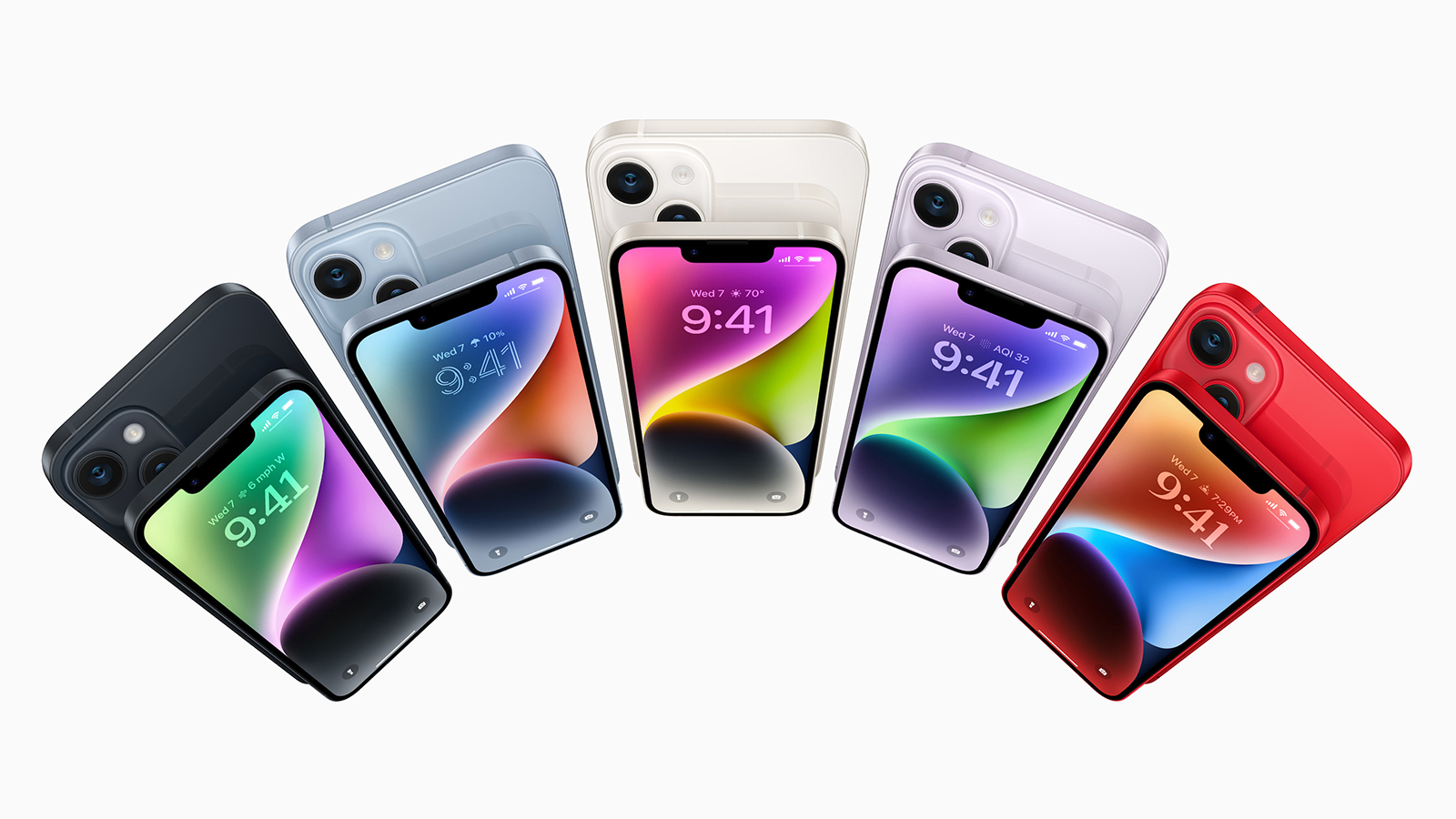
It seems the iPhone 14 and iPhone 14 Plus are getting a new yellow color option very soon, alongside the current blue, purple, midnight (black), starlight (cream), and red – with Apple hopeful it might boost the sales of the two less expensive iPhone 14 models.
This comes from a source on Chinese social media network Weibo via Mac Otakara and MacRumors. While the initial tipster doesn't have much of a track record, MacRumors does – and it says that it's heard Apple is planning a product briefing next week.
While we can't be certain of any rumor or leak until it's actually confirmed, Apple has form for adding new iPhone colors around this time of year: green for the iPhone 13 last year, and purple for the iPhone 12 the year before that.
Yellow could be the sixth iPhone 14 color(Image credit: Apple)
It was all yellow
As in the past, the aim here is to boost sales of the iPhone 14 and iPhone 14 Plus. We're now about half way to another iPhone launch – the iPhone 15 – and so the timing is right to try and drum up some more interest in the current handsets.
This is particularly important for the iPhone 14 Plus. While it was brought in to replace the iPhone 13 mini, which was hardly flying off shelves, the word on the Apple street is that not many people are buying the iPhone 14 Plus.
That's perhaps not surprising, considering both the iPhone 14 and iPhone 14 Plus are making do with last year's Apple A15 Bionic chipset. Even Apple itself seems to prefer the iPhone 14 Pro and the iPhone 14 Pro Max.
Analysis: more colors, please
It's perhaps a little surprising how much difference a new colorway can make to the appeal of a device – after all, every internal component stays the same. The iPhone 14 in yellow will still run just as fast and take the same quality photos and videos.
Or perhaps it's not surprising at all: gadget aesthetics are important, and for some people at least, the look and feel of a phone is a major consideration when weighing up upgrade options. This yellow shade will certainly make the iPhone look a little more distinctive.
We're not wholly sold on the idea of yellow as a smartphone color. It's not one that you see around very much, and straight away it makes us think of various bodily fluids. On the plus side, there are connotations with sunshine and... er... Lego minifigures? Or the Simpsons?
What we are certain about is that Apple's design team can be trusted to produce a yellow shade that's easy on the eye. More color options are always good for consumers, and we should be hearing about the new iPhone 14 one in the coming days.
Online counseling platform BetterHelp has been sharing users’ data with companies like Facebook and Snapchat for advertising purposes without explicit consent, alleges the Federal Trade Commission (FTC).
The company, which trades under a series of other names, has agreed to a $7.8 million payout to consumers who signed up for its services between August 1, 2017, and December 31, 2020.
Subject to a 30-day public comment period, the FTC will make a final decision to instruct BetterHelp to carry out a series of responsibilities that could see BetterHelp having to stop sharing personally identifiable information with third parties.
BetterHelp data sharing
According to an FTC document, email addresses, IP addresses, and health status and histories - including current and previous therapies - had been shared with third parties. It explains that BetterHelp “has repeatedly promised to keep [this data] private and use it only for non-advertising purposes”, which has since been found to be false for a seven-year period dating from 2013 to 2020.
It was also found that employees were lacking adequate training for handling sensitive data, and that third-party companies had been given permission in a number of cases to use the data for their own research and product development.
The data sharing took place in numerous instances for a prolonged period of time. Between 2017 and 2018, for example, BetterHelp had uploaded more than 7 million email addresses to Facebook. The platform later matched 4 million of these to existing Facebook user accounts.
IP address sharing had also been used to re-target previous users with more ads in an effort to drive revenue.
“To clarify, we do not share and have never shared with advertisers, publishers, social media platforms, or any other similar third parties, private information such as members' names or clinical data from therapy sessions. In addition, we do not receive and have never received any payment from any third party for any kind of information about any of our members.”
While we’re already hearing lots about the iPhone 15 and some other upcoming Apple gadgets, so far there’s very little concrete news about the Apple Watch 9—but we have heard a few rumors.
An early leak suggests it might be the same size as the Apple Watch 8 for example, though as we still know very little about it, that might prove wrong.
In any case, you’ll find everything we’ve heard about the Apple Watch 9 below, followed by a list of things we’d like it to offer. We’ll also update this article whenever there’s news about Apple’s upcoming wearable, so check back soon to stay up to date.
Cut to the chase
What is it? The next Apple Watch
When is it out? Probably September 2023
How much will it cost? Likely at least $399 / £419 / AU$629
Apple Watch 9: Price and release date
The Apple Watch 9 will probably launch in September. After all, the Apple Watch 8 was announced in September 2022, and with two exceptions every previous model has landed in September of their release years too.
More specifically, the Apple Watch 9 will probably be announced on a Tuesday or Wednesday in early or mid-September based on past form, meaning September 5, 6, 12 or 13. It will likely be announced alongside the iPhone 15 series, and will probably go on sale around 10 days later.
As for the price, there’s no news there, but it’s likely to cost at least as much as the Apple Watch 8, which starts at $399 / £419 / AU$629, given the rising cost of parts, fuel, and labor.
The Apple Watch 9 will probably cost at least as much as the Apple Watch 8(Image credit: TechRadar)
Apple Watch 9 news and leaks
Apple Watch 9:
The main Apple Watch 9 leak so far comes from an analyst at tech firm Omdia via this MacRumors article, and simply states that the Apple Watch 9 will probably be the same size as the Apple Watch 8. That means it would come in both 1.89-inch and 2.04-inch screen sizes, with likely a 41mm and 45mm case respectively.
Then there’s a sketchy leak that suggests the Apple Watch 9 might instead be called the Apple Watch X, skipping the number nine entirely. This is according to a supply chain source speaking to iPhoneSoft.
They suggest that this wearable would still land in 2023, so it would be a simple name change, but with the X being the Roman numeral for 10 that seems unnecessarily confusing. Plus, we’ve heard from the MacRumors leak to expect the Apple Watch X in 2024 alongside the SE 3, so there are conflicting accounts here. The SE 2 was released alongside the Watch 8 and the first iteration of the Apple Watch Ultra, but there's no news of an Ultra 2 coming in 2024 to complete the trifecta.
The Apple Watch 8 doesn't have brilliant battery life(Image credit: TechRadar)
One of our main complaints with the Apple Watch 8 – and indeed with every Apple Watch prior to it – was the battery life. While it’s not terrible, this is a wearable that you’ll likely need to charge daily, and at the very least every two days.
That’s not ideal, especially for a device designed to constantly track aspects of your health, exercise and sleep. So we’d like to see the Apple Watch 9 last for at least three days between charges, but given that we ask for this every year it’s probably not going to happen.
2. A big chipset upgrade
The Apple Watch 8 technically has a new Apple S8 chipset inside it, but there’s very little in the way of upgrades here. In fact, it uses the same CPU as the S7 and even the S6 from the Apple Watch 6.
Now, in fairness the Apple Watch 8 is a speedy device, so it doesn’t feel particularly lacking in power. But it could always be faster. Or Apple could work to substantially improve the efficiency, for better battery life.
3. An Action button
The Apple Watch Ultra has a handy extra button(Image credit: TechRadar)
One of the key features of the Apple Watch Ultra is an extra button called the Action button. This can be customized to do various things, so it’s basically a shortcut to an app or feature of your choice.
It’s an extremely useful addition, and it’s one we’d like to see make its way to the Apple Watch 9 as well, since it doesn’t seem like something that we should have to shell out on an Ultra model for.
4. A tweaked design
The Apple Watch 8 looks good, so we don’t feel the design needs to be drastically overhauled, but it also looks much the same as the Apple Watch 7, so some tweaks to freshen it up would be nice.
That could take the form of even smaller bezels, a new case material, a slimmer body, or something else along those lines to help it feel new and modern.
5. A lower price
With a starting price of $399 / £419 / AU$629, which rises if you want it in a larger size or cellular connectivity, the Apple Watch 8 is a fairly expensive wearable, despite not offering a vast amount more than the much cheaper Apple Watch SE 2.
So we’d like to see Apple reduce the price for the Apple Watch 9. Either that or make it a substantial upgrade anyway. Doing so would help ensure it ranks high among the best Apple Watches and the best smartwatches.
from TechRadar - All the latest technology news https://ift.tt/fkwP7TD
Going by past form, there’s every chance that the Samsung Galaxy Z Fold 5 will be a superb handset, but the latest leak suggests there’s o...
Going by past form, there’s every chance that the Samsung Galaxy Z Fold 5 will be a superb handset, but the latest leak suggests there’s one area where rivals could have it beat.
According to a report on South Korean site The Elec (via The Verge), Samsung is testing the Galaxy Z Fold 5 to survive 300,000 folds, but will consider it to have passed if the hinge retains 85% of its original strength after just 200,000.
Those are some big numbers, and they’re in line with the tests Samsung carried out on the Galaxy Z Fold 4, but they fall some way short of the 400,000 folds that recent foldables such as the Oppo Find N2, the Oppo Find N2 Flip, and the Honor Magic Vs are tested for.
There’s a high chance the upcoming OnePlus foldable will be tested to 400,000 folds, too, given that OnePlus is a subsidiary of Oppo.
It’s a shame, if the Elec's report is true, that Samsung might not be keeping up - especially given that durability remains one of the key concerns with foldable phones, not least because they’re so expensive.
In more positive news, this report echoes previous claims that the Samsung Galaxy Z Fold 5 will have a new waterdrop hinge design. This essentially means that the two halves of the phone will fold completely flat, which looks neater and should allow Samsung to slightly slim down the Z Fold 5, compared to the Z Fold 4.
This new design will apparently also make the phone slightly lighter, which is desirable, since at 263g the Galaxy Z Fold 4 is fairly hefty. However, the upcoming phone apparently won’t have any major specs upgrades.
Of course, we’d take all of this with a pinch of salt for now. We won’t know for sure until the Galaxy Z Fold 5 launches, likely in August.
The Honor Magic Vs is one of many rivals Samsung's foldables face(Image credit: Future | Alex Walker-Todd)
Analysis: Samsung’s flagship foldable could struggle this year
If the above report is accurate then the Samsung Galaxy Z Fold 5 might be slimmer and lighter than the current model, but with few other changes.
Meanwhile, competitors could prove more durable, and there’s likely to be more of them, too, with the long-awaited Google Pixel Fold and the OnePlus foldable both expected to launch this year. That's in addition to a bunch of phones either already launched or probably coming from Oppo, Honor, Motorola, and Xiaomi.
All of which would suggest that it's a bad year for Samsung to release an iterative update - and that our list of the best foldable phones could be set for some big changes. Then again, the Galaxy Fold range remains the gold standard in this area, so we'll reserve judgement until the latest model arrives later this year.
from TechRadar - All the latest technology news https://ift.tt/djgiDke
via TechRadar - All the latest technology news https://ift.tt/GoYa9uq
The Artificial Intelligence dream has landed in our everyday lives, and the ethical discussions around AI have ramped up as a consequence, especially concerning how much data these AI services are collecting from users. After all, where there is mass storage of possibly sensitive information, there are cybersecurity and privacy concerns.
Microsoft’s Bing search engine, which is newly equipped with OpenAI’s ChatGPT, and is currently being rolled out, has brought its own set of concerns, as Microsoft hasn’t had the best track record when it comes to respecting its customers’ privacy.
Microsoft has occasionally been challenged about its management and access to user data, although notably less so than its contemporaries like Apple, Google, and Facebook, even though it deals in a great deal of user information - including when it sells targeted ads.
It’s been targeted by certain government regulatory bodies and organizations, such as when France demanded that Microsoft ceases tracking users through Windows 10, and the company responded with a set of comprehensive measures.
Jennifer King, director of consumer privacy at the Center for Internet and Society Stanford Law School, speculated that this is partly due to Microsoft’s longstanding position both in its respective market and long-time relationships with governments afforded to it because of its legacy. It has more experience when dealing with regulators, so might have avoided the same level of scrutiny as its competitors.
An influx of data
Microsoft, as well as other companies, is now finding itself having to react to a mass influx of user chat data due to the popularity of chatbots like ChatGPT. According to the Telegraph, Microsoft has reviewers who analyze user submissions to limit harm and respond to potentially dangerous user inputs by combing through user conversation logs with the chatbot and stepping in to moderate “inappropriate behavior.”
The company claims that it strips submissions of personal information, users' chat texts are only accessible to certain reviewers, and these efforts protect users even when their conversations with the chatbot are under review.
A Microsoft spokesperson elaborated that it employs both automated review efforts (as there is a great deal of data to comb through) and manual reviewers. It goes on to state that this is the standard for search engines, and is also included in Microsoft’s privacy statement.
The spokesperson is at pains to reassure those concerned that Microsoft employs industry-standard user privacy measures such as “pseudonymization, encryption at rest, secured and approved data access management, and data retention procedures.”
Additionally, the reviewers can only view user data on the basis of “a verified business need only, and not any third parties.” Microsoft has since updated its privacy statement to summarize and clarify the above - user information is being collected and human employees at Microsoft may be able to see it.
Under the spotlight
Microsoft isn’t the only company under scrutiny over how it collects and handles user data when it comes to AI chatbots. OpenAI, the company that created ChatGPT, also disclosed that it reviews user conversations.
These concerns are multiplied when considering the usage of ChatGPT and ChatGPT-equipped bots by those working at companies with their own sensitive and confidential information, many of which have warned employees not to submit confidential company information into these chatbots. Some companies, such as JP Morgan and Amazon, have restricted or banned their use at work altogether.
Personal user data has been, and continues to be, a key issue in tech in general. Misuse of data, or even malicious use of data, can have dire consequences both for individual people and for organizations. With every introduction of a new technology, these risks are increased – but so is the potential reward.
Tech companies would do well to pay extra attention to make sure our personal data is as secure as possible - or lose the trust of their customers and potentially kill off their fledgling AI ambitions.
from TechRadar - All the latest technology news https://ift.tt/GoYa9uq
via TechRadar - All the latest technology news https://ift.tt/qQP4sJU
Apple has released a new tool for developers creating apps for its App Stores that allows them to compare their own app’s metrics with those of their peers.
A new dashboard for peer group benchmarks was added to App Analytics in the App Store Connect - a platform for developers to manage their apps across all of Apple’s platforms including iOS and macOS.
It comes as part of having a developer account with Apple, but it’s not quite as robust as dedicated peer benchmarking tools so may not be enough to take business away from those, just yet.
Peer group benchmarks for Apple apps
“Peer group benchmarks provide powerful new insights across the customer journey, so you can better understand what works well for your app and find opportunities for improvement," an update posted to the Apple Developer website reads.
In order to surface the most relevant competition, Apple says it considers categories, business models, and download volume.
It also promises to maintain a certain degree of privacy using “industry-leading differential privacy techniques” so that rival apps’ performance remains hidden.
Because it forms part of the wider App Store Connect environment, developers can take action with the new metrics to improve things like conversion rates, proceeds, crash rates, and user retention.
There are plenty of other uses for the developer platform, including testing different elements of a product page, gathering feedback on beta versions, and offering in-app events.
While the maker of the iPhone seems to be keen to drip-feed useful products to developers, it hasn’t all been plain sailing for Apple. It has spent many years in and out of the media for controversial app tracking which saw some consumers’ data being shared even when they had asked for it not to be.
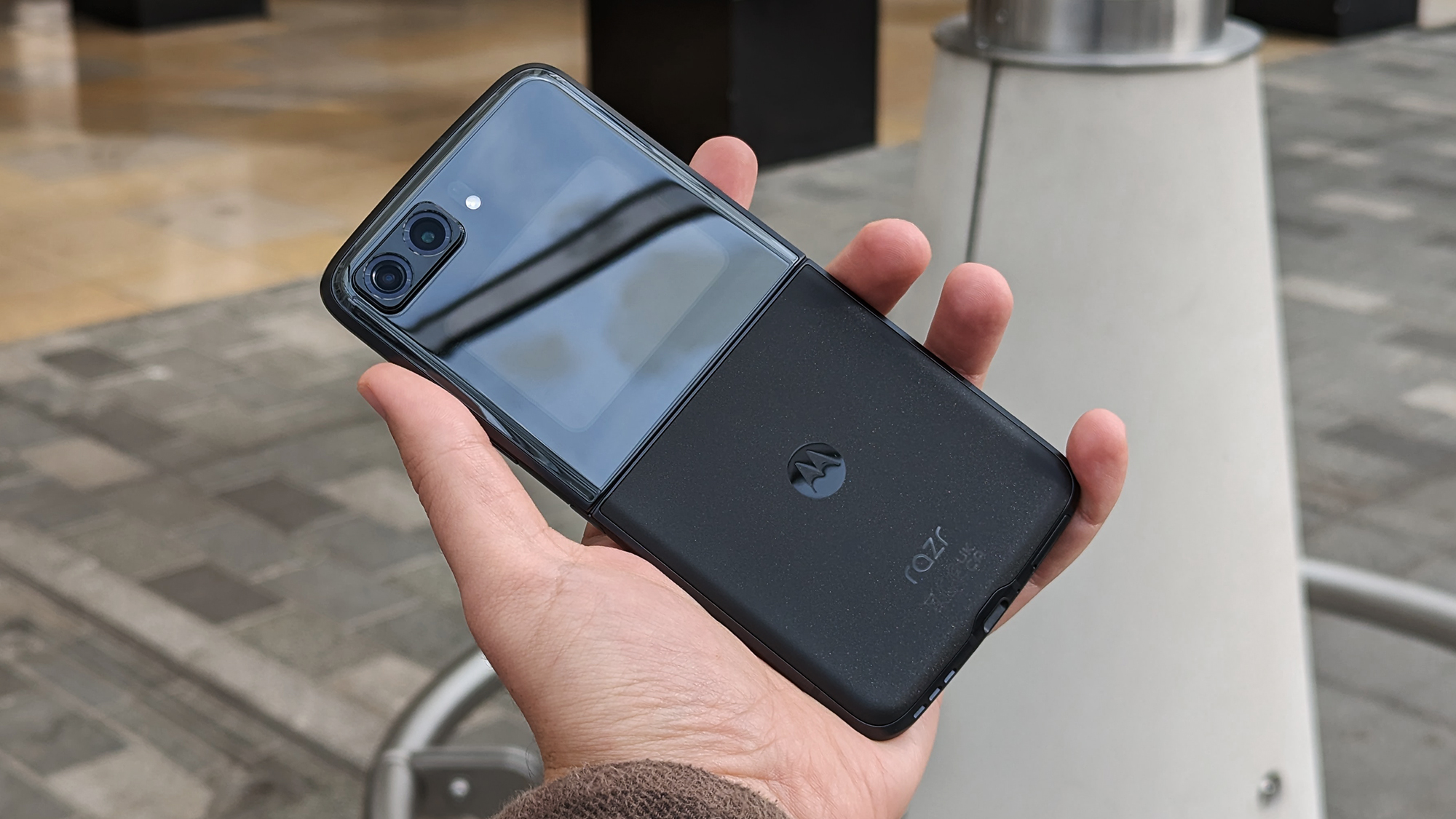
We’d always assumed we’d see a new Motorola Razr this year, but now the company has confirmed it, going so far as to say that the next version of the phone – likely to be called the Motorola Razr 2023 – will launch “very soon.”
This comes straight from Lenovo CEO Yuanqing Yang, speaking to CNBC during MWC 2023, so we’re inclined to believe it. That said, the Motorola Razr 2022 only landed back in August last year, so it seems a bit early for a new model.
Will Motorola launch the Razr 2023 less than a year after the Razr 2022 then, or is “very soon” further away than it sounds? We’re not sure.
Yang also said “I think it’s much better” compared to the Razr 2022, so it would appear that the Motorola Razr 2023 could play host to some significant upgrades. Details of those upgrades weren’t revealed, but apparently the improvements will focus on the hinge and apps.
Beyond that, Yang said that reception to the Razr line “is good”, and that “when the technology becomes mature, then the price could go down, then you can drive higher volume.”
In other words, foldable phones are likely to get more affordable over time, which could help make them more mainstream, a sentiment echoed by Oppo's President for Overseas Sales and Service, Billy Zhang, when we spoke to him at MWC about the possibility of more affordable foldables in the future. There’s no indication that the Razr 2023 itself will be cheaper than last year’s version, though.
The Razr 2022 has flawed cameras(Image credit: Future / Alex Walker-Todd)
Analysis: how could the Motorola Razr 2023 improve?
Yang’s mention of improving the hinge likely means we’ll see both durability improvements and a reduction in the crease across the display. That said, in our Motorola Razr 2022 review we noted that it had a barely-there display crease anyway, so there’s not much more work to do here.
As for the mention of applications, presumably that means a focus on making the most of the foldable form factor for apps. Coming up with bespoke features and modes that require a foldable screen to use.
There are other improvements we’d like to see too, though. We found that the cameras, and particularly the post processing of photos, needed work on the Razr 2022, and that the general performance wasn’t as smooth as we’d have expected given the high-end specs. Hopefully Motorola pays some attention to those areas as well; it'll need to if it wants its next clamshell to find its way onto our pick of the best foldables to buy, that's for sure.
If it does, then this could be a serious rival to the Samsung Galaxy Z Flip 5, which is expected to land in August and is likely to be the most popular foldable phone of the year.
from TechRadar - All the latest technology news https://ift.tt/bOBYJrQ
via TechRadar - All the latest technology news https://ift.tt/tbuDnVO
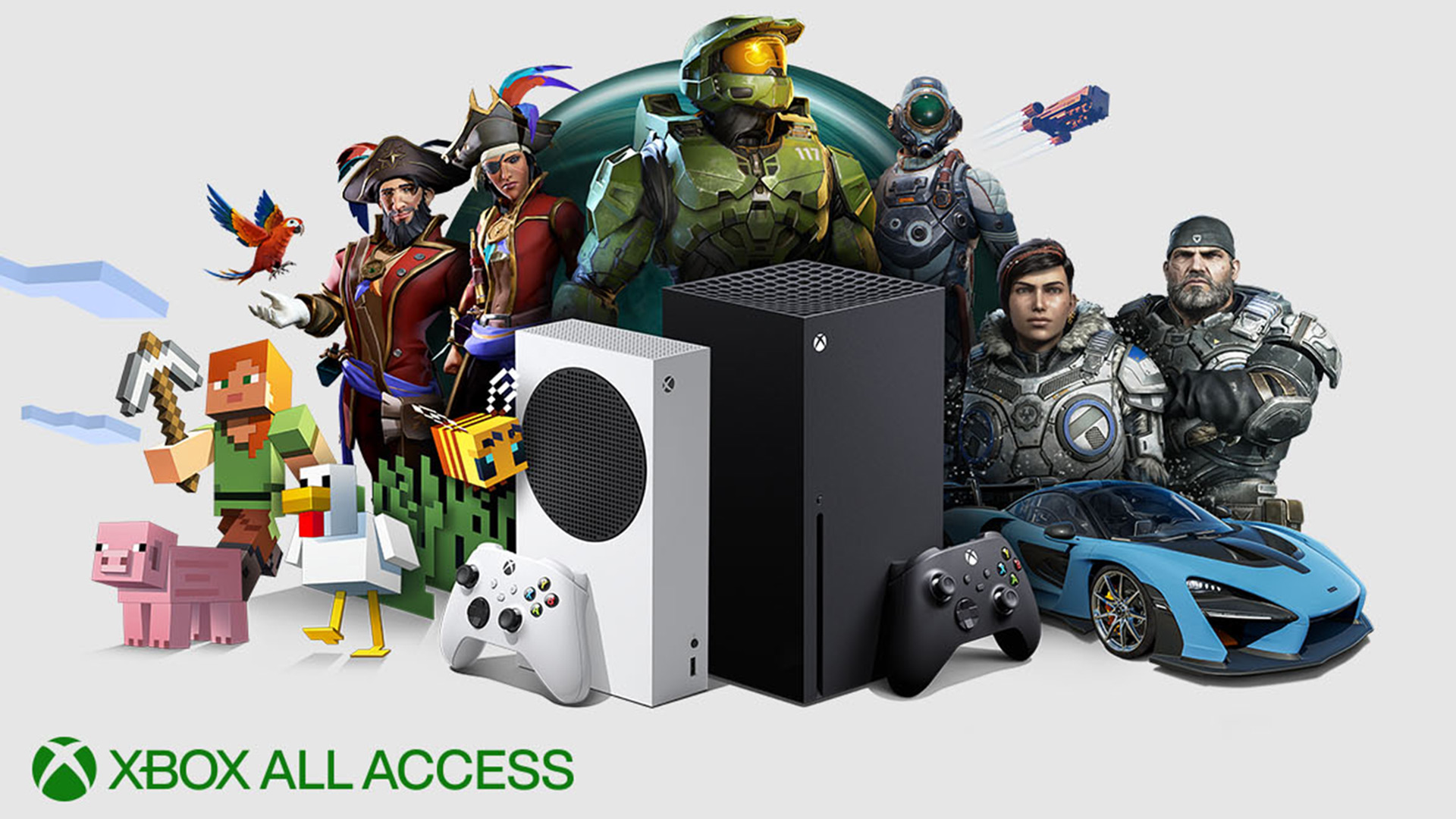
The Xbox Series X is a lot more powerful than the Series S. It utilizes its specs to significantly reduce load times and boost overall game performance and visual fidelity, while features such as Quick Resume, Smart Delivery, and backward compatibility give it the edge.
For
Much faster loading times
Dolby Vision + Atmos support
Backwards compatibility
4K/60fps gameplay (4K/120Hz support)
Against
Exclusive library is lacking
Minimal UI improvements
Compatible TV required for full visual experience
Xbox Series S
The Xbox Series S is a great option if you want to avoid the sizable financial outlay required to own a full-blown new-gen console, but it has significantly less storage, prioritizes 1440p resolution for gaming, and does without the 4K HD Blu-Ray drive of the Xbox Series X.
For
The smallest Xbox ever made
Completely silent in operation
Cheaper than the Series X
Smooth frame rates
Against
Outputs at 1440p resolution when gaming
512GB SSD fills up fast
No disc drive
UI can be overwhelming at first
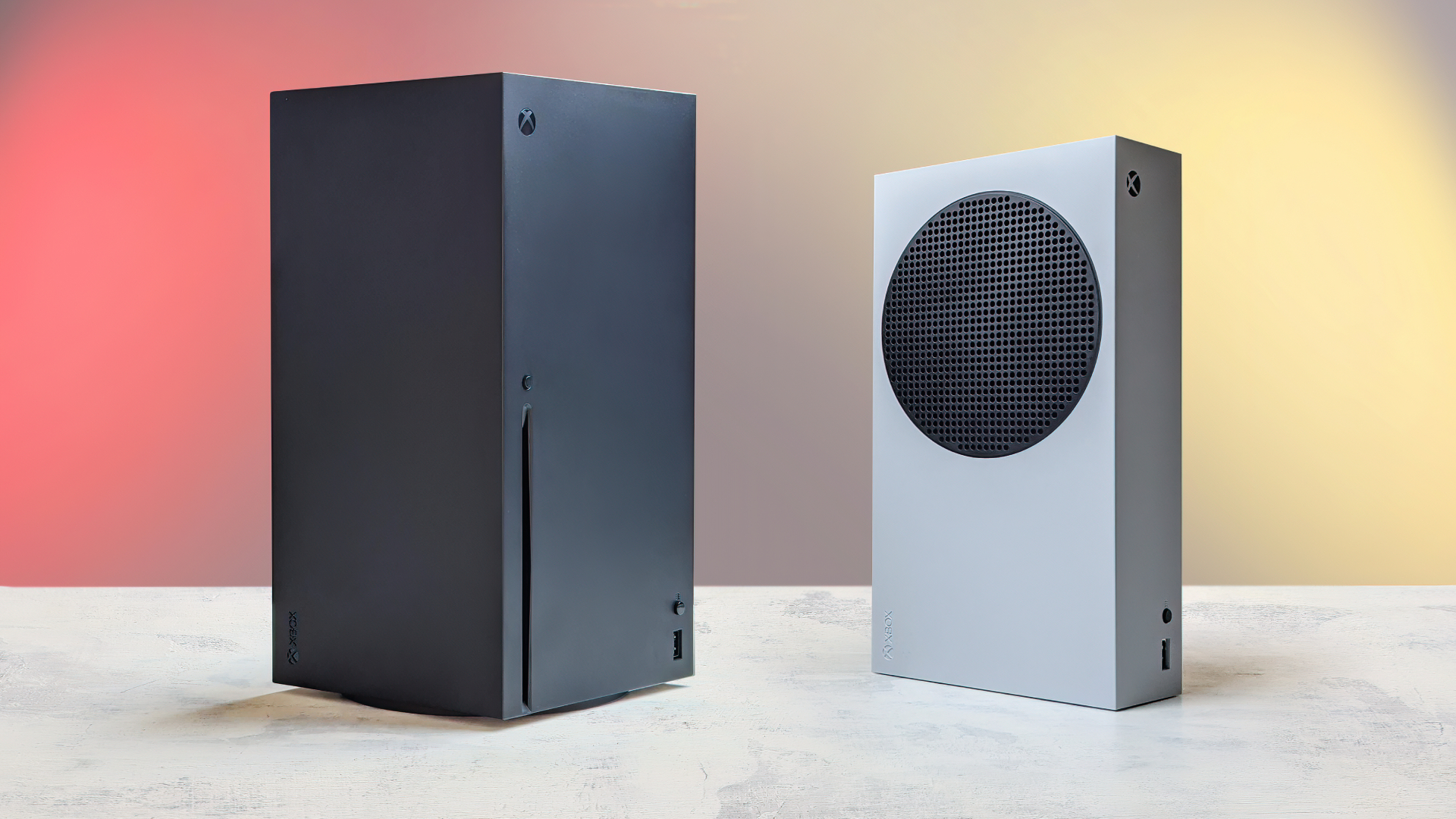
The Xbox Series X vs Xbox Series S is a worthy comparison for any player looking to add one of Microsoft's newest releases to their gaming space. Fortunately, there are a number of positives about both consoles, but since they are both advertised alongside one another, it may be confusing for a first-time buyer. However, once you start looking closer, you are bound to notice their differences.
For example, the Xbox Series X vs Xbox Series S may look similar at first glance, but they both showcase tremendous differences, which should be carefully noted while you shop. One of the main differences to consider outside of your budget is whether you spend more time with digital or physical media since the cheaper console is entirely disc-less, which might put media collectors off.
If you’re looking for further insight into both consoles, our Xbox Series X review highlights the pros of the console alongside our Xbox Series S review. However, if you’re looking for something a bit more next-gen, it might be worth checking out our PS5 vs Xbox series X guide.
Xbox Series X vs Xbox Series S: key differences
(Image credit: Microsoft)
If we had to highlight three key differences between the consoles, it's these: the Xbox Series X has a 4K UHD Blu-ray drive capable of playing physical games and movies, while the Xbox Series S does not.
The Xbox Series X packs a large 1TB SSD that can store, on average, around 16 games, Meanwhile, the Xbox Series S has a 512GB SSD that only stores around four to five, though both can be expanded with a 512GB, 1TB, or 2TB Storage Expansion Card from Seagate. Finally, the Xbox Series X renders games in native 4K at 60 frames-per-second, while the Xbox Series S targets 1440p.
Otherwise, both include the same user interface, the same controller, and the same Xbox Velocity Architecture that enables features like Quick Resume. Both have the same media apps like Netflix and Prime Video, but more importantly, both can play exactly the same games. From what we’ve seen, people are drawn to the sheer power of the Xbox Series X. But don’t overlook the advantages of the more affordable model. Both work well and both can serve a different audiences.
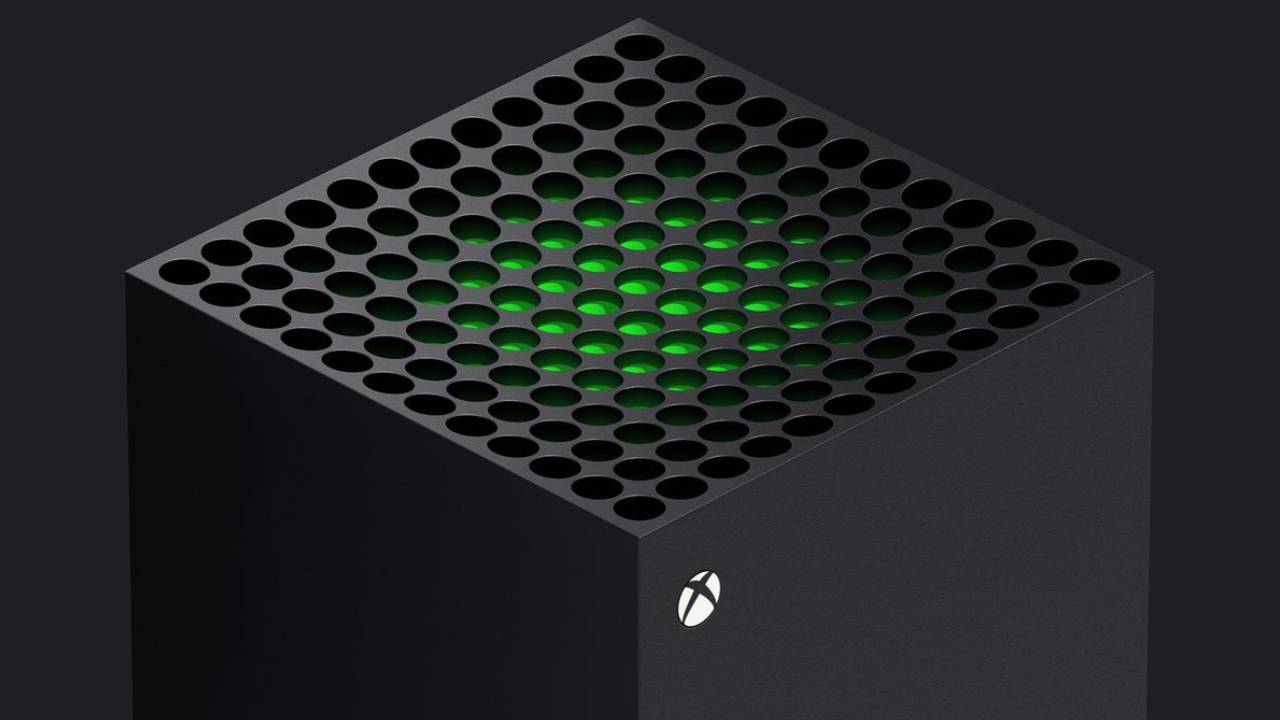
Let's break them down even further. First up is the Xbox Series X, Microsoft’s flagship console. It’s capable of 4K graphics and is currently one of the most powerful consoles available. On paper, these specs are impressive, and it has a compact tower-style design that manages to be both unique and unobtrusive. It’s expensive, though, at $499 / £449 / AU$749, the same RRP as the PS5.
The Xbox Series S is far more affordable and a less powerful alternative for you to consider. However, it’s digital-only, so you’ll be at the mercy of the Microsoft Store for any purchases you make. That said, Xbox Game Pass, Microsoft's Netflix-like subscription service and Xbox Cloud Gaming (only available for Xbox Game Pass Ultimate subscribers), lets gamers stream games and alleviates some of the digital-only restrictions.
Overall, the Series S' price point is aimed at those who are willing to compromise on power for a much better price.
Xbox Series X vs Xbox Series S: price
(Image credit: Shutterstock / Mr.Mikla)
The Xbox Series X costs $499 / £449 / AU$749 and was launched on November 10, 2020. Packed with cutting-edge technology, this console goes head-to-head with the PS5, which also costs $499. The price point may be too expensive for some, but it puts the Xbox Series X in a strong position to compete with Sony’s hardware.
The Xbox Series S launched alongside the Series X and its price is much lower at just $299.99 / £249.99 / AU$499. A $200 saving will be very appealing to the more cost-conscious consumer. That’s considerably cheaper than the PS5 Digital Edition too, which retains the base PS5’s specifications but initially came in at $399.99 / £359.99 / AU$599 instead.
The Xbox Series X is a beast of a console that's truly brought us into the latest generation of gaming.
Xbox Series X specs
CPU: Eight-core 3.8GHz (3.6GHz with SMT) custom AMD 7nm GPU: 12 teraflops 1.825GHz (locked) RAM: 16GB GDDR6 Frame rate: Up to 120 fps Resolution: Up to 8K Optical: HD Blu-Ray disk drive Storage: 1TB NVMe SSD
With a 12 teraflop GPU capable of up to 120 frames per second, the Xbox Series X is twice as powerful as the Xbox One X, Microsoft’s former flagship console for the last generation. It supports various exciting new-gen features such as ray tracing, variable rate shading, and support for 8K resolution.
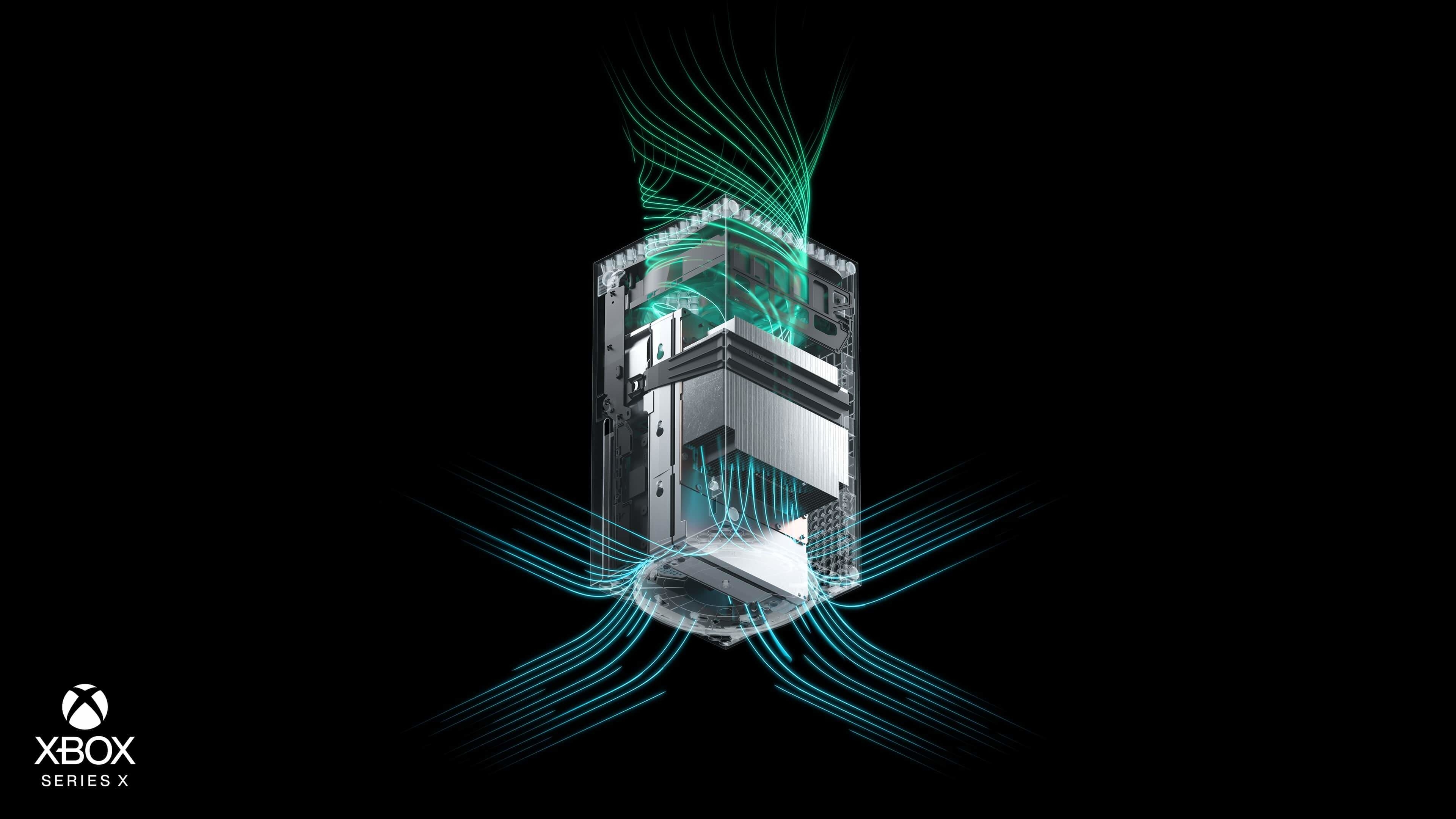
The Xbox Series X makes the wait when booting up games or loading new levels a thing of the past, thanks to its custom-designed super-fast NVMe SSD. The SSD is part of the console’s new Velocity Architecture, which allows multiple games to be suspended in the background while you’re playing something entirely different. Everything is more responsive and snappier as a result, too.
Microsoft is also trying to make latency a thing of the past on Xbox Series X. Forward-thinking features such as Auto Low Latency Mode (ALLM), communication improvements to the Xbox controller, and Variable Refresh Rate (VRR) support take full advantage of TVs with HDMI 2.1 support.
Xbox Series S specs
CPU: Eight-core 3.6GHz (3.4GHz with SMT) custom AMD 7nm GPU: 4 teraflops at 1.550GHz RAM: 10GB GDDR6 Frame rate: Up to 120 fps Resolution: 1440p with 4K upscaling Optical: No disk drive Storage: 512GB NVMe SSD
The Xbox Series S packs significant power for a small box. The console targets a resolution of 1440p instead of native 4K (some games do support native 4K, though), and is capable of 120fps gaming. It's got an almost identical CPU to the Xbox Series X, but the GPU is considerably less powerful, coming with 10GB of GDDR6 RAM instead of 16GB.
That might sound like a big compromise on paper, but remember the Xbox Series S is targeting 1440p/60fps instead of 4K/60fps. This means it needs less power to reach its pixel count, but it can still deliver all the new-gen features Microsoft is focusing on like ray tracing and 120fps.
There’s no disk drive, of course, and the storage is almost halved compared to the Xbox Series X. That’s admittedly concerning for a digital-only model, but Microsoft is undoubtedly hoping people are taking advantage of Xbox Cloud Gaming. That involves no downloads, since games are streamed from Microsoft’s remote data servers.
The storage of both consoles can be expanded, however. Microsoft is selling a proprietary expansion card that plugs into the back of the console, available in 512GB, 1TB, and 2TB options. The best Xbox One games can also be stored on a standard external hard drive to help free up space.
The Xbox Series S and Xbox Series X also support Spatial Sound, including Dolby Atmos and Dolby Vision, via streaming apps at launch. Dolby Vision support for gaming was introduced post-launch and is now available.
Xbox Series X vs Xbox Series S: games
(Image credit: Microsoft)
Here’s what you need to know: both the Xbox Series X and Xbox Series S can play exactly the same games, although they’ll undoubtedly look best on Xbox Series X. The compromises we’ve usually seen on Xbox Series S mainly focus on the resolution drop to 1440p from 4K, and likely more minor changes that probably won’t be as noticeable.
Both consoles offer full backward compatibility with Xbox One, Xbox 360, and original Xbox games. Some FPS Boost games aren’t supported on Xbox Series S though, while others see greater benefits on Xbox Series X.
So while we're still waiting for some of the biggest new-gen exclusives like Fable 4 to launch, there's still plenty to play, particularly if you have a large library of titles already. If you own a lot of physical copies, though, be mindful that these won’t work on Xbox Series S, due to the lack of disc drive.
If you're hoping to get Xbox Game Pass Ultimate for an even cheaper price, we've got good news. While this is currently being trialled in just the Republic of Ireland and Colombia, Microsoft is looking to launch an Xbox Game Pass family plan, allowing you and four players to jump in for a monthly cost of €21.99 – which comes to around $21.99 / £19.99 / AU$32.99
Xbox Series X vs Xbox Series S: verdict
(Image credit: Microsoft)
Microsoft may be onto something here. By offering two consoles that target different audiences, consumers ultimately have more choice and more ways to enter into the Xbox ecosystem. If only the best will do, pick up an Xbox Series X, but be prepared to pay a premium. Want to enter the next generation without breaking the bank? The Xbox Series S is a fantastic entry point, thanks to a tempting price.
Microsoft seems to have created two appealing iterations of its console, without one appearing less attractive than the other. Crucially, it can now fight the PS5 on two important fronts: price and performance. The Xbox Series S costs significantly less than the PS5 and the PS5 Digital Edition.
By creating an argument for Xbox Series X vs Xbox Series S, Microsoft has essentially done its best to turn consumers’ heads where it might not have done so before, was it a straight fight between Xbox Series X and PS5. And that’s surely a win for Xbox as a whole.
Xbox Series X vs Xbox Series S - Frequently Asked Question
Is the Xbox Series X better than the Xbox Series S?
In terms of performance and power, the Xbox Series X delivers on a better scale than the Series S, which is reflected in its price. However, that’s not to say that the Xbox Series S is underpowered. Even though it boasts a smaller size than the Series X, the Series S still manages to pack a punch and perform almost as well as its flagship console. But, generally speaking, the Xbox Series X takes the biscuit as the more powerful console.
Does the Xbox Series X have a disc drive?
One of the main factors to separate the Xbox Series X vs the Xbox Series S is a disc drive. The Xbox Series X has a disc drive, which appeals to players who still rely on a lot of physical media instead of digital downloads. But, the disc-less Xbox Series S helps keep the price down, so if you aren’t too fussed with physical media, then a disc drive may be one of the things to sway your decision.
How much storage does the Xbox Series S have compared to the Xbox Series X?
If storage is one of your primary concerns when shopping for a new console, the Xbox Series X may be a safer option. While the Series S still hosts a wealthy 512GB memory, which drops to around the 300GB mark once you factor in system software. The Xbox Series X offers slightly more with its initial 1TB storage, falling to the 800GB mark with system software considered. Then, of course, there’s always the option to add an SSD or an external hard drive to your console to boost the storage.
A Microsoft study has emphasized the new pressure facing CFOs and their teams as they struggle to balance strategic innovation with their company’s financial goals and long-term financial health.
The report explores the effects of the pandemic which changed the role of CFOs, who went from fiscal planning to driving innovation amid global economic uncertainty, to the point that 79% of finance leaders believe they must play a significant role in business innovation to meet future needs.
Key to success is the successful deployment of technology, which Microsoft explored in a complementary blog post.
CFO job role expanding
More than eight in 10 (82%) of finance leaders recognize the importance of artificial intelligence and other automation technology to support their organization’s goals, which can help decrease human workload and free up time to focus on things that require specific skills and concentration.
Data, for example, can be an expansive environment that needs to be boiled down to presentable information in order to recognize trends, predict future performance, and refine other areas of business. Despite this, Microsoft reckons that 8%% of financial leaders feel overwhelmed by their organization’s data.
Alongside exploring AI tools to support data management, Microsoft is keen to push its new Dynamics 365 Finance business performance analytics feature that’s designed to centralize data from more than one business workstream into an easy-to-use interface.
As we look toward the future, Microsoft wants to take even more of the workload off finance teams, seeking to replace it with low-code solutions that has saved it 977 annual hours of manual labor and $25 million.
Google is thought to be launching a lot of phones this year – as well as the Pixel 8 series we’re likely to see the Pixel 7a and the Pixel Fold, and at least one of those last two could be launching quite soon.
Both phones have previously been rumored to land around the middle of the year, likely in May, and now an unnamed Google phone has been listed with the FCC (Federal Communications Commission) in the US, which is something that usually happens within a few months of launch.
Indeed, as 9to5Google – which spotted the listing – points out, the FCC's confidentiality runs out in six months. That confidentiality hides images and other revealing information from the public, so whatever this phone is it will probably launch in less time than six months.
That pretty much rules out the Google Pixel 8, as we’re fairly confident that the phone will land in or around October.
So we’re almost certainly looking at either the Google Pixel 7a or the Google Pixel Fold here. But which? The FCC listing doesn’t reveal much other than model numbers, specifically G0DZQ, GHL1X, and GWKK3. Going by the included text these all appear to be the same phone, with differences relating the connectivity – some offer mmWave 5G and others don’t.
That tells us that the phone offers 5G, and more specifically mmWave, which – where supported – can be faster than sub-6GHz 5G. But the Pixel 6a already offers 5G, and there’s an mmWave version for Verizon, so this doesn’t tell us much, since the Pixel Fold will almost certainly offer 5G too.
However, the one real clue we do have is serial numbers, which begin with '28291FQHN' or '8251FQHN'. As 9to5Google notes, that’s very similar to a serial number of '2A281FQHN' that was visible on a recent hands-on Pixel 7a leak.
So with that in mind it’s most likely the Google Pixel 7a that’s been listed on the FCC’s database, but we can’t rule out the possibility that it’s the Google Pixel Fold.
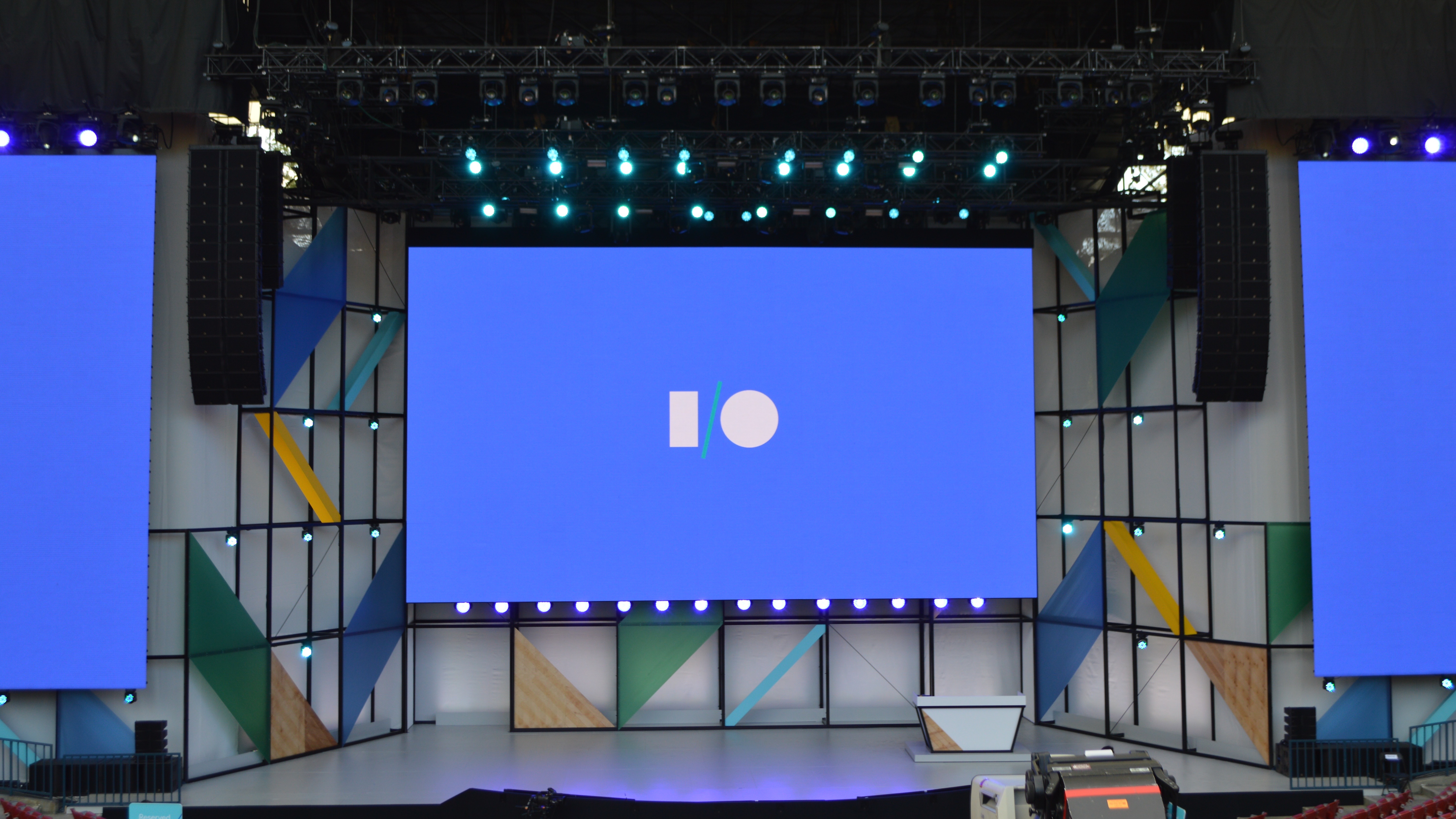
The stage at Google I/O 2017(Image credit: Future)
Analysis: when might this phone launch?
Whether this the Google Pixel 7a or the Pixel Fold, we can take a good guess at when this upcoming phone might land.
As noted, its presence on the FCC’s database means Google will probably want to get it out the doors in less than six months – so before September, but we can get more specific. The most likely timing is probably at this year’s Google I/O.
That’s the company’s annual developer conference, and sometimes products are announced there. Dates for this year’s event haven’t been announced yet, but it usually happens in May.
Not only would that be within the six-month window, but it would leave a long gap before the Pixel 8’s likely October launch, which is probably preferable for Google than having all its product launches clustered together.
Plus, as noted, we’ve seen a number of leaks pointing to early or mid-year launches for both the Pixel 7a and Pixel Fold, with some pointing specifically to May. So we might soon have one or even two new entries in our best Pixel phones guide.
from TechRadar - All the latest technology news https://ift.tt/KvqtzbN
via TechRadar - All the latest technology news https://ift.tt/ORlnhz9
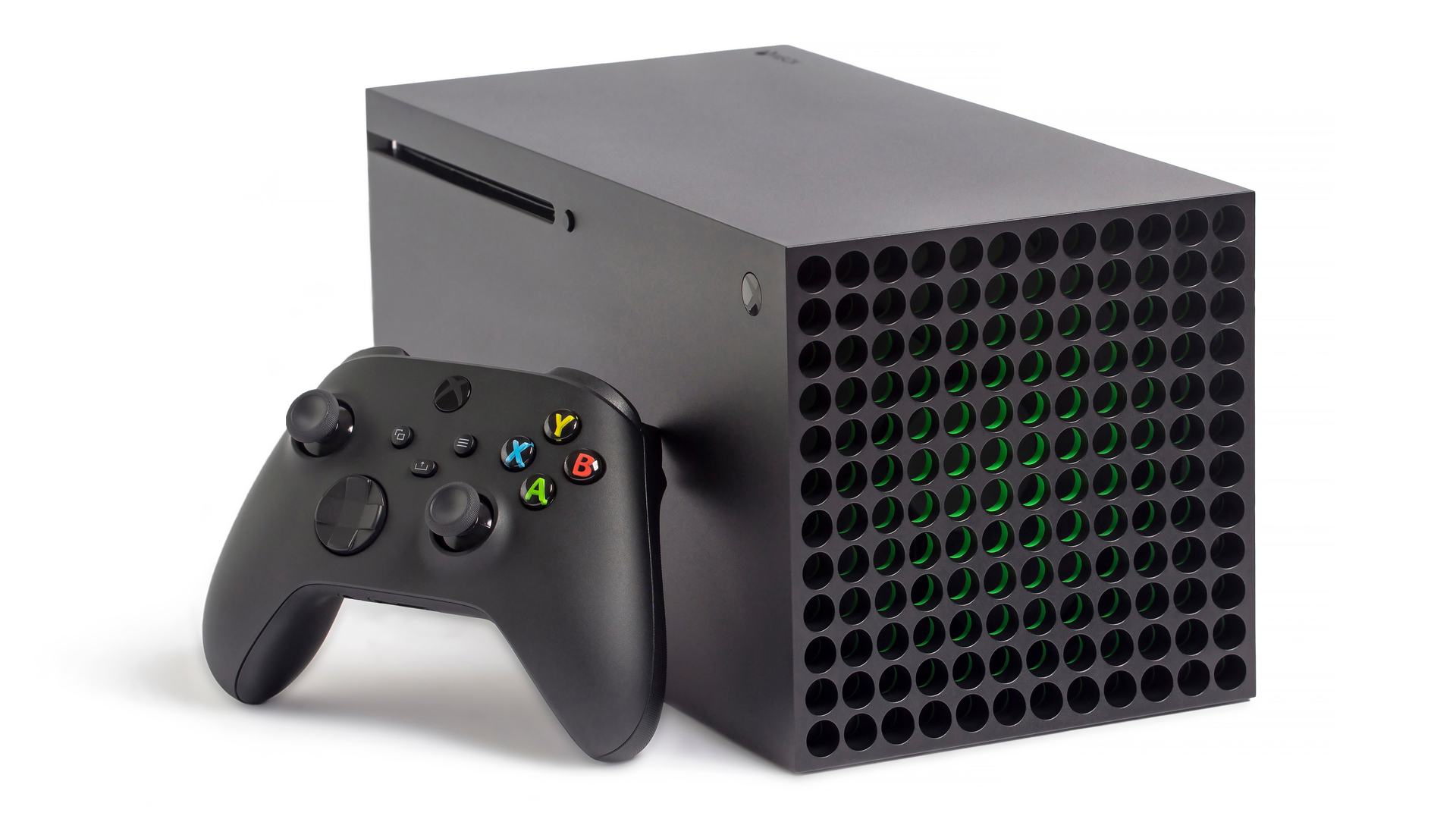
When it comes to Xbox Series X storage, you'll want to know exactly what you're dealing with before you can start thinking about diving into and downloading your favorite games. The Xbox Series X comes with enough storage to get set up, but depending on how many games your library consists of, you may want to look into a little extra help for later down the line.
Despite the Xbox Series X and Xbox Series S being far more user-friendly than gaming PCs, the storage situation isn’t as straightforward as it should and could be for a first-time user. There are a few caveats to note, and with a decent amount of out-of-the-box storage, you’ll want to ensure you know exactly what you’re buying and why it can be so helpful.
We’ll cover everything from internal to external drives, the differences between HDD and SSD, and shed some light on what an NVMe SSD is. More importantly, you’ll know precisely how Xbox Series X storage works by the end of this guide. Of course, everything outlined here also relates to the Xbox Series S, which is worth remembering for gamers who went for the more budget-friendly console.
Xbox Series X storage: everything you need to know
Xbox Series X storage: how much do you get?
(Image credit: TechRadar)
The Xbox Series X comes with a 1TB NVMe SSD, while the Xbox Series S is equipped with a 512GB NVMe SSD. The Xbox Series X has 802GB storage, which means 198GB is reserved for system files and the Xbox operating system.
The Xbox Series S, meanwhile, only has 364GB of usable storage. Games should take up 30% less room than their Xbox Series X counterparts as file sizes are reduced due to developers not targeting a 4K resolution, but you'll likely need to expand the system's memory sooner rather than later.
What is an NVMe SSD?
(Image credit: Shutterstock/Jim1982)
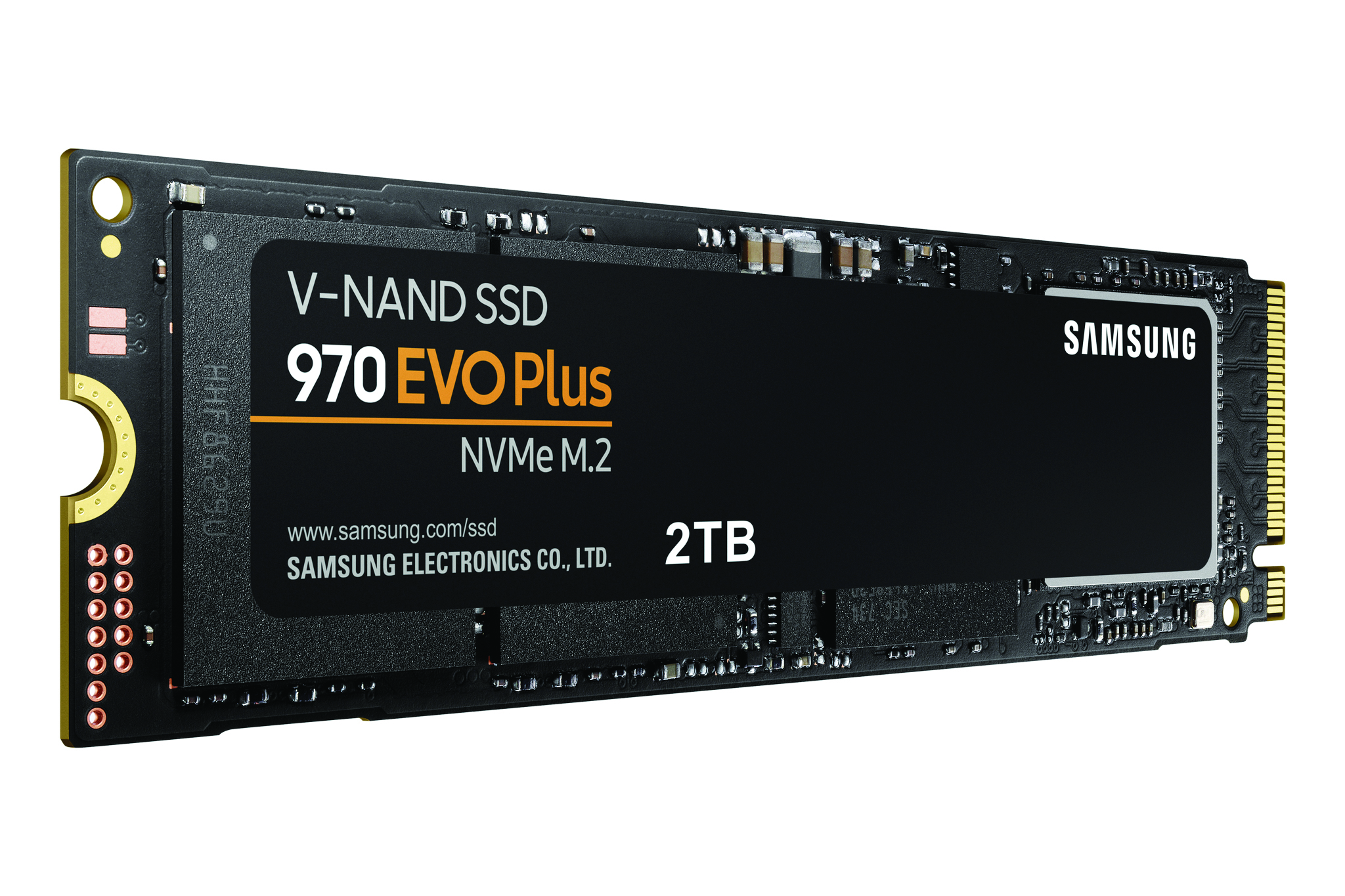
NVMe SSDs (Non-Volatile Memory Express) is a superior storage solution compared to standard hard drives and SSDs. Due to the fact NVMe SSDs use PCIe sockets for data transfer, they can send up to 25x more data than the slower SATA equivalent (which is the hard drive the Xbox One uses).
NVMe drives also cut out the middle man by communicating directly with a system’s CPU, and the end result is blazing fast performance. Both the Xbox Series X and Xbox Series S rely on this new storage format to create a next-gen performance leap, so it’s crucial to understand the difference between the three types of drives.
Is an NVMe SSD the same as an SSD?
(Image credit: Samsung)
No, and that can often be confusing for many – particularly as Microsoft regularly refer to their storage as just “SSD”. Regular SSDs (solid-state drive) rely on SATA, which is a far slower way of transferring data within a system.
An SSD is still much faster than a regular mechanical hard drive (and less prone to failure due to the lack of moving parts), so it's not all bad. However, its speeds pale in comparison to an NVMe drive.
How to expand Xbox Series X|S storage
(Image credit: Seagate)
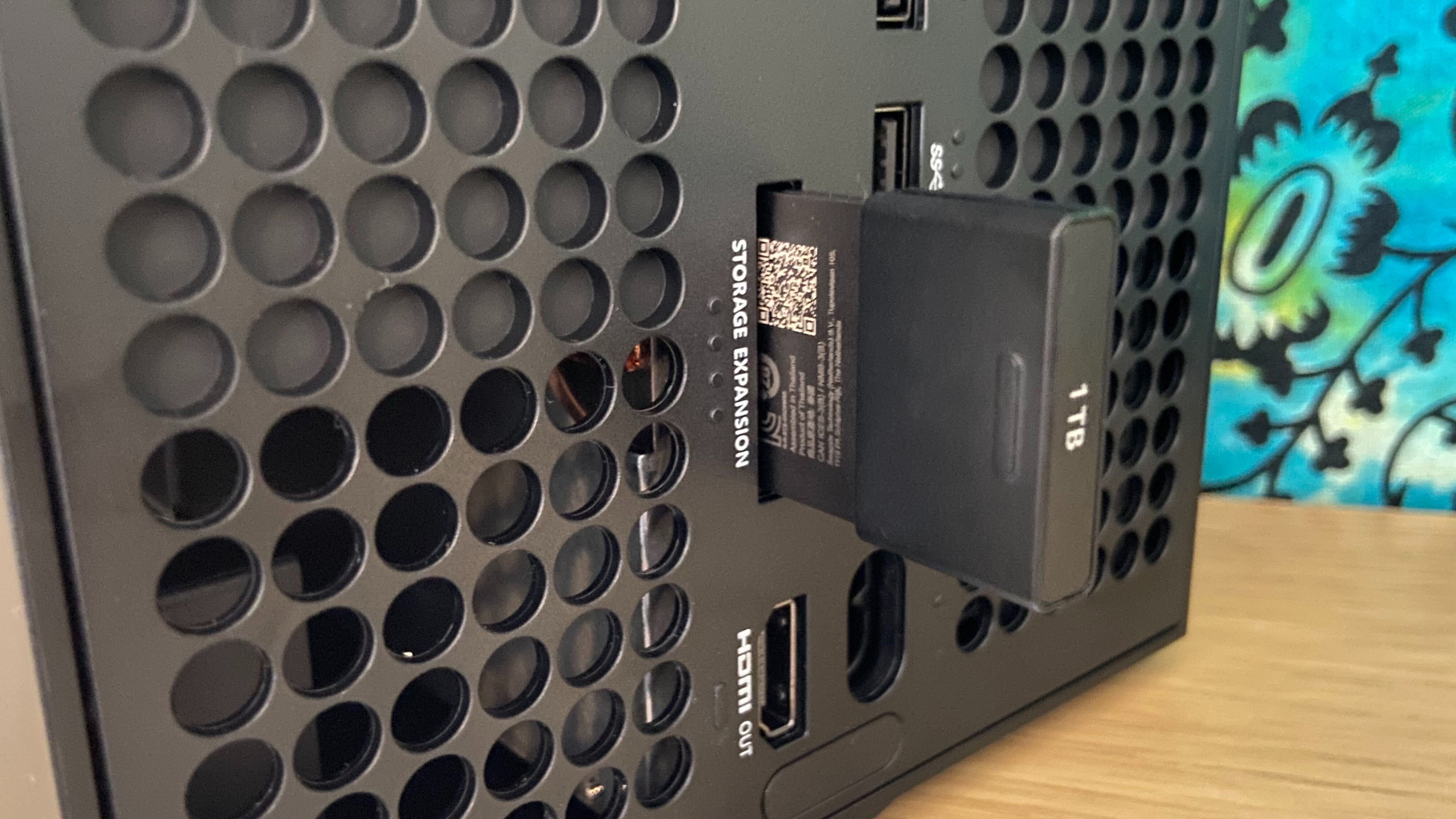
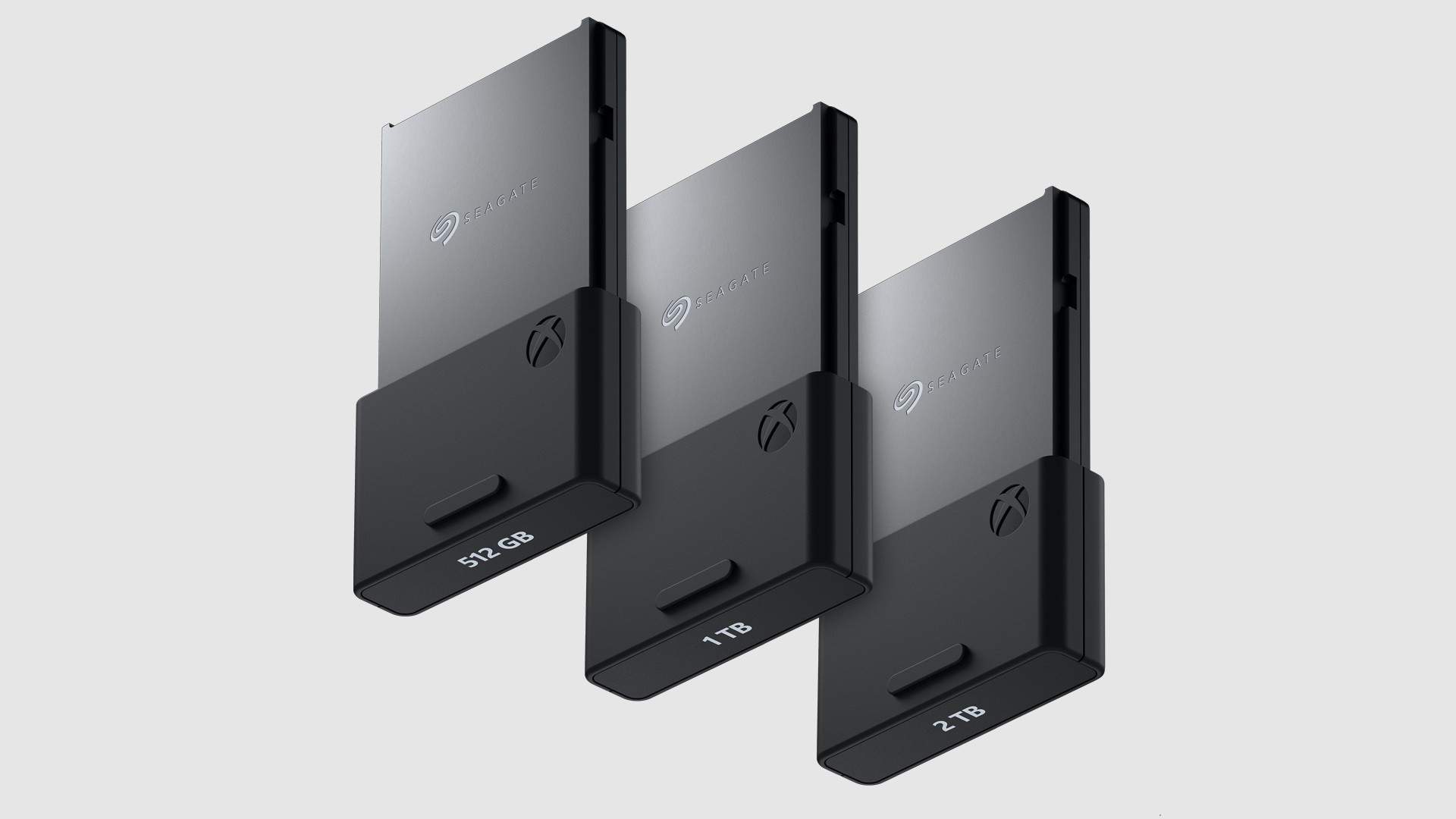
Microsoft’s solution to expanding the Xbox Series X|S’s internal memory with more super-fast NVMe storage is rather elegant, albeit expensive. Microsoft has released 512GB, 1TB, and 2TB models for the Seagate Xbox Storage Expansion Card that slots into the back of both consoles, much like a memory card. Anything you store on the NVMe drives will benefit from the full suite of power that the Xbox Series X|S provide.
Microsoft has also revealed that more storage solutions will be on the way, so consumers won’t just be at the mercy of buying the proprietary drive. This is good news, as proprietary drives can often be more expensive than components from third-party manufacturers.
You can plug in an external HDD or SSD to play Xbox One, Xbox 360 and original Xbox games on. You won’t benefit from the lightning-quick speeds that the NVMe drives provide, however, SSD drives are still considerably quicker than HDD, so if you do go for an external option, opt for an SSD. Any games optimized for Xbox Series X (like Gears 5 for example) will need moving to the internal NVMe drives to be played.
Xbox Series X|S optimized games can be stored on external drives, but they won’t be playable unless they’re transferred back to the main NVMe drives. Quick Resume, which is a feature that lets you suspend and resume multiple games at a time, will work no matter where games are installed.



Follow Us
Were this world an endless plain, and by sailing eastward we could for ever reach new distances