I've had a Spotify premium account long enough to be hit with multiple price hikes from my original, stable subscription plan.
Throughout those years, the streaming platform has defined how and what music I listened to, mostly for the better, though in some ways for the worse; it could be my stage of life, but I don't feel music like I used to.
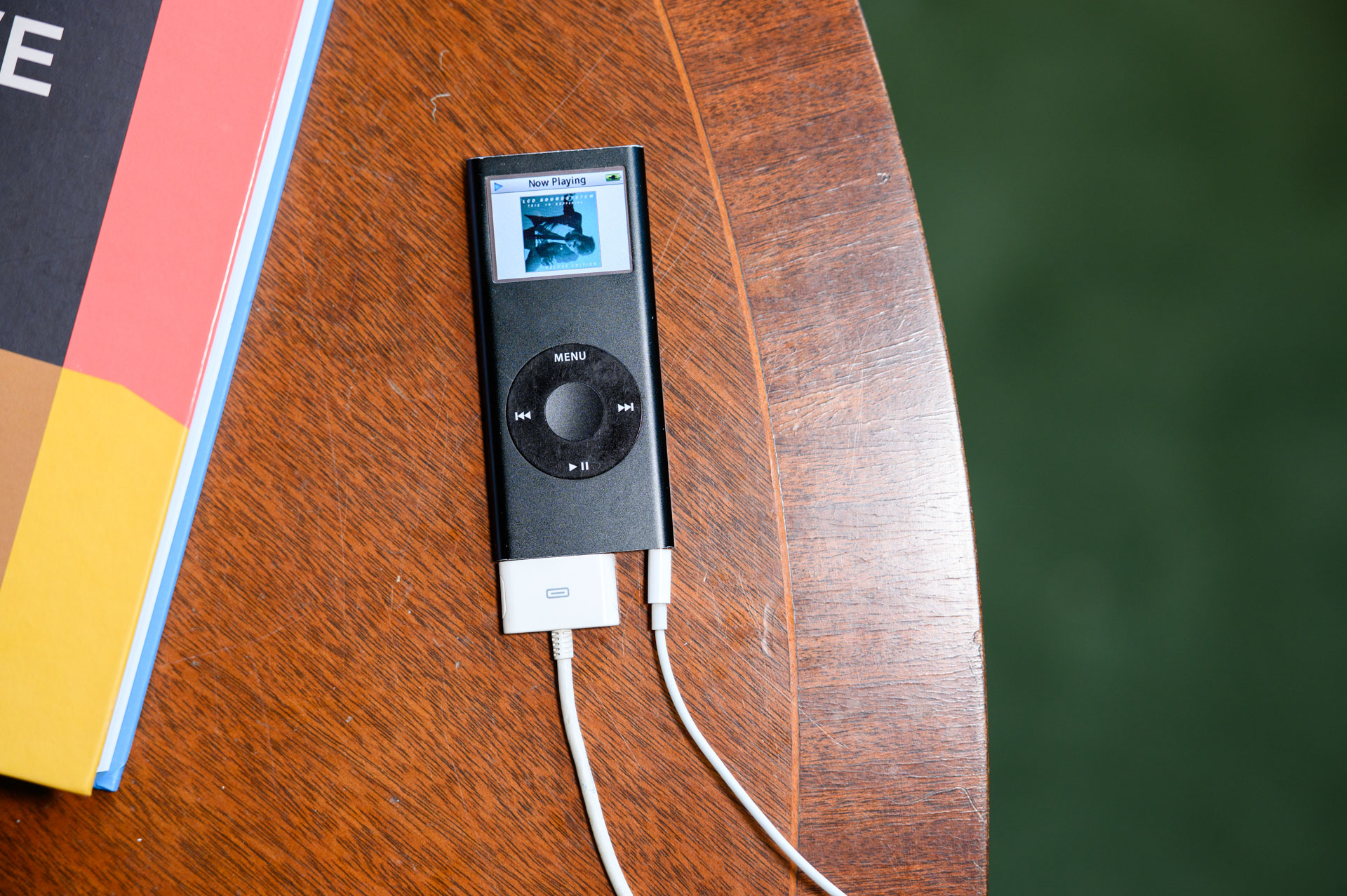
So when I recently rediscovered my iPod nano in a drawer during a clear out, it was the shot in the arm that this tired music lover needed.
The model in question was the iPod nano (2006) in black, and I couldn't for the life of me remember when I had last used it.
I peeled my old portable media player free from its disintegrating soft case and drank in that slice of nostalgia, running my fingers over its aluminum casing and wheel.
I just had to know what music I had painstakingly added to the 8GB of flash memory, however long ago that was.
After persistent rummaging, I found the 30-pin to USB charging cable I needed and, after a moment, sure enough my nano sprang back into life...
(Image credit: Tim Coleman)
The time capsule I needed
2015. That was the most recent period of the music and playlists on my iPod nano. Had it really been over a decade since I had last used a portable media player and moved exclusively to Spotify streaming?
My albums, and more specifically my playlists, spanned 2011 to 2015, with the majority being pre 2013 — the year my first child was born. Back then (pre kids), I was clearly into three genres; electronica, alternative and Christian gospel.
I span the click wheel with my thumb to scroll through the lists, neatly categorized into Playlists, Artists, Albums, Songs, Genres, Composers and Search options.
God, I had forgotten that tactile feeling of the click wheel and the outright simplicity of the distraction-free interface. And with my Bluetooth-faff-free wired headphones attached, I started exploring this little audio time capsule.
Spotify streaming has turned music into fast food. The iPod nano was like a sit down meal.
Did you know TechRadar now has membership?
(Image credit: Future)
Become a TechRadar Insider by simply clicking 'Join Now' at the top of this page. Have a question? Please email membership@techradar.com
Reader, I used to painstakingly curate Final Mix playlists of my favorite tunes each year, and 2012 was so prolific I had also split it into two parts. Three, year-long alternative and electronica playlists! Heck, I even made my own Desert Island Discs list (dated 2013) packed with my eclectic all-time faves, which spanned everything from the hymn Amazing Grace sung by Aretha Franklin to dance house classics like Rez by Underworld and my wedding first dance, Your Love Gets Sweeter by Finley Quaye.
I cued up my 2012 playlist, which opened with This Year by The Mountain Goats, a defiant narrative of endurance in tough times and a simple chorus that resounded "I’m gonna make it through this year, if it kills me".
Eyes closed, I was already finding myself getting emotional.
These were house party days, pub hang-outs and those conversations that went, ‘Hey have you heard this?’. Songs recommended by friends. Songs shared by friends.
I locked in on that playlist, clicking the wheel to crank up the volume to levels probably unsafe for my ears, with no on-screen warning micromanaging my experience.
Tim ColemanTim Coleman
A timely reminder to simplify
Immersing myself in that old iPod nano reminded me why I love music. It took me back to the times when listening to an album might be the only thing I was doing in that moment.
Today, music is far more likely to be an accompaniment to the multiple activities I simultaneously have on the go, interrupted by the notification alerts and social apps on my phone.
For me, Spotify streaming had turned music into fast food. The iPod Nano was like a sit down meal.
And although my Nano’s battery is effectively dead — it needed constant power to operate — it has called me back to enjoy music in a deeper way once more. That fast food had grown dry, and I was appreciating deeper flavors again.
from Latest from TechRadar https://ift.tt/nmAbIDq
0
coment�rios:
Spider-Man: Brand New Day has finally swung into...
Spider-Man: Brand New Day ending explained — who does Sadie Sink play, how many post-credits scenes are there, and more on the new Marvel movie
Spider-Man: Brand New Day has finally swung into theaters worldwide — and I bet you've got questions about Tom Holland's latest Marvel movie.
Haven't seen it yet? Read my Spider-Man: Brand New Day review for a spoiler-light insight into the newly released film. Then, bookmark this page, go and see it, and come back to carry on reading this article, because I'm not kidding when I say full spoilers immediately follow for Spider-Man: Brand New Day.
Of course, if you have watched it, by all means scroll on — it's worth the read, I promise!
Does Sadie Sink play Jean Grey in Spider-Man: Brand New Day?
There have been myriad rumors about who Sadie Sink is playing in the MCU (Image credit: Sony Pictures/Marvel Entertainment)
Yes. One of the worst-kept secrets in Hollywood is finally confirmed about 70 minutes into Spider-Man 4: Sink is playing the Marvel Cinematic Universe's (MCU) version of iconic X-Men member Jean Grey.
Of course, there's been all manner of speculation about the identity of her character, with everyone from Mayday Parker — aka Peter Parker and Mary Jane Watson's daughter in the comics — and Typhoid Mary to Firestar and Shathra mentioned as potential candidates.
Who is the real villain in Spider-Man: Brand New Day?
You messed up, Metzger (Image credit: Sony Pictures/Marvel Entertainment)
That'll be William Metzger, aka the head of the Department of Damage Control (DoDC).
Metzger is played by Tramell Tillman, the Severance star signing on to appear in Spider-Man: Brand New Day last August. It's unclear when or where he'll appear in the MCU next, but I have my suspicions about his next appearance, which I cover later in this article.
Anyway, Metzger is revealed to be the Marvel Phase 6 flick's actual villain in its third act. Initially positioning himself and the DoDC as an ally of Spider-Man's, we eventually learn that Metzger was the one who kidnapped, experimented on, and ultimately killed Jean's older sister Sarah. A fellow telepath, Sarah was taken to the DoDC's main testing facility on Staten Island, where she was used as a lab rat for the company's investigations into new tech powered by superhuman abilities.
Of course, as soon as Spidey learns the truth, our friendly neighborhood hero sets out to rescue Jean, whom he naively helped the DoDC to capture earlier in Brand New Day. Little does Peter Parker know, though, that it could've been his last mission...
Does Peter Parker die in Spider-Man: Brand New Day?
Don't worry, Spidey lives to fight another day (Image credit: Sony Pictures/Marvel Entertainment)
No, but he comes mightily close to losing his life.
After he infiltrates the DoDC's Staten Island headquarters, Spidey uses his upgraded powers to defeat members of The Hand controlled by an antagonistic Jean — remember, she still thinks Spider-Man is the enemy at this point.
Eventually, Peter tracks down Jean, who's holding Metzger hostage. Metzger tried to experiment on Jean as he did with Sarah, but the test not only goes awry, it unlocks Jean's full powerset. No longer limited by the 33-foot radius that her telepathic abilities had, Jean utilizes her powers to paralyze a large part of New York's human population, and threatens Peter that she'll hurt them all — including his former girlfriend M.J. and best friend Ned, who are caught in her paralyzing telepathic wave — if he tries to stop her from enacting revenge on Metzger.
I wonder if Frank will stop being so reckless from now on... (Image credit: Sony Pictures/Marvel Entertainment)
Being the good guy that he is, Peter manages to talk her down. He does so by allowing the souped-up Jean to enter his mind, where he shows her a very specific memory of Aunt May that helps Jean understand that, despite Sarah's death, she's not alone.
Happy ending, right? Not exactly. Like Spider-Man, Frank Castle, aka The Punisher, sprang into action when Jean used her upgraded powers on New York's residents. Unable to reach DoDC HQ, he heads to a nearby rooftop outside of the impacted zone. There, he uses his marksmanship skills to take a shot at Jean with a heavy-duty sniper rifle.
Sensing the incoming bullet, Spidey shields Jean from the sniper round and is critically injured by it. As he bleeds out, Jean employs her powers to keep him alive before Frank races him to a nearby hospital to undergo life-saving surgery.
Some time later, Peter wakes from his coma. After a heart-to-heart — and some light banter — with an apologetic and remorseful Frank, Peter checks himself out of the hospital.
A crowd of dedicated Spider-Man fans, who've congregated outside the hospital to hold a vigil for his swift recovery, awaits him. Fortunately, Frank stays behind, dons the Spider-Man mask, and waves to the assembled crowd from Spidey's hospital room, allowing a profoundly moved Peter to walk away without anyone knowing he's the real wallcrawler.
Does Jean Grey make M.J. and Ned remember Peter Parker in Spider-Man 4?
M.J. and Ned remember Peter Parker without Jean Grey's help (Image credit: Sony Pictures/Marvel Entertainment)
No — she doesn't need to, because the pair end up finding out that Peter is Spider-Man.
M.J. learns who he is when she discovers the note Peter had written back in 2021's Spider-Man: No Way Home. Meanwhile, Ned appears to remember Peter when the duo performs their secret handshake in Brand New Day's final scene. Ultimately, then, Jean's possible intervention wasn't necessary.
Which Marvel characters make a cameo in Spider-Man: Brand New Day?
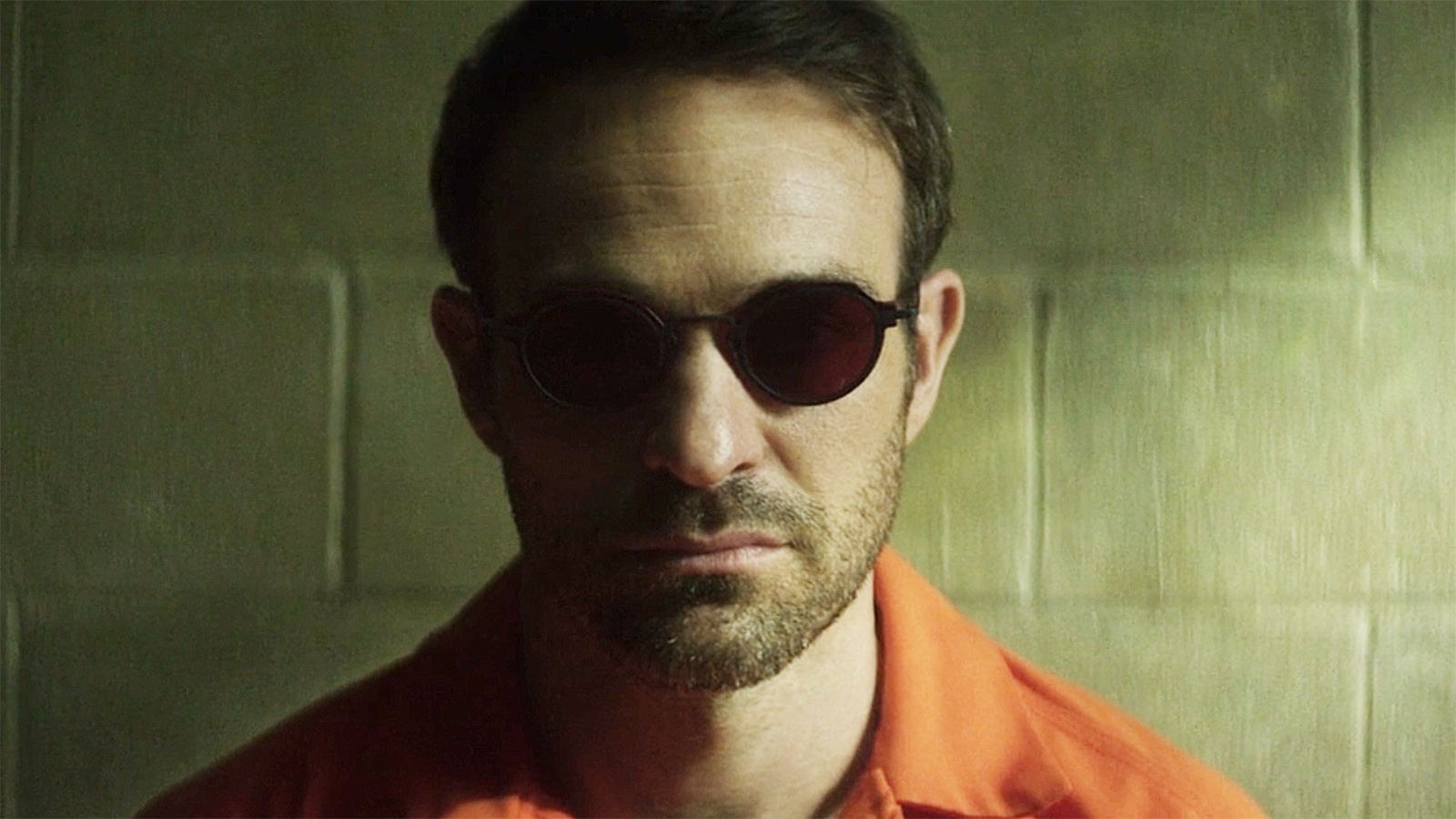
Does Charlie Cox's Matt Murdock appear in Spider-Man 4? (Image credit: Marvel Television/Disney+)
We already knew the vast majority ofSpider-Man: Brand Day's cast heading into the film, but the MCU's latest movie has a couple of surprises up its sleeve.
For one, Florence Pugh's Yelena Belova makes an unexpected yet scene-stealing cameo. Spider-Man meets her at a New York bathhouse to obtain information about the attack on the DoDC in the film's first act. Later on, she appears once more when the eponymous hero starts to suspect Metzger isn't all that he seems and seeks details on Jean's sister Sarah.
The other big cameo is Marisa Tomei's Aunt May. Peter's surrogate mom, who died in No Way Home, appears by way of the memory I mentioned earlier in this article.
"But what about Daredevil?", you might be asking. Given what happened in the final episode of Daredevil: Born Again season 2, some fans had expected Spidey to come across Charlie Cox's Matt Murdock and join forces to take on The Hand in Spider-Man 4's prison-set action sequence. Unfortunately, Cox doesn't show up in Brand New Day, so the wait for a Daredevil and Spider-Man MCU team-up goes on.
Is there an end-credits scene in Spider-Man: Brand New Day?
Brand New Day's post-credits scene shows Spidey has swung off into the cosmos (Image credit: Sony Pictures/Marvel Entertainment)
Yes. Right at the end of the film's final credits, the Spidey Tracker — an app built by Ned Leeds to, well, track Spider-Man's whereabouts — flashes up on the screen.
As an automated message that says "Location unknown" starts to play over and over, the app zooms out from planet Earth and eventually pinpoints that the webslinger is somehow in space.
How does Spider-Man 4 set up Avengers: Doomsday and/or Avengers: Secret Wars?
Avengers: Doomsday will be released in theaters worldwide on December 18, 2026 (Image credit: Marvel Studios/Andy Park)
In short: I don't know. Spider-Man 4's end credits scene could be related to either of the aforementioned movies, so until Avengers: Doomsday is released this December, your guess is as good as mine.
That said, at this moment in time, Tom Holland isn't slated to appear in Doomsday, and that film is already packed with enough characters as it is. You can find out who'll appear and more by finding out everything we know so far about Avengers: Doomsday.
If Holland doesn't show up in Avengers 5, he'll be a dead cert to star in its sequel. Marvel and Sony won't miss the opportunity to put one of their most bankable characters in at least one of the next two Avengers movies, so the smart money is on him having a substantial role to play in Avengers 6. For more on that flick, find out what we know so far about Avengers: Secret Wars.
How does Spider-Man: Brand New Day set up Marvel's new X-Men movie?
A new generation of Marvel's popular mutant superteam will join the MCU in due course (Image credit: 20th Century Fox)
It doesn't. With Doomsday and Secret Wars set to be the next two MCU movies to hit theaters, that pair is far more likely to impact the MCU's first mutant-based film.
Nevertheless, Spider-Man 4's final minutes do show Jean Grey traveling on a bus to an unknown location. Maybe she's attempting to track down more of her fellow mutants? If she is and she's successful, it's possible that whoever she locates will not only have roles to play in Secret Wars, but also form a prototype version of the X-Men ahead of their actual founding/formation in their first dedicated MCU adventure.
Microsoft has won an extended stay at the Competition Appeal Tribunal while it seeks permission to appeal to the UK Supreme Court, having lost at both the Tribunal and the Court of Appeal
Its argument that Office's icons and clip art placed it outside software exhaustion rules was rejected as producing "odd results", including CD software being resellable while identical downloads were not
The jurisdiction ruling matters more than the £270 million claim, as it clears the way for a parallel collective action that could expose Microsoft to billions
Microsoft has bought itself time in its long-running fight with a British software reseller, securing an extended stay of proceedings at the Competition Appeal Tribunal while it prepares to seek permission from the UK Supreme Court to appeal.
While Microsoft has yet to appeal formally, its indication that it intends to do so buys it some breathing room against a judgment that could mean that parallel proceedings, including a £3.5 billion class action lawsuit that could compromise as many as 2.7 million members, could become a centerpiece of the software giant's future legal troubles in the UK.
The UK CAT (Competition Appeal Tribunal) has paused parts of the case as a result, and Chair Justin Turner KC noted that it was not yet known whether permission would be granted, and framed his decision as balancing the potential waste of costs if permission were granted and an appeal succeeded against the undesirability of delay in the proceedings.
A legal quagmire exacerbated by shifting legal defense from Microsoft?
Microsoft has been fighting this claim for years, dating back to 2021, when JJH Enterprises, a Derby-based reseller trading as ValueLicensing, sued Microsoft for £270 million.
The allegation is that Microsoft wrote terms into its agreements that offered customers better subscription pricing in exchange for surrendering the right to resell their perpetual licenses, thereby choking off the secondary market and pushing buyers toward Microsoft 365 even as the software giant denies wrongdoing.
ValueLicensing's case rests on the Court of Justice's 2012 decision in UsedSoft v Oracle, which held that a software vendor's distribution right is exhausted once it sells a perpetual license, including one delivered by download, so it cannot use copyright to block the onward sale of that copy.
Having contested the case as a competition matter for years, Microsoft changed its argument in 2025, recasting it as a copyright dispute. Office, it said, is not merely a computer program. It ships with icons, user interface elements, help files, and clip art, and those creative components should be governed by a different copyright regime in which exhaustion does not bite.
That argument has now failed twice. The Competition Appeal Tribunal (CAT) unanimously decided the preliminary copyright issues in ValueLicensing's favor in November 2025, and on July 7, 2026, the Court of Appeal dismissed both of Microsoft's appeals, one challenging the CAT's jurisdiction to rule on copyright questions at all, the other contesting the copyright findings themselves.
Microsoft's reading, the court observed, would produce "odd results": software supplied on a CD-ROM could be freely resold while the identical software delivered as a download could not, and a vendor could defeat established exhaustion principles simply by bundling some icons with its code.
At the same time, the CAT did not grant resellers unlimited freedom. Under UsedSoft, a buyer holding a single copy installed on a server and licensed for several users cannot carve off part of that user capacity for resale, because exhaustion attaches to the copy rather than the seat.
The Tribunal distinguished that from a genuine volume arrangement comprising multiple independent copies or licenses, in which reselling a corresponding number may be permissible once the seller has stopped using the copies it has passed on. That distinction sets real limits on how the secondary market can operate.
(Image credit: Microsoft)
Microsoft has spent most of the period covered by the claim moving its customer base from perpetual licenses to Microsoft 365. If ValueLicensing wins outright, it wins the right to trade in a category that its opponent has been deliberately retiring for a decade. Should the Supreme Court decline to take the case, proceedings return to the Tribunal, with a trial mooted for 2027.
The jurisdiction ruling matters well beyond this claim. By confirming that the CAT can decide copyright questions where they are necessary to resolve a competition case, the Court of Appeal cleared a path for others, and The Registerreported in April 2026 that Microsoft had viewed that appeal as a complete answer to Alexander Wolfson's collective action, on the basis that copyright issues could not be transferred to the High Court in a class action.
Wolfson was granted permission to intervene in support of ValueLicensing, and his claim, which could expose Microsoft to liability in the billions, now stands to benefit from the ruling.
What could this mean?
Britain's regulators have taken an interest in the same broad shift, too. On July 29 2026, the Competition and Markets Authority opened a consumer protection investigation into how Microsoft marketed its Microsoft 365 Personal and Family plans.
From January 2025, existing subscribers were given Copilot and other new features at no extra cost for the remainder of their term, then automatically moved onto a higher-priced plan at renewal unless they chose an alternative or canceled.
A time-limited "Classic" plan preserved the old feature set at the old price, and for annual subscribers the Copilot version cost £25 more per year.
"When a business changes its subscription plans, customers need clear and timely information about their options," said Hayley Fletcher, senior director for consumer protection at the CMA. "Our investigation will consider whether Microsoft customers were misled and ended up paying more as a result."
Microsoft said consumer trust is a priority and that it is reviewing the claims while cooperating with the inquiry. The CMA has reached no conclusions and has not accused the company of breaking the law.
That probe concerns consumer subscriptions rather than the commercial agreements at issue in the ValueLicensing case, so the two are separate matters under different regimes. What links them is the same underlying transition from one-off purchases to recurring ones.
Microsoft already faces a CMA strategic market status investigation into its business software, and Australia's competition regulator is suing the company in the Federal Court over the same Copilot and Classic plan issue, affecting an estimated 2.7 million customers. Whichever way the Supreme Court application goes, the legal scrutiny of how Microsoft moved the world onto subscriptions is not ending soon.
The scrutiny also lands in a fraught transatlantic moment. On July 24, days after the European Commission fined Google $1 billion under the Digital Markets Act, Trump announced a Section 301 investigation into EU trade practices, declaring that the United States is not a "PIGGYBANK" for Europe and promising a substantial tariff.
Brussels has consistently maintained that regulating economic activity within the bloc is its sovereign right, and that its digital rules apply to all firms operating there. Britain sits awkwardly beside that fight. Its courts are no longer bound by EU case law, and its regulators answer to nobody in Brussels, but the president's stated targets have been digital taxes and digital markets rules in general rather than the EU alone, and the UK has both.
from Latest from TechRadar https://ift.tt/BRP1EZM
0
coment�rios:
For years, residential solar power in the UK has ...
‘Three to five years is a realistic payback period’ — plug-in solar panels will be legal next month, but what do they cost, who can fit them, and is your home even suitable? We asked the experts
For years, residential solar power in the UK has focused primarily on larger installations, comprising photovoltaic (PV) panels on the roof and an inverter for converting DC (direct current) power into AC (alternating current) for use in the home. Indeed, according to government data, the UK now has approximately 1.7 million residential rooftop installations with 2025 the strongest year on record with around 269,000 installations completed.
It’s remarkable progress. Yet for many in the UK, this type of installation remains out of reach for several reasons, including cost, or lack of roof access if they live in a block of flats. If they’re renting, their landlord/landlady might not allow them to install solar panels permanently on the roof.
That’s all set to change with new government legislation. Under Statutory Instrument 2026/848, which formally comes into force on August 27, 2026, legal and regulatory hurdles that previously blocked self-installed, ‘plug-in’ solar systems are set to be cleared.
By officially creating a legal category for what are officially called 'plug-in microgenerators', this landmark legislation allows standard UK BS 1363 three-pin plugs to be approved for feeding electricity into a home socket. As a result, for the first time, millions of people living in flats with balconies will have a viable, low-cost option to generate their own clean electricity.
Plug-in solar panels are already mainstream in much of continental Europe (Image credit: Getty Images / Westend61)
Looking to Europe: the rise of Balkonkraftwerk
Of course, while plug-in solar is new to the UK, it is already well-established across the rest of Europe. In Germany, for example, where these installations are known as Balkonkraftwerk (or balcony power plants), there are officially 1.2 million registered balcony installations — though the actual figure is probably nearer 1.5 million when you take into account unofficial installations.
Did you know TechRadar now has membership?
(Image credit: Future)
Become a TechRadar Insider by simply clicking 'Join Now' at the top of this page. Have a question? Please email membership@techradar.com
Balcony installations are proving particularly popular with renters – those who were historically excluded from rooftop solar power until reform to German tenancy law in 2024 gave them the explicit right to install balcony panels without needing landlord approval. As a result, reports German news site Denkstrom, waiting lists emerged in big cities such as Munich and Berlin for equipment in the months following the reform.
Nor is Germany the only European country to have embraced balcony installations. In Spain, where two thirds of people live in apartments, balcony solar power is also taking off, saving up to 30% on a household’s typical electricity bill. “The beauty of the solar balconies is they are flexible, cheap and plug straight into the domestic network via a converter, so you don’t have to pay for the installation,” Santiago Vernetta, CEO of Tornasol Energy, one of Spain’s main suppliers, told The Guardian.
Gaining UK industry support
Whether balcony solar power technology proves as popular in the UK as other European countries remains to be seen. However, with millions of flats across the UK, including an estimated 380,000 homes in England with a balcony, plug-in solar power certainly has the potential to expand renewable generation beyond rooftop installations.
Driving the rollout of plug-in solar within the UK government is Martin McCluskey, Minister for Energy Consumers within the Department for Energy Security and Net Zero (DESNZ). In June he met up with high street retailers and supermarkets including B&Q, Currys, Amazon, Lidl, Asda, Screwfix and Wickes to prepare market-compliant kits for the official August launch. "We’re delighted to be working with DESNZ to bring plug-in solar panels to the UK market. With energy bills continuing to rise, enabling the safe roll-out of these products will mark an important step for consumers across the UK,” said Michelle Gorringe-Smith, Director of New Categories at Currys in a recent press statement.
Every solar panel, heat pump and battery cuts bills
Greg Jackson, Octopus Energy
“This is a fantastic opportunity to make renewable energy more accessible to people around the UK," Added John Boumphrey, Amazon’s UK and Ireland Country Manager. "Amazon is the largest corporate buyer of carbon-free energy in the UK.. Enabling households to generate their own power with self-install plug-in solar panels is a practical step that supports household budgets and delivering against net zero goals.”
Major energy providers have also welcomed the regulatory change. Chris Norbury, Chief Executive of E.ON UK, describes the removal of regulatory red tape as an “encouraging step toward giving consumers more control over their energy use”.
Similarly, Greg Jackson, Founder and CEO of Octopus Energy said in a UK government statement: “Every solar panel, heat pump and battery cuts bills and boosts Britain’s energy independence.” Furthermore, these industry perspectives align with the wider objectives set out in the UK Government's Solar Roadmap, which details plans to expand solar capacity across domestic, commercial and ground-mount sectors to meet national clean power targets.
Payback time
Under the Department for Energy Security and Net Zero's (DESNZ) interim product specification, compliant solar power consumer kits must meet very strict criteria. This includes a microinverter (which converts direct current electricity into alternating current electricity) which can’t feed more than 800 VA (Volt-Amperes), roughly 800W, into the home at any one time.
Three to five years is a realistic payback period for many sensibly priced, well-positioned systems
Ben Bowyer, PluginSolarCalculator.com
Systems must connect via a standard BS 1363 three-pin UK socket using a manufacturer-supplied, non-rewireable moulded plug with a fuse rated at no more than 5A. Typically, most kits will comprise two 400W panels, each measuring around 1.7m x 1m in size and weighing around 20Kg. However, the regulations allow up to four panels with a combined rating of 2,000W. The inverter still limits the output to around 800W, but the extra panels can help the system generate more power during weaker sunlight.
While working out exactly how long it will take to get a return on a solar panel investment is far from an exact science, most of the commentators I spoke to for this article thought it would take under five years for a system costing between £300 and £600.
“Our modelling suggests that three to five years is a realistic payback period for many sensibly priced, well-positioned systems,” Ben Bowyer, creator of PluginSolarCalculator.com told TechRadar. “The government’s own estimate is around £70 to £110 a year in savings, but I think that’s actually quite cautious. Our figures suggest many suitable 800W installations could save closer to £95 to £155 a year,” he added.
Andreas Pierrie, founder of bespoke solar installation price comparison site Go Solar Today, was even more optimistic about ROI when asked. “For someone with a south facing balcony, you're looking at a payback of roughly two to three years, which is genuinely good for a solar product,” he asserted.
The experts we asked suggested that your plug-in solar panel could pay for itself in two to three years (Image credit: Getty Images / imageBROKER / Robert Poorten)
Lack of battery storage
However, it’s not all good news. While the new legislation will help consumers save some money by turning their systems into ‘plug-in microgenerators’, one key limitation is that batteries are excluded from the initial plug-in framework. Instead, the product specification covers generation-only systems and does not permit integrated battery storage.
The government likely adopted this cautious approach to prioritize safety, as lithium batteries store chemical energy and require strict compliance to prevent hazards such as thermal runaway. Including battery storage would also inevitably have slowed down the roll out of the initial phase of the technology. Go Solar Today’s Andreas Pierrie explains the reasoning behind the phased rollout by noting that the UK is simply following the German approach.
“The UK is copying the German playbook by starting narrow, getting the simple version working and trusted, then widening the rules over time,” he said. “Walking before you run is reasonable when you're opening up self-generation to millions of homes for the first time... The instinct to be careful with batteries is completely understandable.”
How long the lack of battery storage in the solar panel specifications will last is open to debate. Just a few weeks before the final specification was revealed, Octopus Energy announced the Nook Cube — a 2KW battery that plugs into a standard socket - which perhaps indicates a future opening up of the legislation to include battery storage.
Exporting energy for free?
For now at least, one of the main limitations is that any solar energy generated during the day that isn't used immediately by household appliances flows back out into the local grid. Because these small microgenerators do not automatically qualify for the Smart Export Guarantee at launch (unlike solar-powered rooftop installations), this means you are potentially exporting daytime energy to utility companies for free.
“That battery storage can’t form part of a compliant plug-in solar system during this first stage of the rollout is probably my biggest disappointment with the rules announced by the government so far,” admits PluginSolarCalculator’s Ben Bowyer. “A battery would let households store spare solar power generated during the day and use it later in the evening, when electricity use is often higher."
The biggest limitation is the lack of integrated battery storage, meaning any electricity you don't use immediately is typically exported rather than stored for later
Robin Edwards, Curetons
"The biggest limitation is the lack of integrated battery storage, meaning any electricity you don't use immediately is typically exported rather than stored for later," adds Robin Edwards, Property Buying Agent at property-finding company Curetons. "That reduces the financial benefit significantly, particularly for people who are out at work during the day when panels generate the most power.”
However, while disappointed by the lack of battery storage, PlugIn Solar Calculator’s Ben Bowyer admits people often underestimate how much power their home uses even when nobody is actively switching anything on. “Fridges, freezers, routers, and standby devices, create a constant background demand known as the household baseload that a well-positioned plug-in solar system can frequently cover during brighter parts of the day.”
To maximize savings without a battery, consumers can shift flexible energy use, such as running washing machines or dishwashers in daytime hours when the sun is shining.
Simon Turek, Chief Executive of graphene nanomaterials company Haydale, also explained how households can pair plug-in solar with heating solutions. “By moving to efficient forms of electric heating, it’s possible to achieve savings within your overall energy cost, because generation during the day could be used for heating purposes in winter months,” he told TechRadar.
If in doubt, it's best to enlist professional help to install plug-in solar panels (Image credit: Getty Images / Westend61)
Cladding exclusion
Unfortunately, lack of battery storage isn’t the only limitation of the new legislation. Before purchasing a plug-in solar kit, consumers must consider several practical and regulatory rules. For example, users cannot mix and match panels, cables and inverters from different suppliers. Systems must be purchased as complete tested, manufacturer-certified packages listed on the Energy Networks Association Type Test Register. This requirement ensures that all connected hardware meets rigorous domestic electrical standards.
Balcony installations still give me the shivers, especially the thought of someone lifting one of these panels over a railing 10 floors above the ground
Ben Bowyer, PluginSolarCalculator.com
Kits must also plug directly into a wall socket using the manufacturer-provided cable. The use of extension leads, multi-way block adapters, travel adapters, or plug-in RCDs (Residual Current Drives) is strictly prohibited to avoid electrical overloads. Furthermore, installation is prohibited on timber balconies, timber cladding, aluminium composite cladding, high-pressure laminate cladding, or buildings undergoing fire safety remediation. Understandably, these restrictions are designed to mitigate fire and safety risks across high-density residential properties.
Renters and leaseholders must also obtain permission from their landlord or freeholder before installing panels on shared or exterior structures. Users are also legally required to notify their local Distribution Network Operator via a G98 notification form when connecting a system. This notification process ensures that regional network operators maintain accurate records of micro-generation capacity across local distribution grids. Compliance with these administrative steps is mandatory for all system owners.
Beyond administrative rules, there are also practical considerations around installing heavy solar panels. Because individual panels weigh around 20kg each, experts strongly recommend treating the setup as a two-person job, advising consumers to get professional help if there's any uncertainty regarding structural anchoring, working safely at height, or load-bearing capacity. Makeshift fasteners like cable ties, string, or tape are strictly banned and approved mounting hardware rated for UK wind and snow loads must be used.
As Ben Bowyer candidly admits: "Balcony installations still give me the shivers, especially the thought of someone lifting one of these panels over a railing 10 floors above the ground."
Power to the people
With the cost-of-living crisis showing no signs of ending any time soon, the push to legalise plug-in solar technology is welcome news to millions of flat dwellers and renters wanting to reclaim some control over their mounting utility bills. Importantly, by enabling households to create their own microgenerators by connecting small-scale panels straight into standard wall sockets, the framework provides an accessible route to lower electricity costs. With solar power in place, users could save up to 30% on their electricity bills with typical kits paying for themselves within three to five years
The energy transition is ultimately about people taking control of their own power
Christopher Burd, SPS PowerBuild
.However, the legislation is far from perfect. Because the initial rollout focuses purely on daytime generation without integrated battery storage, users must adapt their daily routines to make the most of the power while the sun is shining. What’s more, by establishing an 800W AC output limit and capping panel capacity at 2,000W, the framework really only covers continuous household baseload demand from refrigeration and standby appliances, rather than being able to power your entire home with solar.
Still, it’s a decent start and it’s likely the legislation will be expanded to include battery storage over time. As Christopher Burd, Managing Director of solar installation company SPS PowerBuild told TechRadar: "The energy transition is ultimately about people taking control of their own power. Enabling households to generate clean electricity directly from their living spaces represents a fundamental shift in how we think about urban resilience and domestic independence." Literally, power to the people.
from Latest from TechRadar https://ift.tt/XxST2tU
0
coment�rios:
Smart TVs have long been in controversial waters ...
I'm sick of smart TV privacy worries, so I'm taking my TV off the internet for good — here's why you should too
Smart TVs have long been in controversial waters as far as privacy goes. From claims that your TV is a "privacy nightmare" to accusations of some models being a "mass surveillance system", you probably haven't failed to notice the periodic storms that have erupted around what televisions get up to in terms of data and telemetry. The latest lightning strike that hit last week was a development around LG TVs (and PC monitors) whereby voice features (and a McAfee pop-up ad in Windows) came under fire.
LG has defended its position in no uncertain terms, it should be noted (although the mentioned Windows 11 pop-up has since been retracted). But regardless of the rights or wrongs here, this affair was enough of a reminder to prompt me to finally take action on something I've been meaning to do for quite some time anyway.
Namely, to take my smart TV offline, once and for all. This means I can ensure that I know for certain that my television isn't get up to any online 'shenanigans' with whatever data may (or may not) be getting sent here or there — because it isn't online at all. And I don't need it to be online, either.
Maybe this is something you'd like to do, as well, so if you're thinking of following in my footsteps, I'm going to break down everything for you. That includes whether you actually need to have your smart TV online, and how to go about disconnecting it from the internet while still installing updates for the television manually, should you wish, which is possible in many — but not all — cases.
Do you really need to have your smart TV online?
(Image credit: Shutterstock)
I'd argue that you don't need to have your smart TV online, although that said, answering this question isn't exactly straightforward and there are caveats depending on your personal situation.
Obviously, if you use the TV maker's smart hub for any of your viewing needs, and the apps therein for streaming (or anything else), then clearly, you will need the television to remain online. Although these days, most people use a streaming stick to watch all their content and don't ever go near the smart TV hub, such as the Fire TV Stick (most commonly). It's just a much better way of working. (And yes, I do realize that any such hardware may come with its own privacy-related nuances and issues, but I'm not going to get into all that here – except to say that you'll want to consider Apple TV as an option if privacy is high on your list of priorities for streaming devices).
Assuming your viewing is done via a separate stick or box of some kind, then, the only real reason to keep your TV online is to get updates from the manufacturer. In my case, I have a Sony TV that's now four years old, and at this point, updates have reduced to a trickle – and they're mostly trivial tweaks and the like.
There's nothing I really need, and arguably, firmware updates are as much of a risk as they are a potential benefit at this stage of the TV's life. I like the way my Sony runs now, the picture is great, and everything's good – and who's to say an update might not throw a spanner in the works and break something? These things happen, even if it's something as simple as resetting my TV settings, which isn't fatal, but is annoying (and it has happened before).
Okay, so one thing I won't get that's regarded as vital is security updates and fixes. And I understand why these are thought of as critical, but hey, guess what: I'm taking my TV fully offline, so I won't need them. (There's no greater assurance of security than ditching online connectivity, anyway).
Granted, there are other online features I'll lose too – voice command functionality with the TV, for example, but it's all minor stuff in the great scheme of things, and none of it matters to me personally (I use my streaming stick's voice search, anyway).
If you have an older smart TV, you're likely in a similar boat to me, although if you have a newer model, then maybe your television is still receiving firmware updates which are important, with fixes or new features you actually want.
In that case, you may still want to jump online to download and install those upgrades, but you only need to hop on temporarily to do so (maybe once every few months).
However, there is another way to get updates for your smart TV while keeping it offline permanently. Admittedly, it's a bit of a hassle compared to a seamless update within the TV's interface itself, but it does avoid going online at all, while still ensuring your smart TV is kept fully up-to-date. So, let's look at how to do that — but first, it's worth quickly touching on how to take your TV off the internet in case you're in any doubt.
How to take your TV offline
(Image credit: Future)
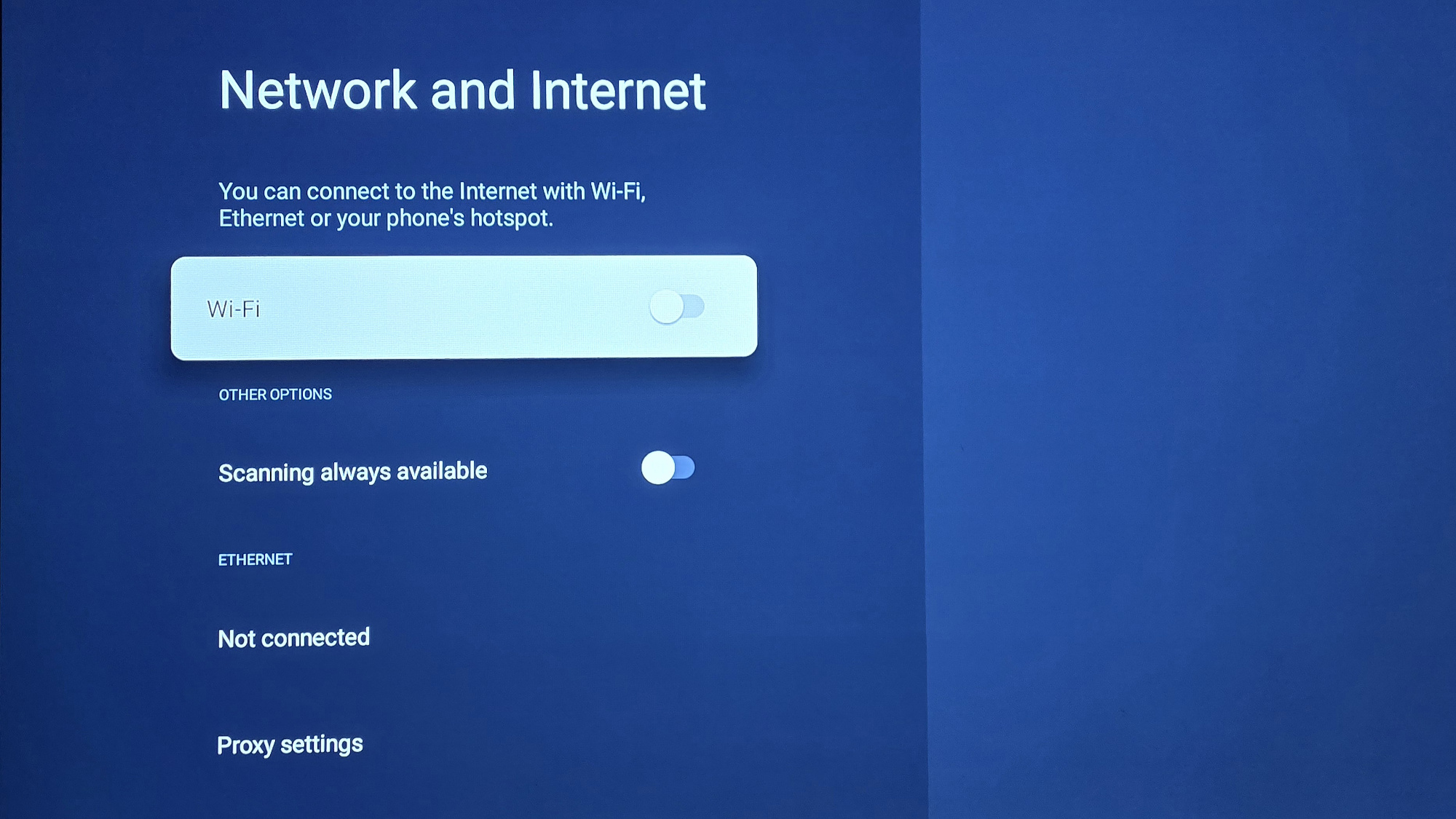
If your TV is online and you wish to revoke that internet access, it's a simple matter of turning off the Wi-Fi in the television's settings. (Assuming you're connected via Wi-Fi to your home router, of course — if you have an Ethernet connection, it's just a case of unplugging that cable from the TV).
You'll find the wireless network options somewhere in your TV's settings menu, generally under a category called 'network' or 'internet'. Head here and there'll likely be a slider or some kind of choice to turn off the Wi-Fi, and it should be as easy as flicking that switch. Of course, the method may vary slightly from TV to TV, as ever (consult your instruction manual if you get stuck).
You'll also see your home Wi-Fi network listed under available networks (or similar), and you can generally go into that option and select the choice to 'forget' the network (remove it permanently from the TV's memory). It's probably worth exercising that option as the safest way of fully disconnecting your television (although it does mean that if you want to add the wireless network again in the future, you'll have to re-enter the password).
How to install a firmware update with your smart TV offline by using a USB stick
(Image credit: Future)
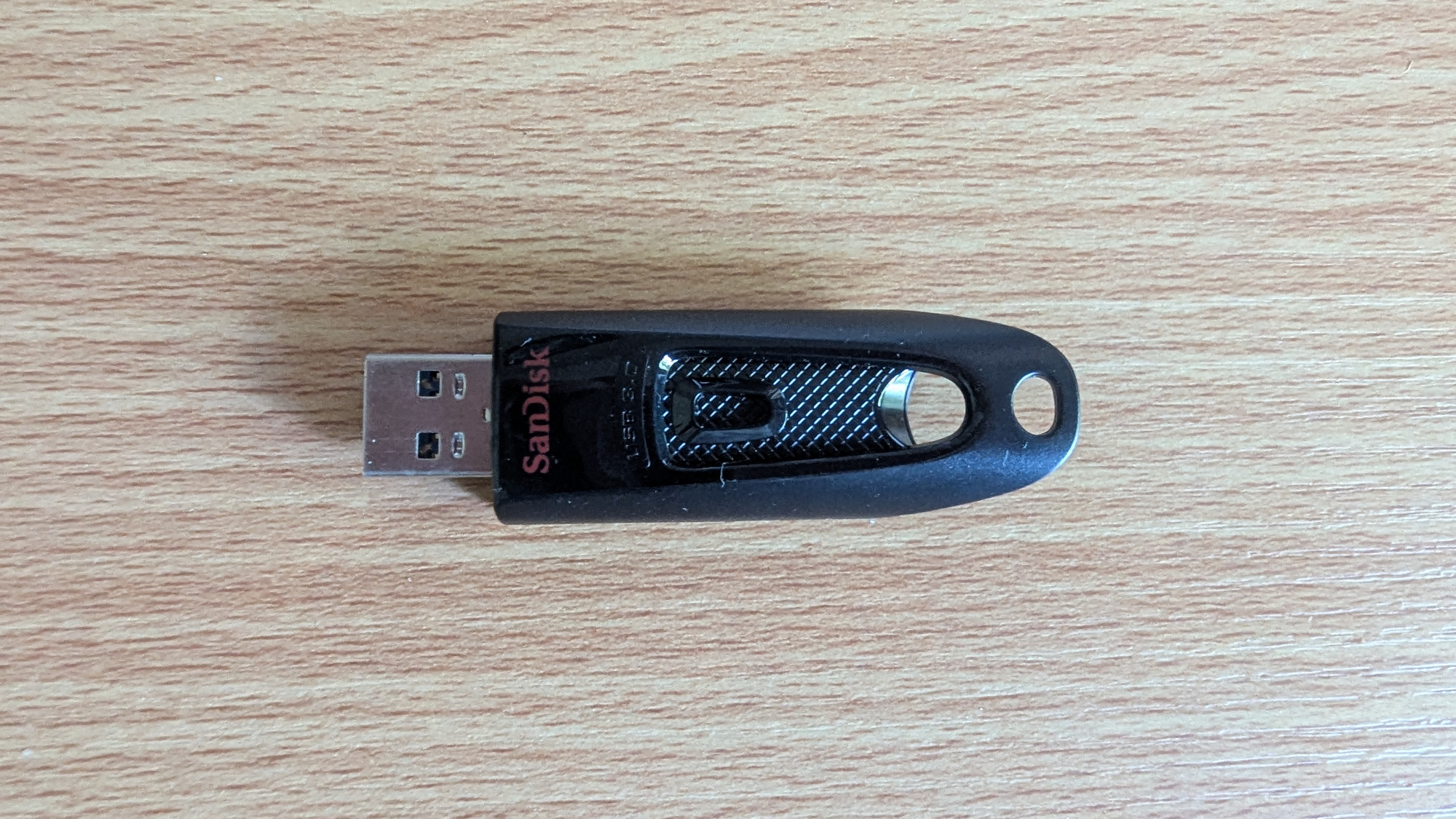
The way you install an update with the TV offline is to do so via a USB stick. This means using another device that's online (your PC or laptop) to download the TV firmware update you want, then you copy it onto the USB stick, and plug that into your TV, piping the update through locally from there.
How this works may vary from manufacturer to manufacturer, as you might expect, but it's broadly the same. Follow the general instructions below, but bear in mind that you may have to adapt them slightly based on exactly which firm makes your TV.
1. Find out your exact TV model
First things first: you should note down the exact model name of your TV. You'll find this on the invoice (from when you bought it), or on the back of the TV set itself, or it'll often be in the settings in the TV menu (generally under Settings > System > About, or similar – or find it via the Help button on your TV remote, under system information or the like).
When I say full name, you'll need that to search for the correct firmware and ensure you download the right file. You can't just search for 'Sony Bravia 55-inch TV', you'll need the exact model with the full complement of letters and numbers, such as 'Sony K55XR80PU' which I'll use here as an example.
(Image credit: Sony)
2. Download the latest firmware from your TV manufacturer's website
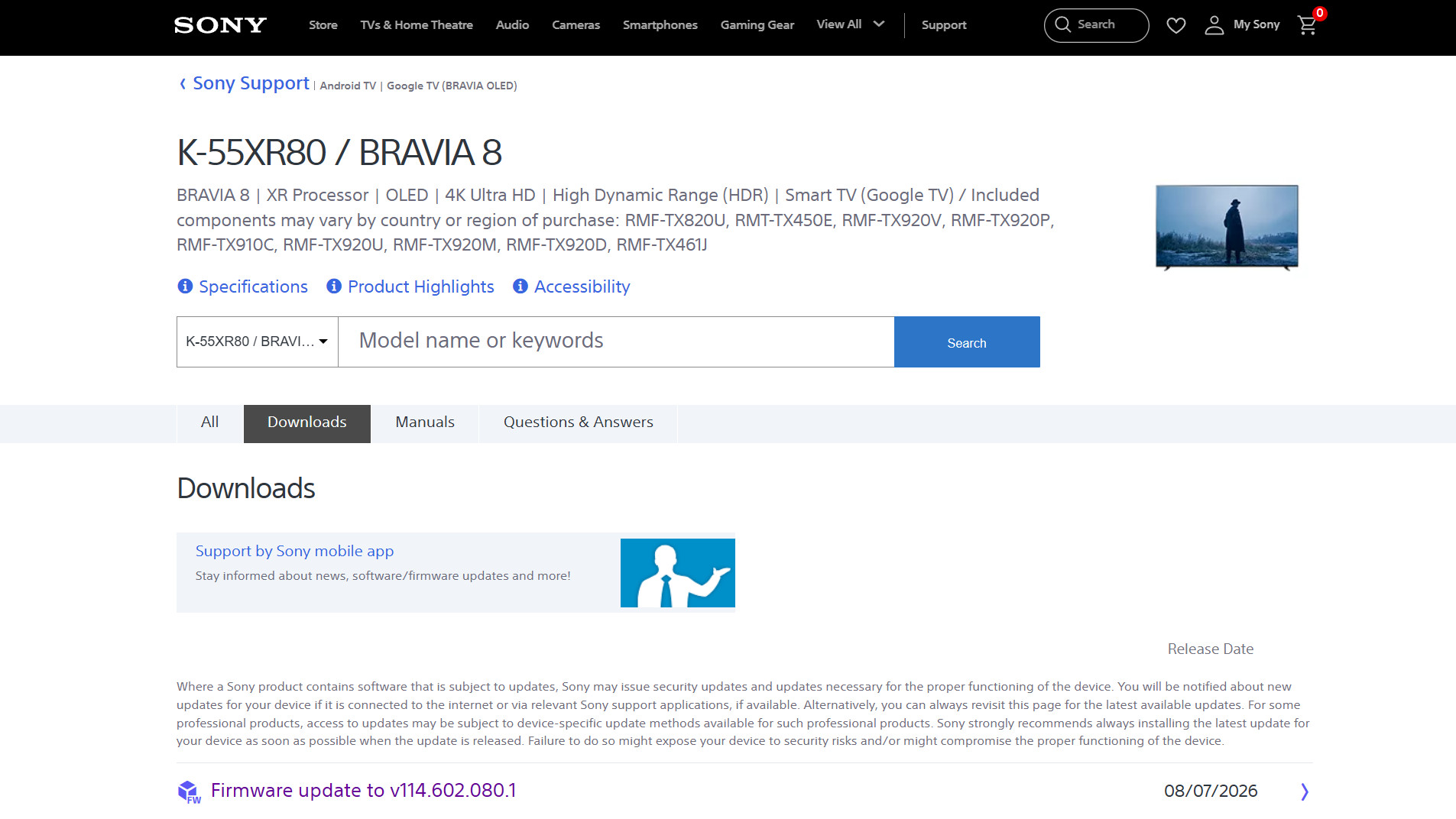
On your PC, run a Google search (or your preferred search engine) for the model name and firmware, so in our example here, we'll search for 'Sony K55XR80PU firmware'. You should get a link that takes you directly to the support web page where the manufacturer provides the relevant firmware download.
At that page, you may find the model name is truncated — it's the Sony K-55XR80 in this case, as the 'PU' bit at the end is regional model info relating to the UK. (Note that you can search directly for the firmware on the manufacturer's support site, but due to variations in the model names as observed, the site might fail to find it, so it's generally best to try Google first).
When you reach the support page for the relevant TV model, you should see the latest firmware update listed with its release date and notes about what it does. It may be referred to as 'firmware' or a 'software update', and in some cases, it might come with instructions. (Samsung calls its firmware downloads 'upgrade file USB type', for example — catchy, huh? — and LG includes a PDF guide with some downloads).
Click on the file to download it to your PC (and the instructions, too, if present).
(Image credit: Sony)
3. Put the update files on a USB stick
Once downloaded, you need to put the firmware files onto the USB stick, so insert that USB drive into your PC, and copy them across. Exactly what you do here may vary slightly — and if you have instructions from the manufacturer you can, of course, follow these — but let's continue with our Sony example to give you an idea of what's involved.
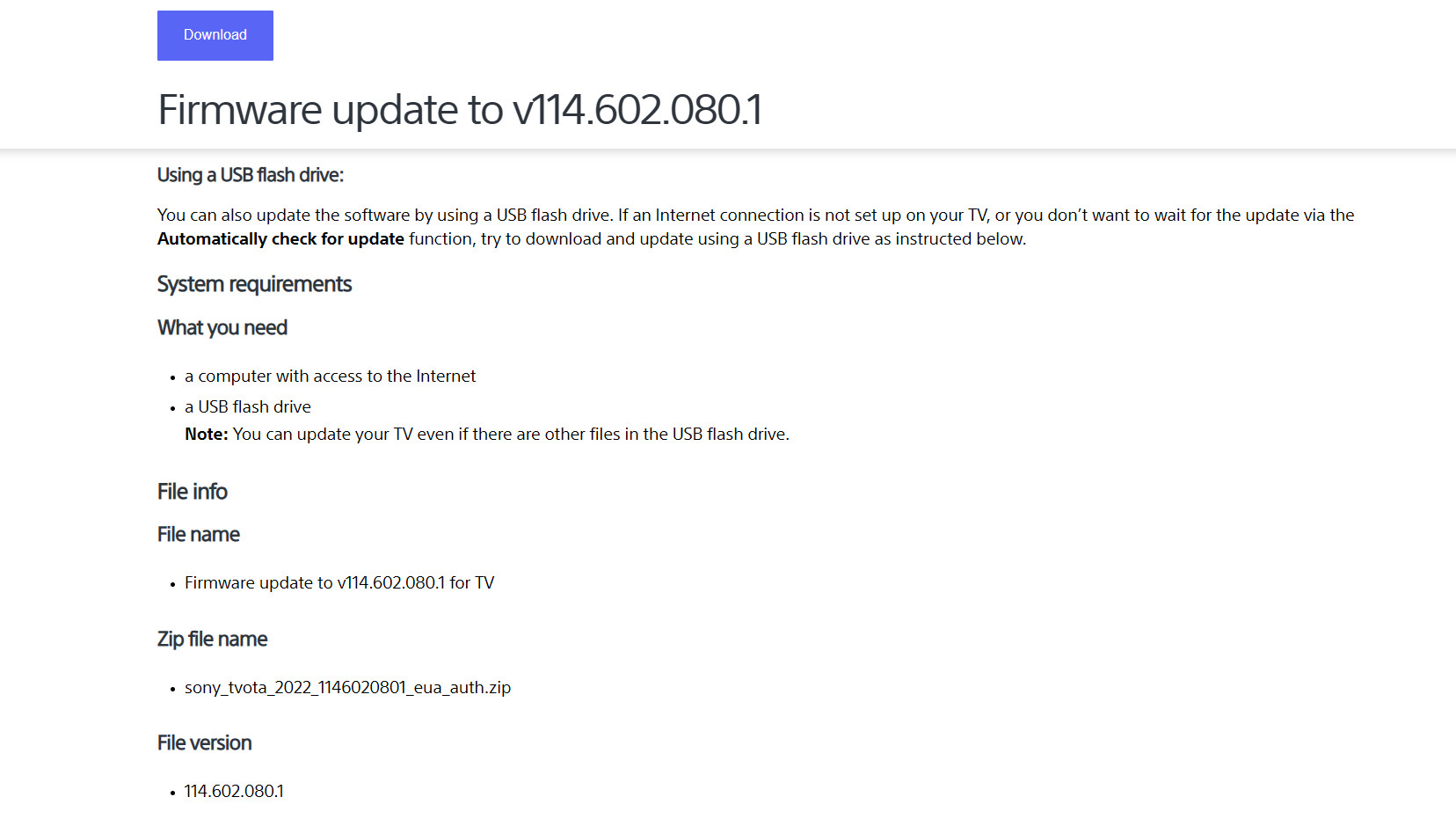
With the Sony K-55XR80 firmware update, what's downloaded to the computer is a ZIP (compressed archive) containing three files. Extract those three files to a temporary folder on your system drive, then copy them over to the root drive of the USB stick (meaning just copy it straight onto the stick — don't put it into a folder). Note that the USB stick doesn't have to be empty, it can have other files on it (the TV will ignore them and pick up what it needs — although you will need enough room for the firmware update files to fit on the USB drive, naturally).
(Image credit: Future)
4. Insert that USB drive into a free port on your TV
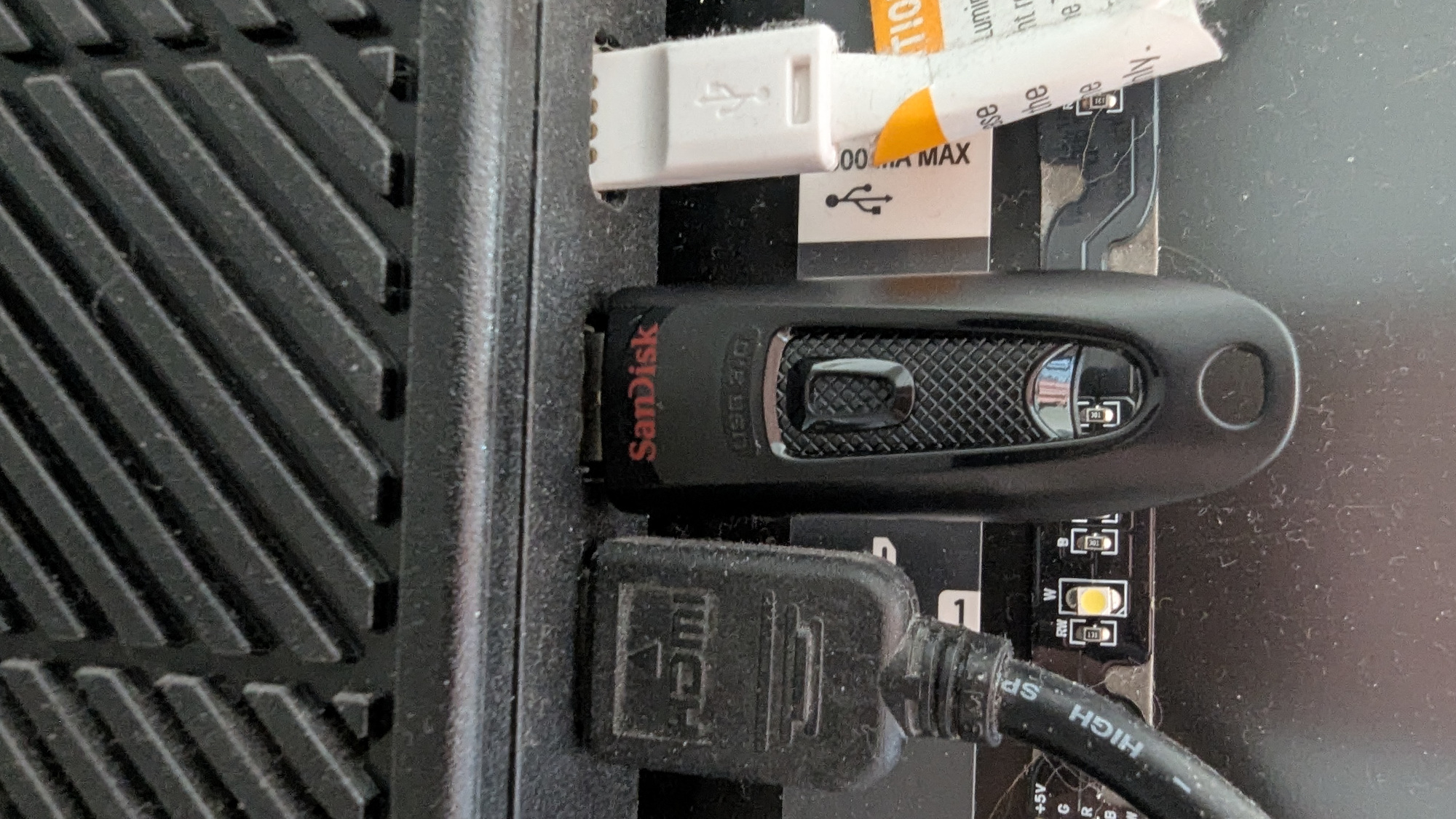
Turn on the TV and plug the stick into an available USB port, and the television should detect the update, and start the installation process. (Sony suggests not having any other USB devices connected, by the way, and also rebooting your TV first, but the latter isn't really necessary — you can just turn it off, then on again, assuming it isn't off in the first place).
Slight variations with different TVs
(Image credit: Future)
Depending on your TV, you may have to proceed a bit differently — as noted, you can follow the instructions provided by your manufacturer on the firmware download page (or the downloaded installation guide, if you get one).
For example, with LG TVs, you need to put the update files in a correctly named folder on the USB stick as detailed in the provided PDF guide (and not the root of the USB stick, as with a Sony TV). Samsung TVs require the files to go in the root of the USB stick — not in a folder — like Sony, although with a Samsung model, the update may not kick off automatically when you plug in the USB drive, and you might need to trigger it manually. (Go to Settings > All Settings > Support > Software Update in the Samsung TV's menu, then select 'Update Now').
But broadly, whatever your TV, the idea is the same: download the update files (or file), put them on the USB stick, then plug the stick into a free USB port on your TV, where the update should be automatically detected and installed. The main differences will likely lie in the number of files you may have to download, and whether or not they need to go in a folder on the USB stick. At any rate, be sure to follow the manufacturer's instructions carefully.
Done and dusted
(Image credit: iStock)
As ever, once a firmware update has begun, don't ever turn off the TV, unplug it (or remove the USB drive), or otherwise interfere with the process, as that runs the risk of seriously messing up your precious television. Sit tight and watch the update run its course, with the TV rebooting itself automatically at some point – and then you're done and dusted.
In many cases, then, there's no need to connect your smart TV to the internet ever, even to get firmware updates. Although don't forget that you'll need to manually keep tabs on when the latest updates emerge, regularly checking the manufacturer's website, as your TV won't flag update availability for you if it isn't online.
There's a final caveat to remember here, namely that some TV manufacturers may not provide updates for download and manual installation with certain models. In that case, you're rather stuck, and indeed Panasonic is notable in this respect, because this TV maker has ditched manual updates entirely for its newer models, with firmware only available via a direct download on the TV. However, even in these scenarios, you can still keep the TV off the internet most of the time, periodically venturing online just to grab the latest firmware (should you want to).
from Latest from TechRadar https://ift.tt/tex0249
0
coment�rios:
31.7% of surveyed employees admit to scrolling on...
It's not just you - report finds almost 1 in 3 workers scroll their phone in meetings, and that's only the tip of the bad habits iceberg
31.7% of surveyed employees admit to scrolling on their phones during meetings
Distraction habits are taking over the workplace, with potentially devastating consequences for long-term employment prospects
Directors are over 4 times more likely to arrive late for a meeting than an entry-level employee
Scrolling through your phone is now considered preferable to engaging in discussion in meetings, with almost a third (31.7%) of employees admitting to looking at their phone instead of the daily PowerPoint, new research has claimed.
Digital distractions in the workplace are costing employees of all ages opportunities to progress, while Gen Z employees are struggling with time management. The findings of a Careerminds UK survey of 600 UK employees highlight meetings, emails, and notifications delivering distraction from the focused task, with completion or attention to personal tasks while at work by 37.2% of respondents.
Time management challenges are affecting employees across the workplace, with Gen Z particularly singled out as struggling to get organized and engage.
“Career-damaging habits”
The survey found chronic laziness, ignored messages, and phone scrolling in meetings among the bad habits, with 44.2% of respondents admitting to indulging in 3 or more “career-damaging habits” every month.
Meanwhile, the threat of “quiet habits” can potentially have the biggest impact on any chance of progression with your current employer.
If you’re prone to avoidance behavior such as staying silent in meetings (31%), venting about a line manager to a colleague (19.2%), or saying yes to a task you cannot complete (5.7%) then you also need to look at ways to break the habits that are holding you back.
"None of these behaviours is likely to derail a career on its own, but together they influence how reliable, engaged and ready for greater responsibility you appear to the people making decisions about promotions and pay rises," noted Amanda Augustine, a Certified Professional Career Coach (CPCC) and resident careers expert at Careerminds UK.
"The encouraging news is that these aren't fixed personality traits; rather, they're everyday habits that can be identified, addressed and improved upon with consistent effort.”
Gen Z: struggling with time management
Perhaps the most concerning data emerging from the survey, however, involves Gen Z. Careerminds UK found found that over a quarter (26.7%) of employees in the 18-29 age group arrived late to meetings in the previous month, far more than the 3.3% rate in the over 55s group. Additionally, the younger cohort is more likely to “pull a sickie” (26.7% versus 12.2%) for extra time off.
However, there is perhaps an opportunity for directors to set an example and arrive at meetings on time, with 38.0% more likely to arrive late for meetings, as opposed to 9.2% of entry-level employees.
Advice from Careerminds UK includes becoming more organized at work, putting time aside for dealing with messages, being present, engaged, and communicative, and admitting to challenges to deadlines before they become an issue.
from Latest from TechRadar https://ift.tt/sn4RABq
0
coment�rios:
AI has sparked a race to build ever more powerfu...
How cloud architecture is reinventing primary storage for the AI era
AI has sparked a race to build ever more powerful infrastructure, with headlines dominated by GPUs, networking and energy demand.
But behind the scenes, another part of the technology stack is undergoing an equally significant transformation: storage.
As AI models grow larger and enterprises retain more data for training, inference and retrieval, storage is no longer simply where information resides.
It has become an active part of AI infrastructure, responsible for feeding compute efficiently, supporting vast datasets and helping organizations balance performance with cost.
That shift has fundamentally changed what primary storage looks like in modern cloud environments.
Historically, primary storage meant tightly coupled block or file systems sitting close to compute.
Today's hyperscale cloud providers have taken a different approach, treating object storage as the persistent system of record while software coordinates how data is stored, protected and accessed across distributed infrastructure.
The move to cloud computing
The move to cloud computing didn't simply increase the amount of storage organizations needed. It fundamentally changed how storage had to work.
Traditional enterprise storage was built around tightly coupled systems where applications interacted directly with file systems. That model worked well when infrastructure was relatively contained. At hyperscale, however, coordinating millions or billions of files across distributed environments introduces complexity that limits scalability.
Cloud providers responded by redesigning storage around software-defined architectures that separate how data is managed from where it is physically stored. Rather than treating storage devices as isolated resources, modern cloud platforms orchestrate entire fleets of storage through software, allowing them to scale far beyond the limits of traditional enterprise architectures.
AI has only accelerated this transition. Training large models, serving inference and retaining ever-growing datasets all place sustained demands on shared infrastructure, making software-defined storage more important than ever.
Although every hyperscale platform has evolved differently, the same architectural ideas appear time and again. Four principles in particular have become fundamental to supporting AI at scale.
1. Object storage is designed around sequential data movement
Traditional cloud storage systems frequently modify files in place. At hyperscale, continually updating data across distributed environments becomes increasingly difficult to manage.
Object storage takes a different approach. Rather than overwriting existing data, new versions are typically written as separate objects. That naturally favors large, sequential data flows, allowing storage systems to operate more efficiently as datasets continue to grow.
As AI workloads generate larger datasets, frequent checkpointing and continuous data movement, designing storage around sequential throughput becomes increasingly important.
2. Metadata has become a software challenge
As organizations store billions or even trillions of objects, tracking where everything lives becomes just as important as storing the data itself.
Rather than asking storage devices to manage both data and metadata, cloud platforms increasingly separate these responsibilities. Dedicated software layers handle object locations, namespaces and system coordination while storage media focuses on delivering scalable capacity.
Separating these functions makes infrastructure easier to scale while allowing storage systems to concentrate on what they do best: storing vast amounts of data efficiently.
3. Resilience comes from architecture, not individual devices
Cloud providers assume that, somewhere across thousands of servers and storage devices, failures will happen. Rather than relying on individual hardware to eliminate every fault, modern architectures distribute data intelligently across large storage pools.
Techniques such as erasure coding allow platforms to recover data efficiently while maintaining availability and reducing the overhead associated with traditional replication strategies.
The result is infrastructure that remains resilient even as AI workloads continue to grow in size and complexity.
4. Intelligent data staging protects performance
AI rarely produces smooth, predictable storage workloads. Training jobs, inference requests and application traffic often arrive in bursts, placing sudden pressure on infrastructure.
Rather than writing every request directly to capacity storage, cloud platforms increasingly use flash and memory as staging layers. These absorb incoming traffic before organizing data into larger, more efficient writes.
This allows organizations to maintain responsive applications while making better use of high-capacity storage as AI workloads become increasingly demanding.
Software has become the defining layer
Taken together, these four principles point to a broader industry shift. Storage performance is no longer determined solely by faster hardware. Increasingly, it is software that decides how efficiently infrastructure performs by orchestrating data movement, coordinating metadata and balancing workloads across distributed systems.
That evolution has fundamentally changed the role of primary storage. Rather than serving individual applications or servers, storage increasingly underpins shared object platforms that support analytics, cloud services and AI workloads simultaneously.
In other words, primary storage is no longer defined simply by where data resides. It is defined by how effectively software enables that data to move, scale and remain available across distributed infrastructure.
A new definition of primary storage
The rise of AI has accelerated changes that cloud providers have been making for years. Primary storage is no longer defined by proximity to compute or by storage hardware alone. Increasingly, it is software-managed, globally distributed and designed to balance performance, resilience and economics at enormous scale.
For organizations investing in AI, storage decisions can no longer focus purely on capacity or latency. Understanding how software, data movement and storage media work together has become just as important.
The organizations that succeed won't necessarily be those deploying the most hardware. They'll be those that build storage architectures capable of feeding AI workloads efficiently while keeping infrastructure scalable, resilient and economically sustainable.
In modern cloud environments, primary storage is no longer simply where data lives. It has become one of the technologies that determines how effectively AI can scale.
This article was produced as part of TechRadar Pro Perspectives, our channel to feature the best and brightest minds in the technology industry today.
The views expressed here are those of the author and are not necessarily those of TechRadarPro or Future plc. If you are interested in contributing find out more here: https://www.techradar.com/pro/perspectives-how-to-submit
from Latest from TechRadar https://ift.tt/eoQu7rb
0
coment�rios:
Having been put on Konami’s backburner for over a...
Silent Hill: Townfall is shaping up to be a great analog horror take on the series
Having been put on Konami’s backburner for over a decade, Silent Hill’s resurgence has been nothing short of extraordinary.
A tepid start with Ascension and The Short Message was counterbalanced by the excellent Silent Hill 2 remake from Bloober Team and the homegrown Japanese horrors of Silent Hill f from NeoBards. The series seems like it’s now heading further in the right direction with the next game, Silent Hill: Townfall.
Early this month I played three hours of Silent Hill: Townfall and spoke with both Screen Burn director Jon McKellan and Konami series producer Motoi Okamoto about the game’s approach to retro tech, the Scottish setting, and cultural authenticity.
Going retro
(Image credit: Konami)
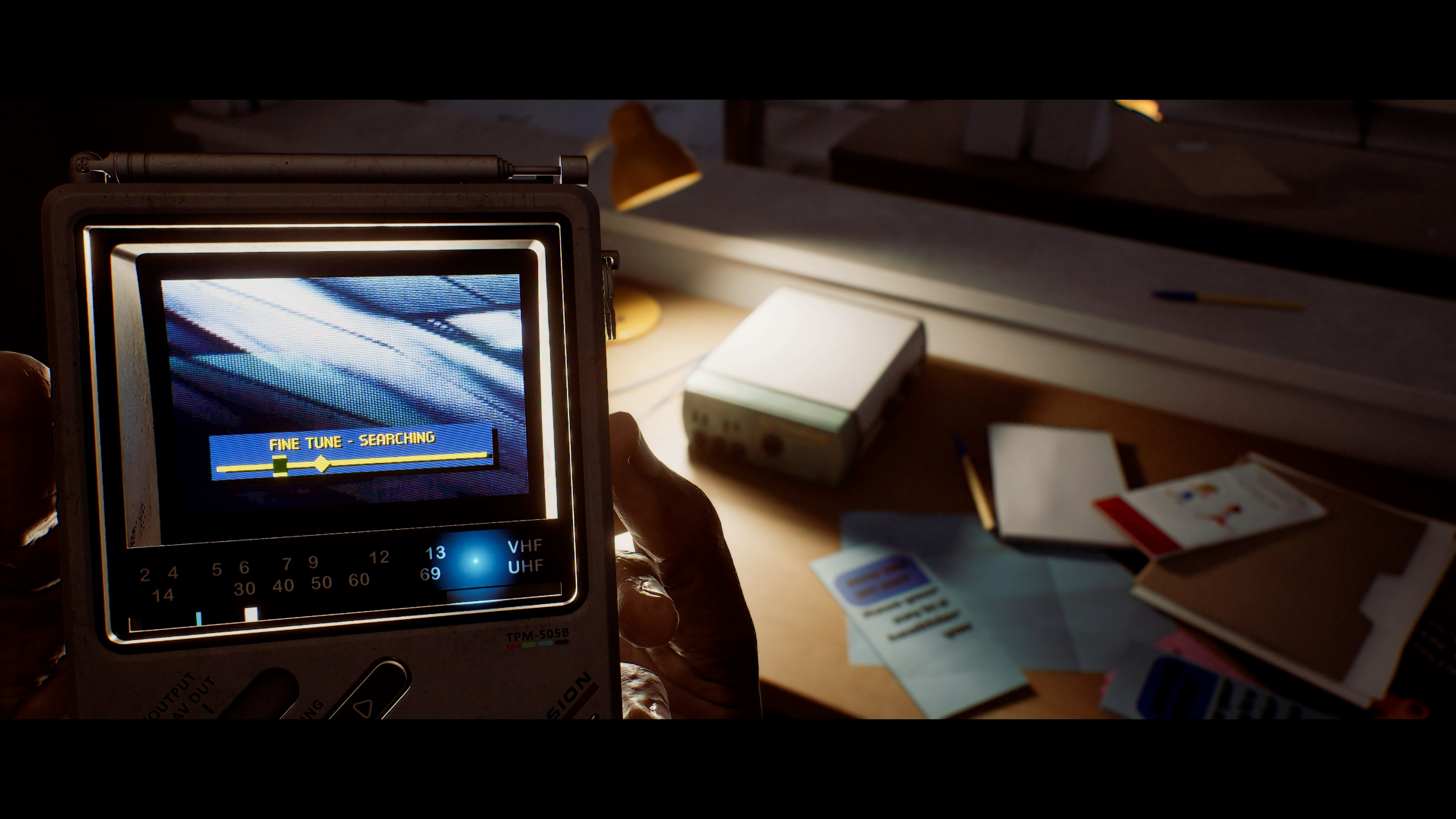
Silent Hill: Townfall follows a man named Simon Ordell in the fictional town of St. Amelia, Scotland. As he wakes up, he finds the entire place shrouded in fog. Slowly walking around, I eventually pick up a pocked CRTV television, which is used for both gameplay and narrative reasons. It's Townfall’s primary mechanic and star of the show. Through it, you can see old static video recordings of Simon’s mysterious partner, Zoe Ellis, who is seemingly his connection to this island.
The radio’s screen also typically shows you the next place to go, which means it’s up to you to search around town until you find the correct spot. Additionally, you can hold up the radio to see through walls to check a monster’s position. It’s a wonderful twist on a common trope. In similar games, protagonists sometimes come with a ‘radar’ sense so that players can stay stealthy and avoid enemy detection. Implementing the radar into the radio itself is not only clever, but reinforces that Simon is, after all, just human, in an unrelenting world filled with monsters.
The time period that Townfall takes place in is paramount to its horror themes. A puzzle hints that the current year is 1996, which is where the mass adoption of technologies like the internet and home dial-up started happening. The transition to an increasingly connected world filled people with anxieties. Simon’s CRTV radio is just advanced enough, but is nowhere near the cutting edge technology we see today.
“The world was on a technological cusp around the mid 90s, where the internet was starting to become a thing. But you were too early to have Google Maps in your pocket and you didn't have this magic bullet for all the problems that might come up,” McKellan explained.
He continued, “So with analog tech, you feel like you can't quite rely on it. It’s a little bit uncertain, and I think that's a great place to be for horror.”
Another theme that was prominently was medicine and healthcare. As I strolled through St. Amecia, I saw protest signs littered around the town square with phrases about “taking this town back”.
I picked up collectibles and notes about St. Amecia’s local hospital, vaguely hinting at some sort of institution providing “protection.” As an American citizen in a country with mainly for-profit healthcare, my mind immediately began trying to connect the dots and figure out the story’s direction. Scotland has a public system, but perhaps some private healthcare provider came in and tried to take over? And what about the “protection” aspect? Did Simon, or someone else, snitch?
The medical symbolism doesn’t end there. Zoe herself is a nurse, and Simon also has an IV bag strapped to his arm. With ingredients found scattered throughout town, he can craft items Resident Evil-style. These include items like blood bags for his IV, which let him resurrect with a sliver of health after being killed by an enemy.
Thankfully, Townfall’s combat feels much smoother compared to Silent Hill f’s. In the latter, there always felt like a second of awkward hit stun when your melee weapons made contact with enemies. Here, smashing planks over their heads feels satisfying. The way their bodies all of sudden go limp simultaneously gives me a feeling of surprise relief every time.
Simon also eventually gets a powerful pistol that one-hit kills many monsters, rivalling even Grace Ashcroft’s Requiem from Resident Evil Requiem. The downside is that it makes a ton of noise when fired, so enemies nearby will zero in on your location. With limited ammo, it’s definitely your last resort weapon, and it’s gratifying every time it goes off.
McKellen ensured that social commentary would be at the heart of the story, similar to how Silent Hill f’s overarching message was around gender expectations. “There are a few different threads in this game that start to coalesce as the game progresses, and I think it takes people in kind of unexpected places,” he explained. McKellen is hoping that people (like me) have an idea of what’s happening, then excitedly twist our expectations.
So why does Simon have a cannula in his hand, and why does it bring him back when he dies? They’re not just gameplay gimmicks—they represent something. McKellen adds, “There's a lot behind it, and we pride ourselves as developers that everything in the game has some relevance. Nothing is there just because or to fill a void.”
Crafting different Silent Hills
(Image credit: Konami)
Over the years, the setting for most of the Silent Hill games were, well, Silent Hill. But recently, Konami has expanded settings for the series to explore other areas. Silent Hill: The Short Message introduced “Silent Hill” as a phenomenon, where similar psychological and experiences occur outside of the titular town in Kettenstadt, Germany. Silent Hill f took the series back to its hometown in the fictional town of Ebisugaoka in 1960s Japan.
“Our current approach in branding is to introduce that concept and show similar types of psychological experiences and narratives that place outside of the boundaries of Silent Hill,” Okamoto said.
Screen Burn, headquartered in Glasgow, Scotland, has a wide age range within its developers. Some grew up with the older games, while others recently discovered it through the newer releases. But the big lesson that the team learned about what’s essential to Silent Hill’s DNA is the understated nature of the stories. They’re not explicit, with plenty of room for interpretation but still feeling satisfied after finishing the game.
“You can walk away from a Silent Hill game feeling like you know something, but whether you know everything or need to discuss that with someone else was one of the big things that came out,” McKellan explained. “People were saying that after every game they would end up talking to someone else about it and having different theories.”
(Image credit: Konami)
The studio’s last game was the sci-fi horror adventure Observation (which is also one of my favorites that you should check out), and the team grew from the game before that, Stories Untold. Both of them had technology as a major theme to convey gameplay, with Stories Untold having players interacting with computers and Observation switching between different cameras in a space station.
You can see the theme of technology rearing its head again in Townfall through the analog CRTV, as well as the phone booth players call to manually save their progress.
Townfall is also Screen Burn’s biggest game to date. The most notable departure is the freedom that players have in exploring the town. “Townfall feels like a Screen Burn game unleashed. We’re taking our narrative sensibilities, puzzle design, and attention to detail, and blowing that out to something much larger with the support of Konami and Annapurna,” said McKellan.
“So if you've played our previous games, you'll probably see a lot of common ground there.”
The future of Silent Hill
(Image credit: Konami)
Looking ahead, Bloober Team’s remake of the first Silent Hill is set to come out after Townfall. Okamoto understood the worry players had about the series potentially becoming annualized, perhaps resulting in fatigue or lapse in quality. That's why Konami was open to new takes on the iconic horror franchise. The Short Message focused on social media, Silent Hill f was distinctly Japanese, and now Townfall is in Scotland.
With the rising cost of game development, it’s a wise idea to have other studios take on notable IP rather than just having your internal studios handle them. Not only does this result in more games being released, but outside talent can revitalize interest. I mean, Bloober Team and NeoBards are proof enough.
Okamoto, however, explained that this method was more about portraying cultural authenticity than anything else, and dependent on the kinds of projects Konami is working on.
“For example, the Metal Gear team has their own philosophy and approach for how they develop games,” Okamoto said. “At least from our perspective, with the goal being trying to create a wider, richer, and more culturally varied universe for Silent Hill, we feel that partnering with third-party developers works best.”
Silent Hill: Townfall launches on September 24 for PC and PlayStation 5.




















0 coment�rios: