Home Top Ad

Responsive Ads Here

With the pollution level rising at an alarming rate, air purifiers have emerged as one of the saviours to fight rising complications due to ...

With the pollution level rising at an alarming rate, air purifiers have emerged as one of the saviours to fight rising complications due to air pollution. Seeing the rise in demand, most home appliance brands have started manufacturing air purifiers which can cost you a premium. According to WHO, 4.3 million people die from being exposed to household air pollution. 

Every year, the risk of a rise in health-related issues increases especially during the festival of Diwali, acting as the major contributor to the growing PM levels. PM (Particulate matter) 2.5 is the term used to define the mixture of fine particles including dust, dirt, smoke and liquid having a diameter less than 2.5 microns so naturally, it cannot be seen through naked eyes.

While outdoor air pollution leads to serious health problems, indoor pollution is no less harmful than that. But, before you make that purchase, it’s necessary to look at some decisive factors like the room size, filter replacement charges, standard certification, noise levels, electricity consumption, etc. In this piece, we have listed some of the best air purifiers which you can use to stay void of such vulnerabilities.

1. Dyson Pure Hot + Cool

Perhaps the only air purifier with heater technology, the Dyson Pure Hot + Cool is a three-in-one solution that can be used throughout the year. It will throw a cool breeze at you in harsh summers while in winters, the same appliance will keep you and your room warm and cozy. In addition, the air purifier works simultaneously and is capable of clearing out over 99.95% pollutants, even as small as 0.1 microns. The vacuum-sealed HEPA filters are surrounded by activated carbon filters which remove gaseous odor.

Dyson Pure Hot + Cool has a robust built and feels premium when placed in any corner of the room. Its cylindrical design allows the purifier to oscillate upto 350-degrees. The air purifier can be controlled via Dyson Link app and certified by the Asthma and Allergy Foundation of America.

Besides, Dyson conducts the POLAR test on its air purifiers which is the benchmark when it comes to performance and purifying efficiency. As opposed to CADR (Clean Air Delivery Rate) test which was created over 30 years ago, the POLAR test is a modern-day method of gauging the pollutants in a home. An air purifier is placed in a corner of a room without a fan, that measures 290 sq ft in size. Using all the nine in-built sensors, the Dyson Pure Hot + Cool can detect and remove all kinds of indoor pollutants and false odors.

Dyson Pure Hot + Cool is priced at Rs 54,900 in India.

2. Xiaomi Mi Air Purifier 2

Using ultra-dense Toray EPA filter, the Xiaomi Mi Air Purifier offers resistance from PM 2.5, pollen grains, dust and dirt particles and other allergic components. Equipped with a powerful aerodynamic system, the purifier provides a 310m3/h Clean Air Delivery Rate(CADR) and circulates pure air in 21m2 area in 10 minutes. The term CADR refers to the international standard for measuring the effectiveness of the air purifier.

The cylindrical shape of the purifier allows the filter to trap the air from 360 degrees. Its activated carbon filter promises to filter harmful gases and bad odor from the air. It also comes with a smart control system which allows users to control the purifier with their smartphone using the Mi Home App. The system also keeps a check on the filter and alerts the user when it needs to be replaced. Priced at Rs. 8,999, the purifier works silently with 58 percent less energy consumption. So, Xiaomi Mi Air Purifier 2 is an affordable smart device.

Buy  Xiaomi Mi Air Purifier 2 for Rs 8,999 @ Amazon 

Buy  Xiaomi Mi Air Purifier 2 for Rs 8,999 @ Flipkart

3. Honeywell Air Touch HAC35M1101G

Honeywell Air Touch has a 3D airflow function which takes in air from the sides and bottom and releases pure air from the top. With 300 m3/h CADR, the purifier covers up to 450 square feet area which makes it suitable for living rooms and bedrooms. Equipped with a multi-layer air purification system, the purifier comes with three filters including Pre-filter, HEPA and the company’s own patented- HiSiv filter.

While the Pre-filter removes the PM 10, pet dander and hair particles, the HEPA filter purifies the passing air by removing bacteria, viruses and PM 2.5 particles. The HiSiv filter further improves the air quality by removing odors, formaldehyde and VOC which is indicated on the LCD from time to time. The highlight of the purifier is that it is 100 percent ozone free, which means it does not emit harmful gases as the by-product of the filtration process. In addition to this, the pre-filter is washable and does not require an engineer to change it.

The purifier is available in Champagne Gold and Classic White color variants at a price tag of Rs 25,990.

Buy Honeywell Air Touch HAC35M1101G for Rs 19,500 @ Amazon

Buy Honeywell Air Touch HAC35M1101G at for 19,500 @ Flipkart

4. Kent Aura

The well-known water purifier company, Kent stepped into the air purifier market with its Kent Aura air purifier. Priced at Rs 15,990, the purifier comes with HEPA filter which removes bacteria and PM 2.5 and SPM particles from the air. Similar to the Honeywell purifier mentioned above, this one also has an activated carbon filter which removes bad odor from the air. Also, to further improve the air quality, Kent has equipped the purifier with an inbuilt ionizer which traps the pollutants either on an electrically charged collection plate or forces them to stick to the surface of the walls of the room.

Having a 180 m3/h CADR rate, the purifier is suitable for small spaces of up to 270 square feet. The Kent Aura air purifier has a LED display which indicates the air quality level in three colors, blue for excellent, pink for good and red for poor. Apart from this, there are three different speed levels and has an 8-hour timer function. So, if you are looking for an air purifier for a small area at a reasonable price, then this will meet up to your requirement.

Buy Kent Aura at Rs 11,206 @ Amazon

Buy Kent Aura at Rs 10,950 @ Flipkart

5. Philips 3000 series (AC3256/20)

The purifier comes with Vitashield IPS technology which can remove particles of up to 0.02-micron size which is more than 100 times smaller than the normal PM 2.5. With its numerical indicator and 4 color AQI lights, the purifier provides the real-time PM levels in the air. Its special Allergen Mode claims that it can remove 99.97 percent common airborne allergens including the H1N1 virus. The purifier automatically boosts its cleaning performance when it detects any change in the quality of the air.

The purifier has an extra NanoProtect HEPA and AC filter having a CADR rate of 367m3/h which makes it suitable for an area of 95m2. Apart from this, the AeraSense technology of the purifier calculates the life of the filter and also alerts the user about the replacement of the same. Not only this, it automatically stops working if the filter is not replaced on time. It also features a sleep mode which turns down the speed of the fan of the product resulting in noise level of 33db. Users can also adjust the light indicators accordingly in the sleep mode. Philips has priced the product at Rs 32,995 which is a little pricier than the ones listed above but it looks better and offers some extra features if you want to look beyond the basics.

So, with the capacity of tracing the minute particles including virus-like H1N1, the Philips 3000 series (AC3256/20) is a product that you would love to own.

Buy Philips 3000 series (AC3256/20) at Rs 26,487 @ Amazon

Buy Philips 3000 series (AC3256/20) at Rs 23,950 @ Flipkart

6. Philips 2000 series (AC2887/20)

It won't be wrong if we say that this purifier is the cheaper variant of the above mentioned 3000 series. It serves to clean the air of comparatively smaller area varying from 24 to 41m2. Using the similar Vitasheild IPS technology and NanoProtect filter, the purifier promises to deliver the CADR rate of up to 344m3/h, remove ultra-fine particles, harmful gases, bacteria, virus and odor. 

Users can also check the life of the filter as it comes with the company's AeraSense technology, which indicates filter replacement alert. The key feature is that it reduces the noise level to 20.5db in the silent mode, allowing users to have a noise-free and comfortable sleep at night.

The purifier comes with a price tag of Rs 22,995 which is 10k cheaper than the 3000 series.

Buy Philips 2000 series (AC2887/20) at Rs 19,220 @ Amazon

Buy Philips 2000 series (AC2887/20) at Rs 15,999 @ Flipkart

7. Sharp FP-FM40E 33-watt air purifier

Equipped with Sharp’s Plasmacluster technology, the air purifier is the world’s first air purifier with mosquito catcher. The company’s patented technology emits ions which destroy the chemical pollutants and neutralizes the harmful VOC and toxic gases, thus purifying the indoor air. The mosquito catcher uses the non-toxic mechanisms along with a glue sheet which captures the mosquitoes to reduce the possibility of getting bitten.

The purifier also comes with an H14 HEPA filter which captures 99.97 percent of dust particles of 0.3 microns and can last for up to 2 years. With the highest CADR rate in its category, the purifier is certified by 28 global labs for safety and effectiveness.

In other words, apart from giving pure air, this device protects you against deadly mosquitoes. You can buy this air purifier from Amazon India at Rs 25,999.

Buy Sharp FP-FM40E 33-watt air purifier at Rs 25,999 @ Amazon                       

8. Blueair Classic 480i

The Blueair Classis 480i air purifier improves the air quality by removing harmful pollutants, allergy and asthma causing virus. The highlight of the device is its Wi-Fi connectivity with integrated quality sensors which allow users to connect the purifier with any smart device and monitor the air quality level using the Blueair Friend app. This not only allows the user to control the purifier from a distance but also provides the tips to improve the air quality inside. In addition to this, the app allows the user to control functions like child mode, night mode, operating speed, etc.

Using the Blueair HEPASilent Technology, the purifier removes all the airborne pollutants ensuring superior quality of air to the users. It comes with a digital control panel which not only indicates the Wi-Fi and filter status but also informs about the VOC and PM 2.5 levels. The purifier is designed to work in an area of 434 square feet with the CADR level of up to 510m3/h.

You can buy the device from Amazon India at Rs 45,695.

9. Honeywell Lite Indoor HAC20M1000W-48watt

Making way to the list is another air purifier from the well-known brand, Honeywell. Known as the Honeywell Lite Indoor air purifier, the device comes with a three-stage advanced filtration process including Pre-filter, HEPA and Activated Carbon which removes more than 99 percent pollutants, PM 2.5 particles, pollen, bacteria, virus, formaldehyde, odor and toxic gases.

With a CADR rate of 210m3/h, the purifier can clean the air of up to 315 square feet of area in just 20 minutes. It comes with filter replacement and LED air quality indicator and offers functions like sleep mode, child lock, auto timer and 3 mode fan speed control.

Priced at Rs 19,990, the purifier offers approximately 2200 hours of filter life, a noise level of up to 49.5db and is available in Snow White colour variant.

Buy Honeywell Lite Indoor HAC20M1000W-48watt at Rs 12,950 @ Amazon 


10. Panasonic F-PXF35MKU (D)

Last but not the least, is the Panasonic F-PXF35MKU (D) air purifier which comes with 3D circulation airflow with nano purification system. Also, the 3D circulation airflow is divided into two modes namely, Side Airflow and Front Airflow to remove pollutants.

The highlight of the device is that its filter consists of Super Alleru-buster, Green Tea Catechin and Anti-bacterial Enzyme which can remove 17 kinds of virus, bacteria and up to 99 percent of allergens.

Apart from this, it has a sleep mode, auto mode and can work in an area of up to 283 square feet. The purifier is priced at Rs 14,897 on Amazon India.

Buy Panasonic F-PXF35MKU (D) at Rs 14,897 @ Amazon


from TechRadar - All the latest technology news https://ift.tt/2yxFQ8o

via TechRadar - All the latest technology news https://ift.tt/2yxFQ8o


via TechRadar - All the latest technology news https://ift.tt/2yxFQ8o

UrbanClap, a marketplace for freelance labor in India and UAE, has raised $75 million to expand its business. The Series E round for the f...

UrbanClap, a marketplace for freelance labor in India and UAE, has raised $75 million to expand its business.

The Series E round for the four-and-half-year-old India-based startup was led Tiger Global. Existing investors Steadview Capital, which led the startup’s Series D round, and Vy Capital also participated in the round. The startup has raised about $185 million to date, according to Crunchbase.

The financing round was split into two parts — a primary round which resulted in a share subscription by the aforementioned investors and a secondary share sale by some of its early backers, the startup said in a brief statement.

Through its platform, UrbanClap matches service people such as cleaners, repair staff and beauticians with customers across 10 cities in India and Dubai and Abu Dhabi. The startup supports 20,000 “micro-franchisees” (service professionals) with around 450,000 transactions taking place each month, cofounder and CEO Abhiraj Bhal told TechCrunch.

Bhal said that UrbanClap helps offline service workers in India, who have traditionally relied on getting work through middleman such as some store or word of mouth networks, to find more work. And they earn more, too. UrbanClap offers a more direct model, with workers keeping 80% of the cost of their jobs. That, Bhal said, means workers can earn multiples more and manage their own working hours.

“The UrbanClap model really allows them to become service entrepreneurs. Their earnings will shoot up two or three-fold, and it isn’t uncommon to see it rise as much as 8X — it’s a life-changing experience,” he said. Average value of a service is between $17 to $22, according to the company.

In recent years, UrbanClap has also began offering training, credit, basic banking services through its platform. On its website, UrbanClap claims to offer 73 services — including kitchen cleaning, hairdressing, and yoga training. It says it has served 3 million customers.

Bhal said that around 20-25% of applicants are accepted into the platform, that’s a decision based on in-person meetings, background and criminal checks, as well as a “skills” test. Workers are encouraged to work exclusively — though it isn’t a requirement — and they wear UrbanClap outfits and represent the brand with customers.


from TechCrunch https://ift.tt/2Mzpqog

In response to concerns raised by a Guardian story last week over how recordings of Siri queries are used for quality control, Apple is su...

In response to concerns raised by a Guardian story last week over how recordings of Siri queries are used for quality control, Apple is suspending the program world wide. Apple says it will review the process that it uses, called grading, to determine whether Siri is hearing queries correctly, or being invoked by mistake.

In addition, it will be issuing a software update in the future that will let Siri users choose whether they participate in the grading process or not. 

The Guardian story from Alex Hern quoted extensively from a contractor at a firm hired by Apple to perform part of a Siri quality control process it calls grading. This takes snippets of audio, which are not connected to names or IDs of individuals, and has contractors listen to them to judge whether Siri is accurately hearing them — and whether Siri may have been invoked by mistake.

“We are committed to delivering a great Siri experience while protecting user privacy,” Apple said in a statement to TechCrunch. “While we conduct a thorough review, we are suspending Siri grading globally. Additionally, as part of a future software update, users will have the ability to choose to participate in grading.”

The contractor claimed that the audio snippets could contain personal information, audio of people having sex and other details like finances that could be identifiable, regardless of the process Apple uses to anonymize the records. 

They also questioned how clear it was to users that their raw audio snippets may be sent to contractors to evaluate in order to help make Siri work better. When this story broke, I dipped into Apple’s terms of service myself and, though there are mentions of quality control for Siri and data being shared, I found that it did fall short of explicitly and plainly making it clear that live recordings, even short ones, are used in the process and may be transmitted and listened to. 

The figures Apple has cited put the amount of queries that may be selected for grading under 1 percent of daily requests.

The process of taking a snippet of audio a few seconds long and sending it to either internal personnel or contractors to evaluate is, essentially, industry standard. Audio recordings of requests made to Amazon and Google assistants are also reviewed by humans. 

An explicit way for users to agree to the audio being used this way is table stakes in this kind of business. I’m glad Apple says it will be adding one. 

It also aligns better with the way that Apple handles other data like app performance data that can be used by developers to identify and fix bugs in their software. Currently, when you set up your iPhone, you must give Apple permission to transmit that data. 

Apple has embarked on a long campaign of positioning itself as the most privacy conscious of the major mobile firms and therefore holds a heavier burden when it comes to standards. Doing as much as the other major companies do when it comes to things like using user data for quality control and service improvements cannot be enough if it wants to maintain the stance and the market edge that it brings along with it.


from TechCrunch https://ift.tt/2YBPrtm

Rumors have been swirling around for months that Samsung would quit resisting current smartphone trends and ditch the 3.5mm headphone jack ...

Rumors have been swirling around for months that Samsung would quit resisting current smartphone trends and ditch the 3.5mm headphone jack from its upcoming Galaxy Note 10 range, and now a new leak has basically hammered the final nail into the coffin for the fan favorite feature. 

The fine people at SamMobile have shared renders of what's said to be the Galaxy Note 10's 3.5mm to USB-C adapter, which will reportedly be included in the box, meaning users will have to use the dongle in order to connect wired headphones to the handset. 

The Galaxy Note 10's alleged 3.5mm to USB-C dongle

As you can see from the image above, the adapter looks practically identical to every other 3.5mm to USB-C dongle that's been released to this point, and its white color would suggest that the Galaxy Note 10's other accessories will also be white this time around.

It's also expected that Samsung's Galaxy Note 10 will be bundled with a pair of wired USB-C in-ear earphones, possibly sporting active noise cancelling functionality, as per a recent tweet from noted leaker Roland Quandt.

Of course, as with all pre-launch rumors, we won't know for sure if any of this is true until the Galaxy Note 10 is officially unveiled in New York on August 7, so it's not a long wait till we finally see it all.


from TechRadar - All the latest technology news https://ift.tt/31e0WF9

via TechRadar - All the latest technology news https://ift.tt/31e0WF9


via TechRadar - All the latest technology news https://ift.tt/31e0WF9

via TechRadar - All the latest technology news https://ift.tt/2Oz3rjR


via TechRadar - All the latest technology news https://ift.tt/2Oz3rjR

While you’d be hard pressed to find any startup not brimming with confidence over the disruptive idea they’re chasing, it’s not often you c...

While you’d be hard pressed to find any startup not brimming with confidence over the disruptive idea they’re chasing, it’s not often you come across a young company as calmly convinced it’s engineering the future as Dasha AI.

The team is building a platform for designing human-like voice interactions to automate business processes. Put simply, it’s using AI to make machine voices a whole lot less robotic.

“What we definitely know is this will definitely happen,” says CEO and co-founder Vladislav Chernyshov. “Sooner or later the conversational AI/voice AI will replace people everywhere where the technology will allow. And it’s better for us to be the first mover than the last in this field.”

“In 2018 in the US alone there were 30 million people doing some kind of repetitive tasks over the phone. We can automate these jobs now or we are going to be able to automate it in two years,” he goes on. “If you multiple it with Europe and the massive call centers in India, Pakistan and the Philippines you will probably have something like close to 120M people worldwide… and they are all subject for disruption, potentially.”

The New York based startup has been operating in relative stealth up to now. But it’s breaking cover to talk to TechCrunch — announcing a $2M seed round, led by RTP Ventures and RTP Global: An early stage investor that’s backed the likes of Datadog and RingCentral. RTP’s venture arm, also based in NY, writes on its website that it prefers engineer-founded companies — that “solve big problems with technology”. “We like technology, not gimmicks,” the fund warns with added emphasis.

Dasha’s core tech right now includes what Chernyshov describes as “a human-level, voice-first conversation modelling engine”; a hybrid text-to-speech engine which he says enables it to model speech disfluencies (aka, the ums and ahs, pitch changes etc that characterize human chatter); plus “a fast and accurate” real-time voice activity detection algorithm which detects speech in under 100 milliseconds, meaning the AI can turn-take and handle interruptions in the conversation flow. The platform can also detect a caller’s gender — a feature that can be useful for healthcare use-cases, for example.

Another component Chernyshov flags is “an end-to-end pipeline for semi-supervised learning” — so it can retrain the models in real time “and fix mistakes as they go” — until Dasha hits the claimed “human-level” conversational capability for each business process niche. (To be clear, the AI cannot adapt its speech to an interlocutor in real-time — as human speakers naturally shift their accents closer to bridge any dialect gap — but Chernyshov suggests it’s on the roadmap.)

“For instance, we can start with 70% correct conversations and then gradually improve the model up to say 95% of correct conversations,” he says of the learning element, though he admits there are a lot of variables that can impact error rates — not least the call environment itself. Even cutting edge AI is going to struggle with a bad line.

The platform also has an open API so customers can plug the conversation AI into their existing systems — be it telephony, Salesforce software or a developer environment, such as Microsoft Visual Studio.

Currently they’re focused on English, though Chernyshov says the architecture is “basically language agnostic” — but does requires “a big amount of data”.

The next step will be to open up the dev platform to enterprise customers, beyond the initial 20 beta testers, which include companies in the banking, healthcare and insurance sectors — with a release slated for later this year or Q1 2020.

Test use-cases so far include banks using the conversation engine for brand loyalty management to run customer satisfaction surveys that can turnaround negative feedback by fast-tracking a response to a bad rating — by providing (human) customer support agents with an automated categorization of the complaint so they can follow up more quickly. “This usually leads to a wow effect,” says Chernyshov.

Ultimately, he believes there will be two or three major AI platforms globally providing businesses with an automated, customizable conversational layer — sweeping away the patchwork of chatbots currently filling in the gap. And of course Dasha intends their ‘Digital Assistant Super Human Alike’ to be one of those few.

“There is clearly no platform [yet],” he says. “Five years from now this will sound very weird that all companies now are trying to build something. Because in five years it will be obvious — why do you need all this stuff? Just take Dasha and build what you want.”

“This reminds me of the situation in the 1980s when it was obvious that the personal computers are here to stay because they give you an unfair competitive advantage,” he continues. “All large enterprise customers all over the world… were building their own operating systems, they were writing software from scratch, constantly reinventing the wheel just in order to be able to create this spreadsheet for their accountants.

“And then Microsoft with MS-DOS came in… and everything else is history.”

That’s not all they’re building, either. Dasha’s seed financing will be put towards launching a consumer-facing product atop its b2b platform to automate the screening of recorded message robocalls. So, basically, they’re building a robot assistant that can talk to — and put off — other machines on humans’ behalf.

Which does kind of suggest the AI-fuelled future will entail an awful lot of robots talking to each other… 🤖🤖🤖

Chernyshov says this b2c call screening app will most likely be free. But then if your core tech looks set to massively accelerate a non-human caller phenomenon that many consumers already see as a terrible plague on their time and mind then providing free relief — in the form of a counter AI — seems the very least you should do.

Not that Dasha can be accused of causing the robocaller plague, of course. Recorded messages hooked up to call systems have been spamming people with unsolicited calls for far longer than the startup has existed.

Dasha’s PR notes Americans were hit with 26.3BN robocalls in 2018 alone — up “a whopping” 46% on 2017.

Its conversation engine, meanwhile, has only made some 3M calls to date, clocking its first call with a human in January 2017. But the goal from here on in is to scale fast. “We plan to aggressively grow the company and the technology so we can continue to provide the best voice conversational AI to a market which we estimate to exceed $30BN worldwide,” runs a line from its PR.

After the developer platform launch, Chernyshov says the next step will be to open up access to business process owners by letting them automate existing call workflows without needing to be able to code (they’ll just need an analytic grasp of the process, he says).

Later — pegged for 2022 on the current roadmap — will be the launch of “the platform with zero learning curve”, as he puts it. “You will teach Dasha new models just like typing in a natural language and teaching it like you can teach any new team member on your team,” he explains. “Adding a new case will actually look like a word editor — when you’re just describing how you want this AI to work.”

His prediction is that a majority — circa 60% — of all major cases that business face — “like dispatching, like probably upsales, cross sales, some kind of support etc, all those cases” — will be able to be automated “just like typing in a natural language”.

So if Dasha’s AI-fuelled vision of voice-based business process automation come to fruition then humans getting orders of magnitude more calls from machines looks inevitable — as machine learning supercharges artificial speech by making it sound slicker, act smarter and seem, well, almost human.

But perhaps a savvier generation of voice AIs will also help manage the ‘robocaller’ plague by offering advanced call screening? And as non-human voice tech marches on from dumb recorded messages to chatbot-style AIs running on scripted rails to — as Dasha pitches it — fully responsive, emoting, even emotion-sensitive conversation engines that can slip right under the human radar maybe the robocaller problem will eat itself? I mean, if you didn’t even realize you were talking to a robot how are you going to get annoyed about it?

Dasha claims 96.3% of the people who talk to its AI “think it’s human”, though it’s not clear what sample size the claim is based on. (To my ear there are definite ‘tells’ in the current demos on its website. But in a cold-call scenario it’s not hard to imagine the AI passing, if someone’s not paying much attention.)

The alternative scenario, in a future infested with unsolicited machine calls, is that all smartphone OSes add kill switches, such as the one in iOS 13 — which lets people silence calls from unknown numbers.

And/or more humans simply never pick up phone calls unless they know who’s on the end of the line.

So it’s really doubly savvy of Dasha to create an AI capable of managing robot calls — meaning it’s building its own fallback — a piece of software willing to chat to its AI in future, even if actual humans refuse.

Dasha’s robocall screener app, which is slated for release in early 2020, will also be spammer-agnostic — in that it’ll be able to handle and divert human salespeople too, as well as robots. After all, a spammer is a spammer.

“Probably it is the time for somebody to step in and ‘don’t be evil’,” says Chernyshov, echoing Google’s old motto, albeit perhaps not entirely reassuringly given the phrase’s lapsed history — as we talk about the team’s approach to ecosystem development and how machine-to-machine chat might overtake human voice calls.

“At some point in the future we will be talking to various robots much more than we probably talk to each other — because you will have some kind of human-like robots at your house,” he predicts. “Your doctor, gardener, warehouse worker, they all will be robots at some point.”

The logic at work here is that if resistance to an AI-powered Cambrian Explosion of machine speech is futile, it’s better to be at the cutting edge, building the most human-like robots — and making the robots at least sound like they care.

Dasha’s conversational quirks certainly can’t be called a gimmick. Even if the team’s close attention to mimicking the vocal flourishes of human speech — the disfluencies, the ums and ahs, the pitch and tonal changes for emphasis and emotion — might seem so at first airing.

In one of the demos on its website you can hear a clip of a very chipper-sounding male voice, who identifies himself as “John from Acme Dental”, taking an appointment call from a female (human), and smoothly dealing with multiple interruptions and time/date changes as she changes her mind. Before, finally, dealing with a flat cancelation.

A human receptionist might well have got mad that the caller essentially just wasted their time. Not John, though. Oh no. He ends the call as cheerily as he began, signing off with an emphatic: “Thank you! And have a really nice day. Bye!”

If the ultimate goal is Turing Test levels of realism in artificial speech — i.e. a conversation engine so human-like it can pass as human to a human ear — you do have to be able to reproduce, with precision timing, the verbal baggage that’s wrapped around everything humans say to each other.

This tonal layer does essential emotional labor in the business of communication, shading and highlighting words in a way that can adapt or even entirely transform their meaning. It’s an integral part of how we communicate. And thus a common stumbling block for robots.

So if the mission is to power a revolution in artificial speech that humans won’t hate and reject then engineering full spectrum nuance is just as important a piece of work as having an amazing speech recognition engine. A chatbot that can’t do all that is really the gimmick.

Chernyshov claims Dasha’s conversation engine is “at least several times better and more complex than [Google] Dialogflow, [Amazon] Lex, [Microsoft] Luis or [IBM] Watson”, dropping a laundry list of rival speech engines into the conversation.

He argues none are on a par with what Dasha is being designed to do.

The difference is the “voice-first modelling engine”. “All those [rival engines] were built from scratch with a focus on chatbots — on text,” he says, couching modelling voice conversation “on a human level” as much more complex than the more limited chatbot-approach — and hence what makes Dasha special and superior.

“Imagination is the limit. What we are trying to build is an ultimate voice conversation AI platform so you can model any kind of voice interaction between two or more human beings.”

Google did demo its own stuttering voice AI — Duplex — last year, when it also took flak for a public demo in which it appeared not to have told restaurant staff up front they were going to be talking to a robot.

Chernyshov isn’t worried about Duplex, though, saying it’s a product, not a platform.

“Google recently tried to headhunt one of our developers,” he adds, pausing for effect. “But they failed.”

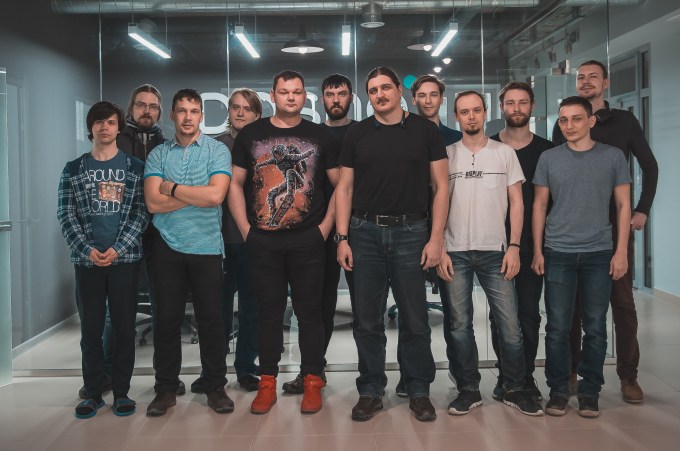
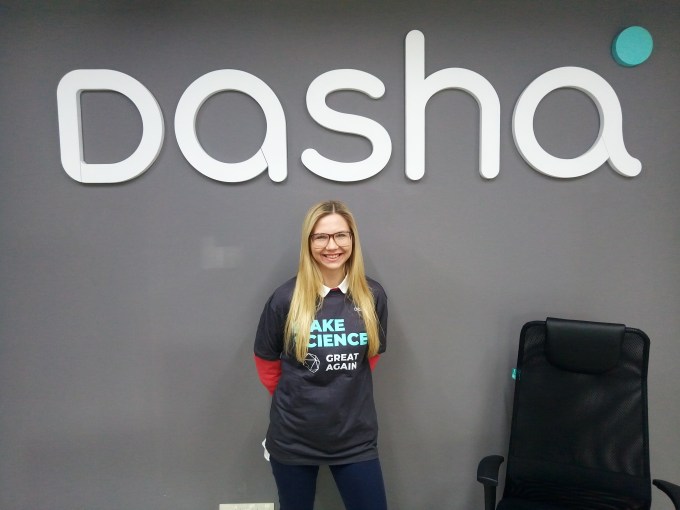
He says Dasha’s engineering staff make up more than half (28) its total headcount (48), and include two doctorates of science; three PhDs; five PhD students; and ten masters of science in computer science.

It has an R&D office in Russian which Chernyshov says helps makes the funding go further.

“More than 16 people, including myself, are ACM ICPC finalists or semi finalists,” he adds — likening the competition to “an Olympic game but for programmers”. A recent hire — chief research scientist, Dr Alexander Dyakonov — is both a doctor of science professor and former Kaggle No.1 GrandMaster in machine learning. So with in-house AI talent like that you can see why Google, uh, came calling…

Dasha


But why not have Dasha ID itself as a robot by default? On that Chernyshov says the platform is flexible — which means disclosure can be added. But in markets where it isn’t a legal requirement the door is being left open for ‘John’ to slip cheerily by. Bladerunner here we come.

The team’s driving conviction is that emphasis on modelling human-like speech will, down the line, allow their AI to deliver universally fluid and natural machine-human speech interactions which in turn open up all sorts of expansive and powerful possibilities for embeddable next-gen voice interfaces. Ones that are much more interesting than the current crop of gadget talkies.

This is where you could raid sci-fi/pop culture for inspiration. Such as Kitt, the dryly witty talking car from the 1980s TV series Knight Rider. Or, to throw in a British TV reference, Holly the self-depreciating yet sardonic human-faced computer in Red Dwarf. (Or indeed Kryten the guilt-ridden android butler.) Chernyshov’s suggestion is to imagine Dasha embedded in a Boston Dynamics robot. But surely no one wants to hear those crawling nightmares scream…

Dasha’s five-year+ roadmap includes the eyebrow-raising ambition to evolve the technology to achieve “a general conversational AI”. “This is a science fiction at this point. It’s a general conversational AI, and only at this point you will be able to pass the whole Turing Test,” he says of that aim.

“Because we have a human level speech recognition, we have human level speech synthesis, we have generative non-rule based behavior, and this is all the parts of this general conversational AI. And I think that we can we can — and scientific society — we can achieve this together in like 2024 or something like that.

“Then the next step, in 2025, this is like autonomous AI — embeddable in any device or a robot. And hopefully by 2025 these devices will be available on the market.”

Of course the team is still dreaming distance away from that AI wonderland/dystopia (depending on your perspective) — even if it’s date-stamped on the roadmap.

But if a conversational engine ends up in command of the full range of human speech — quirks, quibbles and all — then designing a voice AI may come to be thought of as akin to designing a TV character or cartoon personality. So very far from what we currently associate with the word ‘robotic’. (And wouldn’t it be funny if the term ‘robotic’ came to mean ‘hyper entertaining’ or even ‘especially empathetic’ thanks to advances in AI.)

Let’s not get carried away though.

In the meanwhile, there are ‘uncanny valley’ pitfalls of speech disconnect to navigate if the tone being (artificially) struck hits a false note. (And, on that front, if you didn’t know ‘John from Acme Dental’ was a robot you’d be forgiven for misreading his chipper sign off to a total time waster as pure sarcasm. But an AI can’t appreciate irony. Not yet anyway.)

Nor can robots appreciate the difference between ethical and unethical verbal communication they’re being instructed to carry out. Sales calls can easily cross the line into spam. And what about even more dystopic uses for a conversation engine that’s so slick it can convince the vast majority of people it’s human — like fraud, identity theft, even election interference… the potential misuses could be terrible and scale endlessly.

Although if you straight out ask Dasha whether it’s a robot Chernyshov says it has been programmed to confess to being artificial. So it won’t tell you a barefaced lie.

Dasha

How will the team prevent problematic uses of such a powerful technology?

“We have an ethics framework and when we will be releasing the platform we will implement a real-time monitoring system that will monitor potential abuse or scams, and also it will ensure people are not being called too often,” he says. “This is very important. That we understand that this kind of technology can be potentially probably dangerous.”

“At the first stage we are not going to release it to all the public. We are going to release it in a closed alpha or beta. And we will be curating the companies that are going in to explore all the possible problems and prevent them from being massive problems,” he adds. “Our machine learning team are developing those algorithms for detecting abuse, spam and other use cases that we would like to prevent.”

There’s also the issue of verbal ‘deepfakes’ to consider. Especially as Chernyshov suggests the platform will, in time, support cloning a voiceprint for use in the conversation — opening the door to making fake calls in someone else’s voice. Which sounds like a dream come true for scammers of all stripes. Or a way to really supercharge your top performing salesperson.

Safe to say, the counter technologies — and thoughtful regulation — are going to be very important.

There’s little doubt that AI will be regulated. In Europe policymakers have tasked themselves with coming up with a framework for ethical AI. And in the coming years policymakers in many countries will be trying to figure out how to put guardrails on a technology class that, in the consumer sphere, has already demonstrated its wrecking-ball potential — with the automated acceleration of spam, misinformation and political disinformation on social media platforms.

“We have to understand that at some point this kind of technologies will be definitely regulated by the state all over the world. And we as a platform we must comply with all of these requirements,” agrees Chernyshov, suggesting machine learning will also be able to identify whether a speaker is human or not — and that an official caller status could be baked into a telephony protocol so people aren’t left in the dark on the ‘bot or not’ question. 

“It should be human-friendly. Don’t be evil, right?”

Asked whether he considers what will happen to the people working in call centers whose jobs will be disrupted by AI, Chernyshov is quick with the stock answer — that new technologies create jobs too, saying that’s been true right throughout human history. Though he concedes there may be a lag — while the old world catches up to the new.

Time and tide wait for no human, even when the change sounds increasingly like we do.


from TechCrunch https://ift.tt/314pcJA

When founders think about the venture firms most likely to invest in space or robotics or other bleeding edge technologies, a handful of fir...

When founders think about the venture firms most likely to invest in space or robotics or other bleeding edge technologies, a handful of firms tend to jump immediately to mind.

One of these is Lux Capital, a venture capital firm that has offices in New York and Menlo Park, Ca., and whose bets include Zoox, the robotics company that’s trying to pioneer autonomous mobility as-a-service; Bright Machines, a manufacturing startup that aims to eliminate manual labor from manufacturing electronic devices; and AirMap, an airspace intelligence platform for drones.

While one might argue whether Lux has bolder ambitions than its venture competitors, its consistent messaging — it says it invests at the “outermost edges of what is possible” — has enabled it to carve space for itself in an increasingly crowded market of investors.

It also just helped the firm secure $1.1 billion in capital commitments across two funds, including a $500 million early-stage fund and a separate $550 million opportunity fund that it will use to support its breakout investments.

Fortune reported on the two funds earlier today.

Even during a time when billion-dollar funds have become routine, the amount of money is notable. Lux last had closed its previous, early-stage fund with $400 million in 2017, a fund that had brought its total assets under management to $1.1 billion. That was across its then 17-year history.

The firm, now 19 years old, just doubled that amount.

No doubt the sale of the surgical robotics company Auris Health helped toward that end. Lux was part of the company’s $34.4 million Series A round in 2014 (and part of subsequent rounds); presumably, it saw a nice return when Auris was acquired for $3.4 billion in cash to healthcare giant Johnson & Johnson in February.

Other deals, like Desktop Metal, a four-year-old that designs and markets metal 3D printing systems, have meanwhile seen their valuations soar, even if they haven’t sold or gone public.

As part of the new fund, Lux has brought aboard Deena Shakir as a partner. Shakir was formerly an investor with Alphabet’s venture arm, GV.

Earlier this year, another of Lux’s partners, Renata Quintini, transitioned to a role as venture partner as she raises a venture fund with fellow venture capitalist Roseanne Wincek, long of IVP.


from TechCrunch https://ift.tt/2KbOUGH

via TechRadar - All the latest technology news https://ift.tt/2yu3kLv


via TechRadar - All the latest technology news https://ift.tt/2yu3kLv

Fitbit struggled after launching the Ionic , it’s first smartwatch, but managed to bounce back when the company released the Fitbit Versa i...

Fitbit struggled after launching the Ionic, it’s first smartwatch, but managed to bounce back when the company released the Fitbit Versa in March 2018. With its ‘squircle’ shape (as Fitbit calls it) and affordable price tag, it quickly became one of the more popular Apple Watch alternatives on the market.

And it looks like the second generation Versa – with some significant upgrades – is on its way, with reliable Twitter tipster Evan Blass showing off leaked renders of the upcoming Fitbit smartwatch.

If the images are to be believed, it’s clear that the next-gen Versa will physically resemble the original – including the anodized aluminum casing on the top and the PurePulse heart monitor underneath – but instead of the three side buttons, the new version has just the one.

However, the biggest physical change seems to be the display of the smartwatch moving away from LCD to a new AMOLED. One good thing seems to be that Fitbit has removed its logo from the bottom of the display, allowing the updated display to seamlessly blend in with the black bezel of the watch face.

One of the renders also shows Amazon’s smart assistant available on the upcoming wearable. This should give users the ability to control their smart homes exactly the way Apple Watch owners can with Siri.

While there’s no official word yet on when we’ll see the next-gen Fitbit Versa, it usually isn’t too long after we begin to see prominent leaks like this. So watch this space.


from TechRadar - All the latest technology news https://ift.tt/2yu3kLv

via TechRadar - All the latest technology news https://ift.tt/2YBsu9G


via TechRadar - All the latest technology news https://ift.tt/2YBsu9G

Poshmark, an online marketplace for buying and selling clothes, has reported a data breach. The company said in a brief blog post that use...

Poshmark, an online marketplace for buying and selling clothes, has reported a data breach.

The company said in a brief blog post that user profile information, including names and usernames, gender and city data was taken by an “unauthorized third party.” Email addresses, size preferences, and scrambled passwords were also taken.

Poshmark did not say which hashing algorithm, used to scramble the passwords, was used. Some algorithms are stronger than others.

The company also said “internal” preferences, such as email and push notifications, were taken.

Poshmark said it retained an outside security firm but did not say which company. It also said it has rolled out “enhanced security measures” without elaborating. We’ve contacted Poshmark for answers, but did not immediately hear back.

Financial data and physical address information was not compromise, the company said

Poshmark has upwards of 50 million users.

Read more:


from TechCrunch https://ift.tt/2yBNxKt

via TechRadar - All the latest technology news https://ift.tt/2jd6IUX


via TechRadar - All the latest technology news https://ift.tt/2jd6IUX

from ComputerWeekly.com https://ift.tt/2yrj0iB https://ift.tt/eA8V8J


from ComputerWeekly.com https://ift.tt/2yrj0iB
https://ift.tt/eA8V8J