Home Top Ad

Responsive Ads Here

The technology hiring (and retaining talent) crisis is clearly deepening. The latest KPMG and REC Report on Jobs shows that the fastest fal...

The technology hiring (and retaining talent) crisis is clearly deepening. The latest KPMG and REC Report on Jobs shows that the fastest falls in permanent vacancies were seen in the IT and computing sectors. Furthermore, hiring across these industries has been steadily falling since its peak in 2021, and more than a quarter of a million tech jobs were axed last year.

At the same time, an estimated 30 to 70 percent of data, security and development job postings continue to go unfilled, and by 2025, the global shortage of full-time software developers and cybersecurity professionals is expected to reach eight million. Evidently, there aren’t enough people with the right skills to fill the roles organizations currently need.

The digital skills mismatch

This is a significant problem because it has the potential to negatively impact productivity and innovation, and could lead to IT organizations grappling to compete with their international competitors.

So, how has such a skills mismatch materialized? Primarily, traditional educational systems have lagged industry requirements for teaching the latest digital skills. But with technology transforming at such a pace, it would have been difficult to avoid this situation.

In the long term, the Government needs to invest even more in STEM education. Initiatives such as T Levels are a great start, but we also need greater collaboration between schools and universities and employers to ensure that they are teaching the skills that UK businesses require.

Technologies are advancing at an incredible pace; two years ago, generative AI was relatively unknown. Not only does this make it difficult to predict what skills will be required in the near future, but it can also result in shifts in capability demands. Therefore, it would be sensible to assume that spending on training internally is expected to increase. However, the reality is the opposite: globally, IT training and education already represent less than one percent of total IT spending.

How to fast-track technology talent

Organizations cannot afford to sit back and wait for the education system to change. Fortunately, there are several actions they can take now to help plug their current and future knowledge gaps. First, they should start looking for talent early and hire individuals from schools and colleges to build a robust pipeline of employees. Businesses should also reach out to secondary schools and universities to find candidates for in-demand positions like data engineers, business analysts, and programmers through early career internships and apprenticeships.

Where spending on IT training has taken a dive, resources should instead be poured into a more holistic talent strategy. This should incorporate investment in diverse training, with a focus on identifying and developing future skills, and defining career paths for employees. Furthermore, by applying a greater weight to soft skills such as communication and collaboration, people will improve their creative thinking and leverage others' expertise more effectively. As technology permeates every single department, new roles and skills will straddle different functions across organizations. Therefore, different parts of the business must work together better to develop training programs for employees to utilize all their technology and wider business acumen to help foster innovation.

While financial incentives are an important driver for talent attraction, an organization's values and purpose are also important, with 75 percent of job seekers considering an employer’s brand before even applying for a job. If IT leaders can link technology to purpose, underpinned by real action, this will be a big attraction for existing employees and prospective candidates.

Leading digital talent naturally desires to work with cutting-edge technology, so, companies that want to attract and retain leaders in their field should look to build or buy the latest technology. Having a clear understanding of, and ability to communicate about the technology that the company utilises, should give it a real competitive edge in the fight to attract and retain the best people. It will also help improve the employee experience across the organization, as other members of staff will benefit from new innovations and ways of working.

Human resources will be integral to accelerating the talent agenda. The challenge for IT leaders will be how they persuade HR to look beyond sourcing talent for current projects and persuade them that by adopting new hiring techniques and changing internal training, there will be a return on investment in technology talent. This may take years to happen as it will challenge the existing IT talent structure, and new roles, titles, and pay bands could emerge.

IT organizations as talent incubators

Despite the high demand for technology professionals, many job postings remain unfilled due to a skills mismatch. For there to be a change, IT organizations will need to take it upon themselves to act as talent incubators at the forefront of finding and generating the skills needed for the future. Without a radical transformation of how businesses attract and retain digital talent, they will significantly inhibit their ability to thrive.

We've listed the best job site.

This article was produced as part of TechRadarPro's Expert Insights channel where we feature the best and brightest minds in the technology industry today. The views expressed here are those of the author and are not necessarily those of TechRadarPro or Future plc. If you are interested in contributing find out more here: https://www.techradar.com/news/submit-your-story-to-techradar-pro


from TechRadar - All the latest technology news https://ift.tt/cLtbJNO

Despite the clear productivity benefits of using AI tools in the workplace, a study by LinkedIn has revealed that fewer than half (44%) of...

Despite the clear productivity benefits of using AI tools in the workplace, a study by LinkedIn has revealed that fewer than half (44%) of businesses across the UK are actively aiding their employees with AI literacy.

LinkedIn’s findings underscore the growing need for companies to prioritize skills development, with desirable and required skills set to shift by 51% between 2016 and 2030, thanks to the rise of generative AI.

Furthermore, seven in 10 managers anticipate a widening skills gap in the next five years, emphasizing the urgency for upskilling opportunities.

AI upskilling

Despite the apparent lack of current AI support, the report found many UK professionals are eager to enhance their skills, with around two-thirds (65%) believing that AI proficiency will contribute to career progression.

Keen to jump on the bandwagon, LinkedIn hopes that by launching new AI learning courses, career development features, and insights, it can help close the worsening skills gap.

LinkedIn VP and UK Country Manager Janine Chamberlin stressed the need for a proactive approach: “Companies cannot afford to be slow on upskilling if they are to capture the opportunities presented by AI and succeed in an ever-changing world of work.”

Chamberlin touched on some of the reasons why companies may want to spend on their training efforts: “Upskilling employees on hard and soft skills will not only help companies to become more agile, but also improve retention and make it easier for people to pivot into new careers within the organisation.”

As part of its announcement, LinkedIn will offer 250 free courses globally until April 5, covering various AI-related topics.

The social networking platform has also unveiled tweaks that will help candidates find internal recruiting opportunities in order to demonstrate, and benefit from, their new skills.

More from TechRadar Pro


from TechRadar - All the latest technology news https://ift.tt/WjLmaqc

Logitech has unveiled what it says is its most advanced business webcam yet in a bid to tackle some of the most crucial aspects of working...

Logitech has unveiled what it says is its most advanced business webcam yet in a bid to tackle some of the most crucial aspects of working from home.

The company says its MX Brio 705 for Business is a "revolutionary" high-end webcam that enterprise users can enjoy Ultra HD 4K video for their meetings and video presentations.

The latest addition to Logitech's MX series of products, which also includes mice and keyboards, the MX Brio 705 for Business is compatible with all the leading video conferencing platforms, including Microsoft Teams, Zoom and Google Meet.

Logitech MX Brio 705 for Business

Logitech MX Brio 705 for Business webcam

(Image credit: Logitech)

Along with offering Ultra HD 4K resolution, the new release also features 70% larger pixels than Logitech's previous flagship webcam, allowing for an ultra-sharp image, which can be given even more detail via AI enhancement technology including automatic light correction and even facial image improvements.

Logitech says its new release offers two times better face visibility and much finer image details in difficult lighting conditions compared to its previous build, again helping to offer a much better video call experience. There's also the company's RightSight autoframing feature, which is able to center on a speaker even if they move around a space, with two beamforming mics to reduce background noise so you can be heard clearly.

The MX Brio 705 for Business also offers users a range of customization options, allowing them to manually tweak a variety of settings such as exposure, vibrance and tiny to make sure they look their best. There's even a specially-designed Show Mode for collaborating on sketches or other real-world physical objects during a call, and a built-in privacy shutter to keep your private view protected.

“We know that MX users collaborate and communicate from many different environments, and need a versatile webcam offering the best video and sound quality,” said Anatoliy Polyanker, General Manager of the MX Business at Logitech. “MX Brio is our highest quality webcam, featuring customization and the ability to show themselves or their work in the best possible way.” 

The MX Brio 705 will be available in a single graphite color scheme for the time being, and can be ordered now for $199.99 - with other markets hopefully set to follow soon.

More from TechRadar Pro


from TechRadar - All the latest technology news https://ift.tt/al6hx3E

Microsoft has announced it will be holding the next Xbox Partner Preview showcase this week, where fans will be given a glimpse into what...

Microsoft has announced it will be holding the next Xbox Partner Preview showcase this week, where fans will be given a glimpse into what's next for numerous studios, along with a look at some brand-new and upcoming games.

Here's everything you need to know about Xbox Partner Preview, including when and where to watch, as well as what to expect from the livestream itself. 

Xbox Partner Preview: Start Time

The Xbox Partner Preview livestream is set to air on March 6 at 10am PT / 1pm ET / 6pm GMT.

See more

Xbox Partner Preview: Where to Watch

The Xbox Partner Preview event will be available to watch live on Xbox's official Twitch channel, its Twitch ASL channel, and its official YouTube channel. There's also the option to watch on the company's many regional Xbox channels around the world, as well as the official Xbox website.

Xbox Partner Preview: What to expect

Microsoft has confirmed that the latest Xbox Partner Preview livestream will run at approximately 30 minutes and will feature a mix of "new and upcoming games" from publishers such as Capcom, Nexon, EA, and more. Fans can expect "more than a dozen new trailers".

The offerings will include a preview for upcoming Metroidvania game from Surgent Studios, Tales of Kenzera: Zau. Fans will get to watch a video narrated by Assassin's Creed Origins actor Abubakar Salim which reveals more about the game's combat and traversal. 

We'll also be getting a look at new footage from Capcom's Kunitsu-Gami: Path of the Goddess, along with a closer look at The First Berserker: Khazan.

As with every Xbox Partner Preview, the upcoming broadcast will not just reveal trailers and release date announcements but also feature unique behind-the-scenes insights from developers.

For more, be sure to check out our list of the best Xbox Series X games, along with our recommendations for the best Xbox Game Pass titles.


from TechRadar - All the latest technology news https://ift.tt/dQZk4vI

Amazon Web Services (AWS) has continued its recent global spending spree by announcing plans to launch a new infrastructure region in Saud...

Amazon Web Services (AWS) has continued its recent global spending spree by announcing plans to launch a new infrastructure region in Saudi Arabia by 2026 as part of a major investment in the area.

The investment, worth a total of around $5.3 billion, aims to provide developers, startups, enterprises and other organizations in the country with more reliable connections and lower latency.

According to Amazon, the new region aligns with AWS’ long-term commitment to meeting growing demand for cloud services not just in Saudi Arabia, but across the Middle East.

AWS reveals new Saudi Arabia region

AWS VP of Infrastructure Services Prasad Kalyanaraman commented on the news: “The new AWS Region will enable organizations to unlock the full potential of the cloud and build with AWS technologies like compute, storage, databases, analytics, and artificial intelligence, transforming the way businesses and institutions serve their customers.”

Kalyanaraman alluded at the secondary benefits of bringing the new Region online, including “job creation, skills training, and educational opportunities.”

In addition to the cloud infrastructure investment, AWS plans to establish two so-called innovation centers in order to upskill students and developers across the Middle East and North Africa, with an emphasis on headline-grabbing technologies like AI and ML.

The company’s Saudi Arabia region will bring three Availability Zones online at launch, adding to the existing 105 Availability Zones currently available across 3 global Regions. Moreover, AWS has also announced plans for infrastructure across Malaysia, Mexico, New Zealand and Thailand, plus a new AWS European Sovereign Cloud.

Also forming part of the company’s investment is its commitment to training 4,000 women on AWS Cloud Practitioner Essentials, free of charge, which represents considerable progress toward the Kingdom of Saudi Arabia’s Vision 2030 goal of empowering women to increase participation in the workforce.

Its Amazon Academy will also provide free cloud technology training and certifications to over 30,000 Saudi citizens.

Though the company is set to benefit from tapping into a growing market, it’s clear that the market is also set to benefit from Amazon Web Services’ presence, and the move represents opportunities for the area’s citizens.

More from TechRadar Pro


from TechRadar - All the latest technology news https://ift.tt/H2UiVSg

Zero trust isn’t something you can just buy; you need to build it consistently across your organization. In a recent report, Cisco said nea...

Zero trust isn’t something you can just buy; you need to build it consistently across your organization. In a recent report, Cisco said nearly 90% of organizations have begun embracing zero trust security. But of the 4,700 global information security professionals questioned only 2% said they have mature deployments, with the majority (86.5%) starting to implement some aspects of zero trust.

So, where and how should organizations start with zero trust?

Zero trust is a popular marketing catchphrase for IT security companies but it can be hard to pin down the meaning. That’s because zero trust is not simply a solution you can buy, it is more like a plan for rethinking basic security assumptions. The current interest in it reflects a broader cultural change where businesses and authorities are hardening their attitudes to all kinds of risk.

Zero trust is a security strategy which encapsulates a set of security principles, including:

  • Verify every time 
  • Use least privilege for access 
  • Assume a breach has already occurred

Ultimately, the zero trust approach builds on the concept of privileged access management and adds more layers of security to build 365-degree protection. In a world where security threats have created deep paranoia, IT professionals need to remove implicit “trust” wherever possible. So, the approach becomes “never trust, always verify”.

Zero Trust as a framework for an IT security architecture

Zero trust is best defined as a framework to secure a complex network from internal and external threats, particularly where many security incidents come from the misuse of user credentials.

IBM explains Zero Trust as a philosophy where it is assumed that every user and every connection is a threat, and so the corporate network needs defense against these potential risks. It includes several security measures to provide continuous network monitoring and validation to ensure that every user has the correct privileges and attributes:

  • Logs and inspects all corporate network traffic 
  • Limits and controls access to the network 
  • Verifies and secures network resources

Zero trust is, therefore, a framework where authentication, authorization and validation are used to secure users’ access from inside and outside of the network, and this includes cloud-based connections and remote workers. It manages the permissions given to every device, the applications they can run and the data they can access, save, encrypt and transport.

A zero trust approach is recommended because now, with increased remote working and so many organizations relying on the cloud for their networks, the traditional network edge has eroded and there is a more diverse mix of users, technologies and applications which needs to be secured.

Even more challenging is how traditional security policies and tools are less effective across modern IT environments, and this creates a new headache for security professionals.

Best practice for IT security in the cloud

Zero trust is fundamentally different to traditional privileged access management which only addresses the security of users within the network and does not guard against cases where a user’s credentials are misused. A zero trust approach should also secure the network from risks coming from the wider cloud-based environment.

Threats are increasing daily

Cyber security threats have increased to new levels since 2023, with a worrying new surge in state-sponsored cyber activities targeting institutions. Phishing remains the greatest threat, causing 90% of data breaches. Microsoft mitigated an average of 1,435 distributed denial of service attacks each day in 2022, thought to be an increase of 67%. From 2023 there have been 300,000 new malware incidents each day, attempting to gain unauthorized access or disrupt IT systems. While Gartner predicts that 45% of organizations will suffer a supply chain cyber attack by 2025.

So, why with these frightening statistics are organizations so slow to adopt zero trust?

It’s because zero trust needs a new security paradigm which requires time, resource, skills and the right products. Many organisations are looking at zero trust in the context of their own cloud-connected architectures where an extended network uses public and hybrid cloud and remote working. They often have fixed compliance needs. They will typically have a mixed estate and their legacy architecture doesn’t easily support the ideas in the zero trust model. It may not support modern authentication methods or secure protocol. It may seem that a whole new security architecture is required.

Added to this, IT security specialists are often fully occupied with ongoing monitoring and managing the response to alerts. There’s a concern that adding more products would make the whole set-up more complex to manage and maintain.

Identity is key

Increasingly, and as more market research surfaces, analysts are building connections between breaches and compromised and abused privileged credentials. A reported 80% of breaches are targeting user credentials, therefore, businesses should look to have a robust identity strategy at the top of their agenda. With digital transformation projects, enterprises are faced with controlling data access and security for their own employees, contractors, suppliers, customers, and devices.

Identity is the ‘new’ perimeter in a cloud-native world. Allowing credentials without challenge or validation goes against best practices and industry wisdom, exposing an organisation to greater risk. Identity, as a shorthand for managing and validating user access and privileges, remains the only constant in today’s way of working.

Finding a feasible way to build zero trust

A zero trust policy can be broken down into a number of smaller, manageable parts based on NIST’s five stage security model. Vulnerability scanning, attack surface management and asset management can be grouped are all tasks under the ‘identifying’ stage. Identity management and SSO / MFA come under the ‘protect’ umbrella. Anti-malware / EDR, SIEM, MDR services and Log Management all come under the ‘detect’ umbrella.

For each stage in the model there are one or more cybersecurity tools such as risk-based multi-factor authentication, identity protection, end-point security and encryption that can be utilized to build that section of the security architecture. It’s useful to bring clarity and define an approach that will deliver on the zero trust ambition.

The most practical approach is to leverage the model to build zero trust around the technology and managed services that you already have in place and do as much as you can with these.

Key to success is to assemble a suite of tools from best-of-breed vendors to deliver against the zero trust model without adding unnecessary complexity. You should choose tools that dovetail together and that once in operation will provide a series of levers you can use to manage your zero trust policy on a day by day basis. Once you have these in place you will be better protected and considerably reduce your risk of a cyber security breach.

We've listed the best online cybersecurity course.

This article was produced as part of TechRadarPro's Expert Insights channel where we feature the best and brightest minds in the technology industry today. The views expressed here are those of the author and are not necessarily those of TechRadarPro or Future plc. If you are interested in contributing find out more here: https://www.techradar.com/news/submit-your-story-to-techradar-pro


from TechRadar - All the latest technology news https://ift.tt/JfMcuWB

A new Terminator game called Terminator: Survivors is on the way and is set to launch as an early access title on Steam on October 24, 20...

A new Terminator game called Terminator: Survivors is on the way and is set to launch as an early access title on Steam on October 24, 2024.

Originally announced back in July 2022 as an untitled open-world survival project set in the Terminator universe, the Nacon Connect showcase that took place on February 29 revealed its full name and an early access release date.

The information comes alongside a new short teaser trailer, which contains about one minute of footage. Although no actual gameplay is shown, the trailer follows two survivors scavenging for fuel in an abandoned industrial building. They’re being tracked by a hidden T-800 robot, which advances towards the pair before everything cuts to black.

This doesn’t provide a huge amount to go off, but does suggest that the game is going to be set somewhere in the United States judging by the scenery. You can watch the teaser for yourself below:

The game has also received a new Steam page, which contains some more interesting details. Firstly, the game is going to be set in the same world as the first two Terminator films and follows an original story that can be experienced in both solo or co-op modes with up to three other players. Your goal is to build a base and survive against both Skynet machines and hostile human factions, uncovering new story details as you progress.

It sounds like quite a promising survival-oriented twist on the kind of open-world formula found in a game like Far Cry 6, with some additional tension posed by the looming threat of powerful robots hunting you down.

Although it will launch on Steam early access first, Terminator: Survivors will then be coming to PlayStation 5 and Xbox Series X|S at an unspecified date down the line.

For some top quality games that you can play right now, see our guides to the best FPS games and the best RPGs.


from TechRadar - All the latest technology news https://ift.tt/65A7tHN

For a long time, the default answer to tackling changing market dynamics, disruptions and customer demands has been digital transformation ...

For a long time, the default answer to tackling changing market dynamics, disruptions and customer demands has been digital transformation (DX). But while efficiency and productivity gains have been won through some of these efforts, there have also been numerous mistakes made along the way. So many businesses are struggling to bear the fruits, with data from an IDC InfoBrief sponsored by Endava showing that half of DX projects undertaken over the past year failed to achieve their expected outcomes and goals. Added to this are the significant financial implications of failures, as 59% of organizations believe that investments in DX projects have been wasted.

These underwhelming outcomes are staggering when the majority of those organizations consider themselves to be digital-first.

When we dive deeper into the knock-on effect of unsuccessful initiatives, the very real human impact becomes clear, too. It’s not just businesses’ time to market and digital maturity that suffers; failures have also resulted in frustrated staff (56%), employees leaving the business (50%) and a work environment that’s less exciting and stimulating for teams (44%). All of this adds pressure to already struggling companies in a tough economy and points to an urgent need to shift focus. To put it bluntly, companies need to stop wasting time and effort and start putting people at the heart of their strategies.

Invest in people for the best results

All too often, approaches to DX have neglected to focus on what matters – the employees who use those technologies. After all, they are the ones who ultimately add value and who are tasked with making digital initiatives reach the desired business outcomes. Yet when digital solutions are built in siloes with no real consideration for how people interact with them, their potential is stunted, and employees become disengaged.

Recent data affirms this notion that business leaders have hugely underestimated the importance of employee buy-in, as it was cited as a top reason for DX initiatives failing in IDC’s findings. Similarly, a lack of collaboration between the different departments in an organization and conflicting opinions from management were also cited as top reasons, revealing that digitalization efforts are not only backfiring because tools aren’t striking a chord with people, but they are also failing to accommodate internal team dynamics. Without a strong sense of collaboration and communication, problems with digital projects are amplified, and stakeholders become disconnected.

However, while it’s clear that an employee-first approach is the missing ingredient for success, this can’t just be an afterthought. Businesses need to actively engage employees throughout every stage of digitalization – from the planning to the design, implementation and ongoing improvements. This demands a real understanding of all employees’ needs throughout the business, as well as equipping them with the training and skill requirements to manage tools effectively and feel empowered by them.

The same IDC InfoBrief also uncovered that businesses acknowledged gaps in staff training and collaboration, expressing that wasted investment on DX would have been better spent elsewhere, including on upskilling staff and improving internal communication. Yet digital transformation and upskilling don’t have to be mutually exclusive; rather, training should be integral to the ongoing management and improvement of DX initiatives. 

Adopting this human-centric mindset from the beginning will not only prevent wasted investment by enabling people to benefit from technologies, but it will also build innovation and creativity into the organization's culture. That’s because creating a constant practice of sharing knowledge empowers employees to participate in making technologies successful while also enabling them to spot ways to enhance solutions as the environment and market around them inevitably evolve. It’s employees’ diverse skills and perspectives that bring technologies to life.

Your technology is only as good as your people

With growing concerns around the advancement of AI and the associated potential risks, as well as the power dynamic shifting from employer to employee, the need for a people-first approach to deploying technology will only intensify. As a case in point, employees will be integral to ensuring that tools such as generative AI are used responsibly to prevent inaccuracies and biases from being perpetuated within models. As such, nurturing engagement with digital solutions also means creating a workplace where people can actively spot issues and think strategically about how to best use such solutions, as opposed to passively accepting their outputs. 

By harnessing human qualities like creativity and critical thinking in tandem with digital solutions, businesses will be able to create the foundations for true resilience. It’s an approach that ultimately supports more fulfilling and interesting work for employees, in turn backing talent retention and acquisition efforts. You can have the most sophisticated new technologies and innovations, but if you don’t invest in your people and prioritize employee buy-in, then you’re burning money.

We've listed the best HR software.

This article was produced as part of TechRadarPro's Expert Insights channel where we feature the best and brightest minds in the technology industry today. The views expressed here are those of the author and are not necessarily those of TechRadarPro or Future plc. If you are interested in contributing find out more here: https://www.techradar.com/news/submit-your-story-to-techradar-pro


from TechRadar - All the latest technology news https://ift.tt/5fyZeM0

Although everyone wants in, the deployment of generative AI at scale has proved a significant challenge for large enterprises and governmen...

Although everyone wants in, the deployment of generative AI at scale has proved a significant challenge for large enterprises and government bodies. 

Despite recognizing the potential of the technology to streamline processes, reduce costs, and improve supply chains, concerns about cost, complexity, security, data privacy, model ownership, and regulatory compliance have acted as barriers to adoption. 

In a potential breakthrough, Softbank-funded SambaNova Systems has announced the launch of Samba-1, the first trillion-parameter generative AI model. Powered by the SambaNova Suite, Samba-1 is designed to meet the performance, accuracy, scalability, and total cost of ownership (TCO) requirements. The model also promises a 90% reduction in inference costs, although this claim should be approached with caution. 

Building the 'iPhone of AI'

Unlike other trillion-parameter models, which are built as single, monolithic entities, Samba-1 utilizes a Composition of Experts (CoE) architecture. This system aggregates multiple small "expert" models into a single large solution, functioning as a single large model. This approach offers broader knowledge across various topics, high accuracy, and multimodality.

The CoE model can also reportedly provide greater knowledge and accuracy for specialized domains than other large models. Individual smaller models can be trained for specific domains, such as finance, law, physics, or biology, and added to the CoE, bringing high accuracy for that specific domain without the need for training on the entire trillion-parameter model. 

The release of Samba-1 follows SambaNova's announcement of the SN40L, a smart AI chip designed to rival those from AI behemoth Nvidia. The integration of this chip with the Samba-1 model represents a significant step forward, with SambaNova being the first to deliver an integrated hardware and software system for the enterprise. 

“The entire AI industry is talking about building the iPhone of AI - an integrated hardware and software system - and SambaNova is the first to deliver a version of that to the enterprise,” said Rodrigo Liang, Co-founder and CEO of SambaNova Systems. “This past fall, we announced the SN40L, the smartest AI chip, and now we’ve integrated that chip with the first 1T parameter model for the enterprise. Samba-1 rivals GPT-4, however, it’s better suited for the enterprise as it can be delivered on-premises or in private clouds so that customers can fine-tune the model with their private data without ever disclosing it into the public domain.” 

Despite the impressive capabilities of Samba-1, the model's claim to reduce inference costs by 90% should be taken with a pinch of salt. While the CoE architecture does offer low inference costs, the true value of this saving will only become apparent once the model is deployed in real-world scenarios.

Liang told us “AI is not a fad, we’re at the start of this journey. Our full-stack solution is focused on large-scale enterprise and government organizations, which no one else can provide on-prem and privately. There’s no escaping how dominant Nvidia is right now, but we’re able to deploy these models at scale for a fraction of the cost.”

More from TechRadar Pro


from TechRadar - All the latest technology news https://ift.tt/krCuhdK

I like foldable phones, but I haven’t bought one. When I’m spending my own money, I buy phones like the Galaxy S24 Ultra and the iPhone 15...

I like foldable phones, but I haven’t bought one. When I’m spending my own money, I buy phones like the Galaxy S24 Ultra and the iPhone 15 Pro Max. I’ve never purchased a foldable phone for myself, not even the OnePlus Open, my favorite foldable of last year. I’ve had reasons for holding out, but rumors that Samsung may Ultra-fy its Galaxy Z Fold 6 have me very curious – and maybe saving up for a new foldable. 

Why haven’t I bought a foldable phone? It’s not the high price tag – I don’t mind signing up with a carrier for a few years to pay off a phone if they give me a great deal. AT&T gave me $1,000 to trade a worthless old phone for my current Ultra. Once every two or three years, I’ll get an expensive phone this way, and if there’s a solid deal on the Galaxy Z Fold 6 Ultra, I’ll consider it.

Samsung Galaxy Z Fold 5 review

(Image credit: Future / Lance Ulanoff)

It isn’t a question of durability. I go easy on my phones, and sometimes I don’t even use a case. I don’t tend to drop my phones often, and I don’t stash them alongside a big keychain in my pocket. I’m not worried about the durability of foldable phone hinges, and I can be careful enough with that soft, inner display to avoid nasty scratches.

I’m not a fan of the way most foldables look, but it’s not my biggest issue. I think the Galaxy Z Fold 5 is, well… just wrong. Its aspect is wrong; it’s too narrow on the front display. I thought the Google Pixel Fold was better, with a squat, wider display on the front, but it’s still not perfect. The OnePlus Open was the Goldilocks that taught me foldable phones can hit a perfect aspect ratio, with a front display that looks like a normal smartphone, and an even larger inner display.

The one compromise every foldable phone makes

The big sticking point that keeps me from buying a foldable phone is the camera. No foldable yet has shipped with a great camera. The Galaxy Z Fold 5 has cameras similar to the base-model Galaxy S23, and not the Galaxy S23 Ultra. The latter was our best camera phone until the Galaxy S24 Ultra supplanted it. 

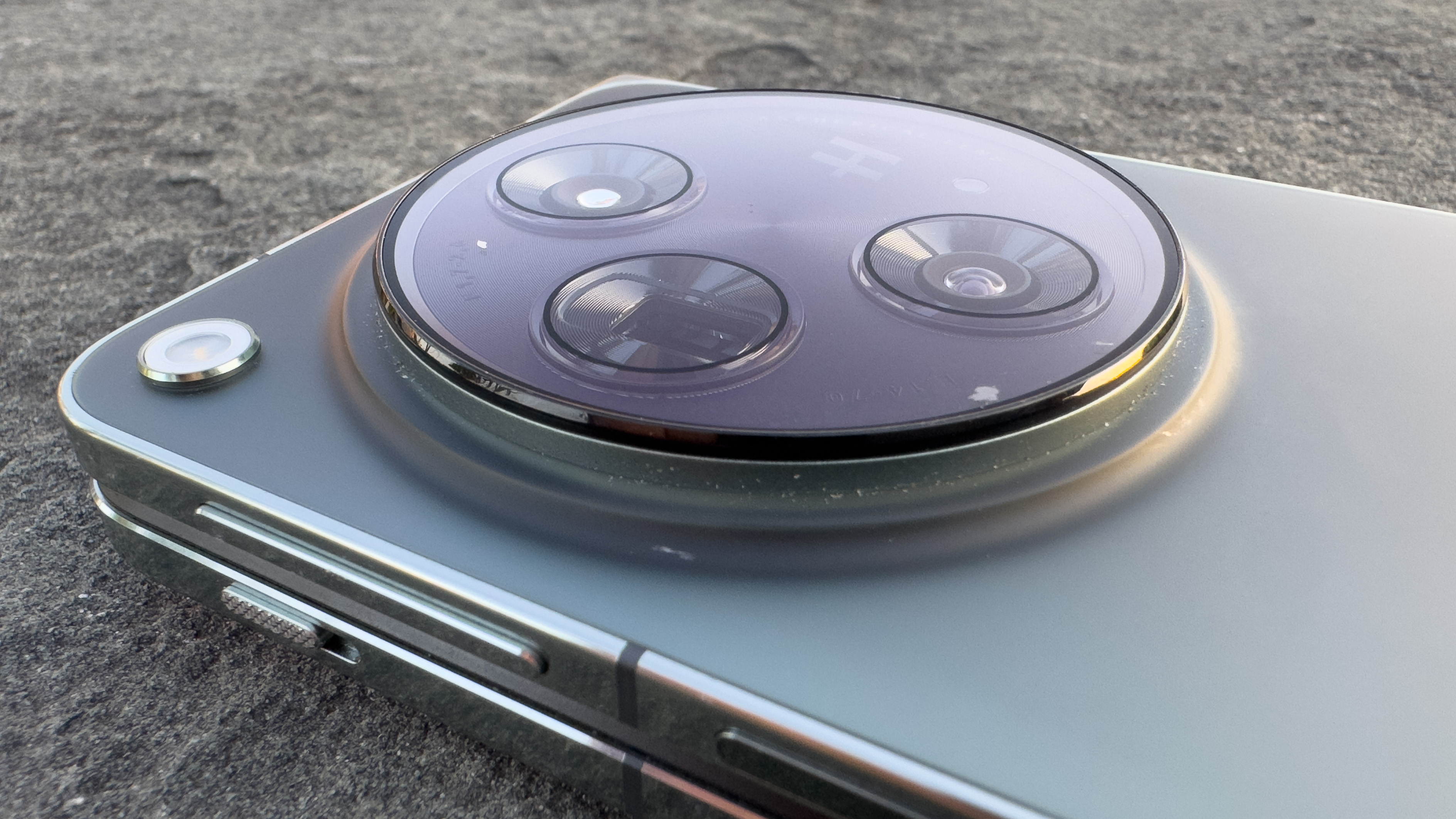
The OnePlus Open uses the new Sony Lytia stacked sensors to great effect, but the cameras aren’t the best. To achieve the thin, foldable design, phone makers compromise every time, and the compromise every foldable makes is on the camera.

OnePlus Open camera lenses showing texture

The OnePlus Open camera bump (Image credit: Future / Philip Berne)

The reason is depth. A great camera system needs room. You need space for the sensor, the lens, and ideally some room in between for depth. And that’s just the main camera. If you want to zoom, you need even more space.

The Galaxy Z Fold 5 is 6.1mm thick, which is not a lot of space for a camera. To compare, the Galaxy S24 Ultra is 2.5mm thicker, at 8.6mm. That’s a lot more room for camera tech. The Galaxy S24 is 7.6mm thick, and its camera specs are nearly identical to the Z Fold 5.

If rumors are true, an upcoming Galaxy Z Fold 6 Ultra could use a big new sensor, possibly the 200MP sensor found on the Galaxy S24 Ultra. That would be huge news. OnePlus managed better photography with the OnePlus Open, but the camera module protrudes significantly. If Samsung can keep its current design and add a huge new camera sensor, I’d be very impressed.

Titanium, too, but about that camera...

In addition to the new camera specs, the Galaxy Z Fold 6 Ultra could get a titanium frame, which would be very cool, and would make the Fold feel more durable for sure. I’m also hoping to see a different aspect ratio, similar to that of the OnePlus Open, and of course a display with no visible crease. 

But it’s the camera that has me the most excited. A foldable phone, especially a tablet-sized foldable, needs an amazing camera. The foldable design lends itself to amazing photography.

Motorola Razr Plus camera app

Foldable phones make for interesting photo opps (Image credit: Future / Philip Berne)

You can position the camera in new ways, and see a preview on the screen while you’re shooting. The main camera is also the selfie camera, thanks to the dual displays. Photography is just more fun with a foldable, except that no foldable has yet excelled at photography.

Frankly, I don’t care much about zoom or a better ultra-wide sensor, not if I can get a great main sensor. I care about portraits, and selfies, and group shots, and night scenes. All of those are photos that look better from a big, high-resolution camera. If the Galaxy Z Fold 6 Ultra is real, and if it delivers on Ultra-level photography, I would say that foldables finally deserve their time in the spotlight, and I’ll be stepping up to take a closer look.


from TechRadar - All the latest technology news https://ift.tt/5euSQCL

It’s no secret that Microsoft is all-in when it comes to AI. The company has invested heavily in OpenAI, and added artificial intelligence ...

It’s no secret that Microsoft is all-in when it comes to AI. The company has invested heavily in OpenAI, and added artificial intelligence to its various products and services, including introducing Copilot in Windows 11.

But just because it’s invested billions in OpenAI that doesn’t mean Microsoft is ignoring other players in the AI game, as the tech behemoth has also now invested heavily in French startup Mistral AI.

The multi-year partnership aims to help speed up AI innovation and debut Mistral Large on Microsoft Azure. Mistral Large, the company's flagship commercial model, is a general-purpose language model proficient in code and mathematics and can process dozens of documents in a single call. It handles French, German, Spanish, and Italian, in addition to English. According to commonly used benchmarks, it's the world's second-ranked model generally available through an API, next to GPT-4, so it's easy to understand Microsoft's interest.

Opportunities galore

The alliance between the two firms focuses on three core areas: supercomputing infrastructure, market scaling, and AI research and development. Microsoft will provide Azure AI supercomputing infrastructure to deliver top-tier performance for AI training and inference workloads for Mistral AI’s flagship models.

Additionally, customers will have access to Mistral AI’s premium models through the Models as a Service (MaaS) in the Azure AI Studio and Azure Machine Learning model catalog. This, coupled with Azure’s AI-optimized infrastructure and enterprise-grade capabilities, offers Mistral AI added opportunities to promote, sell, and distribute its models to Microsoft customers worldwide.

“We are thrilled to embark on this partnership with Microsoft. With Azure’s cutting-edge AI infrastructure, we are reaching a new milestone in our expansion propelling our innovative research and practical applications to new customers everywhere. Together, we are committed to driving impactful progress in the AI industry and delivering unparalleled value to our customers and partners globally, said Arthur Mensch, Chief Executive Officer, Mistral AI.

More from TechRadar Pro


from TechRadar - All the latest technology news https://ift.tt/DOErVU9

When I heard that the Samsung Galaxy Ring was real, my first thought was “what took so long?” I’ve seen the Oura Ring , but there is very ...

When I heard that the Samsung Galaxy Ring was real, my first thought was “what took so long?” I’ve seen the Oura Ring, but there is very little competition in this category, even though it makes so much sense. I’m amazed Samsung did not land on this concept much sooner. It’s such a clear win that an Apple Ring feels inevitable. Oh, right. Apple doesn’t copy Samsung. Sure. 

We should have had a ring before a watch. We should have an Apple Ring already, instead of an Apple Watch Ultra. We can SCUBA dive with the Apple Watch, but there’s no Apple Ring. Something is backwards here. 

Samsung Galaxy Ring

(Image credit: Samsung)

A ring makes much more sense than a watch. First of all, I have a nice, fancy watch that I wear occasionally. I inherited it from my dad, who is still alive, so I like to wear it around him on occasion to show it off. I like it more than he did when it was his. But I still wear my Apple Watch predominantly. I can’t lose a day of closed rings.

Surely a large portion of Apple’s iPhone ownership owns a watch they would rather wear than an Apple Watch, on occasion. It’s an affluent group. Watches are still cool, even if we mostly tell time by looking at our phones. A watch is a great fashion accessory, in addition to being useful. That means I might need more than one watch to match different occasions. I need to accessorize.

If I had an Apple Ring instead of an Apple Watch, I wouldn’t mind wearing it all the time. It wouldn’t keep me from wearing other accessories, unlike the Apple Watch.

A ring will be cheaper if I need a new one every few years

Second of all, we know that this accessory, whether it's a ring or a watch, is going to be out of date some day, probably within the next two to three years. I’m going to trade it in or throw it away or maybe just leave it sitting in a drawer. That’s not so easy with an Apple Watch that costs more than any other watch I’ve purchased. A watch shouldn’t go out of date. A watch couldn’t become obsolete before the Apple Watch.

An image of the black Samsung Galaxy Ring

(Image credit: Future)

An Apple Ring would be more palatable to lose, if I needed something new. A ring is less personal than a watch. It doesn’t have a face. I also imagine an Apple Ring would be less expensive than an Apple Watch. There is more miniaturization involved, and that makes production and parts expensive. But there are also fewer parts, by far, and no moving parts like the digital crown. 

If I have to replace a $200 Apple Ring every two years, I’ll be annoyed, but it's not as bad as realizing that my $600 stainless steel Apple Watch doesn’t have the features I need, and needs to be replaced. 

Now that wearables are for health, a ring makes more sense

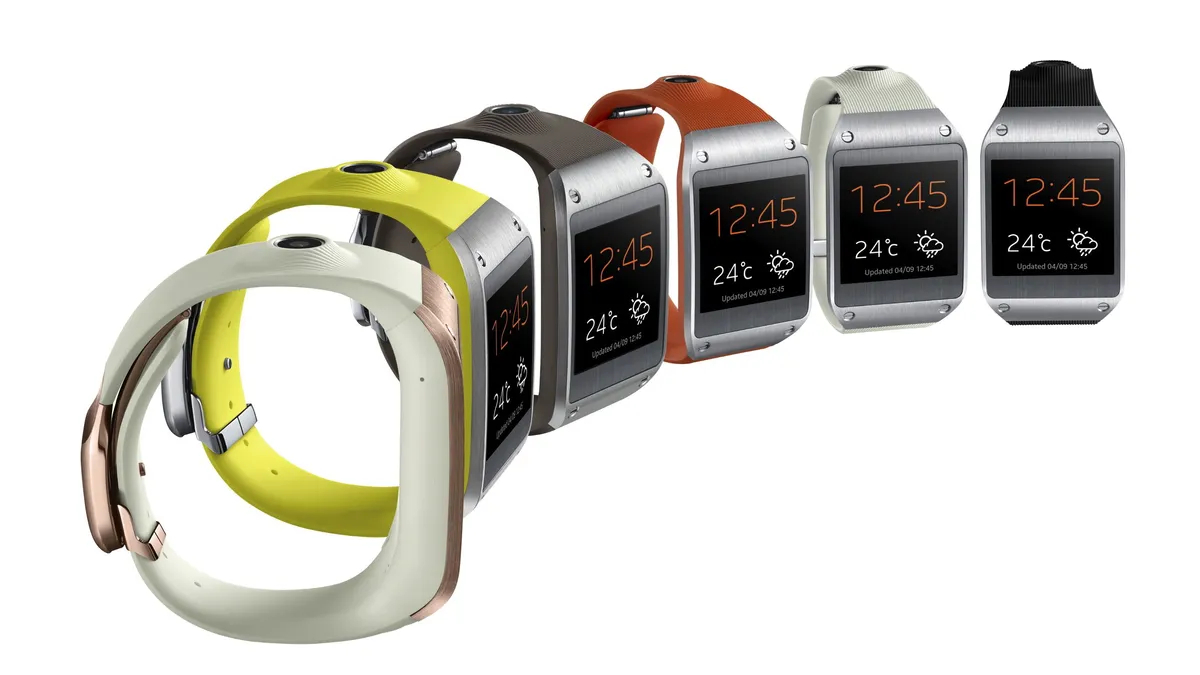
Why didn’t an Apple Ring, or the Galaxy Ring for that matter, come before the Apple Watch, launched in 2015, or the original Samsung Galaxy Gear wearable, from 2013? Because the original smartwatch makers had no idea what a wearable was good for. 

The Galaxy Gear wearable had a freaking camera. For video calls? Maybe, but it shipped with an app that could scan wine bottle labels and recommend food pairings. Tell me that Samsung had a clue what wearables were for back then.

Samsung Galaxy Gear

Samsung Galaxy Gear came before Apple Watch (Image credit: Future)

Don’t laugh, Apple fans. The original Apple Watch had a feature that would record your heartbeat and send it to another Apple Watch owner to feel themselves. That has some creepy Facebook Poke vibes right there. Oh, also Apple sold a gold version for $10,000, and that model is officially no longer supported. I can’t name another gold watch that expires in 10 years.

An expired Apple Watch isn’t even jewelry anymore. It’s worthless. If Apple sells a gold Apple Ring for $1,000 and stops supporting the ring, at least it’s still a gold ring.

It took a while for smartwatch makers to realize that health was enough reason to own a wearable. Everything else is gravy. Notifications are very nice, especially if you work in a field that doesn’t let you look at a phone screen ever. Still, it’s the health features that sell smartwatches. Nobody buys a Galaxy Watch to use it as a viewfinder for their phone camera, though that can be a fun trick on occasion.

Now that we’ve settled on health, let’s admit that a ring makes more sense than a watch. A ring is easier to wear while exercising, especially if you play contact sports. A ring is more comfortable and easier to ignore than a watch, especially if your wrists swell and shrink, as mine do depending on hydration. I don’t track my sleep with my watch because it isn’t comfortable to wear while sleeping, but I could easily fall asleep wearing a ring.

After Apple Vision Pro, an Apple Ring should come next

A person using an Apple Vision Pro headset. There are multiple virtual displays in front of them, as well as a virtual keyboard.

Wouldn't this be cooler with an Apple Ring controller? (Image credit: Apple)

I haven’t even gotten to the way an Apple Ring could interact with the Apple Vision Pro, because it looks like Apple is focusing entirely on hands for input, but eventually I think we’ll see its wearables and phones get more involved in spatial computing, and not just for shooting cool spatial photos and videos. 

Apple needs to make an Apple Ring, and fast. I know that Apple never copies Samsung; it’s Samsung’s job to do the copying. At least, that’s the way Apple fans see it. Forget that Apple only made big phones after Samsung made big phones. Forget that Apple only made the iPhone water resistant after Samsung did it. And multiple cameras. Wireless charging. I’ll stop, I’ve made my point.


from TechRadar - All the latest technology news https://ift.tt/xIusQBN

Apple took a year off from launching iPads in 2023 – for the first year in the iPad's history – and that probably means a stacked tabl...

Apple took a year off from launching iPads in 2023 – for the first year in the iPad's history – and that probably means a stacked tablet schedule in 2024. Now a new chipset leak has given us a better idea of what's coming our way in the next few months.

This leak comes courtesy of a private social media post seen by MacRumors, and includes a list of 16 Apple devices together with the chips they're running. Most importantly for our purposes, eight of those devices haven't been released yet.

Two are listed as having the A14 Bionic chip inside, first seen in the iPad Air 4 and the iPhone 12 from 2020: it's also in the current 10th-gen iPad launched in 2022, so if the next entry-level iPad uses it as well, it'll be a running a chip that's four years old.

Alternatively, they might refer to reconfigured versions of the current iPad that will appear when the next version arrives this year. Another possibility is these devices are actually variants of the HomePod-with-a-display that's been rumored for a while.

Chips with everything

In-person images of the ipad Air 2022 in use

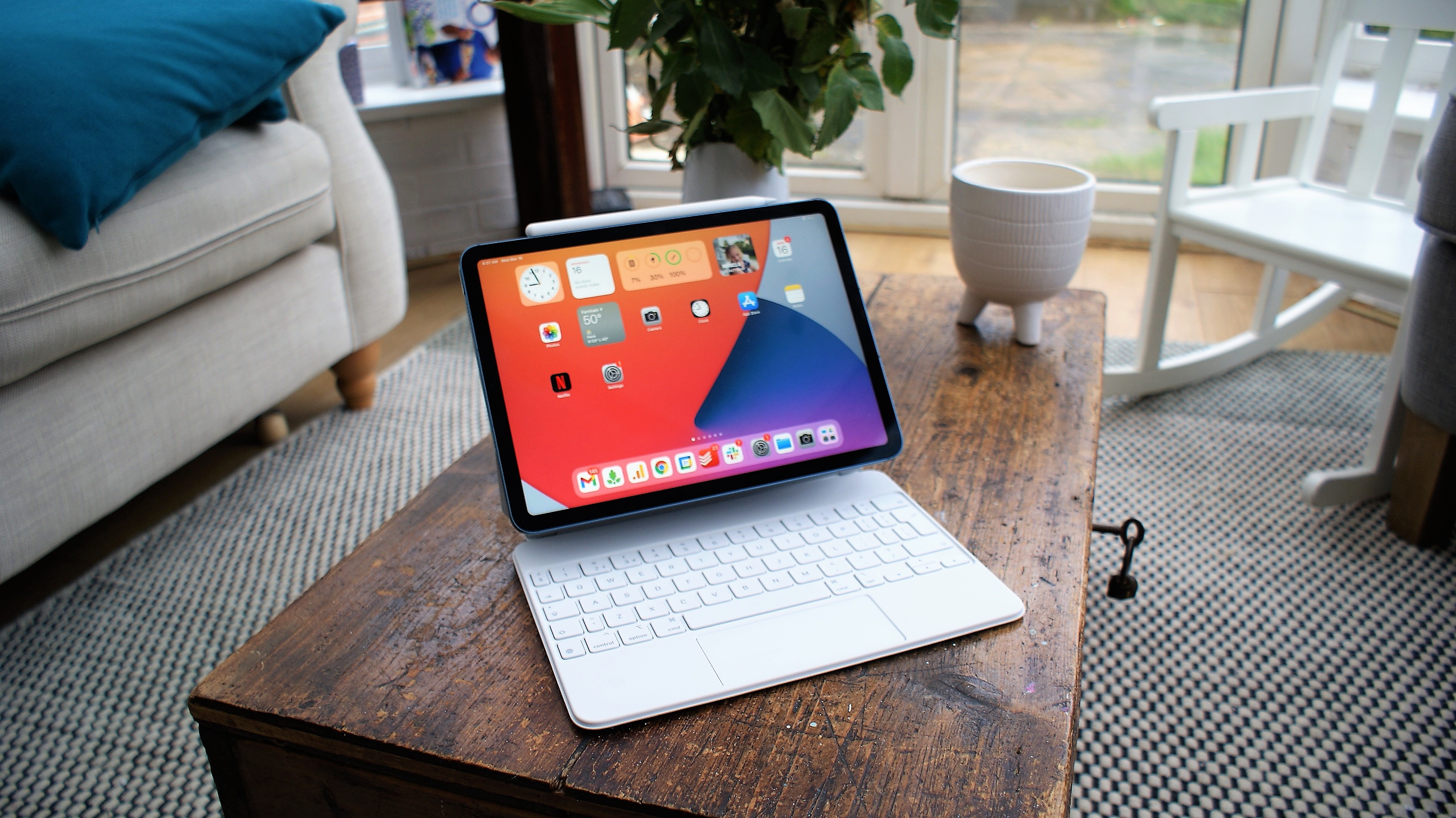
The 2022 iPad Air (Image credit: TechRadar)

Moving on, we've got two devices with an A17 Pro chip, which made its debut in the iPhone 15 Pro and the iPhone 15 Pro Max last year. This piece of silicon could well be powering the iPad mini 7 when it arrives, which would be a hefty upgrade.

Lastly, there are four devices with the M2 chip inside, and MacRumors reckons these are the four iPad Air 6 models – the two rumored 10.9-inch and 12.9-inch sizes, with either Wi-Fi or Wi-Fi and cellular connectivity on board.

The M2 chip was launched in 2022 and first found its way into the MacBook Air and the MacBook Pro, before featuring in the latest iPad Pro models. You can also find it powering the Apple Vision Pro that went on sale earlier this year.

All of these various iPads were expected to show up this year, and the new leak doesn't tell us anything new in that regard – but we've now got a better idea of the specs that they'll come with, and more evidence that they are indeed launching soon.

You might also like


from TechRadar - All the latest technology news https://ift.tt/7KX3ZWO

This week in the world of tech we had the Mobile World Conference – MWC 2024 – where tech companies introduced us to the weird and wonderf...

This week in the world of tech we had the Mobile World Conference – MWC 2024 – where tech companies introduced us to the weird and wonderful mobile gadgets they’re cooking up. 

We went to the show and saw some impressive tech including the phone of the show, Xiaomi 14 Ultra, the laptop of the show, Samsung Galaxy Book 4, and the best wearable, Humane AI Pin – which featured alongside others that we recap in our 11 best gadgets of MWC 2024 roundup.

There was more than MWC though, so to help you get caught up on the most important innovations we’ve got a recap of the seven biggest tech news stories of the past week in case you missed them.

7. We tried the Samsung Galaxy Ring 

Samsung Galaxy Ring

(Image credit: Samsung)

We got our first hands-on experience with the Samsung Galaxy Ring, and we were suitably impressed by its claims of next-generation AI-powered sleep metrics. We learned a lot of new information about the highly-anticipated wearable, including how it’ll work with the Samsung Galaxy Watch 6, its movement-tracking capabilities, and the particular sensors it’ll be packing. 

Although the rings we tried on weren’t exactly connected, by wearing these early prototypes we were able to learn a lot about the design. Notably, its concave shape protects the main body of the Ring from scratches, a fault of other smart rings such as the Ultrahuman Ring Air.

6.  The first truly affordable foldable phone finally landed

Nubia Flip 5G

(Image credit: Future / Axel Metz)

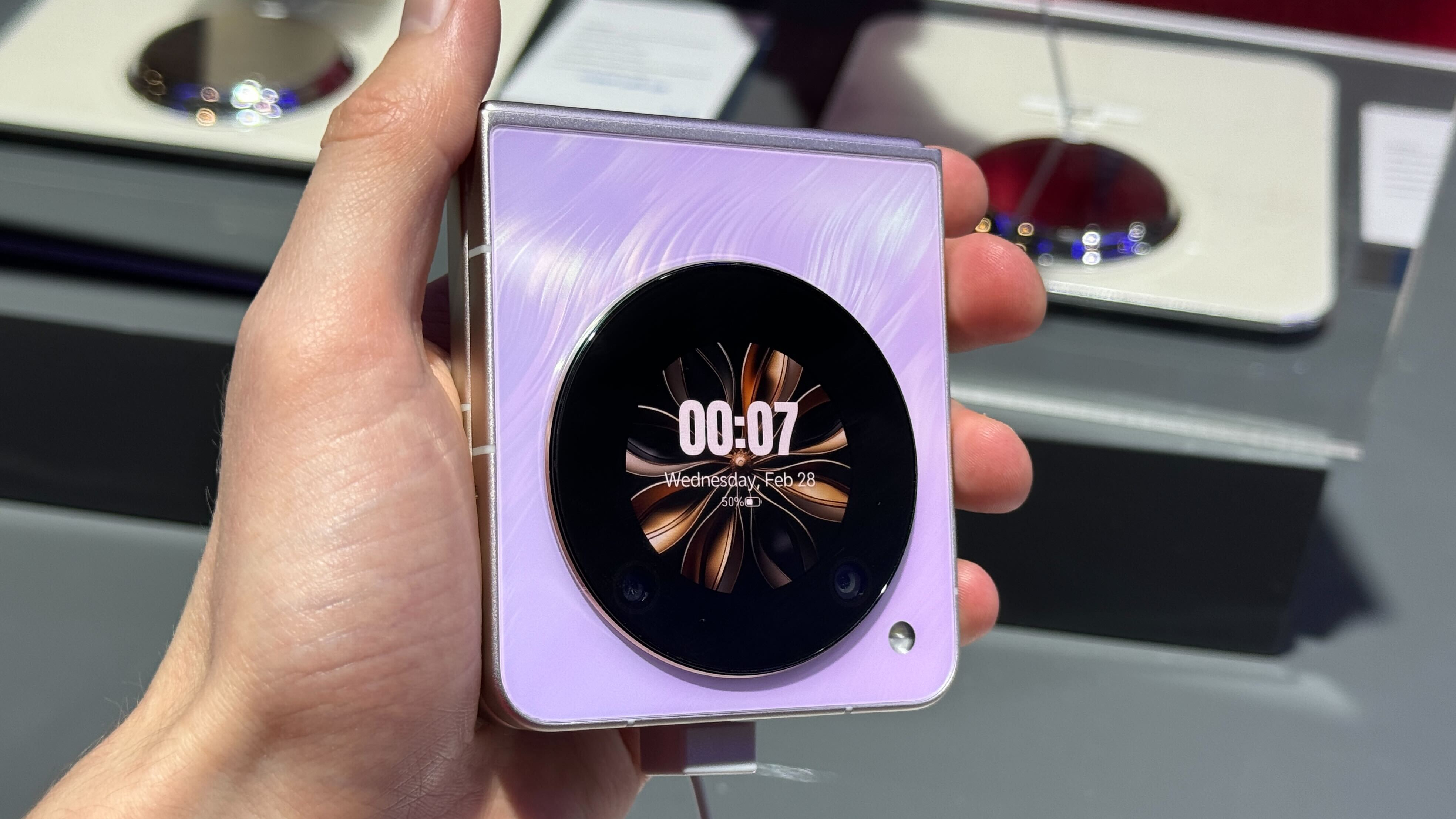
Foldable phones are great, but they’ve also typically come with ludicrous price tags – until now. This week we saw the arrival of the Nubia Flip 5G, a clamshell that’s almost half the price of the Samsung Galaxy Z Flip 5. Okay, it still isn’t exactly cheap at $999.99 / £1,049 / AU$1,649, but that’s a new low for a foldable phone – and that’s a strong start.

While the Flip 5G is still a bit of an unknown quantity, we certainly like the sound of its specs. It packs a 6.9-inch folding AMOLED display with a 120Hz refresh rate, a versatile external display, and three cameras (including a 50MP wide lens, 50MP telephoto lens, and a 16MP selfie camera on the front). 

Even if the Flip 5G’s main legacy is sparking a new wave of mid-range foldables, it’ll have done its job as far as we’re concerned.

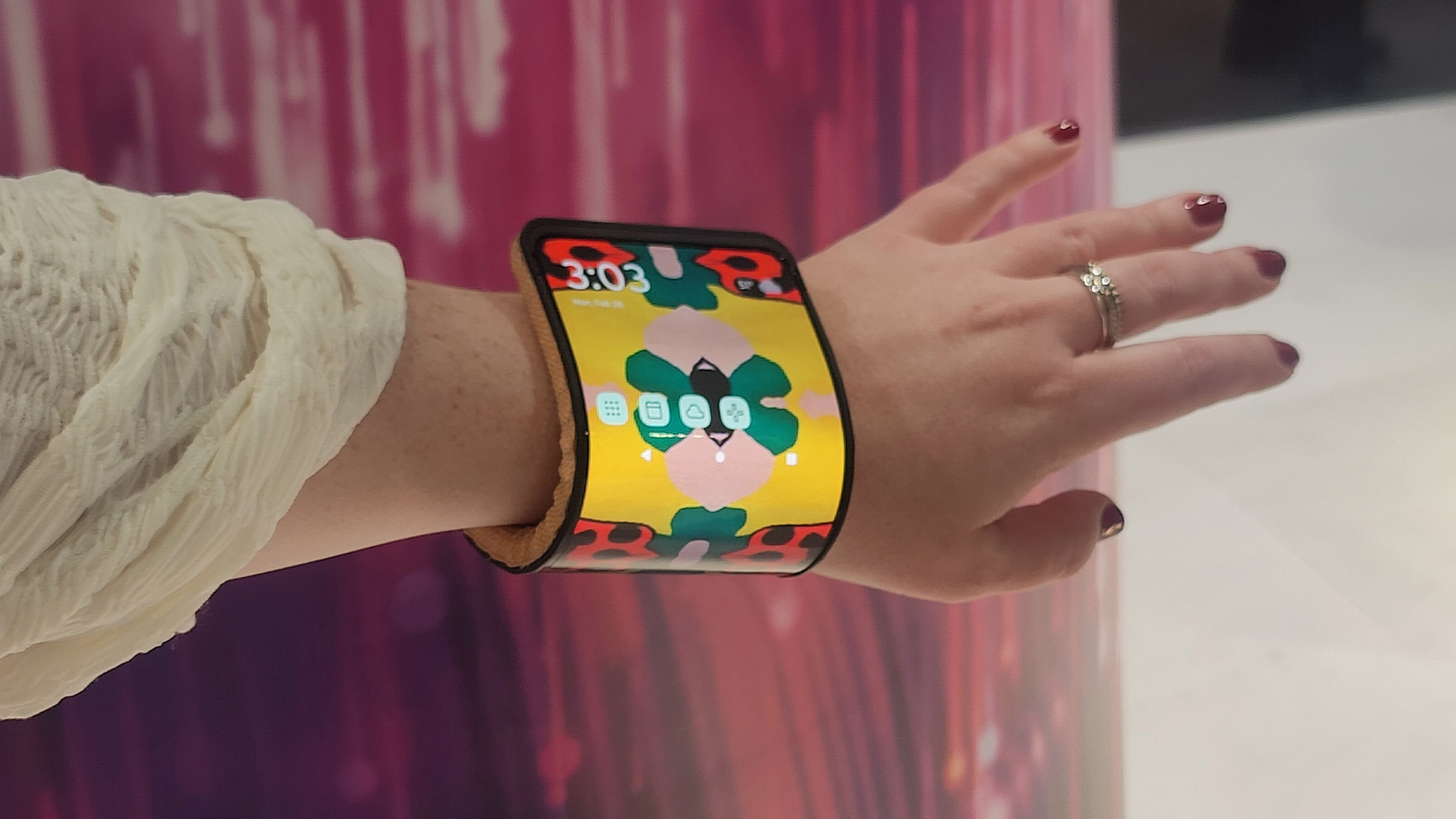
5. We wore a smartphone like a watch

Motorola Adaptive Display at MWC 2024

(Image credit: Future)

MWC is the perfect time for tech manufacturers to show off their weirdest, wildest concepts that aren’t ready to hit the market just yet, and Motorola did just that at MWC 2024. It debuted the Adaptive Display, a phone that’s able to be bent in several different positions, that can be attached to the wrist via a magnetic band. 

Most phone batteries are solid rectangles, preventing them from being bent in this way, but the Adaptive Display has a neat trick that allows it to circumvent this problem. Several smaller batteries comprise horizontal lines at the back of the concept phone, allowing the rest of the phone to be bent around them. Clever stuff. 

4. We saw smart contact lenses

Xpanceo smart contact lens

(Image credit: Xpanceo)

The apex of wearable technology probably won’t be something you can wear on your shirt, it’ll be a tiny, ultra-thin device you can put in your eyes. The latest company to offer promises of a smart contact lens future is Xpanceo. It showed off not one, not two, but four smart lens prototypes demonstrating four aspects of eyeball-wear innovation.

One promises mixed reality (XR) vision, another information, and one even gives you, basically, a super-hero vision.

While the company claims to have built all the working components, no one has worn any of these smart lenses (they need FDA approval for that) and what Xpanceo showed off at MWC 2024 was just one lens on a special stand that you could peer through.

The future of smart contact lenses is exciting but also, probably, a long way off.

3. The Apple Car got parked permanently

Apple Car Concept

(Image credit: Industry Leaders)

Apple apparently parked its long-aborning Project Titan EV car project and is ready to move on full-time to Generative AI. At least that’s the news from one trusted Apple watcher. It’s a big deal because Apple may have been working on an Apple Car (or iCar) for almost a decade and spent billions on the project.

On the topic, our US editor-in-chief Lance Ulanoff said: "I, for one, am not surprised. I’ve been writing about how it was a bad idea and one Apple was never fully committed to for almost as long as rumors have been swirling that it was working on it.

"The car business is nothing like Apple’s other treasured categories: too many partners, too low margins, and a very different sales experience that can often result in no sale. Plus, I also think Apple may have missed its moment to step in (or acquire) and dominate."

Less surprising than this apparent news is that whoever is left from the Apple Car team will turn their attention to a much more present Apple project: Generative AI for all the company’s key categories. So yeah, you'll never drive an Apple car, but your iPhone is probably about to get smart enough to do the driving for you – maybe.

2. Meta made Quest Plus seven times better 

Girl wearing Meta Quest 3 headset interacting with a jungle playset

(Image credit: Meta)

This week Meta announced that its Quest Plus plan is getting an upgrade. Now, on top of the two free apps you get a month that you can download and keep for as long as you’re subscribed, you’ll also get access to a Netflix-style library of rotating VR titles. Best of all, the price of a subscription isn’t changing.

Starting March 1, 2024, 12 titles will join the Quest Plus library – including some of our favorites such as Sports Scramble, Walkabout Mini Golf and Until You Fall – and the two free apps you can keep are shooter Contractors and immersive puzzler Shadow Point.

So for $7.99 / £7.99 / AU$12.95 a month, or $59.99 / £59.99 / AU$99.95 a year, you’ll get access to 14 games and apps instead of just 2. However, it’s not currently clear how regularly the library of 12 games will change, and if it will always have 12 titles or if it will grow and shrink month to month.

1. Apple iPad and MacBook plans leaked

A woman holding and using Apple New Ipad Pro 2020 digital tablet with Apple MacBook Pro laptop computer while drinking coffee

(Image credit: Farknot Architect via Shutterstock)

If you’re looking to buy an Apple MacBook or iPad you might want to wait as one leak suggests new models are coming very soon.

We’d heard whispers that new Apple tablets and laptops could be arriving in March or April, and Bloomberg’s Mark Gurman – a reliable source for Apple intel – has said a Spring launch is all but certain. What’s more, MacRumors reported that Apple recently updated internal documents regarding “unannounced or unreleased products” that are meant to help Apple staff navigate potential customer questions – another sign that new products are likely incoming.

If the leaks are correct, then we could see a refresh of the 13-inch and 15-inch MacBook Air laptops outfitted with the powerful M3 chip that was installed in the MacBook Pro last year. As for iPads, the new Pro models could get an M3, and the iPad Air might be given the older (but still impressive) M2 chip. They might also get OLED displays, but we’ll have to wait and see.  


from TechRadar - All the latest technology news https://ift.tt/NMbJeu6

New research shows that human error is still widely regarded as the main threat to business security, and that's straight from the hors...

New research shows that human error is still widely regarded as the main threat to business security, and that's straight from the horse's mouth.

Despite 90% of CTOs deploying multi-factor authentication, and 91% using identity access management technology for company security, over half (59%) said that human error is the biggest threat to their organization.

Humans were ranked above both ransomware attacks (48%) and phishing attacks (40%).

The research, conducted by STX Next, surveyed over 500 CTOs across the globe and found that while only a quarter (24%) believed that security was the biggest challenge facing their organization, human error was definitely a major concern.

More worryingly however, less than half (49%) of the companies involved in the study said that they had a cyber insurance policy in place, with less than six in ten (59%) implementing a ransomware protection solution within their organization.

The use of in-house security teams is worrying low, with just 36% of companies surveyed having a dedicated department for security services. Speaking on the findings, STX Next CISO, Krysztof Olejniczak said, “Despite deployment of comprehensive technology, poor implementation, substandard support processes or lack of governance can render these efforts useless.

“In recent years, the frequency and severity of cyberattacks across all industries has risen extraordinarily, and employees are often carrying the burden of being an organisation’s first line of defence,” he continued.

“While the threat of ransomware remains high, in many cases, cybercriminals aren’t in fact relying on incredibly advanced and sophisticated methods of attack, but on human error and social engineering techniques to gain access to an organisation’s systems.”

More from TechRadar Pro


from TechRadar - All the latest technology news https://ift.tt/ziNdUbl

Microsoft has announced a raft of enhancements to its native ‘Voice Access’ voice recognition and Narrator screen reader features as part...

Microsoft has announced a raft of enhancements to its native ‘Voice Access’ voice recognition and Narrator screen reader features as part of the next preview release of Windows 11, versions 23H2 and 22H2.

Revealed in a new company blog post, the ‘Voice Access’ feature, invaluable for those with disabilities, now supports additional languages, custom voice shortcuts, and additional displays - making switching easier than ever. 

Narrator now allows for previewing voices, while Microsoft claims that its detection of text and handwriting in images has seen improvement.

Microsoft Copilot and the rest of it as a force for inclusive good

In a more comprehensive rundown of the update from Yusuf Mehdi, Microsoft’s Executive Vice President and Consumer Chief Marketing Officer, support for quickly launching these accessibility tools via Copilot IT teams who want to enable the new features for their organization are advised to enable optional updates via policy.

Being able to quickly launch live captions, Narrator, Voice Access, and a whole raft of other accessibility tools that have been baked into Windows since the dawn of recorded time through Copilot sounds pretty convenient and, dare I say, inclusive.

Custom voice shortcuts benefit everyone in the business of getting things done, because they can boil precise tasks, such as copying and pasting text, down to a phrase, but that’s also a lifeline to many who struggle with speech.

Navigating multiple displays has always been a minefield for users with low-vision, and moving files, apps and windows has forever been a nightmare for low-dexterity users, to the extent that I find it baffling that enabling voice commands across displays wasn’t implemented earlier. However, it’s there now, and will help.

That’s not all Microsoft revealed today - it also revealed Windows Autopatch becoming the ‘unifying’ update management solution for enterprises, and users can also use their your Android phone camera as a webcam now, a feature that’s so long overdue that everyone who suddenly needed a webcam for remote work when Covid-19 simply went out and bought one.

So, instead, it’s these quality of life improvements that drew my attention. Windows’ automatic window snapping getting personalized presets per app isn’t exciting either, on paper, but as one of those low-dexterity users they have now,  who finds this baked-in feature the bane of their existence, I think that’s good.

More from TechRadar Pro


from TechRadar - All the latest technology news https://ift.tt/pl6Z7nb

The technology industry has always been prone to hype. Today, the obsession with artificial intelligence (AI) is almost overwhelming and a...

The technology industry has always been prone to hype. Today, the obsession with artificial intelligence (AI) is almost overwhelming and as someone who has worked with Java for over 25 years I have to admit to a certain degree of envy. It is no surprise that as AI and machine learning continue to trend, computer science graduates are gravitating to the Python programming language as it plays such an integral role in this world.

That said, I think it would be a mistake to put all your eggs in the AI basket. If you are a graduate or already working in the IT industry consulting your ‘Mirror, mirror on the Wall’ and thinking about whether your future lies with Python or Java, then I would like to convince you that Java is indeed the greatest of them all.

You can say I’m biased, but there are huge opportunities for programmers willing to turn their gaze to Java in 2024. The noise around AI may turn heads, but its appeal will rise and fall as the discipline matures. If you want more certainty from a career in IT, then Java is very much the incumbent and THE mature technology in the enterprise.

Reasons why Java skills are in demand

In the enterprise technology world, there is a commercial reality which is underlined by Hackerrank’s analysis at the start of 2023 of the most in-demand skills for employers. In that ranking, Java clearly came out on top. Certainly, an exciting time to be a Java developer.

Why do I believe this? There are many good reasons why Java will continue to lead in its demand among IT skills in 2024, but let me distil it down to the three most prominent ones:

1. Java is everywhere

We conducted our annual research on the State of Java which confirmed it is being used in the majority of enterprise applications and IT infrastructure environments. This universality means there are significant opportunities for those with Java skills. A major issue we have found though is version complexity. Our analysis suggests that many companies are using more than one version of Java from JDK 6 and 7 to JDK 8, 11 and 17. In an enterprise environment, downtime has real financial consequences, so knowing there are so many versions of Java in these set-ups creates complexity and more worryingly security vulnerabilities. 

We saw with the Log4j vulnerability how much potential damage could be caused if code is not up to date. Indeed, recent Veracode research suggests many companies still have not fully updated their Java code base to protect against future breaches. The bottom line is that companies will need individuals with Java skills to ensure applications remain stable and secure and there will be a consistent demand for commercial support to provide the essential fixes, security patches and expertise to support these teams.

At a time when organizations are striving to transform their enterprise IT environments, it is critical that the underlying Java applications and infrastructure are optimized. This creates opportunities for coders, because working with our customers we have also found that optimizing Java environments has had a significant positive knock-on effect for cloud computing usage. 

Historically, we have found customers paying for more public cloud capacity than they use, but if they optimize their Java-based applications and infrastructure they can significantly improve throughput which in turn reduces the number of nodes they require in the cloud. We have also seen examples where organizations have had instances up and running on standby because they are worried about Java warm-up times, which also adds unnecessary costs. 

A good Java coder will be seen as a huge asset to an organization if they can deliver cost savings on public cloud expenditure and improve IT performance.

2. Java is alive and well

While Oracle may own the trademark there is an incredibly robust open source community, which underlines the health of the technology. This community is contributing innovations and building out Java-based frameworks, libraries and tools, which ensures its continued relevance in the enterprise. More than 9 million developers use Java to create applications for everything from smart cards to enterprise servers and the cloud. 

Java powers more than 4,500 branded products. Furthermore, there is a well-established standards structure which gives enterprises the confidence that the technology will be developed in a consistent, reliable manner. You only have to look at the concerns about dependency on ChatGPT highlighted during the recent uncertainty surrounding the OpenAI leadership team to understand why enterprise users cannot become dependent on a technology that is not stable or dominated by one player. 

That Java has so many contributors and established ways of operating means that those with Java skills can also be confident there will be opportunities for them long into the future.

3. Java is at an inflection point

At the start of 2023, Oracle announced it was changing its pricing policy for Java, which has upset many in the community. Based on our discussions with customers we are seeing more and more looking at alternative non-Oracle Java distributions. Clearly, this increases demand for Java skills, but more importantly this disruption will lead to further innovation as other vendors look to provide solutions that will not just match but improve on what Oracle already offers like delivering more distributed architectures; faster startup/warmup times; more performant JVMs; and telemetry to monitor for vulnerabilities in underlying Java code. 

These three factors secure the future for Java as we will see new developments and applications of the technology which will maintain its vibrancy. In turn, this will create opportunities for individuals to carve out a name for themselves by contributing to future developments in the community, suggesting Java will be around for long-time after all the hype around other technologies has died down.

We've listed the best JavaScript online courses.

This article was produced as part of TechRadarPro's Expert Insights channel where we feature the best and brightest minds in the technology industry today. The views expressed here are those of the author and are not necessarily those of TechRadarPro or Future plc. If you are interested in contributing find out more here: https://www.techradar.com/news/submit-your-story-to-techradar-pro


from TechRadar - All the latest technology news https://ift.tt/Z7TbQjJ