The first trailer for Landman, the latest rural America drama from Taylor Sheridan, has been released – and I'm convinced it'll be Paramount Plus' next big TV hit.
Released yesterday (September 5), the forthcoming show's first teaser doesn't just give us a glimpse of its impressive star-studded cast. Indeed, the latest original series from Yellowstone creator Sheridan also gives us our best look yet at the explosive melodrama that'll not only be a major part of Landman's appeal, but has also come to define many of Sheridan's acclaimed works for Paramount's streaming platform.
Hooked already? I know I am. After all, Sheridan's track record with making engrossing television for one of the world's best streaming services is incredibly strong.
The incredibly popular Yellowstone, which Sheridan co-created with John Linson, is one of the best Paramount Plus shows around, notwithstanding, Sheridan has almost single-handedly put Paramount's streamer on the map with a number of other highly-rated series. That roster includes Yellowstone spin-offs 1883 and 1923, the Jeremy Renner-led Mayor of Kingstown (Sheridan co-created it with Hugh Dilllon), the Sylvester Stallone-starring Tulsa King, and the Zoe Saldana-fronted Special Ops: Lioness. There's no reason to suspect, then, that this'll be a certified dud among viewers and/or critics upon release.
Speaking of its launch date, Landman is set to make its Paramount Plus debut on Sunday, November 17. It'll arrive with a two-episode premiere, with new installments set to air weekly on the platform until its finale is released on January 12, 2025.
Who is part of Landman's cast? And what's it about?
Billy Bob Thornton stars as Tommy Norris in Landman(Image credit: Paramount Plus/Imperative Development)
Plot wise, there isn't much to go on. Paramount is playing it pretty coy on the story brief front, with only a couple of differently worded synopses being released before and alongside Landman's first trailer.
In a press blast accompanying the show's inaugural teaser, Paramount simply said of Landman's story: "Set in the proverbial boomtowns of West Texas, Landman is a modern-day tale of fortune seeking in the world of oil rigs". As I said, that's about as secretive as you're going to get from a story synopsis standpoint, but there are other snippets of information that we know about it.
Firstly, Landman isn't a wholly original idea concocted by Sheridan. It's actually based on a monthly podcast series called Boomtown that was developed by Christian Lawrence and produced by Texas Monthly. The 11-part series, which launched on audio streaming platforms including Spotify and Apple Podcasts in December 2019, tells the story of the ever-expanding big oil industry in the Permian Basin, which sits in the southwest corner of Texas.
As for the other big thing we've learned about Landman, it concerns its extremely talented cast. Indeed, there are plenty of heavy hitters set to star in it, including Billy Bob Thorton (Fargo, Goliath), Demi Moore (Empire), John Hamm (Mad Men), Michael Pena (Ant-Man), Ali Larter (Heroes), and Andy Garcia (The Untouchables, The Godfather Part III).
Landman is set to compete for viewer's attention with some big TV rivals in mid-November, not least from Cobra Kai season 6 part 2, which arrives on Netflix on November 15. But, armed with its star-studded cast, engrossing plot, and talented showrunner in Sheridan at the helm, it's got a good chance of holding its own.
Between the release of Astro Bot and the seemingly accidental PS5 Pro reveal, you might've missed the details of Sony's planned celebrations for PlayStation's 30th anniversary.
An official PlayStation Blog post, written by Sony Interactive Entertainment vice president of global marketing Isabelle Tomatis, details what else we can expect from such a monumental anniversary for the PlayStation brand.
What immediately caught my eye as a fan of the best racing games is an all-new way to check out Gran Turismo 7, by way of a free trial known as My First Gran Turismo. Launching sometime this holiday, the trial will feature a select number of cars, circuits, and events "that evoke the nostalgia and excitement of the very first GT experience." It'll be available to all PS5 and PS4 players, so it seems there won't be a need for a PS Plus subscription here.
Additionally, a bunch of digital soundtracks of PlayStation titles are making their way to Spotify for the first time. From October to January, we can expect the soundtracks for God of War (2005), God of War 2, God of War: Ghost of Sparta, Twisted Metal, Starhawk, and Unit 13 to hit the music streaming service. They'll also be available through Apple Music and Amazon Music.
Another interesting debut is 'Shapes of Play.' This is a trio of physical goods designed by PlayStation's console hardware team. Shapes of Play: Battle is a competitive board game, while Shapes of Play: Create is a set of magnetic blocks that can be arranged into various shapes. Finally, there's Shapes of Play: Recharge which appears to be an arrangement of soft stress toys in the shapes of PlayStation's iconic face buttons. That last one's my favorite, actually.
Lastly, there's going to be a free online multiplayer weekend happening from September 21-22, allowing players who don't have a PS Plus subscription to hop online at no extra cost. Several online tournaments are going to be held for games including NBA 2K25, MLB The Show 24,Tekken 8, and Guilty Gear Strive. Participating in any of these tournaments will also net you a couple of unique PlayStation 30th anniversary avatar icons.
And if these announcements leave you feeling disappointed, fear not. The blog post confirms that this is just a taste of what we can expect from the PlayStation 30th anniversary celebrations and that more announcements will be made "in the near future." New Ape Escape, then, please?
You might also like...
PS5 Pro: the latest on rumored specs, price, design, and release date speculation
If you like the idea of Samsung's cute The Freestyle projector but can't justify the price (originally $799 / £899, though now available cheaper), Xgimi's new projector could be just what you're looking for: it undercuts the Samsung quite significantly and is designed to go pretty much anywhere.
The Xgimi MoGo 3 Pro is almost exactly the same height as a Starbucks Venti Cup and weighs just 1.1kg. You can run it from a power bank (65W or better) for plentiful portable projection possibilities, and the manufacturer promises "cinematic visuals and sounds".
This is the third generation of MoGo Pro. We reviewed the very first one back in 2021 and said that it "delivers the goods and a bit more"; it "is a balanced product that delivers where it matters for remote workers and business professionals on the move. Easy to carry, use and put in place." That model had a brightness of 300 Lumens and cost $550; the third generation model is smarter, considerably brighter than both previous models and cheaper too – which is great, since the best portable projectors have come a long way since then.
Xgimi MoGo 3 Pro: key features and pricing
The Xgimi MoGo 3 Pro is an LED projector with a brightness of 450 ISO Lumens and a resolution of 1080p. It's designed to project display sizes of up to 120 inches and has an integrated hidden bracket that enables you to tilt it through 130 degrees. The projector has Xgimi's own ISA 2.0 image correction technology to reduce keystone distortion, avoid obstacles, focus the image and align the picture to the screen automatically.
This is Xgimi's first Google TV projector and includes the Netflix app. You can also choose from the thousands of Play Store apps.
There are two integrated 5W Harman Kardon speakers, and you can use it as a Bluetooth speaker along with its Ambient Light Mode, which lights up as you play your music from your phone.
In addition to the projector, Xgimi has also launched three accessories: a Creative Optical Filter to add atmosphere via the The Wall screensaver app; the PowerBase Stand, a stand that includes a built-in battery with up to 2.5 hours battery life; and a carrying case. There will be a bundle that combines the projector and stand at a discounted price, but Xgimi hasn't announced pricing for that just yet.
The Xgimi Mogo 3 Pro has an RRP of £419 (about $550 / AU$800) – £20 less than the current price of the MoGo 2 Pro – and will be available from 6 September from XGIMI.com, Amazon and other retailers. US pricing hasn't yet been announced but expect it to be low: where the 2 Pro is £439 in the UK, it's $369 in the US.
You might also like
Home Theater Week 2024: see many more great projector and audio articles
A number of companies, including Samsung, Phison, and Huawei, have been teasing 128TB SSDs this year. Inevitably, these products are not intended for consumers but rather are designed to cater to the growing storage needs of AI servers and data centers.
128TB is unquestionably a huge leap forward in terms of capacity. It's important to remember that Solidigm's 61.44TB SSD was the world's largest solid state drive when it went on sale back in January, and no one was offering anything close to it. How quickly things change.
Samsung recently showcased its forthcoming 128TB SSD, the BM1743, at the Future of Memory and Storage 2024 event (formerly Flash Memory Summit). There's currently no word on when that model is expected to see the light of day, but Samsung would like you to know it is already preparing an SSD with double that capacity. Yes, really.
256TB SSD for servers
The Korean Economic Daily reports that South Korean memory rivals Samsung and SK Hynix recently took to the stage at Semicon Taiwan 2024 to talk about high-bandwidth memory (HBM), with the two firms detailing the efforts they are going to in order to boost production of the in-demand chips. During a keynote speech, marking the first time a Samsung representative has given a talk in Taiwan, Jung-Bae Lee, corporate president and head of Samsung’s memory business said, “To maximize the performance of AI chips, customized HBM is the best choice. We are working with other foundry players to offer more than 20 customized solutions.”
It was during this presentation, KED reports, that Dr. Lee dropped his casual bombshell, stating that “Samsung is preparing to unveil a 256 terabyte (TB) solid-state drive (SSD) for servers to meet growing demand for high-capacity storage devices in AI servers.”
No additional information was provided, so it’s unclear when such a device will be released - it could be next year or further in the future. However, the fact that Samsung mentioned it at all suggests the company is a decent way into the development process.
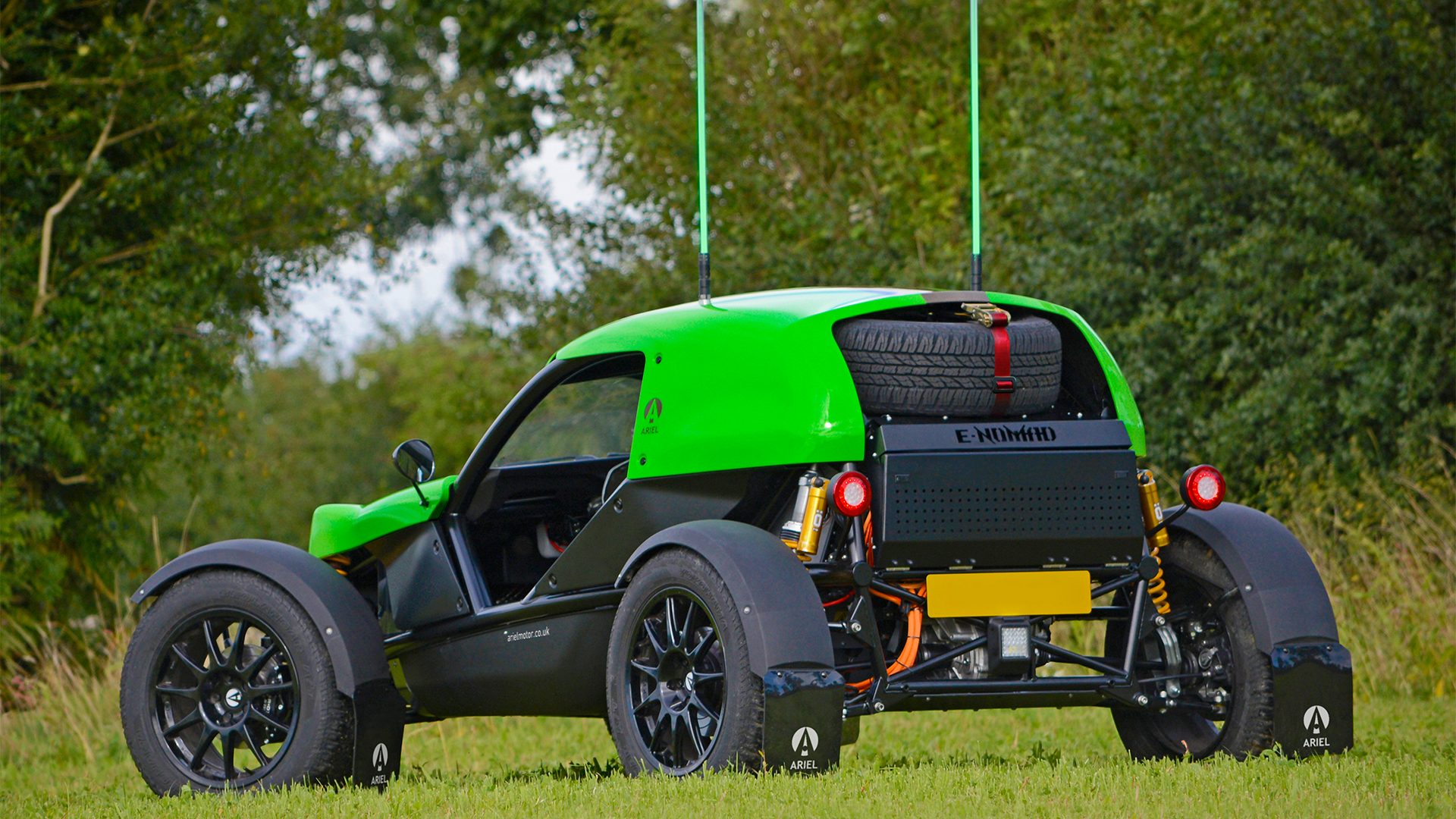
The British manufacturer of niche but extremely fun machines, Ariel Motor Company, has just announced that it will build an electric version of its popular off-road Nomad model to help it gauge consumer reaction for a full production version.
Not ones to conform, Ariel has dabbled in motorcycles and e-bikes with its fabulously powerful and girder-forked Ace and Dash models. Although the badge was arguably immortalized when Jeremy Clarkson famously had his face rearranged by the extreme, open-top Atom in an episode of Top Gear.
The Nomad builds on the Atom’s banzai concept but adds a roll cage, chunky off-road tires and enough suspension to soak up lumps, bumps and serious jumps.
Ariel’s recent decision to venture into electrification adds a completely new dimension to its off-road offering, matching the acceleration of its internal combustion engine sibling and providing the same muddy thrills without the emissions or, more importantly, the noise.
(Image credit: Ariel Motor Company)
The company says the E-Nomad will hit 60mph from rest in just 3.4 seconds and deliver 490Nm of instantaneous torque, which its makers say gives the rear-wheel drive car exceptional performance on-road, while remaining “stable and controllable” on challenging terrain.
But the Ariel experience has typically been about a stripped-back, no frills drive, with weight kept to a minimum in order to maximize performance. This same ethos has been carried through to the E-Nomad, with the team able to keep weight below 900kg (it tips the scales at 896kg).
This is, in part, thanks to the fact that the E-Nomad uses twelve Pegasus V3 battery modules with a total capacity of 41kW, which sees the pack weigh in at just 300kg.
Regardless, it still offers a predicted all-electric driving range of around 150-miles, while delivering 210kW (281bhp) to the rear wheels.
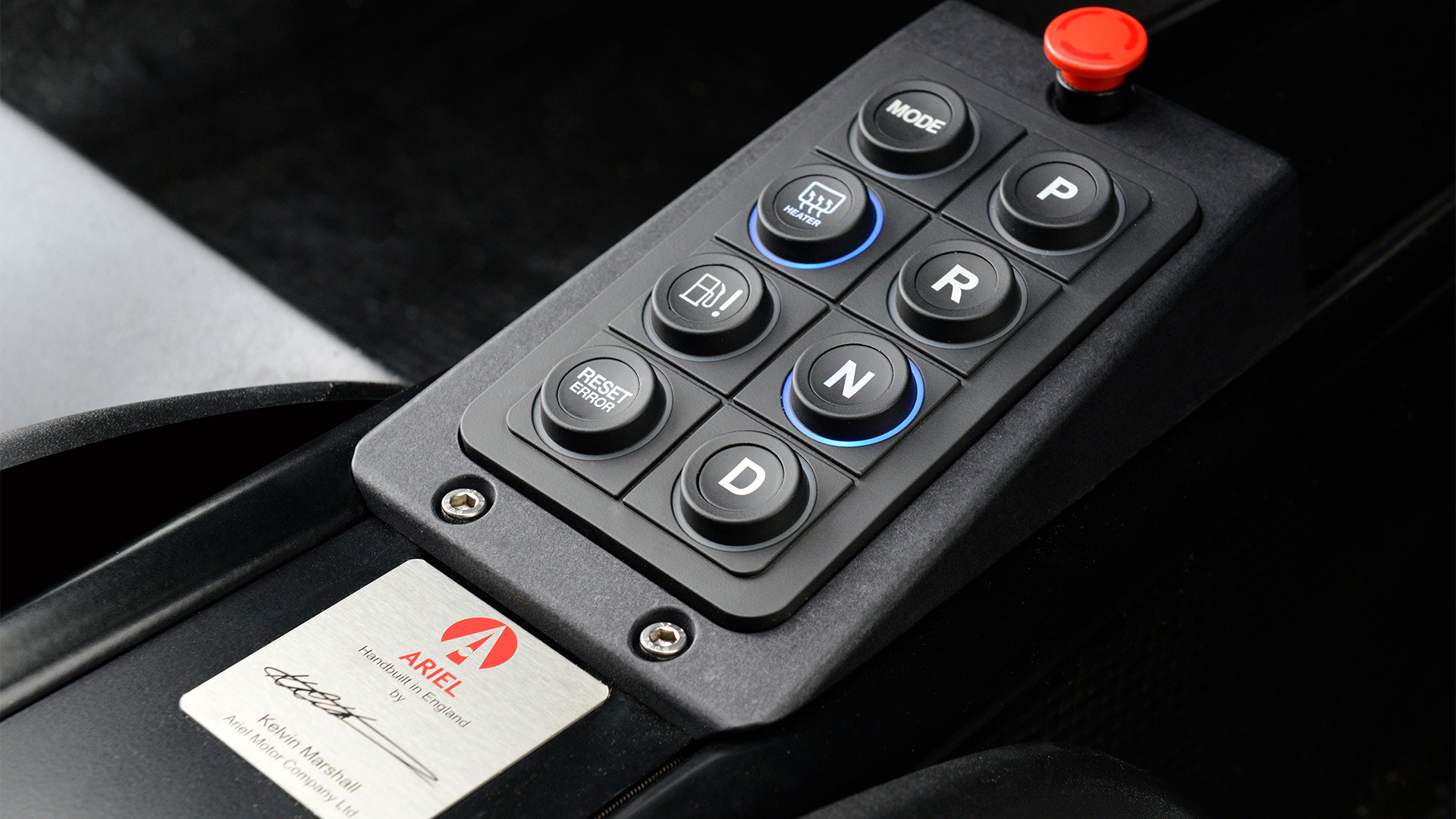
For longer adventures, the E-Nomad is capable of DC fast charging for a 20-80 per cent top up in 25 minutes, while use of regenerative braking means plenty of power is fed back into the system and drivers can effectively use a single pedal to navigate tricky terrain.
Silent but violent
(Image credit: Ariel Motor Company)
Ariel CEO Simon Saunders told Autocar that the E-Nomad would cost around £10,000 more than the combustion engine version should it go on sale, placing it around the £78,000 /$102,000 /AU$152,000 mark.
Despite the fact the company has made clear that customers will have to wait for one, it looks like an incredibly finished package for a mere concept car.
Even down to the fact that Ariel has carefully selected natural flax fibers for the body work in order to reduce the overall CO2 footprint of the vehicle and match the electric powertrain’s ‘green’ credentials.
Given that Ariel only really deals in seriously fun vehicles, the E-Nomad is likely to be just as much of a hoot as the rest of its line-up. But turning to electrified powertrains for this model arguably makes more sense than anything else.
The Nomad was always designed to venture off-grid and this is becoming increasingly difficult in many parts of the world due to strict emissions and noise regulations.
Silently bashing dunes or exploring green lanes is a more socially acceptable pastime and one that has already been exploited by motorcyclists, with the likes of KTM, Sur-Ron and Stark producing machines that will happily rival petrol powered bikes on the trails, without attracting all the attention.
A new study backed by data from more than 3,200 UK developers (and 65,000 developers from 185 countries) carried out by Stack Overflow has revealed the potential earnings for developers across Britain.
In its roundup of the top 10 best-paid developer roles in the country, Stack Overflow highlighted developer experience roles as the most lucrative, with a median salary of nearly £147,000.
Even the tenth highest-paying job attracts a salary of more than £83,000, which is considerably more than the UK average of £35,880 (via Forbes).
Developers in the UK can earn a six-figure salary
Rounding up the top three are engineering managers and blockchain roles, with average earnings of over £109,000 and £105,000, respectively. Together with developer experience roles, these three titles are the only ones with a six-figure average salary.
That said, site reliability engineers, project managers, developer advocates, AI developers and senior executive roles (such as C-suite workers and VPs) all sit in the £94,000-£98,000 bracket.
Security professionals, designers and cloud infrastructure engineers earned an average of £83,000 to £86,000.
Regarding the best position at work, Stack Overflow confirmed that managerial roles are the best-paid, attracting an extra £31,000. Back-end developers came next, followed by mobile, data engineers and front-end workers.
Stack Overflow’s research also extends to the best programming languages to learn for developers wanting to be considered for higher salaries – those capable of handling OCaml earned an average of £10,000 more than Scala and Solidity workers. Cobol and Groovy rounded up the top five.
With the need for highly skilled developers showing no signs of slowing down, spending time on personal development and boosting skills could prove an incredibly rewarding process for Britain’s developers.
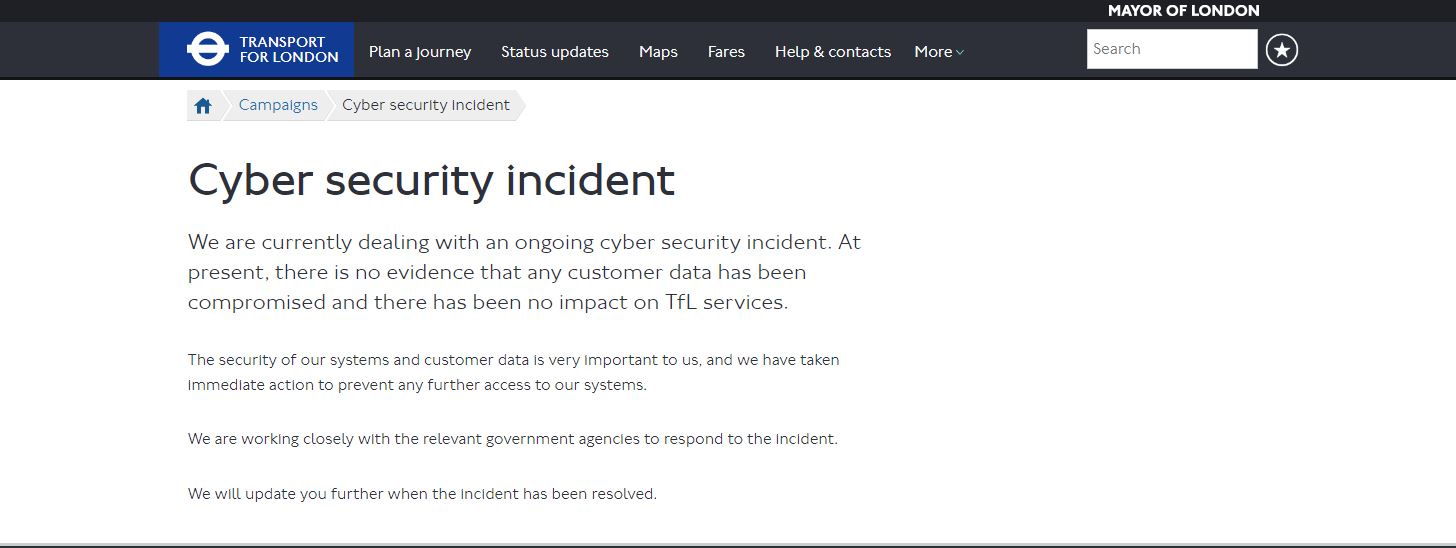
Transport for London (TfL), the local government body responsible for managing the transportation system in Greater London, is currently experiencing a cyberattack. However, the details are quite scarce at the moment, so the nature of the attack is unknown.
In a brief statement given to the BBC, TfL Chief Technology Officer (CTO) Shashi Verma said the company is currently sorting the problem out: “We have introduced a number of measures to our internal systems to deal with an ongoing cyber security incident."
"The security of our systems and customer data is very important to us and we will continue to assess the situation throughout and after the incident,” he added.
(Image credit: Transport for London)
No evidence of data theft
These days, the majority of cyberattacks revolve around hackers stealing sensitive data, and then either demanding a payment in exchange for deleting it, or selling it on the black market.
So far, it was confirmed to the publication, there is no evidence of data compromise. "Although we’ll need to complete our full assessment, at present there is currently no evidence that any customer data has been compromised,” Verma concluded.
"There is currently no impact to TfL services and we are working closely with the National Crime Agency and the National Cyber Security Centre to respond to the incident.”
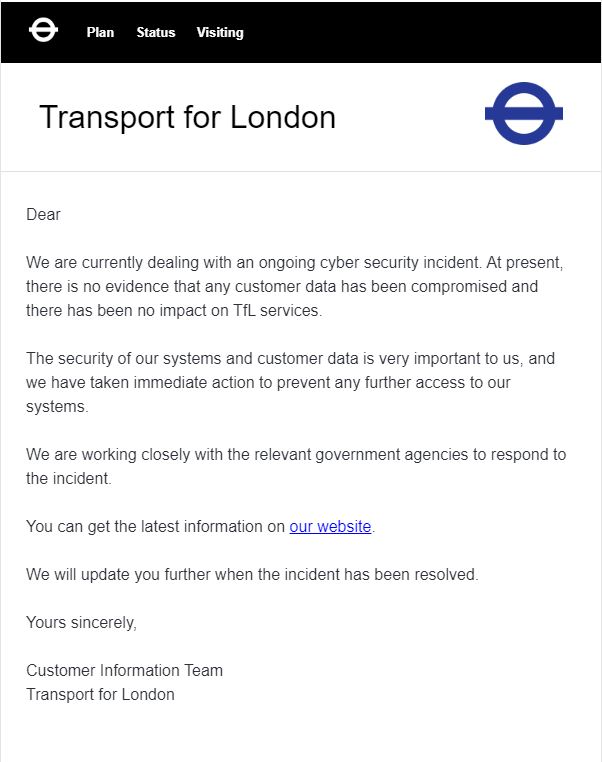
A Transport for London email sent to a customer disclosing the nature of the cyberattack.(Image credit: Transport for London)
Speaking to “insiders”, the BBC claims that employees were asked to work from home if possible, since it is only the backroom systems at the corporate headquarters that are currently affected by the attack.
This is not the first time Transport for London has been involved in a cyber-incident. Just over a year ago, the infamous Cl0p ransomware operation discovered a major vulnerability in the MOVEit managed file transfer tool, which it used to steal sensitive information from thousands of entities, including TfL.
Some of the other companies included 1st Source and First National Bankers Bank, Putnam Investments, Landal Greenparks, Shell, Datasite, National Student Clearinghouse, United Healthcare Student Resources, Leggett & Platt, ÖKK, University System of Georgia.
KitchenAid has just revealed a new range of coffee makers that can brew 40 different hot and cold drinks, all without waking up your sleeping partner. Some coffee machines can reach 70 decibels (dB) during grinding and brewing (the same as a washing machine), but all models in the KitchenAid Espresso Collection are Quiet Mark certified for their low noise levels.
According to Quiet Mark, although coffee machines generally give your ears a break between different parts of the brewing process, grinding beans and pulling espresso shots can still be an uncomfortably loud affair.
"It is because of this reason that isolating louder components, such as the grinding blades, is especially important," says the organization. "Furthermore, liquid sounds are to be minimized outside the coffee pouring process, as they create a sense of leakage where the user may be forced to stop the machine and check for cracks."
The KitchenAid KF8 coffee maker has a special mode for frothing non-dairy milks like oat, almond, and soya(Image credit: KitchenAid)
No dairy? No problem
The new KitchenAid Espresso Collection includes three models. The KF6 can brew up to 15 different coffee drinks, and has a 24in color touchscreen display so you can easily pick your preferred beverage. The KF7 has a 3.5in display and offers 20 different coffee options. Finally, the KF8 (above) has a huge 5in screen and can make over 40 different drinks, with six customizable favorites.
Each bean-to-cup machine has an integrated conical stainless steel burr grinder, and a 9.5oz / 270g removable bean hopper. Interestingly, if you want to brew something other than your usual beans, you can use a separate chute to bypass the grinder and brew pre-ground coffee instead. That could be particularly useful if you want to make an occasional cup of decaf, or have a friend who prefers a different roast to you.
All three machines have an automatic milk frothing and heating system for drinks like cappuccinos and lattes, and the KF8 has a dedicated mode for plant-based milks like almond, oat, and soy that conventional automatic coffee makers tend to struggle with.
The new coffee makers will be available to order direct from KitchenAid today (September 3) in the UK. At the time of writing, prices for the three machines are yet to be announced, but we'll update this article as soon as we have more information. International release dates have yet to be confirmed.
If you're thinking about upgrading your coffee machine but don't know where to start, our roundup of the best coffee makers will help you make the right choice.
The iPhone 16 Pro and iPhone 16 Pro Max are set to be Apple’s top phones for 2024, so it’s reasonable to expect the company will try and make them look as good and premium as possible.
Does that mean drastic design changes compared to the iPhone 15 line? Well, not necessarily, as Apple’s handsets are undeniably well-designed already. But leaks and rumors do suggest some changes are coming for these approaching models.
Below, we’ve detailed all the design leaks we’ve encountered so far, which combined provide a fairly clear picture of what to expect visually from the iPhone 16 Pro and the iPhone 16 Pro Max.
iPhone 16 Pro design predictions
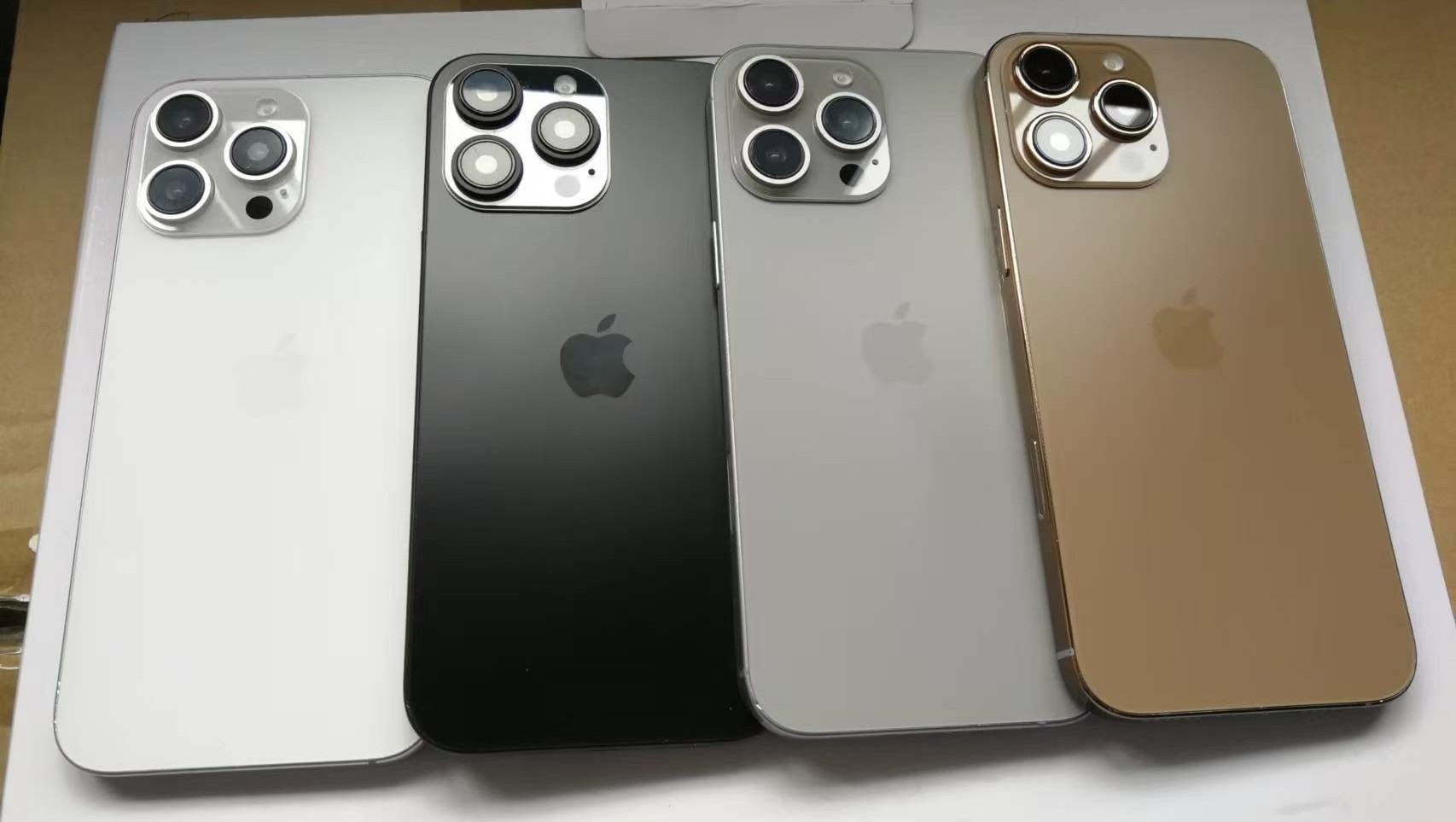
A leaked image of iPhone 16 Pro dummy units(Image credit: Sonny Dickson)
The iPhone 16 Pro could be bigger than the iPhone 15 Pro and packing an additional button, but otherwise look similar to its predecessor, if leaks are to be believed; see the leaked iPhone 16 Pro image above.
On the size front, while we aren’t sure of the exact dimensions yet, multiple sources have claimed that the iPhone 16 Pro will have a 6.3-inch screen, up from the 6.1-inch display of its predecessor.
So that will probably make the overall handset bigger than the 146.6 x 70.6 x 8.3mm iPhone 15 Pro, that said, the iPhone 16 Pro’s bezels are apparently smaller, shrinking from 1.71mm to 1.2mm.
We’d think the likely increase in screen size will also mean it weighs more than its 187g predecessor, though hopefully there won’t be a drastic difference in weight.
The other particularly noticeable design change we’re expecting is the addition of a Capture button positioned alongside the power button. This widely rumored feature would reportedly let you take photos and shoot videos, while a lighter press might engage the autofocus, and swiping across it could zoom in and out.
Beyond this and some new iPhone 16 Pro colors, we expect Apple’s upcoming Pro phone to look much like its current model, with a glass back, a titanium frame, the same basic shape and button layout, and the same camera arrangement.
One early leak did suggest the Face ID components could be hidden under the screen, making the Dynamic Island much smaller, as it would only have to house the front-facing camera. But we haven’t heard this reported elsewhere, so we doubt it will happen.
iPhone 16 Pro Max design predictions
Image 1 of 2
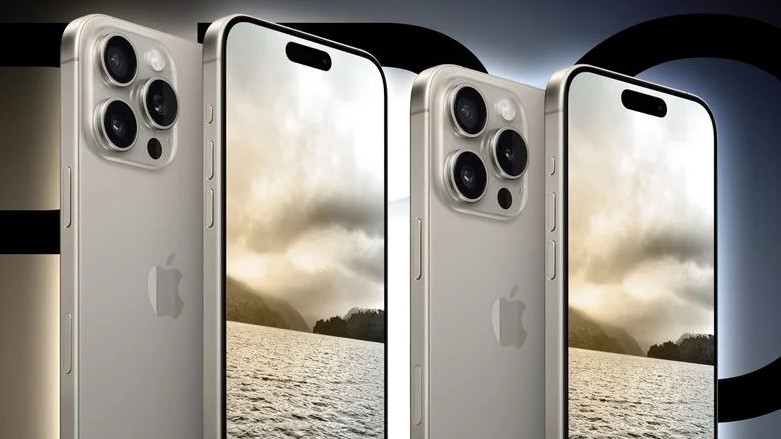
An unofficial render of the iPhone 16 Pro and Pro Max(Image credit: MacRumors)
Image 2 of 2
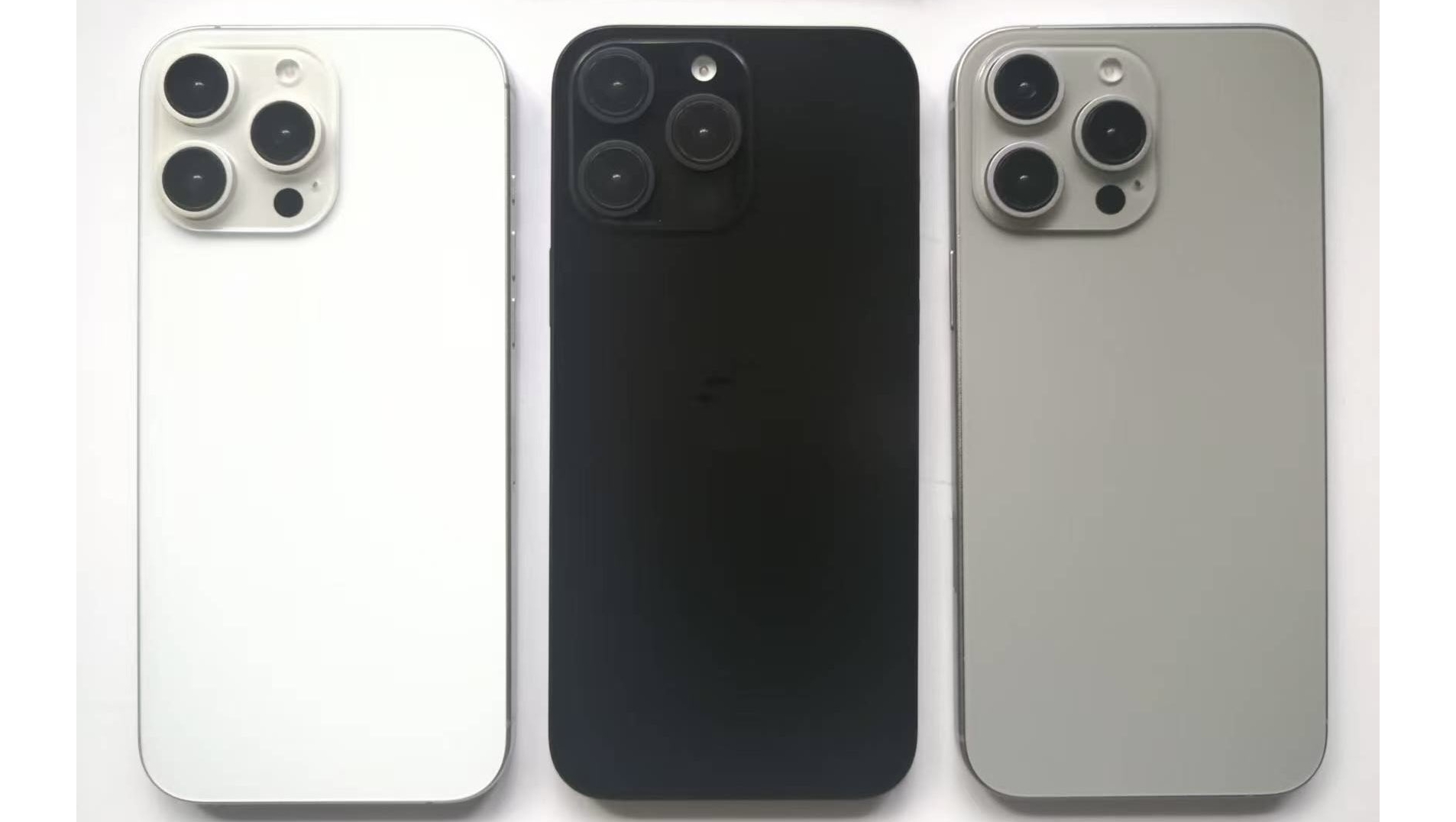
A leaked photo of iPhone 16 Pro Max dummy units(Image credit: Sonny Dickson)
The iPhone 16 Pro Max is likely to have the same design as the iPhone 16 Pro, just in a larger size. Which is to say it will probably also look similar to the iPhone 15 Pro Max, just larger and with an extra button.
That button is thought to be called a Capture button, and as detailed above it will reportedly control the camera, and be housed under the power key on the right edge.
One leak details the exact dimensions of the iPhone 16 Pro Max too, claiming that it will be 163.024 x 77.575 x 8.26mm. That would make it taller, wider, and thicker than the 159.9 x 76.7 x 8.25mm iPhone 15 Pro Max, though not by much. Part of that change in dimensions could also be down to a rumored 19.6:9 aspect ratio for the iPhone 16 Pro Max’s display, rather than the 19.5:9 of its predecessor.
The iPhone 16 Pro Max is likely to also be heavier than its 221g predecessor, but for now we don’t know by how much.
Other than that, and the possibility of some new colors, the iPhone 16 Pro Max will probably look much like the iPhone 15 Pro Max, complete with a titanium frame, a glass back, and the same general layout and shape, as you can see in the leaked iPhone 16 Pro Max images above.
Finally, one source has suggested its Dynamic Island could be much smaller, with the Face ID components hidden under the screen, but we’re skeptical of this.
The Black Ops 6 beta went live on August 30 at 10AM PT / 1PM ET / 6PM BST, and will run until September 4 at 10AM PT / 1PM ET / 6PM BST. Currently, there are four maps to enjoy, as well as four modes. You'll be able to play even more next weekend, when the open beta goes live, adding in even more maps to try out, just make sure you're keeping your game updated.
The Call of Duty Black Ops 6 beta allows players to jump into the game before launch, giving them a taste of the new weapons and Omnimovement mechanics. The first of the two beta weekends is currently live, and will end on Wednesday (September 4)
There are two distinct beta periods, one week apart, with different ways to access each one. If you're looking to play Black Ops 6 as early as possible, you'll need to know the details on the ongoing Early Access period, before the game is opened up to more players at the weekend.
From what we've seen of Black Ops 6 so far, it's certainly got a great chance of ending up on our best FPS games list by the end of the year, with a globe-trotting campaign, a new set of movement skills, and new Warzone integration. The beta is the best way to find out how the game feels, and whether or not you'll be diving in fully when launch comes around.
Here's everything you need to know about the Black Ops 6 beta start date, including how to get Early Access, and when the open beta goes live. As the beta continues to be roll on, we'll update the page with the latest comms from developer Treyarch.
Black Ops 6 beta dates
(Image credit: Activision)
The Black Ops 6 beta went live on August 30 at 10AM PT / 1PM ET / 6PM BST. This is the early access period, the first of two weekends that'll allow players to jump into the game early. You'll find the full schedule below:
Early Access (Weekend One): August 30 - September 4
Open Beta (Weekend Two): September 6 - September 9
Black Ops 6 Early Access - how to get in
(Image credit: Activision)
To get into the Black Ops 6 Early Access beta weekend, you'll need to have pre-ordered the game, or be an Xbox Game Pass subscriber (Game Pass Ultimate, Game Pass PC, or Game Pass Console).
You can often find cheap Game Pass deals, so that's what we'd recommend if you're unsure about pre-ordering Black Ops 6 just yet. Note that the Early Access beta ends on Wednesday, September 4 at 10AM PT / 1PM ET / 6PM BST.
Black Ops 6 open beta
(Image credit: Activision)
The Black Ops 6 open beta weekend runs from September 6 - September 9. It'll go live at 10AM PT / 1PM ET / 6PM BST on the Friday, and then end at 10AM PT / 1PM ET / 6PM BST on the Monday. You'll be able to download the beta from the PlayStation, Xbox, and Battle.net storefronts.
Black Ops 6 beta maps
(Image credit: Activision)
There are eight maps available as part of the Black Ops 6 beta. These include the following:
Skyline (Core)
Rewind (Core)
Scud (Core)
Babylon (Core)
Derelict (Core)
Stakeout (Core)
Gala (Strike)
Pit (Strike)
Weekend One launched with three maps, before an additional three maps will be added over the first beta period. Then, two more maps will follow as part of Weekend Two.
What to expect from the Black Ops 6 beta
(Image credit: Activision)
The Black Ops 6 beta will include 8 maps to play across. Including Skyline, Rewind, Scud, Babylon, Derelict, Stakeout, Gala and Pit. Confirmed modes include Kill Order, Team Deathmatch, Domination and Hardpoint. Weekend One will begin with three maps and four modes, before more are added throughout the weekend. Players will be able to reach level 20, before the cap is raised for the second weekend.
Weekend Two will then introduce two more maps, plus the Gunfight game mode and Face Off, Kill Order. The level cap will be increased to 30 at this point, giving players the chance to earn additional rewards and unlock able items.
Black Ops 6 beta Custom Loadouts
You'll be able to use Custom Loadouts during the Black Ops 6 beta, though you'll need to unlock them first. To do so, you'll need to reach level 4. We recommend jumping in and trying out some of the preset loadouts to get a feel for the new weapons. After that, you can experiment with your own builds, and find what works best for you.
Be aware that if you pre-ordered the Vault Edition, you won't be able to use your exclusive guns until you unlock Custom Loadouts.
Black Ops 6 beta FAQ
Can you preload the Black Ops 6 beta?
You can preload the Black Ops 6 beta now. This works whether you're jumping into the Early Access weekend, or the open beta the week after. Just search for it in your respective store, and free up enough space (for estimated download sizes, head to the Call of Duty website). We managed to find the COD Black Ops beta content in the Xbox Store using the search function. Note that you'll need to download the main COD HQ package as part of this, if you don't already have it.
What is the Black Ops 6 beta Vault Edition bonus?
If you pre-ordered the Black Ops 6 Vault Edition, you'll be able to use some of your bonuses during the beta. Expect to play as any of the four Operators from the Hunter vs Hunted Operator Pack. These include Park, Adler, Brutus, and Klaus. You'll also get to try five weapons from the Mastercraft Weapon Collection.
Is the Black Ops 6 Beta on Game Pass?
The Black Ops 6 beta will be available on Xbox Game Pass starting August 30 at 10AM PT / 1PM ET / 6PM BST. Just log into your Xbox or PC subscription and it'll appear in your collection. Game Pass Subscribers can access both beta weekends at no extra cost.
This year has seen incredible advances in the TV world, with refinements to OLED and mini-LED tech serving to enhance the newest crop of sets. OLED still arguably reigns supreme in 2024, but mini-LED is catching up fast, leveling the field on what models earn the title of best TV.
Highlights so far have included Sony’s decision to move from OLED to mini-LED for its flagship TV, the brilliant Sony Bravia 9, which utilizes its new XR Backlight Master Drive tech (with 22-bit LED drivers) to deliver more refined local dimming. We’ve also seen Samsung, LG and Philips claim their OLED TVs can hit a peak brightness of over 3,000 nits – something we’ve yet to confirm in our testing – and measured over 1,000 nits peak brightness on mid-range OLEDs such as the LG C4 for the first time.
Micro lens array (MLA) tech has entered its second generation, being utilized to maximum effect in OLED TVs such as LG G4. Meanwhile, QD-OLED has hit its third generation, and is used in one of the best OLED TVs this year, the Samsung S95D (spoiler: this isn’t the last you’ll hear of this TV). Even mini-LED has evolved outside of Sony’s Bravia 9, with TVs from brands like TCL hitting an eye-watering 6,500 nits.
Of the TVs I’ve reviewed this year, from the most premium OLED to budget QLED models, several have stood out among the crowd. Here are the top three TVs I’ve reviewed in 2024.
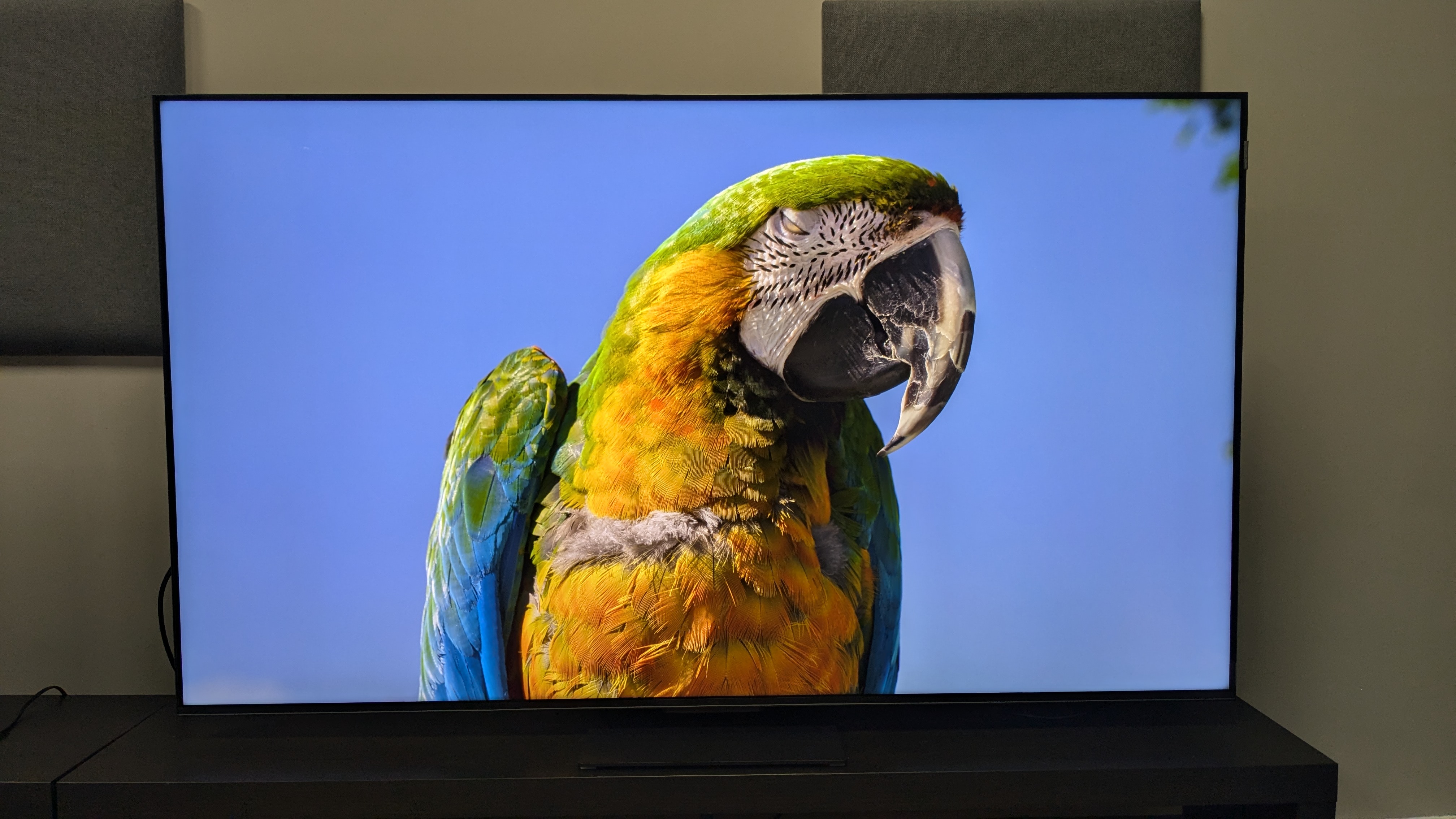
1. Samsung S95D
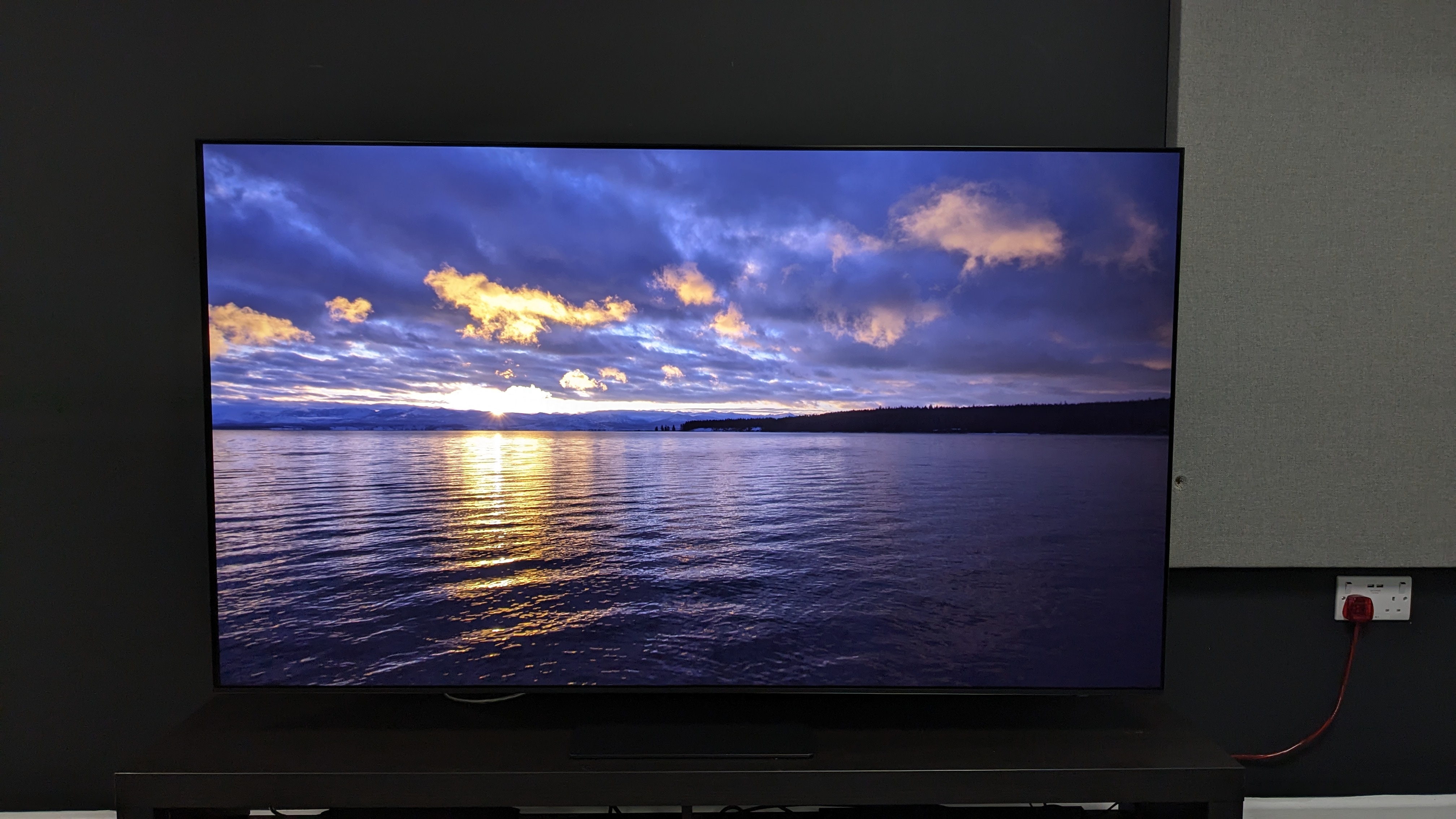
(Image credit: Future)
The Samsung S95D is one of the best OLED TVs I’ve ever seen. In my review, I described it as “the standard bearer for OLED in 2024”. Using QD-OLED tech (a combination of an OLED panel with QLED tech for added brightness and color richness), the S95D delivers spectacular contrast, dazzling HDR highlights and bold colors. Its NQ4 AI Gen2 processor also lets it deliver incredibly well-defined and realistic textures and details.
The S95D’s main secret weapon is its OLED Glare Free screen. This anti-reflection tech uses a matte screen and anti-glare coating to effectively eliminate reflections – arguably one of OLED’s biggest issues. I described this OLED Glare Free screen as “the star of the show” in my review, as I found that I could even watch the dark and challenging images in The Batman in bright viewing conditions – something other OLED TVs I’d tested have struggled with.
But, it’s not just picture where the S95D shines, as it’s also a well-equipped gaming TV with an ultra-low 8.9ms input lag and four HDMI 2.1 ports supporting 4K 144Hz, VRR (with AMD FreeSync Premium Pro in tow) and ALLM. Combine that with its picture and you have one of the best gaming TVs around.
The S95D also looks fantastic, with a ‘floating’ design thanks to its stand and razor-thin depth. As a bonus, its built-in sound is good too, with controlled bass, good placement of effects, and brilliant directional sound. It’s no doubt a premium purchase, but the S95D is easily the best TV I’ve reviewed this year. As I said in my review, it’s “what OLEDs should strive to be.”
2. TCL C855
(Image credit: Future)
The affordable mini-LED TV market is incredibly packed, with the likes of the Samsung QN85D, Hisense U7N, Hisense U6N and more aiming to deliver the best value for money. I’ve seen and tested my fair share of affordable mini-LED TVs this year (including the three just mentioned) and one stands tall among them: the TCL C855. It’s worth noting that this TV is only available in the UK and Australia – the closest alternative for US viewers is either the TCL QM851G (which is a little pricier) or the Hisense U8N.
During my time with the C855, I was surprised by just how good its picture looked even straight out of the box. It delivers outstanding black levels (especially for a mini-LED TV in this price range), vivid colors and realistic textures with details “close to those of the more premium Samsung S95D” as I said in my review. Its high full-screen brightness makes it an excellent TV for sports, and motion across both sports and movies is well-handled (though sports will benefit from some tweaking of settings).
The C855 also offers extensive gaming features for the money, supporting 4K 144Hz, Dolby Vision gaming, VRR (AMD FreeSync Premium Pro included) and ALLM. Gaming performance is smooth and the C855’s picture quality also helps make it a great gaming TV. It only has two HDMI 2.1 ports and a 14.6ms input lag time that’s slightly higher than the best gaming TVs, but at this price, it’s tough to argue against what the C855 achieves.
The real drawing point for the C855, though, is its price: the 65-inch model I tested costs £1,299 / AU$2,295. Although for many that will still be a high price, it’s exceptional value for money for a 65-inch TV that offers this level of performance and features. As I said in my review: “you’ll struggle to find a mini-LED TV with a better picture at this price point.”
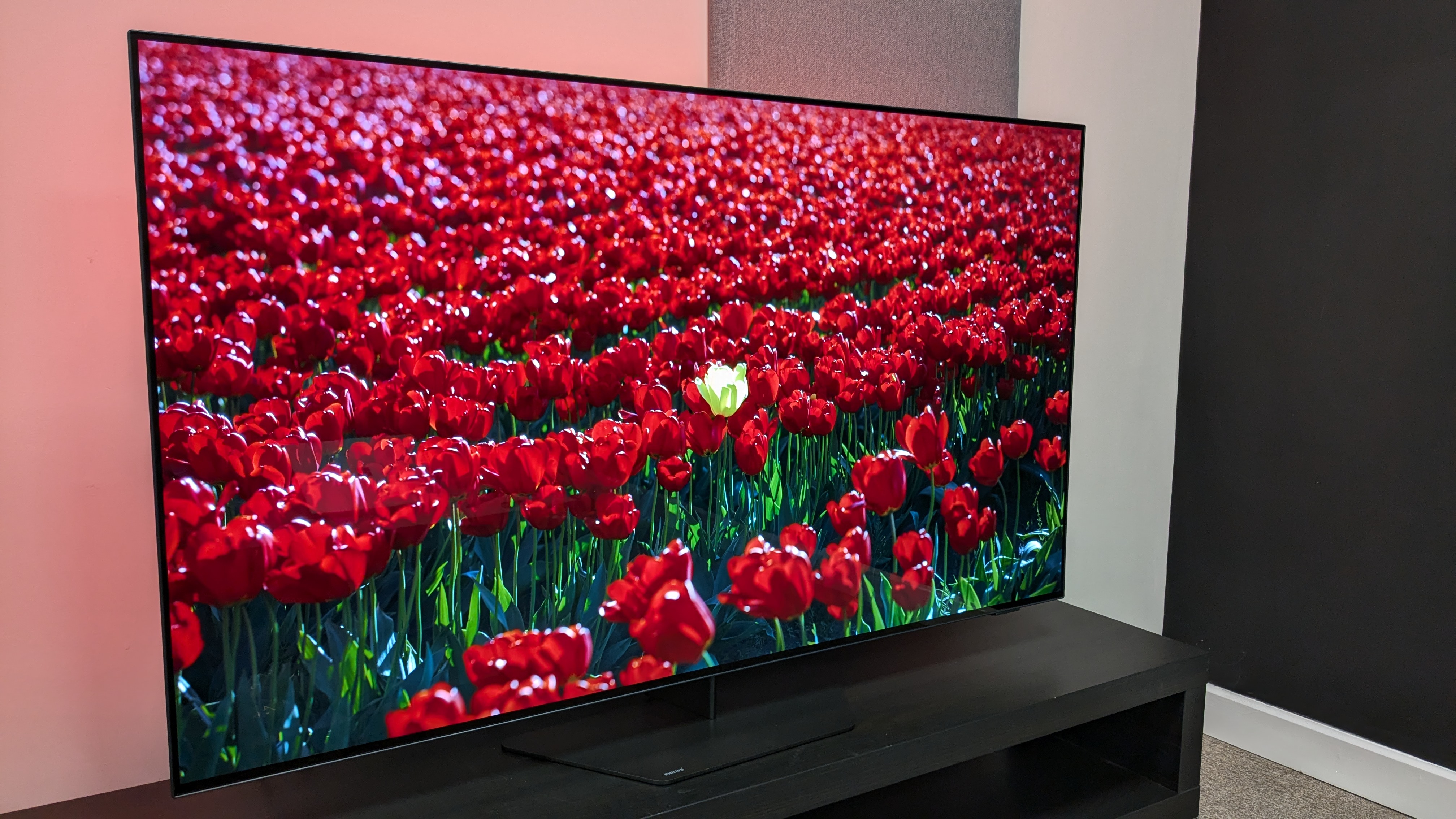
3. Philips OLED809
(Image credit: Future)
I was a fan of Philips’ 2023 mid-range OLED TV, the Philips OLED808, and so was naturally excited to see its successor, the new Philips OLED809. I wasn’t disappointed. (It’s worth noting again that this is a UK-only TV – for US and Australian readers, the closest alternative will be the LG C4.)
I am also a fan of Philips’ Ambilight technology, which is a built-in feature that projects colored lights onto the wall behind the set. Ambilight adds an extra layer to the viewing experience, particularly with bright and colorful movies (in my review it was Star Wars: The Last Jedi) and the lighting tech's vibrant, rich colors give the OLED809's picture a sense of extending beyond the screen.
Beyond Ambilight, the OLED809 delivers outstanding picture quality, with rich detail, powerful contrast, and of course, dynamic colors. In my review, I noted how the OLED809 displayed the “punchy colors of La La Land with stunning accuracy”, but regardless of what movie I watched, the OLED809 delivered a stunning picture.
The real surprise with the OLED809, however, is its sound quality. Despite only carrying a 2.1 speaker array, I found its sound to be punchy and accurate. Watching movies such as The Batman and La La Land during testing showcased the great balance of the TV’s speakers and the strong directional placement of sound effects. When I compared it with another mid-range OLED, the Panasonic MZ1500, I was surprised at just how well it performed.
Beyond this, the OLED809 carries all the gaming bells and whistles you could ask for and it’s competitively priced with other mid-range OLEDs (the 55-inch we tested costs £1,499 while the 55-inch LG C4 costs £1,399). The OLED809 is one of the best mid-range OLED TVs I’ve tested.
A new report from the Acronis Threat Research Unit has uncovered a vulnerability in Microsoft Exchange Online settings that could enable email spoofing attacks.
This issue primarily affects users with a hybrid configuration of on-premises Exchange and Exchange Online, and those utilizing third-party email security solutions.
In July 2023, Microsoft introduced a major change in how it handles DMARC (Domain-based Message Authentication, Reporting, and Conformance) within Microsoft Exchange. This update was intended to bolster security by enhancing how email servers verify incoming emails' legitimacy. Unfortunately, despite clear guidance from Microsoft, a considerable number of users have yet to implement these security measures, leaving their systems vulnerable to various cyber threats, particularly email spoofing.
How misconfiguration leads to vulnerabilities
(Image credit: Shutterstock)
Microsoft Exchange Online can be used as a mail server without the need for on-premises Exchange servers or third-party anti-spam solutions. However, vulnerabilities arise when Exchange Online is used in hybrid environments - where on-premises Exchange servers communicate with Exchange Online via connectors - or when a third-party MX server is involved.
Email remains a key target for cybercriminals, and this is why robust security protocols are essential to protect against spoofing. Three critical protocols have been developed for this purpose: Sender Policy Framework (SPF) checks whether a mail server is authorized to send email on behalf of a domain using DNS records; DomainKeys Identified Mail (DKIM) allows emails to be digitally signed, verifying that they originate from an authorized server and confirming the sender's domain authenticity; and Domain-based Message Authentication, Reporting, and Conformance (DMARC) determines how emails that fail SPF or DKIM checks should be handled, specifying actions like rejection or quarantine to enhance email security.
To understand how email security protocols work together, consider a typical email flow: Server A initiates a DNS request to locate the Mail Exchange (MX) server of the recipient's domain (e.g., ourcompany.com), then sends an email from "user@company.com" to "user2@ourcompany.com" via one of the MX servers (Server B). Server B then verifies the email by checking if it originates from an authorized server (SPF verification), ensuring the presence of a valid DKIM signature, and following the actions specified by the domain's DMARC policy. If Server A is not listed in the SPF records, lacks a valid DKIM signature, or if the DMARC policy is set to "Reject," Server B should reject the email. However, if the receiving server is misconfigured, these security checks may be bypassed, allowing the email to be delivered and posing a significant security risk.
In a hybrid environment, the Exchange Hybrid Setup wizard typically creates standard inbound and outbound connectors to facilitate data exchange between Exchange Online and on-premises Exchange servers. Nevertheless, misconfigurations can occur, especially if administrators are unaware of the potential risks or fail to lock down their Exchange Online organization to accept mail only from trusted sources.
Inbound connectors play a crucial role in determining how incoming emails are handled by the Exchange server. In hybrid environments, administrators must ensure that the correct connectors are in place and properly configured. This includes creating a Partner connector with specific IP addresses or certificates to ensure that only emails from trusted sources are accepted. Without these safeguards, misconfigured inbound connectors could allow malicious emails to bypass security checks, leading to potential compromises.
When using a third-party MX server, it is essential to configure the Exchange Online instance according to Microsoft's recommendations. Failure to do so can expose the organization to spoofing attacks, as emails may bypass critical security checks like DMARC, SPF, and DKIM.
For instance, if the tenant recipient domain's MX record points to a third-party email security solution instead of Microsoft's, DMARC policies will not be applied. As a result, emails from unverified sources may be delivered, increasing the risk of phishing and spoofing attacks.
To safeguard against email spoofing and related risks, administrators should strengthen their Exchange environment by taking the following key steps:
Create additional inbound connectors following Microsoft's guidelines to restrict incoming emails to trusted sources.
Implement enhanced filtering for connectors to apply additional security checks.
Deploy Data Loss Prevention (DLP) and transport rules to prevent unauthorized emails and protect sensitive information.
Conduct regular security audits to ensure that Exchange server configurations align with the latest security practices.
Google has a brand new 4th-gen Nest Learning Thermostat on sale, but those who have already bought the smart home device are finding the display to be a little too dim at times – something that Google is apparently going to fix.
This comes from a report at 9to5Google, which mentions numerous complaints on Amazon about the Nest Thermostat screen being difficult to read because of its low level of brightness, especially at night.
It seems the brightness setting that the gadget defaults to when it detects it's in a dark room is lower than it really should be, and that means the digits and symbols on the screen are hard to pick out.
Even in the daytime, the Nest Thermostat display can apparently be tricky to read, due to low levels of brightness or reflections on the screen. Unlike previous Nest Thermostat models though, the 4th-generation model doesn't offer display brightness controls.
Controls are coming
The new model brings with it a new look(Image credit: Google)
It's not clear why brightness controls weren't included on the new model, but the good news is that Google has told 9to5Google that they will be added at some point in the future – without being specific about a timeframe.
The worries over display brightness have taken some of the shine off the launch of the new smart thermostat, which was heavily leaked in advance of its official unveiling. The 4th-gen model is the first new Nest Thermostat for four years.
You get a noticeable different design with the new edition, one which looks sleeker and more modern. There's better weather integration here, as well as smarter scheduling for your heating and cooling (which should save you money).
For now, the 4th-gen Google Nest Thermostat is only available in the US and Canada, for $279.99 and CA$379.99 respectively (about £215 / AU$415), because it's been optimized for heating systems in those countries. As yet there's no word on international availability.
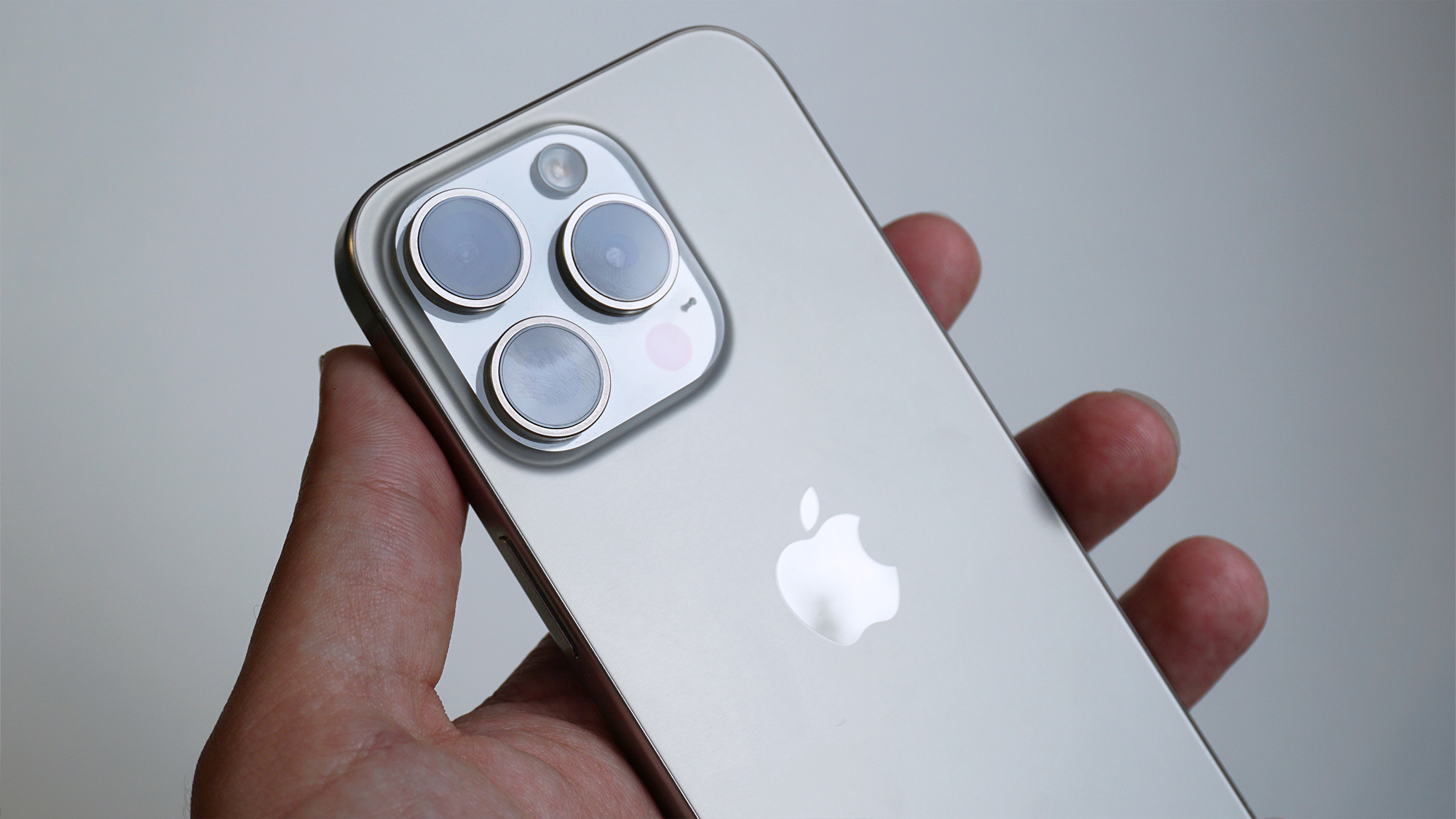
Smartphone cameras may have been pushed aside by AI hype in the past two years, but they're still one of the biggest reasons to upgrade – and as TechRadar's former cameras editor, I'm particularly excited about the iPhone 16 Pro.
Granted, some of that enthusiasm may be because my daily driver is a creaking iPhone 11 Pro, which has now reached classic car status in smartphone terms. But lately, I've felt the allure of shooting with something more discrete and pocketable than my Fujifilm X-T5 – and rather than a Ricoh GR IIIx, it's the iPhone 16 Pro that's caught my eye.
We're still very much in rumors territory for Apple's next flagship phone ahead of its launch on September 9. But after closely following the speculation this year, it looks to me like the iPhone 16 Pro could be the ideal pocket camera to complement my beefier Fujifilm X-series body and lenses.
So why am I thinking of finally upgrading this year, rather than waiting for the iPhone 17 Pro or the rumored iPhone 17 Air next year? Here are the top five photographic reasons why I'm preparing to take the plunge on the smaller Pro model, based on the latest rumors...
1. Apple's best ever ultra-wide camera
The rumor: iPhone 16 Pro and Pro Max tipped to get 48MP ultra-wide camera
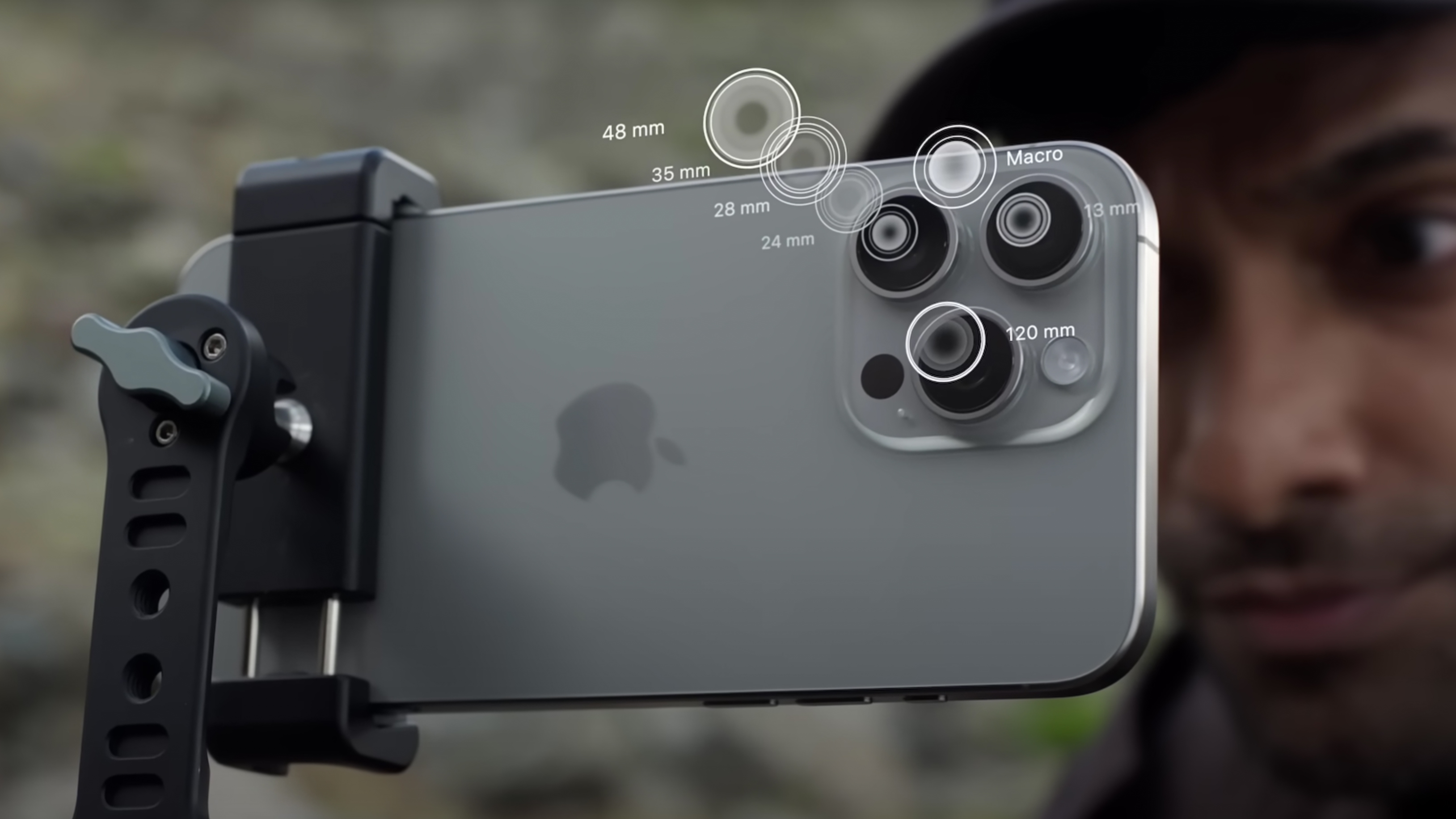
Apple filled in some of the gaps in the iPhone 15 Pro Max's focal range with its digital 'focal lengths', which will presumably also appear on the iPhone 16 Pro series.(Image credit: Apple)
This could be the most useful iPhone 16 Pro camera upgrade for me, if the rumors are true. According to respected tech analyst Jeff Pu, Apple is planning to add a new 48MP ultra-wide camera onto both of its iPhone 16 Pro models – and won't be keeping it exclusive to the Pro Max.
That would be a pretty big deal. The iPhone's ultra-wide camera has traditionally been its weakest link. My iPhone 11 Pro came with Apple's first ultra-wide and it's distinctly average, thanks to its slow f/2.4 aperture and fixed-focus lens. It's certainly improved over recent generations, but the iPhone 15 Pro still only has a 12MP sensor and an f/2.2 aperture.
The benefit of a new 48MP sensor would be that the iPhone 16 Pro's ultra-wide could use the same pixel-binning technique as its main camera to boost image quality in challenging light. If it can produce 24MP files (made from a combo of a 12MP and 48Mp image) with some of the quality I've seen from the iPhone 15 Pro's main camera, the ultra-wide would become a far more usable option.
2. A mature 5x telephoto camera
The rumor: iPhone 16 Pro to inherit the 5x telephoto camera from the 15 Pro Max
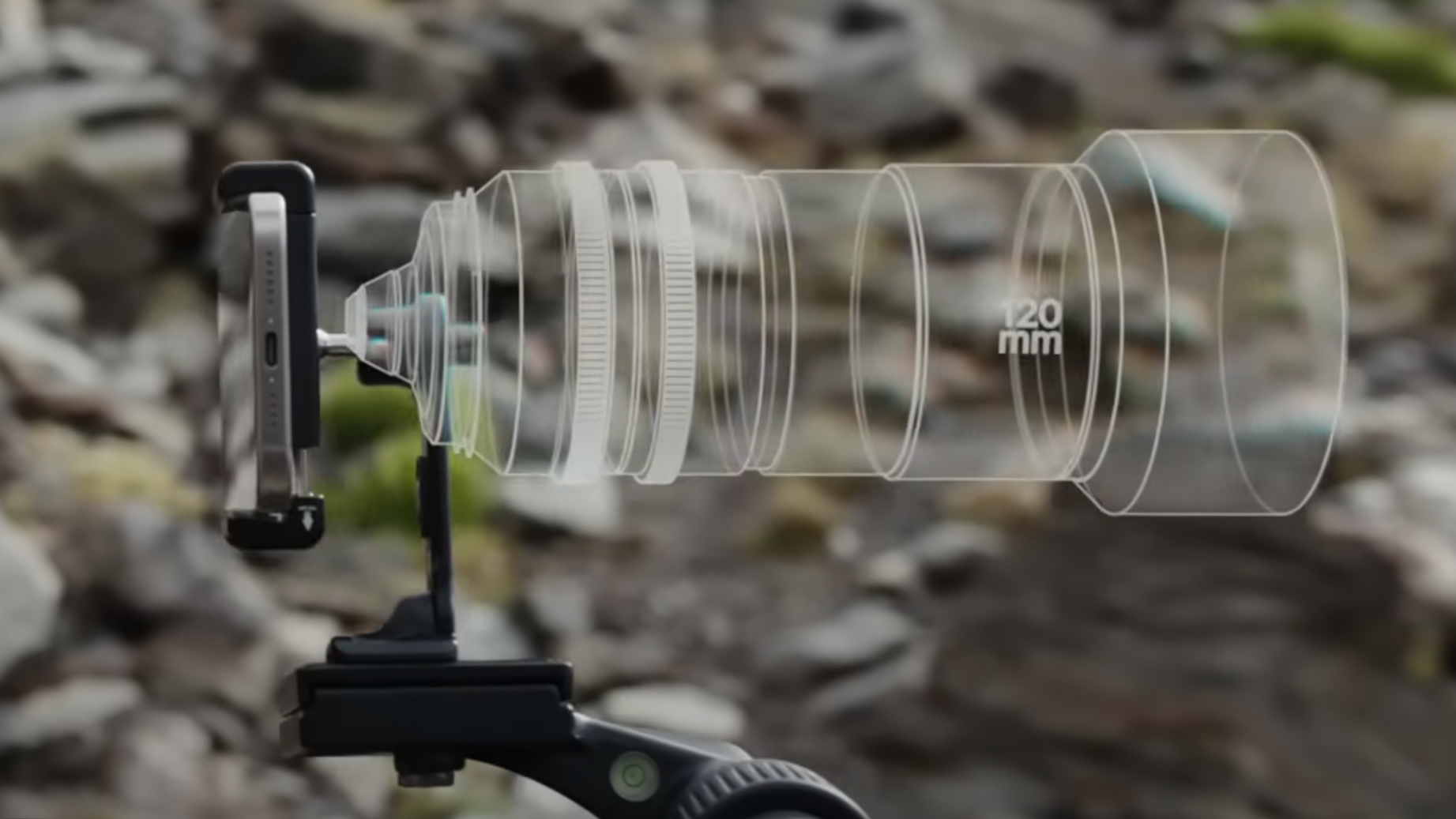
Last year's Apple graphic for the iPhone 15 Pro Max's 120mm lens (above) was slightly misleading, as its 5x telephoto can't zoom and has a far smaller equivalent aperture than the f/2.8 lens depicted. But I'm still tempted by its versatility(Image credit: Apple)
Okay, it was also because I didn't particularly want to lug around a 6.7-inch smartphone, which was my only option because Apple made its tetraprism technology exclusive to the Max model. Not so this year, according to the latest iPhone 16 Pro camera rumors – the 6.3-inch iPhone 16 Pro is highly likely to get the same 120mm equivalent camera as its bigger brother.
I don't think having a 120mm camera is necessarily better than a 72mm equivalent, which is what the iPhone 15 Pro offers. In fact, leafing through my Lightroom catalogue, I mostly shoot in the 35mm-70mm range on my Fujifilm X-T5. But then again, I use my phone for different kinds of shots – and the flexibility of being able switch from 14mm to a refined 120mm telephoto, all on my phone, is very alluring.
Apple's impressive stabilization and image processing managed to eke out some solid, sharp results from the iPhone 15 Pro Max's 5x telephoto camera – after a year of software refinements, I'm expecting that to have improved again this year.
3. The rumored Capture button
The rumor: Apple to introduce a new 'Capture' button across the whole iPhone 16 series
(Image credit: Future | Alex Walker-Todd)
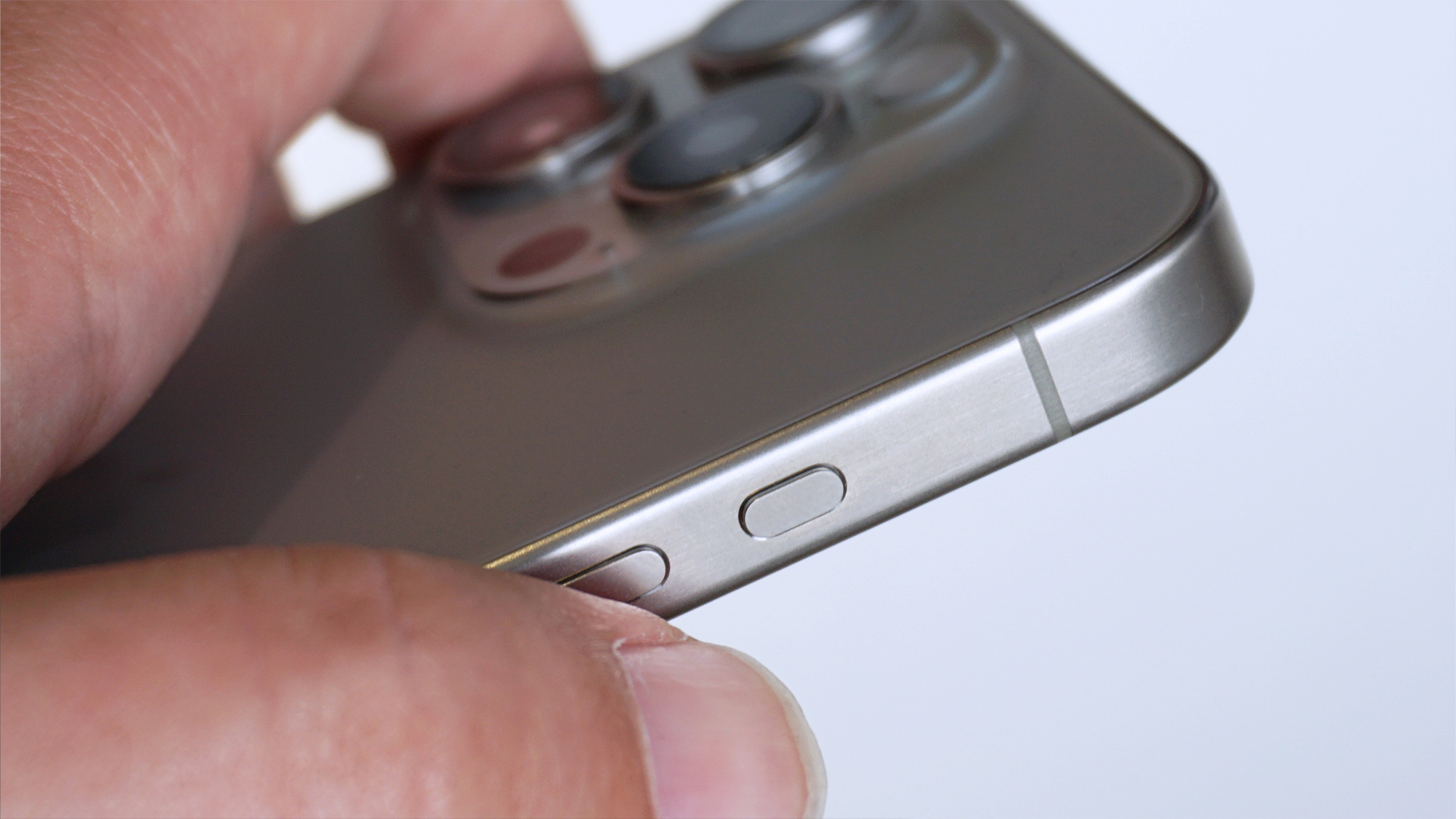
One of my biggest issues with smartphone cameras is their ergonomics – they simply aren't as fun to shoot with as the best mirrorless cameras. While you can improve this to an extent with cases like the Shiftcam ProGrip, recent rumors suggest Apple is also planning to introduce a more camera-like experience to the entire iPhone 16 series with a new Capture button.
There are mixed reports on whether this new button will be capacitive or mechanical, but all of them agree that it'll be focused on shooting photos and videos with a two-step action that lets you first lock focus and exposure, then take a shot. A report from The Information in January suggested that you'll also be able to swipe across the surface of this button to zoom in and out of your scene.
Physical shutter buttons, the return of horizontal snapping – sign me up.
4. AI photography future-proofing
The rumor: iPhone 16 Pro and Pro Max to get new A18 Pro chip for Apple Intelligence features and graphically-intense apps
(Image credit: Apple)
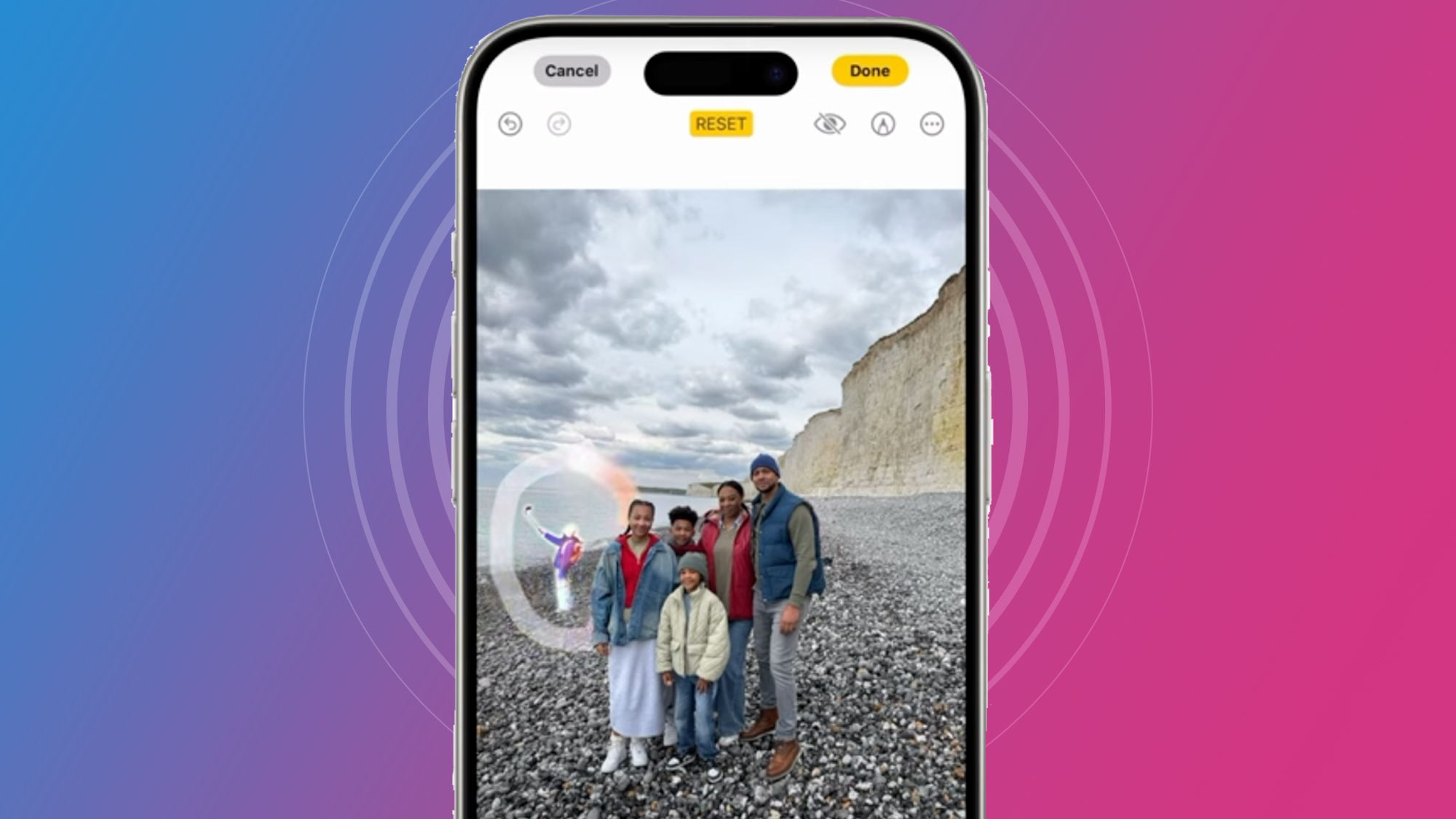
I mostly edit photos using Lightroom Classic or the Lightroom app on iOS, and the latter got its equivalent of Google's 'Magic Eraser' tool back in May. But now Apple is entering the AI-powered photo editing game with tools like Clean Up, I want to make sure my next iPhone is future-proofed (to an extent) for similar iOS innovations – and it sounds like that'll be the case with the iPhone 16 Pro.
The latest iPhone 16 spec predictions suggest that, while every model in the series will get 8GB RAM, the Pro models will get a new A18 Pro chip (compared to the standard A18 chip on the iPhone 16). Exactly what that'll be capable of remains unclear, but the latest rumors point to it having a more powerful graphics processor – which would be particularly useful for gaming and, yes, computational photography.
The reason this matters for Apple's own Apple Intelligence tools, like Clean Up, is because it prefers to run them on-device rather than, like Adobe, via the cloud. I may still largely stick with Lightroom for editing, but if I'm offline then Apple Intelligence features could become helpful photographic backups for quick edits.
There's already talk that next year's iPhone 17 Pro Max might get exclusive Apple Intelligence upgrades, so I'm under no illusion that the 16 Pro will able to handle all of Apple's best AI features in the future. But it's certainly more future-proofed than the poor iPhone 15, which is already locked out of the AI party due to its 6GB of memory.
That extra processing power could also help improve non-AI features like Apple's Cinematic Mode for video, which has slowly been improving over the years (despite its depth-map errors).
5. New camera lens coating
(Image credit: Future | Alex Walker-Todd)
The rumor: iPhone 16 Pro series to get new lens coating to reduce artifacts
According to a well-known Apple tipster, a new camera lens coating (using a technique called atomic layer deposition, or ALD) is being used on iPhone 16 Pro models to help reduce artifacts like flares and halos, which are pretty common in iPhone photos.
I don't pretend to understand the specifics of that particular manufacturing process, but if that's true it would be a helpful quality-of-life upgrade for the iPhone 16 Pro's cameras. In theory, it should also help reduce ghosting in fast-moving objects.
Final thoughts
If the iPhone 16 Pro gets most of these rumored features, I'll almost certainly be upgrading and hitting those iPhone 16 preorders on September 13 (when they're rumored to be starting).
Even if its main camera stays the same with a 48MP Quad Bayer sensor and f/1.8 aperture, a new 48MP ultra-wide and 5x telephoto would be huge hardware upgrades – and I also like the sound of the Capture button. Combine that with the power and future-proofing of the rumored A18 Pro chip, and the iPhone 16 Pro is shaping up to be quite a pocket camera.
Apple may be lagging behind Google when it comes to AI-powered features like Add Me and Reimagine, but as something of a photography traditionalist that doesn't bother me too much. iOS has always had the best camera apps, so most gaps can be filled with third-party software – and there's also the prospect of dabbling with spatial photos and video, which I'd argue is more exciting than AI-generated photography.











Follow Us
Were this world an endless plain, and by sailing eastward we could for ever reach new distances