Home Top Ad

Responsive Ads Here

Following Labour’s victory in the recent 2024 general election, they have recommitted to bringing forward the deadline for phasing out new ...

Following Labour’s victory in the recent 2024 general election, they have recommitted to bringing forward the deadline for phasing out new gas and diesel cars back to 2030.

The UK Government’s Zero Emission Vehicle (ZEV) mandate requires 80% of new cars and 70% of new vans sold in the UK to be zero emission by 2030, increasing to 100% by 2035.

However, the UK is set to significantly miss current targets for electric vehicle (EV) sales by both 2030 and 2035. Fluctuating sales data and an overall decline of sales in the UK emphasizes that there is work to be done to meet Labour’s deadline.

This upcoming EV revolution also brings a breadth of cybersecurity concerns, some being their reliance on local power grids and the growing interconnectedness of vehicles worldwide. As all new cars sold will be connected by 2026, protecting drivers and repairers will be a core to nurturing the growth needed.

One way of supporting the industry’s preparedness for the introduction of EVs and other innovations is through clear and secure access to security related repair and maintenance information.

Not only does this assure protection for manufacturers sensitive repair information but it also ensures garages can streamline their processes to meet the demand and diversity of vehicles on our roads.

The critical role of secure information sharing in automotive

Secure information sharing is central to maintaining the integrity and reliability of vehicle systems in our highly interconnected and digital automotive environment.

The importance of such security measures is underpinned by a number of data breaches, notably the 2022 Arnold Clarke ransomware attack, during which an unauthorized third party accessed the personal data, including contact details, bank details, national insurance numbers, vehicle information, and more, of over 10,000 customers of the car dealership. In the following weeks and months, numerous victims reported evidence of identity theft attempts, as well as instances of successful fraud, leading to legal action which is suggested to have cost the dealership millions in damages.

The incident highlights how digital vulnerabilities can, beyond significant financial losses, quickly halt business operations, impede customer service, and increase concerns over data security, ultimately eroding trust between drivers and dealerships.

Security measures in automotive are increasingly critical as the connective nature of cars increases, due to the onset of advanced driver-assistance systems, driver monitoring systems, e-commerce, pay-by-car parking, digital key systems, and more. These innovations require greater regulation to navigate the growth in connectivity, brands, and models of vehicles, as well as vehicle types.

How SERMI streamlines information sharing

Previously, sharing data amongst independent operators (IOs), remote service suppliers (RSSs) and vehicle manufacturers was disjointed.

Each vehicle manufacturer required independent certifications, creating a cumbersome and time-consuming system for them to talk to others in the vehicle life cycle.

SERMI, the scheme for accreditation, approval and authorization to access security-related repair and maintenance information, is a standardized and single access point for everyone across the sector. It’s a framework for accreditation, approval, and authorization - ensuring secure access to critical vehicle data. This enables quicker, more accurate repairs, reducing wait times for customers.

The SERMI scheme has already been introduced in Europe across 29 countries and is set to be rolled out in the UK later this year, giving independent repair shops access to the same repair information as dealerships. Prior to SERMI, the information asymmetry between dealerships and independent garages placed independent shops at a disadvantage. Consumers often perceived dealerships to have a higher level of expertise due to their exclusive access to manufacturer information.

Not only is this scheme about accessibility, but also about maintaining security. Digital identity companies play a crucial role in enabling a smoother experience for all stakeholders involved safe from bad actors and compromise.

Importance of a Trust Centre

The Trust Centre within the SERMI scheme plays a crucial role in maintaining the integrity, security, and trustworthiness of the scheme. The Trust Centre acts as a certification authority, issuing digital certificates to authorized IO and RSS employees. These certificates authenticate the identity of the operators’ employees and enable secure access to the vehicle manufacturer’s security-related repair and maintenance information.

This helps prevent unauthorized access and potential misuse of sensitive vehicle information.

Digidentity, the Trust Centre for SERMI, have developed a secure virtual token that is stored as a digital SERMI certificate in the Digidentity Wallet on the users’ mobile phone, granting IOs and RSSs access to security related repair and maintenance information on every vehicle manufacturer’s website. This not only simplifies access but also enhances security by eliminating the need for storing or managing multiple credentials.

In addition to eliminating the need for multiple logins and passwords, and streamlining the information retrieval process, it also ensures that sensitive information from both parties remains secure.

Securing car manufacturers’ information is vital to preventing unauthorized access to diagnostic data, ensure accurate and safe vehicle repairs, and protect intellectual property. If left vulnerable to breaches, it could lead to faulty repairs, vehicle hijacking, and overall loss of consumer trust.

Strengthening this automotive security is increasingly important as the push to meet Labour’s deadline accelerates EV sales over the coming decade.

A Trust Centre plays a critical role in this, ensuring that both technicians and drivers of these vehicles can maintain trust and safety, while still supporting industry growth in line with the greater goal of achieving a successful transition to a zero-emission future.

We list the best cloud antivirus.

This article was produced as part of TechRadarPro's Expert Insights channel where we feature the best and brightest minds in the technology industry today. The views expressed here are those of the author and are not necessarily those of TechRadarPro or Future plc. If you are interested in contributing find out more here: https://www.techradar.com/news/submit-your-story-to-techradar-pro


from TechRadar - All the latest technology news https://ift.tt/Q42mA7r
When it comes to the age-old iOS versus Android debate, messaging has long been a point of contention. Apple’s recent adoption of the RCS ...

When it comes to the age-old iOS versus Android debate, messaging has long been a point of contention. Apple’s recent adoption of the RCS messaging standard – allowing more seamless and feature-rich interactions between iOS and Android users – has helped settle things a little now that iOS 18 has launched, but it looks like there are still plenty of problems with how RCS works on Apple’s iPhones.

According to the Washington Post, the biggest problem right now is that of security. For instance, when you send messages between iOS devices using the iMessage protocol, everything is end-to-end encrypted. Yet that’s not the case when messages are sent between iOS and Android users with RCS. And if there’s just one Android user in an RCS group chat otherwise populated by iOS users, end-to-end encryption isn’t used at all.

The issues aren’t just limited to security. Stickers sent by iOS users to Android devices will disappear after a few seconds on the recipient’s phone. As well as that, you’ll also struggle to send a text to an Android user when your Wi-Fi connection is weak. And if you want to schedule an RCS message from your iPhone, you can only do it when texting other Apple devices. That means the system is far from perfect.

Upgrading RCS

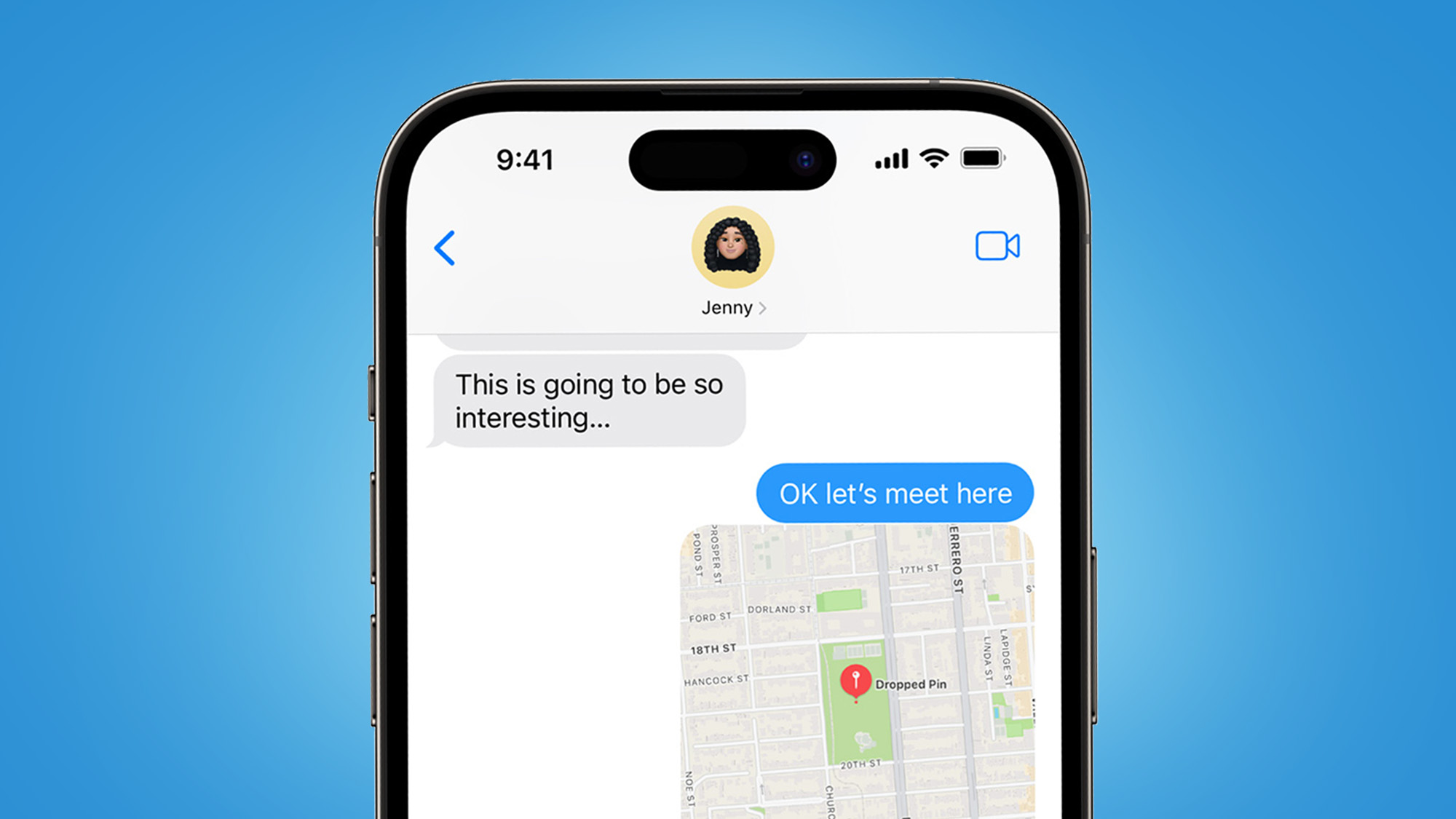
An iPhone on a blue background showing an iMessage conversation

(Image credit: Apple)

The whole idea of Apple adopting the RCS standard on its iPhones was that it would enable feature-rich, secure messaging whether you’re texting an iPhone user or an Android fan. It works in some ways, but it’s clear that there are still teething problems with the new system.

It’s been suggested that Apple could fix these difficulties by simply “adding on” the missing functionality in the way apps like WhatsApp and Signal already have done. Instead, though, both Apple and Google are reportedly working to fix these issues by upgrading the RCS standard itself.

That might be a more laborious fix, but it could ultimately be the right one, as it would mean any app or device using RCS would benefit from the changes, without the companies who make them having to come up with their own solutions.

The drawback is that this process could take longer, as Apple and Google’s improvements will need to go through a lengthy approval process before they can be implemented. Until then, Apple fans might want to use a secure app like Signal or WhatsApp to ensure that their messages are always encrypted, as Apple’s implementation of RCS isn’t yet up to scratch from a privacy and security perspective.

You might also like


from TechRadar - All the latest technology news https://ift.tt/fxsakLb

I’ve had a glimpse of how AI will change the world, and it’s filling me with both fear and wonder in equal measure. The source of my const...

I’ve had a glimpse of how AI will change the world, and it’s filling me with both fear and wonder in equal measure.

The source of my consternation is Google NotebookLM. NotebookLM takes an article, blog post, or web page, and with just one click produces an audio file of a conversation between two people about it that sounds so natural and realistic that there is no way you’d believe you weren’t listening to two real people talking. They talk with passion and authority about the subject, sound engaged and interested and riff off one another in such a natural way that it takes your breath away. There are even the little sniffs, slight mispronunciations, slurs, and little giggles that all make it sound completely human.

Here's what happened. In my spare time I write a blog about Tai Chi called the Tai Chi Notebook. So, having heard about NotebookLM (the 'notebook' in the name is just a coincidence) I thought I’d throw one of my Tai Chi articles at it, just to see what it did.

Creating the audio is easy. It took it a few minutes to think about it, but it very quickly generated a .WAV file that I could download to my desktop. The audio clip lasted around eight minutes and after I’d listened to it, the world simply wasn’t the same anymore; I no longer had confidence that I could tell what was real and what wasn’t.

The AI had taken my article and explained the key concepts via the 'presenters' having a conversation. It had even expanded on it in new and interesting directions that I hadn't thought of, drawing analogies about what I was saying to other areas of life. The presenters had even introduced practical examples of what I was talking about, and these examples weren't taken from my article but from their wider knowledge of the subject. And, most importantly, it didn’t get any of it wrong.

See what you think:

The dawn of the AI-age

Obviously, we’re just at the start of the new AI-age at the moment, with key players such as ChatGPT, Gemini and more recently Apple Intelligence only just getting started. NotebookLM doesn’t have that many options right now – you can speed up or slow down playback and that’s about it – but it won’t be long before it lets you choose the type of presenter you want, their accent, their expertise, their political leaning, their personality and, once we move into AI-generated video as standard, how they look. As I wrote recently, AI is already being used in films, and we can imagine a world where a movie is generated on the fly, with the plot changing to suit your whims.

Yes, this will sound terrifying to some, but movies are already flights of fancy that exist in the world of the imagination. It’s when AI intrudes on the real world that I get most concerned. I’ve got a friend whose daughter is applying for university right now, and he tells me that many institutions are saying they don’t require a personal statement anymore because so many are doctored using AI that there’s little point to them.

All of which brings me back to NotebookLM. It can already produce a fantastic podcast out of one of my articles at the click of a button, and it feels like we're on the dawn of a very big change in the way media is produced. I'm not sure I know what's real anymore, and that's something I'm just going to have to get used to.

You might also like


from TechRadar - All the latest technology news https://ift.tt/afkI9Ee

Back in April , we heard that ChatGPT developer OpenAI was busy working on a hardware device in partnership with ex-Apple design chief Jon...

Back in April, we heard that ChatGPT developer OpenAI was busy working on a hardware device in partnership with ex-Apple design chief Jony Ive – a rumor that has now been confirmed in a new profile of Ive.

The profile appeared in the New York Times (via The Verge), and goes into some of the background of how Ive met OpenAI CEO Sam Altman. The pair agreed to partner up on a new "artificial intelligence device company" – but for the time being, it's not clear what form this device could take.

We do know that much of the device development is being done in secret: the device will be "a product that uses AI to create a computing experience that is less socially disruptive than the iPhone", as per the article. However, the exact nature of the gadget and its released date are both "still being determined".

The article does say that the fledgling AI device company does have office space, and has secured some private funding. In addition, some of the device design team worked with Ive on designing the iPhone (he's also responsible for many other modern Apple product designs, including the iPad and the MacBook).

Choose your form factor

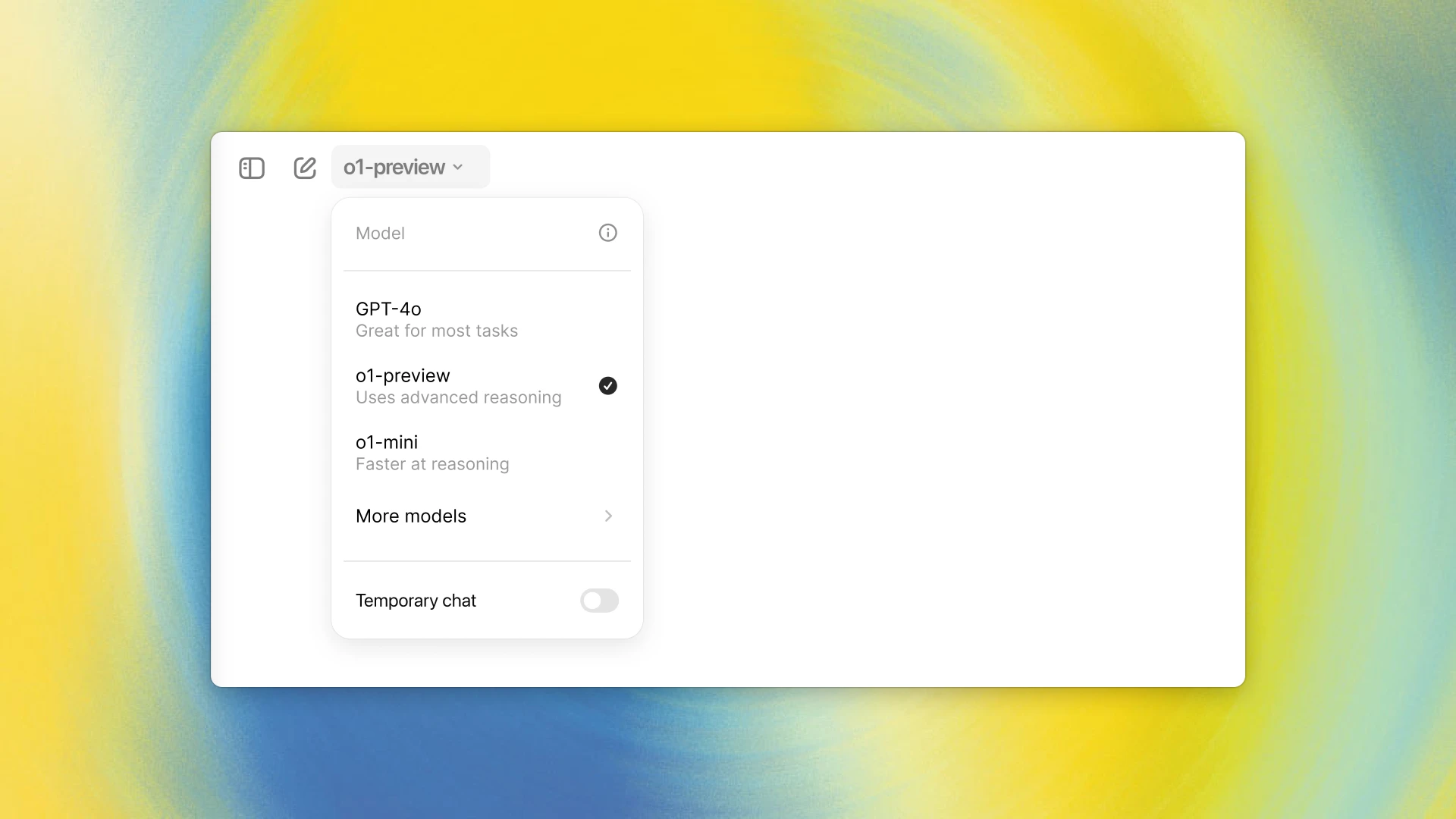
OpenAI-o1

The latest OpenAI model is the o1-preview (Image credit: OpenAI)

Based on the information we get here, it looks as though the exact form factor and features of the upcoming OpenAI piece of hardware are all still yet to be determined – though we've already seen numerous other AI gadgets hit the market in recent times.

The Rabbit R1 hasn't really lived up to its initial promise: the phone-like box promises to use your mobile apps for you, to some extent, replacing them with an all-purpose generative AI assistant – but in our Rabbit R1 review we described it as "an adorable but half-baked idea that you can ignore".

Then there's the Humane AI Pin, which launched to a lukewarm reception. The idea is similar to the Rabbit R1, in that it uses generative AI to mostly replace your smartphone, but the little wearable gadget has been plagued by problems with battery life and overheating in the short time it's been on sale.

These devices, and others including the Plaud.AI NotePin and the Friend, are basically just putting a generative AI assistant inside a compact device. OpenAI already has the assistant software sorted – now it just needs to work out the best physical form for it.


from TechRadar - All the latest technology news https://ift.tt/YBT3cJF

I was exhausted. I had just got back from a trip away, having done more driving in three days than I normally did in two weeks. This includ...

I was exhausted. I had just got back from a trip away, having done more driving in three days than I normally did in two weeks. This included several trips escorting a friend to a nearby hospital, where I had stayed until long past midnight. I was finally back home in my own bed, and I was desperate for a good night’s sleep. 

Consequently, I reached for a device on the pile of gadgets I have for review: the Aura Smart Sleep Mask. It’s not exactly one of the best sleep trackers: unlike the Oura Ring, one of our best smart rings that monitor the quality of your sleep, the ‘Aura with an A’ sleep mask is more focused on improving it. It does so with a few interesting features, although it comes with an all-too-common-these-days subscription-based app. 

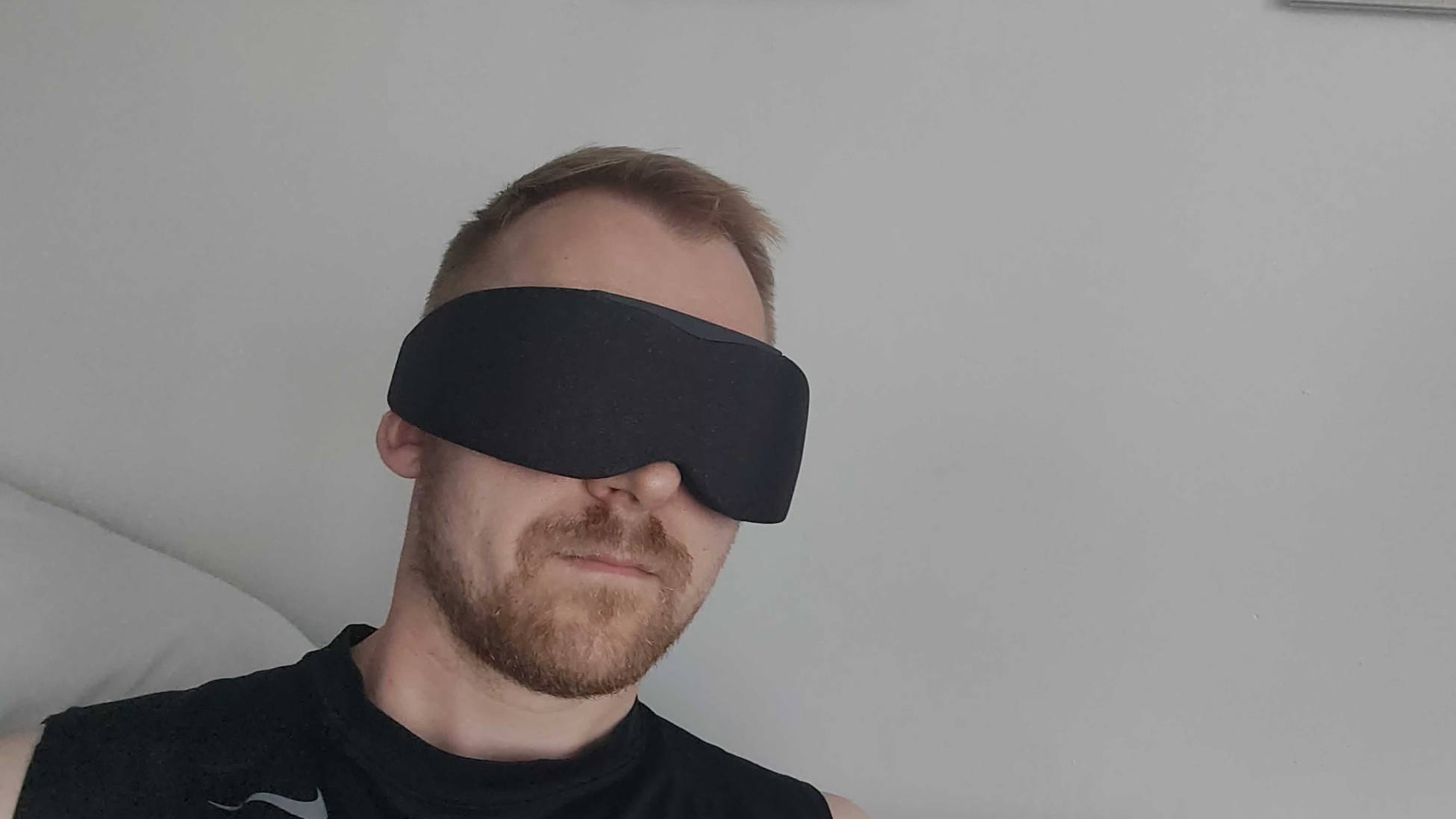
I charged the mask with the included USB-C cable and synced it to the Aura app (after signing up for the free trial, which lasts for one week – then it’s a very expensive $59.99 a year to access all the personalized meditation, sleep and guided movement content on offer, so around £45 / AU$90). I slipped it on and was struck by how light and comfortable it was: the eye-cushion insert and coverings softened the press of the hard plastic casing against your face. Even though the sensation was unfamiliar, I quickly got used to sleeping on my side with it. 

Aura Smart Sleep Mask being worn

(Image credit: Future)

Its contoured design is said to block 100% of light, and I would say that apart from a very slender piece of light below the seam, it’s more or less completely accurate. All-fabric masks may be more comfortable for side sleepers, but this hard-case mask blocks out ambient light more effectively than a thin slip of fabric. It also allows you to have fun and gently annoy your significant other by pretending to be Cyclops from the X-Men.

The Aura mask is Bluetooth-enabled, allowing you to stream audio content from your phone through the mask using several ultra-thin speakers. The mask itself stores a few ambient soundscapes like rainfall and forest sounds in its Zen mode, and it’s designed to stream content from the Aura app. 

I experimented with Spotify and found it could stream from there too, so if you wanted to use your own audiobooks from Audible, for example, there’s no reason you couldn’t do so. I opted for the basic Zen mode, pressed the under-fabric 'on' button at the center of the mask, and went to sleep. It’s an odd sensation, pressing the mask into your face to start it, and I spent a bit of time fumbling with it. 

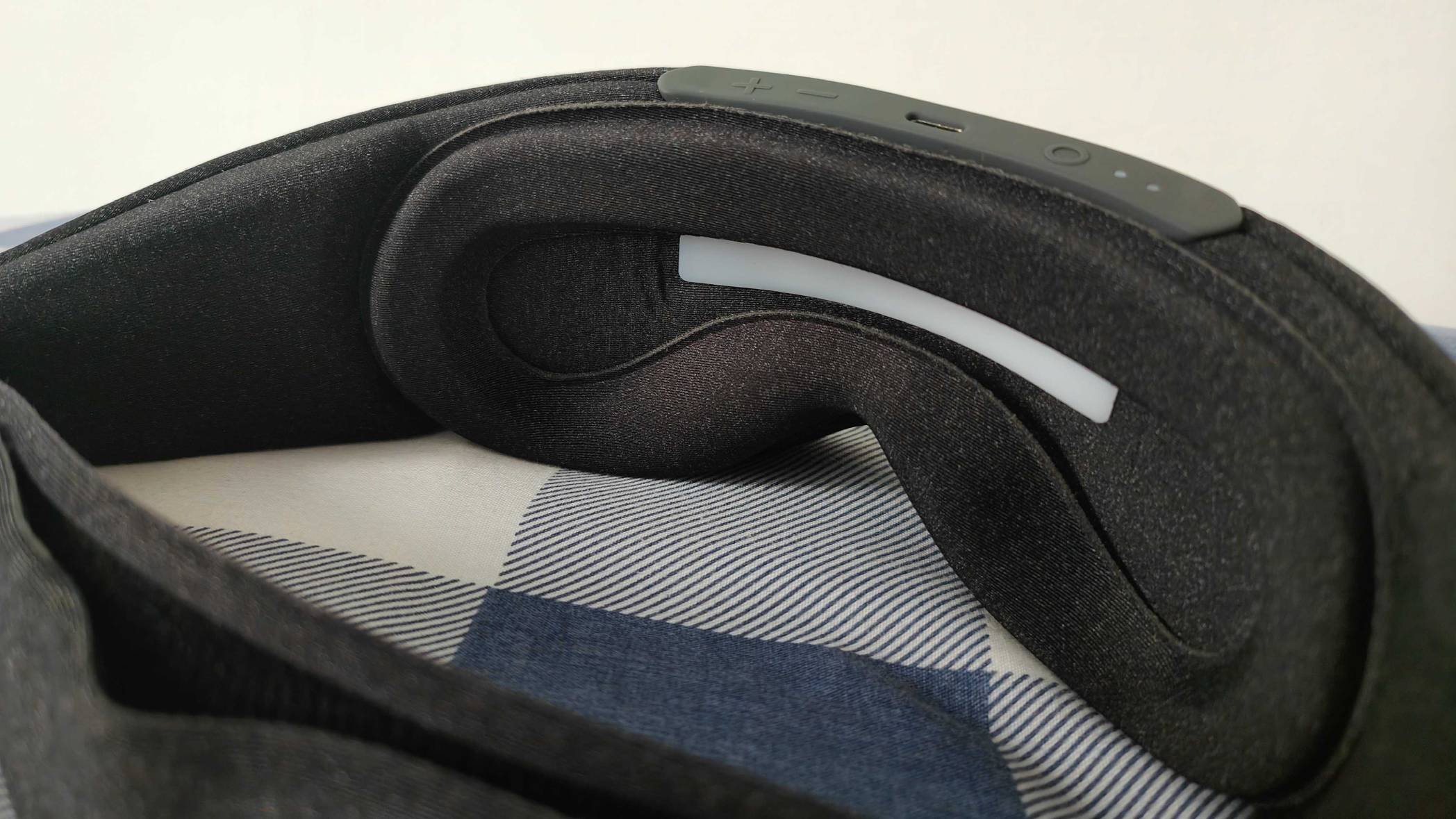
Other than waking up in the middle of the night to use the bathroom and momentarily forgetting I was wearing it, I slept extremely well. Inside the mask is a wake-up light bar called a Glow bar, which acts like the best wake-up lights to imitate a sunrise. It’s a comparable experience to using a separate wake-up light, and a really effective, very gentle way to wake up: far more preferable than your phone’s alarm clock.

Aura Smart Sleep Mask on a blue pillow

(Image credit: Future)

Really, it’s an excellent piece of kit, and I can’t fault either its comfortable design, innovative features like the Glow bar, or its performance as a set of sleep headphones. I genuinely quite enjoyed wearing it, although some of that may have been novelty. 

However, the biggest problem facing it, as mentioned in our full Aura Smart Sleep Mask review, is the price tag. At $229 (around £170 / AU$335) and with an additional $59.99 per year to access almost all the content on the Aura app, which you have to download to use the mask, it’s really only pitched at those with serious money to throw at better sleep.

I stopped my Calm subscription when prices went up to $69.99 per year: after subscribing at a cheaper tier for years, it had given me the tools to carry on a meditation practice without its guided content, and soundscapes exist on other streaming services like Spotify and YouTube. 

There are cheaper alternatives to the Aura Smart Sleep Mask out there, like Snoozeband and Musicozy, which you might want to try first. I haven't tried Snoozeband yet and so can't speak to its quality, but the Deluxe model does clock in at $79.99 / £59.99 / around AU$120, and that's without the ongoing subscription of the Aura app.

I loved the experience of the Aura Smart Sleep Mask, but wouldn’t necessarily buy it as an essential without trying some cheaper alternatives first, especially with the subscription attached.

You might also like...


from TechRadar - All the latest technology news https://ift.tt/q23kuyN

There's no let up in the Samsung Galaxy S25 leaks – and there probably won't be until the handset series gets unveiled sometime in...

There's no let up in the Samsung Galaxy S25 leaks – and there probably won't be until the handset series gets unveiled sometime in January – and two new images have made their way online that give us some idea of the design of the Ultra version.

We've already heard that the Galaxy S25 Ultra is going to adopt a more rounded design next year that's more comfortable to hold in the hand, but based on a new post from well-known tipster Ice Universe, the rear camera design won't be changing much.

The post supposedly shows a Samsung Galaxy S25 Ultra case, and there are the six holes you would expect based on the design of the current model (​four for the actual cameras, and a flashlight and a laser distance meter for autofocus too) – see our Samsung Galaxy S24 Ultra review for details.

For reference, the Galaxy S24 Ultra comes with a 200 MP wide + 10 MP telephoto + 50 MP periscope + 12 MP ultrawide camera setup that's capable of up to 5x optical zoom. There has been talk of upgrades to some of those cameras this year, even if this link suggests the layout is going to be pretty similar.

Another image leak

There's more from Ice Universe to report, as the tipster has also posted a rendering showing the corner and bezel of the current Samsung Galaxy S24 Plus up against what we're expecting from the Galaxy S25 Ultra.

It's been rumored that Samsung is going to be able to shrink the bezels even more on next year's handsets, and you can see that in this leaked image. You can also see the rounded design of the corners we mentioned earlier.

For comparison, you can check out leaked renders of the Galaxy S25 Ultra that have previously surfaced: not much change around the back of the handset, but an overall look and shape that's more consistent with the other models in the series.

As is normally the case, we've heard more about the Ultra model that's coming rather than the standard or Plus models. We've seen reports, for example, that the screen size on the Ultra model will be increased ever so slightly to 6.86 inches (up from 6.8 inches).

You might also like


from TechRadar - All the latest technology news https://ift.tt/XeNY7Wg

The late nineties and early aughts ushered in another Golden Age of Television, changing the way we talk about small-screen storytelling wi...

The late nineties and early aughts ushered in another Golden Age of Television, changing the way we talk about small-screen storytelling with the likes of serious, dramatic fare like The Sopranos, Six Feet Under and The Wire

While those more elevated series scooped awards and critical acclaim, at the same time that era gifted us arguably the last great sitcom: Friends. Its ongoing popularity since being added to the best streaming services is only more testament to that.    

Why is Friends still such a go-to for many of us?

Rachel and Phoebe in Friends

(Image credit: Prime Video)

At the time of its release in 1994, I was a mere 12 years old, not exactly the target demographic, and yet I was hooked from the moment of its UK television premiere on Channel. I rushed home from band practice every Friday to catch the latest episode even though its premise wasn't designed to lure me in. 

A series about six pals making their way in Manhattan, Friends emerged the brainchild of showrunners David Crane and Marta Kauffman and as a risky addition to the NBC slate. With the then-unknown Jennifer Aniston, Courteney Cox, Lisa Kudrow, Matt LeBlanc, Matthew Perry and David Schwimmer cast as the titular sextet, their anonymity gave the series a fresh slate to reflect youthful '90s attitudes. 

“There's nothing to tell! It’s just some guy I work with,” says Cox's Monica Geller, a twenty-something chef excited about an upcoming date. The show's first line of dialogue hints at some of its initial pull; Monica’s date with “Paul the wine guy” results in him spending the night. Granted, it's hardly a wild, out there storyline. In the context of the 1990s it certainly betrays typically-safe, family-oriented sitcom themes right out of the gate. 

The Friends crew

(Image credit: Prime Video)

That pilot storyline – much like Ross’ divorce – set the show apart at time of release, lending it a bit of edge. Through a 2024 lens? It feels a tad vanilla. But those story choices, once so risque, now form part of its lasting appeal, cementing the tone for what’s now a comfort watch for many. Settling down for a few episodes of Friends – check out our roundup of the best Friends episodes – is like hunkering down in a buttery-soft oversized sweatshirt. It evokes feelings of safety and belonging: a wholly separate vibe than prestige television.

Not only that, it’s easy to dip in and out. For me, returning home from work some evenings I'll pop on a few episodes to wind down before bed. Doesn't matter where I start or even if my partner watched some without me. The storytelling is accessible no matter where you dive in. If I see Friends as an in-flight entertainment option but the smattering of episodes is from the middle of season 7 and my rewatch at home is only on season 4, do I pass it over? No way. I might not recall exactly what’s happening but in a matter of moments I pick it up. “Oh, right, this is the one where Monica’s mad about Rachel kissing Ross."

Clowning around with your best buddies

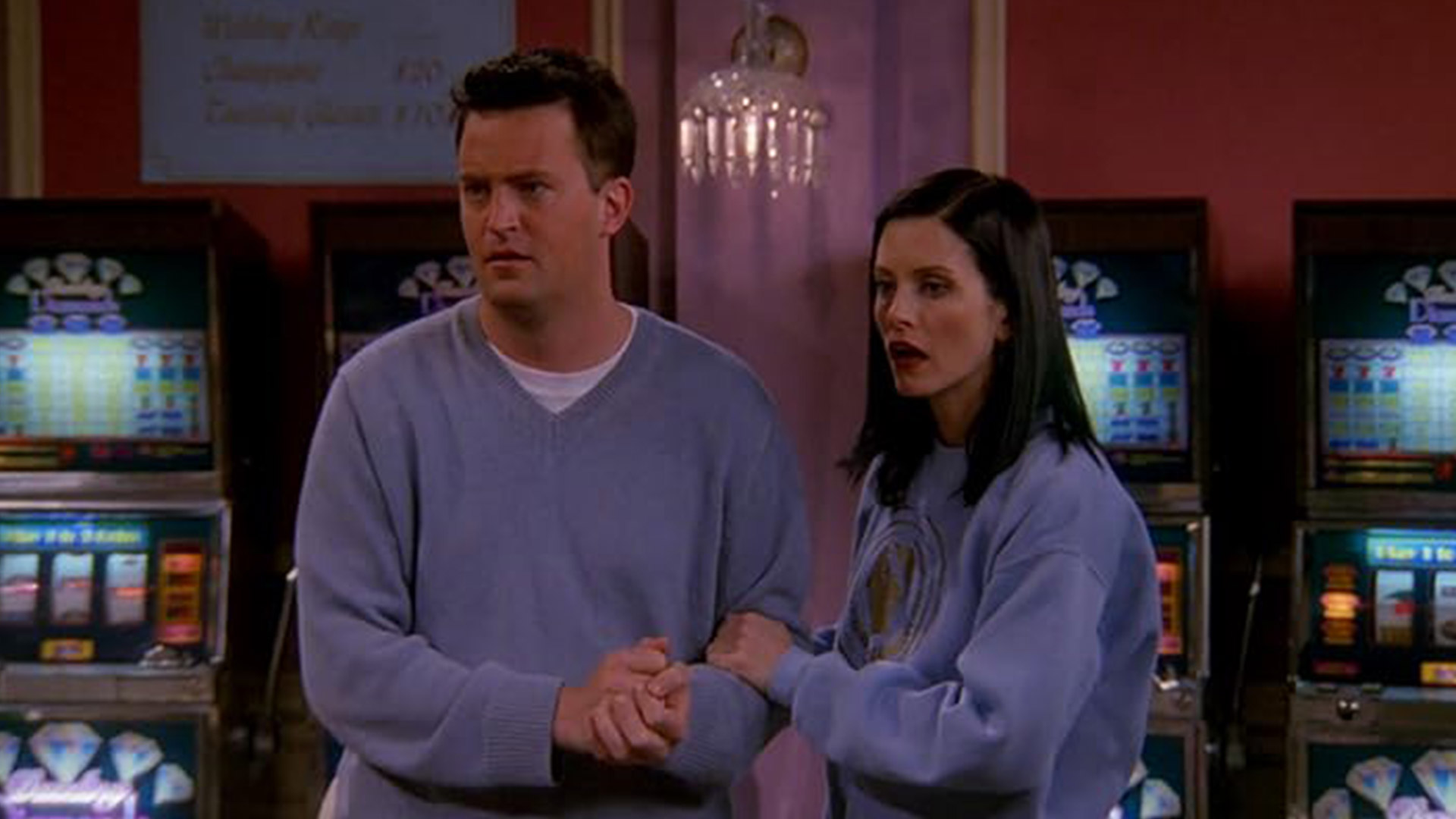
Monica and Chandler hold hands in the apartment of Friends

(Image credit: Prime Video)

A lot of the draw is the platonic intimacy. Is there any human that doesn’t crave that level of intimate and unconditional love, regardless of romance or not?

The show's serialized elements enrich the experience, but you aren’t required to remember painstaking quantities of backstory to enjoy – one of the biggest criticisms leveled at the Marvel Cinematic Universe's ever-expanding slate

Once you sink in, it offers sharp and still-relevant observations about relationships and making it as a twenty-something. Much is said about the nostalgia it evokes for the idealism of the 1990s, made emblematic now by the resurgence of formerly-counterculture '90s apparel being dragged back into the mainstream. 

But Friends boasts another form of longing: human connection. The Internet was not as widespread as it is today, and smartphones wouldn’t be invented until years after the series ended. Don’t worry, I'm not about to rag on technology. I love my smartphone (in fact, I’m writing this article on a commuter ferry thanks to my iPhone) and I advocate for easier access to information at my day job. So while it doesn’t affect us all, isolation due to the surge in online culture is very real. 

Much like Seinfeld (read our pick of the best Seinfeld episodes) did for a slightly older demographic, Friends captures the distinct feeling of goofing off. You know, just hanging out. The feeling that there is nowhere you would rather be than clowning around with your best buddies. How many shows or movies for that matter take that same “risk” as Friends by decentralizing romantic love and placing platonic love at its heart? 

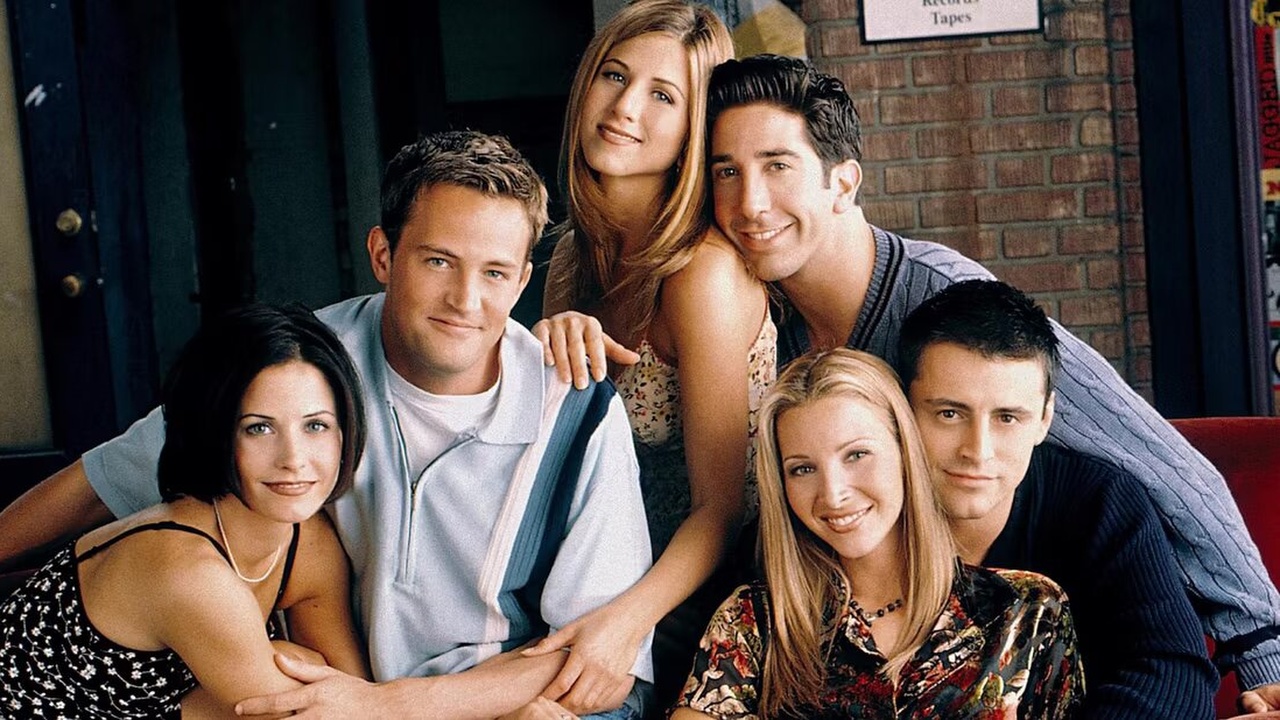
The cast of Friends in a promotional image for the show

(Image credit: Max)

I distinctly recall – sure, I was 12-22 for the series’ run – my life with my friends revolved around figuring out the world together. A friend of mine echoed this, aptly in a conversation over text: "In my opinion, I think a lot of the draw is the platonic intimacy. Is there any human that doesn’t crave that level of intimate and unconditional love, regardless of romance or not?"

It’s a cozy example of community. Who hasn’t missed that over the last few years? I know I have. The gang live close by one another with four of the six living in the same building, while it's implied that Ross and Phoebe's apartments are within walking distance (and even closer once Ross moves across the street). They have keys to each other’s places. They hang at Central Perk. They frequently hangout doing activities that are now relegated to "things we do on our own" such as putting together furniture and doing laundry.

It's like you're always stuck in second gear

The Friends crew in the aparament

(Image credit: Amazon)

It comes to me as no surprise that in 2024 the show remains as popular as ever. Second screen shows – that allow for a watcher to scroll their phone while watching – are huge. At the height of the pandemic, reruns became must-watch TV for their soothing, comfort factor. 

Generation Z in particular latched onto shows like Friends that withstand repeat viewings – my partner's 21 year-old sister informs me that she's seen Friends at least ten times all the way through: "Whenever I need a feelgood show, I put on Friends." 

That same friend of mine echoed this after I told her I was writing this piece: "I literally was watching it in the background earlier today. I’ve been making my way through from the beginning lately. Again. For the zillionth time. Lol." 

Who knew that the series' catchy-as-hell theme song would adopt another meaning all these years later? That it's the show itself that's been there for us


Friends is one of the best Max shows, with 10 seasons streaming on the platform in the US. For those in the UK and Australia, you can catch it on Netflix (Aussies can also find it on Stan).  


You might also like


from TechRadar - All the latest technology news https://ift.tt/HgE14Yp

It’s time to pour one out for the iPhone 13 , as with the launch of the iPhone 16 series, Apple has consigned its 2021 iPhone to the tech ...

It’s time to pour one out for the iPhone 13, as with the launch of the iPhone 16 series, Apple has consigned its 2021 iPhone to the tech bone orchard. But I’m here to tell you to buy one while you still can. 

That’s because the iPhone 13 was, until Apple officially retired it, our pick for the best cheap iPhone. And for good reason. 

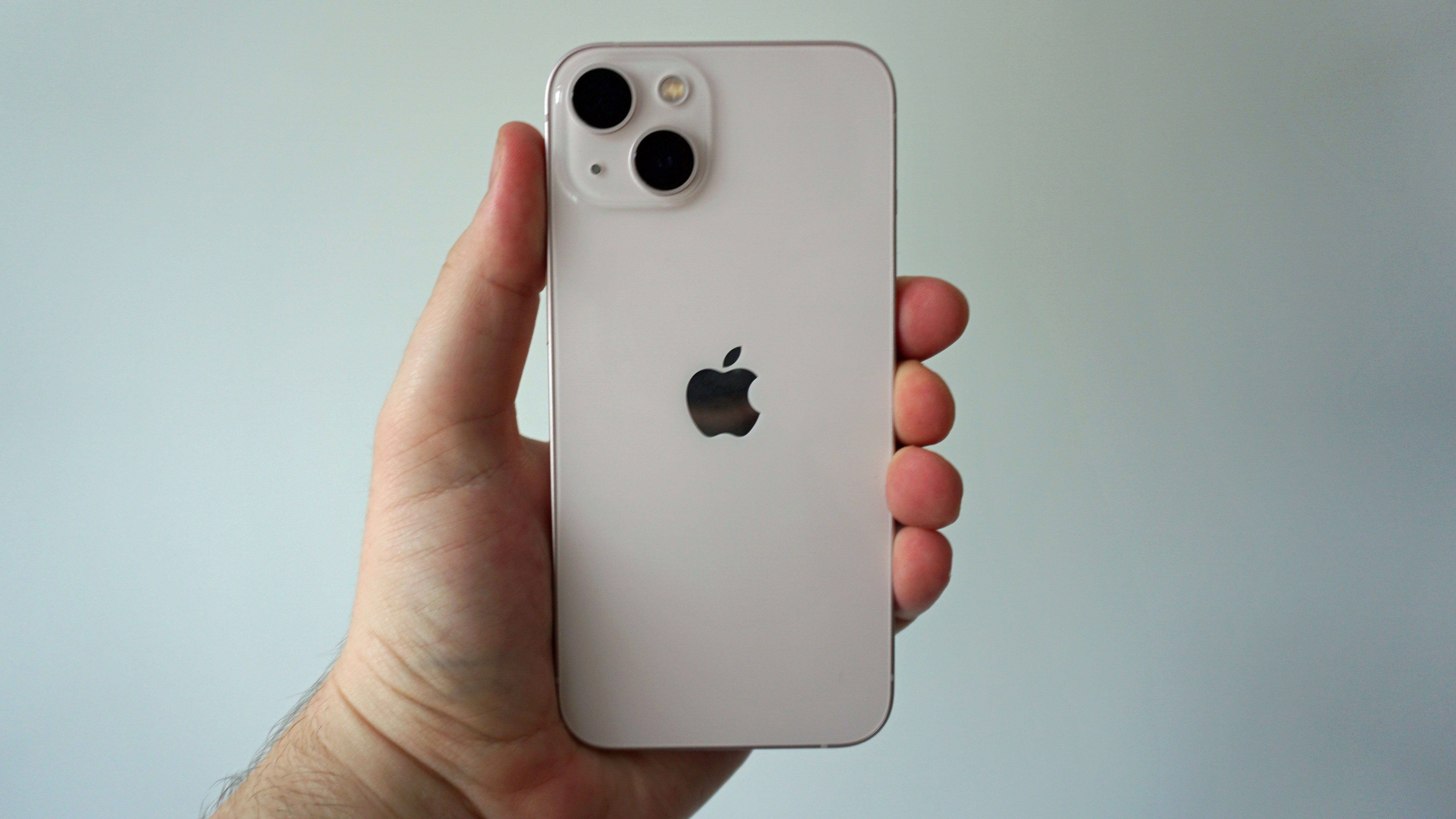
Despite now being three generations old, the iPhone 13 is still a very capable smartphone, and a good entry point into the walled garden of iOS and the Apple ecosystem. It blends a rather sleek design with the best display for size for phones – that’s 6.1 inches – and has a pair of very capable cameras, and a chipset that I doubt you’d be able to make sweat even today unless you threw the most demanding of apps or near-console-quality games at it. 

As such, it previously prompted me to write about why it’s a phone that anyone looking to move from Android to iPhone should consider, as it’s a capable but not overly expensive first Apple handset. And for people with older iPhones, say an iPhone X or iPhone 11, it’s a perfectly good phone to get if you want to avoid the hefty prices the latest iPhones command; such is the benefit of Apple cutting the prices of its older iPhones each time a new generation comes out. 

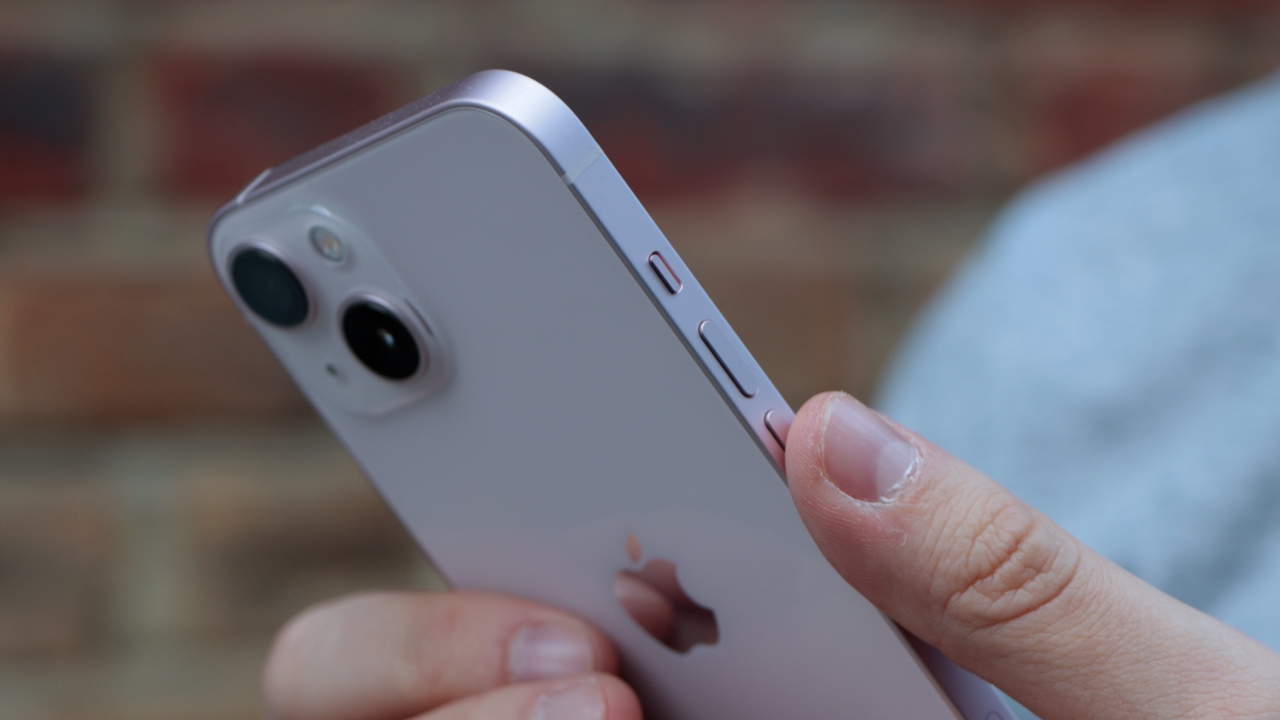
Sure there are caveats to the iPhone 13, namely its 60Hz display, which felt dated back in 2021 for a phone of its class (and feels even more dated on the new iPhone 16 and iPhone 16 Plus), and a now-defunct Lightning port. But otherwise, I think it’s a fantastic phone, with the endurance to last another generation or two if you’re not fussed about Apple Intelligence – and I'd caution against rushing to jump in this Cupertino-tinged AI train, as I’m not wholly convinced that artificial intelligence tools, even in the best AI phones, are as up to snuff as I’d like them to be. 

So I still feel the iPhone 13 is worth it, even if you perhaps just want a spare Apple phone. 

Let the hunt begin

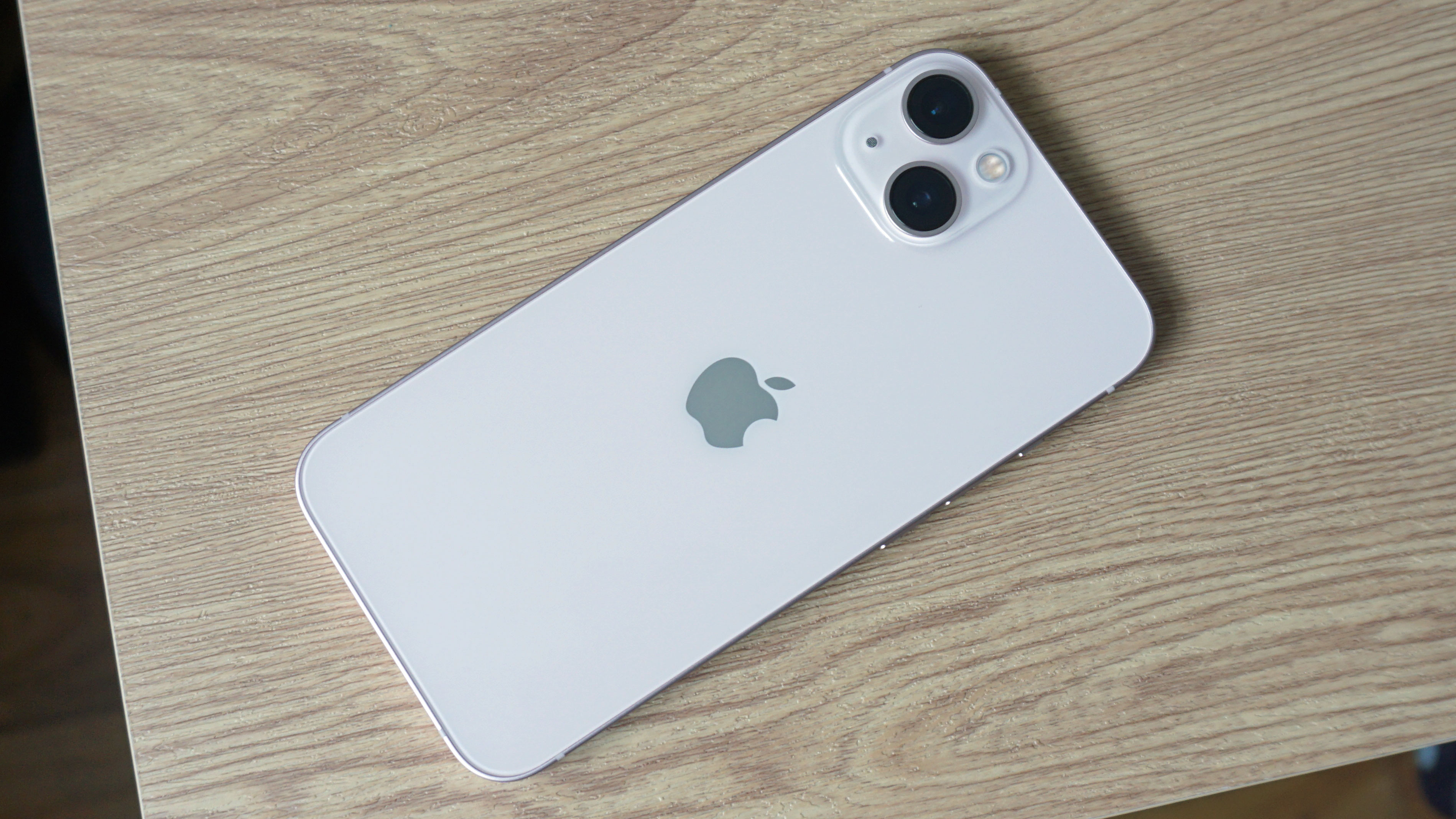
Image 1 of 7

iPhone 13

(Image credit: TechRadar)
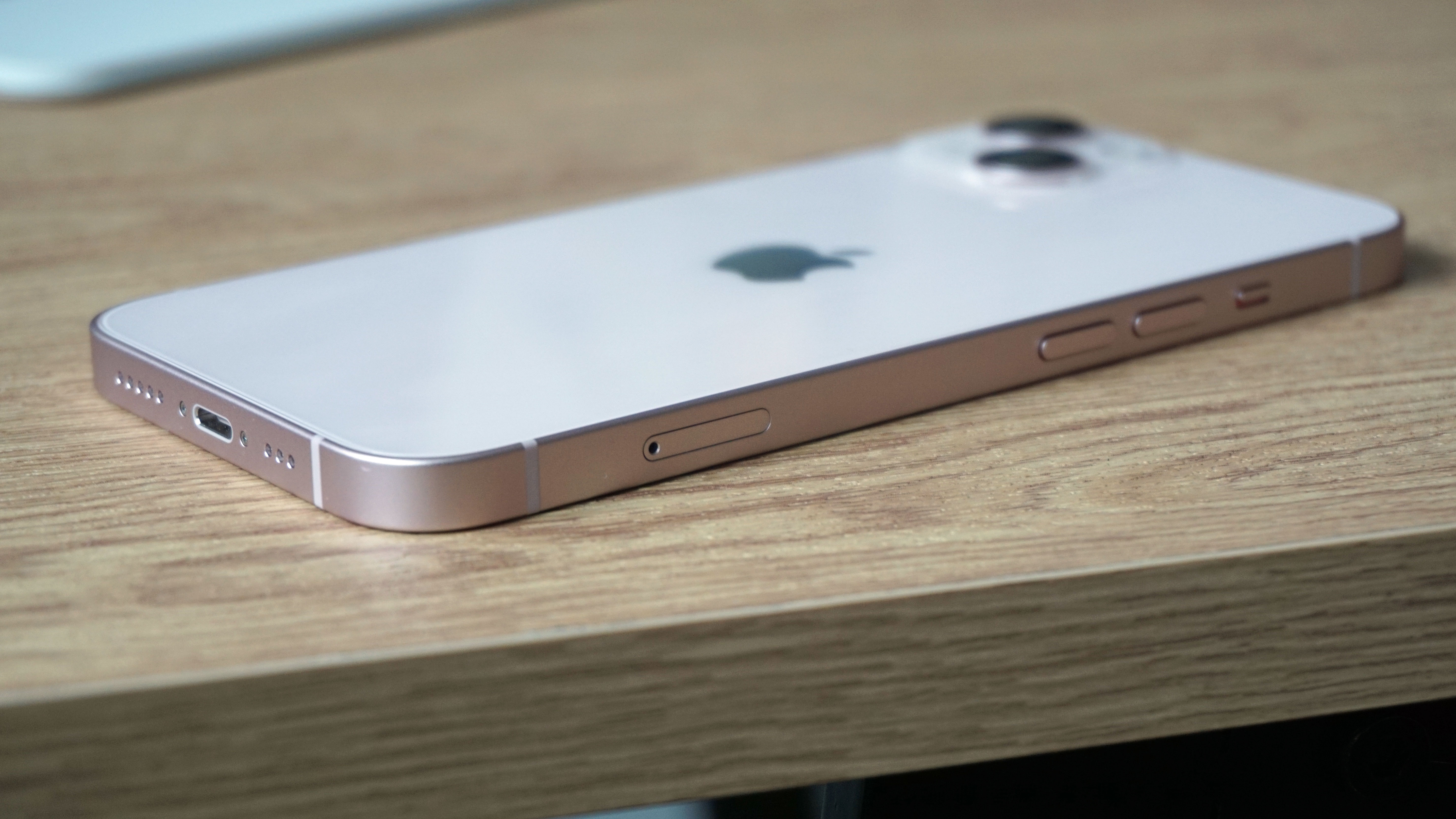
Image 2 of 7

iPhone 13

(Image credit: TechRadar)
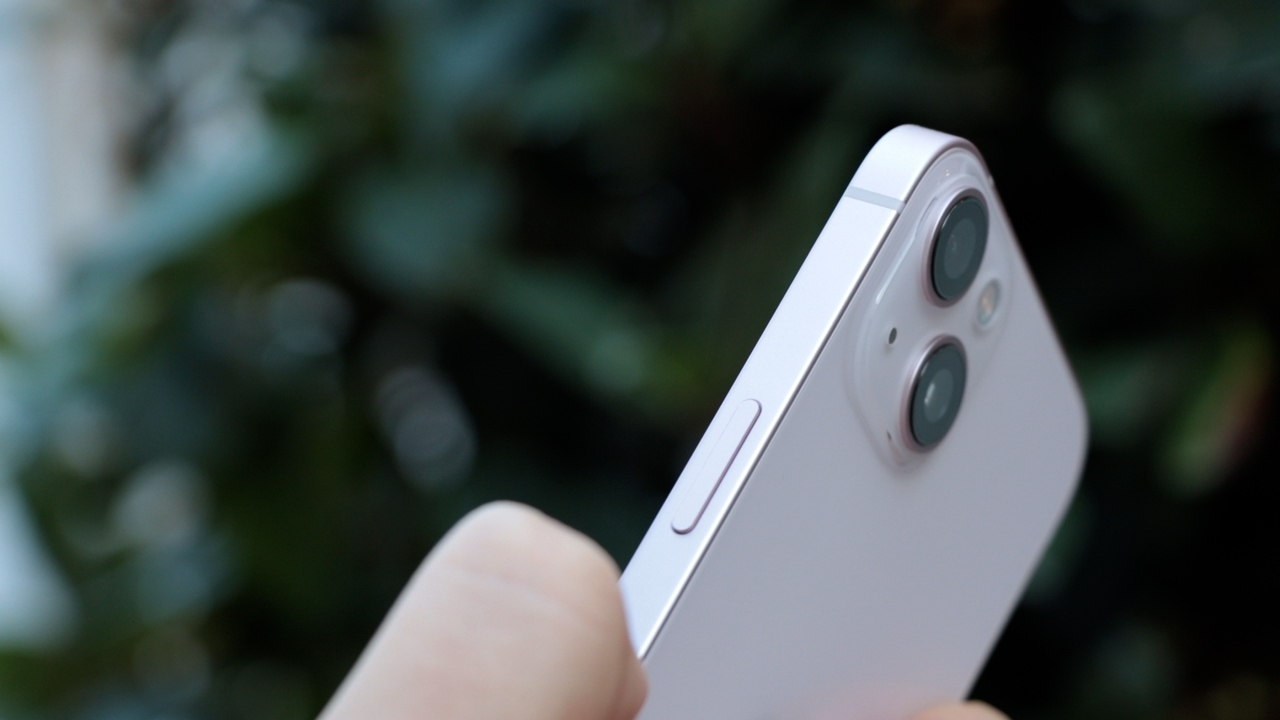
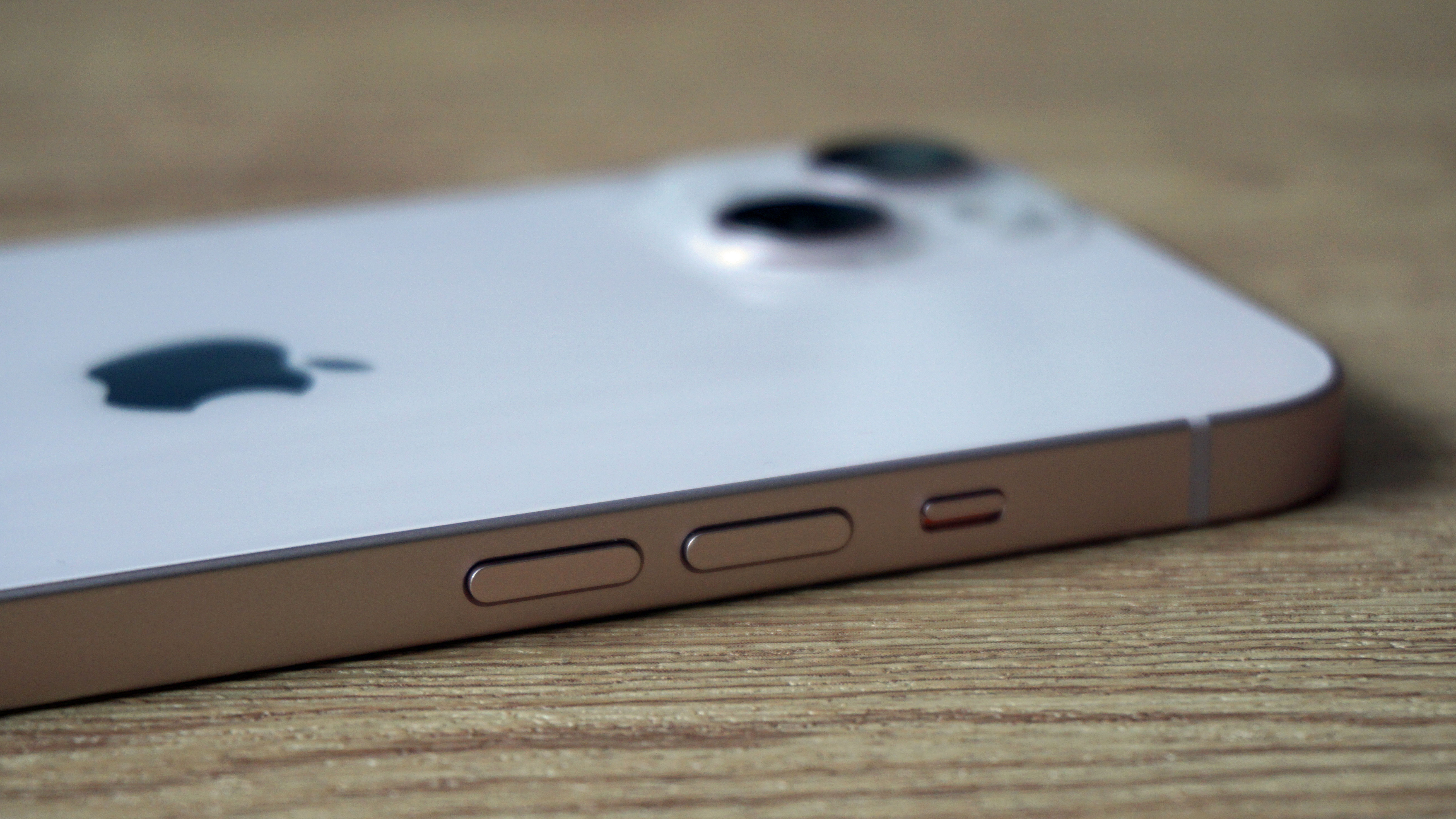
Image 3 of 7

iPhone 13

(Image credit: TechRadar)
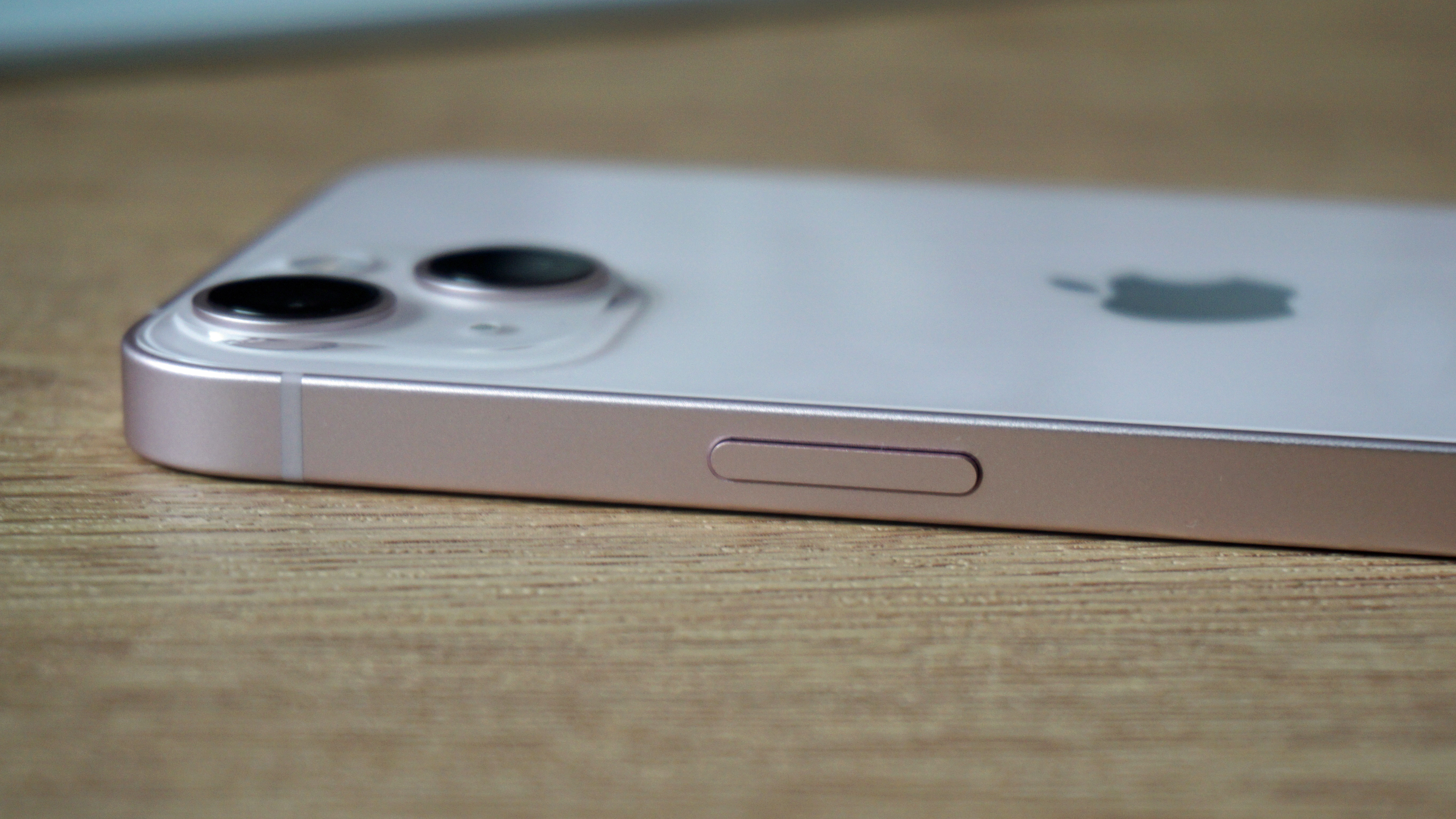
Image 4 of 7

iPhone 13

(Image credit: TechRadar)
Image 5 of 7

iPhone 13

(Image credit: TechRadar)
Image 6 of 7

iPhone 13

(Image credit: TechRadar)
Image 7 of 7

iPhone 13

(Image credit: TechRadar)

Of course, you'll need to move quickly before the iPhone 13 disappears altogether. I’d suggest checking out retailers like Best Buy and Currys in the US and UK respectively. Equally, you could go on the hunt for a refurbished iPhone 13 – the likes of Amazon tend to offer fairly robust refurbishments. And do check out our iPhone deals page to see if any iPhone 13 models pop up there.

I’d also suggest keeping an eye out for iPhone 13 units getting decent discounts as we approach the Amazon Big Deals Days in October and enter what I’m now calling Black Friday season – basically some six-ish weeks of deals. It's during these sales events that I suspect retailers will be looking to shift old Apple stock, and the iPhone 13 will surely feature.

If you end up missing the iPhone 13 boat, then I suspect your next-best hope for an affordable but capable iPhone will come in the form of a next-generation SE model. We’ve been referring to that as the iPhone SE 4, and while the rumors are sketchy as to its potential existence, if it does eventually appear – likely next year – we could see a phone that’s not dissimilar to the iPhone 13, and which could even channel the iPhone 14 in terms of design. Watch this space.

You might also like


from TechRadar - All the latest technology news https://ift.tt/Cr0HF3i

For as long as I can remember, Batman has been a pivotal part of my creative life.  Since sporting a baggy ‘Batman For President’ sweatshi...

For as long as I can remember, Batman has been a pivotal part of my creative life. 

Since sporting a baggy ‘Batman For President’ sweatshirt as a little kid riding on my Uncle Bruce’s Honda motorcycle, watching Adam West’s campy rendition in reruns of the vintage Batman TV show, buying the debut issue of Frank Miller and Klaus Jansons’s pioneering The Dark Knight Returns graphic novel, or attending the opening of director Tim Burton’s Batman at the Westwood Theater in Los Angeles, this pop culture treasure has remained relevant to me.

My love for the character extends to late-night gaming sessions caffeinated on gallons of Diet Coke playing Batman: Arkham Asylum, interviewing Batman: The Animated Series’ creator Bruce Timm, or sitting beside the legendary Batman artist Neal Adams for hours at comic cons, Batman’s shadowy influence, cool demeanor, and psychological complexity seem as alluring and ever-watchful as ever. 

Whether he’s known as the Dark Knight, the Caped Crusader or the main component of the Dynamic Duo with his trusty sidekick Robin the Boy Wonder, this fearless vigilante and champion of justice who first appeared in the pages of Detective Comics #27 back in May of 1939 – one of the best Dark Knight stories – is perhaps the greatest fictional character ever created. Imbued with equal parts of Zorro, Sherlock Holmes, and the pulp icon called The Shadow, Batman is the embodiment of someone who has channeled their inner pain to become a beacon of hope and righteousness.

Batman through the ages

Batman comic books and graphic novels on a red couch

 I've collected all the Batman comics since the 80s. (Image credit: Jeff Spry)

Cloaked in gothic black and equipped with an arsenal of 'wonderful toys', Batman is an intimidating hero for the ages, one that, due to his absence of any true superhuman powers, relies on his keen intellect, lightning reflexes, physical prowess, and preternatural powers of deduction.

Created by artist Bob Kane and writer Bill Finger, Batman was born in pre-World War II America during the Golden Age of comics when there were clear distinctions between good and evil. The billionaire playboy industrialist Bruce Wayne became a nocturnal crusader after his parents were shot dead in Crime Alley after a showing of The Mark of Zorro in Gotham City. He took up the emblem of a bat to instill fear in criminals and honed his mind and body to sheer perfection.

Over the decades the character would be reinvented in myriad media, appearing in the ‘40s in matinee Batman serials at the local movie house after receiving his own Batman solo comic and remaining a fixture in DC’s Detective Comics line – if you're wondering where these fit in a timeline, here's how to watch the Batman movies in order

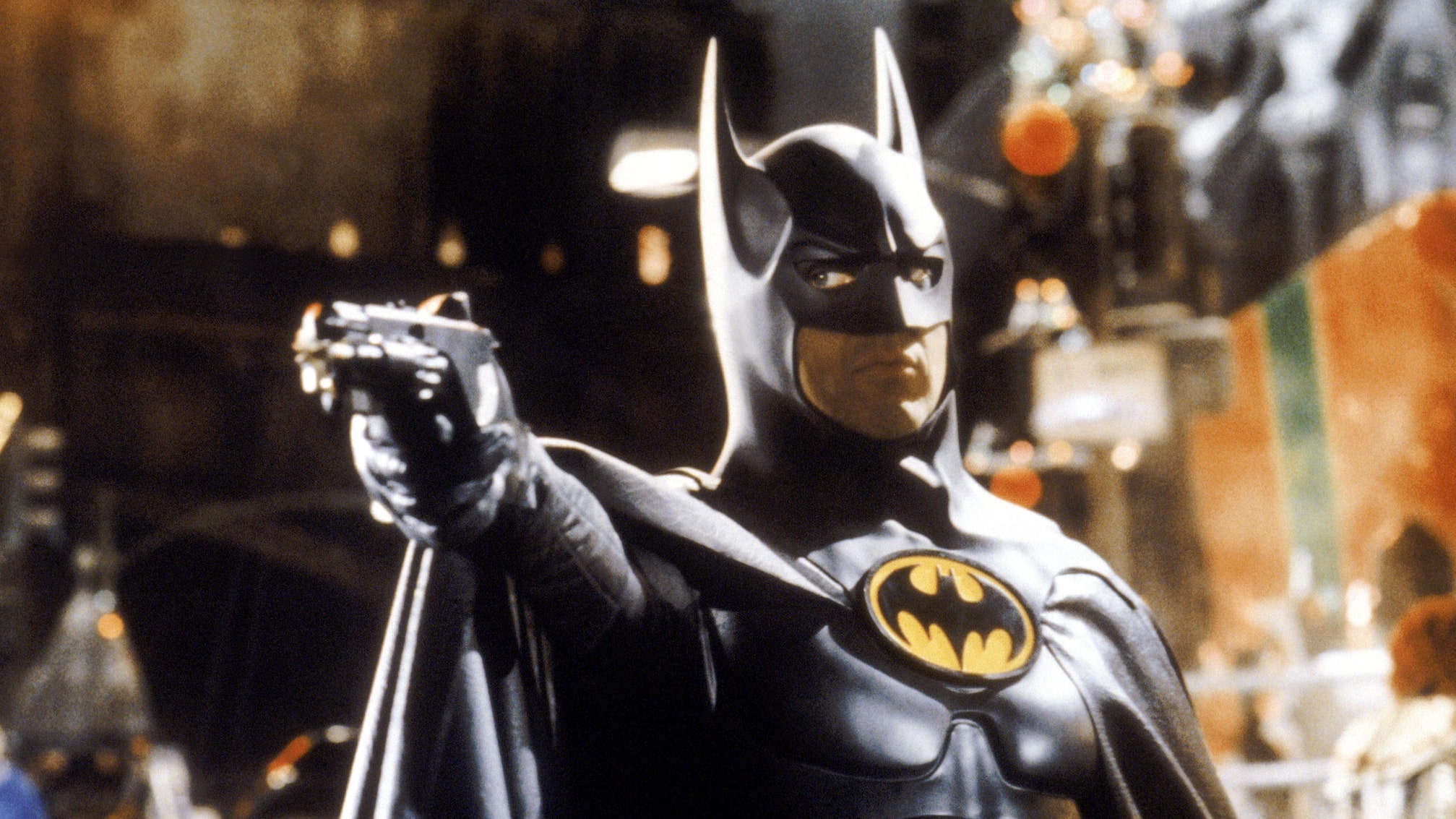
Batman becomes a breakout hit in the ‘60s as a cultural sensation beside James Bond and The Beatles with his own hit TV series, plastered on lunchboxes, buttons, posters, t-shirts, toys, and bedsheets, then debuting in cartoon form as part of the 1970s Super Friends show on Saturday morning, and finally struck the limelight of Tinsel Town in Tim Burton’s 1989 Batman movie starring Michael Keaton and Jack Nicholson. 

Michael Keaton Batman

Michael Keaton as Batman in Tim Burton's 1989 adaptation.  (Image credit: Warner Bros.)

Today, Batman is DC Comics’ most popular character of all-time, currently being featured in a half-dozen different titles and graphic novels. We’ve got a new Batman feature film coming out in 2026 titled The Batman Part 2, which is a sequel to The Batman, Batman theme park rollercoasters, Batman videogames, and a fresh Batman animated series created by Bruce Timm called Batman: The Caped Crusader.

Directors Tim Burton, Joel Schumacher, Christopher Nolan and Matt Reeves have all had their time in the Bat Cave with their own interpretive visions and fans have differing opinions of which portrayal is the truest Batman to them. Myself, I’m rather partial to Robert Pattinson’s laconic 'Year Two' embodiment of the unrelenting protector of Gotham City, with Christian Bale coming in a close second. With his rogues gallery of formidable foes like The Joker, The Penguin (which has a new Max spinoff show called The Penguin), Scarecrow, Catwoman, The Riddler, Harley Quinn, Bane, Poison Ivy, Two Face, Mister Freeze, Ra’s al Ghul, and Killer Croc, Batman is one seriously busy dude keeping streets safe.

The Caped Crusader standing in a dimly lit room in The Batman

Directed by Matt Reeves, The Batman was released in March 2022.  (Image credit: Jonathan Olley/Warner Bros.)

So on this most auspicious of occasions known as Batman Day, it’s the perfect time to reflect on the origins and evolution of this mysterious crimefighter and discover the multitude of ways to watch the best Batman movies on the best streaming services as well as all immediate Bat-needs in films, animated series, and TV shows. 

To sink your soul into the bounty of Batman fare, there are boundless opportunities to figuratively (or literally if you desire) don the cowl and cape to honor him. So let’s discover where you can secure your fix of the Dark Knight during this heroic day of remembrance.

Batman, on demand

Batman glides down a staircase to evade gunfire in Batman Begins

Christopher Nolan's Batman trilogy is one of the best around.  (Image credit: Warner Bros.)

A great place to start is Batman’s official streaming home on Max, the platform owned by Warner Bros. Discovery, the parent corporation of DC Comics. As a respectable sampler for those in the US, Max is currently offering five seasons of Gotham (those in the UK can find it on Prime Video) featuring younger proto-versions of Bat-universe heroes and villains. 

Moving on, you’ll find a bonanza of Hollywood’s flagship Batman feature films including 1989’s Batman, 1992’s Batman Returns, 1995’s Batman Forever, 1997’s Batman & Robin, 2005’s Batman Begins, 2008’s The Dark Knight, 2012’s The Dark Knight Rises, and 2022’s grim and gritty The Batman showcasing a standout performance by Robert Pattinson – read our picks of the 10 best performances from the Batman movies

Also on Max, animation aficionados can gravitate to creator Bruce Timm’s ‘90s classic Batman: The Animated Series and the futuristic Batman Beyond, as well as The Batman, and Batman: The Brave and the Bold. More adventurous types should consider 2017’s The Lego Batman Movie or the Ultimate Edition of Zack Snyder’s operatic Batman v Superman: Dawn of Justice, Justice League, and the intriguing black-and-white cut, Justice League: Justice is Gray.

A screenshot of a promotional image for Batman: Caped Crusader

Batman: The Caped Crusader quickly became an instant hit on Prime Video.  (Image credit: HBO)

And if you’re eager for a solid recommendation from the dozens of excellent DC Animated Universe feature films Max is presenting, you cannot go wrong with the horror-tinged Batman: The Doom That Came to Gotham, which is adapted from a 2000-2001 Elseworlds comic book miniseries written by Hellboy’s Mike Mignola and Richard Price.

Over on Netflix, Batman is predictably absent except for the atrocious mess called The Flash and two decent kids animated series, Justice League and Justice League Unlimited, which don't feature among our pick of the best superhero movies

Finally, Amazon’s Prime Video scored a huge prize when they landed Bruce Timm’s new 1940s-set noirish animated series, Batman: The Caped Crusader, which quickly became one of the best Prime Video shows. Plus Prime Video is also the exclusive destination for a pair of Technicolored Batman gems from the 1960s: all 120 episodes of the Batman TV series that aired from 1966-1968 and 1966’s super fun Batman: The Movie.

However and wherever you dance the Batusi today, a Happy Batman Day to all!


You might also like


from TechRadar - All the latest technology news https://ift.tt/s9YBHqS

This week we published all of our reviews of the new Apple tech so you can find out precisely what we think of it, were disappointed by the...

This week we published all of our reviews of the new Apple tech so you can find out precisely what we think of it, were disappointed by the Apple Intelligence-less iOS 18 launch, and downloaded 40 free games for our Steam Deck through our Amazon Prime membership.

All of that and more is covered in our ICYMI round-up below.

Next week you can look forward to Meta Connect 2024 which we expect will be full of XR (a catchall for VR, AR and MR) and AI goodies. We'll be sure to catch you up to speed on everything you need to know from the event.

6. iOS 18 launched without Apple Intelligence

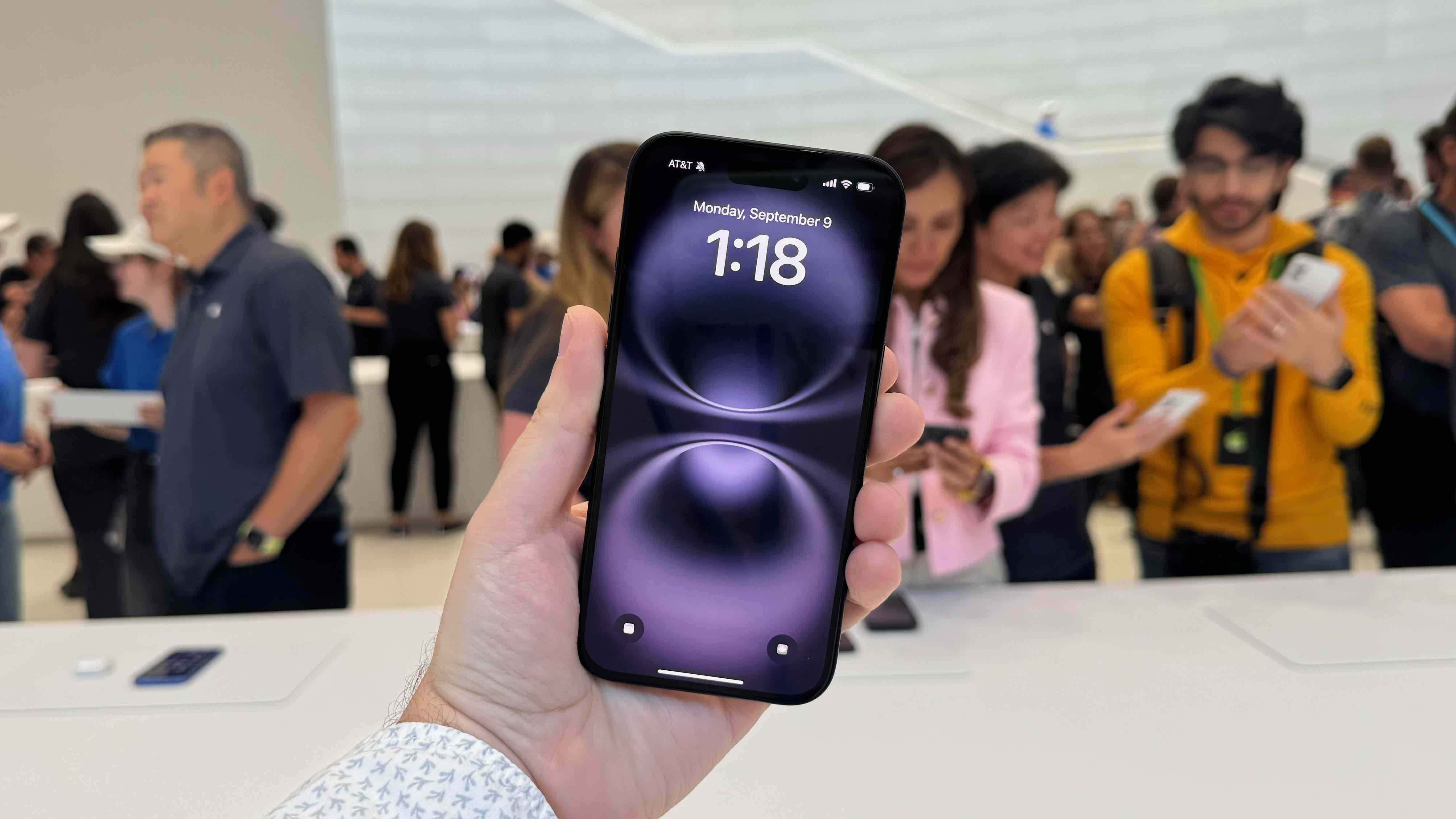
Apple iPhone 16

(Image credit: Future/Jacob Krol)

With the arrival of this year’s new iPhones, we’ve also got a new version of iOS to play around with – iOS 18. It’s coming to every iPhone launched after the iPhone XS – including the 2nd-gen SE – and introduces several new features.

There’s improved home screen customization, so you can finally move apps around to reveal more of your wallpaper. Messages has been overhauled to add text effects and RCS support, and smaller changes like your Photos app and the Control Center are getting a redesign.

Unfortunately, Apple Intelligence – iOS 18’s headline tool – isn’t quite here yet. It’ll start to roll out with US English support in update 18.1 in October. Still, other English variants aren’t coming until December, and major tools like Genmoji, Image Playground, and Siri’s on-screen awareness aren't expected to arrive until much later in iOS 18’s lifespan. A scattered introduction that has certainly put a dampener on things.

5. We reviewed the new Apple tech

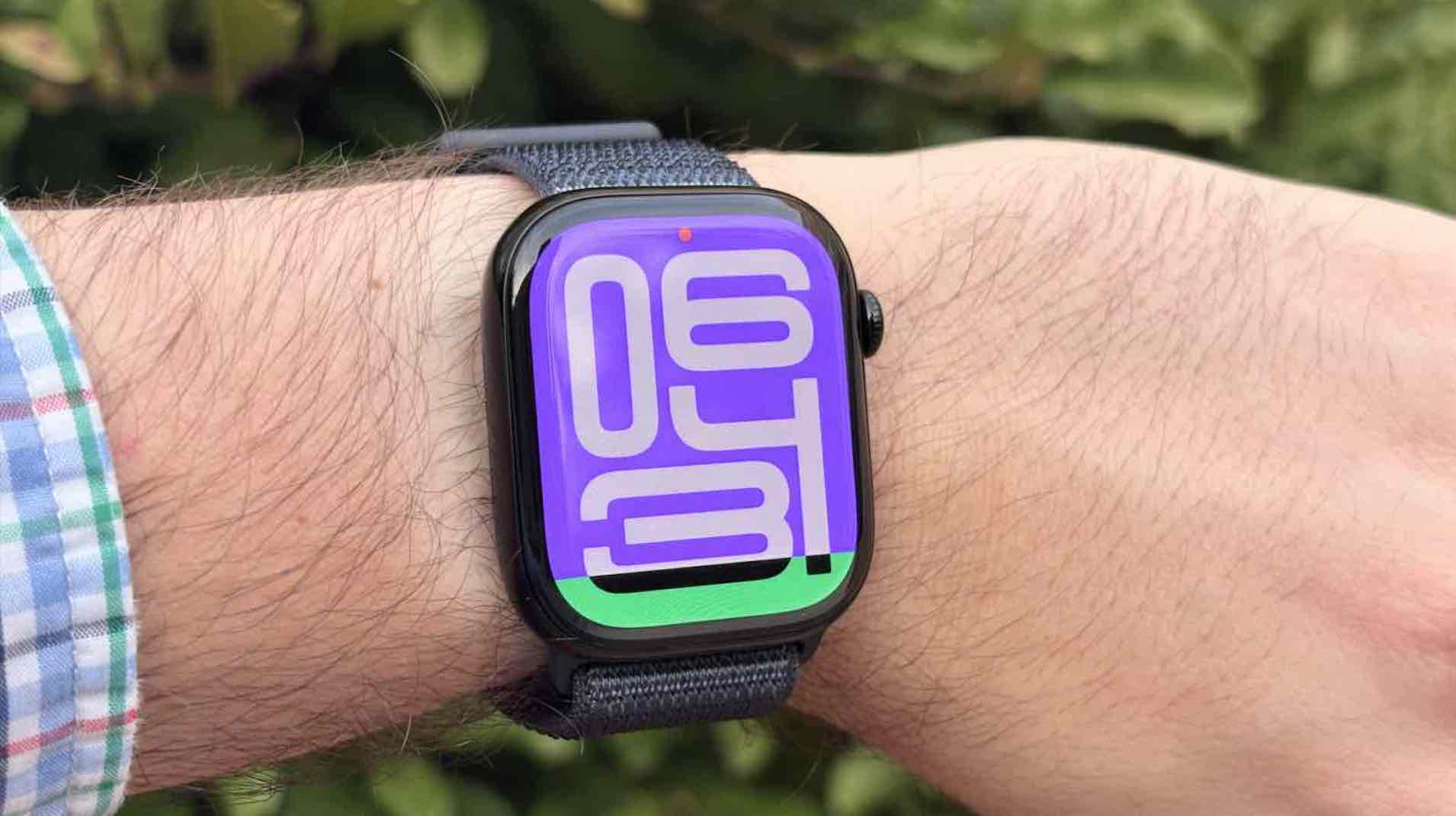
Apple Watch Series 10

(Image credit: Future/Jacob Krol)

It’s Apple availability week, and TechRadar is the place to be for our in-depth reviews, encompassing our full thoughts on all the kits from the Cupertino-based company. Starting off, our Editor-at-Large Lance Ulanoff handled the iPhone 16 Pro Max and called it a “beautiful, intelligent beast.” Read his full review to learn more about the impact of a bigger screen – 6.5 inches to 6.7 inches – a faster processor and new cameras that make a difference.

Of course, there’s also the standard iPhone 16, which got a significant glow-up, and TechRadar’s Jacob Krol tackled the review on it, noting that it’s more Pro than ever before thanks to a zippy-quick A18 chip, the arrival of two buttons, and vibrant colors. He also reviewed the Apple Watch Series 10, noting it's “more than meets the eye from every angle,” alluding to the larger displays on both models and improved viewing angles all housed in a smaller build.

TechRadar also has full thoughts on the iPhone 16 Plus, iPhone 16 Pro, and AirPods 4 with Active Noise Cancellation.

4. Anker felt the heat as it recalled three of its power banks

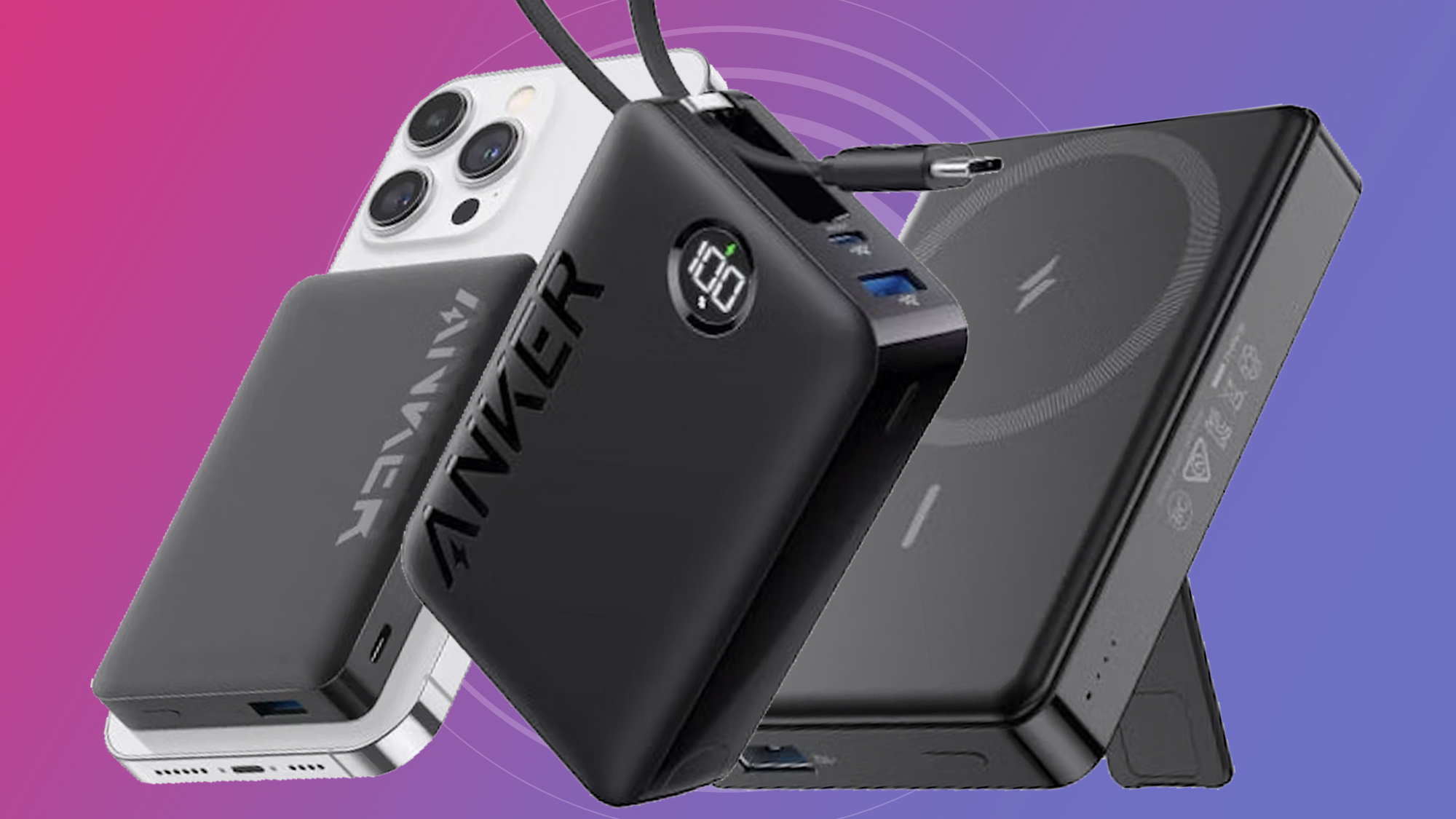
Three Anker power banks on a pink and purple background

(Image credit: Anker)

It wasn’t a great week to be the owner of an Anker power bank – or at least, one of the three models the company had to recall this week due to the discovery of a potential fire risk.

If you own an Anker 334 MagGo Battery (PowerCore 10K), Anker Power Bank or Anker MagGo Power Bank, you should stop using it now and fill out Anker's recall form to get a replacement.

The cause is apparently a manufacturing defect in some models that causes overheating. Anker says it’s now changed suppliers and that owners of its other batteries have nothing to worry about. But the news was an unwelcome addition to the ‘to do’ lists of those unfortunate enough to buy one of those three batteries.

3. ChatGPT started messaging first… But OpenAI fixed it

ChatGPT logo with circuitry in the background.

(Image credit: Shutterstock/Sir David)

For a few days, it looked like ChatGPT had been upgraded in a way no one had expected – it was messaging users first. Apparently, it could do this because it was following up on a conversation it had previously had with users who had mentioned they were starting school in a few days or were trying to discuss medical symptoms.

Some were skeptical about the situation, even suggesting ways it could have been faked, but OpenAI had the last word. It revealed that ChatGPT messaging first was a bug, not a new feature, adding that it had been fixed.

Given the level of excitement generated by the possibility of ChatGPT following up on its own, we wouldn’t be surprised to see the tool launch at some point for real.

2. DJI introduced us to the Osmo Action 5 Pro

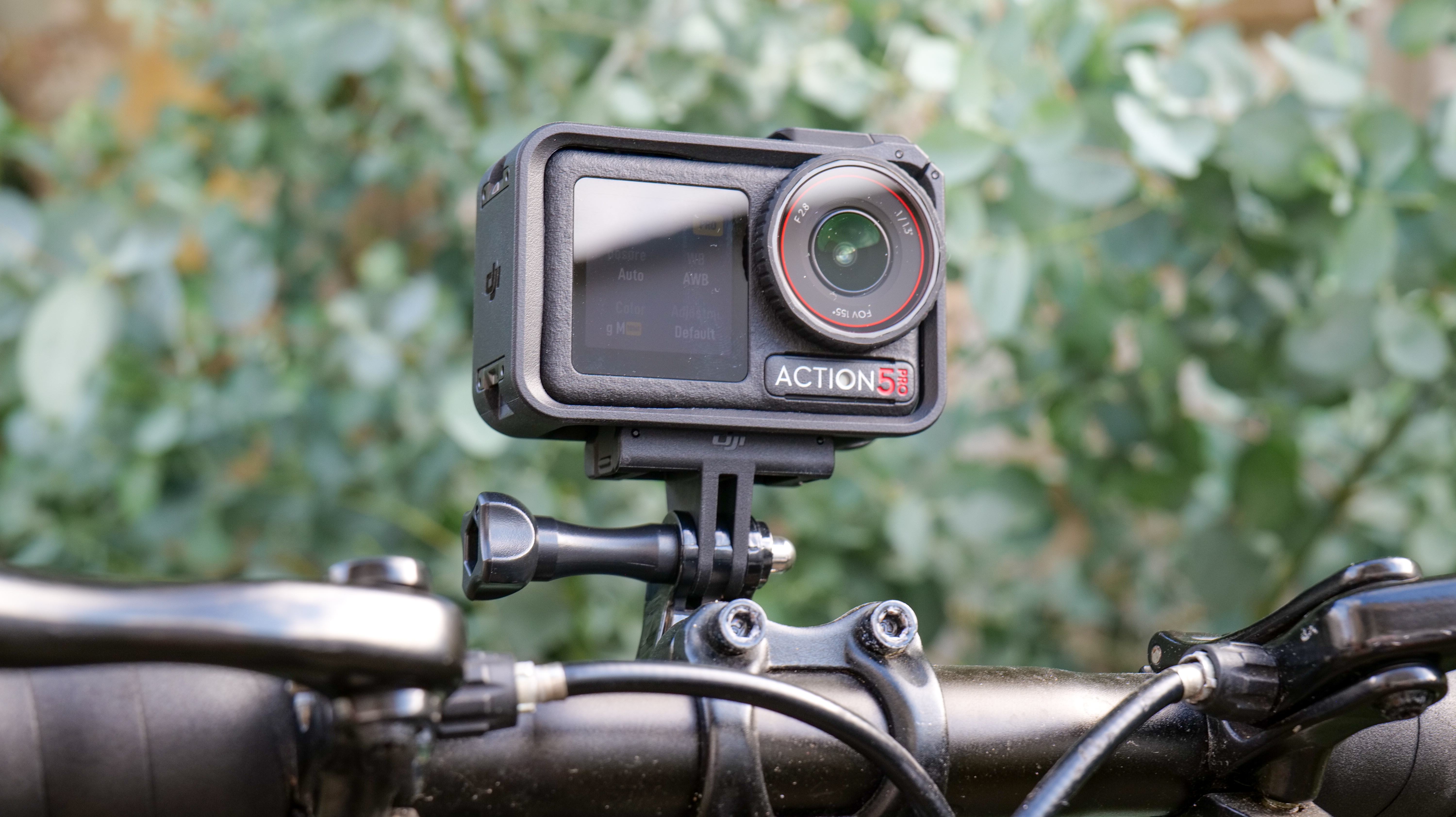
DJI Osmo Action 5 Pro

(Image credit: Future | Sam Kieldsen)

DJI announced its first action camera with the 'Pro' monicker, which delivers a raft of impressive new features, including an industry-first 4nm chip, four-hour battery life – that's double that of the GoPro Hero 13 Black – 20 m waterproofing (which is again double that of its rivals), and bigger and punchier twin OLED screens.

We've already reviewed the flagship action camera, and there are many areas where it steals GoPro's crown, but it's not a one-sided battle. While the Osmo Action 5 Pro has industry-leading 4K image quality and low-light performance, it can't shoot 5.3K video like the Hero 13 Black or 8K video like the Insta 360 Ace Pro, nor does it have GoPro-style lens accessories for different looks.

However, there's plenty going for DJI's unique take on action cams that will aptly satisfy content creators with an eye for detail, and it appears that DJI is making the most headway in this space.

1. Amazon gave away 40 of the best Steam Deck games

Steam Deck on sparkly background

(Image credit: Future / Valve)

Listen up if you’re an Amazon Prime member and a Steam Deck user. As long as you have an active membership, you can enjoy over 40 free of the best Steam Deck games – though act fast, as some are already starting to leave.

There is a caveat to note – these versions of the games aren’t directly available on Steam. Instead, you’ll need to acquire them through Epic Game Store, Amazon Games Store, or GOG. Though, you can rely on the Heroic Games Launcher and shortcuts to help you simplify the process of playing them on Steam Deck.


from TechRadar - All the latest technology news https://ift.tt/OtUW40v

The Huawei Watch D was one of the weirdest wearables of 2022, and now the airbag-packing, blood-pressure-tracking marvel is back.  Release...

The Huawei Watch D was one of the weirdest wearables of 2022, and now the airbag-packing, blood-pressure-tracking marvel is back. 

Released this week as one of six new Huawei Watch models, the D2 builds on the ground-breaking blood pressure tracking of the first D model. In a world-first for any smartwatch, its ambulatory blood pressure monitoring (ABPM) system is now certified by China's National Medical Products Administration and the EU's Medical Device Regulation body. 

The blood pressure monitoring tech is housed inside a revised chassis that's slimmer and lighter than the original Huawei Watch D. Say what you want about the cool health tech, the last one was pretty ugly. The new version is a lot more Apple Watch-esque and features a 1.82-inch AMOLED display. While not a stunning design by any means, it's at least more agreeable on the eye and a much less offensive housing for some otherwise smashing health gear. 

The Huawei Watch D2 paradox

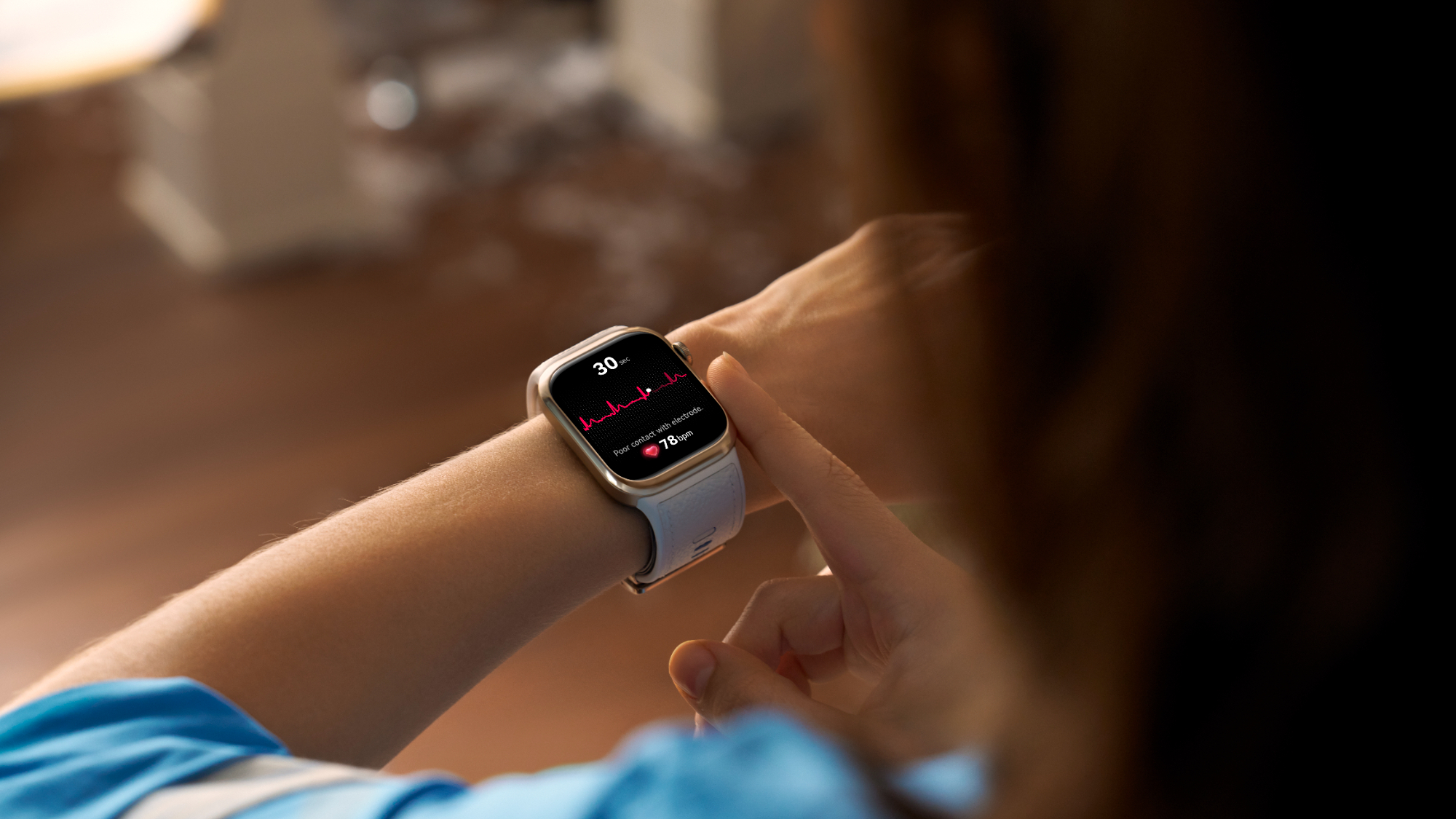
Huawei Watch D2

(Image credit: Huawei)

The advent of Huawei's Watch D2 continues this device's heritage as a bit of an enigma. Including blood pressure technology in a device the size of a wristwatch is a marvelous technological feat. Like the previous model, the D2 houses a narrow mechanical airbag in its strap, and on paper, this is the ultimate wearable for anyone with blood pressure issues. 

However, Huawei remains banned in the U.S., vastly limiting its reach, and precluding the inclusion of Google's Mobile Services. As such, even where you can buy Huawei devices, the ecosystem is incredibly limited and requires the use of a lot of alternative services. 

Still, Huawei has taken the best of the Watch D and repackaged inside a much more amiable second iteration. Sadly, it seems the innovative (and arguably life-saving) blood pressure tech will continue to be held back by Huawei's usual issues. 

Blood pressure monitoring in more mainstream smartwatch models remains out of reach. Behind the scenes, Apple has been working on blood pressure monitoring on the Apple Watch for years. Most recently Bloomberg's Mark Gurman reported that the Apple Watch Series 10's redesign caused a delay with the feature due to problems during testing. The best Apple Watch is now available in stores, with a new titanium finish and a larger display in tow, but no BP technology. 

You might also like...


from TechRadar - All the latest technology news https://ift.tt/WHvTpER

Hot on the heels of Snapchat’s newly-announced AI Creative Tools , which include the ability to create AI Selfies alongside new AI Snaps to...

Hot on the heels of Snapchat’s newly-announced AI Creative Tools, which include the ability to create AI Selfies alongside new AI Snaps tools for Snapchat+ subscribers, a few users have noticed that the setting for Snapchat to use your AI Selfie in adverts is turned on by default.

In Snapchat, your AI Selfie is created from an image of your face, and is a cartoon-like representation of what you look like. You can change the outfit your MySelfie is wearing or regenerate it if you don’t like the results.

Me, myself and MySelfie

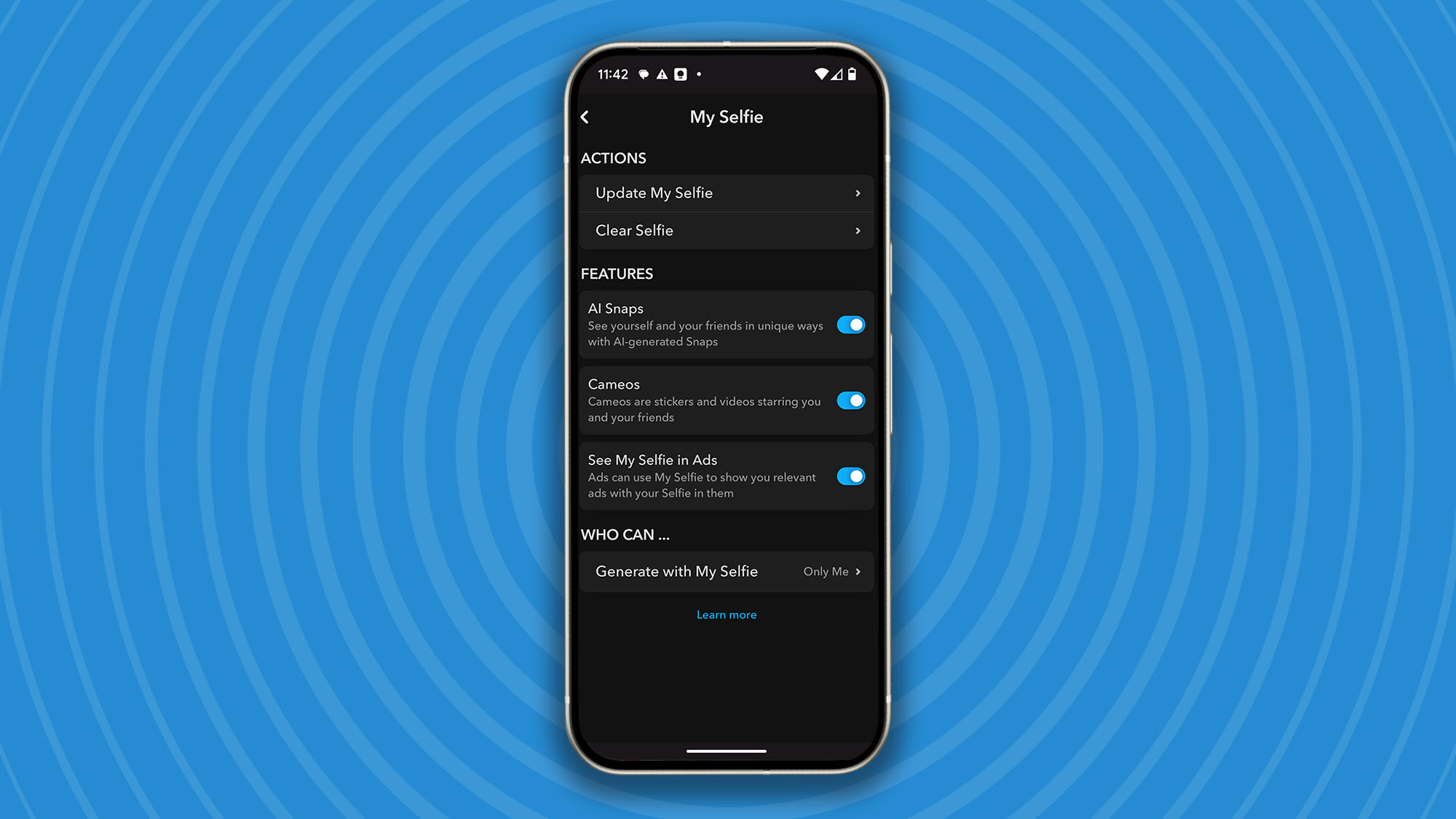
Snapchat settings screen, on a Google Pixel 9.

(Image credit: Snapchat/Google)

We’ve checked the settings screens in Snapchat, and can confirm that by default you’re agreeing to have your own personal AI Selfie appear in ads the app shows you.

This has prompted some to worry about how secure their data is. In a statement to The Verge, Snapchat said, “Advertisers do not have access to Snapchatters’ Gen AI data in any capacity, including My Selfies nor do they have access to Snapchatters’ private data, including Memories, that would enable them to create an AI generated image of an individual Snapchatter.”

Snapchat's statement is reassuring, but there’s no harm in turning the setting off, for extra security. To turn off the ability for Snapchat to use your My Selfie image in ads, tap on your profile in the top-left corner. This will show your AI-generated My Selfie. Now tap on the settings cog. Scroll down until you see My Selfie, then tap that, and toggle off ‘See My Selfie in Ads’. That’s it, all done. While you’re there you might also want to make sure that ‘Generate with My Selfie’ is set to ‘Only Me’.

While Snapchat’s AI Tools require a subscription to Snapchat+, which costs $4.49 (£4.49, AU$5) the ability to chat to an AI chatbot, called My AI, is available on the free tier. Just tap the Chat button then choose My AI from your list of contacts and you enter into a chatbot type exchange with the AI. It’s a great way to have an AI chat on your mobile.

You might also like...


from TechRadar - All the latest technology news https://ift.tt/2DZMx9b

iOS 18 is out now, and it’s an update that brings a lot of good things, but it also comes with at least one quite serious bug. Fortunately...

iOS 18 is out now, and it’s an update that brings a lot of good things, but it also comes with at least one quite serious bug. Fortunately, it’s a bug that’s also easy to avoid if you know about it.

9to5Mac reports that if someone shares their Apple Watch face with you in the Messages app, then – if you’re running iOS 18 and reply to the message in a thread – the Messages app will crash for both you and the person who sent the Apple Watch face.

This isn’t just a one-off crash though – it will also then crash any time you try to open that conversation, and will frequently crash when you're viewing other conversations too, leaving the entire Messages app near unusable.

The Messages app on iPhone

(Image credit: Apple)

Deletion is the only solution

The only fix that has been found is to delete the conversation that triggered the bug from both devices, a process which can be tricky, since the Messages app will keep crashing. And of course, doing this means you lose that whole conversation, including any photos or videos that haven’t been saved outside of Messages.

You can restore the conversation from the Recently Deleted folder, but this will reportedly reintroduce the bug.

9to5Mac additionally reports that the bug won’t be triggered if you reply to the Apple Watch face using a device running the iOS 18.1 beta, only iOS 18. But it seems that if someone replies from a device running iOS 18 then the bug can be triggered for the sender of the Apple Watch face, even if their device is running different software.

It’s not clear if this bug will always trigger under the above circumstances, but it’s definitely not worth the risk. So for now, do not share Apple Watch faces in the Messages app, regardless of what version of iOS your device is running, and if someone shares an Apple Watch face with you, don’t respond to it in a thread if you’re running iOS 18.

Presumably Apple will already be working to fix this issue, perhaps in an iOS 18.0.1 update, so hopefully you’ll be safe to share Apple Watch faces again soon. And once it's been resolved, anyone who's already fallen victim to this bug should hopefully be able to safely restore the conversation from their Recently Deleted folder.

You might also like


from TechRadar - All the latest technology news https://ift.tt/lCKRk5b