
via TechRadar - All the latest technology news https://ift.tt/3kX4DZA

Neuron Mobility, a Singapore-based e-scooter rental startup, announced today that it has added $12 million to its Series A. Led by Square Peg, an Australian venture capital firm and GSR Ventures, this increases the round’s new total to $30.5 million. The company, which operates in Australia and New Zealand in addition to Southeast Asian markets, first announced its Series A in December 2019.
Part of Neuron Mobility’s growth plans hinges on the increased adoption of electric scooters and bikes during the COVID-19 pandemic. Many people are using their cars less frequently because they are working remotely or there are movement restrictions where they live. When they do go out, electric bikes and scooters offer an alternative to public transportation and ride-hailing services for short trips.
Neuron Mobility’s chief executive Zachary Wang said the company raised a Series A+ instead of moving onto a Series B because more cities are “opening up to the possibility of micromobility, particularly rental e-scooters as they present an individual transport option that takes pressure off public transport and allows people to continue social distancing.”
“We’ve been experiencing tremendous growth in ANZ and the pandemic has made us fast track our plans,” he added.
Though Neuron Mobility currently does not operate in other Southeast Asian countries besides Singapore, Wang said it is “constantly evaluating opportunities across APAC.”
The new funding will be used to speed up Neuron Mobility’s expansion plans in Australia and New Zealand, where it claims to be the leading electric scooter rental operator. The company is currently present in nine locations, including Auckland, New Zealand, and Australian cities Adelaide, Brisbane, Darwin, Canberra and Townsville. Neuron Mobility plans to expand into five new cities over the next two months and part of that involves hiring 400 more people in Australia, New Zealand and Singapore. In addition to the Asia-Pacific, Neuron Mobility will also launch in Slough, it’s first location in the United Kingdom, by the end of this year.
Neuron Mobility’s research found that before the COVID-19 lockdowns in Australia, one in five of its users had never used an e-scooter before. But now Australian and New Zealand users have increased their average e-scooter trip distances by 23% to 2.6 kilometers, with the average duration of rides rising by 10% to more than 14 minutes. Neuron Mobility’s pricing is meant to be affordable depending on different markets. For example, in Brisbane, users pay one Australian dollar (about 68 U.S. cents) to begin a trip and then 38 Australian cents for each minute of the ride. Its e-scooters can go up to speeds of about 25 kilometers (15.5 miles) per hour.
Other “micromobility” companies, including Ofo, Reddy Go, Obike and Lime, have also offered rental services in Australia and New Zealand, but ran into trouble. Bike-sharing startups Ofo, Reddy Go and Obike withdrew from Australia in part because city councils were frustrated by bikes were being abandoned on sidewalks and in parks. Lime still operates in Australian cities, but in June, the Australian Competition and Consumer Commission found that the company failed to disclose safety issues with its Generation 2 scooters (in response, Lime said it would implement new compliance procedures and upgrade to its new Generation 3 scooter).
Wang said Neuron Mobility avoids those issues by strategically planning which cities it will launch in, instead of focusing on rapid expansion, partnering with city councils and “continually shifting and adapting to meet their needs.” Several of Neuron Mobility’s features, including geofencing to control where and how fast e-scooters can be ridden, and a “Helmet Lock” to make helmets available for all scooters, were developed after discussions with city councils. Neuron Mobility’s scooters, designed by the company specifically for renting, also use swappable batteries to decrease pollution.
After launching in Singapore, Neuron Mobility decided to focus on Australia and New Zealand because “both countries have cities that are highly suitable for micromobility in terms of infrastructure and regulations,” Wang said. City councils have also “been keen to push the boundaries of what can be done with technology to make programs better and safer and that really suits our way of thinking.”


The companies that invested in Reliance Industries’ digital subsidiary Jio Platforms in a big way are reposing faith in its retail arm, Reliance Retail, too. First it was Silver Lake. Then it was KKR.
And now General Atlantic, which had invested Rs 6,598.38 crore in Jio Platforms, is shelling out Rs 3675 crore (around $498.2 million) at a pre-money equity value of Rs 4.285 lakh crore for a 0.84% equity stake in Reliance Retail.
Reliance Retail operates India's largest and fastest growing retail business serving close to 640 million footfalls across its 12,000 stores nationwide.
General Atlantic is a leading global growth equity firm with a 40-year track record of investing in the Technology, Consumer, Financial Services and Healthcare sectors. General Atlantic has investments in high-profile companies like Airbnb, Alibaba, Ant Financial, Box, ByteDance, Facebook, Slack, Snapchat, Uber and other global technology leaders.
Mukesh Ambani, Chairman and Managing Director of Reliance Industries, in a media statement said, “Like Reliance Retail, General Atlantic believes in the fundamental ability of digital enablement to drive progress, growth, and inclusion across India and the world. We look forward to leveraging General Atlantic’s extensive expertise at the intersection of technology and consumer businesses, and two decades of experience investing in India, as we create a disruptive New Commerce platform to redefine retail in the country.”
Bill Ford, Chief Executive Officer of General Atlantic, said, “General Atlantic is thrilled to be backing Mukesh’s New Commerce mission to drive substantial positive change in the country’s retail sector, which goes hand-in-hand with his vision to enable a Digital India through the work of Jio Platforms. General Atlantic shares Reliance Industries’ foundational belief in the power of technology to foster transformative growth, and we are excited by the immense potential of the full Reliance ecosystem.”
Isha Ambani, Director of Reliance Retail, said, “General Atlantic has tremendous knowledge in the retail space developed by working with leading consumer and retail companies globally over the years and we hope to benefit from that as we progress on our journey.”
Sandeep Naik, Managing Director and Head of India & Southeast Asia at General Atlantic, said “Reliance Retail’s strategy is unique – highly disruptive, and yet fully inclusive”.
Reliance Retail, like its sister entity Jio Platforms, is attracting investments in a big way. After Silver Lake, KKR and General Atlantic, it is said to be in talks with Abu Dhabi state fund Mubadala Investment Co. The latter who is also a stakeholder in Jio Platforms, is said to be in advanced talks to invest up to $1 billion in Reliance Retail.
Reports have it that Japan's SoftBank Group is also keen on investing in Reliance Retail.
It may be recalled that addressing shareholders at Reliance Industries 43rd annual general meeting recently, Mukesh Ambani had said "Reliance Retail has received strong interest from strategic and financial investors."
Ambani explained his plans to add newer categories like electronics, fashion, pharmaceutical and healthcare into its omni-channel venture, JioMart.
Jio Mart is positioned to take on Walmart-backed Flipkart and the other behemoth in the business Amazon.
The Ambani-Amazon face off is being billed as a major battle in the Indian e-commerce sphere.
Jio Mart, apart from using the inventory of kirana stores in each neighbourhood, hopes to ride piggyback on the massive infrastructure Reliance Retail is building.
Reliance Retail is pushing merchants to use technology tools and create an efficient supply chain infrastructure to help deliver a superior value proposition to the customers.
Reliance Retail recently picked a stake in Kishore Biyani-led Future Group.
Broadband bigwig Telstra has announced that it's starting to roll out a new 5G home broadband service to compete with NBN, but it's also making some changes to its core NBN plans as well.
Previously, the telco has offered a fairly simple array of NBN plan speeds – Standard (NBN25), Standard Plus (NBN50), and Premium (NBN100), staying away from newer, faster tiers that have recently been unlocked by NBN Co. That's just changed however, with Australia’s biggest telco now offering two new plans that boost speeds significantly beyond what was previously available.
Unlike other telcos, Telstra isn't offering these as standalone products – rather, they're add-ons to its Premium (NBN100) product. Subscribe to the latter and, if you've got the right connection type, you'll now be able to optionally add Superfast or Ultrafast speeds (aka NBN250 and NBN1000 respectively) for a flat monthly fee.
The Superfast add-on is already available both online and in-store and promises typical evening speeds (7-11pm) of 215Mbps for AU$30 extra per month. Ultrafast connections, meanwhile, offer a typical evening speed of 250Mbps for an extra AU$70 monthly fee – but this option is currently only available in-store.
It’s worth noting that Telstra says its 'typical evening speed' claim for Ultrafast still requires more user data to get an accurate average speed reading, so the 250Mbps rate is likely on the conservative side.

Telstra Superfast (NBN250) plan | AU$130 per month (first 12 months, then AU$140 per month)
With typical evening speeds of 215Mbps, the Superfast plan from Telstra offers blazing fast speeds for those with the connection that can handle it (see below). You'll get unlimited data, AU$10 monthly credit for the first year, 3 months free subscription to Binge Standard movie and TV streaming, a waived AU$99 connection fee, and there's also a Telstra Smart Modem included for new customers that stay connected for 24 months. Score! Total minimum cost over 24 months is AU$3,240
View Deal
As mentioned earlier, not everyone will be able to sign up for these new plans: they're provided as add-ons to the Premium (NBN100) plan. That means if you're an existing Telstra customer on a NBN25 or NBN50 plan, you can’t purchase these add-ons unless you first upgrade to the NBN100 option.
More broadly, whether you can access NBN250 or NBN1000 requires you to have a specific NBN connection type that can handle those higher speeds – meaning you’ll need at least a HFC connection. Telstra states that “Most HFC and FTTP connections are capable of Superfast speeds, while only FTTP and some HFC customers can achieve Ultrafast speeds”.
The good news is that Telstra won’t let you sign up to these plans if your connection won't be able to handle them, so you won’t end up paying extra for high speeds that you can’t possibly reach.
Alongside the new add-ons, Telstra has also revealed that it has resumed selling NBN100 plans "for FTTC customers and selected existing Telstra NBN customers on FTTN and FTTB".
These plan sales were paused earlier in the year, but Telstra assures us that it's upgraded its systems and "done a lot of work behind the scenes" to make sure its customers are getting the speeds promised them.
Further to this, Telstra states that, "if a customer on FTTN, FTTB, or FTTC can’t reach the maximum speeds of the Premium Internet plan or Premium Add-on, we’ll let them know and provide them with options in accordance with our regulatory commitments".

Update: We're adding more Presidential Debate video highlights, and we already have the full video embedded below.
You can already watch the first Presidential Debate 2020 video highlights as well as the full video replay of the debate now that the live stream is over.
It was indeed fiery between incumbent President Trump and former Vice President Joe Biden. Below are both the Presidential Debate full video replay and highlights to give you a sense of the chaotic question answering (and interrupting) that went on.
The full debate touched on a lot of topics, including Covid-19, healthcare reform, and Trump's new Supreme Court nominee, Amy Coney Barrett. This debate is the first Presidential Debate of three, so there'll be two debates before November 3.
We've embedded the unedited YouTube video of the full 2020 Presidential Debate via C-SPAN, the independent US public affairs cable channel. The video starts at 27:45, as the live stream started well in advance of Chris Wallace introducing the Trump and Biden.
Every major station that carried the debate had the same camera angles via a pool camera system, so you won't see anything different (except maybe lower-third graphics) between networks.
President Trump and former Vice President Biden trade barbs over the topic of the Covid-19 pandemic in the first Presidential Debate. This video highlight is a heated five-minute discussion.
In this eight-minute debate highlight, we see Trump and Biden go back and forth about the the process of 'repeal and replace Obamacare.' It got to the point that Biden blurted out "Will you shut up man" as the candidates were talking over each other. That's sure to appear in a lot of highlight videos being cut right now.
Continuing with the healthcare topic in the first Presidential Date, this video highlight is short but it's going to be another widely circulated clip by both campaigns (for different reasons). It has Biden calling Trump "a clown."
In this debate video highlight, Trump addresses his taxes from 2016 and 2017, in which he paid $750. He cited taking advantage of deductions, saying that Biden 'passed the tax bill that gave us all these privileges'.
Miss the debate while it happened live because you don't have cable? You can subscribe to one of these services if you're a fellow cord-cutter in the US.
If you’re currently traveling abroad for work or out of the country, watching the first presidential debate will be difficult as many of your viewing options may be geo-blocked.
Thankfully there’s an easy fix that will let you watch the first Presidential Debate online from anywhere. By downloading a VPN, you can watch no matter where you’re currently located. This simple piece of software changes your IP address to one in a different country where the debate is being broadcast, so you can stream it as if you were back home.

Get a 100% risk-free ExpressVPN trial for 30-days
We've thoroughly tested all of the most popular VPNs and rate ExpressVPN as the best of what's out there. It's simple to install, boasts strong security features, and is compatible with just about any streaming device out there, including the Amazon Fire TV Stick, Apple TV, Xbox and PlayStation. You can also use it with Android and iOS mobile devices, so to get that home broadcast and stay safer online, this is our pick of the litter.
Best of all, ExpressVPN comes with a 30-day money back guarantee so you can try it out for a month for free, or sign up for an annual plan and get 3 months absolutely FREE. It really is the top option around, so check it out today.
View Deal
The first debate between President Donald Trump and Democratic presidential nominee Joe Biden covered six topics:

President Trump and former VP Biden were asked questions based on a variety of topics including their records, the US Supreme Court, the integrity of the election, Covid-19, race and violence in US cities and the economy.
The first Presidential debate moderator was Chris Wallace, who is the anchor of Fox News Sunday and son of the legendary journalist, the late Mike Wallace.
Chris Wallace wanted to be invisible in tonight's debate, letting the Trump and Biden hash out the topics on stage, but several times, he had to reign in the candidates to abide upon the agreed upon two minutes. Political editor of C-Span Steve Scully will moderate the second debate, while NBC News White House correspondent Kristen Welker will moderate the third debate.
If you’ve watched US presidential debates in past years, there were almost always two or three moderators present to ask a variety of questions (typically based on their speciality as an anchor or reporter). This Presidential Debate series, like a lot of 2020, is different: there will be just one moderator at each Presidential Debate to reduce the number of people in the room.
The Lenovo ThinkBook 15 Gen 2 i (note the i) looks relatively unimpressive from the outside but this new laptop has pioneered a new way of consuming multimedia-content on the move.
In what is one of the most unique features we've seen for a while, the device offers branded integrated wireless earbuds that can be stored inside the laptop, delivering what Lenovo calls a completely new audio experience.
These ThinkBook earbuds will charge automatically when stored in a dedicated drawer (where they are charged) and connect to the laptop audio system instantly (via Bluetooth) when taken out. Muting and unmuting yourself during calls requires merely a double tap on the earbuds.
These aural peripheral devices are also equipped with dual microphones and environmental noise cancellation to, “make online meetings more effective than ever before”, Lenovo says.
If that wasn’t clear enough, this business laptop targets WFHomers, small and medium businesses as well as ROBO (remote office/branch office) environments.
There’s even a dedicated button to reach Lenovo support faster; pressing it will automatically send device details such as the serial number of the laptop. Sadly, there’s no Zero Touch login, a security feature that locks and unlocks your device depending on your face and physical presence.
Confusingly, there’s the ThinkBook 15 Gen 2 i, the ThinkBook 15 Gen 2 AMD, the ThinkBook 15p i; only the first one, which features an Intel 11th generation processor, will come with the earbuds. Expect it to go on sale from October 2020 starting at $569. Note that the ThinkPad E15 Gen 2 i will also get these groovy earbuds.
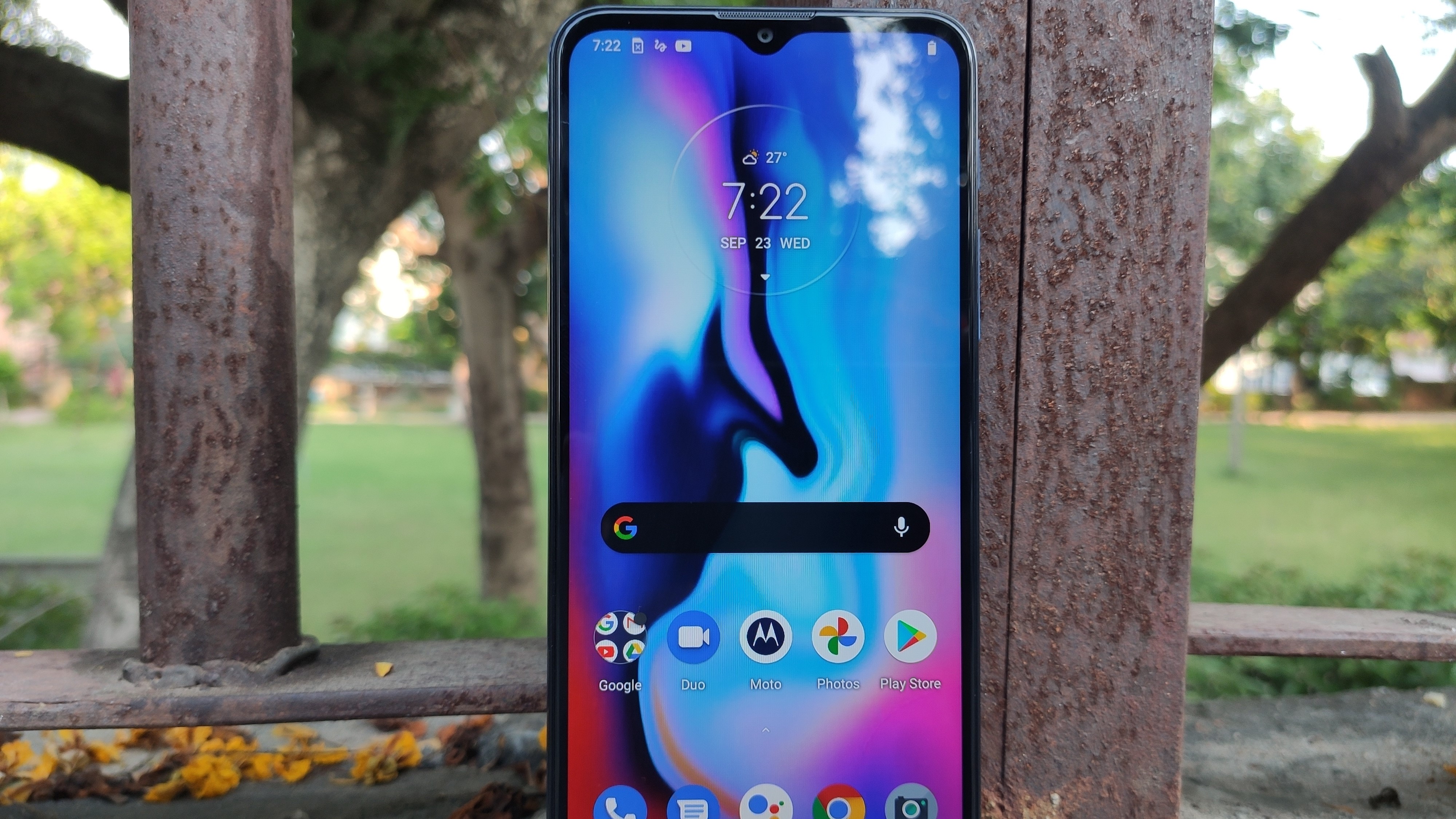

Motorola's latest budget offering, the Moto E7 Plus was unveiled in India recently. The Moto E7 Plus will go on sale for the first time in India today.
The Moto E7 Plus is an entry-level offering from the company. The key highlight of the phone is the massive battery and 48MP rear camera which comes with night vision. The device will go on sale via Flipkart at 12 noon.
The price of Moto E7 Plus in India is set at Rs. 9,499 for the sole 4GB + 64GB variant and will be available in two colour options - Misty Blue, Twilight Orange with a gradient finish.
Check out Moto E7 Plus on Flipkart
4GB + 64GB: Rs 9,499
5% Instant Discount on ICICI Bank Credit Card EMIView Deal
The phone is powered by an with an octa-core Snapdragon 460 chipset with Adreno 610 GPU coupled. This is paired with 4GB of RAM and 64 GB internal storage. Additionally, you also get microSD card support up to 512GB. You can choose between two colour options - Misty Blue, Twilight Orange.
On the front, there is a 6.5-inch Max Vision IPS TFT LCD with HD+ (1600x720) resolution. The phone is backed by a 5,000 mAh battery with support of a 10W charging solution. Moto has opted for a Micro USB charging slot on this phone.

In terms of optics, the phone comes with a dual-camera setup at the back with a primary 48MP primary sensor with f/1.7 and a 2MP secondary camera with f/2.4 for depth sensing. The camera supports Night Vision that allows you to capture detailed images even in low light conditions. On the front, the phone has an 8MP selfie shooter housed in a waterdrop notch.
The Moto E7 Plus runs on Android 10 out of the box with close to stock Android experience. It is a dual sim phone that supports two nano sims and a dedicated micro SD slot for memory expansion and has a rear-mounted fingerprint sensor. Other features include Bluetooth 5.0, WiFi, 3.5mm headphone jack, and GPS.
Poco's latest budget phone, the Poco M2 will go on open sale starting today. The device was unveiled earlier this month and went on flash sale a few times on Flipkart. Now the company has announced that the device will be available 24/7 on Flipkart.
Starting today noon at 12, the Poco M2 will go on open sale, making it easier for those who are looking for a phone around Rs 12,000. This is also India's cheapest phone with 6GB of RAM.
The Poco M2 comes in two configurations. The 6GB + 64GB variant is priced at Rs 10,999 while the 6GB + 128GB variant is priced at Rs 12,499. Colour options include Pitch Black, Slate Blue and Brick Red.`
We have worked hard to bring enough stocks of India's most affordable 6GB RAM phone, #POCOM2.Buy yours anytime starting tomorrow 12 noon on @Flipkart.Know more: https://ift.tt/36hVu9T pic.twitter.com/ejgglprcv9September 29, 2020
6GB + 64GB: Rs 10,999
6GB + 128GB: Rs 12,499
Flat Rs 750 Instant Discount with ICICI Bank Credit Card and Credit and Debit card EMI Transactions. View Deal

On the front, the Poco M2 sports a 6.53-inch IPS LCD display with a resolution of 2,340 x 1,080. There’s also Corning Gorilla Glass 3 protection on top. The fingerprint scanner is located under the cameras on the back. The entire phone is also P2i coated for splash-resistance.
The Poco M2 is powered by the MediaTek Helio G80 chipset with. This is an octa-core processor built on the 12nm process. The Mali G52 clocked at 950MHz takes care of the graphics duties. MediaTek’s HyperEngine Gaming technology also makes the cut. It is also the cheapest phone in India to offer 6GB of RAM across the board. There’s up to 128GB of internal storage, which can be further expanded by 256GB via micro SD.
On the back is a quad-camera setup consisting of a 13MP primary camera, an 8MP ultra-wide lens, a 5MP macro shooter and a 2MP depth sensor for portraits. Selfies are handled by an 8MP front camera.
The Poco M2 has a big 5,000mAh battery inside with support for 18W fast charging. A 10W charger is included in the box. It runs on Poco Launcher atop MIUI 11 based on Android 10.
Poco is expected to unveil the Poco X3 in India in the coming weeks.

Update: Telstra is discounting select NBN plans for a limited time, scroll down to find out more.
A decade after it was first announced and the NBN rollout is almost complete, so there’s a very good chance that wherever you are in Australia, you’ll have access to the nation’s high-speed network.
While different areas will have access to different connection types, some of the trickiest choices you’ll need to make are deciding which internet service provider to go with, which speed tier you’ll need and how much data you’ll use.
Here, we’ll drill down on the best NBN plans currently on offer, whether it be the most affordable option, the highest speeds or the best overall value. Along with our handpicked plans, you’ll also find a live tracker featuring the best NBN plans as, and when, they’re put on offer.
The price for NBN50 plans is steadily creeping up but this one from Tangerine is the best value right now. Starting at a little under AU$60 a month for the first half-year, you'll get unlimited data and no lock-in contract. You'll need your own modem though, or alternatively you can pay AU$119.90 upfront to get the same plan but with an included modem.
Total minimum cost is AU$59.90View Deal

Mate | NBN100 | Unlimited data | No lock-in contract | AU$79 per month
Tangerine had long held our number one pick for best NBN100 plan, but it’s now been dethroned by this killer deal from Mate. For AU$79 a month, you’ll get unlimited data and typical evening speeds of 83Mbps – excellent value for a premium plan. There’s no setup fee, and you’ll have the option of using your own modem, or you can pick up a preconfigured one from Mate for AU$165.
Total minimum cost is AU$79View Deal
Before rushing to sign up to a high-speed NBN1000 plan, there are a couple of caveats you should be aware of. This tier is only available on two types of NBN connection – fibre-to-the-premises (FTTP) and hybrid fibre coaxial (HFC). And while all FTTP connections can sign up for 1000Mbps, that speed will only work with a select subset of HFC installations – estimated to be roughly 7% of the total.

Aussie Broadband | NBN1000 | Unlimited data | No lock-in contract | AU$149 per month
Aussie Broadband was the first in the market to offer NBN1000 to residential addresses, but that didn’t stop the telco from offering an incredibly competitive plan. For download speeds of up to 1Gbps and upload speeds approaching 50Mbps, you’ll pay just AU$149 a month. Aussie has rightly cautioned potential customers that it’s yet to determine definitive numbers on peak evening speeds, though it’s put forward 215Mbps as its baseline, so you’ll at the very least get that.
If you’re happy to sign up to an NBN1000 plan with a 3000GB data limit, you can opt for this limited time deal with Superloop, where you can save AU$10 each month over your first year – that’s AU$139 each month. That discount is available with the code Whistleout10FOR12 until September 30.
Total minimum cost is AU$149View Deal
Telstra is now offering a rare discount on some of its NBN plans, so if you’re looking to switch, now’s a good time to do so. The Big T is taking AU$10 per month off this NBN50 plan for your first year with the service, which will save you AU$120 in total. After those first 12 months, your monthly bill will then bump up to the usual AU$90. You can expect unlimited data with typical evening speeds of 44Mbps, which should be enough for the average household looking to stream in HD, and enjoy smooth and responsive gaming. New Telstra customers will have their connection fee waived if they sign-up online, and if you stick with the service for 24 months, you won’t have to pay for the Telstra Smart Modem either (usually AU$216). The discount is only available to new customers, so get in before the offer ends on November 2.
Total minimum cost over 24 months is AU$2,040View Deal

Optus | NBN50 | Unlimited data | No lock-in contract | AU$75 per month
If you’re looking to go with a trusted telco, but are hoping for a competitive price, then this NBN50 plan from Optus offers value for money. For AU$75 a month, you’ll get unlimited data and typical speeds of 44Mbps during the busy evening period. Optus Sport is also included as standard, and the telco’s modem comes with 4G backup. It’s worth noting that there’s an additional AU$99 upfront fee to get started, and if you stick with Optus over 36 months, you won’t have to pay for the modem (usually AU$252).
Total minimum cost is AU$426View Deal
TPG | NBN50 | Unlimited data | 18-month contract | AU$69.99 per month
TPG is a favourite for delivering solid, reliable speeds at a bargain price. The ISP typically ranks well in the Australian Competition and Consumer Commission’s (ACCC) quarterly report, delivering typical evening speeds of 46Mbps. If you sign up for 18 months, TPG will waive the usual AU$99 setup fee. However, note that a AU$10 delivery fee applies, as well as a AU$20 home phone deposit. While this plan is much cheaper than what’s on offer from the big telcos, be mindful that you could face a contract payout fee of up to AU$350 if you decide to leave early.
Total minimum cost over 18 months is AU$1,289.82View Deal
Australia’s NBN was first proposed as a high-speed network of fibre-optic cable that would reach every home in the country. Following a change in government, that’s not what we've ended up with, with the final rollout combining a mix of old and new technologies.
While the NBN is made up of a multi-technology mix, it’s important to know that you don’t have a choice in what technology is available to you. Different connection types have been built in different areas, so it’s entirely dependent on where you live. Below, we lay out the connection types across the network, and what they mean.
Fibre-to-the-premises (FTTP)
FTTP is a fibre-optic line that runs directly to your home, and therefore is the best type of connection you can have. It requires a device to be installed in your home, and is what was originally intended for every household in Australia when the NBN was first announced.
Fibre-to-the-building (FTTB)
An FTTB connection is most commonly used for connecting apartment blocks and similar buildings to the NBN. In this instance, a fibre-optic line runs to the building’s communications room, and existing technology such as copper wiring is used to connect each apartment from there.
Hybrid fibre coaxial (HFC)
An HFC connection uses existing pay TV (Foxtel) or cable network as the final connection to households. The HFC line will run from your home to the nearest available fibre node.
Fibre-to-the-curb (FTTC)
FTTC is when the fibre-optic cable extends a little closer to your home by connecting to a distribution unit located outside on the street. From there, it uses the copper phone line to run the last leg into your home.
Fibre-to-the-node (FTTN)
The majority of Australian households – around 4.7 million – are using FTTN technology. This connection type uses existing copper phone wire to make the final connection to the home from a central node in your neighbourhood. The distance of your home to the node will affect the average speeds you can reach, so if your home is more than 700m from the node, it’s not advisable to choose an NBN100 plan.
Fixed Wireless
Fixed Wireless connections are used to reach regional and remote areas. Homes in these areas will access the NBN from a transmission tower through an antenna installed on their roof.
Sky Muster satellite
The NBN’s Sky Muster satellite technology is also used to reach regional and remote communities. It requires a satellite dish to be installed on the premises, to which the NBN is received through satellite.
It’s important to note these recommendations do not take into consideration other factors which could make certain deals a better option for you. For instance, do you already have a Telstra or Optus mobile plan and home phone line? If so, sometimes combining them with their respective NBN plans could save you some money.
When applying for a new NBN deal, make sure you’re not already signed up to a contract you can’t get out of – most contracts are on 12 or 18 month terms, so it’s important to contact your current provider before committing to anything else.
Another thing worth noting is some services may not be available in your area. If a particular deal seems good to you, head over to the provider’s website to find out if it’s available at your address.

Update: With the newer Galaxy S20 range on our shores, there aren't as many telcos and retailers stocking the S10 (currently, it's just Telstra, and they're out of stock) but that doesn't stop you from scoring a bargain. Check below for the best plan option, outright handset, and SIM-only plans on offer.
With the Samsung Galaxy S10 and its more expensive, and more affordable, siblings landing in Australia, everyone's eager to get their hands on what is shaping up to be one the best Android handsets around.
While you can learn everything there is to know about the handset in our hands-on Samsung Galaxy S10 review, we know you're really here to check out what it takes to get yourself one of these shiny flagships, so this page will cover the best plans available.
See also: Galaxy S10e review | Galaxy S10 review | Galaxy S10 Plus review
Samsung Galaxy S10 128GB | 80GB data | $122 pm
Currently out of stock.
This plan is the most well-balanced of Telstra's offerings, with a very solid 80GB of data included, along with neat extras like 3 months of Binge streaming service and data-free sports and Apple Music streaming. Total cost over 24 months is $2,928
View Deal
To fill its empty CMO position, Facebook just promoted to the C-suite a longtime Facebook executive focused on product growth.
Former VP of product growth and analytics Alex Schultz, who has been with the company since 2007, announced the move Tuesday in a Facebook post. Schultz will fill the position left open by Antonio Lucio, who joined the company from HP in 2018 and announced his departure last month. Lucio said he was leaving the company to “dedicate 100% of my time to diversity, inclusion and equity.”
In his Facebook post, Schultz said he planned to bring “experience in segmentation, targeting, and measurement” to the table to extend Facebook’s already massive reach. Schultz, who is the executive sponsor of Facebook’s LGBTQ resource group, added a personal note to the news, writing that Facebook is the first workplace where he has “truly safe to be gay and be open about it.”
Stepping into the role late in the U.S. election, an intensely consequential time for the company, Schultz acknowledged Facebook’s precarious position in the public eye. Touching on Facebook’s failures around platform enforcement, Schultz mentioned that he spent “most of my energy” over the last four years working on safety at the company. That work includes projects like Facebook’s community standards enforcement report, a new quarterly accounting of the company’s efforts to rid its platform of hate speech, harassment and other rule-breaking behavior.
“I believe deeply in the good Facebook’s products do,” Schultz said in his Facebook post. “We have all seen it through this pandemic as billions of people have connected with family and friends socially online while staying physically apart and slowing the spread of the virus. At the same time I think scrutiny of any new technology is appropriate and there are ways we can, and should, improve without losing all the good.”


Swarm’s new network of satellites is intended to provide low-bandwidth, low-power connectivity to “Internet of Things” devices all over the world, and the company just announced how much its technology will actually cost. A $119 board will be sold to be integrated with new products, so while your home security camera won’t get it, it might be invaluable for a beehive monitor deep in an orchard or gunshot detection platform in a protected wildlife reserve.
The Swarm board is about the size of a pack of gum, and provides a constant connection at the kind of data rate and power requirement that IoT devices need — which is to say, low. After all, things like barometric pressure monitors, seismic activity detectors, and vehicles that operate far from cellular coverage just send and receive a handful of bytes now and then.
Connecting those to legacy geosynchronous satellite networks is possible, of course, but also expensive, bulky, and power-hungry. Swarm aims to offer a similar service for a tenth of the price; The company’s basic data plan provides up to 750 packets per month, with each packet up to 200 bytes. Not a lot, but it’s more than enough for many applications.
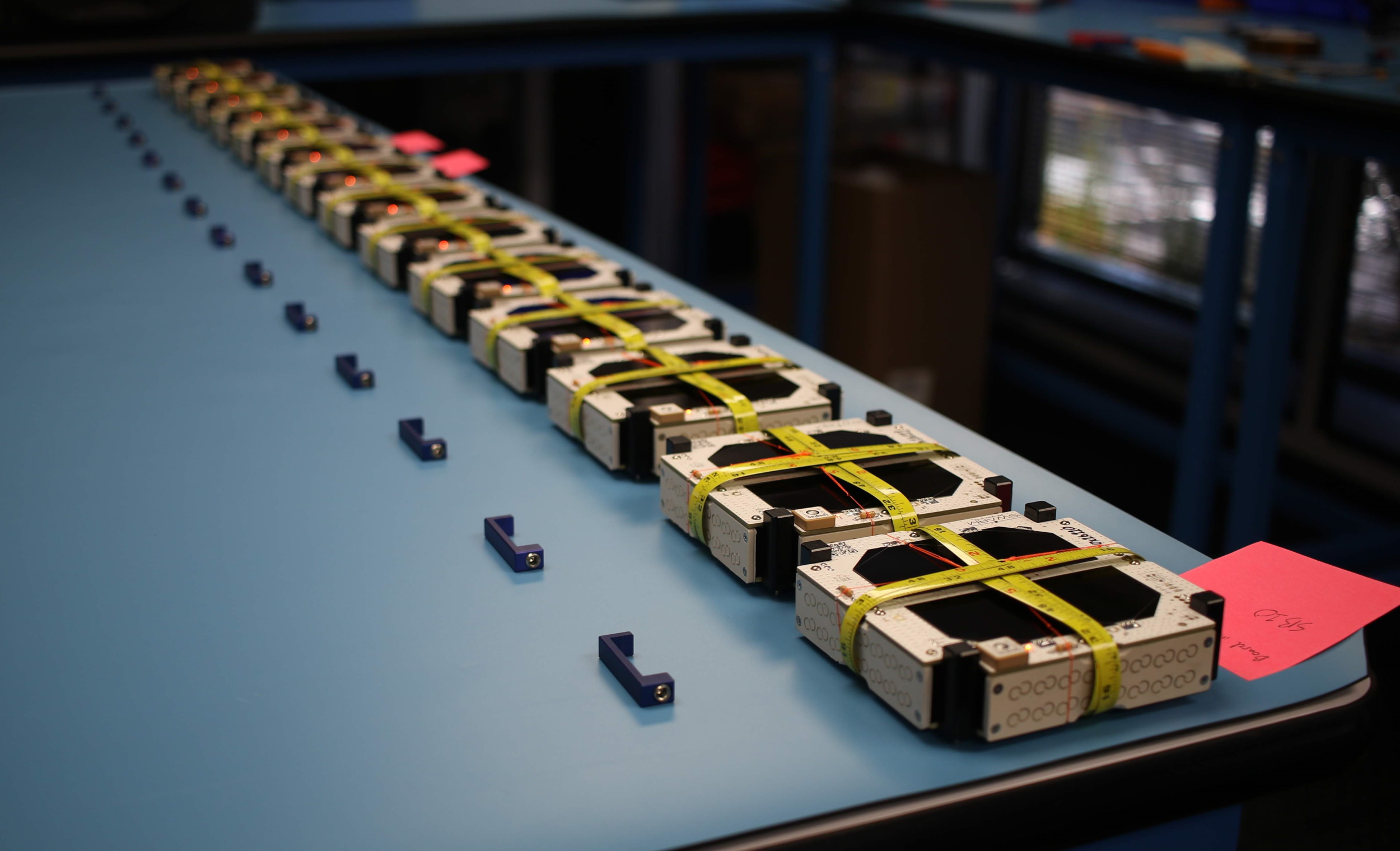
Image Credits: Swarm
It’s important to keep costs down and connectivity up in growing industries like precision agriculture and smart maritime and logistics work. Being able to check in hourly from anywhere in the world for five bucks a month is a no brainer for many companies that otherwise might have to go blind or pay quite a bit more for a traditional satellite link.
It’s not just the Swarm chip that’s small — the satellites themselves are too. So much so that they attracted unwanted attention from the FCC, which worried that the company’s “SpaceBEEs” were too small to be effectively tracked from the ground. Fortunately Swarm got that all cleared up last year and sent its first dozen up earlier this month.
Right now the company has 12 of a planned 150 satellite constellation in orbit, so it’s still proving out its network with early access and pilot projects. That affects covered areas and traffic limits, but the company expects the full set to be in orbit by mid-2021.


French startup Exotec has raised a $90 million Series C round led by 83North, with existing investors Iris Capital and Breega also participating. Other existing investors include 360 Capital. The company has been working on semi-automated warehouses for e-commerce clients.
The system is based on tiny robots called Skypods. They roam the floor and go up and down racks to pick up standardized bins of products.
The company also provides logistics software to coordinate all those robots through the warehouse. As you scale, you can add more robots and more racks without any downtime.
It’s not going to replace humans altogether as you still have to pick up goods from the bin and pack stuff. But human operators can stay at a workstation while robots take care of all the roaming.
You can use a workstation to pick up goods but also to replenish bins. The idea is that you never have to enter the Exotec area. It’s a robot-only zone.
In addition to productivity gains, you can also increase your storage capacity by switching to Exotec thanks to tall racks and narrow aisles.
The company now has teams in Atlanta and Tokyo — it plans to produce 4,000 robots per year by 2021. Everything is manufactured in Lille, France in a 6,000 square-meter plant. The company currently has fourteen running systems around the world. Clients include Carrefour, Leclerc, Cdiscount and Fast Retailing (Uniqlo).
Exotec has previously raised $17.7 million in 2018 and $3.8 million (€3.3 million) in 2016.
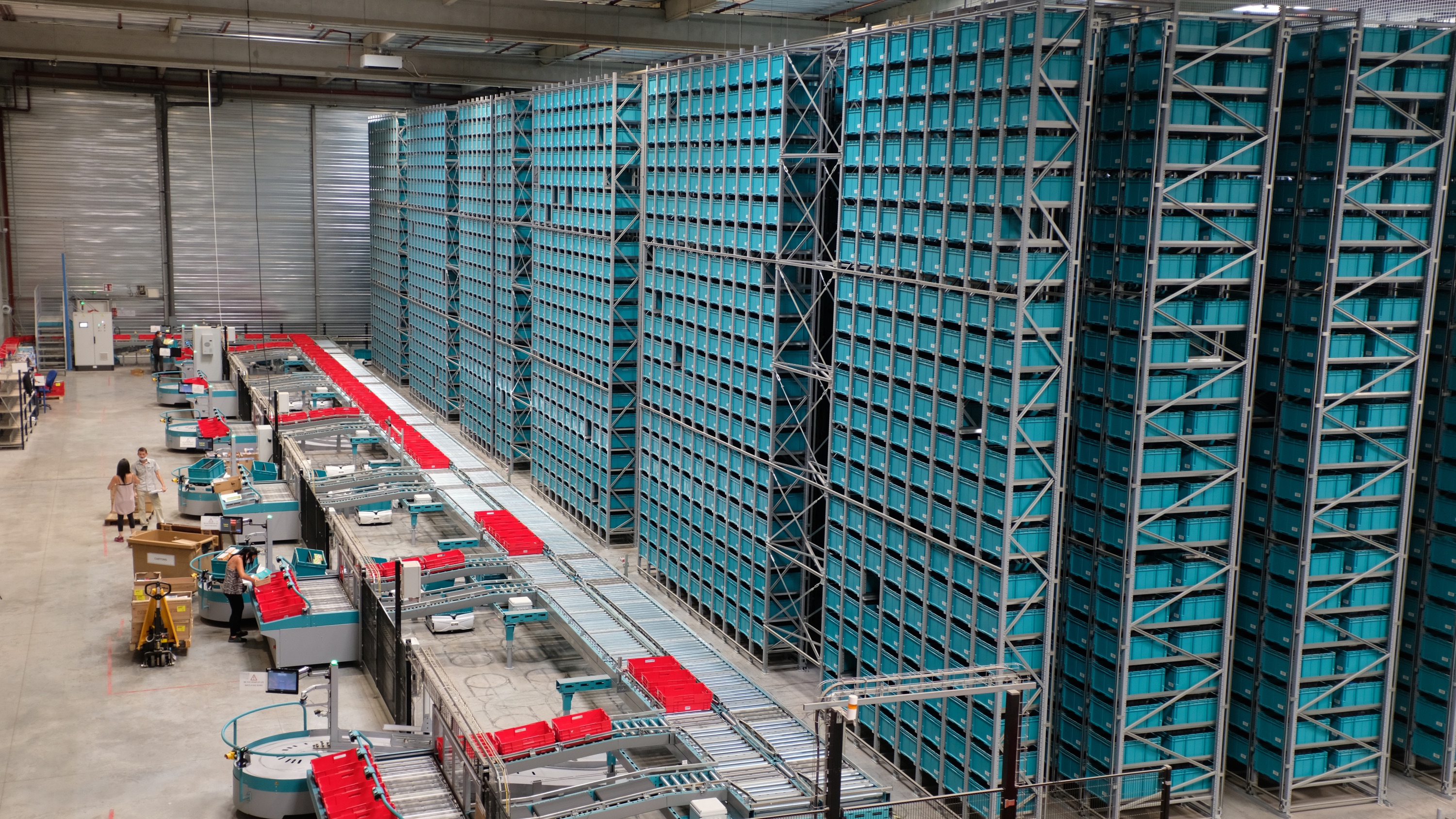
Image Credits: Exotec


 faran follow
BLUETTI FridgePower review
Examining the ‘pipeline problem’
Easemate.ai review
The iPhone feature that lets families share apps is being used to scam people
Kobo Nia takes on Amazon's entry-level Kindle with a sharper screen
I've tested a bunch of Shark vacuums and they all have the same problem
Best website builder of 2019
Microsoft boosts its AI translation capabilities
Axeleo Capital raises $51 million fund
faran follow
BLUETTI FridgePower review
Examining the ‘pipeline problem’
Easemate.ai review
The iPhone feature that lets families share apps is being used to scam people
Kobo Nia takes on Amazon's entry-level Kindle with a sharper screen
I've tested a bunch of Shark vacuums and they all have the same problem
Best website builder of 2019
Microsoft boosts its AI translation capabilities
Axeleo Capital raises $51 million fund
Follow Us
Were this world an endless plain, and by sailing eastward we could for ever reach new distances