
via TechRadar - All the latest technology news https://ift.tt/stiJUy0

Google has announced that it's bringing end-to-end encryption to group chats in the Google Messages app. The security upgrade is heading to beta users first before being rolled out more widely.
End-to-end encryption means no one, not even Google, can read the content of messages. It's already supported in the Google Messages app for one-to-one chats, but now (via The Verge) it's going to be added to group conversations as well.
"End-to-end encryption is starting to roll out for group chats and will be available to some users in the open beta program over the coming weeks," Google says. "This shouldn’t even be a thought – just an expectation and something anyone texting should not have to worry about."
In the same announcement blog post, Google revealed that the ability to quickly react to a message with any emoji is coming to Google Messages soon as well. At the moment, only a selection of emojis can be used as reactions.
Alongside a mention of these new features, Google also continued to push hard for RCS (Rich Communication Services) to become the new standard for everyone – the technology, an upgrade on SMS, is now widely available but has yet to be adopted by Apple on its iPhones.
Google's post also acknowledged the 30th anniversary of the SMS, a milestone which emphasizes how old the technology is as well as how overdue we now are for a standard that can fully replace it.
The arrival of SMS three decades ago helped to transform the way that we communicate with each other – even if the messages were limited in terms of characters, and many phones could only store a limited number of texts at any one time.
Now, apps like WhatsApp and Slack have taken us far, far beyond those limitations. Messages can be much longer and include photos, videos or audio, and we can even tell when recipients have opened up the messages we send them.
It's benefits like these that make RCS a worthwhile upgrade, improving the security of messages and making features such as group chats much better. Google didn't create the standard, but it is heavily promoting it.
However, whenever an iPhone user texts an Android user, SMS is still the protocol used. Google wants that to change, but it's unlikely that Apple ever will – Apple knows that iMessage is one of the key reasons that people stick with iPhones.
Before I present ChatGPT’s article about itself, it’s worth presenting the prompt that generated this story.
“Write a 350-word news story about the impact of ChatGPT in the style of Lance Ulanoff”
Had I given it more detail or more specifics about the intended audience, it might’ve come out differently. Even so, the time from prompt to completion of this brief post was a matter of seconds. I only wish I could write this fast. What follows is a completely unedited, unaltered TechRadar post by ChatGPT.
As ChatGPT continues to gain popularity, its impact on the world of artificial intelligence and natural language processing is becoming increasingly apparent.
Developed by OpenAI, ChatGPT is a large language model that is able to generate human-like text in response to prompts. It has been trained on a massive amount of data, allowing it to understand and respond to a wide range of topics and questions.
The potential applications of ChatGPT are vast. In the business world, it could be used to automate customer service and support tasks, freeing up employees to focus on more complex issues. In the world of journalism, it could be used to generate articles and reports, allowing journalists to focus on more in-depth analysis and storytelling.
But ChatGPT's impact goes beyond just increasing productivity and efficiency. It also has the potential to revolutionize the way we interact with technology. With its ability to understand and respond to natural language, ChatGPT could make it possible for people to have more natural and intuitive conversations with their devices.
This could have a profound impact on the way we use technology in our daily lives. For example, instead of having to remember specific commands or navigate through menus, we could simply ask ChatGPT to perform tasks for us using natural language. This could make technology more accessible and user-friendly for people of all ages and abilities.
Of course, there are also concerns about the potential downsides of ChatGPT. Some worry that it could lead to the automation of jobs, or that it could be used to spread misinformation. But the developers of ChatGPT are working to address these concerns and ensure that the technology is used responsibly.
Overall, ChatGPT's impact on the world of artificial intelligence and natural language processing is significant, and its potential applications are exciting. As it continues to evolve and improve, it has the potential to revolutionize the way we interact with technology, making it more intuitive and accessible for everyone.
If you like the idea of getting to see Netflix movies and shows before they go on show to the public, then you'll want to be a part of the Netflix Preview Club: a group of subscribers who get to see content early in return for reviews and feedback.
According to The Wall Street Journal (via TechCrunch), the club is opening its doors wider. Around 2,000 people are currently enlisted, but that's set to rise to the tens of thousands in the early part of 2023, picked from all across the world.
"Netflix is working to ensure that every dollar spent on content yields the highest level of member attention and engagement across its 223 million-strong subscriber base globally, and comes as streamers more heavily scrutinize content spending and focus more on profitability," reads the WSJ report.
The existence of the Netflix Preview Club – which is similar to schemes run by the likes of Amazon Prime Video and Hulu – was previously revealed by Variety. The practice of getting early feedback on films and television programs is of course nothing new, but it seems as though Netflix wants to expand its own system.
Apparently, more humor was added to the 2021 Netflix movie Don't Look Up, based on early audience feedback. It went on to break weekly viewing hour records on the streaming service, and earned four Oscar nominations as well.
It's not clear exactly how people are picked to be part of the Netflix Preview Club, but we'd suggest keeping a close eye on your email inbox. Presumably Netflix will want to ensure it gets a good cross-section of subscribers to hear feedback from.
While test screenings are common in the entertainment industry, it's interesting to get a glimpse into how early reviews and feedback work at Netflix. As per the WSJ, Netflix employees also play a role in reviewing content ahead of time.
A platform like Netflix has the benefit of a huge amount of user data: what people are watching, how quickly they're watching it, what they like to watch next, and even at what point in films or shows people give up and abandon watching something.
That's all valuable feedback when it comes to making sure something is a hit rather than a miss. According to the new report, creators "are typically able to decide which alterations to make" – it doesn't sound as though they're forced to make any changes.
How much gets altered also depends on how much spare footage the production teams have available: reshoots are costly and inconvenient, so it's unlikely they would go to the effort and expense to get them unless something met with a really negative reaction.
Cloud computing has revolutionized all kinds of business and workplace environments, but one of the biggest players in the industry now hopes it can help accelerate the next big breakthroughs in space as well.
Speaking at the recent AWS re:Invent 2022 event, Clint Crosier, the company’s director of aerospace and satellite, outlined how the company is heavily backing the use of cloud computing in space.
At a panel session alongside Peggy Whitson, astronaut and director of human space flight at Axiom, Crosier described, “what we at AWS call the making the world a better place from space mission.”
Amazon founder Jeff Bezos has famously funded multiple space-bound projects through his company Blue Origin, but the cloud arm of his former company clearly sees space as the next big frontier for the technology.
AWS recently revealed that it had run a positive trial of its software suite on a low-Earth-orbit (LEO) satellite for the first time earlier this year. The trial included successful downlinks of imagery data from the satellite, with the software automatically reviewing images to decide which were the most helpful to send back to Earth.
Crosier explained that NASA’s recent handing-off of other LEO activity to private companies such as Blue Origin could be a good thing for scientific discovery, with companies such as Whitson’s Axiom taking over “mundane” tasks that will allow NASA to push on to the next big project.
Crosier, who admitted he’s become “a cloud zealot” during his time at AWS, outlined how future space activity such as repairing satellites, asteroid mining, and even space tourism and exploration will all require greater computing capabilities, as well as more processing speed and power, which the cloud can help provide.
"What the cloud allows you to do is create infrastructure, tinker (with it) to come up with optimal designs...and then with two or three clicks of a button you can upload it to the ISS - that's a game-changer,” he noted.
“The thing that's really exciting to me in the application of technology is it seems every year we come up with a new way to use space capability that we didn't know before that actually improves lives, and in some cases, saves lives... I love that the advanced technical capabilities of cloud support this mission to do this faster and more effectively than ever before.”
“Just like the Earth has benefitted from the terrestrial cloud...all the new missions we see emerging in space are going to require the same advanced cloud-based technology,” he said, “so our goal at AWS is to push that to wherever customers need it.”

Earlier this week, Apple marked International Day of Disabled Persons 2022, held every year on December 3, with a video called ‘The Greatest’ that showcased how some of its users were using its accessibility features, from door detection to sound alerts.
As ‘I Am the Greatest’ (with the Marliya Choir) by Spinifex Gum plays in the background, you’re shown a few scenarios employing accessibility features on iOS and macOS such as Magnifier, Door Detection, and Image Descriptions on an iPhone, alongside alternate pointer controls on Mac, such as head tracking & facial expressions.
Granted, it’s an ad when it boils down to it - a bunch of features shown off that you can use on Apple’s devices. However, you can’t deny that there’s something special here, and it makes an impact as to how far software has come that almost anyone can use these devices as well as anyone else.
Yet, with rumors of an Apple VR headset allegedly coming in 2023, it makes me wonder how Apple’s accessibility features could go one step beyond when it comes to AR and VR.
As you watch this two-minute video (there’s an audio-described version, as well), you’re struck by how these seven users, not actors, are going about their lives using an iPhone, a Mac, and an Apple Watch to help them with day-to-day tasks. For example, you see a hearing-impaired mother being alerted on her Apple Watch that her newborn child is crying, so she goes and tends to her. You can switch this on by going to Settings > Accessibility > Sound Recognition, then turn on Sound Recognition to select certain alerts for some sounds.
Meanwhile, Julliard-trained jazz pianist Matthew Whitaker caught my attention with how he was using the detection feature in a scene where he’s using an iPhone to help him read out what it says on the door. I've been told that door detection works with any iPhone that features a LIDAR scanner, so an iPhone 12 Pro and above, and it can work for distances of up to 20 feet.
Watching how Detection Mode in the Magnifier app was reading the ‘Stage’ word on the door, it struck me how this could be the start of something greater. Imagine a headset that could automatically read out items on a menu wherever you directed your eyes or other detection notifications for distance.
Also, if you’re walking a dog, for example, the headset could let you see clearer on a foggy morning to pick up a stick that the dog may have dropped beside you, or it could instruct you where the stick is, and how close it is.
All of these come back to accessibility and how it can enrich someone’s lifestyle. For too long, there’s been content describing Accessibility features as ‘easter eggs’ or ‘hidden features’, and it’s time for that to change. It’s videos like ‘The Greatest’ that shows just how Detection Mode and Voice Control not only help users every day but to thrive as well.
The rumored headset could take these features to the next level, and if it does get announced in 2023, the first question for me won’t be about how much it will cost, but what accessibility features are included from day one.
The video is one of Apple’s best in recent years - now let’s see what else the category can do to better enrich other people’s lives.
AMD is set to unleash a trio of Ryzen 7000 processors with 3D V-Cache tech including a mighty 16-core spin, and these chips are just around the corner according to a new rumor.
In fact, new 8-core, 12-core and 16-core 3D V-Cache CPUs will be launched at CES, according to Quasarzone, as @harukaze5719 explains on Twitter. Of course, we should take this with the usual skepticism that should be applied to hardware rumors, and it’s not clear if this will just be an initial reveal next month, or the processors will actually go on sale in January 2023 (we’ll come back to that).
They shared 3 exclusive Zen 4 3D info.1) Three Ryzen 7000X3D model is confirmed. 16/12/8C. But about 8C model, it isn't determined model name whether7700X3D or 7800X3D2) Unlike Zen 3 3D, clock speed will be same or at least almost same.3) It is expect Jan 23. So CES.1/nDecember 2, 2022
These will presumably be the Ryzen 9 7950X3D (16-core) plus 7900X3D (12-core), but it’s apparently unclear whether the 8-core chip will emerge as the 7800X3D or 7700X3D. There will be no 6-core X3D processor according to the spillage shared here.
Quasarzone also insists that unlike the existing 5800X3D, where clock speeds were dialed back, the clocks of these Ryzen 7000 3D V-Cache products will be the same as their vanilla counterparts – or at least very close to the same. Which sounds like maybe some models will stick to the same frequencies, and others might dip very slightly – presumably we’re talking 100MHz, rather than the 400MHz slowdown imposed on the base clock of the 5800X3D.
There are a couple of interesting things here, one of them being that a past rumor from an established leaker insisted that things could pan out quite differently. That speculation shared by ECSM just a few weeks back claimed that there would be 6-core and 8-core X3D processors, but nothing else.
So not only does this new rumor rubbish the idea of a 6-core chip, but it also floats the possibility that there will be a pair of high-end X3D models, including a 16-core flagship version. Which is exciting stuff on the face of it just to see the kind of performance gamers might get from that (the 5800X3D being well-known as a great chip for gaming, of course – and the same is expected from the 7000 series variants).
Then again, a Ryzen 7950X3D is bound to be very pricey, and so on the affordability front, a focus on beefier chips and the apparent lack of a 6-core option for 3D V-Cache is somewhat disappointing. Still, that’s not to say that AMD couldn’t eventually produce other X3D models such as a 7600X3D.
If Quasarzone is right with all this, one of the most tantalizing prospects is how early AMD is pushing out these refreshed CPUs. The aforementioned previous word from the grapevine was looking at April at the earliest for Zen 4 X3D chips to turn up – and indeed it could still be the case that even if we do get a reveal at CES, the processors may not be on sale until a while after.
That said, the suggestion here certainly seems to be a January launch, or at least that the X3D versions are pretty close to coming out. And in all honesty, that’s what AMD needs in terms of the necessity to bolster its Zen 4 ranks as soon as possible to compete with Intel’s Raptor Lake.
It’s worth noting that given the quite different angles taken by these two recent rumor dumps, we should probably be even more cautious around all this speculation for the time being. At least we don’t have long to wait now for CES to find out what AMD is going to reveal there.

BOE (Beijing Oriental Electronics) has revealed a new display with the fastest ever refresh rate seen, a mind-boggling 600Hz to be precise.
The screen in question is actually a laptop display, a 16-inch LCD that the Chinese site IT Home brought to our attention (via Tom’s Hardware).
The panel was shown off at the World Conference on Display Industry in China, but besides the size and refresh rate, no other specs were provided for the screen, although it was demonstrated at the event.
BOE showed off the display in a laptop with an AMD Ryzen CPU and Nvidia GPU – presumably, or at least those logos were on the chassis of the notebook, so it’d be very odd if the stickered components weren’t inside the portable.
The 600Hz screen seems like it’s still in the earlier stages of development, mind you, because while functioning, the display was attached to the laptop base using tape, apparently.
Does the world really need a 600Hz panel? Is there any point to this seemingly relentless drive to up refresh rates to increasingly colossal levels? At the beginning of the year, BOE was trumpeting a 500Hz gaming monitor, and already before the year is out, a 600Hz screen has trumped that effort, and by a considerable distance.
Isn’t this all getting very silly? Well, we think that’s true in the main, but that said, there is a target audience for this kind of ultra-high refresh rate panel, though it’s arguable exactly what such a display brings to the table.
That target audience would be professional gamers, playing the likes of Counter-Strike: Global Offensive, where it’s possible to drive really, really high frame rates (as they aren’t demanding titles).
It’s worth noting that we can presume the 600Hz screen is 1080p resolution, given that the need to push high frame rates means it won’t be higher-res. In that case, 600 fps would never be attainable – and remember, this is a laptop too, making hitting those heights a trickier task in terms of available GPU grunt. This is another point – we’re not sure why this has been created as a laptop panel, rather than a standalone monitor like BOE’s aforementioned 500Hz effort.
As Tom’s Hardware rightly points out, one advantage of cranking the refresh rate of panels this high is that you get a better frame time – a smoother and more consistent delivery of frames – but there are very much diminishing returns on this front as you go up to dizzying refresh rates. 360Hz for example offers a frame time of 2.7ms, whereas 600Hz drops that to 1.66ms. Now, a basic 60Hz panel is 16.66ms, which is fine for casual gaming, so the drop in going from here to 360Hz and 2.7ms is a sizeable one (at least to competitive gamers). But further decreasing that to 1.66ms is pretty marginal, to say the least.
Is a person really likely to appreciate that tiny difference? Can the human eye even detect the benefits of 600Hz (or even 500Hz, or lower) panels? In truth, the answer for the vast, vast majority of folks, is probably not. But for a vanishingly small niche of the top pro gamers, they might benefit from an ultra-high refresh rate panel in terms of a smidgeon of a smoother gameplay experience that may be perceptible only in terms of a very slight difference in the feel of the game. But then, even the thinnest wisp of a potential advantage is something high-earning gaming pros could well find value in chasing.
For the rest of us non-gamer-god types, though, these screens built to reach towering refresh rates are pretty pointless. And the extreme heights to which all this has been pushed over the course of 2022 will inevitably seem silly to us mere mortals of the gaming world. Realistically, we’ll be absolutely fine and dandy with 144Hz, or 240Hz if you want to push the boat out.
On a final note, it also remains to be seen how much of this is BOE flexing its marketing muscles. Will we ever actually see this 600Hz panel in gaming laptops? Maybe, but then again, we’ve not heard a chirp from the company about the 500Hz monitor since it was shown off at the start of the year.
Supposedly there are 480Hz monitors coming for 2023 inbound from AU Optronics and LG Display, too, so whatever your feelings about superfast refresh rates, presumably we’ll see some of these models pitching up at some point next year.

With the Samsung Galaxy Z Flip 4, Samsung almost perfected the clamshell foldable phone, but there are still a few notable issues, and at least one of them might be resolved with the Samsung Galaxy Z Flip 5.
According to Ross Young – a leaker with a solid track record – the Samsung Galaxy Z Flip 5 will probably have a cover display of over 3 inches. In a reply to the tweet where they made this claim (spotted by GSMArena) they got more specific, saying that it will likely be around 3.3 to 3.4 inches.
Though they also note that they heard the Galaxy Z Flip 4 would have a 2-inch cover screen, and it actually came in at 1.9 inches, so they’ve acknowledged that they might be slightly out.
In any case though, if the Samsung Galaxy Z Flip 5 has a cover display that’s roughly between 3 and 3.4 inches, then it will be significantly larger than the Z Flip 4’s cover screen, and that could make it a lot more useable and useful.
It will still be too small for any serious interactions, but don’t forget – early iPhones only had 3.5-inch screens, so this could be almost as big as that, while still having a much larger foldable display too.
As I told my Super Followers yesterday, there are a couple of important changes coming to the Z Flip 5... pic.twitter.com/rEcD2DvaWwDecember 1, 2022
But that’s not all, Young also claims that the Samsung Galaxy Z Flip 5 will have a different hinge design which will reduce the visibility of the seam in the foldable display. So if Young is right then it sounds like the Z Flip 5 could be in for some significant upgrades.
We haven’t heard much else about it yet, other than the believable claim that it will use the new Snapdragon 8 Gen 2 chipset, but we’d expect to hear plenty more rumors as we get closer to the launch – which will probably happen around August 2023.
Increasing the size of the cover display would make for a substantial improvement, but that’s not the only area where Samsung’s Galaxy Z Flip line needs work.
The battery life has so far been a low point, the cameras, while solid, don’t include a telephoto lens, and while Samsung has impressively added water resistance to the Z Flip 4, there’s no dust resistance.
These issues may be hard to fix, especially while keeping the price somewhat palatable, but there’s definitely room for improvement in the Galaxy Z Flip 5, and with the Motorola Razr 2023 likely to offer significant competition, improvements will probably be needed for the Z Flip 5 to rank among the best foldable phones.
The first trailer for Indiana Jones 5 has landed online – and, thankfully, it looks like a welcome throwback to the movie series' iconic roots.
Released publicly on December 1 after being shown at Brazil Comic-Con, the film's teaser suggests it's leaning heavily towards classic Indy adventures (such as The Temple of Doom) rather than the maligned Kingdom of the Crystal Skull. And that's before we get onto the stunning de-aging technology used to make Harrison Ford's legendary archaeologist look like a young man again.
Check out the first trailer for the film – full title Indiana Jones and the Dial of Destiny – below:
Impressed and excited? You should be. Indiana Jones 5 has the look and feel of the fan-favorite 80s film franchise down to a tee, and it's certainly galvanized my interest in the forthcoming movie.
What's so special about it? For one, that de-aging technology we mentioned earlier.
Disney and Lucasfilm's attempts at recreating iconic characters in other franchises, such as Star Wars, has been... iffy, to say the least. In Star Wars: Rogue One, we got de-aged versions of Princess Leia and Grand Moff Tarkin, who were previously (and iconically) played by Carrie Fisher and Peter Cushing. Meanwhile, in The Mandalorian season 2 and The Book of Boba Fett, a more youthful version of Mark Hamill's Luke Skywalker was also part of the cast.
However, the end results look slightly plastic and unnatural – and that's before you get into the debate about whether it was respectful for Disney/Lucasfilm to recreate Fisher and Cushing's likenesses in Rogue One. Cushing died in 1994, while Fisher passed away just two weeks after Rogue One was released in theaters.
Clearly, though, Disney and Lucasfilm's de-aging tech has come a long way in a short period of time. As part of Indiana Jones 5's plot, we'll see a de-aged Harrison Ford playing a younger version of Indy in a flashback scene or two – and the results are absolutely remarkable. Just take a look at the stunning still image below:
It's uncanny, isn't it? From Indy's messy hair and Ford's facial features, to how the lighting hits his face and even the minute detailing of his stubble, the results are terrific. Ford is 80 years old but, based on this tech, you wouldn't think he's a day over 41 – Ford's actual age when 1981's Raiders of the Lost Ark was being filmed.
And this feat helps Indiana Jones 5 to simultaneously replicate the film series' first three installments and move it forward. Thanks to the flashback sequences, we'll get to see Indy in his prime one last time as he looks to thwart another world-conquering plot by those pesky Germans in the 1940s. That means plenty of high-octane action sequences, such as the thrilling train skirmish dotted throughout the teaser.
There are plenty of other nods to the movie series' roots. John Rhys-Davies makes an appearance as Indy's Egyptian sidekick Sallah, there's plenty of tomb raiding (sorry, Lara Croft) involving Indy and granddaughter Helena (played by Phoebe Waller-Bridge), and frenetic car chases – one that even involves Indiana Jones riding a horse through a subway tunnel.
Add in a slight reimagining of that immediately recognizable theme song, a crowd-pleasing throwback to that amusing gun-sword 'battle' in Raiders of the Lost Ark, and lots of shots of Indy using his whip and wearing his legendary fedora, and what's not to love?
As for moving things forward: there's no Shia Leboeuf in this one, which means we can completely skip over events from 2008's divisive Kingdom of the Crystal Skull. Meanwhile, Waller-Bridge's Helena appears to be a shoe-in for the successor to Indy – that's if the franchise continues after Ford's final appearance.
Regardless of whether the Indiana Jones series carries on without Ford, The Dial of Destiny is shaping up to be a return to the beloved action-adventure franchise's roots. I don't know about you, but I couldn't be happier about that prospect.
Indiana Jones and the Dial of Destiny stars Ford, Waller-Bridge, Rhys-Davies, Mads Mikkelsen (Doctor Strange), Antonio Banderas (The Mask of Zorro), Toby Jones (Captain America: The First Avenger), and Boyd Holbrook (The Sandman) among others. James Mangold (Logan) directed the movie, which lands in theaters on June 30, 2023.
For more Indiana Jones and Lucasfilm-based content, find out everything we know about MachineGames' upcoming Indiana Jones video game. Alternatively, read our exclusive chat with the cast and crew of Willow, another Lucasfilm property, about how "everything aligned perfectly" for the fantasy movie's Disney Plus sequel series.
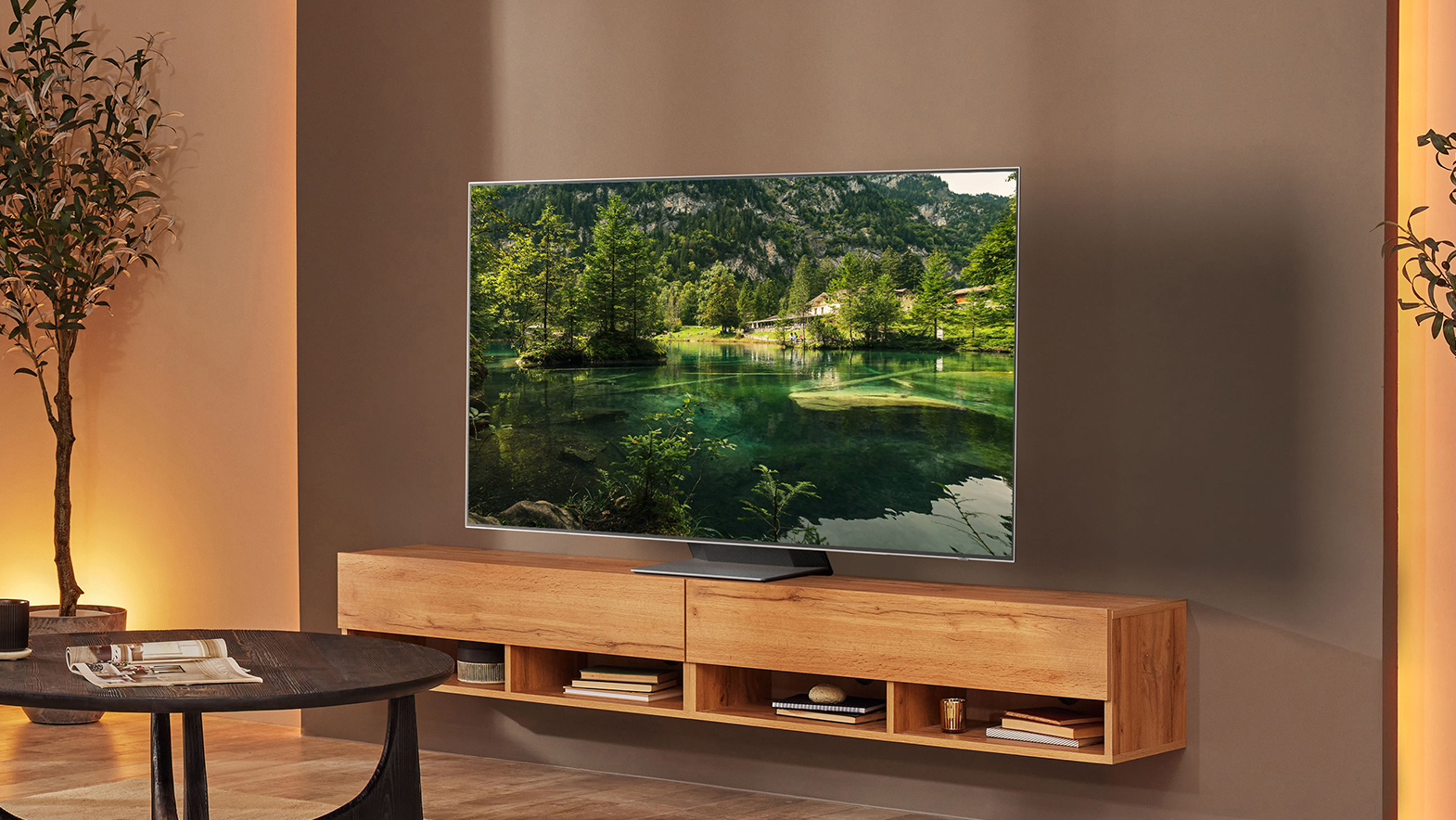
QD-OLED looks to have taken a step closer to becoming the display technology to beat, with 8K TVs and higher-res monitors featuring the next-gen panels about to hit production lines for the first time.
As reported by FlatpanelsHD, Samsung Display has likely just taken order of machinery that would enable it to start to the mass manufacture of high-density panels that could appear in the best 8K TVs or super-detailed monitors.
Built by American industrial inkjet equipment manufacturer Kateeva, the machine, which is nicknamed “Jarvis” will allow high-volume production of 8K TVs and high-resolution monitors. Kateeva’s machines are reported to have set Samsung Display back $14.5 million.
Samsung Display is currently the only manufacturer to produce QD-OLED panels, but it hasn’t yet officially announced any plans for production of 8K displays featuring the screen tech, however many industry experts have predicted the South Korean company will likely announce its intentions do so at CES in January 2023, though we wouldn't expect the TVs themselves to become available until later in 2023.
QD-OLED panels use a quantum dot layer instead of color filters, meaning TVs using the tech can theoretically achieve higher peak brightness than regular OLED models can deliver, as well as being capable of better saturation.
Anyone who has recently been in the market to buy one of best 4K TVs will have done their homework on the latest TV tech and will probably be aware of QD-OLED.
Combining the best performance characteristics of quantum dot LED (QLED) TVs – high brightness and color saturation – with the rich blacks and pixel-level image precision of traditional OLED, it's an extremely tempting option. We rate the Sony A95K, one of the two TVs to use it so far, as the best TV on the planet for sheer image quality.
In short, its looking like the display tech to beat in the future. But anyone on the brink of stumping up the sizable asking prices for cutting-edge flagship QD-OLED TVs like the Samsung S95B or a Sony A95K may be hesitant, knowing that they aren’t capable of 8K, despite their premium price tags.
The news of Samsung Display’s outlay on manufacturing tools shows the company’s commitment to QD-OLED, and we would anticipate that an announcement on 8K panels is likely coming soon – though you should expect any early TVs that use the tech to be massively expensive, just as the few regular OLED TVs that come in 8K are.
And with EU regulations meaning that many 8K TVs may not even be possible to sell in the lucrative European market in the future, it may be that high-res monitors are where Samsung Display's efforts will be placed – perhaps the first 4K monitors with QD-OLED are coming soon.

The Xiaomi 13 and Xiaomi 13 Pro were supposed to be getting unveiled today (December 1), but in a last-minute announcement, the company has now delayed the launch.
The reason for the delay wasn’t given, with the news – posted on Weibo and spotted by NotebookCheck – simply reading “We regret to inform you that the launch of the new Mi 13 series will be postponed. We will notify you as soon as the new release date is confirmed. Thank you for your understanding and support.”
However, it’s been speculated that the delay is to honor former Chinese president Jiang Zemin, who just passed away.
The big question is when the launch will now happen; with this post providing no hint at a new date. However, assuming the delay is for the reason above, we can;'t imagine it'll hold things up for too long, so there’s a high chance the Xiaomi 13 series will still be unveiled before the end of the year.
In the meantime, a major new leak has emerged, along with some teasers from Xiaomi itself, which combined mean there might not be much in the way of surprises at the 13 series' launch anyway.
First up, Xiaomi has revealed – in posts spotted by Sparrow News – that the Xiaomi 13 Pro has a 1-inch sensor for its primary camera, and that both the Xiaomi 13 and Xiaomi 13 Pro have a 75mm (3.26x optical zoom) telephoto camera, which uses an unusual ‘floating lens’ design, shown off in the teaser video above.
The company also shared some impressive camera samples on Weibo, taken using these two lenses, a couple of which you can see below.

As for the leak, a hands-on video of the Xiaomi 13 Pro – reuploaded to YouTube by Sparrow News – which you can see below, shows how the phone probably looks, complete with a large camera block and a design that matches previous unofficial renders.
This leak also provides a glimpse at the settings screen, which lists 128GB of storage and Android 13. We also already know from Xiaomi itself that the Xiaomi 13 line uses the powerful Snapdragon 8 Gen 2 chipset.
While there’s a high chance the Xiaomi 13 and Xiaomi 13 Pro will still be unveiled before the end of 2022, this initial launch is just for China, so other countries probably won’t get the phones immediately.
That’s typical of Xiaomi, with the Xiaomi 12 series, for example, being unveiled in late December 2021, but not going on sale in the UK or a number of other regions until April of this year.
So there could still be months to wait before you can actually get hold of a Xiaomi 13, and if you live in the US then you probably won’t be able to get one at all – unless you import, as Xiaomi phones aren't sold there.
Windows 11 users who have run into a problem whereby they’re finding that large files are copying really slowly will be pleased to hear that Microsoft has now fixed the issue.
This issue affects Windows 11 22H2, and note that the fix is in place in the freshly released preview build 25252. So in other words, those testing the OS now have access to the fix, to run it through its paces and ensure all is working correctly.
Naturally, it will come through to the release version of Windows 11 eventually. As Bleeping Computer reports, Ned Pyle, who is Microsoft’s principal program manager in the Windows Server engineering group, informed us: “The final fix for Windows 11 22H2 production computer will come in a normal monthly Cumulative Update through Windows Update once validated in Insider builds.”
Performance being considerably reduced when copying larger files – which simply means they’ll take a lot longer to copy over than they should, and going by some reports, they might take twice as long in fact – kicks in “when copying larger files from a remote computer down to a Windows 11 computer or when copying files on a local drive,” Pyle explained.
Pyle added that PCs on home networks or small offices were less likely to encounter this bug, but it’s still possible, clarifying that: “You are more likely to experience this issue copying files to Windows 11, version 22H2 from a network share via Server Message Block (SMB) but local file copy might also be affected.”
Obviously, this resolution will be more than welcome, as copying big files can be a painful enough time-sink, without having to tap your fingers on the desk for up to twice the length of time as normal.
That said, it’s still in testing right now, so that’s not going to help those running the release version of Windows 11. When will the fix actually arrive on PCs in the real world? That’s a tricky one, as it depends on how testing goes, naturally.
However, what we do know is that this won’t be here this month, as the cumulative update for December has already been pushed out (in preview), and so is too close on the horizon (it’ll be released in under two weeks now). What we can hope for is a smooth path with testing means we’ll see this cure bundled with the Windows 11 update for January, which will be unleashed on January 10 – which still isn’t too far away.
We could still be waiting longer if testers uncover any wonkiness with the fix, of course, or indeed other unforeseen problems introduced elsewhere (it wouldn’t be the first time a patch for one issue caused another flaw to pop up, as we’ve all seen in the past when Microsoft plays bug whack-a-mole).
Microsoft has been busy fixing a whole bunch of frustrating issues which have affected some parts of the Windows 11 user base in recent times. That includes a nasty bug that caused stuttering while playing games and a seriously thorny gremlin that half-broke some printers, not to mention a glitch that slowed down the CPU.
Windows 11 is slowly but surely becoming a smoother experience in that respect, though in an ideal world we wouldn’t see so many major bugs coming through in the first place.
 faran follow
BLUETTI FridgePower review
Examining the ‘pipeline problem’
Easemate.ai review
How to stream Pet Shop Boys album A Man from the Future for free online from anywhere
TP-Link Archer 8 Ultra Wi-Fi 8 router is out — but it's seriously pricey
New Thor: Love and Thunder image confirms big link to Moon Knight
Diablo Immortal release times and pre-load confirmed
Southampton vs Portsmouth live streams
How to watch Singapore Grand Prix 2026: Live stream F1 sprint weekend from anywhere
Follow Us
Were this world an endless plain, and by sailing eastward we could for ever reach new distances