Proton, the privacy and security company behind the Proton Pass password manager, has unveiled its entry into the world of dark web monitoring and password health analytics.
The new Pass Monitor tool promises to help customers stay on top of their credentials by alerting them as soon as any stolen passwords show up on the dark web, as well as providing strength feedback and notification of accounts without any multi-factor authentication.
Customers on the best plans will be able to combine the dark web monitoring recently launched in Proton Mail with access to Proton Sentinel, allowing users to know when their account is at risk, and helping to protect it if an attacker steals your details.
Password empowerment
Pass Monitor provides detection mechanisms for weak passwords that could be easily brute forced by an attacker, and will notify you of reused passwords which, if leaked, could result in multiple account compromises - highlighting the need for proper password hygiene.
“Proton Pass was developed to make robust security accessible to everyone, and with the introduction of Pass Monitor, we're elevating that commitment," says Son Nguyen, Director of Product at Proton.
"Pass Monitor allows users to evaluate the security status of their online credentials and provides immediate alerts if their data is compromised. This proactive approach is crucial for preparing our users against the inevitable phishing attacks that follow such breaches, ensuring that their digital identities are protected across all fronts"
With the recent developments threat actors have made in social engineering for phishing campaigns, just one successful email could bring your entire online identity tumbling down. Proton Monitor therefore provides users with the option to create a unique address for every account, stopping attackers from obtaining your real email address.
While dark web monitoring is only available to customers on a paid plan, all Proton Pass users will have access to Pass Monitor with its password health functions.
More from TechRadar Pro
Take a look at our guide to the best antivirus offerings around today
Google is extending its passkeys work in a bid to boost security across the world ahead of a series of major elections, including the US presidential race, scheduled in 2024.
In a blog post, the search giant revealed it will soon support the use of passkeys to enroll in its Advanced Protection Program (APP), a Google security offering designed for high-risk individuals such as journalists, human rights workers, or presidential candidates and campaign workers.
“In a critical election year, we’ll be bringing this feature to our users who need it most, and continue to work with experts like Defending Digital Campaigns, the International Foundation for Electoral Systems, Asia Centre, Internews and Possible to help protect global high risk users," the company noted.
Malicious meddling
Previously, for APP, users needed a form of hardware security as a second factor, but soon, users will be able to enroll in APP with any passkey, in addition to their hardware security keys, Google explained. Furthermore, they will be able to use passkeys as a sole factor, or pair it with a password.
If you’re unsure why Google correlates passkeys with the US presidential elections, there were reports that state-sponsored threat actors from Russia, as well as other Russia-affiliated groups, influenced, or tried to influence, previous elections. They allegedly did it through social media campaigns and misinformation, often using stolen accounts in the process.
Google also revealed more third-party password managers are now leveraging passkey management APIs on Android, and other operating systems, and that the support for passkeys is growing throughout the industry.
It also said that the consumers responded in kind: “In less than a year, passkeys have been used to authenticate people more than 1 billion times across over 400 million Google Accounts,” the company said. “In fact, on a daily basis passkeys are already used for authentication on Google Accounts more often than legacy forms of 2SV, such as SMS one-time passwords (OTPs) and app based OTPs (such as Authenticator apps) combined.”
Smart rings vs. smartwatches: which is the best choice? As smart rings become more popular and enter the public consciousness, many people are asking this question. but there’s no straightforward answer. Both devices serve similar purposes, but are made for different people with different preferences. In this guide, I’ll help you decide which is right for you.
Many tech reviewers have suggested that smart rings could signal the end of smartwatches. But based on my extensive testing of the best smart rings, I can confidently say they won’t suit everyone. While it might seem that wearing a tracker on your finger could be more comfortable and convenient, this isn't always the case. You’ll also need to consider accuracy, design, price, and tracking features.
It may also be helpful to consider some of the best fitness trackers on the market. There’s an overlap between the best smartwatches and fitness trackers: although smart rings are gaining popularity, many find that budget-friendly fitness trackers can offer a more reliable and straightforward way to monitor health, sleep, and fitness.
Drawing from my years of experience testing smart rings and smartwatches, I've created this guide so you can decide whether a smart ring or a smartwatch is right for you based on your budget, preferences, and priorities.
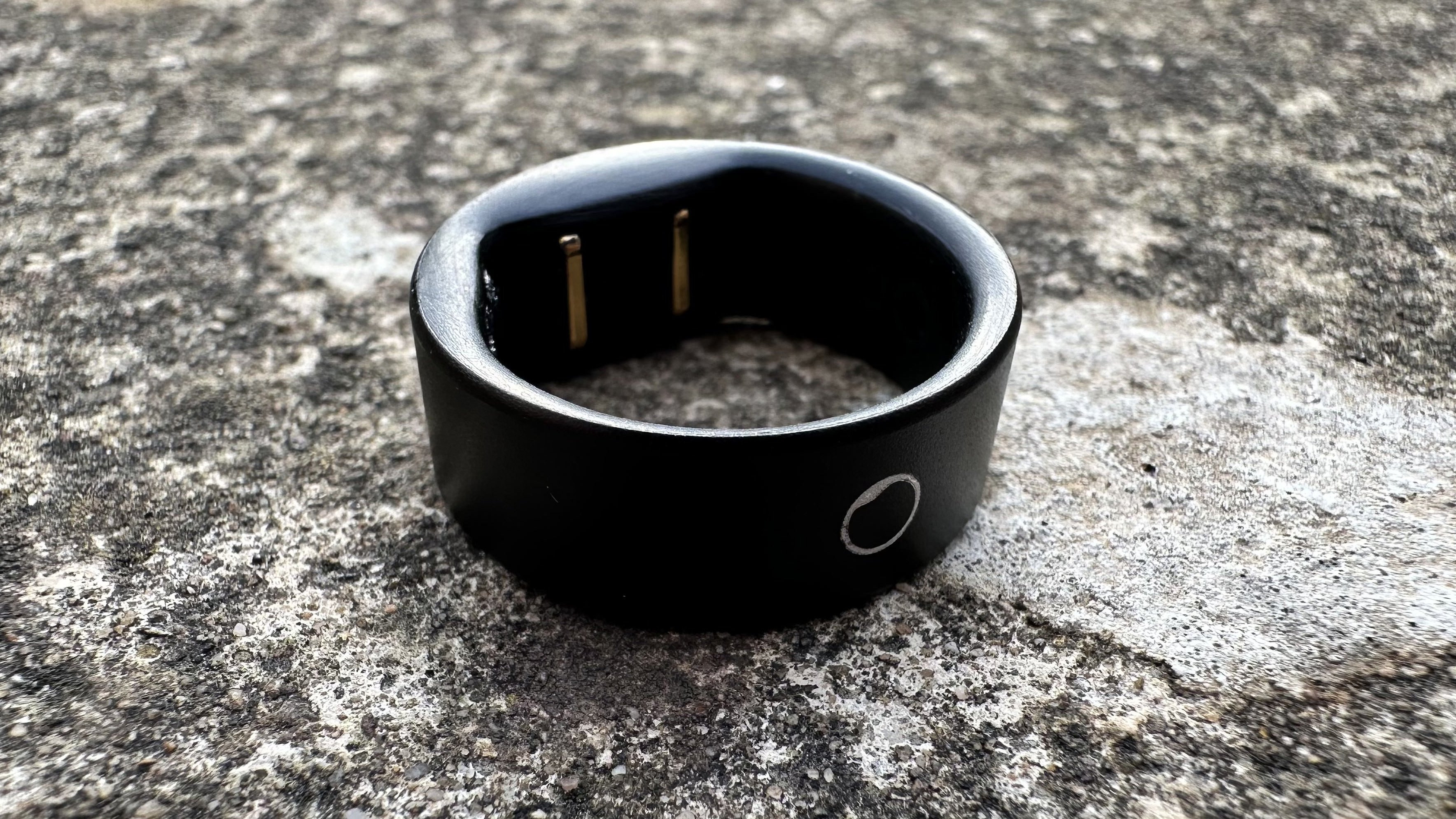
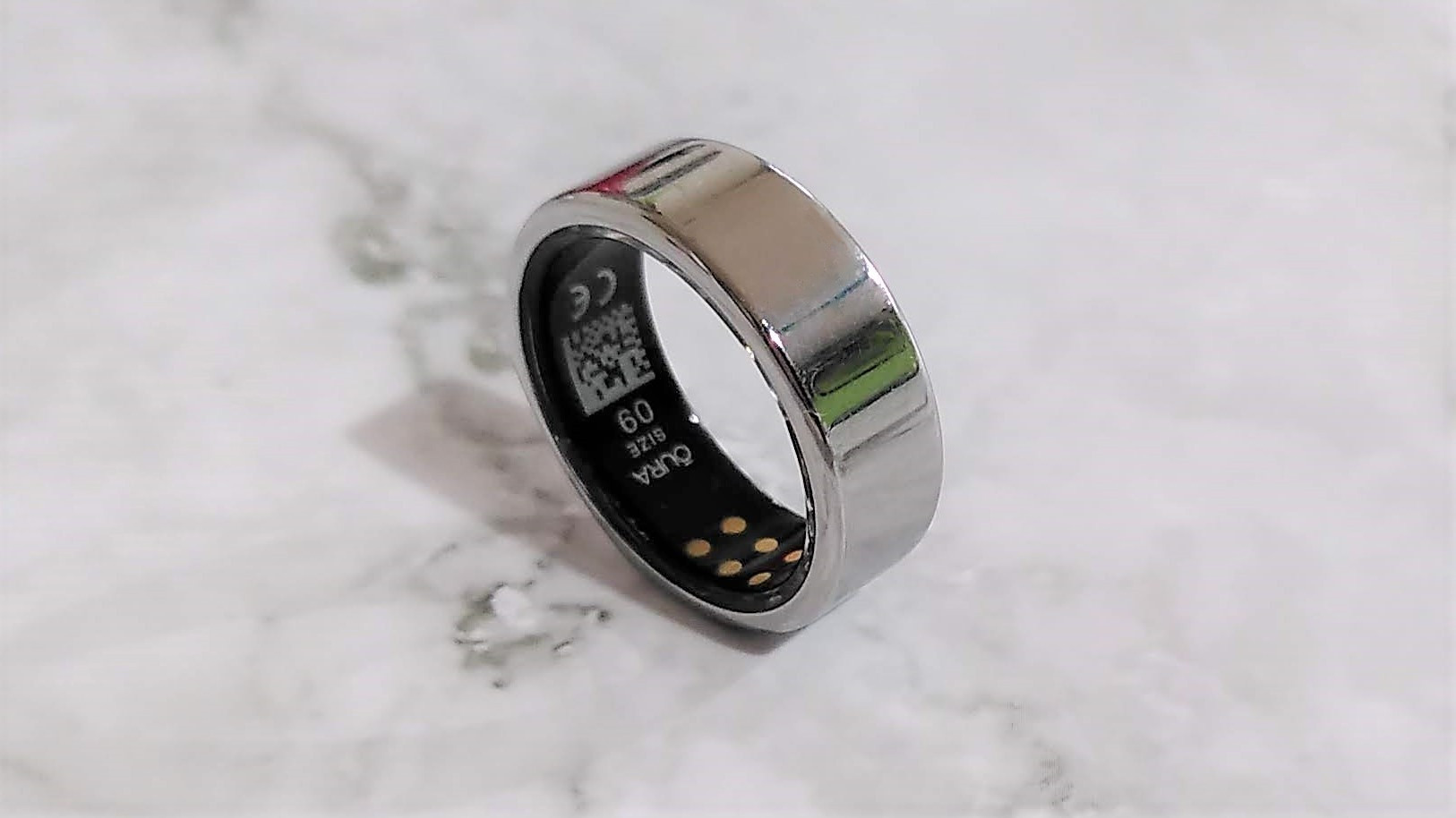
The Circular Ring Slim has a sleek design, but we're not sure about that big white logo on the front.(Image credit: Becca Caddy)
Smart ring vs smartwatch: Comfort, design and durability
Choosing between a smartwatch and a smart ring largely depends on personal preference. Smartwatches offer adjustable straps for a perfect fit and can be customized by swapping out straps with different materials and colors.
However, if you find wearing something on your wrist uncomfortable, a smart ring might be a better alternative. While smart rings don’t offer adjustable sizing, many companies will send you a sizing kit with plastic dummy rings to help you find the ideal one for you. Most of the ones I’ve tested so far have been incredibly comfortable with a snug fit.
They're designed to be comfortable enough to wear overnight, whereas many people dislike wearing watches to bed.
Although these rings are fixed in design, they tend to be more discreet and resemble jewelery, bringing you a sleeker, less sporty look compared to most smartwatches and fitness trackers. However, many do still seem bulky when you compare them to regular rings, especially on smaller hands – don’t let the marketing messages that they’re all incredibly slim and dainty fool you.
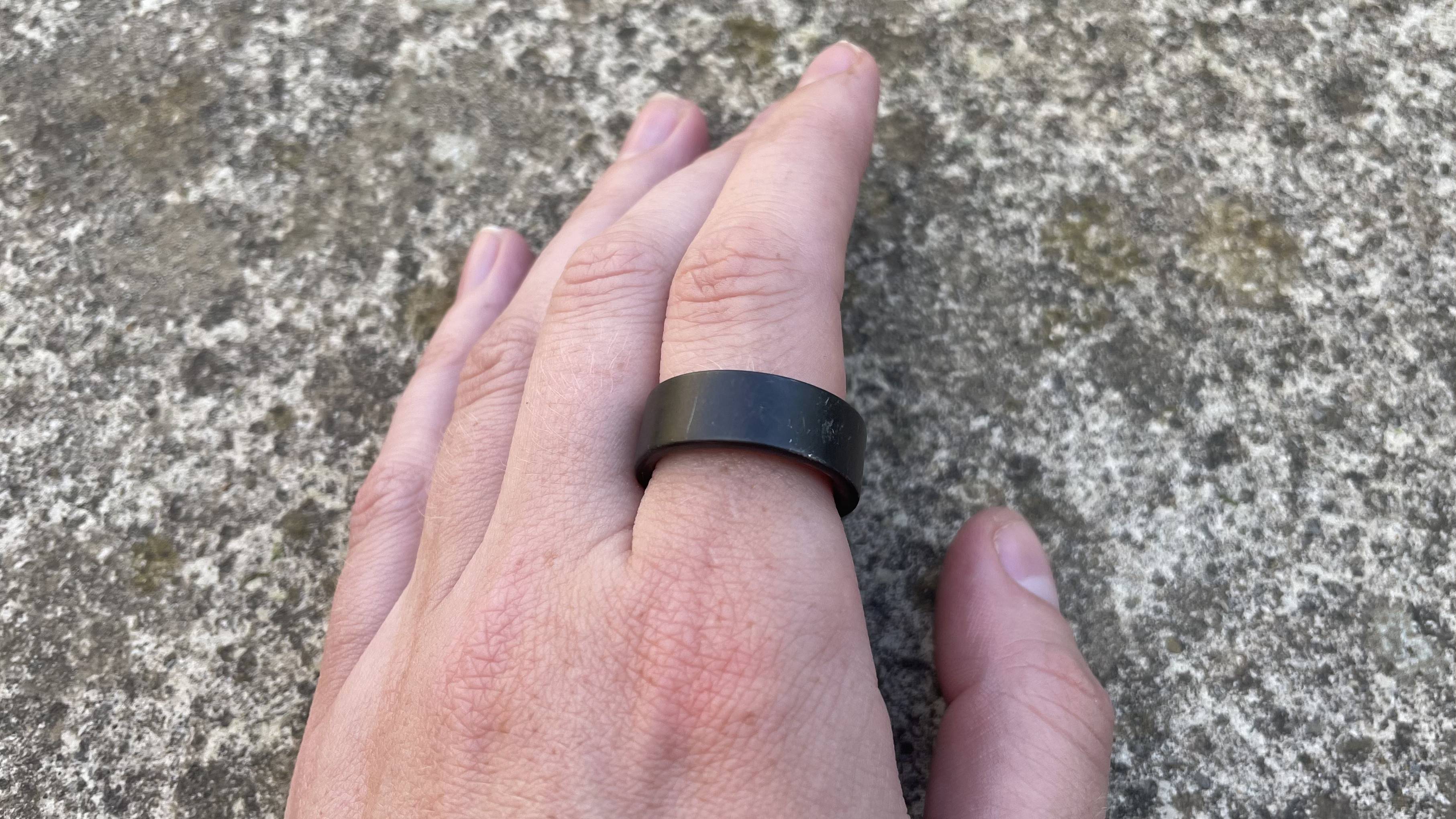
Like all wearable technology, smart rings are also susceptible to wear and tear. During my tests, those with matte black finishes, like the Ultrahuman Ring Air and the Circular Ring Slim, showed significant signs of scratching after just a few days. More premium smartwatches, on the other hand, are designed with durability in mind.
Winner: Smart rings
Smart ring vs smart watch: Screens, apps and smartphone features
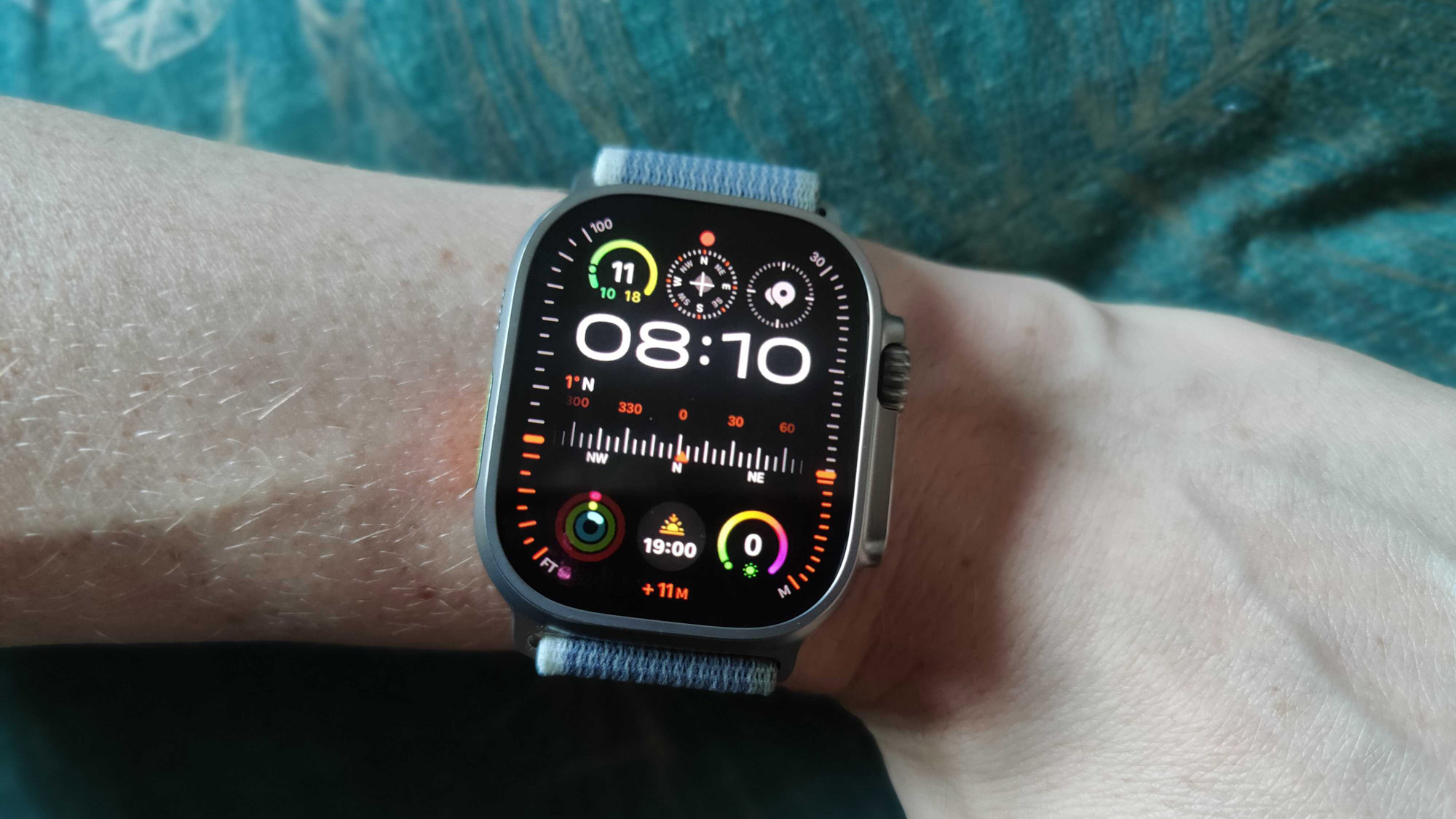
The Apple Watch Ultra 2 is our pick of the best Apple Watch smartwatches. (Image credit: Future)
If you prefer a device with a screen, you'll need to choose a smartwatch or a larger fitness tracker. Smart rings are designed to be more passive – though some models now include added features, like vibrating alarms. This makes smart rings an excellent choice if you're trying to reduce your screen time but still want to monitor your health. Alternatively, you could consider a screenless wrist-based tracker, like the Whoop 4.0, which focuses purely on fitness tracking without digital distractions.
While the lack of a screen might be part of the smart ring appeal, consider whether you might miss this feature during activities like running, using apps or when you want to control music playback from your phone. For many, the desire to disconnect from screens is strong. But if you’re moving from a smartwatch or fitness tracker to a smart ring, it’s worth thinking about whether this will impact your lifestyle, especially if you're keen on tracking specific activities from your wrist in real-time, like workouts.
On the other hand, smartwatches, especially those with LTE connectivity, offer a world of possibilities. They can function as standalone devices, capable of sending SOS alerts and making calls. Many also feature physical controls, built-in voice assistants, and apps, making them much more than just fitness trackers. Think of them as your comprehensive digital companions.
Winner: Smartwatches
Smart ring vs smart watch: Sleep tracking, energy and wellbeing
The Ultrahuman Ring Air is a solid sleep tracker.(Image credit: Becca Caddy)
One significant advantage of smart rings is their accuracy in sleep tracking thanks to the data they collect, like heart rate, movement and even temperature. For those who find wrist-worn devices uncomfortable at night, a smart ring might also be a more suitable option. Generally, I’ve found the smart rings I’ve tested to be more comfortable for overnight wear, though it's worth noting that a poorly fitting ring or flashing sensors can disrupt sleep.
Many top smart rings are primarily designed to monitor sleep and give you information about your energy levels and overall well-being rather than focusing primarily on fitness. This makes them an excellent choice for those prioritizing a holistic view of their health, although most high-end smartwatches and fitness trackers also track these metrics too.
Oura and Ultrahuman offer detailed feedback on your daily energy levels and readiness for exercise in their apps, as well as giving you information about the best time to eat, sleep and drink caffeine. This type of feedback isn’t unique – for example, Garmin offers similar suggestions about energy levels – but it does highlight how smart rings are differentiating their offerings from other devices.
It's important to mention that while many smartwatches and fitness trackers, like the best Apple Watches, are just as effective at sleep tracking, they may require nightly charging, which can be really inconvenient. Just like smartwatches, battery life varies significantly among smart rings: for example, the latest Oura Ring Generation 3 lasts up to 7 days on a single charge, whereas the Circular Ring Slim needs recharging after just 2 days.
Winner: Smart rings
Smart ring vs smart watch: Fitness tracking, sensors and accuracy
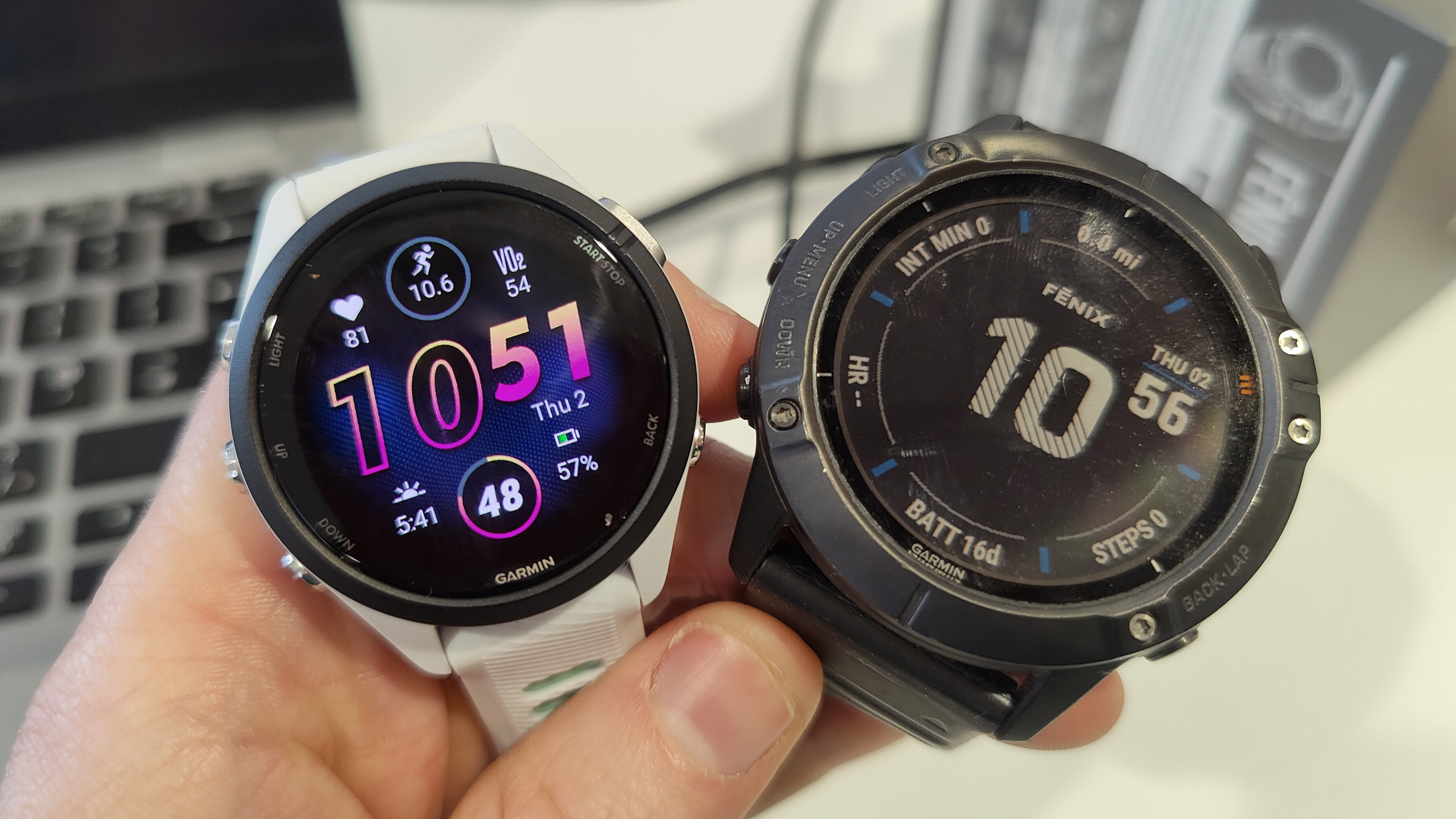
The Garmin Forerunner 265 and the Garmin Fenix 6X are two of the best running watches.(Image credit: Future)
Many of the leading smart rings can track your movement, and they’re getting better at monitoring your workouts – especially when you add activities manually via their app. However, smartwatches and fitness trackers currently provide the best solution for detailed data on speed, heart rate, laps, and other specific metrics.
While some may claim that smart rings can perform all the functions of smartwatches and fitness trackers, they fall short in delivering comprehensive fitness data and (obviously) cannot display this information in real-time, because there's no screen.
This is probably why some people combine their wearable gear, using a dedicated fitness tracker, like a top-tier running watch, for specialized activities while wearing a smart ring for continuous, everyday wear. Although mixing and matching wearables is an option, it may not be feasible for everyone, particularly those on a budget or those who prefer simplicity.
There's a big debate about whether smart rings or smartwatches are more accurate. Some data suggests that a smart ring's placement on your finger might yield more precise readings for heart rate and temperature, but this accuracy depends on several factors, including the quality of the sensors, the algorithms used for data interpretation, and, importantly, the fit of the device. For instance, one smart ring I'm currently reviewing fits like the others I've tested at first, but shifts around during the night, causing the sensors to lose contact with my skin.
Winner: Smartwatches
Smart ring vs smartwatch: Price, subscriptions and risk
The Oura (3rd gen) is one of our top choices if you're looking for a reliable sleep tracker.(Image credit: Future)
There are many different smartwatches available, from the eye-wateringly expensive Apple Watch Ultra 2 ($799 / £799 / AU$1,399) to the incredibly affordable CMF Watch Pro from Nothing ($69 / £69 / AU$131). It's a similar story with fitness trackers, from the high-end running watch, the Garmin Epix Pro ($899.99 / £829.99 / AU$$1,529) to the super budget Huawei Band 7 (£49.99 / AU$159).
In comparison, the best smart rings aren't quite as pricey as the most high-end models, but are still a significant investment. For example, the Oura Gen 3 is $299 /£230 / AU$420 and the Ultrahuman Ring Air is $349 / £280 / about AU$537.
Some reviewers claim that smart rings are available on a budget, but in my experience, these affordable options compromise on quality. In contrast, budget fitness trackers might lack some of the same slick aesthetic appeal but often offer greater reliability. If cost is your primary concern, choose one of the best budget fitness trackers. Things are changing fast, but right now it’s hard to make a good smart ring on a budget, which has led to a surge in the market of low-quality, cheap smart rings.
What's more, there's been a significant buzz around smart rings. I’ve met people who were initially enthusiastic about owning a smart ring, only to find it uncomfortable, excessively scratched, or simply annoying to use. If you have a more generous budget and enjoy experimenting with the latest gadgets, these issues might not deter you. However, for those who are more cautious, it might not be the ideal time to invest in a smart ring.
It's worth noting that certain leading smart rings, like the Oura, come with subscription plans. While some users might find these services and their benefits appealing – such as upgrades and integration with third-party apps – it's essential to evaluate whether the ongoing expenses after the initial purchase are in your budget.
Finally, some smart rings seem rushed to market. Features aren't ironed out, design flaws are evident, and the apps don’t read or work as well as they should. In comparison, more established devices, like smartwatches, tend to offer a more polished experience, benefiting from years of user feedback and iteration.
Winner: smartwatches
Smart ring vs smartwatch: which is the best?
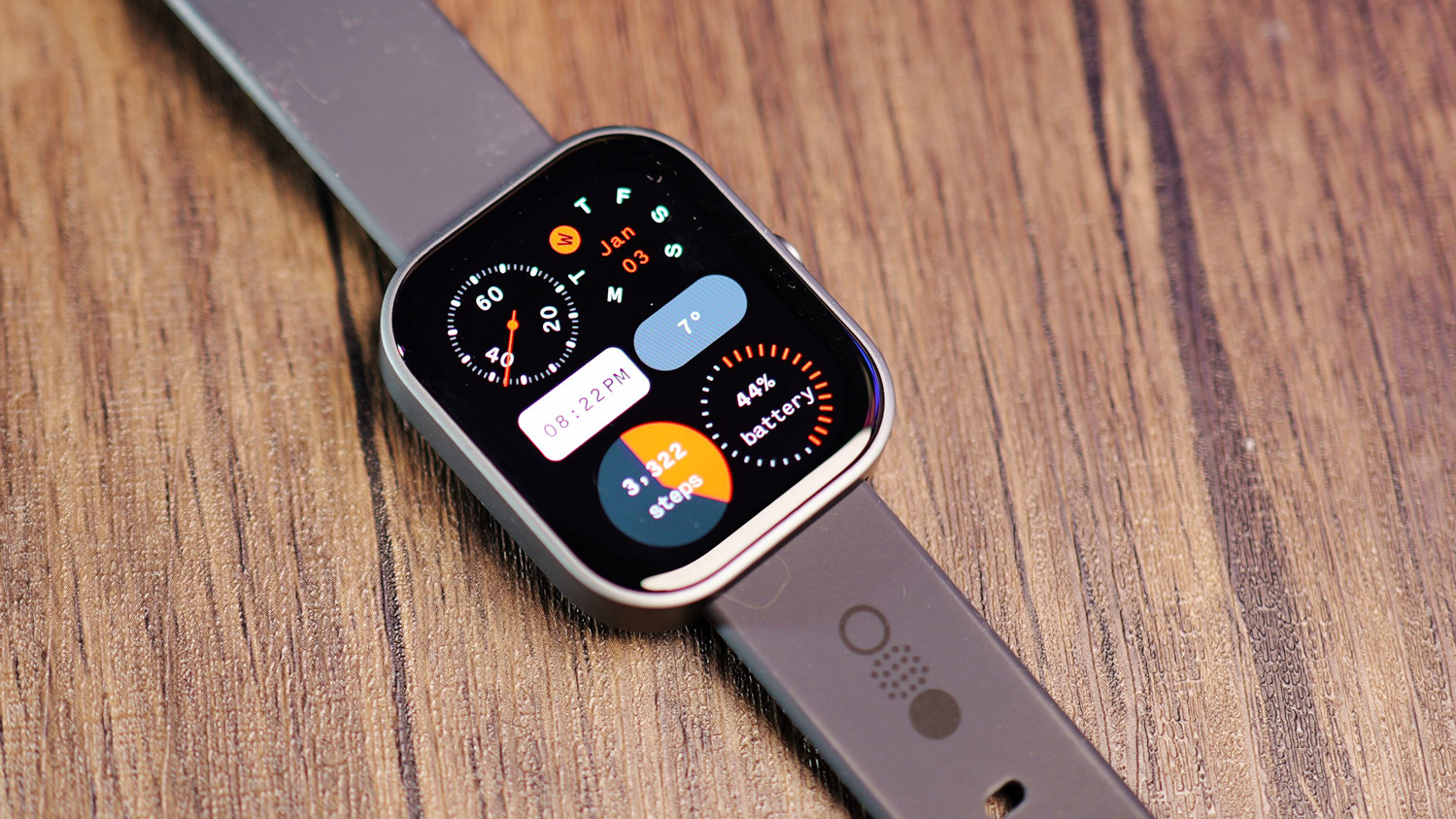
The CMF Watch Pro from Nothing is our top pick of the best smartwatch on a budget at only $69 / £69 / AU$131.(Image credit: Luke Baker)
There’s no definitive answer as to whether smart rings or smartwatches are better. Each type of wearable caters to different preferences and needs, with distinct advantages and disadvantages.
A smart ring could be an excellent choice for those with a larger budget who are keen on trying the latest technology and don’t require detailed fitness tracking. Smart rings are also particularly effective for monitoring overall wellness and sleep; many of the best ones are very light and comfortable. However, as a category, smart rings are still in their infancy, and will improve with time.
If you value having apps at your fingertips, require detailed fitness metrics, or want a proven, reliable device, a smartwatch is the way to go. Alternatively, if apps are not a priority and cost is a concern, consider opting for one of the top fitness trackers.
While they may not have the aesthetic appeal of the newest smartwatches or the novelty of smart rings, they're great at tracking fitness metrics accurately without any fuss.
France 2030 is a strategic €34 billion investment by the French government aiming to kickstart economic growth in the country.
As part of this initiative, the SIRCAPASS project (Surveillance of Road Infrastructures by Passive Sensors) has chosen French firm SilMach to provide ultra-cheap microsensors to monitor and ensure the structural health of bridges across the country.
The €1.7 million project is aimed at monitoring road infrastructures through passive sensors, specifically targeting impact detection, fatigue monitoring, exceptional overload, and crack identification - all tasks that previously were handled manually.
Operate effectively in harsh environments
Built around hybrid MEMS micromechanical sensor technology, these microsensors can record critical structural events without a power source, potentially identifying any hazards that might compromise a bridge's structural integrity, and hopefully ensuring public safety.
“France 2030 marks a crucial step in SilMach's development,” said Co-CEO Pierre-François Louvigné. “We are proud to lead this public-private consortium with key actors capable of providing a technological solution for the safety of the French and our economy.”
Fellow Co-CEO Jean-Baptiste Carnet added, “Everyone knows the human and economic cost of a bridge collapse. Our innovations are here to provide a new response to a major societal challenge.”
SilMach says its energy-free microsensor sensors operate effectively even in harsh environments including underwater and in space. With a communication module linked to an information system, the sensor can relay critical data and provide a mechanical memory ensuring access to raw data in a directly exploitable format.
Apple has a big event coming up in a few days (Tuesday, May 7, to be exact), and the smart money is on this being a showcase for a new range of iPad tablets. However, one particular rumor suggests this won’t be any ordinary iPad launch, and it might spook a few Mac owners.
According to whispers online, at least one of the new iPads will be powered by Apple’s own M4 chip and will arrive with advanced AI features. Seeing these powerful M-series chips – primarily designed to run the best MacBooks and Macs – included in an iPad Pro isn't anything new; there have been iPad models in the past that included these chips. However, their inclusion in an iPad usually comes after the chip has already appeared in Apple’s computers and laptops.
If this rumor – which originated from notable Apple leaker Mark Gurman – is accurate, it would be the first time an M-class chip has appeared in an iPad before a Mac or MacBook. This would be a major change in Apple’s tactics. Ever since the company dropped Intel from making the processor (CPU) and integrated graphics (GPU) for its Macs and MacBooks, instead choosing to build its own system on chip (SoC) that combines the CPU, GPU and memory (plus other clever bits), every generation of M-class chip (M1, M2, and M3) has launched alongside new MacBooks.
Could this latest move suggest the company is switching focus from Macs to iPads again? I certainly hope not.
End of the Mac renaissance
I’m going to be honest: the Macs and MacBooks Apple released between 2010 and 2020 were rather uninspired. Outside of a few minor design tweaks, each new Mac, iMac and MacBook received a slight bump in specifications... and that’s about it. While none of the releases were poor products, neither were they particularly exciting. In fact, they were teetering on the edge of becoming what so many Apple fans hate about Windows laptops: functional yet boring.
Even Apple seemed disinterested, instead focusing on its (relatively) new hit products, the iPhone and iPad.
That all changed in 2020 with the launch of the M1-powered MacBook Air, MacBook Pro 13-inch and Mac mini. While on the surface those products didn’t look any different from the models that came before, there'd been a revolution on the inside. I remember talking to various people at Apple around the time of that launch, and what was striking was the excitement surrounding these new Macs. This wasn’t just an iterative hardware upgrade, it was a whole new ball game, and it felt like Apple knew it was on to a winner.
(Image credit: Future)
The new Macs backed up that confidence, delivering impressive performance, excellent battery life and great value for money – something you don’t often associate with Apple. Customers were as impressed as the critics, and Apple was rewarded with the kind of sales that surely made most laptop makers envious.
And so began what I call the Mac renaissance. More powerful variants of the M1 chips followed (the M1 Pro, M1 Max, and an almost ridiculous M1 Ultra), along with a revamped 16-inch MacBook Pro and all-new 14-inch MacBook Pro and Mac Studio.
Obviously not wanting to lose momentum, Apple soon launched the M2 chip, again alongside a MacBook Air (this time with a radical redesign that gave the laptop a much-needed modern look), a 13-inch MacBook Pro, and a Mac mini. This was followed by M2 Pro, M2 Max chips, and the M2 Ultra.
Apple was seemingly getting into a bit of a routine. However, towards the end of 2023, the company decided to shake things up – and not everyone was impressed.
(Image credit: Apple)
At an event in October called 'Scary Fast', Apple surprised pretty much everyone by not only announcing the anticipated M3, but also the M3 Pro and M3 Max. This broke the cycle of launching the Pro and Max variants around six months after the initial chip launch – and, understandably, it upset those who had only recently bought M2 Pro and M2 Max MacBooks. The M3 versions launched just nine months after the M2 versions, leaving some people feeling like the expensive high-end devices they bought were all too quickly superseded.
It also raised eyebrows at the M3 ‘Scary Fast’ event that the 14-inch and 16-inch MacBook Pros were launched alongside the new chips, and a new 24-inch iMac, but for the first time, there was no MacBook Air (or 13-inch MacBook Pro, although that was less missed).
This meant that people who'd been hoping for an affordable MacBook with the new M3 chip were left disappointed.
The MacBook Air with an M3 chip did finally come along in March of this year (in both 13-inch and 15-inch variants), though, and they were well worth the wait, earning coveted five-star reviews and a place at the top of our best laptops guide.
But I couldn’t help but feel that Apple’s enthusiasm for MacBooks was once again waning. And, if the company decides to go forth with the iPad Pro as the showcase product for the M4, this could spell the end of the mighty Mac renaissance.
(Image credit: Apple)
Picking favorites
An iPad Pro with an M4 chip could be seen as a snub to Mac fans. For a start, it would kill off any hope of an M3 Ultra mega-chip. I can’t imagine Apple would attempt to sell an ultra-powerful (and expensive) chip built on outdated architecture.
Buyers of the new M3 MacBook Airs may also feel a bit put out if their new devices were surpassed – and by a tablet.
However, if this does come to pass, one thing's for sure: I certainly won't be ditching my beloved MacBooks for an iPad Pro.
For a start, you have to accept that at some point your cutting-edge tech will be superseded. If you only ever want to use the most powerful gadgets money can buy, you’ll be burning through a lot of money. Instead, you should remember that even if your device is no longer the absolute best-in-class, that doesn’t mean it’s suddenly worthless.
I have a 16-inch MacBook Pro with the M2 Pro chip, and I absolutely love it. When the 16-inch MacBook Pro with M3 Pro was released, my M2 Pro model was still an absolute beast of a machine, and it will be for many years to come. Replacing the MacBook for the newer model would be costly and largely pointless – especially if an M4 iPad Pro heralds the coming of an M4 Pro in the near future.
And, while I’d be a little glum if an iPad got to show off the power of the M4 before a Mac, I won’t be swapping a laptop for a tablet any time soon. The iPad Pro is a fine line of tablets, sure – as I discovered when I used an iPad instead of a laptop last year, with a good keyboard attachment, you can get a decent experience that comes close to what a laptop offers.
But "close" isn’t good enough. Unless the M4 iPad comes with macOS instead of iPadOS, and thus allows me to use full desktop applications rather than pared-down mobile app versions, I’m not interested.
I use my MacBook Pro mainly for recording and editing music and videos, and I can’t see an M4 iPad Pro allowing me to do the same. Of course, that’s just my use case, I also much prefer typing on a physical keyboard.
There will be plenty of iPad fans who will love the idea of the M4 chip debuting in an iPad Pro, especially after a few years where they might have felt that Apple has lost interest in the tablet. That’s a feeling Mac fans will certainly find familiar, so maybe we can graciously allow the iPad line to benefit from a new piece of Apple silicon this time around, safe in the knowledge that M4 Macs will surely follow soon.
Unless, of course, Apple pulls the rug from under all of us, launching the M4 alongside a new Vision Pro. If that happens, we riot.
Artificial intelligence is clearly going to feature heavily in iOS 18 and all the other software updates Apple is due to tell us about on June 10, and new leaks reveal more about what's coming in terms of AI later in the year.
These leaks come courtesy of "people familiar with the software" speaking to AppleInsider, and focus on the generative AI capabilities of the Ajax Large Language Model (LLM) that we've been hearing about since last year.
AI-powered text summarization – covering everything from websites to messages – will apparently be one of the big new features. We'd previously heard this was coming to Safari, but AppleInsider says this functionality will be available through Siri too.
The idea is you'll be able to get the key points out of a document, a webpage, or a conversation thread without having to read through it in its entirety – and presumably Apple is going to offer certain assurances about accuracy and reliability.
Fast and private
Expect to hear more about iOS 18 in June(Image credit: Apple / Future)
Ajax will be able to generate responses to some prompts entirely on Apple devices, without sending anything to the cloud, the report says – and that chimes with previous rumors about everything running locally.
That's good for privacy, and for speed: according to AppleInsider, responses can come back in milliseconds. Tight integration with other Apple apps, including the Contacts app and the Calendar app, is also said to be present.
AppleInsider mentions that privacy warnings will be shown whenever Ajax needs information from another app. If a response from a cloud-based AI is required, it's rumored that Apple may enlist the help of Google Gemini or OpenAI's ChatGPT.
Spotlight on macOS will be getting "more intelligent results and sorting" too, AppleInsider says, and it sounds like most of the apps on iOS and macOS will be getting an AI boost. Expect to hear everything Apple has been working on at WWDC 2024 in June.
Prime Video's catalog for May 2024 is one of the service’s most jam-packed lists yet. So be prepared to be kept very busy this month! Along with a new wave of Prime Original movies and shows including Outer Range and Clarkson’s Farm, the titles arriving this month stretch across a huge range of genres – bringing over 100 movies to the service on May 1, yet again proving why Prime Video is one of the best streaming services.
As well as catching up on recent releases you may have missed, Prime Video are ushering in a plethora of movies from Hollywood’s past for you to revisit, going back as early as 1946 with Gilda, starring Rita Hayworth.
It goes without saying that Prime Video is giving you your subscription’s worth, and there’s definitely a chance that its new arrivals could make it to our list of best Prime Video movies.
Everything new on Prime Video in May 2024
Arriving on May 1
12 Angry Men
3:10 To Yuma
A Dangerous Method
A.I. Artificial Intelligence
Airplane!
All That Heaven Allows
American Me
Anatomy Of A Murder
Atonement
Bachelor Party Vegas
Beautiful And Twisted
Beautiful Girls
Because I Said So
Ben Hur
Biloxi Blues
Blame It On Rio
Blues Brothers 2000
Bottle Rocket
Breach
Breathless
Brigsby Bear
California Suite
Call Me By Your Name
Call Me Crazy: A Five Film
Capote
Chocolat
Clockstoppers
Coco Before Chanel
Cold Mountain
Cry Macho
Dead Reckoning
Death Race
Death Race 2
Death Race 3: Inferno
Delta Force
Delta Force 2: The Colombian Connection
Drew Peterson: Untouchable
Emma
Erin Brockovich
Europa Report
Everybody Wants Some!!
Fatal Attraction
Fire In The Sky
Flight Of The Intruder
Fluke
Four Weddings And A Funeral
Fried Green Tomatoes
Gattaca
Gilda
Glory
Harley Davidson And The Marlboro Man
Hellraiser III: Hell On Earth
Hellraiser IV: Bloodline
Hellraiser V: Inferno
Hellraiser VI: Hellseeker
Hellraiser VII: Deader
Hellraiser VIII: Hellworld
Imagine That
In A Lonely Place
Indecent Proposal
Invasion Of The Body Snatchers
Isle Of The Dead
John Lewis: Good Trouble
Knock On Any Door
Koyaanisqatsi
Lassie: The Road Back
Lizzie Borden Took An Ax
Lone Wolf Mcquade
Magnificent Obsession
Malcolm X
Men At Work
Night School
Not Another Teen Movie
On The Waterfront
Once Upon A Time In The West
Open Wide
Pal Joey
Panic Room
Pillow Talk
Pompeii
Psycho
Rear Window
Reindeer Games Homecoming
Repo Men
Roboshark
Rolling Thunder
Rope
Run Lola Run
Schindler’s List
Serpico
Shampoo
Sliver
Some Like It Hot
Soul Plane
Stargate: Continuum
Stargate: The Ark Of Truth
Steel Magnolias
Steppin' Into The Holiday
The Accused
The Adventures of Buckaroo Banzai Across the Eighth Dimension
The Adventures Of Elmo In Grouchland
The Advocate’s Devil
The Big Chill
The Big Heat
The Birdcage
The Birds
The Blues Brothers
The Change-Up
The Curious Case of Benjamin Button
The Deer Hunter
The Harder They Fall
The Lady From Shanghai
The Last Detail
The Man in the Iron Mask
The Man Who Knew Too Much
The Mountain Men
The Night of The Hunter
The One
The Ring
The Swimmer
The Tarnished Angels
The Wiz
Tom & Jerry
Undercover Brother
Vertigo
Virtuosity
Whiplash
With This Ring (2015) Yours, Mine & Ours
Mamma Mia! Here We Go Again
Sixteen Candles
The Idea of You
Arriving on May 2
American Fiction
BlacKkKlansman
Muppets From Space
Arriving on May 3
Clarkson’s Farm Season 3
NWSL
Arriving on May 4
Premier Boxing Champions Pay-Per-View Event on Prime Video
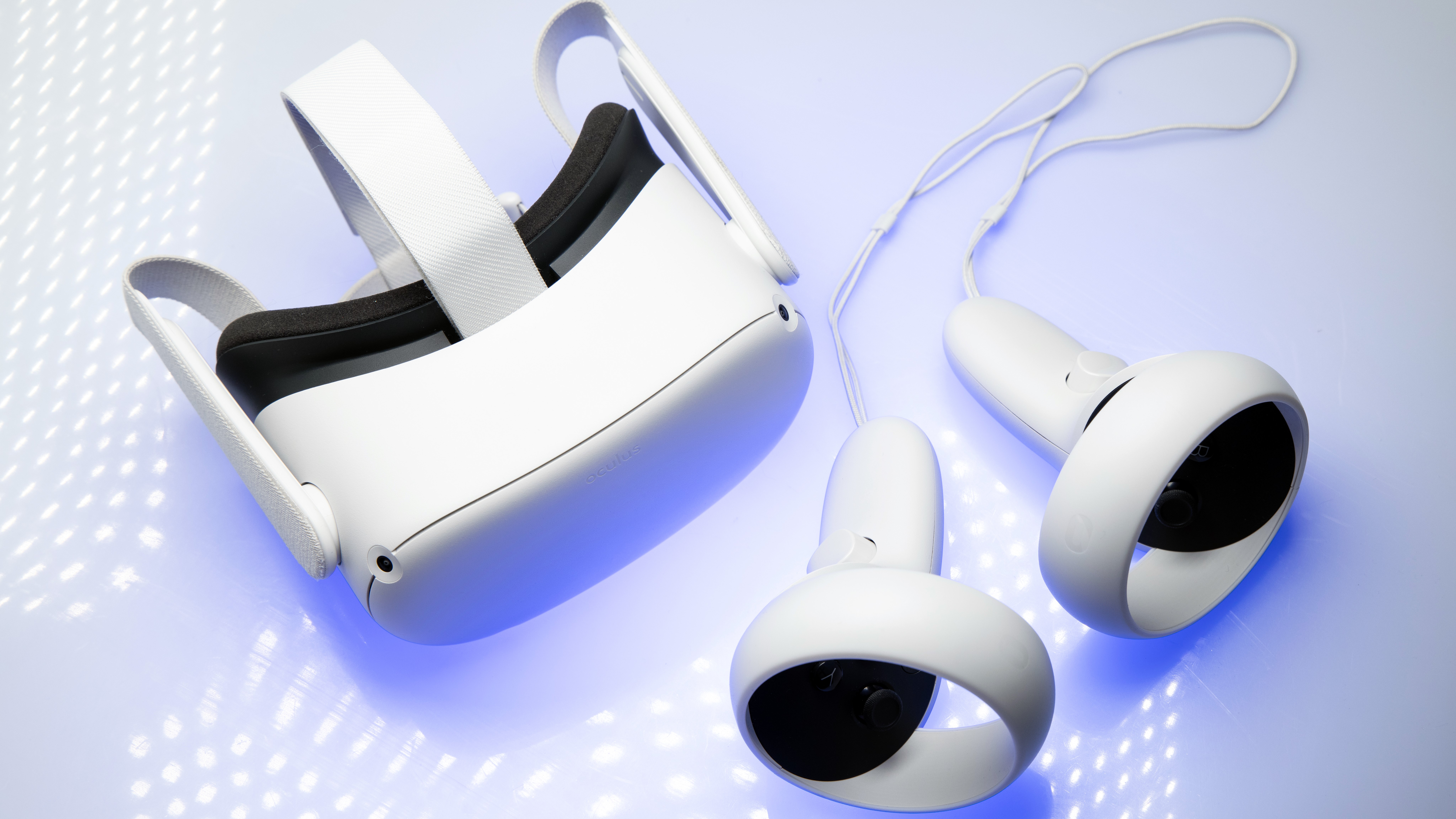
May the Fourth, also known as Star Wars day, is today and for Meta Quest 3 (or Oculus Quest 2) owners there are some far better ways to celebrate than simply watching one of the classic films. That’s because you can immerse yourself in a galaxy far far away with some stellar Star Wars VR titles.
What’s more there are some superb savings to be had on my favorite Star Wars VR game – Star Wars Pinball – right now, making it the best time to pick this title up if you haven’t already. There are others you can check out too that aren’t discounted like Vader Immortal and Tales from the Galaxy’s Edge, as even at full-price there’s a lot to love about them.
Alternatively you can celebrate Star Wars day the traditional way with a marathon of the Star Wars films in order, or by reading up on Star Wars: Skeleton Crew which is set to land later this year.
Star Wars Pinball VR
Okay, okay, I know pinball won’t leave you feeling like a lightsaber-wielding badass, or a slick space pirate, but I promise you have to try this game out. If only because it’s currently massively on sale – coming in at just $8.49 / £6.79 instead of $24.99 / £19.49 just for Star Wars day.
Star Wars Pinball VR reimagines the iconic digital cabinets Zen Studios has crafted over the past few years in a full VR experience. They are situated in a fan’s dream hangout space you can decorate with collectible goodies that you unlock by getting high scores and competing challenges, and the pinball machines themselves are a delight.
They capture the retro-chic flair that real world pinball machines offer, while delivering on digital expectations by featuring interactive elements that wouldn’t be possible in real life. There are 10 total cabinets to master, but if you want to mix things up further you can explore the Career mode; it adds various restrictions and powers to your gameplay that force you to mix up your playstyle.
I’ve enjoyed this game since it first released, and will admit to almost falling over a few times because I’ve been so immersed in the game that I tried to lean on a cabinet that wasn’t there. If you haven’t tried it already you absolutely should right now, especially because it’s at a bargain price.
Vader Immortal
No villain, nor character in general, is more iconically Star Wars than Darth Vader. So what better way is there to celebrate Star Wars day than with a trilogy inspired by the Sith Lord himself.
As a smuggler who picked the wrong planet to explore – the fiery world of Mustafar which Vader calls home – you must use your lightsaber skills and latent force powers in order to survive the adventure that fate has thrust you into, including an encounter with Vader himself.
This series is far from fault-free – chief among its issues is it’s fairly brief even spread across three games – but the lightsaber combat feels exactly like you always dreamed it would. The force abilities are clunkier, but again it’ll be exactly what everyone who’s ever tried (and failed) to pull an out-of-reach object closer by willing it towards them ever wanted.
The other downside of grabbing Vader Immortal right now if you’re interested is you can only pick each entry up individually. They’re often bundled together in a package that comes with a big discount but that’s currently not the case – so if you’re not desperate to play this game today you might want to hold off until it’s on sale.
Supernatural
If you want to swing a lightsaber around – or at least something like one – and get a little fitter whirl you’re at it, then check out Supernatural. I got hooked on the VR fitness app during my month-long VR workout experiment with my Meta Quest 3, and recently I’ve been enjoying its limited time Star Wars-themed Flow sessions.
My personal favorite one is the Dark Side list because it features Duel of the Fates – it’s so much fun to do battle while this tune blasts through my headset’s speakers. But there’s also a general Star Wars and a Light Side mix if you don’t want to embrace the Sith’s teachings.
Just act fast as these Star Wars levels are leaving very soon.
Star Wars: Tales from the Galaxy’s Edge
If you’re less interested in being a laser sword-wielding space wizard, and would rather be like the blaster touting characters in The Mandalorian or Andor, then Tales from the Galaxy’s Edge will be right up your street.
Set in Batuu – the same location you can travel to at Disney World in Orlando Florida – you must help some familiar droids as you adventure through the wilds of this Outer Rim settlement. Once you’re done you can continue this quintessentially Star Wars story with the Last Call DLC, and if you’ve enjoyed the main game I know you’ll enjoy this expansion too.
As an extra bonus, you can additionally explore tales from Star Wars’ rich history, with short bonus IG-88 and Ady’Sun Zee (a Jedi Padawan) missions. They’re very much secondary to the main game’s plot, but they’re great minigames especially if you’re sharing the experience with friends and family who just want a quickfire burst of Star Wars.
Happy Star Wars Day to those who celebrate! But even on these most nerdy of holidays, the tech world moves so fast it's like it's jumped to Hyperspace.
If you've lost track of the top stories this week we're here with our trusty lightsaber to cut through the noise so you can get caught up on the most important tech news of the past seven days from Netflix, Rabbit R1, DJI, and Apple.
Speaking of, be sure to head back here on Tuesday, May 7, to read about all the latest hardware announcements from the Apple event. And return next Saturday for another ICYMI news round-up.
In social media posts, Apple has described its upcoming showcase as “a different kind of Apple event,” which has got us thinking about how this iPad-centric reveal might differ from previous Apple events we’ve tuned into.
There are some obvious but boring conclusions to draw here, like the fact that this ‘Let Loose’ event is being held slightly earlier than other Apple events – proceedings are due to kick off at 7am PT / 10am ET / 3pm BST, which is May 8 at 12am AEST in Australia – but we’re hoping Apple justifies its own hype with a more exciting revelation (perhaps we’ll get a sneak peak at the company’s long-awaited generative AI software?).
Other countries, including the US, aren’t affected yet. But, with a global rollout likely to happen, we suggest you work through your watchlist of the best Netflix shows, best Netflix movies, and best Netflix documentaries ASAP. Otherwise, you might have to start paying extra or be subjected to ads when you're automatically switched over from the Basic tier to the Standard with Ads one, if you want to watch them on the world’s best streaming service.
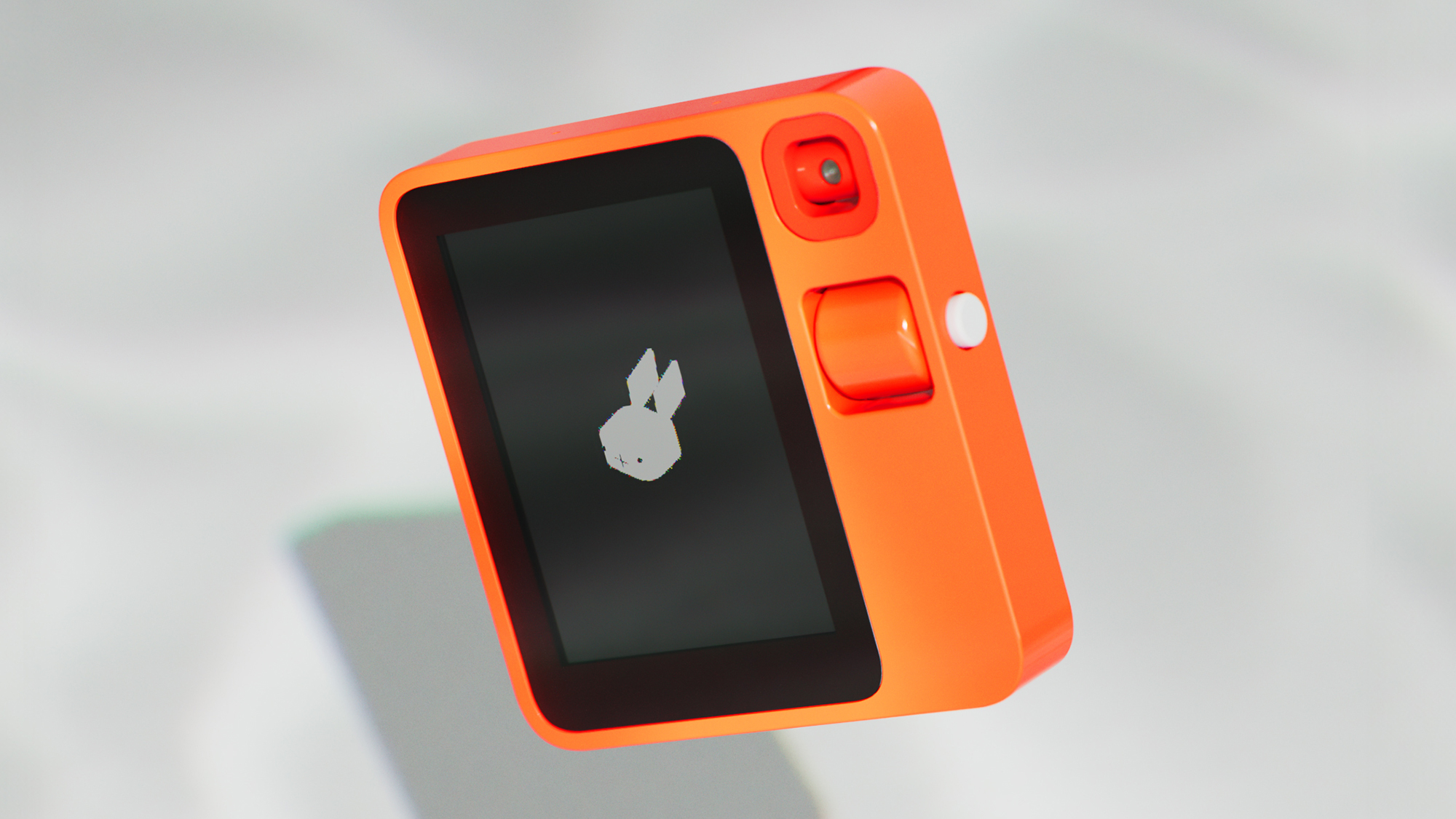
Welcome to the very disappointing age of personal AI devices. First there was Humane AI, a wearable AI Pin that was slammed by most major tech critics. Following fast on its heels was Rabbit R1, a far more adorable pocket-sized AI companion that at least has a screen.
Sadly, that’s the kindest thing we can say about it at the moment. This is a bright orange device that is supposed to bridge the gap between intention and action without the need to navigate various apps. In reality, it’s an odd little box with an awful analog scroll wheel, inconsistent performance, and an average LLM. As far as we can tell, it does nothing your iPhone with the Microsoft Copilot app installed on it can’t do, and the marquee item – accessing app features without using apps – often doesn’t work. To make matters worse, there are now claims that the Rabbit OS is little more than an Android app. That may be so, but it’s definitely not the handset's biggest problem, At least it only costs $199.
A potential DJI ban in the US aside, life just got harder for DJI rivals that make beginner-level drones after the launch of the Mini 4K.
It’s DJI’s cheapest-ever drone to shoot 4K video and it costs less than $300 / £270 which is an absolute bargain. With much the same hardware as the Mini 2 SE, the Mini 4K is ideal for beginners with easy flight moves, tutorials in the Fly App, a foldable sub-250g design, 31-minute flight time, downward object sensing, and Level-5 wind resistance.
Where it improves on the 2.7K video-equipped Mini 2 SE is higher resolution video, higher bit rates, and a 2x digital zoom. DJI’s cheapest drone just got more powerful and we expect it to be very popular.
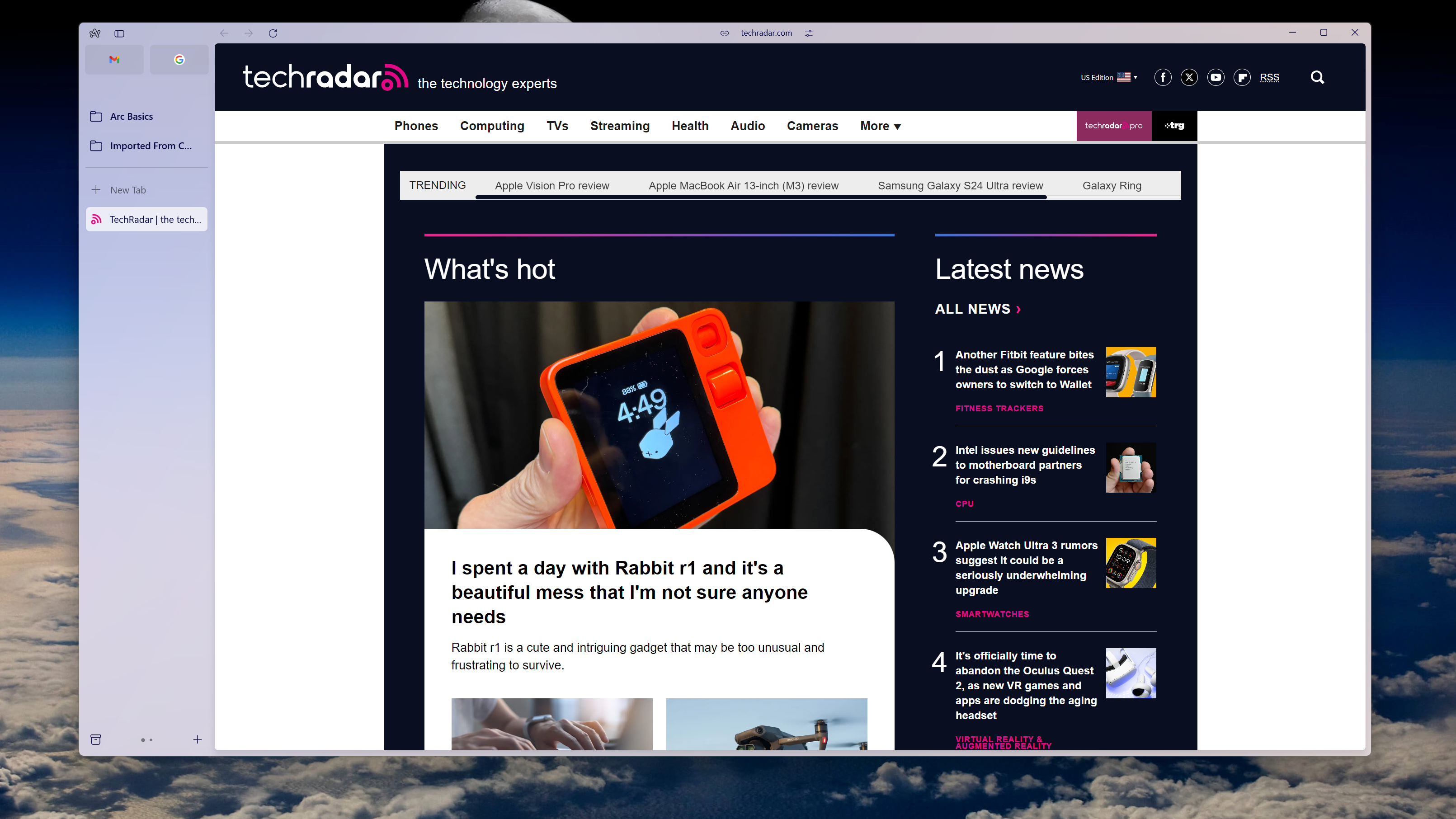
The Arc browser finally came to Windows 11 after originally launching on macOS and iOS, and we're already loving it more than than Google Chrome and especially Microsoft Edge. It's speedy, uses far less memory than Chrome, and lacks Edge's annoying ads and all its other clutter.
Obviously, things aren't perfect in every way. As it is a Chromium browser, the looming privacy threat of Manifest V3 is very real, and there's the issue that the browser can still track users with ad block installed.
Though Arc has a lot of great things to offer, and The Browser Company team developing it has promised big feature updates are incoming, including Windows 10 support.
If you’re interested in trying out Arc out for yourself, you can download it for free here.
The Oculus Quest 2 might have recently seen its price drop to just $199.99 / £199.99 / AU$359.99, which is ridiculously cheap – but we highly recommend you ignore it and pick up a Meta Quest 3 instead, even if it’s $499.99 / £479.99 / AU$799.99.
That’s because the first Meta Quest 3 exclusive games were revealed recently, with Batman: Arkham Shadow being announced only a few days ago. So finally, after years of dominance, it’s officially time to put down your Quest 2 – as stupendous as it was – and pick up a different standalone headset as you can no longer enjoy the latest and greatest VR software on the aging Meta device.
Artificial intelligence became a little more human this week for all ChatGPT Plus users after OpenAI rolled out its Memory feature.
Exactly what the name suggests, memory allows the AI chatbot to recall key details from your previous conversations. Say you mention your birthday is next week, or that you just got a new cat, the bot will remember this and should use the information to inform its responses to your prompts in the future.
This should make it feel more like you’re continuing a conversation with the same person rather than a complete stranger every time, but if the idea terrifies you then you can turn the feature off, delete the bot’s whole memory, or delete only certain details.
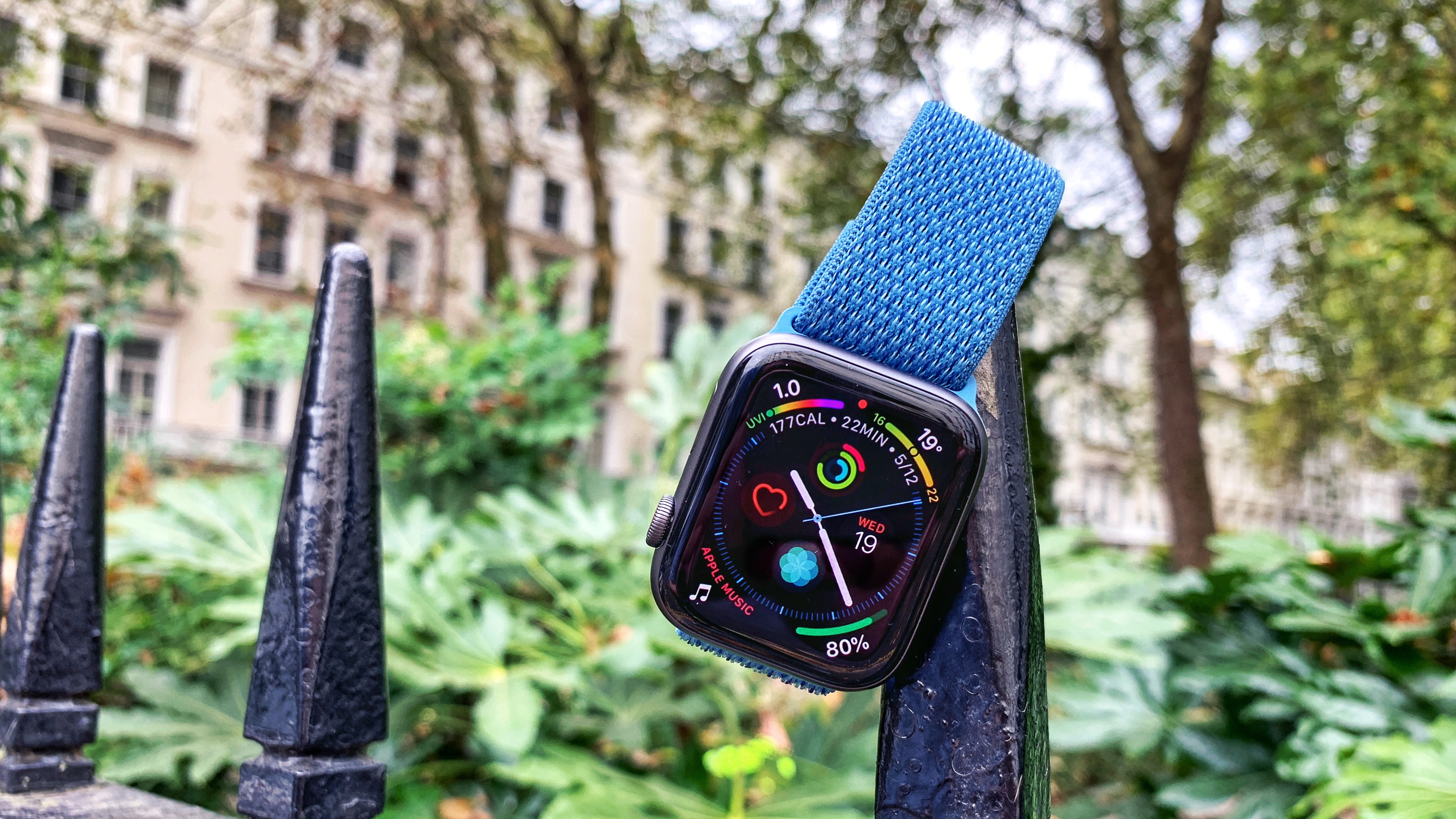
Since the Apple Watch first appeared in 2015 – and was initially sold more like a fashion accessory – its reputation as a seriously capable health and fitness tracker has grown and grown. And now it has a new seal of approval from regulators in the US.
As reported by MyHealthyApple (via MacRumors), the US Food and Drug Administration (FDA) has qualified the Apple Watch's atrial fibrillation (or AFib) history feature as an MDDT – or a Medical Device Development Tool.
That's a lot of acronyms to keep track of, but essentially it means the AFib readings on an Apple Watch 4 or later are able to be used to verify other medical devices in clinical trials. It's a major endorsement of the accuracy on board Apple's wearables.
The FDA notes this is the first digital health technology to be approved for MDDT use. Previously, the FDA has already given the thumbs up to AFib history on the Apple Watch, which means Apple is able to advertise the wearables as having this feature – though it's not at the level where it can replace a proper medical assessment.
Regular upgrades
The Apple Watch 4 introduced AFib monitoring(Image credit: Future)
Monitoring atrial fibrillation – irregular heart rhythms, essentially – is a feature intended for those who have already been diagnosed with the condition and are aged 22 or older, giving them a non-invasive way of checking the frequency of AFib signs.
Year on year, the Apple Watch has consistently added new health and fitness features, whether that's extra hardware sensors or additions to the software features (keep an eye out for watchOS 11 in June). Having the weight of FDA support behind it certainly helps in marketing the wearable as a reliable and trustworthy tracker.
There have been bumps along the way though: Apple is in an ongoing dispute over blood oxygen tracking patents, which briefly led to the Apple Watch 9 and the Apple Watch Ultra 2 being pulled from sale in the United States.
A new study carried out by imaging and electronics company Ricoh has unveiled that, despite the majority of workers being sent home at the beginning of the pandemic, many companies are still failing their staff when it comes to providing adequate digital equipment.
According to the figures, fewer than one in three (28%) UK and Ireland employees feel that they have the right technology needed for seamless collaboration with colleagues across hybrid working setups.
The research encompasses the thoughts of 2,000 workers and 300 decision-makers, and like many other studies, reveals a disparity between expectations and reality.
Hybrid workers aren’t being given the right kit
Far from the first to reveal so, this Ricoh study found that only one in four decision-makers believe their current collaboration technology falls short of industry standards, compared with nearly three in four (72%) workers.
A small but still considerable number of employees (15%) also noted a lack of access to essential software like Microsoft Teams and Zoom, with more than a quarter (28%) lacking the right hardware, like video conferencing equipment.
Paula O’Brien, Director of Sales at Ricoh UK, commented: “The ability to collaborate seamlessly is not just a luxury but a necessity for organisational success. I feel passionately that by embracing innovative solutions that empower flexible working, businesses have enormous opportunity for growth now and in the future.”
The study also touched upon the weight that hybrid working has in a worker’s decision to move to or remain with a company – nearly a quarter said that being able to hybrid work with the right tools is a key way to increase fulfilment at work.
Nicola Downing, CEO of Ricoh Europe, added: “Organisations have had several years to adapt to flexible working practices, so it’s startling that many are still falling behind in providing even the most basic technologies that facilitate collaboration and communication.”
For a long time, the base iPhone models have tended to be the most popular, but in recent years that trend has changed, with Apple's Pro and Pro Max devices increasingly proving the biggest sellers.
That’s more true than ever right now, with the iPhone 15 Pro Max having a 23% share of iPhone sales in the US in March 2024, according Consumer Intelligence Research Partners (CIRP). Their report – spotted by Apple Insider – puts the iPhone 15 Pro in the number two spot, with a 22% share.
The standard iPhone 15 is way behind with a 14% share. And the iPhone 15 Plus? That has just a 9% share.
(Image credit: CIRP)
In March 2023, the Pro models had a similar share to this year, with the iPhone 14 Pro having a 22% share and the iPhone 14 Pro Max having a 24% share, so the shift towards Pro models had already started then. But what’s interesting is that the base iPhone 14 had a higher 19% share than the iPhone 15's 14% share this year, so the base models are continuing to drop in popularity.
As well as people choosing Pro models, this continued drop is down to buyers choosing older iPhones; right now, for instance, as many people are buying the iPhone 14 as the iPhone 15.
So, it seems people either want the best phone they can get their hands on, or they’re happy with something older (and likely much cheaper), with the middle ground of a new base model iPhone proving less appealing than it once did.
No love for the iPhone 15's upgrades
In some ways, this phenomenon is surprising, as the iPhone 15 is a substantial step up from the iPhone 14, adding things like a Dynamic Island, a 48MP main camera, and a USB-C port.
But then again, Apple’s insistence on sticking with a 60Hz refresh rate on the base models is increasingly ridiculous, and the recent switch to equipping these phones with year-old chipsets probably isn’t helping drive sales, either.
So, there’s certainly some logic to going Pro if you buy a new iPhone, and as CIRP notes, "we also suspect some economic pressure to reduce spending, when possible, and a generational trend toward sustainability and away from always wanting the newest thing." The firm concludes that "together, these factors put pressure on the newest base model and pumped-up demand for the one- and two-year old alternatives."
There’s a chance, though, that this will change with the iPhone 16 line, at least partially, as leaks suggest the base iPhone 16 and iPhone 16 Plus will have an entirely new chipset, rather than being stuck with last year's version. They might also gain both the Action button (a feature that the iPhone 15 Pro already has) and a new Capture button (which no iPhone yet has).
So, Apple might not reserve quite as much for the Pro models this time around. That said, all signs point to the iPhone 16 still having a 60Hz refresh rate, and it’s likely that the iPhone 16 Pro and iPhone 16 Pro Max will have better cameras. So buyers who simply want the best will still, of course, pick a Pro.
You might also like
iPhone 16: release date speculation, latest leaks, price predictions and more
LastPass has now officially severed ties with its former parent company, GoTo, which was formerly known as LogMeIn.
The separation, initially announced in December 2021, marks a pivotal moment for the password manager company as it begins a journey on its own.
The move comes in the wake of a series of high-profile attacks, with the new company committing to bolstering security measures across the board in order to improve resistance.
LastPass splits from parent company
In the months that followed the attacks on LastPass, which revolved around the theft of source code and certain customer information, the company started introducing stricter measures, such as the enforcement of a 12-character minimum for passwords.
The then CEO, Karim Toubba, continues the role of heading up the newly diverged company despite criticism over the attacks.
Toubba commented on the split: “Together, we are all committed to delivering solutions that never compromise on security, quality, or performance – helping to set new standards in the cybersecurity landscape on behalf of our valued customers, dedicated employees, and the industry for years to come.”
LastPass has also invested in establishing its own dedicated threat intelligence team, comprising workers who collectively helped drive a 98% decrease in credentials offered for sale by infostealing malware in 2023.
In its announcement, LastPass also asserted that the company “stands on solid financial ground,” alluding to upcoming investment in technology and R&D. LastPass is now owned by private equity sponsors Francisco Partners and Elliott Management.
Toubba added: “Our journey forward as an independent company is filled with excitement and gratitude.”
The company remains in Boston, where former parent company GoTo is headquartered, but it will reside in its own property.
Amazon Web Services has unveiled the next part of its plan to redefine software development with the launch of Amazon Q, a new generative AI assistant.
Amazon Q is designed to support developers and businesses with streamlining processes, enhancing productivity and unlocking new opportunities to innovate.
Like other AI tools already available from the likes of GitHub and other key players in the industry, AWS hopes its Q-branded chatbot can help ease many of the challenges faced by developers during the software development processes.
AWS launches new Amazon Q chatbot for developers
Two slightly separate use cases exist for Amazon Q – the first, for developers, promises to unlock workers more time to spend on meaningful work. The announcement cites a study revealing that developers currently spend less than one-third of their time coding, with the majority of their remaining time dedicated to performing tedious and repetitive tasks.
Early Amazon Q adopters, customers and partners include Blackberry, BT Group, GitLab and Toyota.
Besides offering “best-in-class” scanning and remediation for vulnerabilities, Q is also designed to be an “expert” on AWS, and specifically, a customer’s AWS environment, making it an appealing GenAI tool for anybody already using Amazon’s cloud computing services.
The second deployment, designed for more general business purposes, is said to integrate with more data sources than other GenAI assistants, including the likes of Atlassian, Gmail, Salesforce and Slack.
Dr Swami Sivasubramanian, VP of Artificial Intelligence and Data at AWS, commented: “Amazon Q is the most capable generative AI-powered assistant available today with industry-leading accuracy, advanced agents capabilities, and best-in-class security that helps developers become more productive and helps business users to accelerate decision making.”
Following its announcement at re:Invent, Amazon Q is now generally available on the company’s website.
Amazon has just announced impressive year-on-year growth on the back of another three successful months during which it saw net sales reach $143.3 billion, representing a healthy 13% increase.
Of that, around 17% was made up of AWS segment sales, which saw a 17% growth compared with the 13% growth recorded last quarter, surpassing Wall Street predictions and underpinning it as an important segment of the company’s earnings.
Despite its origins as an online retailer, Amazon’s cloud businesses has added around $5 billion (or another quarter) to its revenue since the second half of 2022, just weeks before OpenAI’s ChatGPT set a new standard for artificial intelligence.
AWS pushed Amazon’s revenue up again
Amazon CEO Andy Jassy commented on AWS’s lucrative role in the company’s books: “The combination of companies renewing their infrastructure modernization efforts and the appeal of AWS’s AI capabilities is reaccelerating AWS’s growth rate.” AWS now has a $100 billion annual revenue run rate.
During the past quarter, AWS made three Local Zones generally available in Atlanta, Chicago, and Houston. It also announced plans for infrastructure Regions in Saudi Arabia and in Mexico and billions in upcoming investment globally to expand its infrastructure and support training efforts.
The company also announced the removal of exit fees for those wanting to migrate their data to another cloud, as well as expansions to its Bedrock generative AI service.
Jassy also thanked expansion to its Stores business and strong Advertising revenue fueled by growth in its Stores and Prime Video businesses for pushing the company’s revenue in an upward trajectory.
Looking ahead, Jassy alluded to continued growth: “It’s very early days in all of our businesses and we remain excited by how much more we can make customers’ lives better and easier moving forward.”




Follow Us
Were this world an endless plain, and by sailing eastward we could for ever reach new distances