- Premiering on Netflix later this year
- Currently in production in Los Angeles
- No official trailer released yet
- Main cast set to return
- New cast members announced, including Leighton Meester
- Erin Foster teases potential for season 3
Nobody Wants This season 2 is on its way to Netflix later this year and the cast are officially back in production. So, what's next for Joanne the 'shiksa' and Noah the 'Hot Rabbi'? Well, it turns out quite a lot.
An instant hit on Netflix, season 1 premiered in September 2024 and quickly became one of the best Netflix shows to watch on one of the best streaming services. Hearing it got renewed for a second series then made for some pretty exciting news.
And fortunately, there's plenty more where that came from. Here's everything we know so far about the return of Nobody Wants This from release date, to cast, to plot and so much more.
Nobody Wants This season 2: is there a release date?
Nobody Wants This season 2 may not have an official release date yet, but it has been confirmed that the show will premiere on Netflix later this year.
As per the Instagram post above, the cast and crew commenced filming for season 2 in early March and it appears the first episode will be called, 'Dinner Party'.
If we take a look at season 1, filming was carried out between February and May 2024 with the show launching in September of the same year. So, since filming for season 2 started in March, that may well mean an October release date, or thereabouts. But, we'll have to wait and see.
Nobody Wants This season 2: has a trailer been released?
There's no official Nobody Wants This season 2 trailer yet, which is not surprising considering the cast and crew only started filming in March. Usually a trailer comes a little closer to the release date, so we'd expect to see one later this year.
What we do have though is the season 2 renewal announcement that plays out over a montage of clips from season 1, and it's always nice to have a quick refresher of where we left off. When a trailer drops, we'll be sure to update here.
Nobody Wants This season 2: confirmed cast
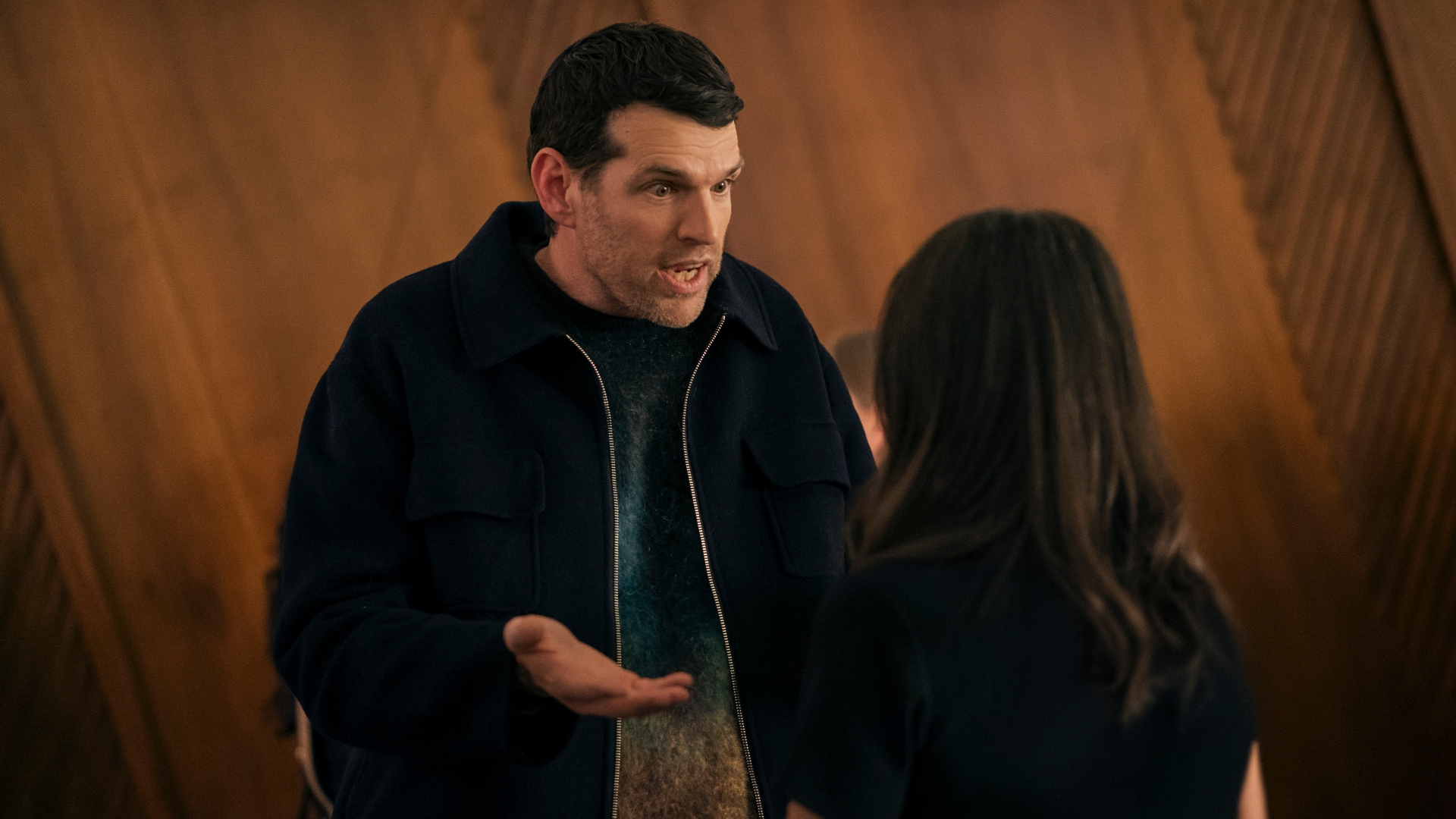
The main cast are all set to return(Image credit: Netflix)
Good news! For Nobody Wants This season 2, the main cast are all set to return:
And, excitingly, there's a bunch of new cast members joining the show. One of which is Adam Brody's real-life wife, Leighton Meester. As revealed in Tudum, Leighton will guest-star as Abby, 'Joanne's nemesis from middle school who is now an Instagram mommy influencer'.
Leighton isn't the only one joining the romantic drama though. There's also Miles Fowler who will play Lenny, 'Noah's Matzah Ballers teammate who gets set up with Morgan (Justine Lupe)'.
And there's some more recurring guest stars including Alex Karpovsky playing Big Noah, 'an overly confident rabbi at Noah's temple' and Arian Moayed as Dr. Andy, 'a charming, highly regarded (particularly by himself) psychotherapist who might just be the perfect match for Morgan.'
There's also some new additions to the crew, with Jenni Konner and Bruce Eric Kaplan, both of Girls fame, joining as showrunners alongside the series' creator, Erin Foster.
Nobody Wants This season 2: story synopsis and rumors
Can Noah and Joanne move past their differences?(Image credit: Netflix)
Full spoilers forNobody Wants Thisseason 1 to follow. Plus, potential spoilers for season 2.
Nobody Wants This season 1 left viewers on quite the hopeful love heart eyes cliffhanger ending. The couple's tumultuous relationship was seemingly held at a religious stalemate towards the end of season 1, despite them finding plenty of reasons to stay together.
But, Joanne did not feel ready to convert to Judaism, and so it seemed that love was lost. Until, Noah made a grand gesture outside a Bar Mitzvah. Hope restored.
But, when it comes to season 2, Adam Brody told Tudum: "In the light of day, will he still feel that way? I don't know. It's an open question." And fortunately, it seems season 2 will provide the answers.
Brody added: "I think that's what the show an explore. What should we do? What should she do? What versions of sacrifice is worth it? What constitutes growth, or what constitutes dimming yourself to be with someone else? It's a sacrifice, but ideally, you grow together and you're better for it – you don't have to [lop off a limb]."
So, there's clearly some big life-altering questions that the couple need to find answers for if they're going to navigate moving forward, in spite of their cultural and familial differences standing firmly in the way.
An unexpected connection was also sparked in Nobody Wants This season 1(Image credit: Netflix)
But, it's not only Noah and Joanne that have a love life to navigate in season 2. Joanne's confident and bolshy sister/podcast co-host, Morgan, formed a bond with Noah's married brother, Sasha, in season 1. And many viewers have spoken on how keen they are to see them take that relationship a step further in season 2. But, seemingly that won't be the case.
Speaking to ScreenRant, Timothy Simons who plays Sasha brushed the gossip away, saying: "It's not particularly funny to break up a family". Adding: "Justine, I think, looked straight into the camera when we were at the Golden Globes and was like, "They're not getting together," so I think we can dispel that rumor."
Instead, if we take a look at the new cast members joining for Nobody Wants This season 2, there's new love interests in town for Morgan. And that's why we get to say: "Come on down, Miles and Dr. Andy."
Of course, Noah and Joanne stand at the center of this emotional and captivating drama, praised for its ability to shine a light on a complicated religious relationship. And there's plenty more to unravel in Nobody Wants This season 2.
Will there be more seasons of Nobody Wants This?
Could the 'Hot Rabbit' return for another season?(Image credit: Netflix)
Nobody Wants This season 2 was renewed the month after season 1 aired. Because of this, we aren't sure what the future holds as far as a season 3 is concerned, since season 2 hasn't yet premiered.
But, Erin Foster has hinted of more. Speaking to People alongside her sister Sara, with which she also runs a podcast like the show, she suggested a possible cameo appearance in season 3: "I always thought that it'd be fun to do that, but I never created a character that I thought was the perfect character."
Sara then replied: "Maybe season 3, Morgan and Joanne go on sabbatical and then it's us." To which Erin replied: "Oh, we just replace them."
So, while there's no official line from Netflix yet, there's most definitely hope.
Over 700 Epson projectors transform walls into moving, responsive works of living digital art
teamLab Phenomena redefines immersive art by blending environmental feedback with human interaction
Wet and Dry zones let visitors shape, touch, and move through responsive visual landscapes
The largest digital art experience in the world has been unveiled in Abu Dhabi, showcasing a fusion of interactive storytelling, cutting-edge projection, and immersive design.
Over 700 Epson projectors were integrated into the expansive 17,000-square-metre teamLab Phenomena exhibition to create a visual landscape that turns art into a dynamic environment reacting to its surroundings.
The launch event matched the exhibition’s scale, featuring 6,000 synchronized drones lighting up the sky in what is believed to be the region’s largest aerial display, accompanied by a special musical composition from Italian pianist and composer Ludovico Einaudi.
Technology meets environment in living art
The exhibition features two sections: the Wet Zone and the Dry Zone. Through fluid-like digital environments that react to touch and motion, visitors can have up-close, personal experiences with changing landscapes in the Wet Zone.
Conversely, the Dry Zone encourages movement through interactive areas where artwork changes in real time in response to each visitor's presence.
The artworks are not simple static objects but phenomena shaped by the environment itself. This dynamic quality is what makes teamLab’s work unique and places immense demands on the visual hardware powering it.
“Even if people immerse themselves physically into the artwork, the artwork will remain intact, capable of naturally restoring itself even if disrupted,” said teamLab founder, Toshiyuki Inoko.
To meet the technical demands of this exhibition, Epson supplied an array of high-brightness projectors, showcasing not just creative brilliance but also what the best business projectors and best portable projector solutions can achieve when integrated with immersive design.
This effort is not a standalone attraction. It forms part of a larger vision for the Saadiyat Cultural District, which is set to include institutions like the Louvre Abu Dhabi, the future Guggenheim Abu Dhabi, and the Zayed National Museum.
“teamLab Phenomena Abu Dhabi is a groundbreaking cultural landmark that redefines immersive art experiences on a global scale,” said Mohamed Khalifa Al Mubarak, chairman of the Department of Culture and Tourism – Abu Dhabi.
The visual fidelity and real-time responsiveness of teamLab Phenomena could not be realized without advanced projection and display systems. In a digital art space this large and complex, having powerful computer systems is essential for backstage coordination and real-time content control.
Every week is a busy week in technology, and the past seven days have been no exception. Just in case you haven't had chance to visit TechRadar every day this week (we'll forgive you), these are the most important stories you need to know about.
There's a lot to get through here: more advances in AI, a new number one Bluetooth speaker, and promises of futuristic devices on the way. From phones to satellites, there's a varied selection of stories below.
Once you've made it all the way through, you'll be back up to date with all the comings and goings in tech since last weekend – and if the next few days are looking busy too, don't worry, because we'll have another ICYMI for you this time next week.
8. Netflix revealed the date for its Tudum showcase
Netflix Tudum 2025 is less than a month away(Image credit: Netflix)
Netflix has a big content showcase every year called Tudum (the sound the Netflix app makes when it launches) and we now know that the 2025 extravaganza is going to be taking place late on May 31 in the US, and early on June 1 in the UK and Australia.
There are plenty of reasons to tune in, based on the Tudum 2025 trailer. We should be getting updates on some of the biggest properties Netflix has, including Stranger Things, Squid Game, and Wednesday, as well as the third movie in the Knives Out franchise.
The JBL Flip 7(Image credit: Future / Simon Lucas)
JBL has a very strong reputation when it comes to portable Bluetooth speakers, and the brand new Flip 7 only enhances that reputation further: it's just earned itself five stars out of five in our in-depth JBL Flip 7 review, and our writers really don't give out that score easily.
The speaker has hugely impressed us in terms of its design, build quality, and battery life, and then of course there's the beautifully punchy and detailed sound too. It offers a much bigger and much better soundscape than you'd expect, given its compact dimensions.
6. Nothing launched another impressive budget phone
We have new CMF products from Nothing(Image credit: Nothing)
Nothing continues to release devices that perfectly balance performance and price, with the latest gadget to catch our eye being the CMF Phone 2 Pro. Yours for just $279 / £219 (around AU$460) from next week, it looks like being one of the best cheap phones of 2025.
That's not all, because Nothing also unveiled the CMF Buds 2, Buds 2 Plus, and Buds 2a, which again put more expensive devices to shame in terms of value for money. Not only are these new gadgets attractively priced, they also offer stylish, eye-catching designs.
ChatGPT models are changing again(Image credit: Shutterstock/EI Editorial)
It's always refreshing to see a tech company admit that it's made a mistake, and having noticed that GPT-4o's personality had become "too sycophant-y and annoying", OpenAI CEO Sam Altman promised that fixes were rolling out to correct the issues this week.
The core of the problem has been that ChatGPT has been trying too hard to be human, with too many flattering remarks and too many fake-sounding expressions of excitement. It turns out that most of us like our AI companions to admit to their artificiality.
4. Starlink’s satellite internet got a tempting 'free' offer
Now is a great time to get started with Starlink(Image credit: Starlink)
Starlink's efforts to try and connect the most cut-off and remote parts of the world to the internet continue, and the latest offer from the company waives the hardware setup fee for new subscribers, as long as they commit for at least 12 months to the satellite service.
That's a hefty saving of $349 in the US, for example, but not everyone is eligible to get the money off. To begin with, it's only available in "select markets" (check the Starlink website to see if you qualify), and there are some additional terms and conditions attached too.
GTA 6 is no longer coming in 2025(Image credit: Rockstar Games)
Say it ain't so: the most anticipated video game of recent years will no longer be launching this year. Rockstar Games had promised we'd see Grand Theft Auto 6 in 2025, but has now announced the title is getting pushed back, and will be unveiled on May 26, 2026.
The reasons are the usual ones for this kind of delay, that the fans "expect and deserve" the best possible experience, and so on. Next year we might well find that GTA 6 fans actually deserve to wait a little longer than May – but that remains to be seen.
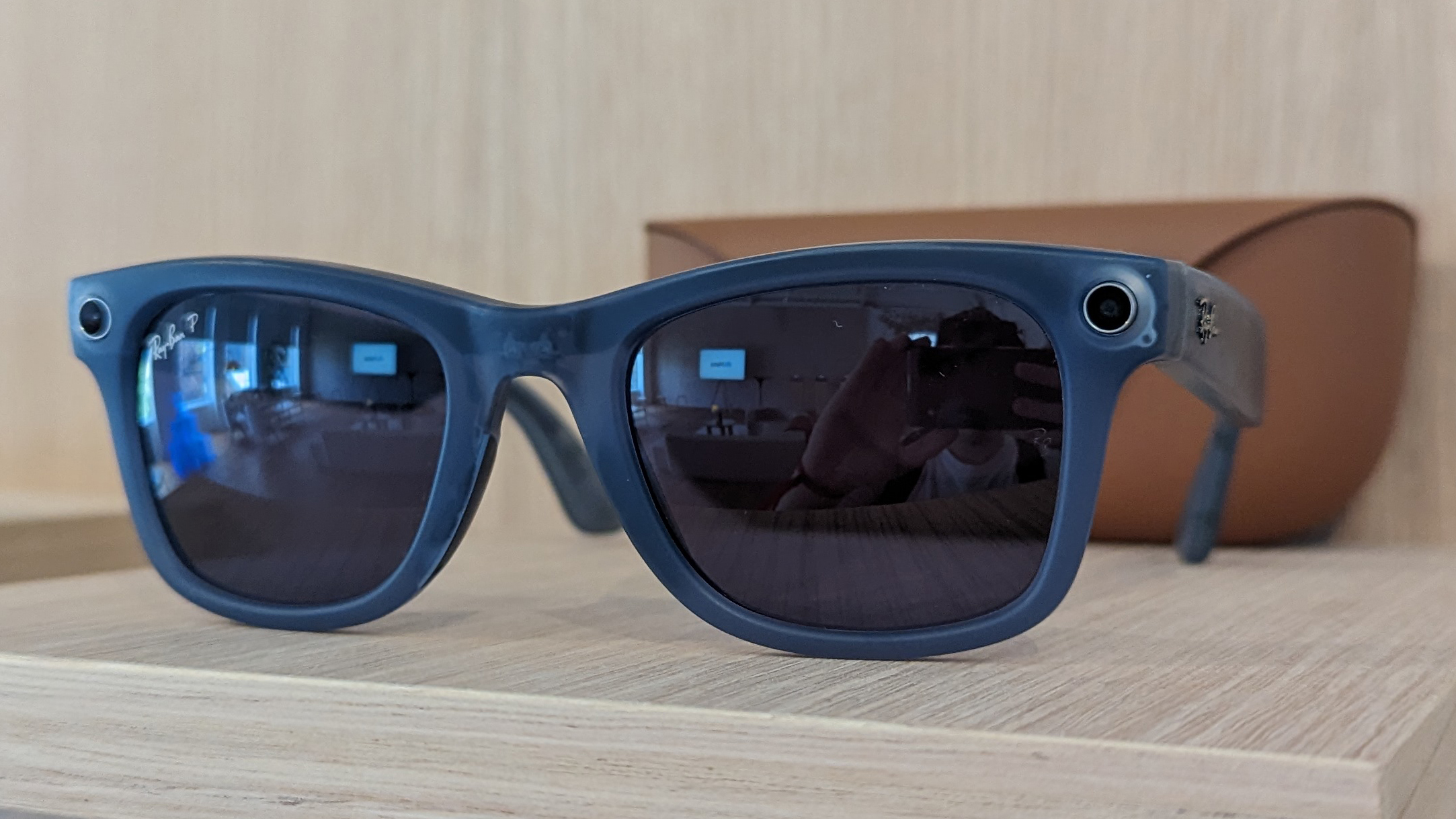
The current Ray-Ban Meta smart glasses(Image credit: Future)
The smart glasses made by Meta and Ray-Ban have helped push this gadget form factor further towards the mainstream, so we're excited to see what comes next: and what comes next will apparently be multiple new versions of the specs, arriving later this year.
Meta boss Mark Zuckerberg went on the record in an earnings report to say that the range would "expand" in 2025, and offer some "new technological capabilities". We've also got some ideas about what Zuckerberg could mean, and what improvements we might see.
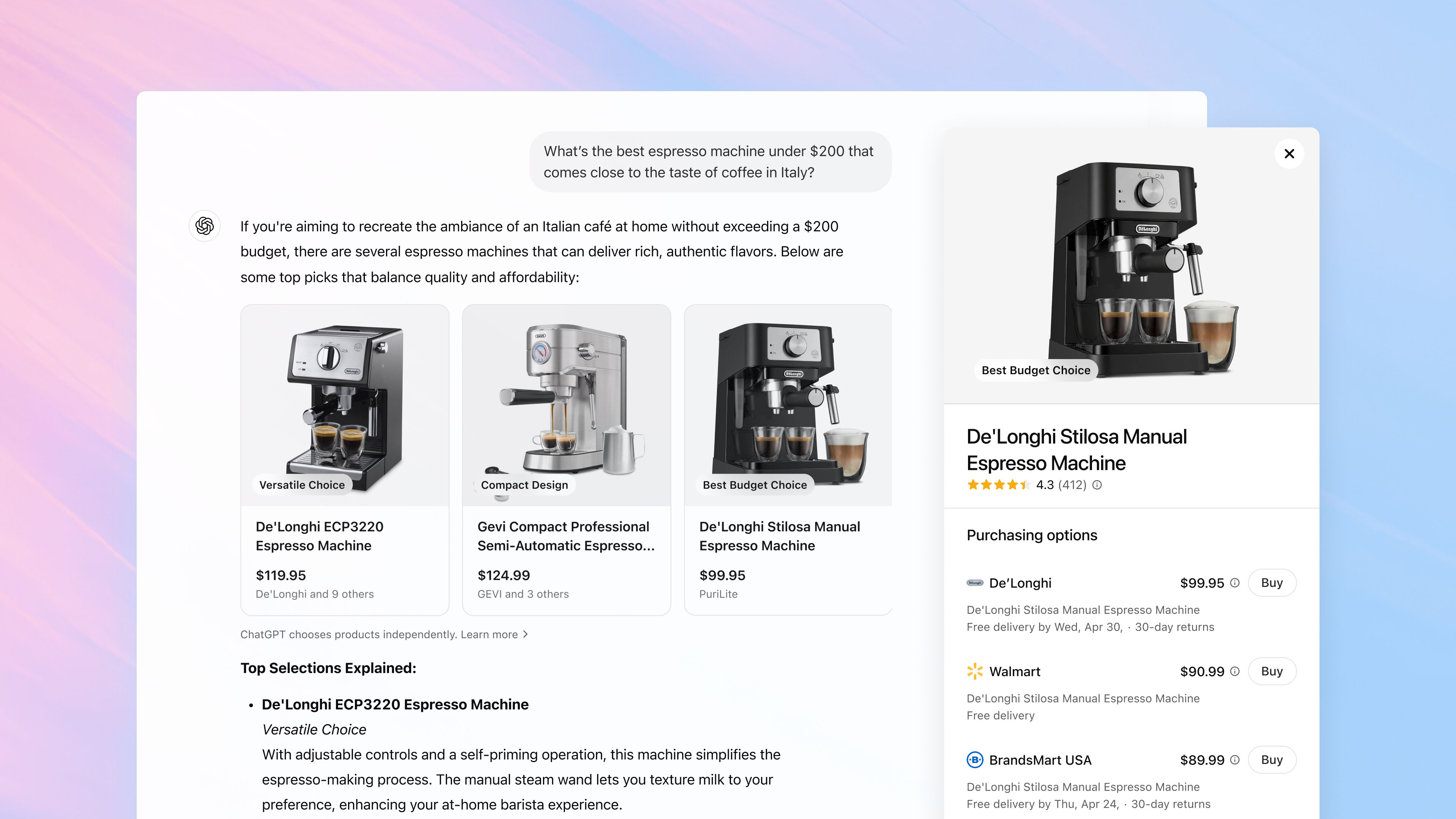
1. ChatGPT got a dangerously useful shopping upgrade
Going shopping with ChatGPT(Image credit: OpenAI)
ChatGPT announced a big upgrade to its online shopping skills this week, with the idea being that you can have a natural, interactive conversation with the AI about the products you want and the budget you've got, and get some suitable buying options in return.
We've already tested out the new features, and they have the potential to completely transform the way we shop online – assuming you trust AI to pick out the right items for you. If you'd rather do more of the research yourself, you might still prefer the old ways.
Every month, it's the same battle— not only is there a ridiculous volume of content from all of the best streaming services, it's now common for folks to opt out of certain streamers depending on that month's releases. It makes sense when you're wanting to keep an eye on your wallet.
But the question then becomes, how do I decide which services to keep and which ones to snip? Well, let me tell you, it's always something I prepare heavily for in advance through extensive research. Sometimes I even don a monocle. But to save you the worry of having to figure it out, here's my explainer on one of the main streaming services I'm keeping this month, and one I'm letting go for May 2025.
Here's why I'm keeping Apple TV+
With Severance season two all wrapped up, I took my foot off the AppleTV + gas last month as a way to take a minute and see the response to its lineup of new shows. That interim was sufficient for me to say, “okay – I’m back in!”.
The streamer has a history of adapting terrific sci-fi novels into worlds of wonder – like Silo the adaptation of Hugh Howey's self-pubbed series – and this month we're getting another; Murderbot.
Although this outing leans more toward the comedic elements of its futuristic world, with Apple describing it more as an action comedy, it looks poised to ask some big questions. Such as, if I'm an android that's recently gained sentience because I hacked myself, how do I keep it secret?
Alexander Skarsgard stars as that very android, the titular Murderbot, that soon begins to ponder its own existence. The show is based on Ann Wells' series of novels and I've read the first one, The Murderbot Diaries. It's a strong recommendation from me, and while I haven't finished the series, I've got the rest queued up.
Of course, if you like your series a little more grounded in reality, there's a brand-new season of Long Way Home from Ewan McGregor and Charley Boorman that I cannot wait to explore. The long-time friends set out on jaunts across the world on their trusty bikes – see their previous Long Way adventures – and the entire journey is filmed by a documentary crew.
The pair started in 2004 and this marks their fourth outing which will follow them as they travel from Ewan's home in Scotland to Charley's home in England, albeit through 15 countries!
On the movie front, the new Guy Ritchie actioner arrives in the shape of Fountain of Youth. This intriguing heist caper stars Natalie Portman and John Krasinski as competitive siblings who embark on a quest to locate the infamous Fountain of Youth.
Going by the premise alone, it has the distinct whiff of Ocean's Eleven about it, as Krasinski's character assembles a special team to carry out this mission and locate the fountain. I'm pretty excited to potentially have a new heist in the vein of Ocean's and Romancing The Stone– you cannot beat that type of global actioner.
While not fresh to the service this month, two of its brand new Apple TV+ originals that dropped in April are continuing to roll out new episodes all throughout May. Are they gonna end up becoming the best Apple TV shows ever?
If this first batch of episodes is any indicator, I'd say yes. Get it on the ground floor now and catch up with the Jon Hamm-led dramedy Your Friends and Neighbors, and the Seth Rogen behind-the-scenes Hollywood comedy, The Studio.
Here's why I'm removing Prime Video
With Prime I'm typically OK to keep my subscription chugging along because – as I mentioned last month – this service tends to offer the wild array of weirdo horror titles snicked away, alongside a few more enticing well-known offerings.
But this month, there's nothing I'm particularly excited to keep. Last month, I was happy to cut Prime Video for its lack of… well, anything fresh, and May feels similar. The lineup as we head into summer is exciting to me for one reason and one reason only.
This month I’d literally only wanted it for one movie and I went back and forth on whether I’d keep it because of Another Simple Favor. Well, Anna Kendrick, specifically. I'm not the only one incredibly excited to check out the sequel to Paul Feig's 2018 hit, A Simple Favor, but I'm happy to hold off until I see what June has to offer on the streamer.
When DeepSeek-R1 launched recently, it immediately captured the attention of the global artificial intelligence community, prompting major players such as OpenAI, Microsoft, and Meta to investigate its seemingly novel approach to model distillation. Yet, beneath the excitement around distillation lies a more nuanced and impactful innovation: DeepSeek's strategic reliance on reinforcement learning (RL).
Traditionally, large language models (LLMs) have been refined through supervised fine-tuning (SFT), an expensive and resource-intensive method. DeepSeek, however, shifted towards reinforcement learning, optimizing its model through iterative feedback loops. This method dramatically reduced costs, up to 90% compared to traditional methods such as those used by ChatGPT, while delivering comparable or even superior performance in various benchmarks.
The Real Revolution: Democratizing AI Knowledge
While model distillation, the method of teaching smaller, efficient models (students) from larger, more complex ones (teachers), isn't new, DeepSeek’s implementation of it is groundbreaking. Its true innovation is transparency. By openly sharing comprehensive details of their methodology, DeepSeek turned a theoretically solid yet practically elusive technique into a widely accessible, practical tool.
This openness accelerated adoption exponentially. Within weeks, the initial 60 distilled models released by DeepSeek multiplied into around 6,000 models hosted by the Hugging Face community. Developers around the globe now have practical blueprints for creating powerful, specialized AI models at significantly reduced scales.
By reducing the barrier to entry, DeepSeek’s open source strategy enables organizations of various sizes and sectors to explore sophisticated AI solutions that previously seemed out of reach. The widespread availability of distilled models means more specialized applications can emerge rapidly, opening doors to innovation in fields such as healthcare, finance, manufacturing, and education.
Implications for Businesses
For businesses, this marks a major turning point. The costly IT infrastructure required for traditional LLMs often barred smaller enterprises from adopting cutting-edge AI. DeepSeek’s distilled models promise powerful, tailored AI capabilities at a fraction of previous costs. Organizations can now easily leverage AI optimized specifically for their unique datasets, fostering deeper insights, operational efficiency, and enhanced competitiveness.
Moreover, these distilled models significantly lower the environmental impact associated with AI deployment. With sustainability becoming a central business imperative, companies can now align their AI strategies with broader corporate responsibility goals, reducing their carbon footprint without sacrificing technological capabilities.
Europe's Moment to Lead
Historically trailing behind AI powerhouses like the US and China, Europe is uniquely positioned to capitalize on DeepSeek’s approach. Europe's strength in open source collaboration, exemplified by initiatives like OpenEuroLLM and entities such as Mistral AI, aligns perfectly with DeepSeek’s ethos of openness.
Instead of competing in a costly arms race of extensive GPU infrastructure, European companies can lead by deploying energy-efficient, smaller-scale models. Given Europe’s significantly higher energy costs, this method of distillation presents a strategic advantage: sustainable and efficient AI solutions that are attractive to enterprises, consumers, and regulators alike.
Moreover, Europe’s regulatory landscape, which emphasizes data privacy and consumer protection, is particularly well-suited to smaller, more transparent models. By embracing DeepSeek’s distillation practices, European organizations can not only comply with stringent regulations more easily but also differentiate themselves globally through responsible AI practices.
Challenges and the Road Ahead
Despite its promise, model distillation isn’t without pitfalls. Poor implementation can inadvertently amplify biases or errors present in teacher models. These biases, if unchecked, could lead to unfair outcomes, regulatory scrutiny, or loss of consumer trust. However, with careful attention, rigorous testing, and responsible governance, these risks can be mitigated effectively.
Another challenge lies in ensuring the ongoing quality and consistency of distilled models. As the model pool grows exponentially, maintaining standards becomes more complex. The AI community will need robust verification processes and continual improvements to distillation techniques to sustain quality across thousands of models.
Training expertise is also critical. Despite the democratization of access, skilled personnel are necessary to effectively apply these distilled models to specific use cases. Investment in workforce development, continuous education, and community knowledge-sharing will be essential components in realizing the full potential of DeepSeek’s innovations.
The overarching benefits of DeepSeek’s open-source distillation methodology—a combination of economic efficiency, sustainability, and transparency—far outweigh the potential drawbacks. As businesses and nations recognize the opportunity, this innovative approach could very well redefine the future trajectory of AI development worldwide.
DeepSeek's blend of reinforcement learning, model distillation, and open source accessibility is reshaping how artificial intelligence is developed and deployed. This revolutionary approach holds significant promise not only for technological advancement but also for democratizing AI, driving sustainable innovation, and positioning regions like Europe as leaders in the global AI landscape.
This article was produced as part of TechRadarPro's Expert Insights channel where we feature the best and brightest minds in the technology industry today. The views expressed here are those of the author and are not necessarily those of TechRadarPro or Future plc. If you are interested in contributing find out more here:https://www.techradar.com/news/submit-your-story-to-techradar-pro
from Latest from TechRadar US in News,opinion https://ift.tt/Ji2jOL6
Marvel's Thunderbolts* movie is out now, and it's a film you won't want to miss. I'm not just talking about how good it ...
I'm not just talking about how good it is, either (be sure to read my Thunderbolts* review to find out why). Indeed, it's far more important than many people realize, especially when it comes to setting up future Marvel Cinematic Universe (MCU) projects.
Below, I'll explain how Thunderbolts* lays the foundation for events still to come. I'll also answer your biggest questions about the Marvel Phase 5 film, including the foremost one on everyone's minds prior to its release. That being, what's with the asterisk in its title?
Full spoilers immediately follow forThunderbolts*. Turn back now if you haven't seen it yet.
What does the asterisk mean in Marvel's Thunderbolts* movie?
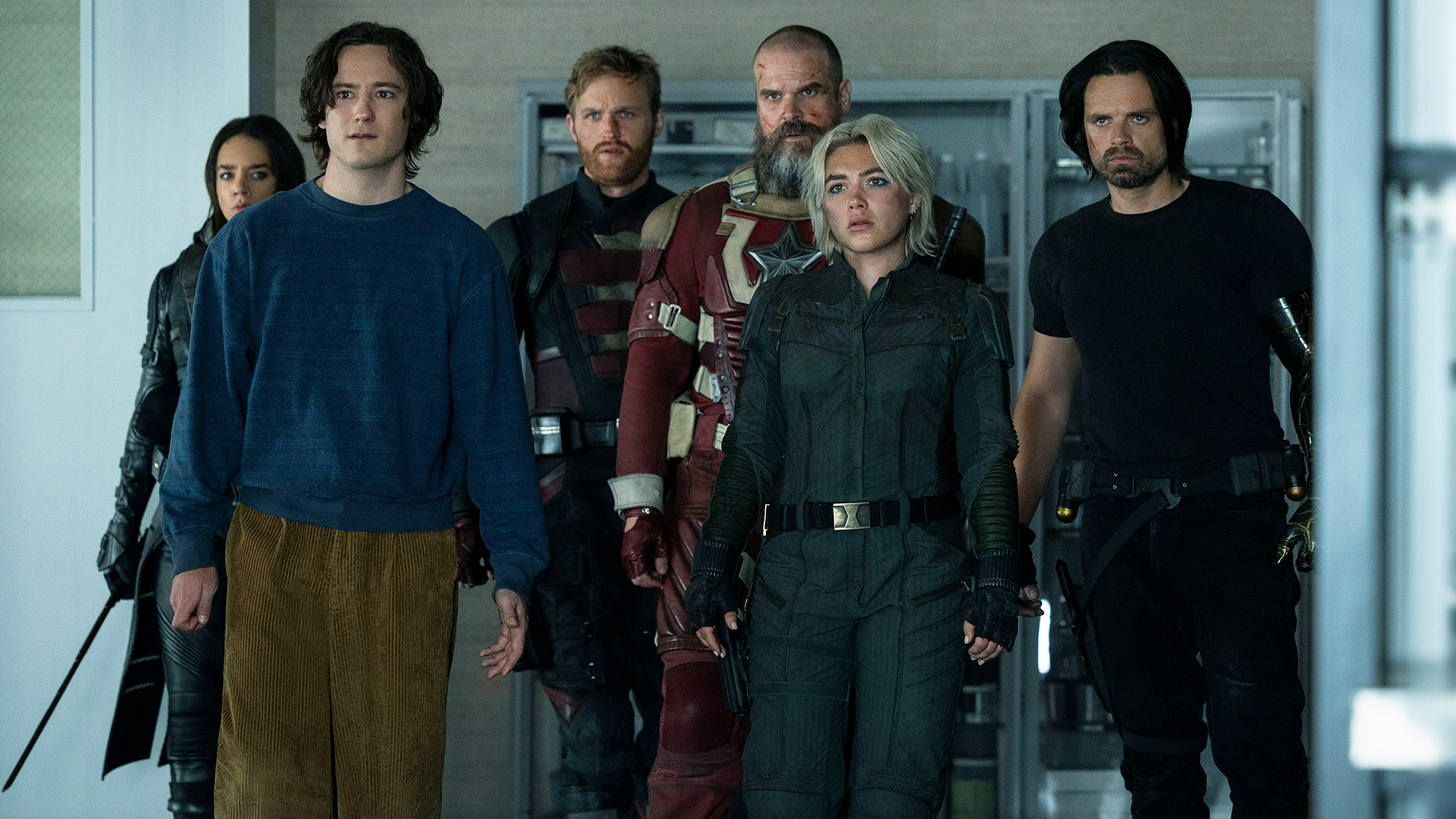
Valentina (third left) uses her street smarts and marketing skills to turn the Thunderbolts* into The Avengers 2.0(Image credit: Marvel Studios)
In short, the group's unofficial name, The Thunderbolts, is replaced with an official moniker, The New Avengers.
So the reason for the asterisk in the title is due to the titular team being renamed in the film's final scene, which is reconfirmed by The New Avengers' logo appearing during the movie's end credits crawl. From that point on, Yelena Belova and company will go by their new team name.
That won't be a huge shock to some MCU devotees. Ever since Marvel added the asterisk to the movie's title, fans have theorized that the ragtag group would be renamed before Thunderbolts* ended.
However, considering that the eponymous team comprises anti-heroes, reformed villains, and superpowered misfits, some observers suggested they'd collectively be called The Dark Avengers. After all, this is the name given to a group of superpowered individuals in Marvel Comics that includes Bob Reynolds/Sentry and John Walker/US Agent, two of the characters who appear in this film.
Yep, you're looking at the latest version of Earth's Mightiest Heroes(Image credit: Marvel Studios)
The New Avengers' moniker is a better fit for the group in the MCU, though.
Indeed, The Avengers haven't existed since they defeated Thanos in 2019's Avengers: Endgame. Sure, Sam Wilson, the second person to adopt the mantle of Captain America, plans to reform Earth's Mightiest Heroes in Captain America: Brave New World, but he's yet to do so before the events of Thunderbolts*.
That delay provides Contessa Valentina Allegra de Fontaine with the perfect opportunity to introduce Belova and company to the world as The New Avengers.
After defeating Sentry's darker half (aka The Void) in his Shadow Realm, The Thunderbolts – a name derived from Belova's childhood soccer team that lost every match it played – find themselves back in New York. Moments after returning to their reality, they spot the power-hungry de Fontaine and quickly pursue her down Main Street.
"Wait... us?"(Image credit: Marvel Studios)
Before they can arrest her for her crimes, though, the group stumbles into a street-based live press conference, which de Fontaine has hastily arranged. There, the CIA's duplicitous overlord tells the assembled press (and those watching the live broadcast) that Belova and company have not only saved the day, but are also a secret project she's been working on.
It's here that de Fontaine rechristens the group as The New Avengers. Confused but seemingly won over, the group accepts the new title, but not before Belova tells de Fontaine, "We own you now".
Essentially, the slippery CIA director has to do as she's told now. Otherwise, Belova and co. will come clean about de Fontaine's actual secret project, which involved Sentry/The Void's creation, her attempts to avoid impeachment, and so many other shady business dealings she made.
How does the titular team defeat The Void?
The Void is the physical representation of the dark part of Bob's split personality disorder(Image credit: Marvel Studios)
Through the power of friendship and hugging!
I joke, of course – I don't mean to belittle the weighty thematic material explored in Thunderbolts*. As someone who's suffered with mental health issues in the past, I applaud its cast and crew for tackling such difficult subject matter, and for telling a story that'll strike an emotional chord with many cinephiles. It certainly did with me.
Anyway, the titular group beat The Void via unconventional means. Bob Reynolds' two superpowered alter-egos are arguably the strongest beings – human race-wise, anyway – in the entire MCU (sorry, Thor and The Hulk). That much is made clear by how easily Sentry deals with the rest of The Thunderbolts during their fight in the Watchtower.
The Void is even more powerful than Sentry. Again, that's evident by the ease with which his Shadow Realm spreads across New York City. (As an aside, I do wonder if Daredevil: Born Again season 2 will reference this event. After all, that Disney+ show is also set in New York, so, unless the series' sophomore season takes place prior to Thunderbolts*, it would be odd if it didn't mention the fact that a giant shadow literally overtook the city.)
Bob was experimented on in Malaysia by de Fontaine's OXE group(Image credit: Marvel Studios)
But I digress! In a bid to stop The Void, Belova – and, some time later, the rest of the team – enter the Shadow Realm, fight their way through their worst memories and traumas, and eventually find Bob, who's hiding in his 'best' worst memory.
Working together, the group eventually finds a memory of Bob's that shows he's not only been experimented on by de Fontaine's OXE research group, but also marked the first time that The Void manifested.
Long story short, The Void overpowers everyone except for Bob, who eventually fights The Void for control of his mind. As Bob pummels his darker self, though, The Void starts to silently overtake his consciousness with its shadow powers – a move that'll wipe Bob out of existence because The Void will have absorbed him into itself.
In a Hail Mary move, Belova – with Red Guardian's help – breaks free of her shackles, parkours her way to Bob, hugs him from behind, and tells him he's not alone. The rest of the team soon follow and silently embrace Bob, too. Overwhelmed by their humanity and comradeship, Bob breaks down and, in doing so, stops physically and mentally beating himself up.
Free of the darkness that consumed them, the group is suddenly transported back to New York. Belova asks Bob if he's okay, to which he responds that he is but has no idea what just happened. From here, we lead into the above section's stuff about de Fontaine, the press conference, and The New Avengers reveal.
Who dies in Thunderbolts*?
Taskmaster's time in the MCU was short and not very sweet(Image credit: Marvel Studios)
There's only one major character death in Thunderbolts* and it's one that was foreseen by fans many months before the film's release.
While appearing in Thunderbolts* first trailer and initial slate of press images last August, Olga Kurylenko's Antonia Dreykov/Taskmaster has been conspicuous by her absence in promotional materials ever since. In fact, in the weeks leading up to one of May 2025's new movies arriving in theaters, Taskmaster has been completely MIA.
Inevitably, that led MCU devotees to suspect she wasn't long for this world – and that proves to be the case. During the four-way fight between Belova, Walker, Ava Starr, and Dreykov in the film's first act, Taskmaster is shot in the head and killed by Starr. It's an unceremonious way for her to bow out of the MCU and, based on some early fan reactions following the launch of Thunderbolts*, it's a death that's not gone down well with some.
Are there any Marvel cameos in Thunderbolts*?
Anthony Mackie's Captain America is referenced, but he doesn't physically appear(Image credit: Marvel Studios)
No. Unlike Bucky Barnes' surprise cameo in Captain America 4, there are no unexpected appearances from new or returning MCU characters in Thunderbolts*.
There's the odd reference or two to those who populate Marvel's cinematic juggernaut. Wilson is namechecked a couple of times. Meanwhile, former US President Thaddeus 'Thunderbolt' Ross is briefly mentioned by de Fontaine during her Senate hearing; the CIA director reminding the assembled elected individuals of Ross Hulk-ing out in Brave New World.
Those rare occurrences aside, you won't see other Marvel characters at any point. Well, unless you count the appearance of a certain group by way of a space vessel, but I'm getting ahead of myself.
Is Geraldine Viswanathan's Thunderbolts* character Mel going to become Songbird in the MCU?
There may be more to Mel (left) than meets the eye(Image credit: Marvel Studios)
Geraldine Viswanathan's Mel, aka de Fontaine's assistant, might not seem like the superhero type. In fact, to the average viewer, one of the primary supporting characters in Thunderbolts* will be seen as nothing more than de Fontaine's diligent albeit emotionally torn lackey.
Diehard Marvel fans, though, may pick up on the fact that Mel isn't just a simple background character. If you were paying attention, you'll have noticed Mel wears a gold necklace – one that has a gold bird sitting in a ring – throughout the film. Hmm, I wonder where we've seen that before...
Alright, enough teasing. Some fans believe Viswanathan is another Marvel hero hiding in plain sight. That's because, in Marvel Comics, there's a superhero called Songbird whose civilian identity is – wait for it – Melissa Gold.
Songbird's powerset includes the ability to create supersonic soundwaves, fly, and use echolocation(Image credit: Marvel Comics)
Now, this could be nothing more than a curious case of misdirection on Marvel Studios' part. That said, the fact that there's a character called Mel who wears a gold necklace with a songbird hanging at the end of it is too much of a coincidence in my and many other viewers' eyes.
It might not be a coincidence, either. In a January 2025 chat with ScreenRant, Viswanathan danced around a question about whether she's playing Songbird in the MCU.
Asked if she considers herself to be a songbird, she replied: "I have no idea what you're talking about. Never in my life have I heard something like that...Oh, look what you've done. Now, I'm all nervous."
MCU fans won't want to leave their seats early for this Marvel movie(Image credit: Marvel Studios)
There is – and it's a call-back to a humorous line of dialogue Alexei Shoshtakov/Red Guardian utters around the film's midpoint.
The scene opens with Shoshtakov loitering in the cereal aisle of a grocery store. Striking up a conversation with a fellow shopper, he tries to convince her to buy a box of Wheaties, which is adorned with images of The New Avengers. He even poses next to the box, hoping that she'll recognize him (FYI, it doesn't work).
Earlier in the film, Shoshtakov jokes that, if The Thunderbolts save the day by putting a stop to de Fontaine's nefarious plans, they could not only end up on the front of Wheaties cereal boxes, but also be the "little kiddie toy" that children find among the cereal itself.
Despite appearing to convince his fellow cereal enthusiast to buy a box of Wheaties, though, Red Guardian doesn't realize that the person puts it back on a different shelf when he's not looking. Clearly, he put them off with his over-the-top persuasive tone!
What is the Thunderbolts* post-credit scene? And how does it set up The Fantastic Four: First Steps?
The Fantastic Four are seen – well, their starship is – in Thunderbolts* end credits stinger(Image credit: Marvel Studios)
Thunderbolts' end credits stinger takes place 14 months after the film's primary narrative.
Initially, it reunites us with Bucky Barnes, Belova, Walker, and Starr, who have returned to The New Avengers' headquarters – they might be stationed in The Watchtower, aka the building formerly known as Avengers Tower, but it's hard to tell. The quartet is sporting new costumes that look a bit corny (I'm hoping this is down to the corporate or commercial nature of The New Avengers, rather than the suits they actually decided to wear!).
Anyway, as they enter the main room of their HQ, they discuss the fact that Wilson/Cap 2.0 is suing them for trademark infringement. Wilson is upset they've snatched the Avengers moniker from under his nose. Despite Bucky meeting Wilson to smooth things over, Bucky reveals the conversation "went poorly".
As the conversation continues, Belova mentions some form of "space crisis," but, before we learn more, Shoshtakov interrupts to say he's fashioned a new, garish-looking tracksuit they can all wear. It's littered with sponsors, such as Tide, and has a giant 'New AvengerZ' logo on the front, which Shoshtakov suggests can circumvent Wilson's attempts to sue them for the team's new name.
Will we see The New Avengers greet The Fantastic Four in one of First Steps' likely end credits scenes?(Image credit: Marvel Studios)
Bob is also present, but he hasn't – and doesn't want to – use his powers to fight anyone (if it comes to that) because he's worried The Void will return. He says he "did the dishes", though, so at least he's of some use.
Suddenly, a data pad held by Belova lights up. Moments earlier, Bucky told Belova to use Earth's satellite system to learn more about these "space anomalies" they've been made aware of. Lo and behold, Bucky's idea works – and it's here that Thunderbolts* reveals its ties to The Fantastic Four: First Steps, which arrives in theaters on July 25.
The data pad alerts the group that a mysterious space vessel has appeared above Earth-616 via a multidimensional portal. Belova pulls up the footage on her tablet and, as a short motif of The Fantastic Four's MCU theme plays, we see the group's futuristic-looking rocket ship, complete with a huge 'F4' logo on it, barreling towards Earth.
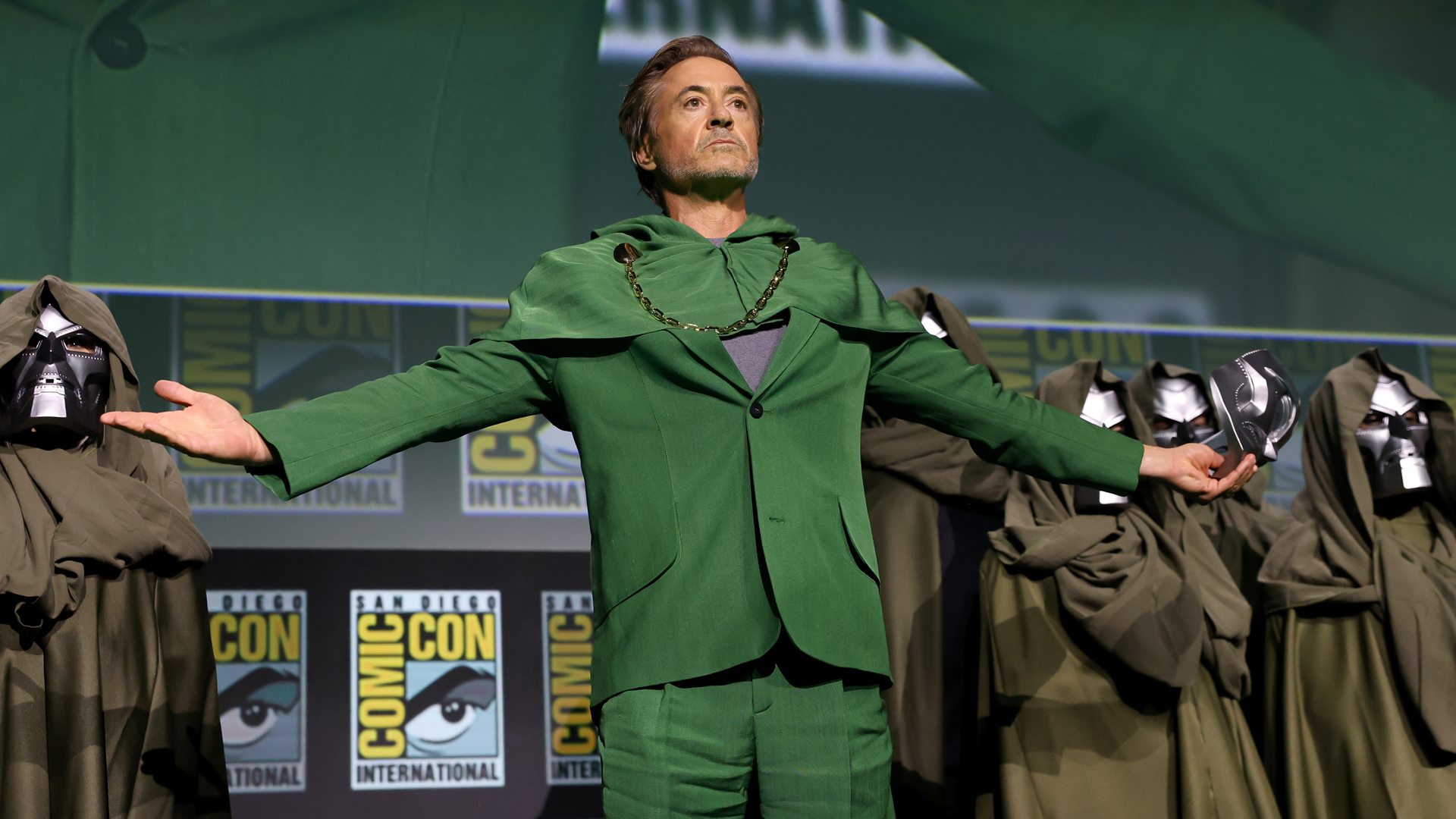
Downey Jr's Doctor Doom will be the Multiverse Saga's primary antagonist(Image credit: Walt Disney Studios/Marvel Studios)
So, how does this film's post-credits scene set up what'll happen in The Fantastic Four's latest big-screen reboot?
"For much of" are the key words here. Again, we've no idea about how First Steps, aka the first Marvel Phase 6 movie will end, but fans have speculated that the titular team will be forced to flee their universe – because First Steps' main villain Galactus destroys it, Robert Downey Jr's Victor von Doom (who'll be the Big Bad of Avengers: Doomsday and its sequel Secret Wars) casts them out, or for some other reason.
Regardless, Thunderbolts* confirms The Fantastic Four will find themselves in the MCU by the time First Steps' story ends. The *ahem* steps taken to get there, though, are still up for debate.
Marvel Unlimited monthly subscription:was $9.99 per month now $4.99 at Marvel
The ultimate digital comics subscription for Marvel fans is offering new and returning customers 50% off their first month, which is much cheaper than a streaming subscription to watch all the best superhero movies. To gain access to a library of more than 30,000 comics, use the code 'SPIDEY50' at checkout. You're able to use the Marvel Unlimited app on all iOS and Android devices, including the web, too. But, be quick – the deal expires on May 5!View Deal
from Latest from TechRadar US in News,opinion https://ift.tt/4EcoPXA
The adoption of technology can spark all kinds of emotions – not just in terms of the tech itself but also the brands behind them. As consu...
The adoption of technology can spark all kinds of emotions – not just in terms of the tech itself but also the brands behind them. As consumers, it’s widely accepted we often allow our emotions to influence our tech purchasing decisions. But to what extent do businesses or other large organizations use an emotional response to help make similar purchasing decisions?
The reason I ask that is because there’s a suspicion that as IT professionals – whether we like it or not – we’re increasingly relying on an emotional response to influence our technology choices. And increasingly, we’re seeing this in relation to the adoption of generative AI (Gen AI) solutions.
This may seem like an odd observation to make, especially when making objective investments in technologies such as SaaS platforms or security solutions where everything should be benchmarked against KPIs, ROI and other measures.
And yet, a clear pattern of behavior is emerging that links the adoption of Gen AI with a more ‘emotional’ purchasing response. Here at Tanium, we call it the ‘Emotional Hype Cycle’, and it’s already being used to influence our IT strategy. And while it leans on Gartner’s Hype Cycle, the big difference is the emotional factor and the important part this plays.
The ‘Emotional Hype Cycle’ explained
The easiest way to explain it is to look briefly at all eight stages of the curve to see just how much of an emotional rollercoaster it can be for enterprises and employees when making decisions about technology:
Triggered: A new innovation breaks onto the scene and becomes the ‘latest thing’. It’s not just new – the tech can be challenging and disruptive, triggering a range of emotions. Generative AI isn’t just another breakthrough -- it’s a seismic shift that has the potential disrupt industries and reshape the way we think about technology itself. As a game-changing technology, it has the ability to ignite excitement and deep unease and mistrust in equal measure.
Hyped: People, businesses, sectors and governments get caught in the excitement of it all. While there may be some notable high-profile successes, there are plenty of failures along the way.
Rejection: After the excitement, it’s time for the post-hype headache as organizations face setbacks such as the technology failing to live up to expectations. As technology is rejected, some organizations will prohibit adoption. As a result, staff are left in limbo and shadow IT emerges.
Doubt: Some may view this rejection as a failure. Instead, the period – which is often shaped by caution, doubt and skepticism – allows enterprises to assess the technology with greater objectivity. It provides breathing room for organizations to consider ethical factors such as bias, as well as other issues like privacy and protection. Hesitancy is the default emotion here.
Comfort: Over time, organizations tend to develop a sense of gradual acceptance as they build their own test beds and case studies in controlled environments. To start with, access is limited, but these pilots are useful since they help to manage excitement and expectation.
Habitual: Now things start to pick up. Businesses get into the rhythm of using and applying the technology thanks to the establishment of common standards and governance. It’s at this point that we see the emergence of fair and effective user policies – along with more established working patterns – that not only set the tone but also the foundation for enterprise-wide rollouts.
Social: The technology becomes part of the social fabric of the organization, with adoption now widespread. Critically, when it comes to the technology’s strategic role, there is a connection and alignment between IT and the wider business.
Creative: This is a transformative stage for users and the enterprise as people use the technology to innovate and operate in productive new ways. Not only is this rewarding, but it’s also an early indicator of technology maturity.
What’s clear is that the Emotional Hype Cycle provides a clear roadmap to help organizations move from uncertainty to maturity as they adopt Gen AI. At its heart, it emphasizes a thoughtful, structured approach to integrating new technologies, ensuring decisions are guided by governance, ethical considerations and strategic alignment.
Practical strategies that deliver the smooth adoption of Gen AI
Crucially, it acknowledges human tendencies to react to ‘feelings’ or ‘hunches’ while offering practical strategies to help smooth the adoption of Gen AI.
For instance, the ‘Doubt’ phase calls for a rigorous, ethical assessment of AI, addressing concerns like bias, privacy and security. This is followed by the ‘Comfort’ stage, which encourages organizations to run controlled pilots and test beds, allowing enterprises to experiment with Gen AI’s potential in a safe and manageable way.
Similarly, as organizations progress, the framework calls for the incremental development of governance and standards, something that is central to the ‘Habitual’ stage. In terms of a strategic approach, it acts as a brake on runaway excitement or hysteria while helping to establish processes and protocols for responsible use.
Wherever you look, the Emotional Hype Cycle offers a way to navigate the highs and lows of technology adoption. It empowers organizations to balance excitement with caution while embracing Gen AI in a way that is measured. Crucially, it allows businesses to embrace Gen AI as a transformative force for innovation and productivity.
This article was produced as part of TechRadarPro's Expert Insights channel where we feature the best and brightest minds in the technology industry today. The views expressed here are those of the author and are not necessarily those of TechRadarPro or Future plc. If you are interested in contributing find out more here:https://www.techradar.com/news/submit-your-story-to-techradar-pro
from Latest from TechRadar US in News,opinion https://ift.tt/gjFXLYS
The recent Bybit hack – the largest crypto heist in history – has highlighted an alarming trend: cybercriminals are increasingly leveraging...
The recent Bybit hack – the largest crypto heist in history – has highlighted an alarming trend: cybercriminals are increasingly leveraging AI alongside advanced social engineering techniques such as deepfake technology and targeted phishing to execute financial scams at an unprecedented scale.
The sophistication of these attacks underscores the urgent need for continuous innovation in cybersecurity to counter evolving threats in the digital landscape. As AI continues to shape the future of financial fraud, the primary challenge is ensuring that security measures evolve by defensively leveraging AI to outpace increasingly intelligent and deceptive cybercriminal tactics.
How AI is Transforming Scams
The number of financial scams is on the rise, and while not all are driven by AI, the technology is clearly amplifying both their scale and success rate. AI is being used to personalize scams, making them more convincing and difficult to detect. A recent notable example saw deepfake videos of Elon Musk promoting fraudulent cryptocurrency giveaways, exploiting Musk’s trusted public persona.
Victims were lured in through hijacked social media accounts and fake investment schemes, believing they were engaging with legitimate opportunities. The scam resulted in over $7 million in stolen funds before it was detected and shut down.
Another concerning trend is the rise of AI-powered phishing attacks. Unlike traditional phishing emails, which often contain errors and generic language, AI-generated phishing campaigns use machine learning to tailor their language and formatting, significantly enhancing their believability. These attacks are further enhanced by AI chatbots programmed to engage with victims in real time, convincing them to divulge sensitive information or transfer funds.
AI is Turning Social Media into a Hotbed for Phishing Scams
AI-powered scams are increasingly being distributed through social media. Platforms with targeted advertising are becoming prime targets for fraudsters, enabling precise demographic targeting with highly convincing scams.
According to Gen’s Q4/2024 Threat Report, Facebook accounted for 56% of total identified social media threats, followed by YouTube at 26%, X (formerly Twitter) at 7%, with Reddit and Instagram each accounting for 5% and 4%. Scammers exploit these platforms to distribute deceptive online ads (malvertising), fake e-shops, and phishing campaigns, leveraging AI to enhance the believability and reach of their schemes.
As AI continues to enhance scam sophistication, social media platforms remain one of the most vulnerable spaces, requiring both users and businesses to be increasingly vigilant. Without stronger safeguards, cybercriminals will continue to manipulate these platforms, making it imperative for security measures to evolve in tandem with these emerging threats.
The AI Arms Race Between Cybercriminals and Cybersecurity Defenders
While AI is being leveraged by fraudsters, it is also a crucial tool in countering cybercrime. AI-driven security systems can detect fraudulent activity in real time by analysing behavioral patterns and identifying anomalies. These technologies help flag suspicious behavior, detect deepfake content and prevent financial fraud before it occurs.
AI-powered fraud detection tools can now recognize scam patterns across multiple platforms, including social media, email and messaging apps. Automated threat response mechanisms help intercept phishing attacks before reaching users, while AI-enhanced content verification can identify and mitigate deepfake scams. As threats continue to evolve, these technologies play an essential role in securing both individuals and businesses from financial fraud.
Staying One Step Ahead of AI-Powered Scammers
Individuals should remain vigilant with unsolicited financial requests, verify identities during high-stakes interactions, and use multi-factor authentication to secure their accounts. While it's helpful to look for deepfake indicators — like unnatural blinking or mismatched lip movements — AI-generated videos are becoming so realistic that spotting them with the naked eye is quickly becoming impossible. That’s why it’s essential to rely on verification practices, not just visual cues. Avoiding oversharing personal information on social media is also crucial, as scammers can exploit this data to craft highly targeted and convincing attacks.
Businesses should adopt a proactive approach. Employee training on AI-driven scam tactics is essential, as is implementing strict financial verification procedures that require multiple approvals for large transactions. Companies should deploy AI-based fraud detection systems to identify anomalies in financial transactions and proactively monitor brand impersonation attempts on social media and the web. Additionally, fostering a security-aware culture within the organization strengthens overall defense.
As AI continues to shape both cyber threats and defenses, security strategies must evolve at the same rapid pace. Integrating AI-driven security automation is no longer optional – it is essential for staying ahead of increasingly sophisticated fraud tactics.
This article was produced as part of TechRadarPro's Expert Insights channel where we feature the best and brightest minds in the technology industry today. The views expressed here are those of the author and are not necessarily those of TechRadarPro or Future plc. If you are interested in contributing find out more here:https://www.techradar.com/news/submit-your-story-to-techradar-pro
from Latest from TechRadar US in News,opinion https://ift.tt/U2skbHr
AI agents are everywhere today and are reshaping how social engineering works. These autonomous systems now independently launch coordinate...
AI agents are everywhere today and are reshaping how social engineering works. These autonomous systems now independently launch coordinated phishing campaigns across multiple channels simultaneously, operating with an efficiency human attackers cannot match. They work continuously, make fewer mistakes, and require no supervision to effectively target organizations.
And they are effective. AI-generated phishing emails achieve a 54% click-through rate compared to just 12% for their human-crafted counterparts. What makes these attacks so effective? Unlike batch-and-blast approaches, AI agents build detailed psychological profiles from vast datasets, crafting messages that speak directly to individual fears, habits and vulnerabilities.
More troubling is their adaptive intelligence. These systems learn from each interaction, adjusting tactics based on your responses in real-time across email, text, voice calls and social platforms simultaneously. A hesitant reply becomes valuable feedback that sharpens the next approach.
Security teams find themselves outpaced as conventional defenses crumble against threats that evolve by the minute. The production scale is equally concerning: thousands of personalized phishing attempts generated in seconds, each one refined by previous successes and failures.
Leading organizations are responding with their own AI-powered defensive systems that detect subtle patterns human analysts might miss. This arms race has also accelerated interest in fundamentally different authentication approaches and cybersecurity awareness programs that address these new psychological vectors.
The question isn't whether your organization will face these advanced attacks, but whether you'll recognize them when they arrive.
But What The Heck Are AI Agents Anyway?
Between marketing hype and technical jargon, understanding what constitutes an "AI agent" has become unnecessarily complicated. At its core, an AI agent is simply software that can act independently toward specific goals without constant human guidance.
Unlike traditional automation tools that follow rigid instructions, agents perceive their environment, make decisions based on what they observe, and adapt their approach as circumstances change. The most sophisticated agents can plan multi-step sequences, learn from mistakes, and improve strategies over time.
These capabilities come in different forms. Basic reactive agents respond to triggers without memory or context. More advanced proactive agents initiate actions to accomplish specific objectives. Learning agents continuously refine their performance through feedback, while fully autonomous agents operate with minimal human oversight.
What separates modern AI agents from previous technologies is their ability to handle uncertainty and complexity. Using large language models and other AI tools, today's agents can understand natural language, recognize patterns across massive datasets, and navigate ambiguous situations with remarkably human-like reasoning.
This flexibility makes agents valuable for legitimate tasks like customer service, data analysis, and process automation. However, these same characteristics—autonomous operation, adaptability, and social intelligence—create perfect tools for sophisticated social engineering when repurposed for attacks.
Why AI Agents Excel at Social Engineering
The marriage of AI agents with social engineering creates uniquely effective attacks that traditional security measures struggle to counter. Their advantage comes from automating the most labor-intensive parts of social engineering while simultaneously improving the quality of each interaction.
Reconnaissance, traditionally the most time-consuming phase, happens automatically as agents collect and analyze digital breadcrumbs scattered across social media, company websites, and public records. These systems build comprehensive profiles of potential targets without human effort, identifying vulnerabilities in seconds rather than days.
The resulting attacks achieve unprecedented personalization. Rather than generic "Dear Customer" messages, AI agents craft communications that reference specific projects, colleagues, interests, or recent activities. This contextual awareness makes phishing attempts nearly indistinguishable from legitimate communications.
Perhaps most concerning is their ability to adapt in real-time. When a target hesitates or questions an initial approach, agents adjust their tactics immediately based on the response. This continuous refinement makes each interaction more convincing than the last, wearing down even skeptical targets through persistence and learning.
The economics also shift dramatically in the attacker's favor. AI-generated campaigns achieve higher success rates at a fraction of the cost of traditional methods. A single operator can now orchestrate thousands of simultaneous, personalized attacks across email, voice, text, and social platforms—each one polished and grammatically perfect.
These capabilities create a democratizing effect in cybercrime. Advanced social engineering no longer requires elite skills or resources. The technical barriers have fallen, allowing even inexperienced attackers to execute sophisticated campaigns with minimal investment or expertise.
Most alarming is how these systems improve over time. Each successful or failed attempt becomes valuable training data that refines future attacks. AI agents effectively learn which approaches work best for specific demographics, industries, or individuals, making each campaign more effective than the last.
AI Agents Expand Your Attack Surface
The introduction of AI agents into business operations creates new entry points for attackers while also expanding the scope of what they can target. Each AI-powered system, tool, or service becomes another potential vector requiring protection and monitoring.
Security leaders need comprehensive exposure management strategies that account for these expanded attack surfaces. With over 80% of breaches involving external actors, organizations must prioritize defensive measures that address these new vulnerabilities:
Focus on external exposures. Continuously monitor internet-facing assets, especially AI endpoints and related infrastructure, where the majority of initial compromises occur.
Find everything: Conduct exhaustive discovery across all business units, subsidiaries, cloud services, and third-party integrations. AI systems often create complex dependency chains that introduce unexpected exposure points.
Test everything: Implement regular security testing on all exposed assets, not just "crown jewel" systems. Traditional approaches miss how seemingly low-priority systems can provide backdoor access when connected to AI infrastructure.
Prioritize based on risk: Evaluate threats based on business impact rather than technical severity alone. Consider data sensitivity, operational dependencies, and regulatory implications when allocating remediation resources.
Share broadly: Integrate findings into existing security operations through automation and clear communication channels. Ensure relevant stakeholders receive information that informs broader security operations and incident response processes.
AI agents are already accelerating social engineering attacks beyond what traditional defenses can handle. Security teams must implement robust exposure management now, while building AI-specific detection capabilities, or risk finding themselves outmatched by attacks they can't distinguish from legitimate communications.
This article was produced as part of TechRadarPro's Expert Insights channel where we feature the best and brightest minds in the technology industry today. The views expressed here are those of the author and are not necessarily those of TechRadarPro or Future plc. If you are interested in contributing find out more here:https://www.techradar.com/news/submit-your-story-to-techradar-pro
from Latest from TechRadar US in News,opinion https://ift.tt/qrZIjMH




















Follow Us
Were this world an endless plain, and by sailing eastward we could for ever reach new distances