Home Top Ad

Responsive Ads Here

Artificial intelligence (AI) isn’t something on the horizon. It’s already part of how people are getting work done. Recent research from H...

Artificial intelligence (AI) isn’t something on the horizon. It’s already part of how people are getting work done.

Recent research from HP and YouGov found that 72% of UK employees using AI tools say it saves them time every week. One in ten are saving more than five hours. Some are using it to reduce manual admin. Others say it helps them focus, collaborate more effectively, or feel more in control of their day.

But these gains aren’t coming from structured enterprise rollouts. In many cases, they’re the result of quiet experimentation - employees using what’s already at their fingertips, often without training or direction from IT.

At the same time, more than a quarter of UK businesses still report having no formal AI strategy. This creates a growing disconnect: employees are forging ahead on their own, while the organization risks falling behind. It’s not a technology gap; it’s a leadership one.

In my conversations with CIOs and IT leaders across the UK and wider Northwest Europe market, I hear a mix of urgency and uncertainty. Everyone agrees AI is critical to future competitiveness. But there are open questions around where to start, how to scale responsibly, and how to balance experimentation with governance.

That hesitation is understandable, especially in industries where risk and compliance frameworks are tight. But as more teams adopt AI organically, the absence of a centralized plan introduces its own risks - from data leakage to inconsistent performance and lost opportunities for enterprise-wide value.

A rare opportunity to re-architect from the ground up

The end of Windows 10 support in 2025 presents a strategic window. Many organizations are already reviewing their device strategies and digital estate planning. This moment, whether viewed as a compliance trigger or a chance to modernize, is an ideal time to align IT infrastructure decisions with longer-term goals around workplace tools and AI integration.

We’re seeing growing interest in AI-capable endpoint devices as part of that strategy. These systems offer local processing, reduced latency, and better data control-critical features for organizations managing hybrid environments or strict regulatory requirements. But while improved performance and privacy are important, the real benefit is this: AI becomes embedded, accessible, and usable without disrupting the way people already work.

I’ve spoken with IT leaders who are introducing AI incrementally through use cases that matter to employees: summarizing meetings, creating first drafts, reducing clicks. It doesn’t need to be complex to be effective, but it does need to be intentional.

From pilot mode to platform mindset

Too many organizations remain stuck in test-and-wait mode. A pilot project goes well, but momentum fizzles. There’s no clear business owner, no framework to expand, no metrics to track long-term impact. Here, AI remains confined to one team or workflow, useful but limited.

To unlock real value, businesses need to stop thinking in projects and start thinking in systems. That means moving AI out of isolated pockets and into the core of IT and business strategy. From what I’ve seen across sectors, this shift requires three mindset changes.

First, move from experimentation to prioritization. AI isn’t a side initiative anymore. It needs sponsorship, resourcing, and KPIs tied to outcomes the organization cares about - whether that’s productivity, cost savings, or faster decision-making.

Second, move from scattered adoption to secure design. Governance, data privacy, and accountability must be built in from the beginning. In regulated industries, this is non-negotiable. But even in more flexible sectors, employees need to know where AI fits and what the boundaries are.

Third, move from short-term rollout to long-term enablement. AI success isn’t about deployment alone. It’s about building trust, training users, and supporting adoption in ways that stick. That means investing in support infrastructure-not just software licenses.

Some of the most effective CIOs I’ve worked with are building cross-functional AI working groups that bring together IT, data, ops, HR, and business units. These teams aren’t just coordinating rollouts-they’re shaping roadmaps, reviewing risks, and evolving policies together. That kind of alignment isn’t flashy, but it’s what allows AI to move from tactical to transformative.

AI that works - for people and the business

Beyond the tech stack, there’s a broader benefit to consider. In the same HP and YouGov research, AI users reported lower stress, improved work-life balance, and greater satisfaction with their roles. When implemented well, AI doesn’t just make work faster, it makes it more manageable and more meaningful. That translates into retention, productivity, and culture shifts that directly affect the bottom line.

As IT leaders, we don’t just manage systems, we shape environments. Our job is to build the foundations that allow people to do their best work. And increasingly, that means designing ecosystems where AI can be adopted confidently, used securely, and evolved sustainably.

The momentum is already there. Employees are experimenting. The tools are ready. The opportunity now is to implement structure and take those individual wins and build a strategy that turns them into lasting, measurable impact.

We list the best employee management software and the best employee experience tool.

This article was produced as part of TechRadarPro's Expert Insights channel where we feature the best and brightest minds in the technology industry today. The views expressed here are those of the author and are not necessarily those of TechRadarPro or Future plc. If you are interested in contributing find out more here: https://www.techradar.com/news/submit-your-story-to-techradar-pro


from Latest from TechRadar US in News,opinion https://ift.tt/3R5QHqn

The European Accessibility Act (EAA) took effect on June 28, 2025, introducing new legal requirements for digital accessibility across the ...

The European Accessibility Act (EAA) took effect on June 28, 2025, introducing new legal requirements for digital accessibility across the European Union (EU).

A 2024 WebAIM study found that 97% of the world’s leading websites do not currently meet compliance standards. The EAA applies to companies providing digital products and services in the EU, regardless of where they are based. This means businesses in the US, Asia and elsewhere will also need to ensure compliance.

Many companies are unprepared because accessibility is not seen as a priority. According to a recent Storyblok report, 18.5% of surveyed companies were completely unaware of the EAA, and 16% had not yet started making necessary changes. Even among those that have knowledge of the EAA, only a quarter feel fully prepared.

A lack of resources, technical complexity and low awareness at the leadership level contribute to the slow pace of progress. Accessibility is also often treated as a compliance issue rather than an integral part of digital strategy, which leads to delays in implementation.

Failure to comply

Failing to comply with the EAA comes with financial and operational risks. Fines range from €5,000 to €20,000 per violation, with additional penalties for ongoing non-compliance. Businesses that do not meet the requirements may also face reputational damage, loss of customers and restrictions on selling products or services in the EU.

Putting aside the legal implications, it’s worth remembering that accessibility affects a significant portion of the population, with more than 135 million people in the EU living with some form of disability. Companies that do not address accessibility risk excluding a substantial number of potential customers.

Businesses do not need to overhaul their entire IT infrastructure overnight, but they do need to start making changes. Conducting an accessibility audit is a good first step. Websites and digital products should be tested against Web Content Accessibility Guidelines (WCAG) 2.2 standards.

While automated tools like Lighthouse and Axe can help flag common issues, manual testing is also necessary. Involving users who rely on assistive technologies provides valuable insight into usability challenges.

Improving accessibility

A headless content management system (CMS) can also make accessibility improvements easier. Separating content from design allows businesses to implement accessibility features consistently across different platforms without needing to redo everything from scratch. Companies should also prioritize smaller, manageable updates such as adding alternative text to images, improving color contrast and ensuring keyboard navigation works correctly while planning more extensive updates in the long term.

Employee training is critical. Accessibility needs to be embedded into company culture and everyday business processes. Regular training ensures that developers, designers and content creators understand best practices and apply them in their work. Compliance teams should also keep up with regulatory updates, as accessibility requirements will continue to develop.

Beyond compliance

Beyond compliance, accessibility offers a business advantage. Research from Storyblok shows that 69% of companies recognize accessibility as a way to improve customer experience and engagement. Digital products designed with accessibility in mind tend to be more user-friendly for everyone, not just those with disabilities. Investing in accessibility now can also prepare businesses for future technological developments, such as voice search and AI-driven user interfaces, which will benefit from inclusive design.

A common misconception is that improving accessibility means starting from scratch. In reality, small changes can have a big impact. Adding captions to videos, ensuring text descriptions for all non-text content and enabling text resizing without loss of functionality are straightforward but effective adjustments. Keyboard accessibility is another critical aspect, as many users rely on keyboards or alternative input devices to navigate digital interfaces.

Businesses that prioritize accessibility often see direct commercial gains. For example, retailers that optimize their websites for accessibility have reported increased conversions, as customers with disabilities, often an underserved market, find it easier to complete transactions. Financial institutions that improve accessibility features in online banking have seen an increase in customer retention and trust. The demand for inclusive digital experiences is growing and organizations that act now can establish themselves as leaders in this space.

Increasing scrutiny

Regulatory bodies are also increasing scrutiny on compliance. In some countries, lawsuits related to web accessibility have surged, with high-profile cases leading to costly settlements. Large companies have faced legal action for failing to provide accessible digital experiences and these cases are expected to become more common as awareness grows. For multinational businesses, aligning with accessibility standards is not just about meeting the minimum EU requirements but also establishing best practices that will serve them globally.

There is no time to waste. The transition period before enforcement is running out and businesses that wait until the last-minute risk rushed implementations that may still fall short of compliance. Accessibility should be viewed as an ongoing process rather than a one-time fix. Regular audits, user testing and engagement with accessibility experts can help companies stay on track and adapt to future regulations.

Technology also continues to develop and businesses that embed web accessibility into their digital strategies will be better positioned for emerging innovations. AI-driven accessibility tools, voice interfaces and adaptive design techniques are transforming how users interact with digital content. Organizations that invest in accessibility now will be better prepared for these shifts making digital services easier to use across a wider range of users and devices.

Investing in accessibility

Organizations that take a structured approach - starting with audits, implementing incremental improvements and investing in accessibility training will be in a stronger position to comply with regulations and serve a wider audience.

Accessibility should be treated like any other core compliance risk: it needs clear ownership, regular reporting, and cross-functional collaboration. Working closely with developers, designers, and legal teams will help surface issues early and prevent gaps in future projects. Waiting until next year is likely to mean rushed fixes and greater exposure. Building the right internal processes now will reduce that risk and make ongoing compliance more manageable.

Compliance professionals must act decisively. The EAA is a fundamental shift in how digital services must be designed and delivered. Failing to act in time could expose organizations to legal scrutiny, increased litigation risks and potential exclusion from key markets. Regulators will not view accessibility failures as minor oversights but as breaches of consumer rights.

Key Takeaways

Compliance teams should take a proactive approach, conducting thorough risk assessments to identify where their digital services fall short. Establishing internal policies and governance frameworks will be critical, ensuring accessibility is embedded into all future development work. Training employees, integrating accessibility checks into procurement processes and working closely with IT and legal teams will help organizations maintain compliance beyond the 2025 deadline.

Meeting accessibility standards requires sustained effort. Ongoing updates, oversight and accountability are essential to remain compliant over time. Businesses that prioritize it now will meet regulatory demands but, more importantly, position themselves as leaders in ethical and responsible digital practices.

Key Takeaways:

1.Businesses operating in the EU must comply, regardless of where they are based.

2.A lack of awareness, technical challenges, and limited resources are common barriers.

3.Non-compliance carries financial penalties and reputational risks. It can also limit market access within the EU.

4.Practical steps, such as accessibility audits, CMS updates and staff training, can help businesses meet requirements.

5.Improving accessibility benefits all users and makes digital platforms more user-friendly. It is a long-term investment, not just a compliance issue.

We list the best web design software.

This article was produced as part of TechRadarPro's Expert Insights channel where we feature the best and brightest minds in the technology industry today. The views expressed here are those of the author and are not necessarily those of TechRadarPro or Future plc. If you are interested in contributing find out more here: https://www.techradar.com/news/submit-your-story-to-techradar-pro


from Latest from TechRadar US in News,opinion https://ift.tt/I8nul6d

The Galaxy S26 is rumored to be getting an NFC upgrade This would make mobile payments more straightforward We should see the Galaxy S26...

  • The Galaxy S26 is rumored to be getting an NFC upgrade
  • This would make mobile payments more straightforward
  • We should see the Galaxy S26 phones sometime in January 2026

We're likely some five months away from the launch of the Galaxy S26 series, if Samsung sticks to its usual schedule in 2026, and the latest leak around these devices concerns a useful-sounding upgrade to contactless payments.

According to South Korean outlet ETNews (via SamMobile), Samsung is going to improve the Near Field Communication (NFC) tech in its next flagships – the protocol that powers in-person payments on all modern-day smartphones.

Samsung is planning to add a new NFC antenna right at the top of the phone, the report suggests, to go with the one next to the rear camera. That should mean that when you tap to pay, there's much less of a chance of missing the mark.

It would also put the Galaxy series on a par with recent iPhones, including the iPhone 16. Apple's handsets already have this kind of setup in place, and indeed Apple owns several patents for the tech, which Samsung has only just been able to work around.

No connection worries

Someone paying via NFC with a watch

NFC payments continue to grow in number

This may seem like a rather minor upgrade compared to components like chipsets, batteries, and cameras, but with contactless payments becoming more popular across the world it's certainly going to be a welcome improvement.

Mobile payments on current Samsung phones work fine, most of the time, but the positioning of the single NFC antenna can mean a connection sometimes isn't registered – which should no longer be the case with the Galaxy S26.

Of course this isn't official yet, until Samsung announces it. Other upgrades we've heard rumored for the Galaxy S26 series include boosts to charging speeds and camera quality, while the Edge model might fully replace the Plus model next year.

Samsung recently unveiled its latest flagship foldable handsets, and these may point towards stylings and features for the Galaxy S26 – check out our Galaxy Z Fold 7 review and Galaxy Z Flip 7 review for more details of those phones.

You might also like


from Latest from TechRadar US in News,opinion https://ift.tt/YHKDXSt

Artificial intelligence continues to fundamentally change how we do business, and in the past year, a new innovation has entered the spotl...

Artificial intelligence continues to fundamentally change how we do business, and in the past year, a new innovation has entered the spotlight. AI agents are being adopted at record speed across organizations, from marketing to data management to customer service, with the promise to streamline decisions, engage customers and boost productivity for companies to drive business value.

We’ve seen AI agent launches from companies across all sizes and industries. In May, Google announced it would incorporate AI agents in its searches, while Microsoft also announced a plan to use AI agents to help its users search the web. The use of AI agents is surging across industries, from finance and healthcare to car dealerships.

In fact, Boston Consulting Group predicts that the market for AI agents will grow at a 45% CAGR over the next five years. Gartner has also estimated that 80% of common customer service queries will be resolved by AI agents in less than five years.

But here’s the catch: agents are only as good as the data they run on.

Why Data Still Trips Up AI

No matter the cutting-edge nature of the AI tool or its sky-high promises, one constant remains when it comes to the data they’re operating on: garbage in, garbage out.

Companies racing against competitors to deploy AI agents without taking a step back to evaluate the sources they’re operating on face a major risk—if those agents rely on fragmented or inaccurate data, they won’t perform as expected. Even the most capable AI systems can’t deliver results if they’re built on bad information.

According to MIT Technology Review Insights, 78% of global companies are not ready to deploy AI agents and LLMs. What’s stopping them? Their data is not prepared to support AI. At the core of AI’s success is unified, accurate and real-time customer data.

When AI agents are powered by bad, disjointed data, the consequences can be costly. Last year, Air Canada was forced to reimburse a customer when its chatbot promised a discount that didn’t exist. And, in April, a tech company suffered fallout after a customer service agent’s mistake resulted in a wave of canceled subscriptions.

These types of mishaps can threaten customer loyalty and result in churn. AI agents are only as smart and useful as the data on which they’re built. In order to trust your AI agent, you have to trust your data foundation.

Identity Resolution, Reimagined for Agents

The most essential—and most overlooked—piece of making agentic AI work is identity resolution. Without a clear, accurate view of who the customer is across historically disconnected and fragmented systems, agents are flying blind.

That’s changing. AI agents can now take on identity resolution as part of their function, matching records in real time, continuously refining connections and operating without brittle rule-based systems. Rather than depending on static, one-size-fits-all profiles, agentic identity resolution builds a living picture of the customer, improving with each interaction and fostering enhanced productivity and accuracy.

This means fewer errors, less time-consuming manual data prep and faster time-to-insight for every downstream system.

Getting the Data Foundation Right

Before AI agents can operate effectively, the underlying data must be:

Unified: Data from every touchpoint, ranging from eCommerce and CRM to customer support, should be stitched together into a single, accessible layer that’s usable for marketing and engineering teams alike.

Accurate: Identity resolution must reconcile inconsistencies or duplicates across multiple channels and touchpoints to build a reliable profile.

Contextual: Different use cases need different views. Marketing might need probabilistic profiles for broad targeting, while support needs deterministic, single-session accuracy.

Governed: Access controls, human oversight, feedback loops and consent tracking are table stakes for compliant and trustworthy AI – especially in the wake of evolving privacy regulations.

A modern lakehouse architecture, paired with AI-native tools for identity resolution and customer profile building, can drastically reduce the manual effort required and make real-time, AI-powered decisions viable.

Data as Competitive Differentiator

Often, data quality is treated like plumbing, which is necessary but invisible. But in the age of AI agents, it becomes a competitive asset.

High-quality, agent-ready data enables better personalization, faster experimentation and safer automation. It allows AI to act with confidence, knowing who it's interacting with, what they want and how to best respond efficiently and effectively.

When done right, data doesn’t just support AI - it elevates it.

What’s Next

Agent-based AI is already reshaping expectations for responsiveness, personalization and automation. But the true breakthrough isn’t in the models, it’s in the data.

The companies that invest in a high-quality data foundation now will be the ones who make AI useful, reliable and transformative for not only their operations, but also for the end customer experience. That’s the difference between a flashy interface or a top-notch algorithm and an impactful, scalable solution.

Before you build your next agent, build the data foundation it needs.

We list the best customer experience (CX) tool.

This article was produced as part of TechRadarPro's Expert Insights channel where we feature the best and brightest minds in the technology industry today. The views expressed here are those of the author and are not necessarily those of TechRadarPro or Future plc. If you are interested in contributing find out more here: https://www.techradar.com/news/submit-your-story-to-techradar-pro


from Latest from TechRadar US in News,opinion https://ift.tt/VIYtmb8

The Hallmark Channel and Hallmark+ are bringing Providence Falls to fans from August 2 in a three-part ‘event’ (think miniseries, only i...

The Hallmark Channel and Hallmark+ are bringing Providence Falls to fans from August 2 in a three-part ‘event’ (think miniseries, only it’s three movies rather than episodes). The new three-part film series follows Cora (Katie Stevens), a new cop on the scene suddenly partnered with the rogue and spaced-out Liam (Lachlan Quarmby). The reason Liam’s not all there isn’t an obvious one, having been sent to Cora from their past lives in 1800s Ireland to make sure she falls in love with her fated romantic partner, Finn (Evan Roderick).

Essentially, we’ve got a period drama, police procedural and whodunnit murder mystery all happening at the same time, with one plot staying wrapped within another at all times. This will make much more sense as you watch it, and I promise the line between a satisfying payoff and having enough clues to crack without things being too confusing is an ideal balance. As these are Hallmark movies, after all, you can probably take a good guess at how the series ends.

But while the ending ties up some loose threads, does this really mean we’re leaving Providence Falls for good? I think it’s a world too rich to abandon, and when I put this to the cast, they already had their own ideas for a return.

Providence Falls could continue to exist in the wider Hallmark universe

“I hope [Providence Falls returns], it's a fun universe,” star Roderick tells me. “I think there's an opportunity to bring back the angels of destiny, and have that be the rock of the show. I mean, that would be a really, really cool concept moving forward, if the fans love it.”

As far as I’m concerned, Roderick’s elevator pitch is a Hallmark goldmine. The Angels of Destiny storyline could be applied to absolutely any character we’ve met over the past few decades, and could even work in the context of continuing shows such as The Chicken Sisters, When Calls the Heart and The Way Home. Anybody who has a dodgy run-in or awkward storyline gets a chance for redemption, even if they have to die in order to do so.

Granted, the number of people who have died in Hallmark projects is slim to none, meaning fresh recruits like Liam might need to be drafted in for Providence Falls to continue. But if the angels and main cast aren’t coming back (their storylines have basically been wrapped up, after all), there’s still the town itself. Everything we love about shows like Virgin River and Sullivan’s Crossing is now sitting in Hallmark’s lap, and they’d be silly not to utilise that.

Does Providence Falls now have the legs to be a springboard for a bigger ongoing series? I’d say absolutely. Of course, the same storyline can’t be replicated, but if Hallmark wants to replicate the out-of-the-box success of The Way Home or find a rival for Virgin River, they best start listening to Roderick’s idea.

You might also like


from Latest from TechRadar US in News,opinion https://ift.tt/15pLaVs

Experts warned to maybe not list all of their experience online Doing so could open them up to attacks and scams LinkedIn might be a goo...

  • Experts warned to maybe not list all of their experience online
  • Doing so could open them up to attacks and scams
  • LinkedIn might be a good place to advertise yourself - but have some limits

A top security experts has warned defence employees that listing their work on employment sites such as LinkedIn has created a ‘cumulative and comprehensive set of information, people and opportunities for foreign powers to target and exploit.’

Mike Burgees, the Director-General of Security of the Australian Security Intelligence Organisation (ASIO), said it has seen nation states use, ‘even more sophisticated and difficult to detect methods’ in their attempts to unlawfully obtain sensitive information.

Whilst this may seem like common sense, ASIO has identified over 100 individuals using job sites such as LinkedIn to talk about projects they worked on, and some posting specifications and functionality on ‘open discussion forums’.

The true cost

This has direct consequences for national security, and the mistakes add up. A report quoted by Burgees identifies an overall cost of over AU$12 billion dollars in just one year lost to espionage - highlighting its impact.

These are conservative estimates too, Burgees points out, and the, ‘most serious, significant and cascading costs of espionage are not included in the 12.5 billion dollar figure’.

That means that anything without a direct calculable financial impact, like potential loss of ‘ strategic advantage, sovereign decision-making and warfighting capacity’, all of which hold ‘immense value’ are not included in the calculation.

Of course, foreign adversaries have always targeted anyone who holds valuable information of almost all kinds, and have used much more unconventional methods in the past.

That being said, social media sites in which colleagues follow and interact with each other whilst openly talking about their current professional projects does provide spooks with a cheat-sheet of target information.

These can have serious consequences for governments and companies, Burgees warned, noted how, "ust last year, an Australian tech company went into voluntary administration after one of its investors made a series of decisions that made no commercial sense. These included selling the company’s intellectual property – which had commercial and military applications – to a foreign corporation, on terms highly unfavourable to the Australian company."

"ASIO is yet to confirm if a nation state or foreign intelligence service directed this activity, but we are aware of similar cases where sensitive information about a company’s vulnerabilities – such as its cyber security settings – were passed to hostile intelligence services by an insider."

You might also like


from Latest from TechRadar US in News,opinion https://ift.tt/G9QfS6l

Tim Cook has been speaking at an all-hands meeting Cook promised Apple has a bright AI future There are some "amazing" product...

  • Tim Cook has been speaking at an all-hands meeting
  • Cook promised Apple has a bright AI future
  • There are some "amazing" products in the pipeline

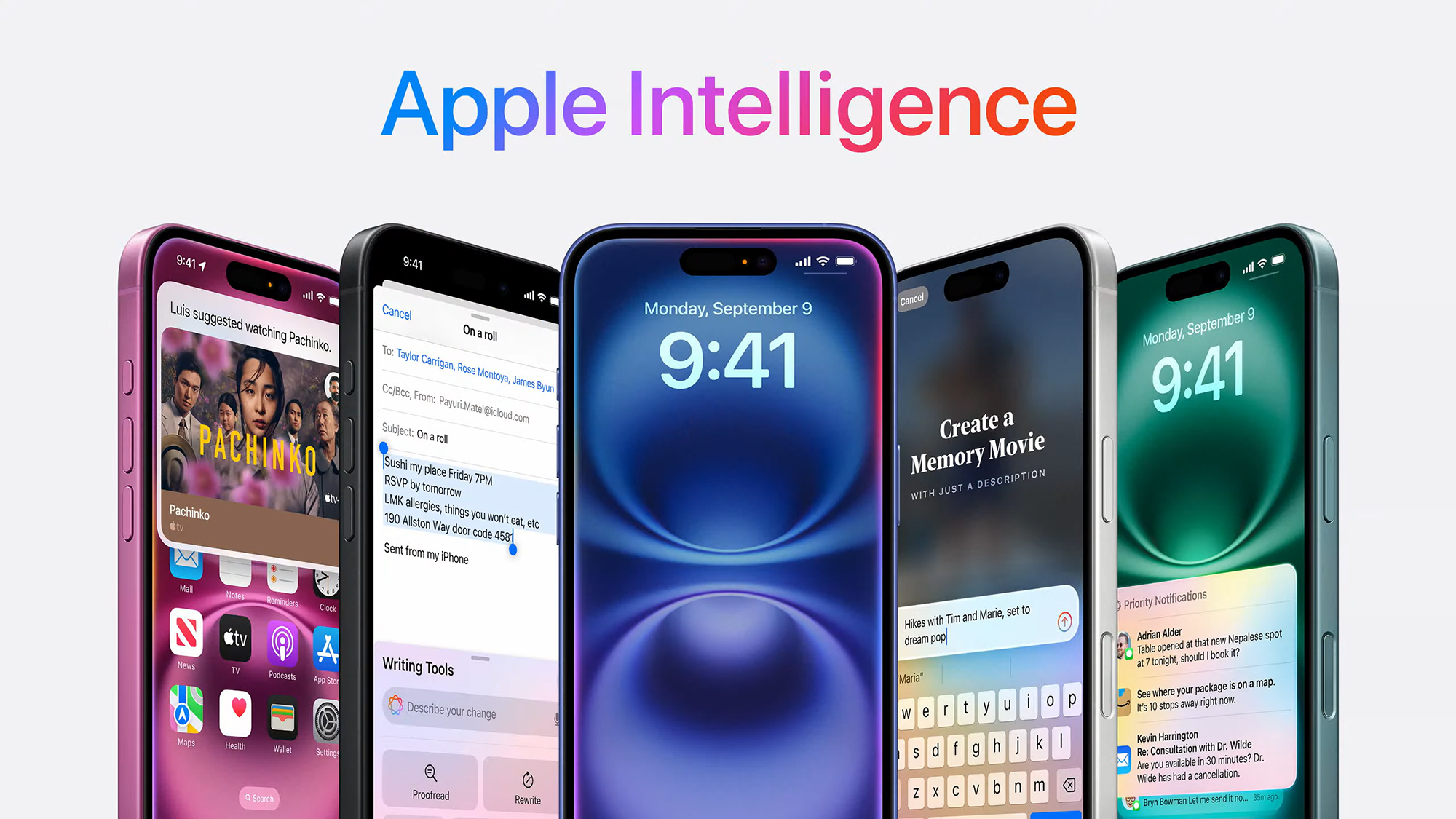
The delays and issues around Apple Intelligence have been well documented, but Apple CEO Tim Cook says his company isn't giving up an AI – and in fact has said the AI market is "ours to grab" in a recent all-hands meeting.

As per the usually reliable Mark Gurman at Bloomberg, the hour-long meeting was held right after Apple's most recent earnings call, and both Tim Cook and senior vice president of software engineering Craig Federighi were apparently upbeat about Apple's AI future.

"Apple must do this," Cook apparently said on AI. "Apple will do this. This is sort of ours to grab." The CEO reportedly went on to say that while Apple hasn't always been first in product categories, it's usually able to catch up and surpass its rivals.

According to Gurman, Cook also encouraged Apple employees to use more AI in their day-to-day work, to avoid being "left behind" in the field. The CEO is predicting AI will be bigger than smartphones, apps, and the internet.

'A much bigger upgrade'

Apple Intelligence

Apple Intelligence has had its issues (Image credit: Apple)

As for Federighi, he reportedly told staff that Apple was overcoming the initial challenges it had faced with adding Apple Intelligence on top of Siri. Rather than merging two systems, engineers are now working on building an entirely new architecture.

"The work we've done on this end-to-end revamp of Siri has given us the results we needed," said the exec. "This has put us in a position to not just deliver what we announced, but to deliver a much bigger upgrade than we envisioned."

Apple has clearly rushed its AI efforts in an attempt to catch up to the likes of OpenAI and Google – having to pull adverts promising features that have yet to materialize – but it would appear that Apple remains fully committed to the technology.

The all-hands meeting is said to have covered other topics including Apple TV+, AirPods, and the impact of regulations. Cook also mentioned that there's an "amazing" series of Apple products in the pipeline – which may include a folding iPhone.

You might also like


from Latest from TechRadar US in News,opinion https://ift.tt/9dJA4Or

Beth Dutton and Rip Wheeler Yellowstone spin-off: key information - The Beth Dutton and Rip Wheeler spin-off was first announced in Dece...

Beth Dutton and Rip Wheeler Yellowstone spin-off: key information

- The Beth Dutton and Rip Wheeler spin-off was first announced in December 2024

- It was rumored to be called Dutton Ranch, but Rip Wheeler actor Cole Hauser confirmed that wouldn’t be the title

- It will be set in the present day, and will explore the Dutton’s lives after the events in season 5

- Other actors from Yellowstone are likely to appear in it, including Finn Little, who plays Carter

- It will share “the most DNA with Yellowstone” than any of the (many!) other planned spin-offs

- The release date has been suggested for late 2025, but Paramount+ have yet to confirm this

The Beth Dutton and Rip Wheeler spin-off series from the Yellowstone universe is officially underway and while it's still very early days, we do know some crucial details about what the new Paramount+ series might look like.

You should never underestimate the pull of a good Western: and the TV series Yellowstone has totally proved this. Launching without much fanfare on the Paramount Network back in June 2018 (HBO turned it down initially) the Kevin Costner-fronted show steadily drew in a bigger and bigger audience, as the series – which covered life in and around a ranch in Yellowstone, Montana – went out on a high in the final series five in 2024 with a viewership of more than 12 million people.

But the people, like the ranchers, wanted more. And spin-offs of the Dutton family were hastily assembled by creators Taylor Sheridan and John Linson. First were the prequels, 1883 and 1923, then the sequels and other Dutton-adjacent series (deep breath): The Madison (due out in 2025), Y: Marshalls, 1944, 6666 and, perhaps the most eagerly awaited of all the new series in the Yellowstone universe, a show that some have said will be called Dutton Ranch. But, hold fire! says Cole Hauser, who plays Rip Wheeler, as he told Fox News that: “First of all, it's not [called] Dutton Ranch. That's not the name of it.”

So, what do we know about the spin-off show that will see Kelly Reilly and Cole Hauser reprising their roles as Beth Dutton and Rip Wheeler? Here’s everything you need to know about the neo-Western series so far, including cast members, potential plot and expected release date:

Beth Dutton and Rip Wheeler Yellowstone spin-off: release date predictions

Beth Dutton and Rip Wheeler sitting on the grass

It's a return to Dutton Ranch for Beth and Rip. (Image credit: Paramount+)

News first came out off a spin-off in December 2024 when Deadline reported: “Taylor Sheridan, the mastermind behind Yellowstone and its ever-expanding universe, is working on the creative for the new show, which will likely feature other cast members from the mothership series alongside Reilly and Hauser.”

Since then, the most recent word is, according to Bloomberg, that this particular show is being pegged for a Fall launch in 2025, which would make this a very quick turnaround. Paramount+ are yet to confirm a release date, but we’ll update this piece as soon as we find out.

Beth Dutton and Rip Wheeler Yellowstone spin-off: is there a trailer yet?

Beth Dutton smokes a cigarette.

Fan favourite Beth smokes a cigarette to kill time while waiting for the trailer. (Image credit: Paramount+)

No, there’s nothing as yet – we’ll let you know as soon as anything drops.

Beth Dutton and Rip Wheeler Yellowstone spin-off: who is in the cast?

Finn Little, who plays Carter standing outside in a cowboy hat.

Finn Little will be making a return to the bullring as Carter. (Image credit: Paramount+)

Excitingly for the fans who weren’t ready for Yellowstone to finish after five seasons, Kelly Reilly and Cole Hauser will be back in their legendary roles of Beth Dutton and Rip Wheeler, respectively. It’s been suggested by several publications that other key characters from Yellowstone could also make a return, but so far, the only person confirmed is Finn Little who plays Carter.

Carter arrived as a “troubled teen” in season four, who met Beth in hospital, when both their fathers were dying. After Carter’s dad dies of a drug addiction, Beth and Rip become Carter’s guardians, and he comes to live and work with them on their ranch. Beth is unable to have children and doesn’t see herself as maternal, yet she and Rip form a bond with Carter, and come to view him as family.

Beth Dutton and Rip Wheeler Yellowstone spin-off: the potential plot

Rip Wheeler walks through a field of horses in a cowboy hat and shades.

The series will pick up after the events of Yellowstone season 5 (Image credit: Paramount+)

Well, it’s a series that will obviously have Beth and Rip at the heart of the action. At the end of season 5 of Yellowstone (spoilers ahead, if you’re not up to date yet) the Dutton Ranch is no more, after being sold to the Broken Rock Reservation, allowing the land to be preserved as a protected reservation.

Beth’s father, John Dutton III, was murdered by a contract killer (by a gunshot to the head) hired by Jamie Dutton and Sarah Atwood, but it was staged to look like suicide. In the season’s finale, Beth, who vowed revenge for her dad’s death, stabs Jamie.

According to Deadline, the spin-off is likely to pick up where season 5 ended. It will be “led by Yellowstone characters, played by the same actors in the same present-day time frame; the new offshoot shares the most DNA with the mothership of any shows in the Yellowstone universe to date.”

Hauser is remaining tight-lipped about the plot, also telling Fox News in May 2025: "We can expect the same that we've been doing for the last seven years. Kelly and I are going and working our [expletive] off trying to create something special.”

Meanwhile, he told The Hollywood Reporter in June 2025: “Kelly and I, we're focused on [Rip and Beth's] relationship and our love together, and what we're going to get [them] into. I'm excited just like everybody else. I can't wait to see what they come up with. Hopefully, we'll start seeing stuff soon.” We’d hope so too, if the series is to be released by the end of the year.

What are the other spin-offs, sequels and prequels of Yellowstone that we know about?

Finn Little who plays Carter walks across the ranch.

The Beth and Rip series will be set in the present day. (Image credit: Paramount+)

There will be two other offshoots soon joining the Beth and Rip series. The Madison (appearing on Paramount+), led by Michelle Pfeiffer as Stacy Clyburn, and Y: Marshals (on CBS) which will star Luke Grimes as Kayce Dutton, and which will be released in early 2026.

Alongside this, there are two more series in the Yellowstone universe: 1944 (set during World War II and will explore the Dutton family's experiences during that era) and 6666 (about another ranch, Four Sixes, which also appears in Yellowstone and will be about the characters who live on it) which have been previously announced as “in development”.


from Latest from TechRadar US in News,opinion https://ift.tt/7gjy8eF

An image of the iPhone 17 Air battery has leaked We're expecting a capacity of around 2,900 mAh All of the iPhone 17 models should l...

  • An image of the iPhone 17 Air battery has leaked
  • We're expecting a capacity of around 2,900 mAh
  • All of the iPhone 17 models should launch in September

We're expecting the iPhone 17 series to launch sometime during September, including the iPhone 17 Air – apparently a replacement for the iPhone 16 Plus. Now a new leak purports to show off the battery that will be fitted inside the Air model.

Images of this battery have been posted by well-known tipster Majin Bu (via 9to5Mac), and it comes enclosed in a steel frame, which matches the iPhone 16 Pro approach. Of particular note is how thin the battery is, from front to back.

According to Bu, the battery capacity is around 2,900 mAh, which is close to the 2,800 mAh figure we've heard from earlier rumors. For comparison, there's a 3,561 mAh battery inside the current iPhone 16, so we're looking at a significant drop.

However, given improvements in battery life technology, and tweaks set to be introduced with iOS 26, reports suggest iPhone 17 Air should still give you a day of battery life – even with the ultra-slim profile and reduced capacity battery.

Battery worries

If the rumors are to be believed, then the iPhone 17 Air is going to measure just 5.5 mm, front to back. That's a lot slimmer than the 7.8 mm iPhone 16, and it even beats the recently launched Samsung Galaxy S25 Edge, which is 5.8 mm thick.

Ever since we heard an iPhone 17 Air was on the way, there have been concerns about battery life. Putting together a super-slim phone is all well and good, but it does mean less room for the battery and other internal components.

However, we know that iPhones can traditionally get more battery life out of less battery capacity, because Apple develops its hardware and software in tandem – so let's hope the usual trick can be repeated with the iPhone 17 Air.

It should be unveiled alongside the iPhone 17, the iPhone 17 Pro, and the iPhone 17 Pro Max during September. Apple hasn't said anything officially, but well-placed sources have pointed to September 8-10 as the most likely dates.

You might also like


from Latest from TechRadar US in News,opinion https://ift.tt/A2rfTSv

Slow Horses season 6: key information - Officially wrapped filming - No trailer released yet - Main cast predicted to return - Plot t...

Slow Horses season 6: key information

- Officially wrapped filming
- No trailer released yet
- Main cast predicted to return
- Plot to follow Mick Herron’s 'Joe Country' and 'Slough House' novels
- Season 7 expected to begin shooting in September/October
- Slough House spin-off, Down Cemetery Road, in the works

Slow Horses season 6 has already finished filming, which is huge news considering season 5 isn't even out on Apple TV+ until September 24.

The gritty spy drama is getting a bit of a name for itself, not only for its thrilling action-packed scenes, but its incredible release schedule never leaving more than a year between seasons.

And it appears there's plenty more where that came from as Jackson Lamb and his team of down-and-out MI5 agents are returning for season 5, 6 and 7 over the next couple of years.

Adapted from the books by Mick Herron, Slow Horses season 6 already has a plot to follow and filming in the can, but there's plenty more to talk about when it comes to trailer, expected release date, predicted case, news, rumors and more. Though, I'll be sure to update here once season 5 hits Apple TV+.

Potential spoilers follow for Slow Horses seasons 1 to 4.

Slow Horses season 6 release date

Apple TV+ renewed Slow Horses for season 6 just days after the season 4 finale – and, according to Deadline, the cast and crew have already finished filming.

In an official statement from Apple TV+ on the show's renewal, Jay Hunt, creative director for Europe said: "Audiences around the world have fallen in love with the Slow Horses, and I'm delighted that Gary Oldman will be leading this star-studded cast on another acerbic and action-packed adventure".

So, when it comes to the Slow Horses season 6 release date, season 4 released in September 2024 and season 5 is scheduled for September 2025. With season 6's filming done and dusted, I think I can quite confidently say that season 6 is looking at a fall 2026 release date.

Slow Horses season 6 trailer: is there one?

Emma looks down at Roddy in Slow Horses season 5

There's no Slow Horses season 6 trailer just yet (Image credit: Apple TV Plus)

Considering Slow Horses season 5 is yet to receive its own trailer, it seems incredibly unlikely that we'll get a season 6 trailer any time soon.

But, we were treated to a season 5 teaser look at the end of the season 4 finale. If that's the case this time round, mark October 22 on your calendar for the season 5 finale for a potential first look at season 6. I'll be sure to update here when it drops, too.

Slow Horses season 6 predicted cast

Jackson stands in the dark in Slow Horses season 5

Gary Oldman will reprise his titular role as Jackson Lamb (Image credit: Apple TV Plus)

Full spoilers follow for Slow Horses season 5.

Slow Horses season 5 will air six episodes on Apple TV+ between September 24 and October 22. Since we don't know what happens yet (and we don't want to spoil it by revealing the plot of Mick Herron's 'London Rules' novel), we can only predict the cast to appear in season 6, with one known addition:

  • Gary Oldman as Jackson Lamb
  • Jack Lowden as River Cartwright
  • Kristin Scott Thomas as Diana Taverner
  • Saskia Reeves as Catherine Standish
  • Christopher Chung as Roddy Ho
  • Aimee-Ffion Edwards as Shirley Dander
  • Rosalind Eleazar as Louisa Guy
  • Ruth Bradley as Emma Flyte
  • James Callis as Claude Whelan
  • Tom Brooke as J.K. Coe
  • Hugo Weaving as Frank Harkness
  • Joanna Scanlan as Moira Tergorian
  • Jonathan Pryce as David Cartwright
  • Lenny Rush as TBC
  • Nick Mohammed as TBC
  • Hiba Bennani as TBC

So, there's a new cast member that we know for certain is joining Slow Horses season 6 and that's Doctor Who's Lenny Rush who, according to the Radio Times, was spotted filming with Oldman in January. Other than that, I'm sure it'll be full of returning favorites.

Slow Horses season 6 potential plot synopsis and rumors

iJackson and Diana look at each other n Slow Horses season 5

Slow Horses season 6 will be adapted from 'Joe Country' and 'Slough House' (Image credit: Apple TV Plus)

Major spoilers follow for Slow Horses seasons 1 through 4.

Slow Horses season 6 is confirmed to be the first season that will follow not one, but two, of Mick Herron's novels. As confirmed by Deadline, these will be 'Joe Country' and 'Slough House', the sixth and seventh books in the series.

And the official synopsis from Apple TV+ for season 6 is as follows: "Season six sees the Slow Horses on the run as Diana Taverner embroils them all in a fatally high-stakes game of retaliation and revenge".

To delve deeper into the plot, it's also worth taking at the synopsis's for the books. For 'Joe Country' that's: "In Slough House, the backwater for failed spies, memories are stirring, all of them bad. Catherine Standish is buying booze again, Louisa Guy is raking over the ashes of lost love, and new recruit Lech Wicinski, whose sins make him outcast even among the slow horses, is determined to discover who destroyed his career, even if he tears his life apart in the process.

"With winter taking its grip Jackson Lamb would sooner be left brooding in peace, but even he can't ignore the dried blood on his carpets. So when the man responsible for killing a slow horse breaks cover at last, Lamb sends his crew out to even the score.This time, they're heading into joe country. And they're not all coming home."

The Slow Horses team gather round a phone in Slow Horses season 5

The team at Slough House return for more espionage drama (Image credit: Apple TV Plus)

And for 'Slough House': "Slough House - the crumbling office building to which failed spies, the 'slow horses', are banished - has been wiped from secret service records.

"Reeling from recent losses in their ranks, the slow horses are worried they've been pushed further into the cold, and fatal accidents keep happening.

"With a new populist movement taking a grip on London's streets, the aftermath of a blunder by the Russian secret service that left a British citizen dead, and the old order ensuring that everything's for sale to the highest bidder, the world's an uncomfortable place for those deemed surplus to requirements.

"The wise move would be to find a safe place and wait for the troubles to pass.But the slow horses aren't famed for making wise decisions."

Much like the rest of Slow Horses, season 6 will also be six episodes long and while I'd usually take a look at the previous season to give an insight into the plot, it doesn't air until September/October.

I'll be sure to update here as soon as the story at Slough House has unfolded once more.

Will Slow Horses get more seasons on Apple TV+?

River stares at someone in Slow Horses season 5

Slow Horses season 7 is officially on the way (Image credit: Apple TV Plus)

Slow Horses season 7 was officially confirmed by Apple TV+ in July and Deadline reported in June, whilst in conversation with Oldman, that "season 7 will begin shooting in the UK in late September or early October".

With season 5 following books 6 and 7 in Mick Herron's Slough House series, season 7 will follow 'Bad Actors'. There's also the soon-to-be published 'Clown Town' coming September 9, which could hint at at least one more season to come, but any news on this is unconfirmed.

But, there's also a Slough House spin-off series in the works titled Down Cemetery Road, based on Herron's first novel of the same name.

With filming already happening, The Hollywood Reporter revealed it will star both Emma Thompson and Ruth Wilson as Sarah Tucker and Zoë Boehm respectively.

Apple TV+'s creative director, Hunt, said of the news: "Down Cemetery Road has all the hallmarks of Mick Herron's funny and acerbic writing, and I'm delighted we will be bringing it to life for Apple TV+ with such a stellar cast".

For more Apple TV+ coverage, read our guides on Ted Lasso season 4, Foundation season 3, Presumed Innocent season 2, and Silo season 3.


from Latest from TechRadar US in News,opinion https://ift.tt/0RK1I9r

This week DJI and Insta360 had a Freaky Friday situation as they announced a 360 camera and a drone respectively, tech the other is usually...

This week DJI and Insta360 had a Freaky Friday situation as they announced a 360 camera and a drone respectively, tech the other is usually known for.

We also heard that OpenAI is scared of its next AI, and the UK faced the Online Saftey Act.

You can catch up on these stories and more in this week's catch up of the seven biggest tech news stories.

7. We Found My Skechers

The Find My Skechers sneaker, which can store an Apple AirTag in its heel.

(Image credit: Skechers)

This week, Skechers debuted the new Find My Skechers. They look like your run-of-the-mill sneakers on the outside, but hidden in each heel is a cutout that’s perfect for an Apple AirTag.

This Bluetooth tracker can then be used to help you keep track of your child if you’re out in an unfamiliar place, or help you locate any lost shoes, whether they were misplaced while out and about or while getting ready in the mad rush to get to school.

Though when we polled parents, the reactions were mixed. Predominantly because the target age range – toddlers and young children – outgrow their shoes every six months to a year. At their cheapest, Find My Sketchers cost $52 a pop, which is a lot to regularly shell out.

6. The UK faced the Online Safety Act

Composite image of digital eye and British flag

(Image credit: Getty Images)

This week Britain was hit by the latest provisions of the Online Safety Act, introducing age verification measures designed to help prevent young people accessing age inappropriate content. However the new requirements have frustrated many adults.

A petition to repeal the UK Online Safety Act garnered over 450,000 signatures in just a few days, and some have tried all sorts of workarounds including attempting to game the system with Death Stranding’s photo mode.

Most people are onboard with the idea behind the rules, but aren’t keen on needing to share their ID with websites – especially foreign websites – as they’re worried their data might be mishandled. Despite the concerns, the Government has said it won't be repealing the measures.

5. Google Home's crisis got worse

Google Nest Mini

(Image credit: Future)

Last week, we reported on a growing number of complaints about Google Home devices, with the smart home gadgets failing to deal with commands properly or throwing up other bugs.

This week, it seems the problem got worse, with many reporting their voice controls for smart lights were now completely broken and not working at all.

The situation has gotten so bad that US law firm Kaplan Gore has announced it has "begun investigating a possible class action" against Google because so many users are now reporting broken functionality, despite most of these devices having worked fine in the past.

4. DJI Osmo 360 landed

DJI Osmo 360 camera mounted to a paddle board, on the water, surrounded by water droplets

(Image credit: DJI)

The 360 camera space has been dominated by Insta360 for years, but it finally has some proper competition following the arrival of the DJI Osmo 360. What's more, they could soon be joined by the GoPro Max 2, which was recently teased by GoPro.

Considering it's DJI's first foray into the market, the Osmo 360 impresses straight off the bat, delivering what DJI says are several industry firsts, the most notable of which are its twin 1-inch sensors with 8K video recording up to 50fps. Those sensors are effectively twice the size of the Insta360 X5's, our current favorite 360 camera, and should give DJI's model the upper hand for image quality, especially with richer 10-bit color depth.

Based on specs, the Osmo 360 has the edge over the X5, but it's real-world use that matters the most, and the X5 is our favorite model for a reason. It has stellar battery life, and its lenses can be replaced in the event of damage. We are currently conducting our hands-on versus of the two models, and it's making for a titanic battle.

3. Insta360 revealed the world’s first 360 drone

A veiled mystery Antigravity drone

(Image credit: Antigravity, Insta360)

DJI isn’t used to having competition in the skies, but this week, its first serious rival for years flew into town. The undisputed king of 360 cameras, Insta360, has announced its new Antigravity platform, which will soon give us the first drone with a 360-degree camera.

Okay, but what’s the benefit of a flying, all-seeing camera? The main one is that, in theory, you won’t need to worry about perfectly shooting aerial videos as you fly, because you’ll be able to reframe them later. We’re looking forward to experiencing that in person when the Antigravity drone fully launches later this month.

2. ChatGPT helped us study

ChatGPT Study mode on mobile.

(Image credit: OpenAI)

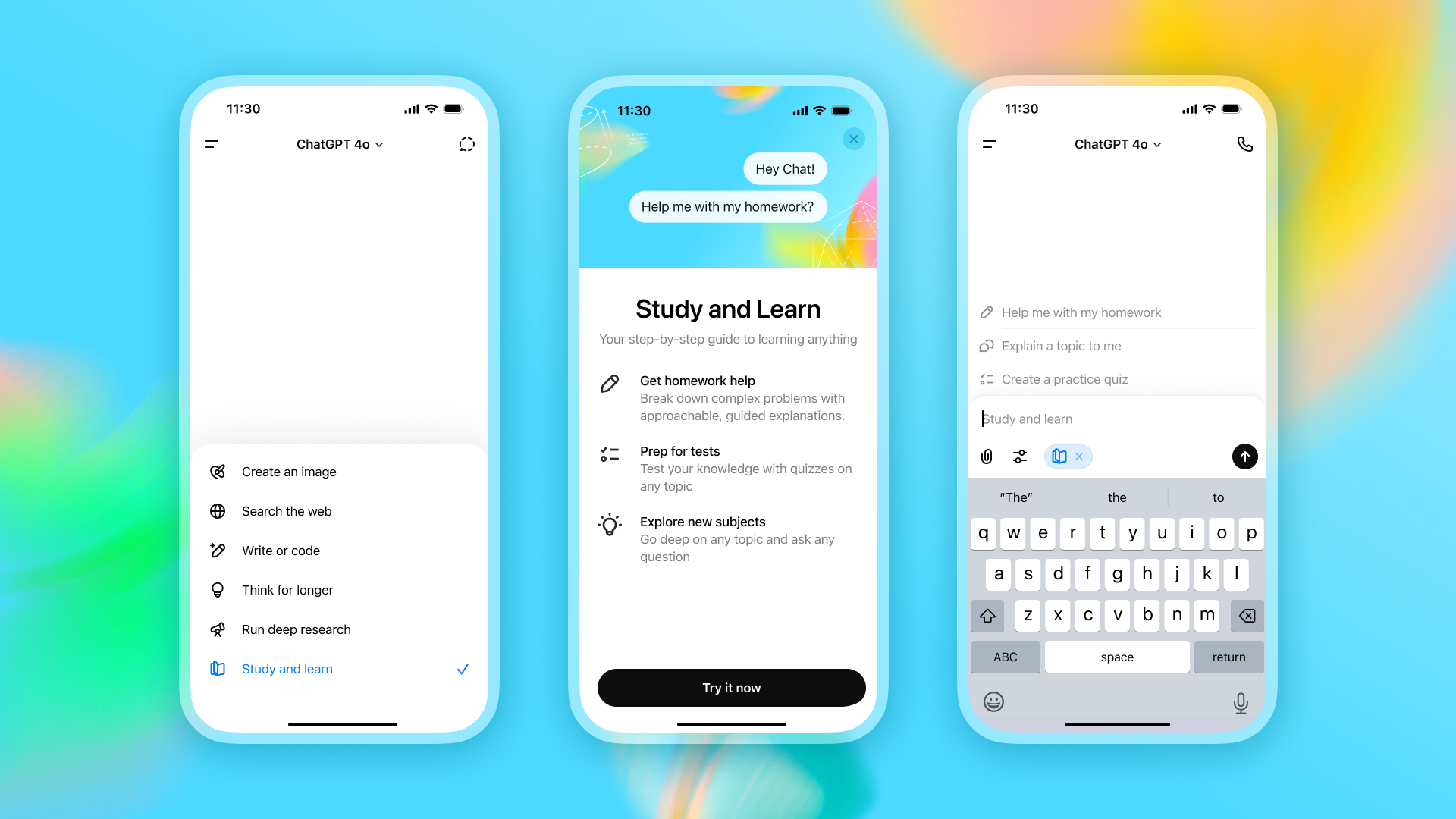
ChatGPT has added a new feature called Study mode to its paid-for and free accounts that turns the famous chatbot into an unpaid study tutor for your kids. Parents often panic about ChatGPT being used by their children to avoid actually learning anything, but Study mode is different. It’s pretty safe for kids to use because it teaches them how to arrive at the answer, rather than just giving them the answer. It’s more of an interactive back-and-forth chat about the question being posed, which encourages them to learn as they go.

Of course, you don’t need to let your kids have all the fun with it. You can use Study mode yourself to learn any new subject. Having the ability to turn ChatGPT into a proper tutor is pretty handy, so whatever it is you want to learn – whether that’s a new language or how to code – now you’ve got the perfect excuse to get started.

1. OpenAI was scared by its AI

Sam Altman and ChatGPT logo.

(Image credit: Shutterstock/ DIA TV)

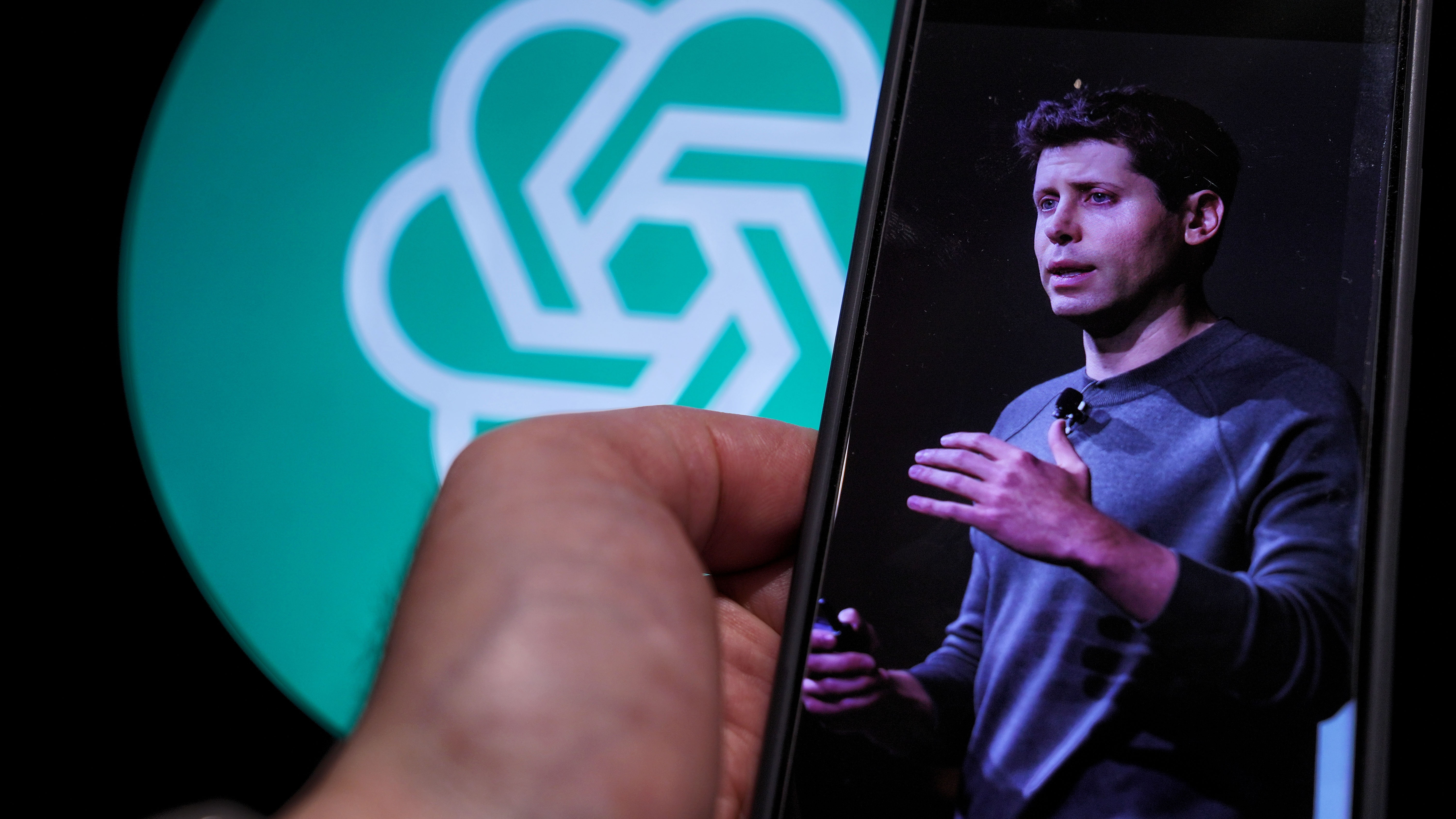
OpenAI CEO Sam Altman revealed details about his company's testing of GPT-5 (the next-gen brain for ChatGPT) by saying he got scared by the AI, and comparing it to The Manhattan Project.

The over-the-top analogy might evoke some level of keen scientific minds coming to a major breakthrough, but his other comments made OpenAI seem either reckless or incompetent.

Even if he's exaggerating, we don't know if either of those descriptions should be attached to the kind of company that might decide how next-gen AI power is deployed.


from Latest from TechRadar US in News,opinion https://ift.tt/fd3MsbR

The Crosley C65 is a turntable and speakers for £289 / $299 Switchable amp to use as a turntable with external components Bluetooth head...

  • The Crosley C65 is a turntable and speakers for £289 / $299
  • Switchable amp to use as a turntable with external components
  • Bluetooth headphones support too

Crosley has unleashed a new record player package, which includes speakers right in the box so you have everything you need to get started – like a more affordable version of the Pro-Ject colorful packages I wrote about a little while back. Despite being cheaper, the new C65 is a stylish-looking package that seems like it could make a good great first system, or a system for smaller spaces.

The C65 is a belt-driven, retro-styled turntable that wouldn't look out of place in The Fantastic Four: First Steps thanks to its old-school design cues. It's teamed up with 50W speakers, which connect directly to its built-in amp, and can also stream to the best wireless headphones over Bluetooth.

The Crosley C65 record player and speakers on a white background

(Image credit: Crosley)

Crosley C65 Record Player: key features and pricing

The Crosley C65 has a pre-mounted Audio-Technica ATN3600L moving magnet cartridge, an aluminum tonearm, and a full-size steel platter with adjustable pitch control. Its amp is switchable, enabling you to use it with external amplifiers if you want to upgrade later and just keep it as your record player, which is a nice touch of future-proofing.

The C65 is adjustable between 33⅓ RPM and 45RPM, and the package includes a 45-adaptor, slipmat, dust cover, cartridge alignment protractor and a spare NP5 stylus.

The price is £289 / $299, which puts it in the middle of the affordable audio market: that's about £100 / €100 more than the Lenco or House of Marley turntable and speaker bundle you're likely to see the C65 racked with at your local audio retailer, but a bit less than you'd expect to spend if you bought, say, an Audio-Technica or Sony Bluetooth turntable and something like Audio-Technica's new active speakers separately.

You might also like


from Latest from TechRadar US in News,opinion https://ift.tt/puYlt0m

Universities are under growing pressure to modernize. Many are being challenged on the absence of AI literacy in their courses, while also ...

Universities are under growing pressure to modernize. Many are being challenged on the absence of AI literacy in their courses, while also trying to stay globally competitive amid falling enrolments and funding pressures.

Recent QS World University Rankings saw Oxford, Cambridge and over 50 other institutions drop, following broader concerns that the UK higher education sector is losing ground on innovation, investment and academic freedom.

With employers now expecting AI-literate graduates, questions around student readiness are emerging. Many graduates still leave university with limited hands-on experience with AI tools, while others misuse them altogether.

Against a challenging backdrop of staff burnout and funding cuts, universities must develop scalable, future-proof strategies to embed AI literacy into the curriculum without compromising academic standards.

Building confidence with AI-powered personalized learning

AI-powered tools can enhance course content by making it more dynamic and simplifying how interesting elements like gamification, real-time feedback and other interactive features are incorporated.

When integrated into a broader learning management system, AI can automatically tailor materials to each student’s progress and learning needs, creating more personalized journeys.

This individualized approach, which accounts for different learning styles and abilities, can significantly improve engagement and outcomes by identifying where students are struggling and adapting accordingly.

These insights are equally valuable for educators as they face growing workloads and larger cohorts, helping them identify learning gaps more efficiently and focus their time on meaningful student interaction.

Short courses and microcredentials for workplace-ready AI skills

Microcredentials are still in an experimental phase for most universities, but they have the potential to tackle digital skills gaps head on, particularly when it comes to AI. Delivered as flexible, stackable modules, they allow students to build skills in focused, employer-relevant areas without universities needing to overhaul legacy degree structures.

Microcredentials may offer more than just a pedagogical tool, as they also pave the way for new revenue streams. They can help institutions future-proof their offerings through diversified, modular learning that may appeal to entirely new student groups like mature learners, those working around family commitments or shift workers.

Embedding critical thinking around AI into short courses will help students build confidence with the tools, understand their limitations and develop the fluency employers now demand.

With the right approach, and through partnerships with knowledgeable technology providers, this will start to close the gap between academic learning and real-world application. As a bonus, it will also help universities carve out valuable competitive differentiators.

The challenge of legacy tech

Many universities implemented advanced edtech platforms during the pandemic, but some are still only scratching the surface of what these systems can do. Those continuing to rely on legacy IT infrastructure across both operations and pedagogy risk falling behind their more agile, digitally mature peers.

While old habits die hard, and legacy systems may feel reassuringly familiar, they can struggle to meet the demands of today’s fast-moving technology environment. Moving on from a legacy technology stack needn’t be overly disruptive because modern AI-capable learning platforms now offer far more than content delivery and are built for intuitive, user-friendly adoption.

However, when embedding AI-powered tools into everyday teaching, making sure educators are appropriately trained to use them with confidence should be a strategic priority.

Preserving academic standards by embedding ethical AI use

As universities adopt AI more widely, safeguarding trust must be a priority. This goes beyond preventing misuse or plagiarism to include transparency, protecting data privacy and promoting responsible use across the board.

To achieve this, universities need more than isolated pilots or quick fixes. Clear, campus-wide strategies will ensure AI can uphold academic integrity and excellence, while improving the student experience.

We've listed the best online learning platforms and the best online courses and online class sites.

This article was produced as part of TechRadarPro's Expert Insights channel where we feature the best and brightest minds in the technology industry today. The views expressed here are those of the author and are not necessarily those of TechRadarPro or Future plc. If you are interested in contributing find out more here: https://www.techradar.com/news/submit-your-story-to-techradar-pro


from Latest from TechRadar US in News,opinion https://ift.tt/By9jzCQ