
via TechRadar - All the latest technology news https://ift.tt/2SJSSLn
2019 brought more global attention to Africa’s tech scene than perhaps any previous year.
A high profile IPO, visits by both Jacks (Ma and Dorsey), and big Chinese startup investment energized that.
The last 12 months served as a grande finale to 10 years that saw triple digit increases in startup formation and VC on the continent.
Here’s an overview of the 2019 market events that captured attention and capped off a decade of rapid growth in African tech.
The story of the year is the April IPO on the NYSE of Pan-African e-commerce company Jumia. This was the first listing of a VC backed tech company operating in Africa on a major global exchange — which brought its own unpredictability.
Founded in 2012, Jumia pioneered much of its infrastructure to sell goods to consumers online in Africa.
 With Nigeria as its base market, the Rocket Internet backed company created accompanying delivery and payments services and went on to expand online verticals into 14 Africa countries (though it recently exited a few). Jumia now sells everything from mobile-phones to diapers and offers online services such as food-delivery and classifieds.
Seven years after its operational launch, Jumia’s stock debut kicked off with fanfare in 2019, only to be followed by volatility.
The online retailer gained investor confidence out of the gate, more than doubling its $14.95 opening share price post IPO.
That lasted until May, when Jumia’s stock came under attack from short-seller Andrew Left, whose firm Citron Research issued a report accusing the company of fraud. The American activist investor’s case was bolstered, in part, by a debate that played out across Africa’s tech ecosystem on Jumia’s legitimacy as an African startup, given its (primarily) European senior management.
The entire affair was further complicated during Jumia’s second quarter earnings call when the company disclosed a fraud perpetrated by some of its employees and sales agents. Jumia’s CEO Sacha Poignonnec emphasized the matter was closed, financially marginal and not the same as Andrew Left’s short-sell claims.
Whatever the balance, Jumia’s 2019 ups and downs cast a cloud over its stock with investors. Since the company’s third-quarter earnings-call, Jumia’s NYSE share-price has lingered at around $6 — less than half of its original $14.95 opening, and roughly 80% lower than its high.
Even with Jumia’s post-IPO rocky road, the continent’s leading e-commerce company still has heap of capital and is on pace to generate over $100 million in revenues in 2019 (albeit with big losses).
The company plans reduce costs by generating more revenue from higher-margin internet services, such as payments and classifieds.
There’s a fairly simple equation for Jumia to rebuild shareholder confidence in 2020: avoid scandals, increase revenues over losses. And now that the company’s publicly traded — with financial reporting requirements — there’ll be four earnings calls a year to evaluate Jumia’s progress.
Jumia may not be the continent’s standout IPO for much longer. Events in 2019 point to Interswitch becoming the second African digital company to list on a global exchange in 2020. The Nigerian fintech firm confirmed to TechCrunch in November it had reached a billion-dollar unicorn valuation, after a (reported) $200 million investment by Visa.
Founded in 2002 by Mitchell Elegbe, Interswitch created much of the initial infrastructure to digitize Nigeria’s (then) predominantly cash-based economy. Interswitch has been teasing a public listing since 2016, but delayed it for various reasons. With the company’s billion-dollar valuation in 2019, that pause is likely to end.
“An [Interswitch] IPO is still very much in the cards; likely sometime in the first half of 2020,” a source with knowledge of the situation told TechCrunch.
2019 was the year when Chinese actors pivoted to African tech. China is known for its strategic relationship with Africa based (largely) on trade and infrastructure. Over the last 10 years, the country has been less engaged in the continent’s digital-scene.
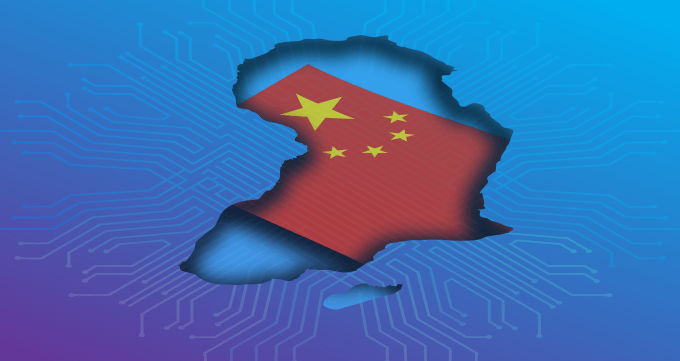 That was until a torrent of investment and partnerships this past year.
July saw Chinese-owned Opera raise $50 million in venture spending to support its growing West African digital commercial network, which includes browser, payments and ride-hail services.
In August, San Francisco and Lagos-based fintech startup Flutterwave partnered with Chinese e-commerce company Alibaba’s Alipay to offer digital payments between Africa and China.
In September, China’s Transsion — the largest smartphone seller in Africa — listed in an IPO on Shanghai’s new STAR Market. The company raised ≈ $394 million, some of which it is directing toward venture funding and operational expansion in Africa.
The last quarter of 2019 brought a November surprise from China in African tech. Over 15 Chinese investors placed over $240 million in three rounds. Transsion backed consumer payments startup PalmPay raised a $40 million seed, stating its goal to become “Africa’s largest financial services platform.”
Chinese investors also backed Opera-owned OPay’s $120 million raise and East-African trucking logistics company Lori Systems’ (reported) $30 million Series B.
In the new year, TechCrunch will continue to cover the business arc of this surge in Chinese tech investment in Africa. There’ll surely be a number of fresh macro news-points to develop, given the debate (and critique) of China’s role in Africa.
On debate, the case could be made that 2019 was the year when Nigeria become Africa’s unofficial capital for fintech investment and digital finance startups.
Kenya has held this title hereto, with the local success and global acclaim of its M-Pesa mobile-money product. But more founders and VCs are opting for Nigeria as the epicenter for digital finance growth on the continent.
A rough tally of 2019 TechCrunch coverage — including previously mentioned rounds — pegs fintech related investment in the West African country at around $400 million over the last 12 months. That’s equivalent to roughly one-third of all startup VC raised for the entire continent in 2018, according to Partech stats.
From OPay to PalmPay to Visa — startups, big finance companies and investors are making Nigeria home-base for their digital finance operations and outward expansion in Africa.
The founder of early-stage payment startup ChipperCash, Ham Serunjogi, explained the imperative to operate in the West African country. “Nigeria is the largest economy and most populous country in Africa. Its fintech industry is one of the most advanced in Africa, up there with Kenya and South Africa,” he told TechCrunch in May.
When all the 2019 VC numbers are counted, it will be worth matching up Nigeria to Kenya to see how the countries compared for fintech specific investment over the last year.
Tech acquisitions continue to be somewhat rare in Africa, but there were several to note in 2019. Two of the continent’s powerhouse tech incubators joined forces in September, when Nigerian innovation center and seed-fund CcHub acquired Nairobi based iHub, for an undisclosed amount.

The acquisition brought together Africa’s most powerful tech hubs by membership networks, volume of programs, startups incubated and global visibility. It also elevated CcHub’s Bosun Tijani standing across Africa’s tech ecosystem, as the CEO of the new joint-entity, which also has a VC arm.

CcHub/iHub CEO Bosun Tijani
In other acquisition activity, French television company Canal+ acquired the ROK film studio from Nigerian VOD company IROKOtv, for an undisclosed amount. The deal put ROK founder and producer Mary Njoku in charge of a new organization with larger scope and resources.
Many outside Africa aren’t aware that Nigeria’s Nollywood is the Hollywood of the continent and one of the largest film industries (by production volume) in the world. Canal+ told TechCrunch it looks to bring Mary and the Nollywood production ethos to produce content in French speaking African countries.
Other notable 2019 African tech takeovers included Kenyan internet company BRCK’s acquisition of internet provider Surf, Nigerian digital-lending startup OneFi’s Amplify buy and Merck KGaa’s purchase of Kenya-based online healthtech company ConnectMed.
In 2019, Africa’s motorcycle ride-hail market — worth an estimated $4 billion — saw a flurry of investment and expansion by startups looking to scale on-demand taxi services. Uber and Bolt got into the motorcycle taxi business in Africa in 2018.

Ampersand in Rwanda
A number of local and foreign startups have continued to grow in key countries, such as Nigeria, Uganda and Kenya.
A battle for funding and market-share emerged in Nigeria in 2019, between key moto ride-hail startups Max.ng, Gokada, and Opera owned ORide.
The on-demand motorcycle market in Africa has attracted foreign investment and moved toward EV development. In May, MAX.ng raised a $7 million Series A round with participation from Yamaha and is using a portion to pilot renewable energy powered e-motorcycles in Africa.
In August, the government of Rwanda announced a national policy to phase out gas-motorcycle taxis altogether in favor of e-motos, in partnership with early-stage EV startup Ampersand.
The year 2019 saw several new funding initiatives for Africa’s startups. Senegalese VC investor Marieme Diop helped spearhead Dakar Network Angels, a seed-fund for startups in French-speaking Africa — or 24 of the continent’s 54 countries.

Africinvest teamed up with Cathay Innovation to announce the Cathay Africinvest Innovation Fund, a $100+ million capital pool aimed at Series A to C-stage startup investments in fintech, logistics, AI, agtech and edutech.
Accion Venture Lab launched a $24 million fintech fund open to African startups.
And Naspers offered more details on who can pitch to its 1.4 billion rand (≈$100 million) Naspers Foundry fund and made its first investment in online cleaning services company SweepSouth.
Like any tech ecosystem, not every startup in Africa killed it or even continued to tread water in 2019. Two e-commerce companies — DealDey in Nigeria and Afrimarket in Ivory Coast — closed up digital shop.

Southern Africa’s Econet Media shut down its Kwese TV digital entertainment business in August.
And South Africa based, Pan-African focused cryptocurrency payment startup Wala ceased operations in June. Founder Tricia Martinez named the continent’s poor infrastructure as one of the culprits to shutting down. A possible signal to the startup’s demise could have been its 2017 ICO, where Wala netted only 4% of its $30 million token-offering.
2019 saw more startups expand products and business models developed in Africa to new markets abroad. In March, Flexclub — a South African venture that matches investors and drivers to cars for ride-hailing services — announced its expansion to Mexico in a partnership with Uber.
In May, ExtraCrunch profiled three African founded fintech startups — Flutterwave, Migo and ChipperCash — developing their business models strategically in Africa toward plans to offer their products in other regions.
By December, Migo (formerly branded Mines) had announced its expansion to Brazil on a $20 million Series B raise.
As we look to what could come in the new year and decade for African tech, it’s telling to look back. Ten years ago, there were a lot of “if” questions on whether the continent’s ecosystem could produce certain events: billion dollar startup valuations, IPOs on major exchanges, global expansion, investment from the world’s top VCs.
All those questionable events of the past have become reality in African tech, even if some of them are still in low abundance.
There’s no crystal ball for any innovation ecosystem — not the least Africa’s — but there are several things I’ll be on the lookout for in 2020 and beyond.
Two In the near term, start with what Twitter/Square CEO Jack Dorsey may do around Bitcoin and cryptocurrency on his return to Africa (lookout for an upcoming TechCrunch feature on this).
I’ll also follow the next-phase of e-commerce in Africa, which could pit Jumia more competitively against DHL’s Africa eShop, Opera and China’s Alibaba (which hasn’t yet entered Africa in full).
On a longer-term basis, a development to follow is how the continent’s first wave of millionaire and billionaire tech-founders could disrupt dynamics around politics, power, and philanthropy in Africa — hopefully for the better.
More notable 2019 Africa-related coverage @TechCrunch


If your New Year celebrations are less about how many snowballs you can knock back and more about how much money you can save in the January sales, then you're in good company. TechRadar has got very good at digging out the best cheap iPhone deals in the UK.
So whether you're looking to shave a little money off one of the latest iPhone 11 series handsets, or are an Apple devotee that wants to pay a lot less and is happier with an older model, we've unearthed iPhone deals for all tastes.
Let us not keep you from your mobile phone deals any longer - we don't have much more of 2019 to celebrate...
There's no doubt that iPhone 7 deals are no longer the newest option from Apple but there is one thing this handset is still one of the best choices for - affordability. As one of Apple's cheapest phones around, this is a welcome change to the high price tags we see elsewhere.
The release of Apple's iPhone 11 and its two more powerful models was a big reminder of the costly nature of Apple and just another reason the iPhone 7 could be the ideal phone for you.
But despite its age the iPhone 7 still rocks many of the specs we have come to expect from Apple. A mid-size battery, strong processor and the much loved iOS features Apple has made famous.
When it comes to choosing the tariff for you there is still a surprisingly large range of iPhone 7 deals. Big data remains affordable and brilliant cheap contracts under £20 are readily available.
On this page you'll find all of the best iPhone 7 deals you can get right now. Whether you're looking for unlimited data, a free phone or any other type of tariff, you can use our comparison chart below to choose the cheapest option out there. Scroll down to find the best deal for you.
See also: iPhone 8 deals | iPhone 7 Plus deals | iPhone 7 SIM-free | Samsung Galaxy S8 deals | Best mobile phone deals | iPhone deals
The Apple iPhone 7 might now have fallen behind, becoming one of Apple's older devices and yet, the specs till hold up. The battery might not be market leading but for the price you pay for iPhone 7 deals, the water resistance, impressive camera and strong processor are a perfect combination.
Read TechRadar's full iPhone 7 review


Smart device company Wyze accidentally exposed a database online containing details from up to 2.4 million customers.
The incident happened early in December, eventually being noticed by cybersecurity company Twelve Security at the end of the month, when it was reported by video surveillance news website IPVM.
According to Wyze, a budget vendor in smart devices such as cameras, locks, bulbs, and plugs, the database was a test environment for making information processing more efficient.
However, while Wyze said it was exposed in error, Twelve Security reported that details included email addresses, usernames, and security tokens - enough information for malicious third parties to take control over any smart devices affected.
Wyze has since reset its systems to help prevent that.
The problem arose when Wyze, using Amazon Web Services to process Internet of Things (IoT) data, left security protocols off that allowed their Elasticsearch data to be accessed online. It remains a reminder to businesses that they are ultimately responsible for security when it comes to cloud computing services.
However, this isn't the first time Wyze have run into problems with user access. Earlier this year a flaw in their system allowed users to still access smart cameras that had been reassigned to another account.
Grab and Singtel, one of the largest telecoms in Singapore, announced today that they are applying for a digital full bank license together. If approved, the license will allow them to offer simple credit and investment products, before progressing to a full-functioning bank if they meet the Monetary Authority of Singapore’s (MAS) criteria.
Grab will hold a 60% stake in the consortium, with Singtel holding the other 40%. A joint statement said the companies are “committed to contributing to the financial services sector with a differentiated offering that addresses the unmet and underserved needs of consumer and enterprise segments in Singapore,” including SMEs that need access to credit. Securing working capital is a major pain point across Southeast Asia, with several startup and financial institutions working on new tools to gauge creditworthiness and manage loans.
Grab launched in 2012 as a ride-sharing company, but now bills itself as “Southeast Asia’s leading super app,” with app that provides a wide array of service, including transportation, logistics, food delivery, ticket and hotel booking and financial services, through one portal.
It entered financial services in 2016 with the introduction of GrabPay Wallet, a digital wallet, before launching Grab Financial Group in 2019. Grab Financial Group’s services include online payments, lending and insurance products that it says reaches 100 million users across Southeast Asia.
In a press statement, Grab Financial Group senior managing director Reuben Lai said the consortium’s plan is to “build a truly customer-centric digital bank that will deliver a variety of banking and financial services that are accessible, transparent and affordable.”
MAS announced in June that it will issue up to two digital full bank licenses and three digital wholesale bank licenses, as part of a bid to to liberalize Singapore’s banking sector.


The Google Pixel 4 series disappointed many potential buyers with a rather small upgrade at a not-so-small price tag. Leaked renders of the Pixel 4a suggest that Google might fix some of those with its upcoming mid-ranger.
Earlier this year, Google unveiled the Pixel 3a, which brought the legendary Pixel cameras and software experience to the budget segment, and went on to become a better-received smartphone in many markets. Considering that the Pixel 4 wasn’t a runaway success this year and didn't make it to India, we expect Google to try and improve the more affordable Pixel 4a and win back the lost customers.
91mobiles was able to get its hands on a bunch of renders of the upcoming Pixel 4a, giving us a good idea of what to expect. The biggest perceivable change comes with the display, as it seems to adopt a taller (than Pixel 3a) display with a punch-hole notch for the selfie camera instead of the aging thick forehead approach we saw on the Pixel 4. This pretty much confirms that the Project Soli array of sensors, and Motion Sense, are gone. While that may seem like a downstep, it will make the Pixel 4a eligible to be sold in countries such as India.
The existence of a fingerprint scanner on the back strengthens this presumption. The back on this particular model has only a matte finish throughout, with the familiar squircle camera bump on the top left corner. Only a single camera sensor can be seen in these renders, but leakster OnLeaks suggests that there will be additional sensors. If the same design makes it to the final units, then the other sensor could be a Laser AF module which is usually indistinguishable from a black surface. The bottom will house the USB Type-C connector while the headphone jack makes a comeback, on the top.
Internal specifications weren’t a part of the leak, but there are a few details that we expect to be present on the Pixel 4a. For starters, the Snapdragon 730 or 765 are the likely candidates to power this device, along with at least 4GB of RAM and 64GB of storage. The same 12.2MP primary camera on the back, and a battery in the range of 3,000mAh. Perhaps, we will also see 5G capabilities.
The Pixel 4a might be the only way India gets to experience all the latest photography capabilities of the Google phone.

Indian tech startups have never had it so good.
Local tech startups in the nation raised $14.5 billion in 2019, beating their previous best of $10.5 billion last year, according to research firm Tracxn.
Tech startups in India this year participated in 1,185 financing rounds — 459 of those were Series A or later rounds — from 817 investors.
Early stage startups — those participating in angel or pre-Series A financing round — raised $6.9 billion this year, easily surpassing last year’s $3.3 billion figure, according to a report by venture debt firm InnoVen Capital.
According to InnoVen’s report, early stage startups that have typically struggled to attract investors saw a 22% year-over-year increase in the number of financing deals they took part in this year. Cumulatively, at $2.6 million, their valuation also increased by 15% from last year.
Also in 2019, 128 startups in India got acquired, four got publicly listed, and nine became unicorns. This year, Indian tech startups also attracted a record number of international investors, according to Tracxn.
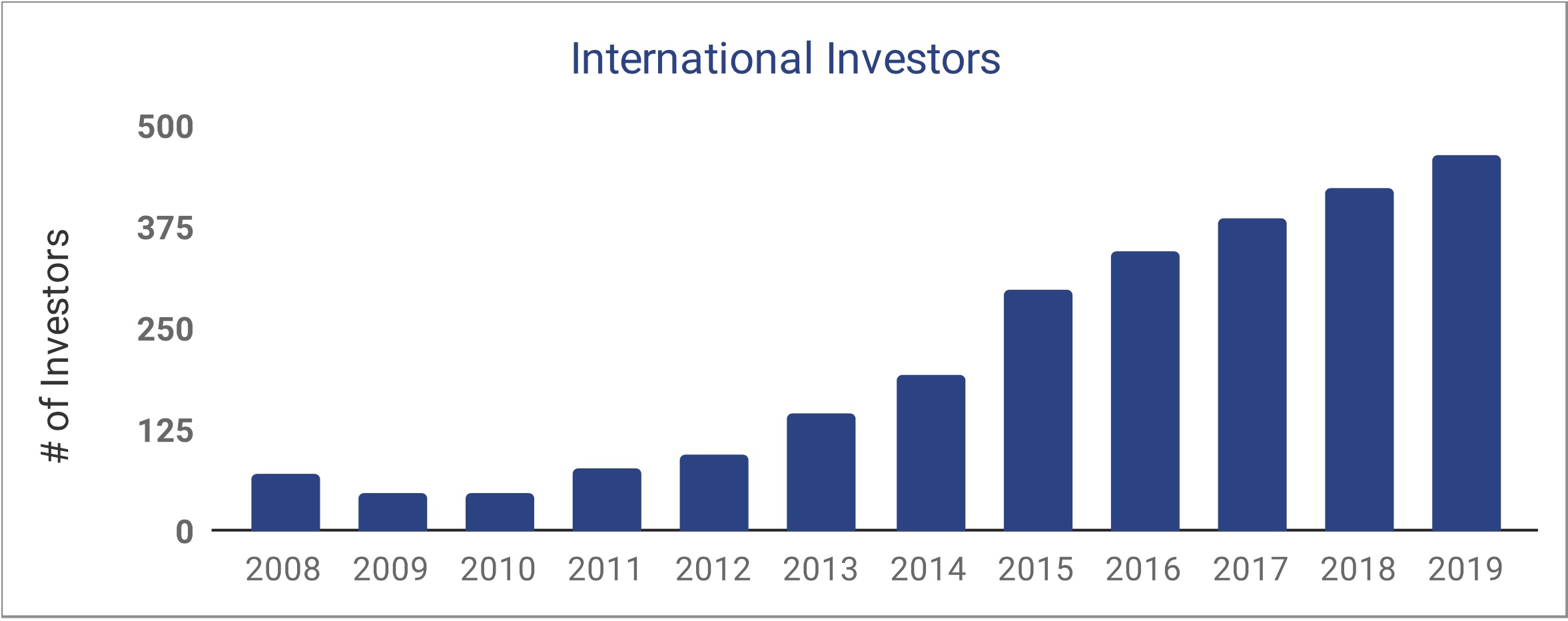
This year’s fundraise further moves the nation’s burgeoning startup space on a path of steady growth.
Since 2016, when tech startups accumulated just $4.3 billion — down from $7.9 billion the year before — flow of capital has increased significantly in the ecosystem. In 2017, Indian startups raised $10.4 billion, per Tracxn.
“The decade has seen an impressive 25x growth from a tiny $550 million in 2010 to $14.5 billion in 2019 in terms of the total funding raised by the startups,” said Tracxn.
What’s equally promising about Indian startups is the challenges they are beginning to tackle today, said Dev Khare, a partner at VC fund Lightspeed Venture Partners, in a recent interview to TechCrunch.
In 2014 and 2015, startups were largely focused on building e-commerce solutions and replicating ideas that worked in Western markets. But today, they are tackling a wide-range of categories and opportunities and building some solutions that have not been attempted in any other market, he said.
Tracxn’s analysis found that lodging startups raised about $1.7 billion this year — thanks to Oyo alone bagging $1.5 billion, followed by logistics startups such as Elastic Run, Delhivery, and Ecom Express that secured $641 million.
176 horizontal marketplaces, more than 150 education learning apps, over 120 trucking marketplaces, 82 ride-hailing services, 42 insurance platforms, 33 used car listing providers, and 13 startups that are helping businesses and individuals access working capital secured funding this year.
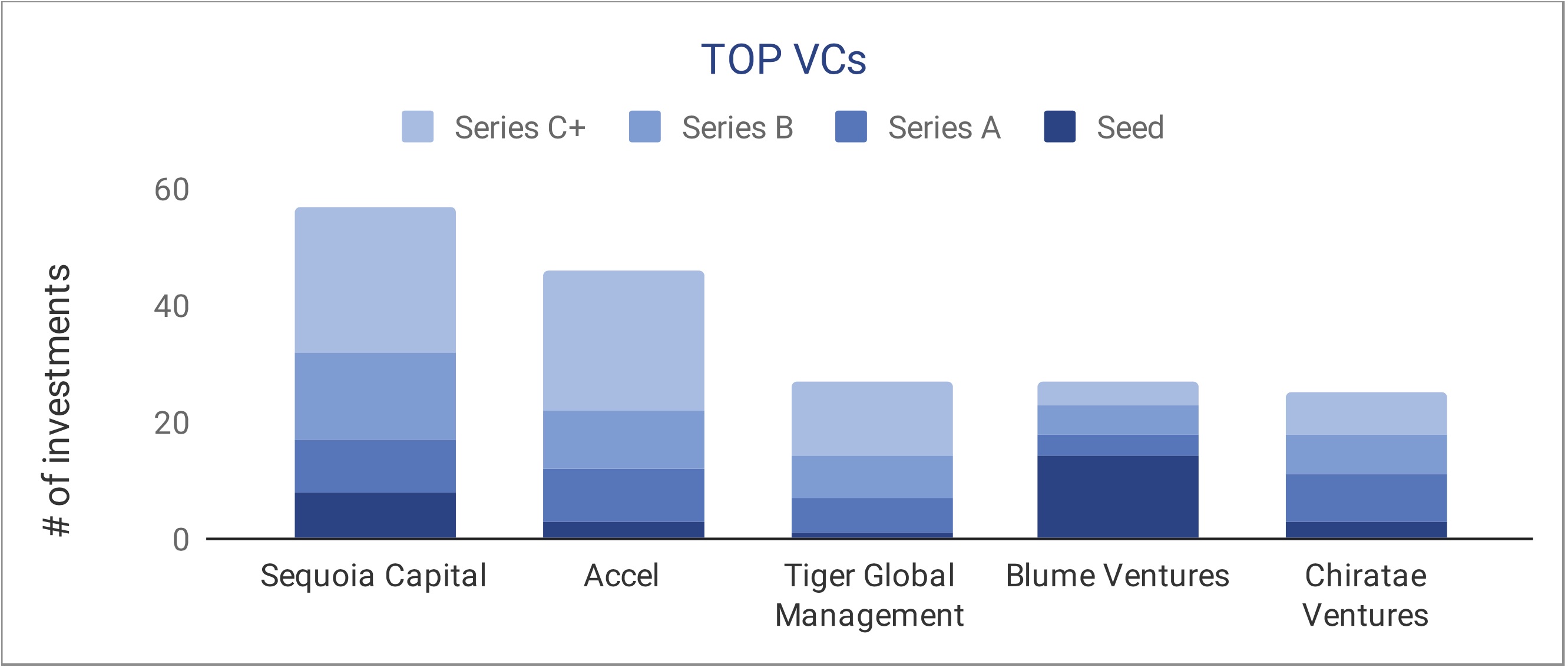
Sequoia Capital, with more than 50 investments — or co-investments — was the most active venture capital fund for Indian tech startups this year. (Rajan Anandan, former executive in charge of Google’s business in India and Southeast Asia, joined Sequoia Capital India as a managing director in April.) Accel, Tiger Global Management, Blume Ventures, and Chiratae Ventures were the other top four VCs.
Steadview Capital, with nine investments in startups including ride-hailing service Ola, education app Unacademy, and fintech startup BharatPe, led the way among private equity funds. General Atlantic, which invested in NoBroker and recently turned profitable edtech startup Byju’s, invested in four startups. FMO, Sabre Partners India, and CDC Group each invested in three startups.
Venture Catalysts, with over 40 investments including in HomeCapital and Blowhorn, was the top accelerator or incubator in India this year. Y Combinator, with over 25 investments, Sequoia Capital’s Surge, Axilor Ventures, and Techstars were also very active this year.
Indian tech startups also attracted a number of direct investments from top corporates and banks this year. Goldman Sachs, which earlier this month invested in fintech startup ZestMoney, overall made eight investments this year. Among others, Facebook made its first investment in an Indian startup — social-commerce firm Meesho and Twitter led a $100 million financing round in local social networking app ShareChat.


Storage giant Seagate unveiled two new hard disk drives with a 16TB capacity earlier this year and for once, it was not all about data centers.
The Exos X16 and the IronWolf/IronWolf Pro targeted two different audiences (data center for the first and NAS users for the second) and feature SATA or SAS interface only for the first one and SATA only for the second model.
Provantage is selling the Exos (ST16000NM001G) for just over $400 while the IronWolf one (ST16000VN001) retails for just under $500 from Amazon.
Both have nine platters, use Helium technology and have a five year warranty (the IronWolf has three); they also share the s same spinning speed (7200RPM), idle power (5W), average latency (4.16ms) and cache (256MB).
The Exos range carries a MTBF (mean time before failures) at 2.5M hours and boasts a higher sustained transfer rate at 261MBps; the IronWolf Pro and the IronWolf reach 250 and 210MBps respectively. Note that the IronWolf Pro also comes with bundled Rescue Services, great for data recovery.
Toshiba announced the 16TB MG08 series in January 2019 but we have yet to see any stock in the channel. Western Digital also shipped its first 16TB hard disk drives as well but based on MAMR rather than HAMR technology - as used by Seagate.
While SSD prices have been falling, they are still far more expensive than their hard disk drive counterparts. At about $2800, Micron’s 9300 Pro is nearly SEVEN times more expensive although this gap has all but disappeared for sub-1TB capacities.
For anyone that's been following the computing industry over the last year, it's probably not too surprising or controversial to say that Intel hasn't had its best year ever. The Santa Clara chip manufacturer faced a number of challenges in 2019, from its own silicon shortages to recent developments in the ever-turning Intel vs AMD processor wars.
But it wasn't all bad. Intel did release some very promising technology this year, mostly when it comes to its 10nm Ice Lake laptop chips that kick off a new age for Intel-based laptops that it's calling Project Athena.
All of this leaves Intel in a pretty interesting spot this year, and makes us intensely curious what it will be doing at CES 2020 and beyond - those desktop chips have to be somewhere, right?
Either way, because 2019 is finally over and 2020 is peeking from around the corner, we're going to dive into all the major breakthroughs and defeats that Intel experienced in 2019, along with what we predict for 2020.
Because we knew that AMD would be releasing a slew of 7nm processors in 2019, we were expecting big 10nm moves from Intel in response. And, that's exactly what we got at CES 2019. Well, kind of.
At the giant tech conference, Team Blue announced its new Sunny Cove architecture, built on a 10nm process, that would be behind the upcoming Ice Lake microarchitecture. What we didn't know at the time though, is that Sunny Cove would be almost entirely built for laptops, rather than desktops.
Essentially, Intel was hinting at a mobile platform that wouldn't come out for months, along with Lakefield, a new hybrid CPU architecture meant to take on Qualcomm's increased competition with the likes of the new Qualcomm 8cx chipset found in the Surface Pro X. But, even though this was announced way back at CES 2019, we still haven't seen it materialize into an actual product.
In fact, we didn't hear more about Ice Lake until Computex 2019, which was a whole five months later. At the giant computing event in Taipei, Intel spilled more details on Ice Lake, and how it would in fact be shipping in 2019.
Some clarification was also given on what Project Athena actually was - rather, is. Rather than a single product or CPU microarchitecture, it is a multi-year-long initiative that would see Team Blue pushing mobile computing further, improving AI and power efficiency to produce more accessible computing for everyone.
When Ice Lake laptops started to hit the streets in September 2019, we noticed that a lot of them were more power efficient and mobile, but we've yet to see how Intel's AI focus will truly impact your average consumer. We've heard about how your computer would be able to learn what users need the most power for, and intelligently boosting performance around these personalized tasks, but there just isn't an excellent way to test that for ourselves quite yet.
Ice Lake wasn't the only mobile architecture on offer by Intel this year. Comet Lake also managed to power a lot of the best laptops this year, but there was a catch: it was still based on the same 14nm process as Intel's been stuck on for years. This meant that these chips weren't much of an improvement over 2018's Whiskey Lake.
And for the most part it seems like there were far more laptops with Comet Lake than Ice Lake, perhaps because the new 10nm Sunny Cove architecture is in shorter supply. We just hope that in 2020, Intel can go all-in on 10nm.
Also at Computex 2019, Intel announced the Core i9-9900KS, a "special edition" of the Intel Core i9-9900K with an all-core boost clock of 5.0GHz. The only problem was that the Core i9-9900K really had no problem hitting that via overclocking, providing you had a halfway-decent cooling solution.
When we finally got our hands on the Intel Core i9-9900KS for review, we found that it was only marginally faster than the original chip at stock settings, which was pretty disappointing.
That alone wouldn't have been a huge deal, but 2019 marked the first year that Intel did not release a new desktop lineup of processors, leaving AMD Ryzen 3rd Generation to take over the desktop market completely unopposed. Intel fell behind AMD both in performance and market share, which was only exacerbated by some bizarre claims made by its marketing.
This is definitely something that Intel needs to improve on in 2020 if it wants to remain competitive in the desktop space. Intel still has a leg-up when it comes to single-core performance (which is especially important in PC games), but that gap narrows with every single generation, and if Intel doesn't do something, AMD will absolutely come out on top in 2020 in that area, as well.
In 2018 Intel only just managed to pull ahead of Threadripper 2nd Generation, but with a higher price tag. We expected the same thing to happen this year as well, with Intel tackling Threadripper 3rd Generation directly. But reality, as always, is stranger than fiction.
We heard that Cascade Lake-X processors would be coming out in November 2019, and that they'd be significantly cheaper than prior generations, to the tune of as much as 50%.
And while we haven't had a chance to get a full review of the Intel Core i9-10980XE, our own internal testing points to a chip that's slower than AMD's Ryzen 9 3950X. Not only is that chip cheaper, but it's on the mainstream X570 platform which is also more affordable than the Intel X399 motherboard you'll need to actually use the 10980XE.
Intel has essentially reached the limit of what it can do on the 14nm process, and it will absolutely need to move to 7nm across its desktop platforms to remain relevant in 2020.
In a lot of ways, 2020 is going to be a make-or-break year for Intel: if it doesn't innovate in the desktop space, Team Blue is going to be all but irrelevant. Hopefully, CES 2020, which is right around the corner, will give us some hint as to what we can expect from the 10th-generation desktop lineup of processors, especially because Coffee Lake Refresh came out so long ago.
We're also expecting the veil to be lifted from Intel Xe graphics cards, but we would expect those to be shown off at Computex 2019, as that show is all about breakthrough computing technology.
Beyond that, we fully expect Project Athena to develop even more, delivering laptops that can truly last all day in chassis that we can easily toss in our bag without even noticing the weight difference. Tiger Lake is promising to be at least an interesting mobile platform, and the replacement for Ice Lake may even be the first glance we get of Xe graphics - sometimes things come in the weirdest packages.
At the end of the day, we want nothing more than for Intel to remain competitive across the entire computing landscape. AMD is on top of the world right now, providing Intel with competition it hasn't faced in years. But, if Intel doesn't adapt and provide some meaningful improvements in the desktop space, we could see the processor market becoming stagnant again in a few years. 2020 will likely give us a pretty good idea of whether or not that will happen.

 faran follow
BLUETTI FridgePower review
Examining the ‘pipeline problem’
Easemate.ai review
How to stream Pet Shop Boys album A Man from the Future for free online from anywhere
TP-Link Archer 8 Ultra Wi-Fi 8 router is out — but it's seriously pricey
New Thor: Love and Thunder image confirms big link to Moon Knight
Diablo Immortal release times and pre-load confirmed
Southampton vs Portsmouth live streams
How to watch Singapore Grand Prix 2026: Live stream F1 sprint weekend from anywhere


Follow Us
Were this world an endless plain, and by sailing eastward we could for ever reach new distances