The Samsung M series devices in the past couple of years have been one of the best mid-range to premium devices in the sub Rs 20,000 segment. The series has played an instrumental part in bringing Samsung’s overall numbers up and staying in the top 5 smartphone makers in India.
Soon, the company will be launching the Galaxy M51 in India. With this launch, Samsung will be moving a step ahead in the price ladder and we expect it to be slightly more specced and priced above the Galaxy M31 series.
The Samsung Galaxy M30 and M31 series are extremely popular in India and the company added a new device called the Galaxy M31s. The key highlight of the series is the massive battery and the AMOLED screen, which is a great combo for the masses. With the upcoming Galaxy M51 device, Samsung will try and replicate the same success they’ve enjoyed with the M30/M31 series but with a slightly more premium price.
Just ahead of the India launch, the device was announced in Germany and now, we have all the specs as per the German Samsung site.
Cut to the chase
What is it? A new mid-ranger by Samsung
When will it come? September
What price? Under Rs 30,000
Samsung Galaxy M51 expected price and launch date in India
(Image credit: Sudhanshu)
The device is in the news for a long time now. First, the device was expected to launch in the month of June and then, due to the production issues, the launch was pushed ahead and now, it looks like Samsung is finally ready to unveil the Galaxy M51 in India. We are expecting the launch of the device in September first half.
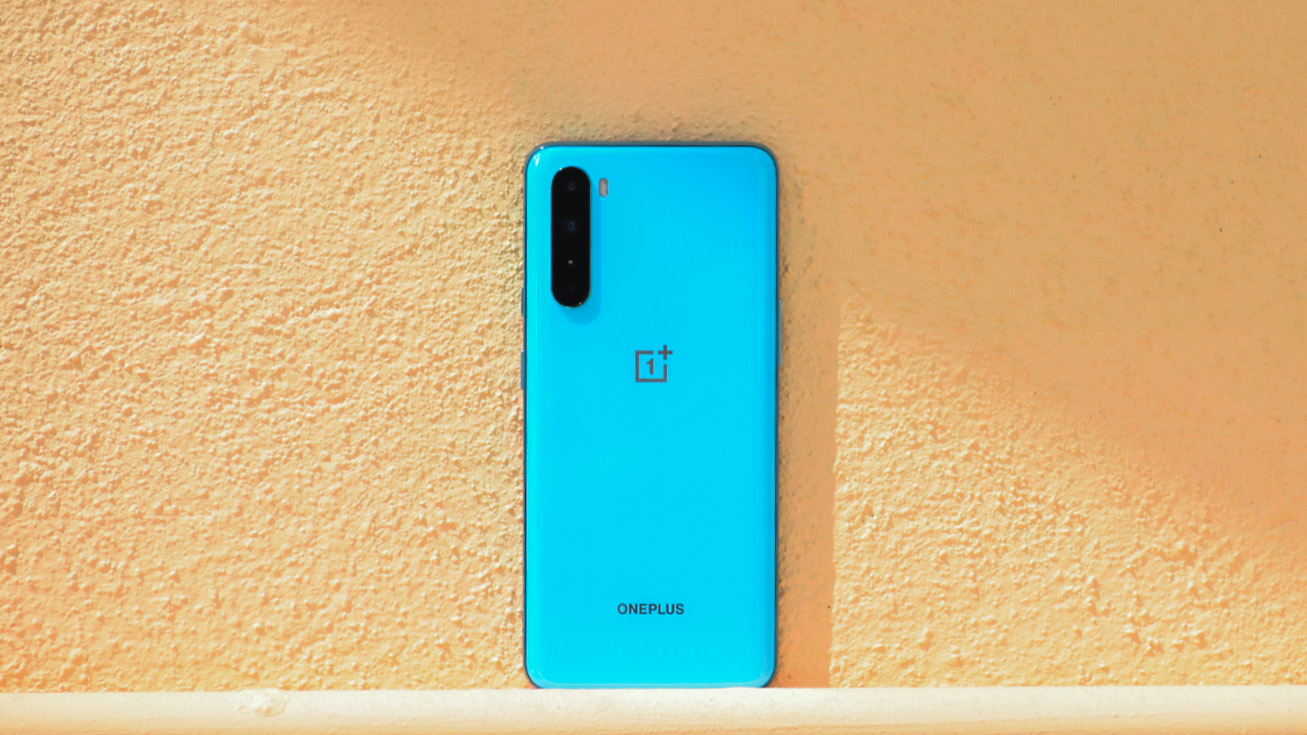
As far as the pricing is concerned, the device is expected to sit above the Galaxy M31s line-up, which means the price of the base variant of the Galaxy M51 might start around Rs 25,000 and go all the way up to Rs 30,000. Since the devices are most likely ‘made in India’, we can expect some aggressive pricing. With this price point, Samsung will take on the likes of OnePlus Nord, Realme X3 series, and Redmi K20 Pro.
In Germany, the device is available for pre-order at € 360 which is around Rs 31,400. The Samsung Galaxy M51 will be available on Amazon, just like the other M series devices. The teaser for the same is already live on Amazon.in.
Design and Display
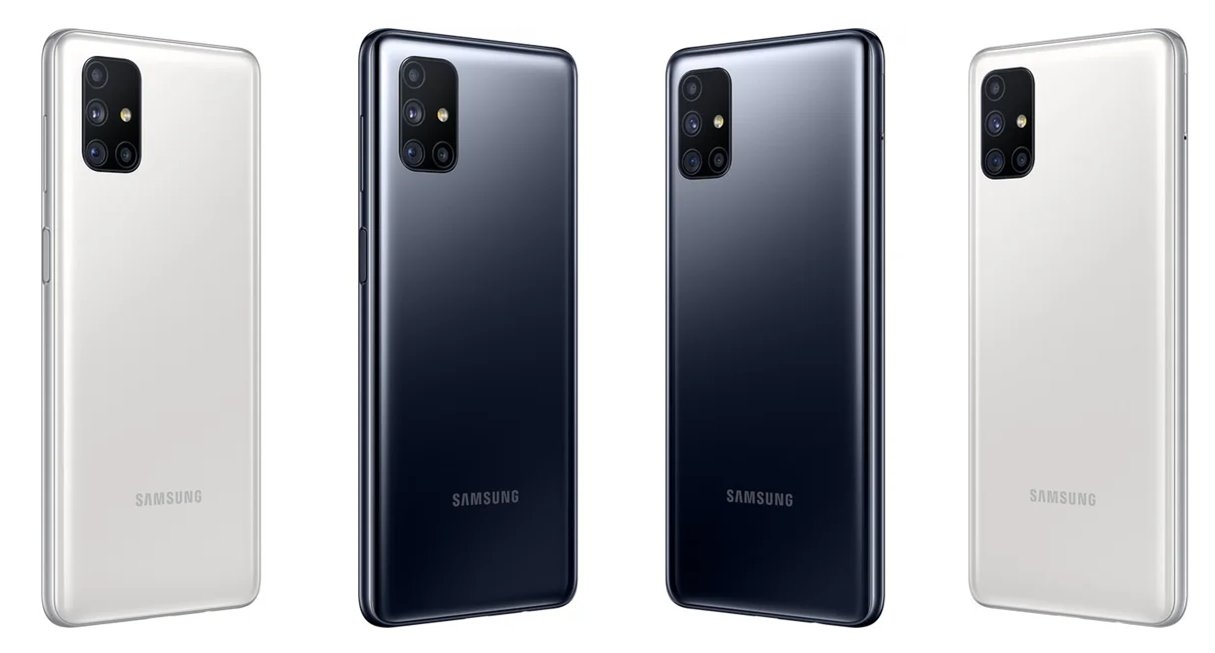
The Samsung M series has followed the same design language over the years with a polycarbonate body and different colours including a couple of gradient finishes on the back. With the Galaxy M51, you get a similar design language. It comes with a glossy back and is available in two colour options Black and White.
The Samsung Galaxy M51 packs in a 6.67-inch display. It is a Super AMOLED screen with Infinity-O panel which means there is a centred punch-hole cutout for the selfie camera. The refresh rate here is set at 60Hz, although we’d have liked to see a Samsung device with 90Hz in the mid-range segment.
According to previous reports, the device will have a resolution of 2,340 by 1,080 pixels. It is said to have a pixel density of 386ppi and 420 nits brightness, which is similar to the Galaxy M31s. Further, the device is said to come with 8.5mm thickness and weight of around 213 grams.
(Image credit: Samsung(Germany))
Performance
Performance is one thing that the M series always had issues with. Samsung was opting for its own Exynos SoC or going for under-powered/outdated chipsets from Qualcomm. They both resulted in a slow performance which affected the user experience.
In Germany, the Galaxy M51 is available in one configuration, 6GB of RAM with 128GB of internal with microSD card slot for additional storage. However, in addition to the variant, in India, we can expect the device to come with 8GB RAM. There is also the Samsung Knox security feature that's built-in to the handset.
There is still no clarity on the chipset of the Galaxy M51 even though the device is launched in Germany. The site only mentioned "Octa-core" and nothing more. The chipset inside still remains a mystery here. It could be Snapdragon 730/730G chipset or the in-house Exynos SoC.
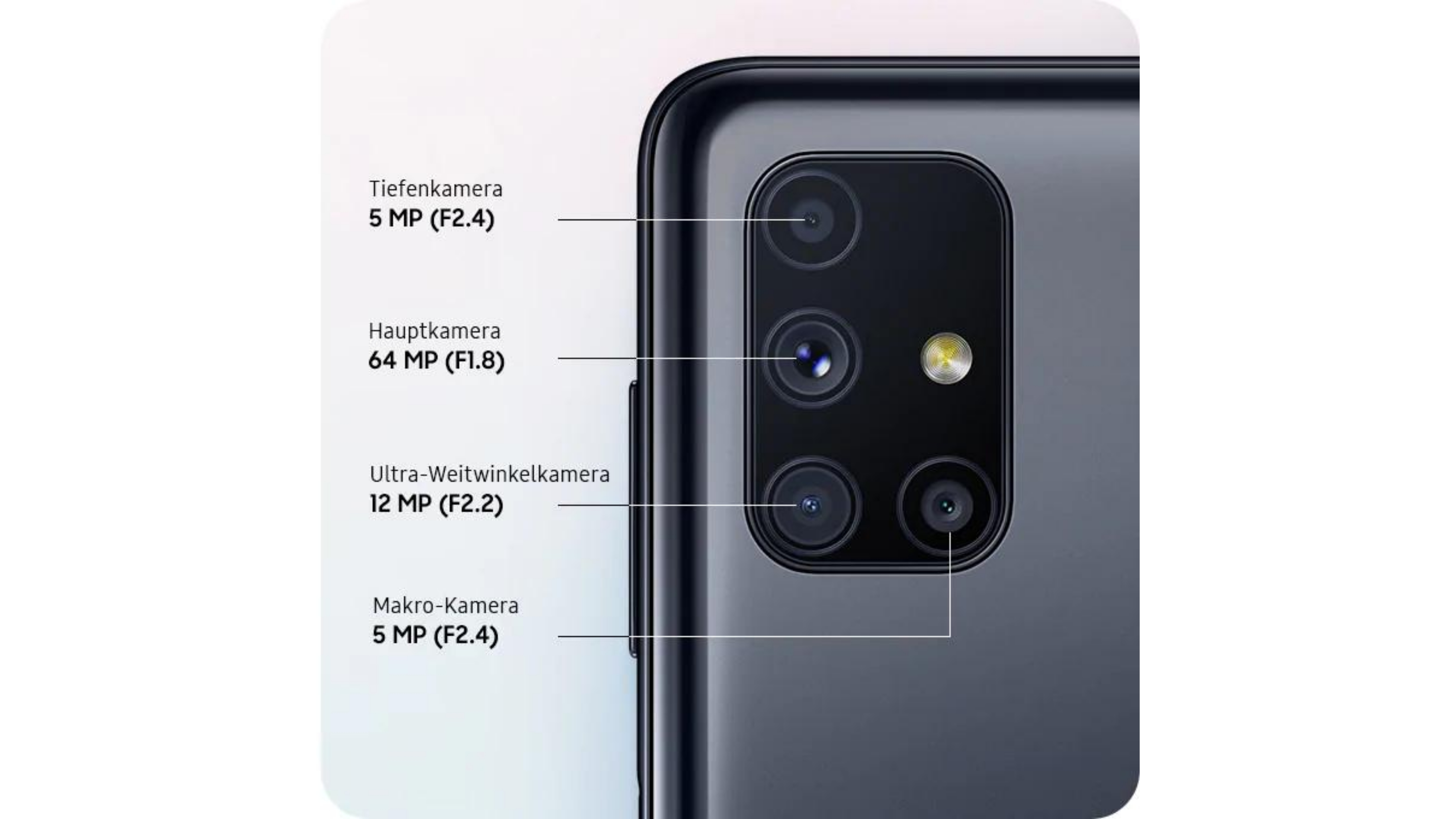
The Galaxy M51 comes with a quad-camera set-up with a 64MP primary camera with f/1.8 aperture. The primary camera is followed by a 12MP wide-angle lens with f/2.2 aperture, a 5MP depth sensor and a 5MP macro lens. For selfies, the phone is said to feature a 32MP shooter. The camera specs are pretty much similar to the Galaxy M31s here.
It also comes with a bunch of shooting modes such as Live focus, background blur for selfies, and more.
Battery and charging
Battey capacity and battery life have always been a plus point for the M series. With the Galaxy M51, Samsung is taking that to the next level. The Galaxy M51 features a massive 7,000mAh battery. This is a jump for M series standard 6,000mAh capacity. On the charging front, the device comes with support for 25W fast charging technology via Type-C interface.
(Image credit: Amazon)
Everything else
Apart from the above-mentioned specs, the Galaxy M51 comes with a side-mounted fingerprint scanner along with face unlock feature. It runs on OneUI 2.0 based on Android 10.
Since the turn of the century, the vinyl, which most thought was a dead audio format, has seen a surprising resurgence. Tens of millions of copies have sold across both sides of the Atlantic, bucking the trend that saw physical, tangible objects being replaced by digital formats.
Like we did for the venerable tape cassette a few weeks ago, we let our minds wonder and had a think about what a 2020 vinyl upgrade might look like.
It turns out there was indeed an update to the LP, the 12-inch version of the vinyl medium, but it was used for video, not audio. The Laserdisc was all the rage in South East Asia in the 1980’s and 1990’s, where the ability to access any track on a disc within seconds made it a favourite in thousands of Karaoke bars before the internet era.
The technology used in the Laserdisc was improved over two decades to give rise first to the DVD and then to the Blu-ray.
The Laserdisc's official successor, the Archival Disc, was first announced in 2013. However, it is used primarily - as the name implies - for data archiving purposes (popular in cloud storage setups as cold storage).
A single disc can store 300GB, with triple layer Blu-ray discs reaching 200GB. The data is recorded on both sides for both media and the Archival Disc roadmap introduces 500GB and 1TB models in a near future.
They are stored in cases (known as magazines) to mitigate the risk of physical damage (scratches etc.), similar to floppy discs (or ZIP/Syquest).
Laserdisc updated to 2020
Even using the technology of a 200GB Blu-ray disc, a dual-sided 2020 version of the vinyl would be a formidable rival to other archival media. A Blu-Ray disc has a diameter of 4.7 inches, while a Laserdisc is 12 inches in diameter. Without accounting for the non-usable areas (near the edge and in the middle), the “laservinyl” offers a far larger real estate, by about 6x.
So here you have it, if someone (Panasonic, Sony, Verbatim or Hitachi) decided to take a punt and create a 2020 version of the Laserdisc, complete with a portable turntable/record players/mange disque, the media would have a capacity of about 1.2TB - and up to a staggering 6TB if they used the latest technology deployed on the Archival Disc.
That is still a far cry from the 100TB SSD(the world’s biggest solid state drive) or the forthcoming 20TB hard disk drive, but it is likely that the cost of production would be far cheaper.
A wardrobe-sized cabinet with 200 or so discs would be able to store 1.2PB of data. Plus, optical discs are a contactless media, impervious to magnetic fields and have a lifetime of about 100 years when stored safely.
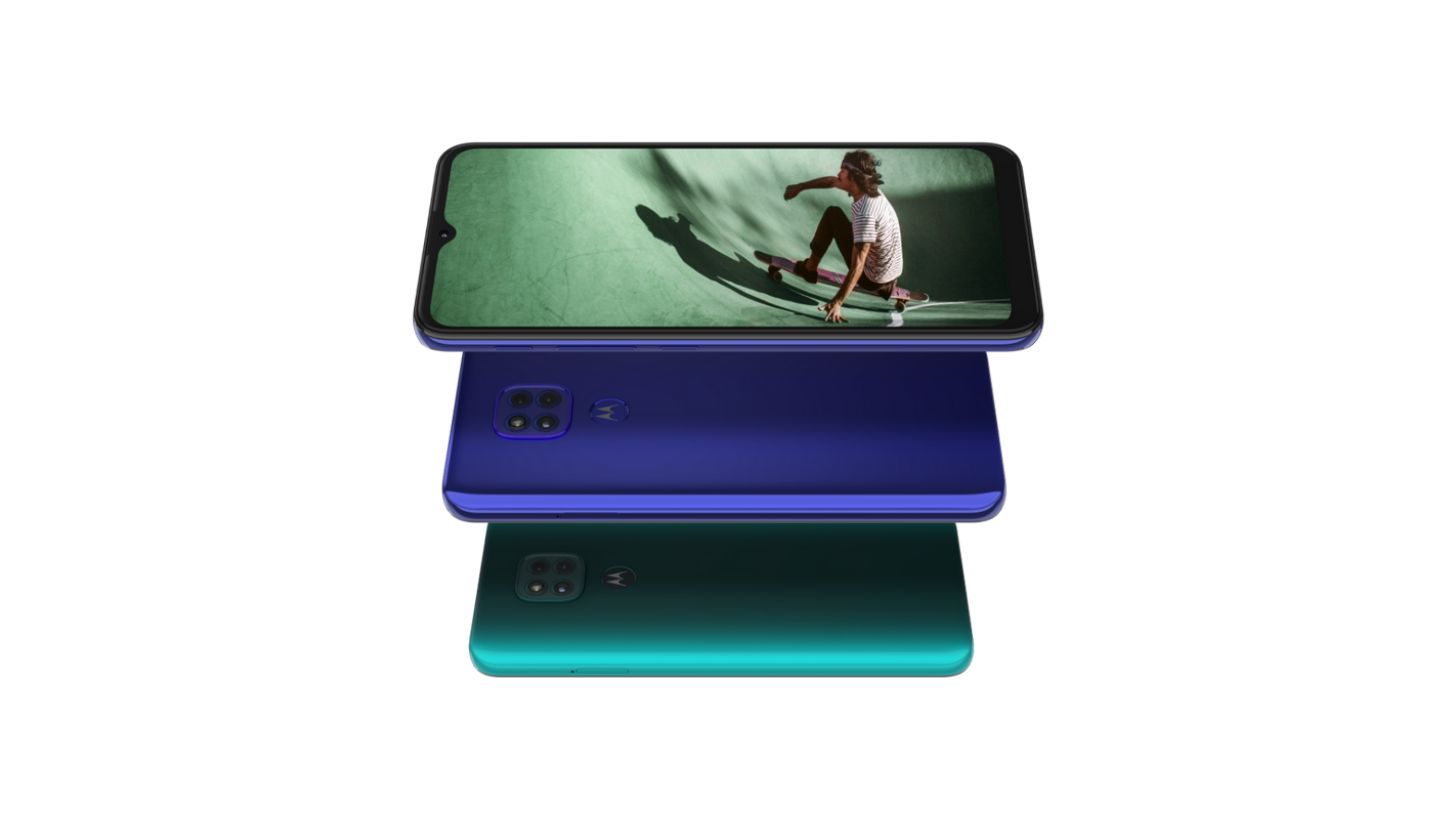
Motorola’s latest G series device, the Moto G9 will go on sale in India today. The device was announced last week in India as India’s first smartphone with the Qualcomm Snapdragon 662 chipset.
The Moto G9 will go on sale in India 12 noon on Flipkart. For the first sale, you can also avail Rs 500 instant discount if your purchase made through ICICI Bank or Yes Bank Credit Cards and Debit card EMI transactions.
The Moto G9 features a 6.5-inch HD+ Max vision IPS TFT display with 1600 x 720 Pixels resolution. It comes with a tall 20:9 aspect ratio. Under the hood, the device is powered by Snapdragon 662 SoC with Adreno 610 GPU. This is also India’s first phone to feature the same. Snapdragon 662 is an octa-core processor with a clock speed of 2GHz. The device comes in one variant only with 4GB of RAM and 64GB of internal storage. You also get micro SD card support up to 512GB.
On the optics front, the Moto G9 features a triple camera stack at the rear with a 48MP primary sensor with f/1.7 aperture and quad pixel technology. This is followed by a 2MP depth sensor and a 2MP macro shooter with an f/2.4 aperture. The Moto G9 comes with an 8MP selfie camera which is placed in the dew-drop notch. Powering the internals is a 5,000mAh battery, the largest in the Moto G series. It is backed by a 20W fast charging and comes with a Type-C port.
The device runs on Android 10 with near-stock UI. The fingerprint scanner is located on the rear. Other features on the Moto G9 include water-repellent design, NFC, 3.5 mm headphone jack, quick gestures, Bluetooth 5, dual-band Wi-Fi, and Hybrid slot.
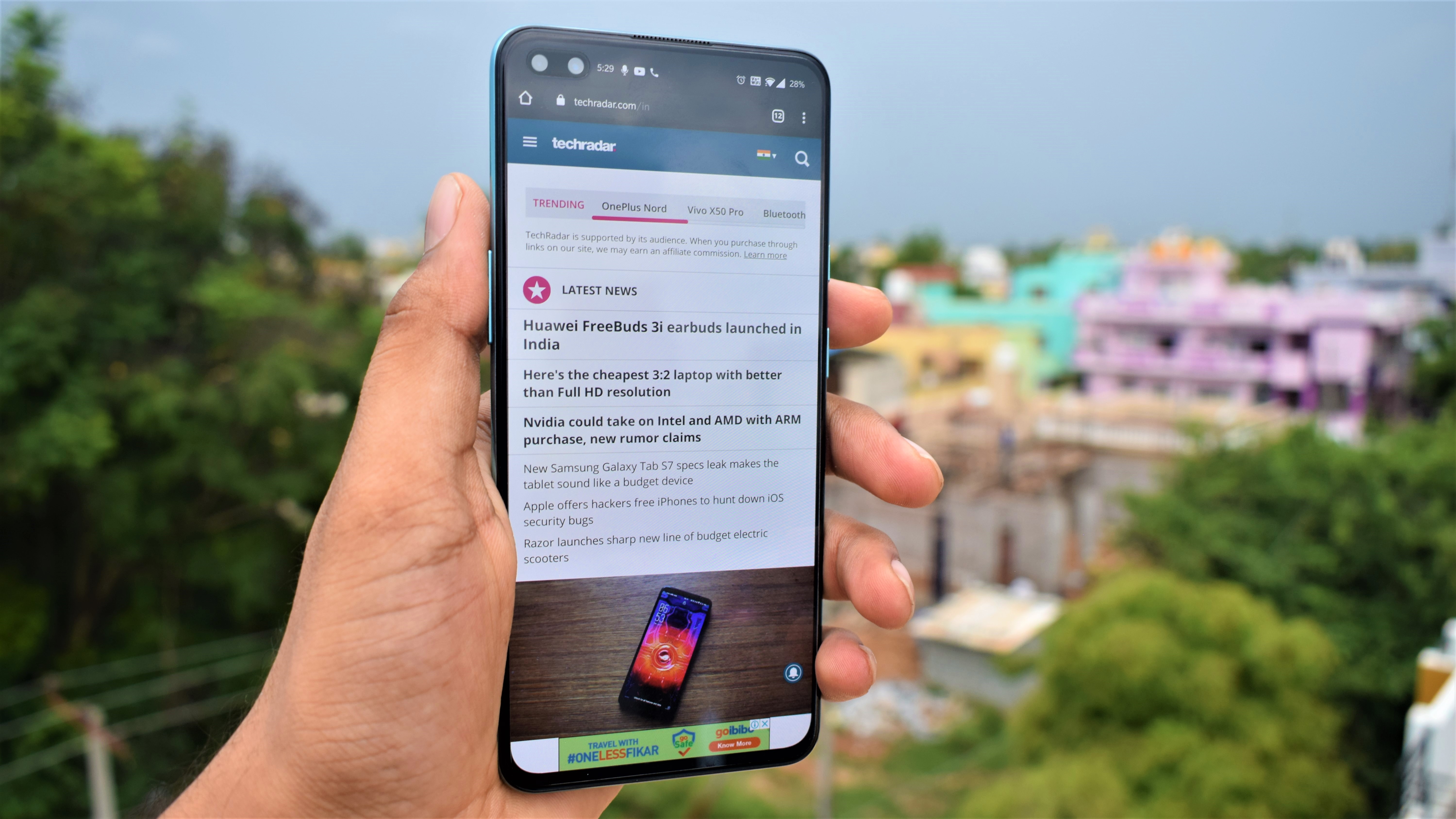
The OnePlus Nord will go up for pre-booking in India today. The device was launched as the OnePlus’s first mid-range device last week. There are also a couple of offers for those who pre-book the phone.
The Pre-booking will be up on Amazon starting today 12 noon and will go on till August 3. The OnePlus Nord will go on open sale starting August 4 on Amazon. If you pre-book today and pay the full amount, your Nord order will be dispatched starting August 4.
If you pre-book the device today, you will be eligible for Rs 2,000 off on purchase of OnePlus Nord. EMI offers will include upto 6 months of no-cost EMI on purchase of the OnePlus Nord. Jio is offering Rs 6,000 worth of benefits across the platform. And, lastly, OnePlus Red Cable Club will give you an additional six-month extended warranty and assured buyback rates, 50GB worth of free OnePlus Cloud storage and other exclusive benefits.
OnePlus also said that the open sale will be available on a first-come, first-served basis depending on the stocks. Hence, pre-booking is advised.
For those who pre-ordered the OnePlus Nord by paying Rs 499 on July 15, Amazon will send a coupon code along with the Gift Box web-link (oneplus.in website) within 30 days of the smartphone purchase. You can redeem the Pre-order Gift Box in the web-link provided by Amazon without additional cost. If you return the phone, you would not be able to redeem the 2nd pre-order box.
The offline pre-booking is now open and will be available till August 3 at OnePlus Stores, Reliance Digital stores and other selected partner stores across India. You can pay Rs 1,000 and pre-book the OnePlus Nord. The orders can be collected during pre-booking sale on August 4 and 5.
Starting August 4, the OnePlus Nord will be up on open sale on Amazon.in. The 8+128GB Blue and Gray variant will be on sale. The 12+256GB Gray variant will also go on sale on the same day. However, the 12+256GB Blue Marble variant will be a part of Amazon Prime Day 2020 launch and will go on sale from August 6. And, lastly the base variant 6+64GB will be available later in the month of September.
OnePlus Nord price
OnePlus Nord
Price
6+64GB
Rs 24,999
8+128GB
Rs 27,999
12+256GB
Rs 29,999
(Image credit: Srivatsa Ramesh)
OnePlus Nord quick specs
6.44-inch Full HD+ Fluid AMOLED screen
90Hz refresh rate
Octa-core 2.4GHz Snapdragon 765G processor
6/8/12GB RAM
64/128/256GB internal storage
48MP + 8MP + 5MP + 2MP rear cameras
32MP + 8MP selfoe cameras
4,115mAh battery, 30W Warp charging
Android 10, OxygenOS 10.5
Thickness: 8.2mm
Weight: 184 grams
OnePlus Y1 32-inch smart TV will also on sale via Amazon at 12 noon today. It is priced at Rs 12,999.
Update(August 31): The MagsicBook 15 will go on sale in India today on Flipkart.
The Honor MagicBook 15 will go on sale in India next week again. The laptop was launched in India back in July along with two smartphones. The laptop will go on sale again on August 31 at 12 noon.
The company entered the budget laptop segment to take on the Mi NoteBook 14 in India. Unlike the Mi NoteBook 14, the MagicBook 15 is powered by AMD Ryzen chipset.
The Honor MagicBook 15 is priced at Rs 42,990 and for the first sale, it was available for Rs 39,990. However, on the next sale, the laptop will be priced Rs.3000 higher.
#HONORMagicBook15 goes on sale on 31st August, 12PM. Make work & play a delight with all-day battery & ultra-fast performance. Buy at ₹42,990 + no-cost EMI upto 12 months, starting at ₹3583*. Also, get ₹8400 off on product exchange on @Flipkart!https://t.co/yXnivyCldX pic.twitter.com/K6Hp8DB365August 26, 2020
It is a thin and light laptop which will take on the Mi NoteBook 14 here in India. The major difference comes with the SoC. The Honor MagicBook 15 is powered by AMD Ryzen 5 3500 CPU coupled with Vega 8 graphics. You get 8GB of DDR4 dual-channel RAM and 256GB of SSD. Port options onboard include a Type-C port, HDMI, USB 2.0, and a USB 3.0.
One of the unique features of the laptop is the camera. The MagicBook 15 comes with a pop-up HD camera which is placed under the keyboard and comes out only when in use. You get a 15.6-inch FullView Full HD display with 16:9 aspect ratio with 5.3mm thin bezels on all the sides. On the battery front, there is a 65Whr battery with quick charge support for a quick charge which can charge up to 53% in just 35 minutes. It charges via Type-C port. On a single charge, the laptop is claimed last up to 6.6 hours.
For security, there is a fingerprint scanner that’s integrated with the power button. Other features include Magic link 2.0 which makes sharing between laptop and phones seamless(only select Honor devices). To keep the thermals under check, there is an S-shaped fan under the hood. The laptop weighs 1.53Kgs and is thick at 16.9mm.
Xiaomi’s Mi Band series has been India’s go-to budget fitness trackers for the past few years. The Mi Band 4 is soon expected to get a successor with the Mi Band 5, which is already available in China. However, along with the fitness tracker, the company is also expected to bring a new smartwatch this time.
According to a report from 91mobiles, the Mi Band 5 and Mi Watch Revolve smartwatch are expected to land on Indian shores soon. The Mi Band 5 will be the successor to the Mi Band 4 budget fitness tracker and the Mi Watch Revolve will be the company’s first smartwatch in the country.
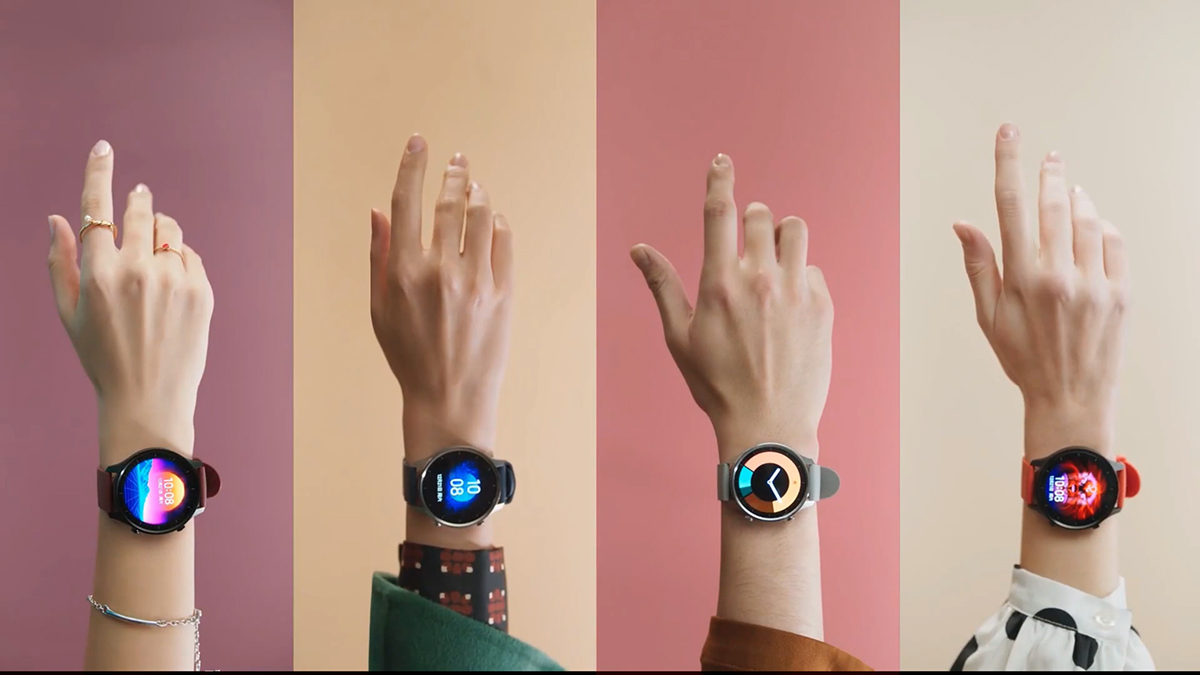
The Mi Watch Revolve is renamed Xiaomi Mi Watch Color for markets outside of China. It features a circular 1.39-inch AMOLED screen with two crowns for navigating. It comes with a heart-rate monitor, GPS, sleep tracker, and connects via Bluetooth 5.0. It is also water-resistant up to 5ATM and offers up to 14 days of battery life on a single with the in-built 420mAh battery. It runs on Xiaomi’s own software and not Google’s Wear OS. In China its priced at CNY 800 (~Rs 8,521 ).
The Mi Band 5, on the other hand, is more affordable and is priced at CNY 189 (~Rs 2,000). It features a 1.1-inch AMOLED screen, 6-axis sensor, and offers up to 14 days battery. The Mi Band 5 comes with a magnetic charger which is one of the major upgrades in the Mi Band lineup. Apart from that, there is 11 sports mode, 24x7 heart rate monitor, 5ATM water resistance. It also comes with NFC and Xiao AIvoice assistant. However, that feature might be limited to China.
There is no timeline or launch date from Xiaomi regarding these two wearable devices yet. However, mid-September is usually the time when Xiaomi generally announces a bunch of new devices at the annual Mi Smarter Living event. We can expect the launch of the two wearables in the mid-September as well.
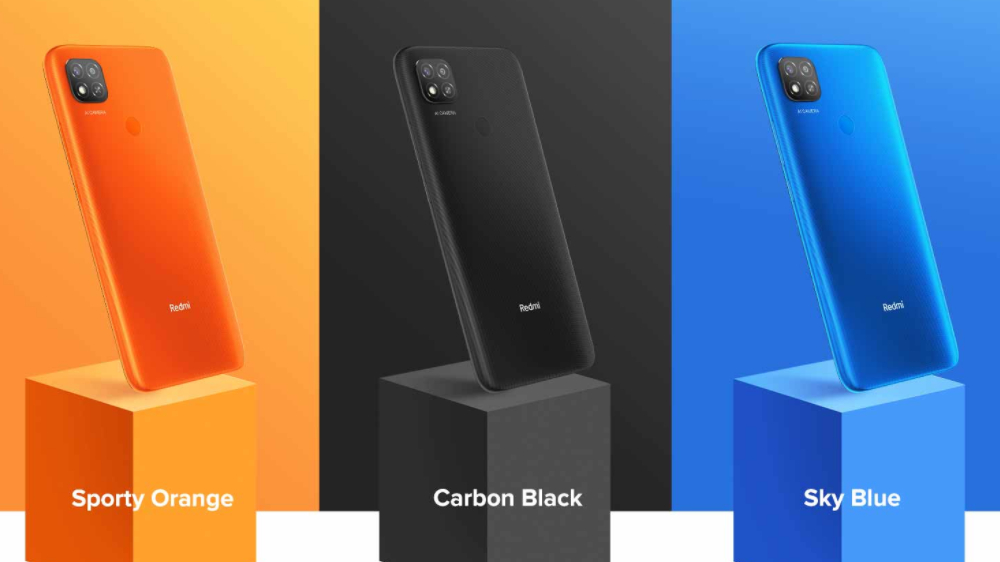
The Redmi 9 which is the fifth device in the Redmi 9 series will go on sale in India today. The device will be available on Amazon and Mi.com.
This is the first sale of the device since it was launched in India last week. This is Xiaomi’s first device in India to run on MIUI 12 out of the box. The device will be available in two variants. The 4+64GB variant is priced at Rs 8,999 and the 4+128GB variant is priced at Rs 9,999. It will go on sale at 12 noon via Amazon.
It packs in a 6.53-inch HD+ display with a resolution of 1,600 x 720 pixels and a dot-drop notch. The display is certified by TUV Rheinland for low Blue light and has a max brightness of 400 nits. On the inside, the handset is powered by Mediatek’s Helio G35 SoC which is an octa-core chipset clocked at 2.3GHz. It comes with 4GB of RAM and up to 128GB internal storage. There is also a dedicated microSD card slot which supports memory expansion up to 512GB.
The Redmi 9 comes with MediaTek’s HyperEngine technology which is said to enhance the gaming experience. On to the camera department, the Redmi 9 features a dual-camera setup with a bunch of AI shooting modes. You are looking at a 13MP primary camera tagged along with a secondary 2MP depth sensor along with LED flash. To the front, there is a 5MP selfie camera with AI selfie mode. The camera app comes with a new UI on the device with support for portrait mode and pro mode.
Furthermore, to the phone up and running, the device is packed with a 5,000mAh battery. However, it misses out on fast charging and you will have to settle with 10W charging via micro USB port. This is also Xiaomi’s first phone India to run on the latest MIUI 12 skin which is based on Android 10.
Other features include a rear-mounted fingerprint scanner, Bluetooth 5.0, Dual SIM 4G LTE, VoLTE, Vo-WiFi, 3.5mm audio jack, water-resistant P2i rating.
Notches and selfie cameras continue to be the last hurdle on the way to truly full-screen displays. While we’ve seen numerous creative workarounds for them, in the future, they would be concealed under the display itself. With its new breakthrough, Xiaomi is hoping to jump on to this bandwagon, and do it fast.
Xiaomi today shared its success in creating a display which can perfectly disguise the front camera under the screen, creating a truly full-screen form factor without any obtrusions. When implemented, smartphones will be able to offer the usual selfie experience without the need for a notch, punch-hole or moving mechanisms. The company also confirmed that the mass production of phones with this tech will begin next year. Even though a specific timeline wasn’t mentioned, we expect it to debut on a premium product first.
We’re proud to present the latest masterpiece from our Xiaomi engineers: 3rd Generation Under-Display Camera Technology! True full-screen displays are just around the corner! We're planning on putting this into mass production next year. Stay tuned! #InnovationForEveryone pic.twitter.com/DrKeL8wZUgAugust 28, 2020
Xiaomi aims to bring this technology to the mass market next year.
Xiaomi also shared some background information on how the third-generation under-display camera technology was developed. The first implementation was silently worked on and wasn’t showcased to the public. The second model was showcased as a working prototype a year ago, but it wasn’t perfect and had light transmission issues.
That has been addressed with the new development via a self-developed pixel arrangement which allows light to pass through the gap between sub-pixels, allowing individual pixels to retain the complete RGB layout. This was achieved by increasing the horizontal and vertical pixel density of the area above the camera sensor, so as to maintain visual parity with the rest of the display. The circuitry for the module was also redesigned to hide the components under the sub-pixels and further increase light transmission to the camera. It is being supplied by TCL’s Huaxing subsidiary.
A similar implementation was also referred to in a recent patent by Xiaomi which showed a smartphone where a part of the display would become transparent when the front camera is activated, returning to a normal display at other times.
If that seems like a long wait, the ZTE Axon 20 launching next week will be the first smartphone with a functional under-display camera to become available for purchase. We can expect more manufacturers to unveil their hidden selfie camera solutions in the future, with wider availability next year.
Neuralink, Elon Musk’s neurotechnology startup that is developing interfaces to connect human minds to computers, held a big event yesterday to announce what progress they had made over the last one year.
For the uninitiated, Neuralink aims to help people with severe neurological disabilities via devices that can be implanted in the brain. Neurons, which are the basic working units of the nervous system, transmit signals to other parts of the body. All of that information exchange happens over minuscule electrical signals. With the Neuralink device in place, patients should be able to regain or improve upon the effects of neurological injuries. Since every action in the human mind and body works over the same electrical impulse principle, theoretically, it can be used to achieve a lot more things. All of our senses are basically signals sent by the brain, and are thus, alterable.
Using external readers to record neural activities is not a new concept. It is currently being used for medical purposes to achieve the aforementioned results. However, in its current state, the implementations are bulky, need constant expert attention and can function over 100 channels per array. As inconvenient as that may sound, it has proven to be successful. Current implants are done as a part of a Deep Brain Stimulation surgery which can zap your brain with currents to correct certain disorders. However, it can have unwanted effects as limits to how much can be ascertained.
In a lot of ways, it’s like a Fitbit in your skull with tiny wires.
That is the space Neuralink hopes to redefine. Last year, the device was about the size of a hearing aid that would sit behind your ear and would have wires extending to the head. The newer version, which was shown off at the event, is about the size of a coin that sits flush within the head.
Intrigued? Confused? Here are the biggest announcements and takeaways from Neuralink’s Progress Update, Summer 2020.
Event objective
Right off the bat, Musk made it clear that the purpose of the event was not to raise money or look for investors. It was to solely show how much progress Nueralink had made and share that with the world, in order to attract talent to join the team and help the product reach the market faster.
Through the event, multiple references to hiring were also made, ranging from engineers and developers to surgeons and animal handlers — “basically everything that a company would need to run”. He further urged people who had experience in shipped electronics, be it smartphones or wearables, to consider this opportunity. “No prior brain experience needed”, he chimed in.
The company currently employs around a hundred people and hopes to have a strength of around 10,000 in the future. “There’s a super-linear relationship between the number of people at Neuralink and the number of neurons we can interact with”, added Musk.
How do the implants work?
(Image credit: Neuralink)
A lot of people would be scared at the prospect of having machines drilled into their head. Through the event, these fears and doubts were addressed in a way to make it digestible to common people.
The latest iteration of the Neuralink device is the size of a coin that replaces a part of the top-most cortical layer of the skull. The entire procedure is said to take less than an hour with no need for intensive care afterwards. The surgery will be done by robots for extreme accuracy, resulting in a safer and painless procedure. Patients will also not have to be administered general anaesthesia to perform the implantation.
The device has wires which will be inserted into various areas around the device to read and write information. Eventually, it will be controlled via a smartphone app.
What is the need for this?
(Image credit: Neuralink)
If you’ve followed Musk, you’ll know how important expanding human capabilities is for him. With age, many people fall prey to brain and spinal cord problems, which hampers their abilities. With Neuralink, these people can get a second lease at life. Since all senses are just electrical signals, if you can correct them you can theoretically fix them.
The current list includes the following neurological disorders: memory loss, hearing loss, blindness, paralysis, depression, insomnia, extreme pain, seizures, anxiety addiction, strokes, brain damage. It can also monitor the vital signs of a person even if it is not directly related to the brain, such as a heart attack.
Another application that was suggested was the ability to communicate without explicit speech. Musk considers words to be a very lossy format of transfer of data, and only those who know how to use it well excel at communicating. With the ability to share thoughts and ideas without needing to convert them to words and back will improve the way humans communicate. From a more practical standpoint, it can be used by people with motor impairments who can not talk or even type but need to “say” something.
Moreover, in the future, Neuralink also aims to achieve symbiosis with artificial intelligence, helping mankind unlock more capabilities which had been unfathomable till now. With technology being a bigger part of our lives each day, creating new and intuitive ways to interact with them becomes essential.
How is Neuralink better than the existing tech?
(Image credit: Neuralink)
For any new technology that hopes to become mainstream one day, it has to be better or cheaper than the existing options. At the event, Musk took us through all the strides made in the device that puts it ahead of the competition.
Link v0.9 is the latest iteration of the Neuralink device, is the size of a coin, significantly smaller than the competition. This makes it more discreet as well as user friendly. In fact, the device won’t even be visible once implanted. Steps were also taken to ensure that it doesn’t come with implications that would lead users to not be able to live a regular life. The devices are designed to be able to withstand stress at levels similar to or better than the existing skull.
While it is currently limited to the cortex (responsible for movement, sight, touch, speech, etc.), they do plan on eventually going to the deeper parts of the brain such as the hypothalamus to access more actions.
How close is it to reality?
(Image credit: Neuralink)
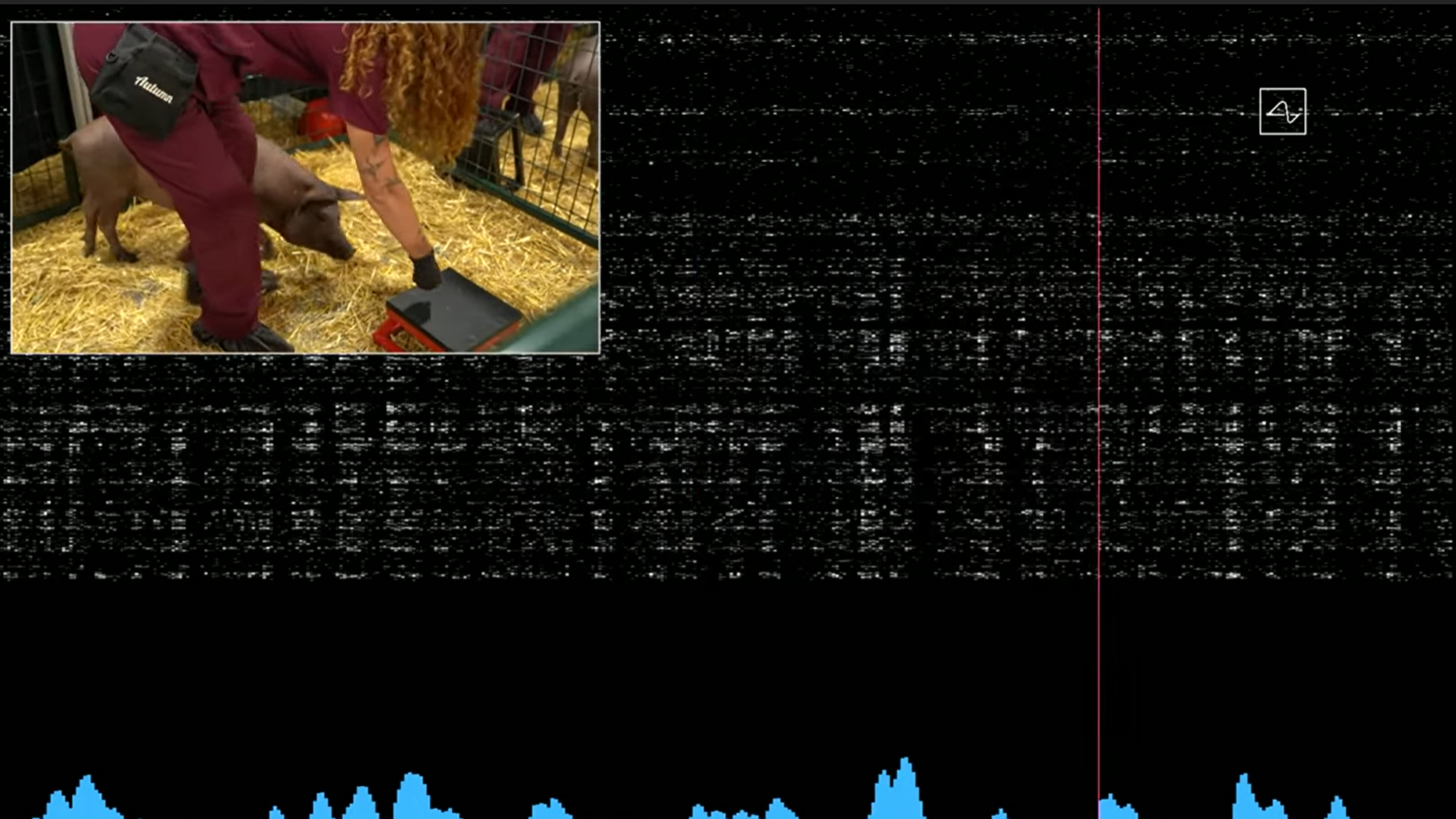
The event also saw the first public working demonstration of the Neuralink in action. Currently, the device is being tested on pigs owing to a similar skull structure and level of intellect. They also have a big part of their brain dedicated to olfactory senses to crunch the information coming from the snout.
Three pigs were present — one with no implant, one which had an implant but was now removed and one which had the implant for two months. The objective was to showcase how indistinguishable users at different stages would be. The last, named Gertrude, was let to sniff around her pan while the device recorded signals from the area of her brain linked to the snout. The readings were represented as an array of thousands of dots which would light up each time a neural spike was detected. It served as a proof of concept that the device can read and translate the data into actionable information.
Another experiment included a pig walking on a treadmill, where a wireless neural network would predict the position of the joints from the readings from the neurons. When compared with the actual positions of the limbs, the inferences had very high accuracy.
Similarly, two-photon microscopy footage of the brain was also shown when information was written in the brain. When the implanted electrodes were fired, the surrounding neuron bodies would light up in response. This will have to be successfully achieved at different power levels as some areas of the brains can be more difficult to activate.
Are the implants removable?
(Image credit: Neuralink)
All Link implants will be surgically removable if a user decides to no longer participate. It is claimed to have no permanent side-effects except a small scar at the designated area.
Beyond reversibility, it also has a much bigger role in the future of Neuralink. When the state of technology improves, users should be able to upgrade to newer versions of the device to gain access to more features and abilities (Think of it as a smartphone).
Will it be able to summon a Tesla?
(Image credit: BGR)
All Teslas (Elon Musk’s other company) have autonomous driving capabilities. A simple action on your phone app can get it to arrive at your doorstep, ready to pick you. During the Q&A session, one user asked on Twitter if Neuralink will be able to do the same without the need of a phone.
Showing his excitement, Musk answered: “Summoning a Tesla via Neuralink? Yes, 100%, that’s easy!”
How good is the current Neuralink device?
(Image credit: Neuralink)
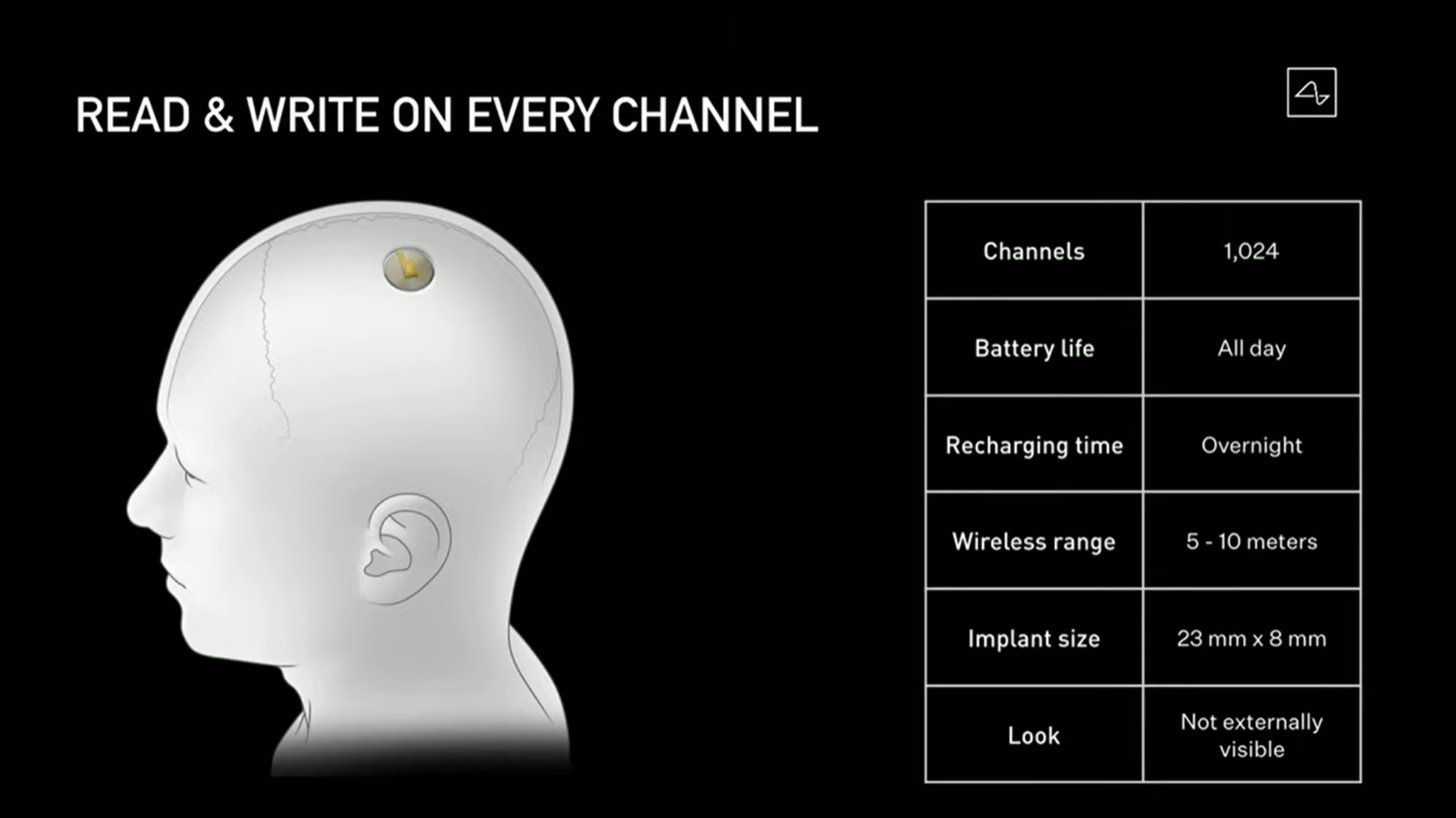
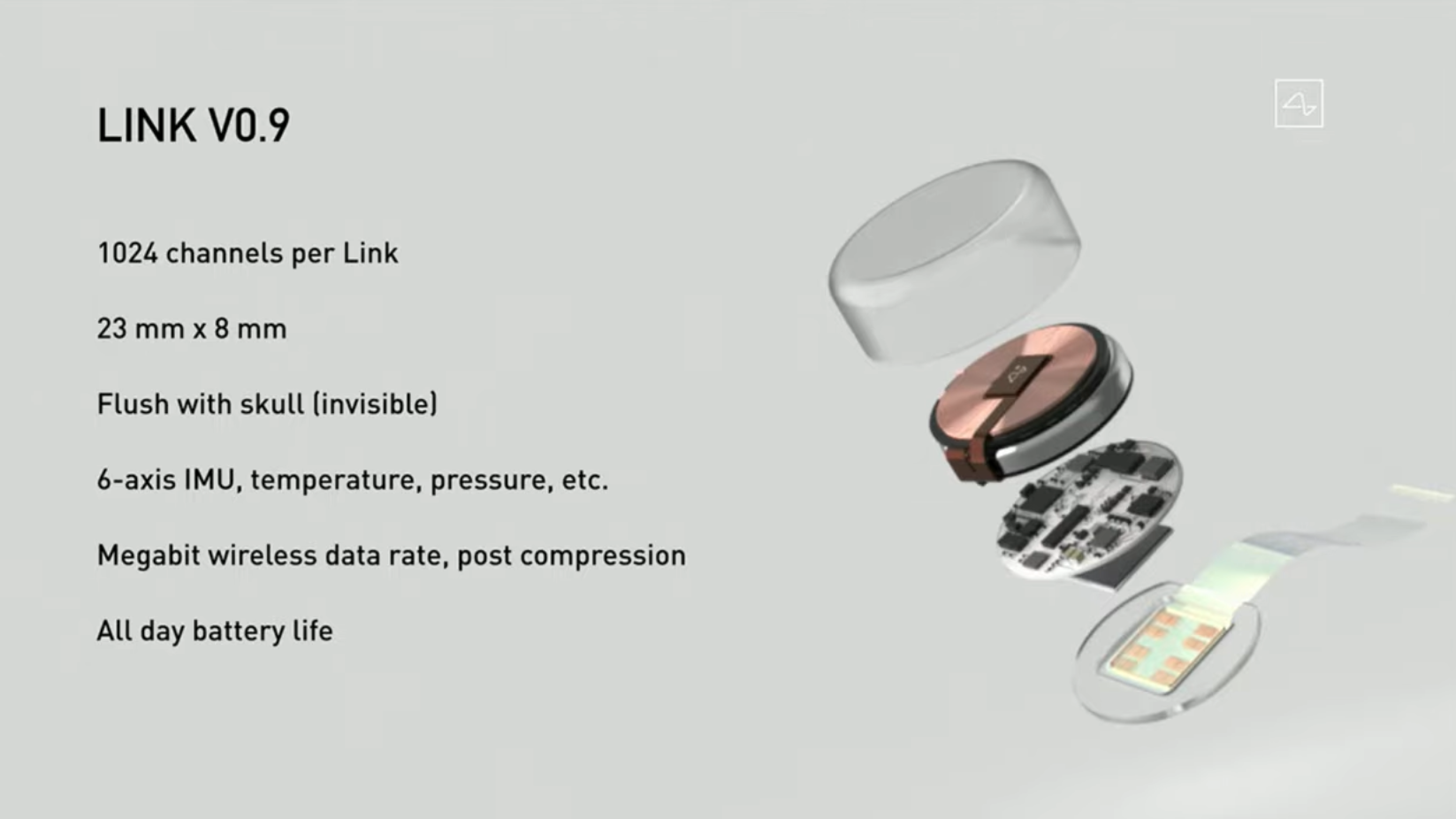
Specifications and abilities of the current system were also shared. Stated to be 100 times better than the other offerings, the current Link v0.9 has a whopping 1,024 channels that can read and write simultaneously at very high bandwidths. Currently, the data is read, converted and compressed on the device itself, but that could later be offloaded to the phone if the throughputs increase. Other sensors include a 6-axis IMU, temperature sensor and pressure monitors.
The coin-like part has a diameter of 23mm and a thickness of 8mm, helping it sit flush with the skull. The “wires” are the tricky bit. They need to be thin and malleable enough to not cause any damage to the brain, yet strong enough to survive in that corrosive environment; anything too thin and it could lose integrity and inductivity over time. Right now, the electrodes are about 5 microns in thickness (20 times thinner than human hair). With advancements and material research, it is estimated to go down to sub-micron levels.
It will be invisible and not externally visible. “In fact, I could have a Neuralink right now and you wouldn’t know. Maybe I do!”, giggled Musk.
When publicly available, all the features will be accessible via a phone app. It will have a range of 5-10 metres and will function over Bluetooth Low Energy. The battery life is rated as “all day”, and will have to be charged each night wirelessly (over induction).
What are some of the other use cases of Neuralink?
(Image credit: Neuralink)
With a device that can seemingly expand the capabilities of the human mind, it potentially has a ton of non-medical applications. Elon’s vision includes achieving “symbiosis with artificial intelligence”, allowing humans to exponentially increase their knowledge base and skill set and using it for progress. Imagine being able to download hard skills at the click of a button!
Having an AI extension of yourself, like a tertiary layer over the limbic system and the cortex such that the future of the world is controlled by the combined will of the people of Earth; I think that that’s obviously gonna be the future that we want.
Towards the end of the keynote, the entire core team shared their individual moonshot abilities that would one day be unlocked via Neuralink (we implore you to watch it). Some of the notable ideas included using it as an added form of input for gaming; newer forms of communication and helping humans in more ways possible. For instance, if a person loses their eyesight due to non-neurological reasons, they could be fitted with a camera whose feed can act as vision.
Artists would no longer be restricted by their abilities of tangible portrayal as entire scenes could be projected wirelessly into someone else’s minds; With the advent of IoT and connected devices, users could also interact with other tech in their surroundings without needing to move; Memories could be saved and recalled at will, thus also letting people take control of their moods and emotions; Human sufferings such as pain can be done away with entirely; understanding what the conscience actually is; preventing diseases before they happen from chemical clues in the body; etc.
The path ahead
(Image credit: Neuralink)
Neuralink is yet to begin trials on humans. It has however been granted Breakthrough Device status by the FDA, who will be working closely through the development and provide feedback. The first human implantations will happen “soon”, once the device clears the pending approvals and crosses safety standards. The first clinical trials will be conducted on patients with severe spinal cord injuries.
Considering the extremely sensitive nature of the information that will be dealt with, everything will be encrypted and stored in a way that human intervention will not be possible. As it progresses, it is likely to be governed by further laws and regulations.
Apart from these, there’s also the technological aspect of bringing this product to the market. It will be extremely expensive at launch but is targeting “a few thousand dollars” eventually. Neuralink’s mission of creating a generalized brain device that is reliable and affordable might just change the path of humanity’s future.
We're coming into September – the time of year that GoPro usually reveals its next action camera. And the leaks and rumors have already begun to fly about the GoPro Hero 9 Black.
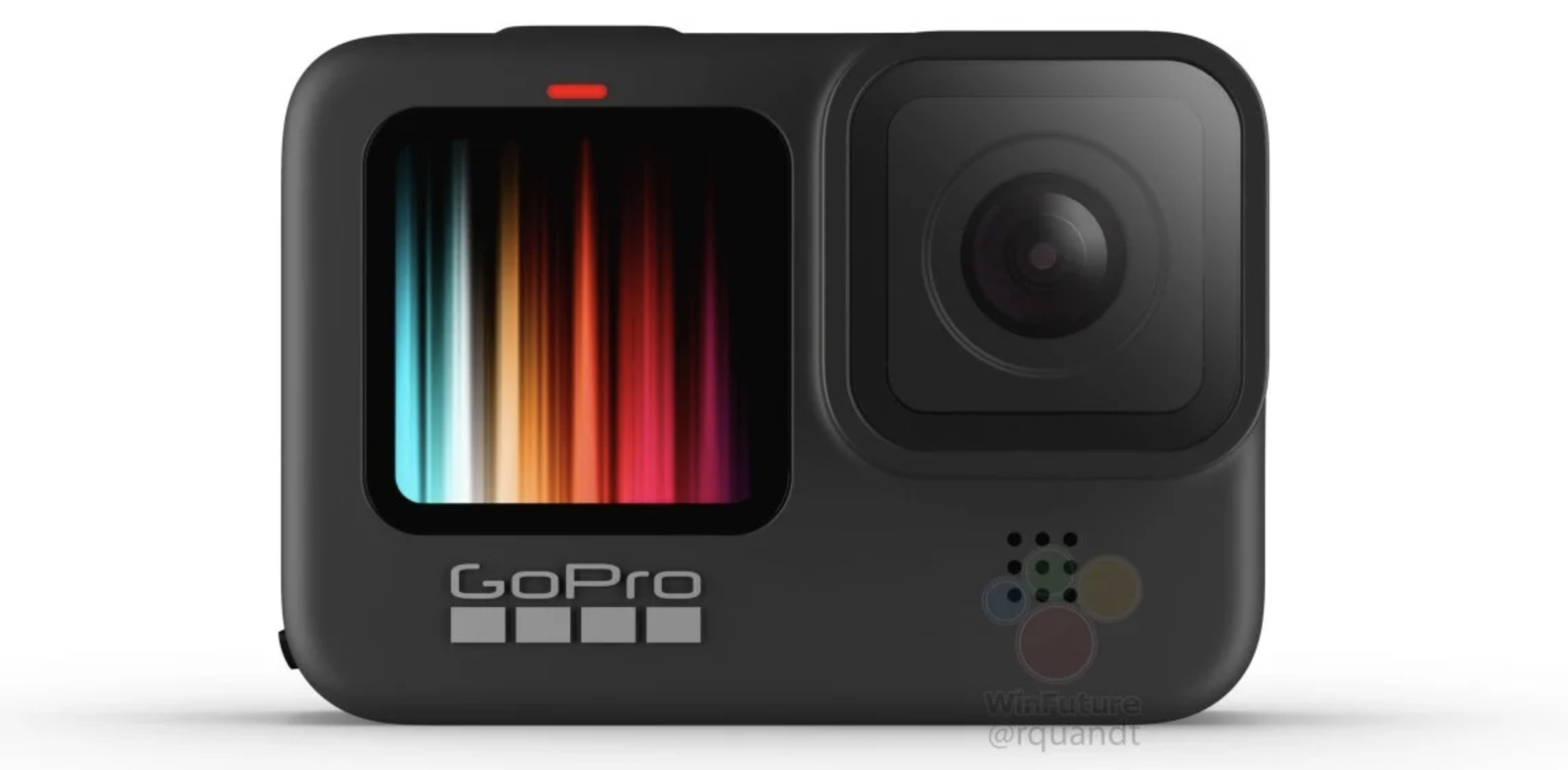
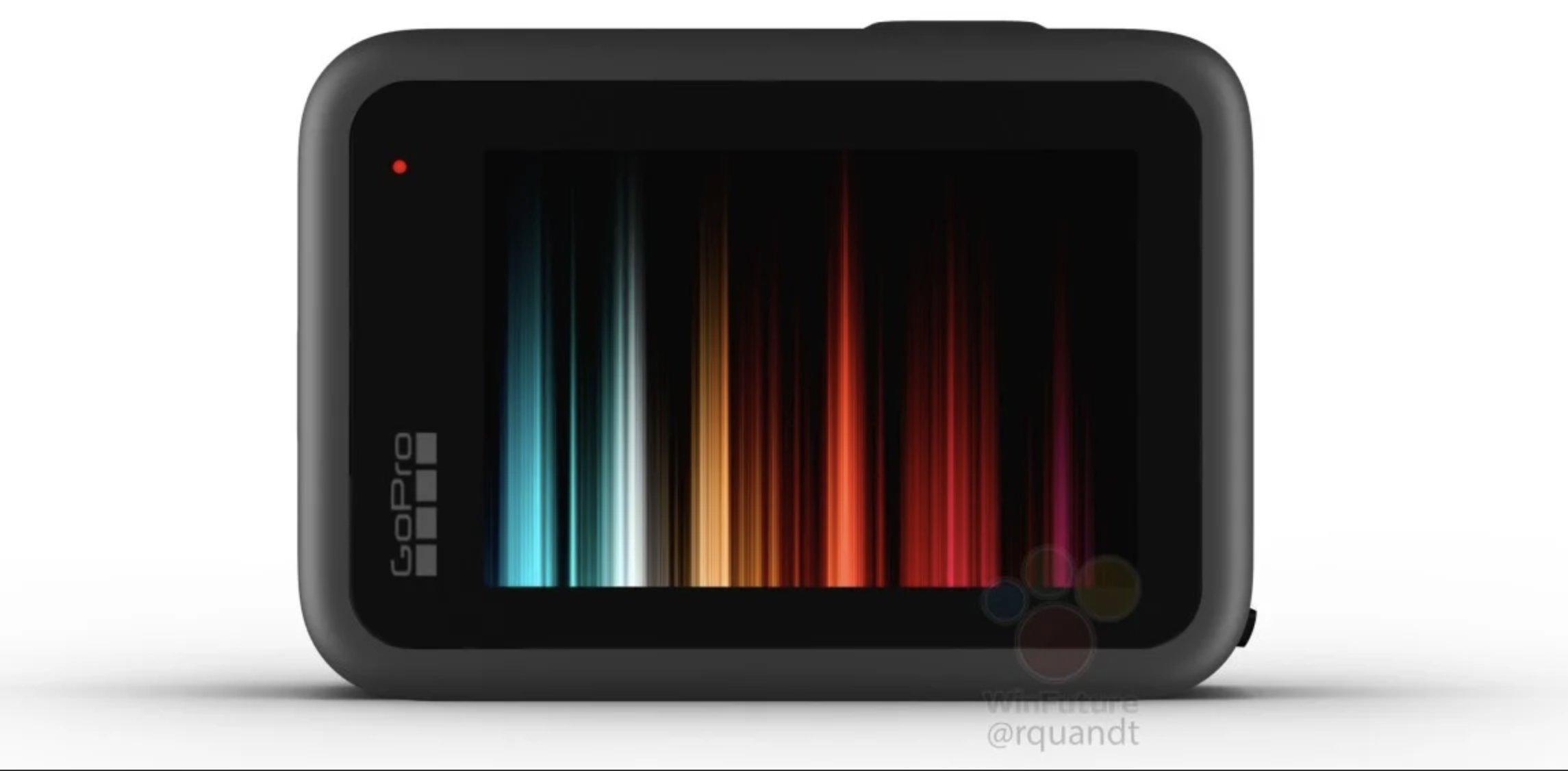
In July, a leaked image of a GoPro camera's front panel was revealed on Reddit, showing off a large square cutout that could indicate the ninth generation GoPro may come with a front display similar to that of the DJI Osmo Action. That has now seemingly been confirmed by what appear to be leaked official product shots of the upcoming GoPro Hero 9.
German publication Winfuture – with a rather impressive track record of reliable leaks – has shown off what they claim to be "official" product images of the upcoming action camera, with several of them showing off color displays on the front and back.
(Image credit: Roland Quandt/WinFuture)
There's no indication of whether that upgraded front display will be used for video previews or for displaying shooting parameters (like the current monochrome front display on the GoPro Hero 8 Black), but this change is one way for GoPro to attract more customers.
Other than the larger color front screen, the rest of the GoPro Hero 9 seems to be identical to the Hero 8 Black. So what more could GoPro do to attract and keep its customers?
(Image credit: Roland Quandt/WinFuture)
Winfuture claims there's 5K video support coming to the Hero 9 "in the future", as per some "documents" the publication has laid its hands on. There's no other concrete evidence to support this, so we'd suggest taking this news with a pinch of salt. No other technical details about the camera have been revealed as yet.
We also still have no idea how much the camera will cost or when it will start shipping, but if GoPro sticks to its usual timetable of a September reveal, we'll know everything soon enough.
It looks very much as though a TicWatch Pro 3 Wear OS smartwatch could be on the way in the near future, as a listing briefly appeared on Amazon in the UK showing off the new device and some of its key specs.
As spotted by 9to5Google, the listing has since been changed to show a different picture and a more generic name, but it would appear that a new smartwatch from the TicWatch brand is indeed on the way.
And that wouldn't be much of a surprise – the TicWatch smartwatches that we've seen to date have been some of the best Wear OS devices in the business, and manufacturer Mobvoi is going to be keen to take advantage of Qualcomm's new Snapdragon 4100 wearable processor.
Check out the best Wear OS watches
The LG Wing leaks again
What we want to see in the OnePlus 9
New hardware from TicWatch was indeed mentioned when the Snapdragon 4100 and 4100 Plus were unveiled, so it's not as if we weren't expecting another smartwatch from the brand to be arriving in the near future.
Coming soon
According to the listing on Amazon, the "near future" is in fact going to be October 1 – though this might be a placeholder date, so don't bet your entire home on it just yet. The timing would make sense with the rollout of the Snapdragon 4100 series.
Unfortunately the listing doesn't tell us too much about the TicWatch Pro 3, besides the updated processor and the launch date. We're assuming the device is going to come with the usual TicWatch polish and everything that the latest Wear OS software offers.
You haven't missed the TicWatch Pro 2 by the way – Mobvoi released an updated version of the original TicWatch Pro with more memory and added robustness, which we're guessing counts as the second in the series, ahead of the TicWatch Pro 3 unveiling.
The pricing on the listing was originally put at £299.99 (about $400 / AU$545), but that's since been changed to £399.99 (about $535 / AU$745), suggesting a more premium price point for the next TicWatch smartwatch. As soon as anything is made official, we will of course update you here.
Until 2020, it probably never bothered you how dirty your smartphone might be. Sure, we've all heard the stories of how your beloved phone is dirtier than most toilet seats but it never felt like that big of a deal until now, did it?
Now that we're all worrying about keeping clean and safe, and obsessively washing our hands, it's a sensible move to also sanitize your smartphone once in a while too. A UV phone sanitizer simplifies the process by using ultraviolet light to kill off any germs that happen to be residing on your smartphone, or any other small personal object such as your credit cards or keys.
For the amateur germ enthusiast, that might sound weird, but it's quite simple at heart. The light damages the DNA of the bacteria, disrupting its chances of ever infecting you and effectively eradicating it. Best of all, the light doesn't damage your device in the slightest. It's almost too good.
With many different UV phone sanitizers out there now, it can be tricky to know what's best for you. Most look oddly like coffins for your smartphone but don't let that put you off, they're good for you and your beloved handset.
We've ranked the top UV sanitizer options, so read on to find out which phone sanitizer you should be snapping up.
(Image credit: TechRadar)
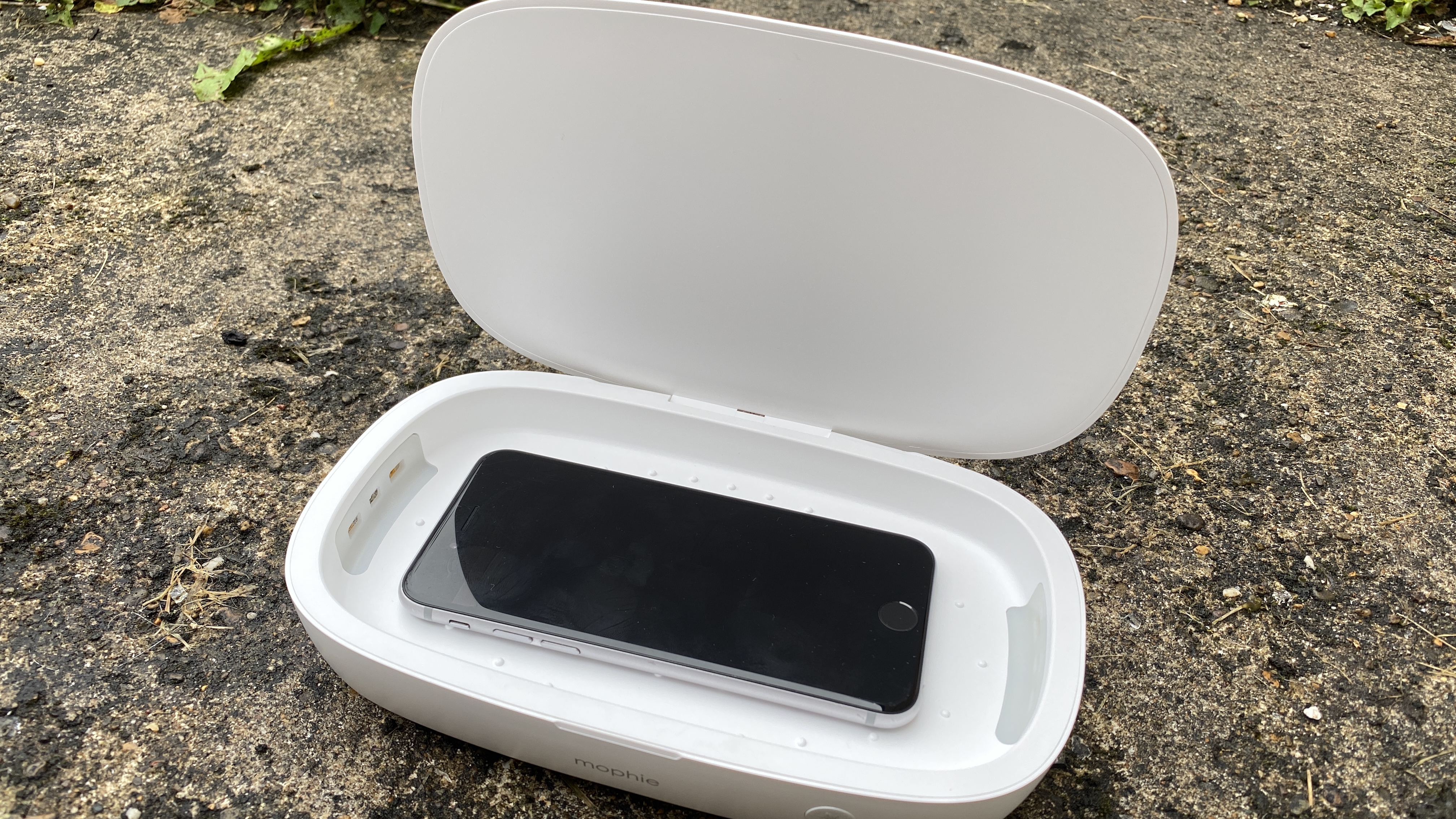
1. Mophie UV Sanitizer with Wireless Charging
Neat and compact, this UV sanitizer is a secure fit for most phones
Good size without being bulky
Phone feels secure inside
Charging can be inaccurate
Not super spacious
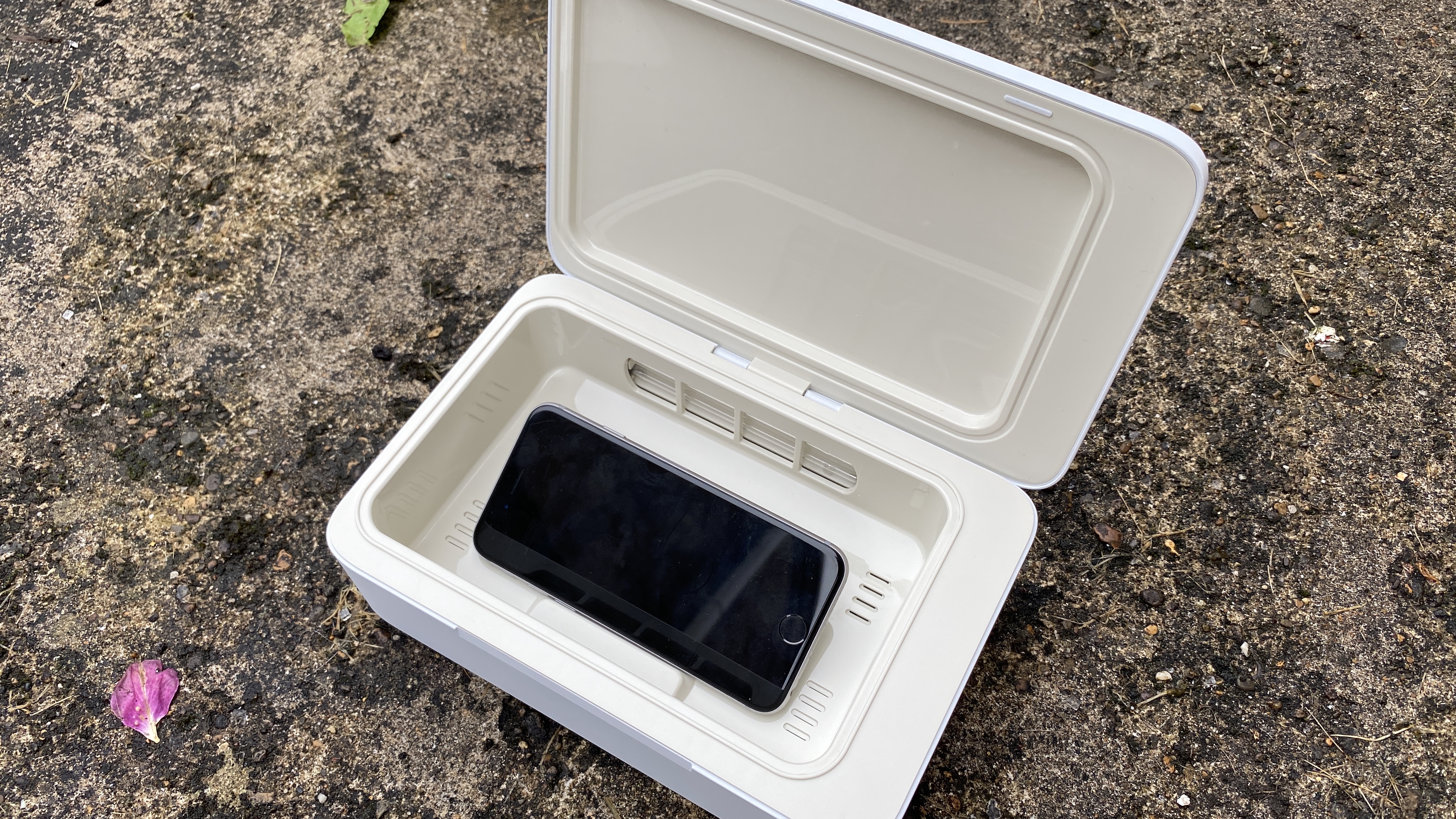
The Mophie UV Sanitizer with Wireless Charging is smaller than a lot of other UV sanitizers, but it offers plenty of useful features in its small package. Notably, it has ridges inside the casing so your device feels more securely contained during use (although we wouldn't recommend moving any of these devices mid-use).
A brief alert noise activates when the sanitizing process begins so you know exactly what's going on, and the whole process only takes about 5 minutes. You can place any other small devices or objects in here too such as keys or credit cards.
As the name suggests, the Mophie UV Sanitizer also works as a wireless charger, with you also able to place your smartphone on top of the sanitizer case to charge it while the sanitizer cleans up other devices.
With options to charge the sanitizer itself via a wall charger or USB-C, the Mophie UV Sanitizer covers all the bases, proving to be a great one-stop shop for all your sanitizing needs.
(Image credit: TechRadar)
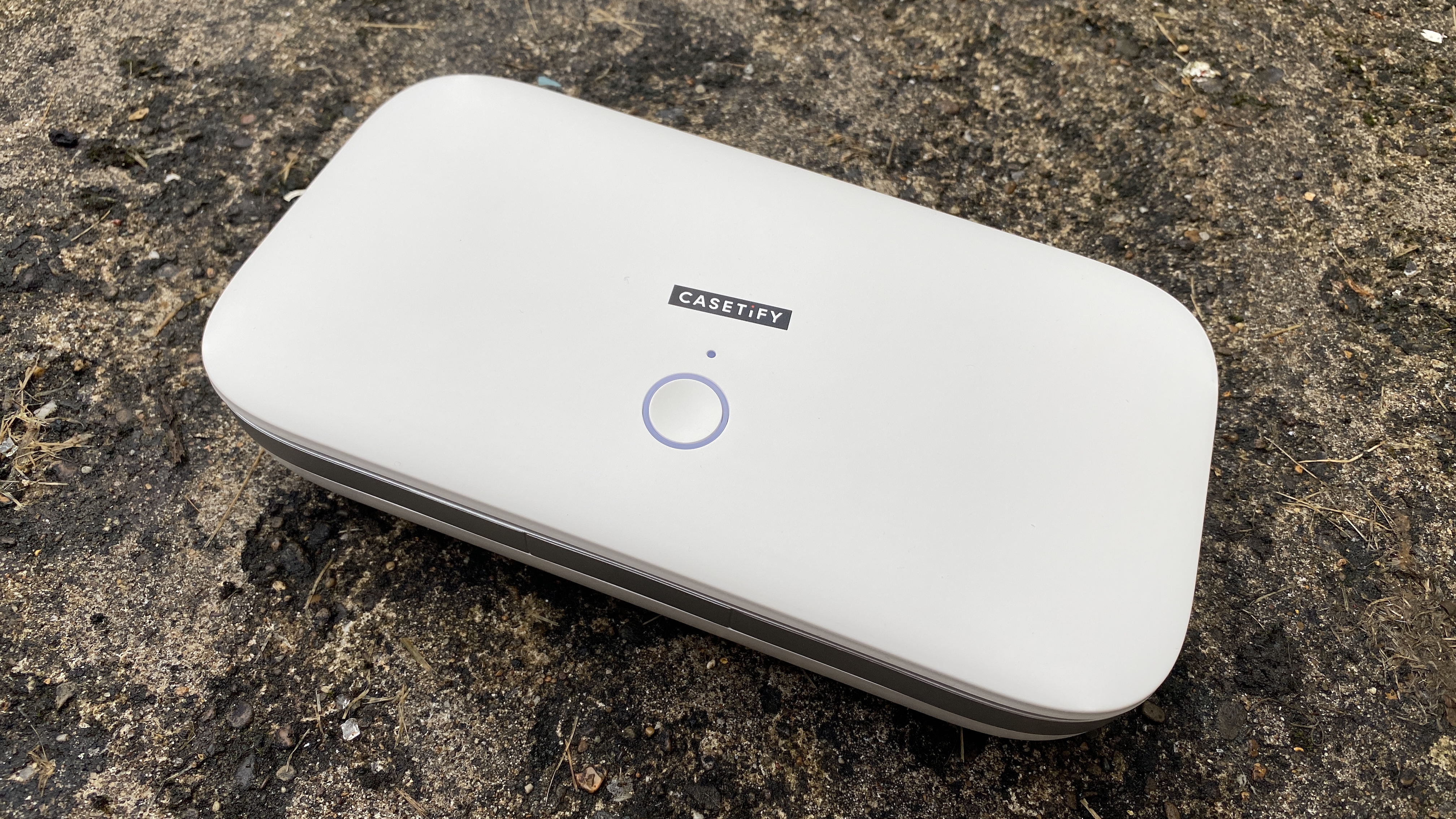
2. Casetify UV Sanitizer
Faster than most, this spacious sanitizer is ideal if you're in a rush
Fast sanitization process
Spacious for many devices
No wall charger included
It's pretty bulky
While some UV sanitizers take up to 10 minutes to cleanse your phone and other items, the Casetify UV Sanitizer promises to do just as good a job in a mere 3 minutes. That's perfect if you're often in a rush and want to be able to clean your phone regularly without having to wait around.
A somewhat reassuring pulsing blue light indicates that the process is under way, with it turning solid once you're good to go. It's a convenient way of being able to see what's going on at a glance.
The light also helps demonstrate that wireless charging is working too with the case charging your phone while you sanitize it. Sure, it's only 3 minutes’ worth of charging but that can be quite a top-up depending on your phone. There's always the option of a 15-minute intensive sanitization process too if you hold the button in.
(Image credit: TechRadar)
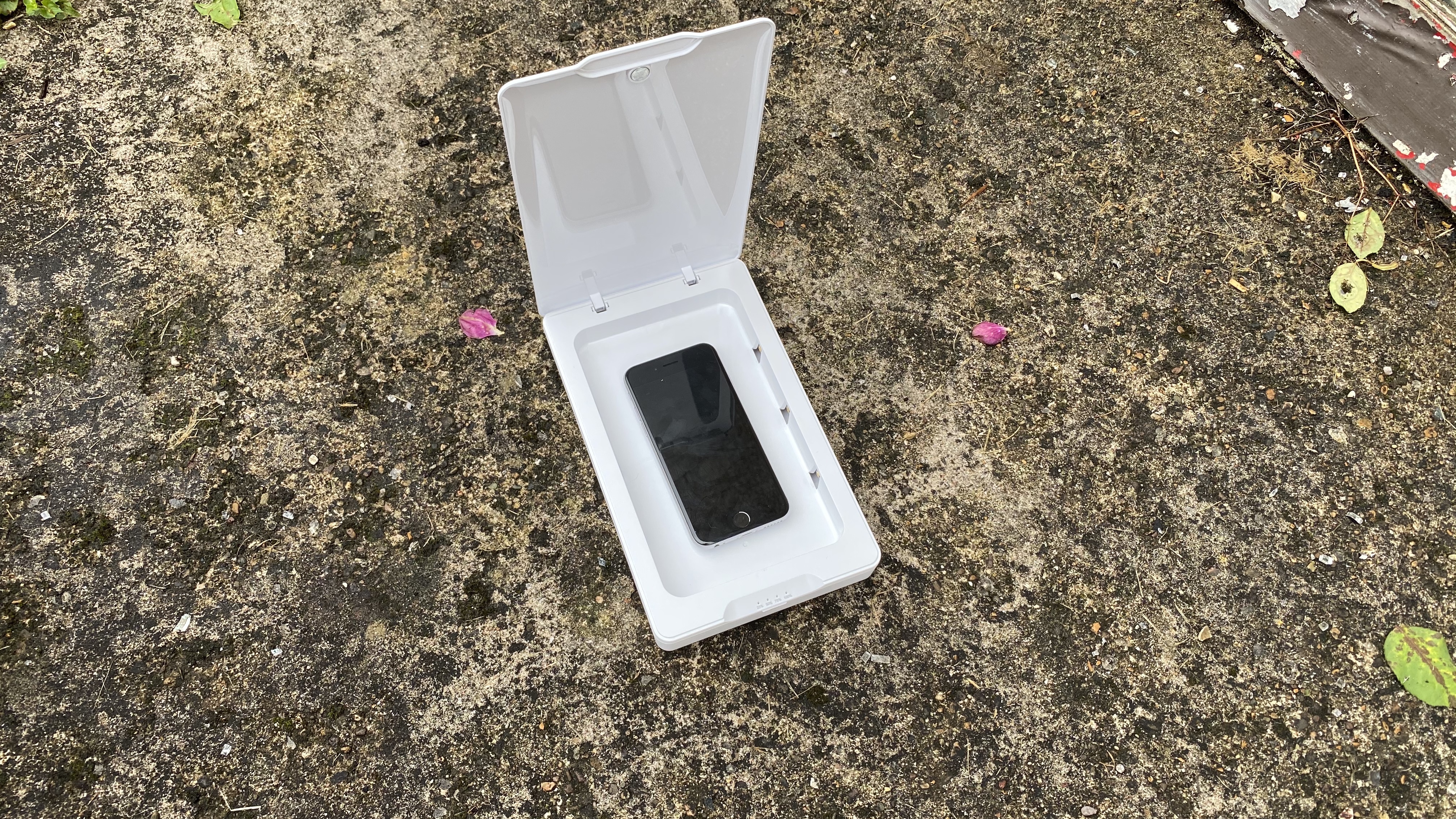
3. Invisible Shield UV Sanitizer
Basic yet effective, this UV sanitizer does the job at a great price
Cheap
Indicator lights are great
Bare-bones layout
No wireless charging
A budget UV sanitizer, the Invisible Shield UV Sanitizer isn't the most stylish of devices but it does have a lot going for it.
Essentially a large plastic case, you'll need more room on your desk for this one compared to others here but that does also mean you won't run out of room if your phone is particularly bulky or if you want to put many other items inside. It doesn't come with a wall charger but its USB-C charging cable does the job regardless.
Due to its somewhat bare-bones appearance, its interior isn't the best of fits for many phones given its lack of protective ridges or bumpers, but then this isn't the kind of device you'll be moving around a lot.
There's no wireless charging feature but we did really appreciate that this UV sanitizer offers 4 indicator lights each representing 25% of the sanitization process, so you know exactly how long you've got left to go. More expensive sanitizers could take note here.
(Image credit: TechRadar)
4. Splash UV Elite
More versatile than most
Reliable wireless charging
Plenty of room for devices
Far from stylish
Have to place phone inside to wirelessly charge
UK-based firm Splash has developed a somewhat unattractive yet massively spacious UV sanitizer. Designed like a fairly deep case, it offers wireless charging in a more reliable fashion than some alternatives, thanks to an angled wireless charging pad that means you can't fail to place your phone correctly inside the case.
Alongside that, you can actually use the sanitizer to charge up to 3 devices at once thanks to USB-A and USB-C charging ports. That's particularly useful if you want a desktop companion that's practical for more than just sanitizing.
The Splash UV Elite certainly doesn't look like much and it's a bit plain and plasticky, but we really appreciated how effectively it charges with no risk of slippage. A 5-minute sanitizing cycle and plenty of room for your gadgets further endears you towards it.
(Image credit: TechRadar)
5. PhoneSoap 3 UV Sanitizer
Simple to use with an extra thorough 10-minute process
Simple to use
Multiple color options available
Long sanitization process
No wireless charging
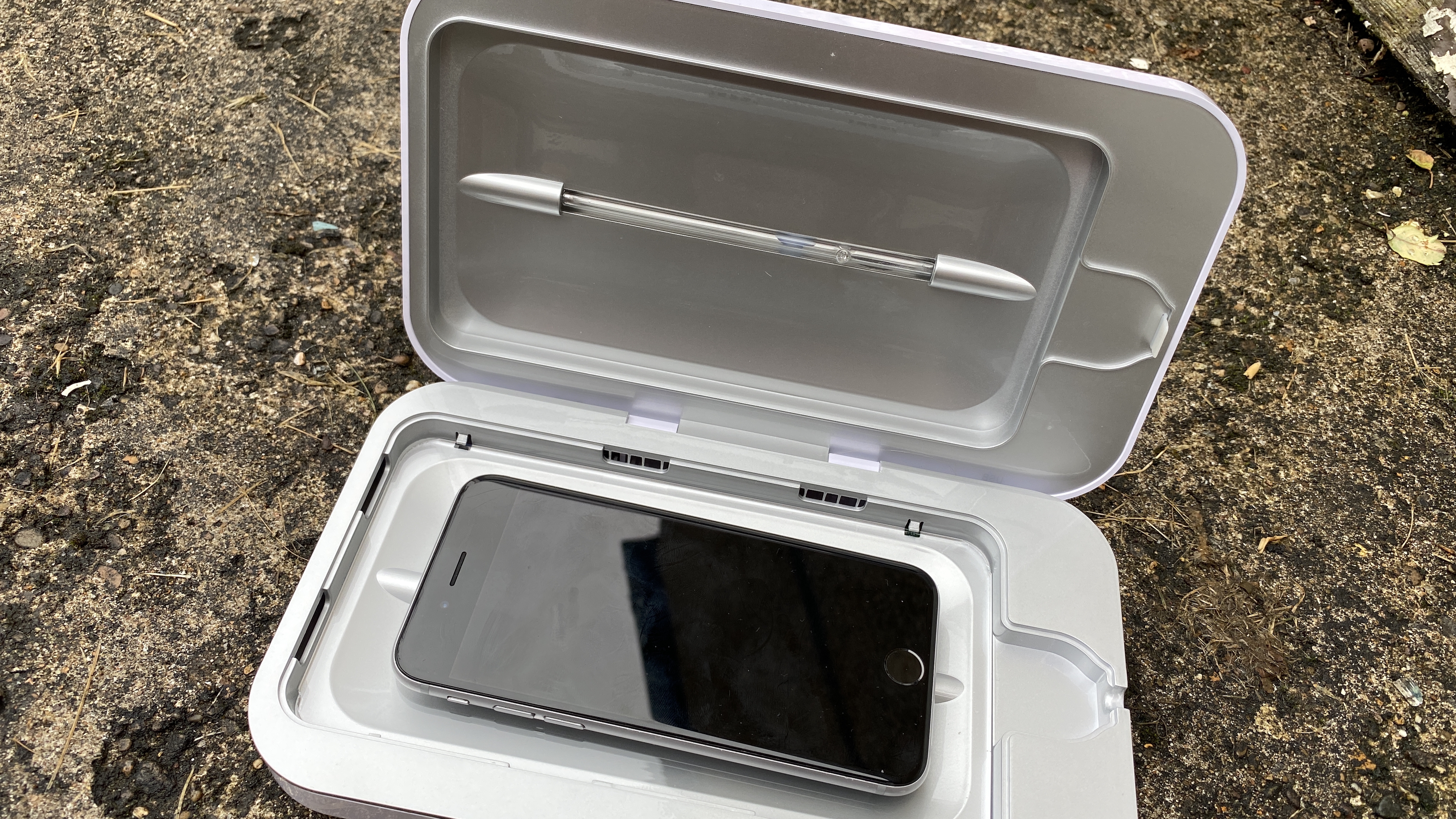
The PhoneSoap 3 UV Sanitizer keeps things super simple. There aren't any buttons to distract you, simply place your phone or other accessories inside the PhoneSoap 3 and the device does the rest for you.
There's something simultaneously convenient yet confusing about that. You don't have to think too deeply but you might be left wondering if it's actually working. It does display a glowing lightning bolt when sanitizing but you might want to feel more involved in the process.
In all, the PhoneSoap 3 takes longer than its competitors with the whole process taking 10 minutes. It's hard to gauge without lab tests if that makes it more exact in its germ-killing ways but it's reassuring to know that there's a lot going on here.
While there's no wireless charging, you can slide a cable into the case to charge your phone while it sanitizes, so it's still fairly neat.
After news hadbroken in Junethat the company had raised hundreds of millions in convertible debt, I hadn’t guessed that the productivity unicorn wouldn’tgive us an S-1in the very next quarter. I was contentedly wrong. But the reason why Asana’s IPO is notable isn’t really much to do with the company itself, though do take the time todig into its resultsandhistory.
What matters about Asana’s debut is that it appears set to test out a model that, until very recently, could have become the new, preferred way of going public amongst tech companies.
Here’s what I mean: Instead of filing to go public, and raising money in a traditional IPO, or simply listing directly, Asana executed two, large, convertible debt offerings pre-debut, thus allowing it to direct list with lots of cash without having raised endlessequitycapital while private.
The method looked like a super-cool way to get aroundthe IPO pricing issuethat we’ve seen, and also provide a ramp to direct listing for companies that didn’t get showered with billions while private. (That Asana co-founder Dustin Moskovitz’s trust led the debt deal is simply icing on this particular Pop-Tart).
This brief column was going to be all about how we may see unicorns follow the Asana route in time, provided that its debt-powered direct listing goes well. But thenthe NYSE got permission from the SECto allow companies to raise capital when they direct-list.
In short, some companies that direct-list in the future will be able to sell a bloc of shares at a market-set value that would have previously set their “open” price. So instead of flogging the stock and setting a price and selling shares to rich folks andthenfinding out what public investors would really pay, all that IPO faff is gone and bold companies can simply offer shares at whatever price the market will bear.
All that is great and cool, but as companies will be able to direct-listandraise capital, the NYSE’s nice news means that Asana is blazing a neat trail, but perhaps not one that will be as popular as we had expected.
The NASDAQ isworking to get in on the action. AsDannysaid yesterdayon the show, this new NYSE method is going to crush traditional IPOs, provided that we’re understanding it during this, its nascent period.
Market Notes
Look, this week was bananas, and my brain is scrambled toast. You, like myself, are probably a bit confused about how it is only finally Saturday and not the middle of next week. But worry not, I have a quick roundup of the big stuff from our world. And, notes from calls with the COO of Okta and the CEO of Splunk, from after their respective earnings report:
China-based fintech giant Ant is super profitable and super big and super powerful and is going to have amega-IPO that matters, even if it isn’t happening Stateside. (This haslong been expected.)
Also this week, Y Combinator had a two-day Demo Day confab that we wrote a lot about. Sure, these are early-stage companies, but their ranks will generate some material winners. Socatch up here, with that link containing our chat about the startups and directions to all our coverage.
On the SMB side, Kerrest reported little to no change. This is a bit more bullish than we anticipated, given that it seemed likely that SMB customers would have taken the largest hit from COVID.
Kerrest also told us some interesting stuff about how the wave of COVID-related spend has changed: “We actually have seen the COVID ‘go home and remote work very quickly’ [thing], we’ve actually seen that rush subside a little bit, because you know now we’re five months into [the pandemic], so they had to figure it out.”
This is a fascinating comment for the startup world.
Okta is big and public and is going to grow fine for a while. Whatever.For smaller companies aka startups that were seeing COVID-related tailwinds, I wonder how common seeing “that rush subside a little bit” is.If it isverycommon,manystartups that had taken off like a rocket could be seeing their growth come back to Earth.
And if they raised a bunch of money off the back of that growth at a killer valuation, they may have just ordered shoes that they’ll struggle to grow into.
And then there was newMcLaren F-1sponsorSplunk, data folks who are in the midst of a transition to SaaS that is seeing the firm double-down on building ARR and letting go of legacy incomes:
I spoke withCEO Doug Merritt, kicking off with a question about his use of the word “tectonic” regarding the shift to data-driven decisions fromSplunk’s earnings report. (“As organizations continue to adapt to tectonic societal shifts brought on by COVID-19, one thing is constant: the power of data to radically transform business.”)
I wanted to know how far down the American corporate stack that idea went; are mid-size businesses getting more data-savvy? What about SMBs? Merritt was pretty bullish: “We’re getting to tectonic,” he said during our call, adding that before “it really was the Facebooks, the Googles, the Apples, the DoorDashes, [and] the LinkedIns that were using [Splunk].” But now, he said, even small restaurant chains are using data to better track their performance.
Relating this back to the startup world, I’ve been curious if lots of stuff that you and I think is cool,like low-code business app development, will actually find as wide a footing in the market as some expect. Why? Because most small and medium-sized businesses are not tech companiesat all. But if Merritt is right, then the CEO of Appian might be right as well about how many business apps the average company is going to have in a few years’ time.
We’re already over length, so I’ll have to keep our bits-and-bobs section brief. Thus, only the brightest of baubles for you, my friend:
Y Combinator startups are focusing on revenue in this more uncertain world. PerThe Information, the startup org has encouraged startups in its world to “focus on generating revenue” and how to juice enough cash from their operations to endure sans checks from private investors.
Given the pace of private investments into certain startup niches today, it’s almost odd advice. But what is true for late-stage SaaS companies (very hot!) might not hold true for smaller YC companies that are focused on consumers.











Follow Us
Were this world an endless plain, and by sailing eastward we could for ever reach new distances