Rocksteady Studios, the devs behind Suicide Squad: Kill the Justice League, have shared an update on the game's first season and what players can expect - and fortunately, it's a character many players will be keen to see. As announced during Rocksteady's latest Suicide Squad Insider video on YouTube, it was announced that The Joker would be the next member to join the suicide squad when the first season rolls in March.
Each season intends to theme itself around a different DC character, and The Joker has taken the beacon for the first round, offering an alternate variant of the character to echo the Elseworlds theme of the pass. Alongside adding the character, players will unlock a Joker-themed playable environment, two new episodes, new missions, a boss battle, and new Riddler content. So, enough to fill your boots. And, the best part is - it's entirely free.
In fact, Rocksteady has confirmed that no playable content will be locked behind the seasonal "battle pass" and in-game purchases will be exclusively through things like cosmetics, taunts, and outfits, some of which were shown off in the Suicide Squad Insider video.
In addition to the first season, Rocksteady is committed to delivering Seasons 2, 3, and 4, all offering a new playable character and accompanying playable environment. But, we've had no information on who we can expect to join the roster as part of these seasons, which is half the fun. For more up,ates as and when they come, it's worth watching the official Suicide Squad: Kill the Justice League Twitter page and YouTube channel for any further Insider videos.
Our guide to thebest superhero gamesmay offer you a chance to see the story from the other side. But, our list of thebest single-player gamesmay also be worth checking out if you're looking for an immersive adventure to sink your time into.
from TechRadar - All the latest technology news https://ift.tt/tDU2owG
Smart home lighting brand Signify will be launching new lighting fixtures under the Philip Hue name to help you personalize the outside a...
Smart home lighting brand Signify will be launching new lighting fixtures under the Philip Hue name to help you personalize the outside and inside of your house.
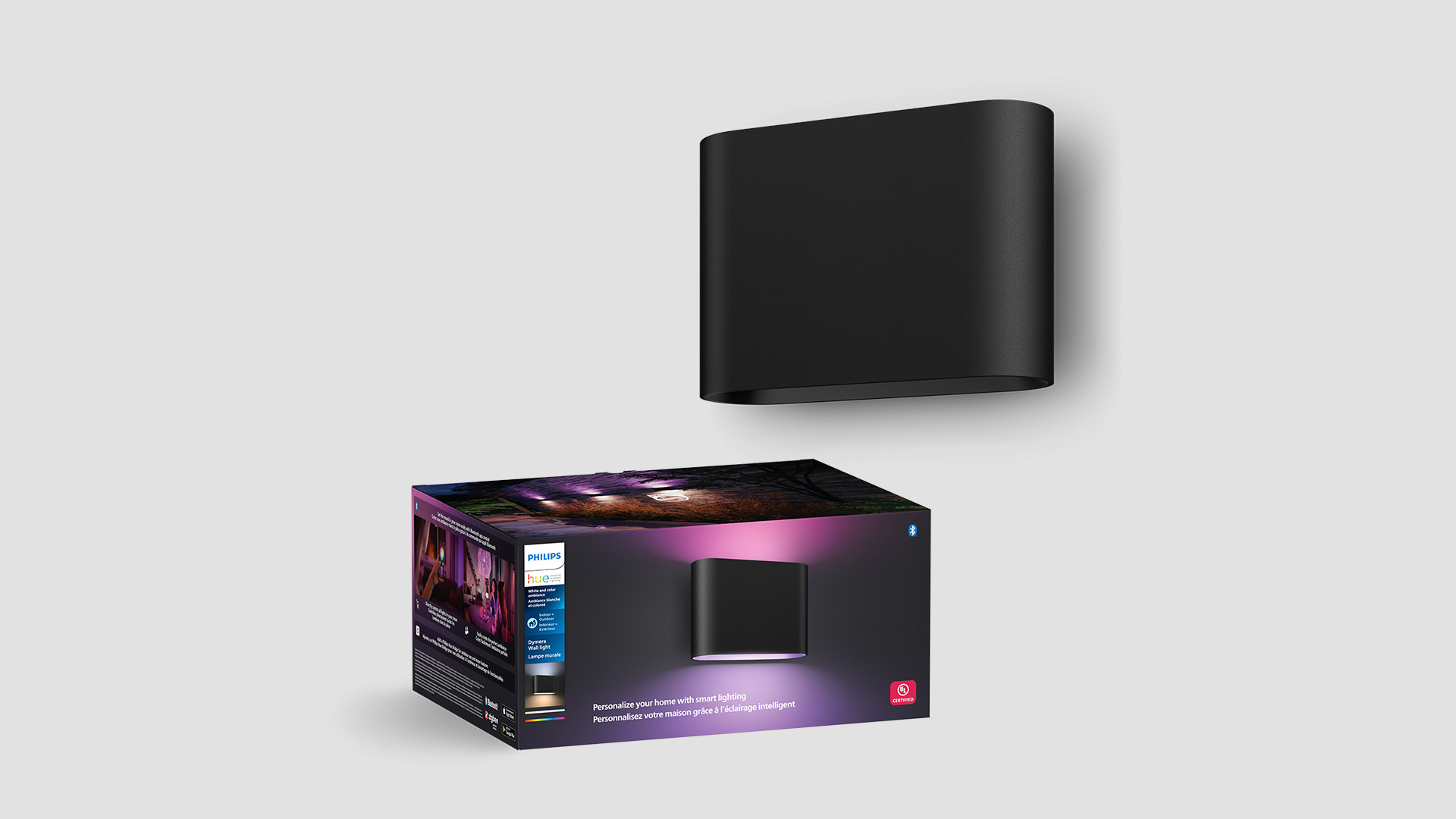
Chief among these is the Dymera, a device that goes up on a wall emitting two beams of light from the top and bottom. Both sides can be configured individually so you can have the top light shine in color while the bottom one emits white light. Signify states users can configure the fixture’s brightness level via the Philip Hue mobile app. It’s also on the app where you can adjust the color of the lighting as well as set scenes via the gallery section.
These are distinct lighting arrays and can, for example, be used to have the device’s beams slowly transition from one shade of color to another. Philips offers a variety of pre-made scenes on its website or you can make your own to suit your needs.
(Image credit: Signify/Phillips Hue)
Notable features include support for Bluetooth connectivity as well as a resistance rating of IP44 allowing it to handle splashes of water with ease.
Illuminating the homestead
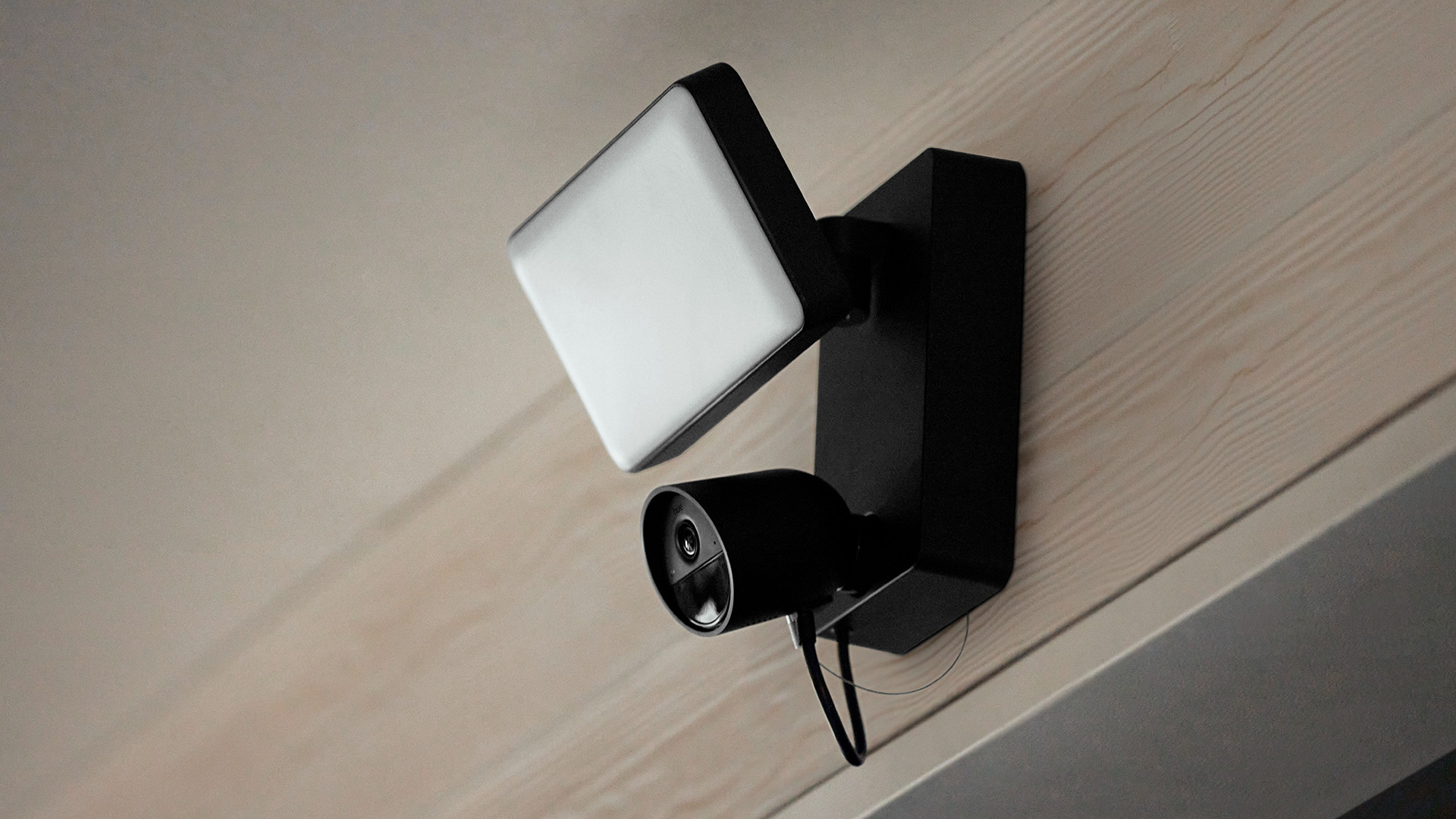
Alongside the Dymera is the new Philip Hue Secure floodlight camera. Unfortunately, we don’t know a whole lot about the Secure model as Signify is keeping its cards close to its chest. The company did tell us it will be powerful enough to illuminate your backyard, patio, or driveway in a variety of colors from bright white to red. Initial images of the Secure device show it consists of a floodlight sitting on top of an outdoor camera.
There is a catch with this model. You will need to own a Philips Hue Bridge to use it.
(Image credit: Signify/Philips Hue)
The last announced fixtures are accessories. They’re called Perifo T connector and the Perifo flexible connector. As their names suggest, the pair is meant to support the rail lights from the Perifo series.
The Perifo T, as you can probably guess, is a T-shaped rail going off in three different directions, giving homeowners a way to illuminate the darkest corners of a room. The Perifo flexible connector, on the other hand, consists of two separate rails connected by a cable. This option will let you string lights together in any shape you want. That way, you can get around those tricky corners.
(Image credit: Signify/Philips Hue)
Availability
It appears these lights will come out in the UK first.
The Secure floodlight is available right now at £299.99. A few weeks after that, the Perifo flexible connector will be released on February 6 for £29.99. The Dymera has a launch date of February 27. It’ll cost you £199.99. Lastly is the Perifo T connector. It’s slated for a Q1 2024 launch at £34.99 a pop. An exact date was not given.
It’s unknown exactly when Signify will roll out these products in the US or EU, but we do know it’ll happen. Tech news site NotebookCheck managed to discover American and European listings for the Dymera. The outdoor fixture will retail for $219.99 and €219.99, respectively. A release date was not given, however, you can sign up for email notifications for when it eventually goes on sale.
We scoured the Philips Hue website for listings on the other products but sadly came up with nothing. So we reached out to Signify asking for more details. This story will be updated at a later time.
How much control do we have over our sleep environment? We might be able to pick the best mattress and best pillow, but when it comes to disruptive nighttime noises, we often have to put up with whatever our local environment wants to deliver. If I could dictate my sleep soundscape, I would get the Alaskan Malamute that lives next door not to howl mournfully between 12am and 7am.
But just because we can't put a stop to ambient noise, it doesn't mean we can't take some control over what we hear at night. A survey commissioned by hotel chain Premier Inn found that 50 per cent of people use white noise to fall asleep at least some of the time, with 26 per cent listening to it every night. And it turns out we're all dreaming of rainy evenings, with 40 per cent of white noise listeners picking rainfall as their top soothing sound.
But is a wet night really what we want to picture as we drift off? With the launch of its new white noise service – NodFlix – Premier Inn is helping us to dream a little bigger, by tapping into our secret sleep fantasy: to be cozied up on a luxury hotel mattress during a decadent weekend getaway with a massive breakfast waiting in the morning.
(Image credit: Getty Images)
Inspired by ASMR, the NodFlix soundscapes are the sort of quiet background noises you expect to hear in a hotel. That's suitcases trundling along the hall, the brush of premium linens as you sink into bed, the lift doors opening at the penthouse suite... It's the sound of soothing luxury, and, yes, you can still have the pitter-patter of raindrops in the distance. (Or for a hotel-style upgrade, switch to the sound of a rainfall shower.)
Crafting this optimal soundscape can potentially help your brain slow down and switch-off, easing you into a deeper sleep. Each part of your soundscape should be chosen for how it makes you feel – relaxed, calm, and peaceful. Steer clear of any noises that might lead to excitement or stress. Those surveyed ranked the sound of a vacuum cleaner as the least relaxing, and if you've ever vacuumed a set of stairs, it isn't hard to guess why.
What about sounds to wake you up? Perhaps unsurprisingly, being shocked awake by a shrieking alarm might not be the best start to the morning. Instead, the best iPhone alarms to wake up to have easy melodies and low frequencies, for a gentle switch from asleep to awake.
(Image credit: Getty Images)
But with an ASMR soundscape, you can pick the noises that will really make you want to get out of bed. Sizzling bacon, a boiling kettle, toast being sliced in half – the enticing dream of a waiting breakfast. Although, while these sounds might wake you up, your morning might take a downward turn when you realize that cappuccino and cooked breakfast were imaginary.
Right now, the NodFlix service is fairly limited. If you want an ASMR soundscape for sleeping, you might be best off creating your own. Maybe treat yourself to a night away at a premium resort, so you can capture the perfect sounds in person? After all, your sleep will thank you.
from TechRadar - All the latest technology news https://ift.tt/df2bDXB
You can now virtually run Windows 11 on the newest Apple Mac devices (those with Apple’s own ARM-based M1 , M2 , or M3 chips) using Micro...
You can now virtually run Windows 11 on the newest Apple Mac devices (those with Apple’s own ARM-based M1, M2, or M3 chips) using Microsoft-authorized methods.
For Mac devices with Intel processors, users could turn to the multi-boot utility program, Boot Camp, which enabled users to install and run Windows on their Macs as their chosen operating system (OS) - rather than the default macOS.
Users with Apple silicon processor devices can’t use Boot Camp, as it’s incompatible and would have to turn to other ways of running Windows operating systems, such as emulators and virtualization programs. There are many virtualization programs out there, but now, Microsoft has chimed in on which ones it thinks are best for this.
Microsoft has authorized Parallels’ desktop versions 18 and 19 to run the ARM-specific versions of Windows 11 Pro and Windows 11 Enterprise.
Users can do this by installing Parallels Desktop version 18 or version 19 and create a virtual machine that lives within your existing OS (probably macOS in this case). It explains that the ARM versions of Windows 11 OS do have limitations that impact a user’s ability to run certain hardware, games, and apps (a long-standing issue with Windows 11 on ARM devices, sadly). This workaround does, however, give users access to most Windows 11 features such as hardware acceleration, many multimedia technologies, and more.
Some limitations of Parallels include features that make use of Windows’ nested virtualization capabilities like Windows Subsystem for Android, Windows Subsystem for Linux, Virtualization-Based Security (VBS), and Windows Sandbox (this allows users to run isolated apps without affecting or harming your main OS installation). Parallels Desktop for Mac is also not able to run 32-bit Windows ARM versions, as Microsoft cut off support for 32-bit UWP apps for ARM in January of last year.
Apple also dropped support for 32-bit apps a while ago, with no known workarounds to make them work in modern macOS versions. If you’d like to try the listed features, Neowin recommends Microsoft’s other highlighted service, Windows 365 Cloud PC (which runs in a web browser window, making it much easier to set up), or getting a Windows laptop instead.
Microsoft’s in-house solution, Windows 365 Cloud PC, will enable Mac silicon-chip users to stream a fully-fleshed-out and personalized Windows 11 version. Microsoft describes this as a “software-as-a-service solution for organizations of all sizes,” so this isn’t for individual users (yet).
It offers many of the features Parallels lacks like nested virtualization for testing, support for emulators within the virtual Windows 11 OS, and more. Perhaps we could see Microsoft introduce an individual model akin to the commercial version like it has recently for the premium version of its new flagship digital assistant, Copilot Pro.
Of course, Microsoft wants you to run Windows 11 on a PC meant specifically for it, (it even mentions this in the first line of the support post). However, many users like experimenting and personalizing their computing experiences and I think Microsoft’s willingness to accommodate that with its products fosters a positive impression among users and professionals.
While some Mac and MacBook users may baulk at the idea of running Windows on their devices, there are some useful benefits for people who want to test out Windows 11 programs, or use applications that don’t currently have native Mac support, so it’s good to see Microsoft acknowledge this and offer support and advice, even if it’s through gritted teeth.
I’ve been covering Apple product launches for a long time now, and I’ll give the company one thing: even after all these years, it can still surprise me – and I’m hoping it does it again with the Apple Vision Pro.
In fact, I don’t want it to just surprise me – I want it to prove me wrong. Make me eat my words. Humiliate me (ok this is getting a bit weird).
Why? Because I think the Apple Vision Pro is an expensive folly that will have no appeal to people outside of the most ardent fans of the Cupertino company. And, I want to be wrong about that. Despite my reservations, I’d love to see Apple make good on all its lofty promises about the headset, to really change the way we interact with our devices, and to transform the market.
It’s happened before. Back in 2010, when Steve Jobs showed off the first iPad, I thought, "This is it, Apple has lost the plot. Again." I saw Apple’s visionary CEO waving about what I thought looked like an oversized iPod and decided there and then that we were about to enter the second Apple Dark Age.
Of course, I was wrong. The iPad was a hit and proved itself to be so much more than a bigger, less portable, version of the iPod. While the iPod faded into irrelevance, the iPad continues to be a huge success, and for many people is the product they think of when someone mentions (non-medical) tablets.
I now own an iPad and used it while on holiday instead of taking my laptop with me. Apple proved me wrong, and I’m glad it did – I doubt tablets would be anywhere near as successful if the iPad didn’t exist and show competitors how it should be done.
(Image credit: Apple)
Apple’s vision... but not mine
My reaction to the Apple Vision Pro unveiling last year was similar. What Apple showed certainly seemed like it had impressive potential, but I couldn’t help but feel like I’d seen it all before. I’ve tried and owned several virtual reality headsets, and while I’ve been initially impressed with the experience, they’ve mainly been left to gather dust after a few sessions.
The immersion VR offers wasn’t enough to make up for the inconvenience of setting up and using a VR headset, some of which were heavy, uncomfortable, and tethered to a PC with a cable. Shutting yourself off from the outside world also didn’t appeal to people with family and pets.
In the end, a lot of companies, such as Microsoft, HP, and Dell, lost interest in VR headsets – taking their lead from unenthusiastic customers. The companies that still believe in VR – Meta, Valve, and maybe some others I’ve forgotten about – are fighting over a market that remains resolutely niche.
So, it was a surprise to see Apple announce a headset seemingly so late to the party. And, while the company is at pains to explain that the Vision Pro is not a VR headset, a lot of the issues those headsets faced (uncomfortable, inconvenient, not really adding anything to our daily lives) still apply – hence my apprehension.
With a focus on how the Vision Pro can replace computers and help out in a variety of professions (and with a huge price tag to match), it also brought to mind Microsoft’s Hololens headset. Again, impressive tech with lofty ambitions, but do you ever hear people talking about Hololens anymore? I don’t think even Microsoft talks about it.
(Image credit: Microsoft)
So, ignoring the high asking price, which puts it out of the reach of most people, and the almost obligatory over-priced accessories and add-ons that Apple is also selling (a $199 travel case, and Zeiss Optical Inserts that start at $99 and are essential for people who wear glasses, for example), the real obstacle I see for the Vision Pro becoming anything more than an extremely niche product is that it doesn’t seem to fix or improve our existing way of doing things. For heavy-duty computing, such as industrial design and architecture, a traditional PC or laptop remains the best form factor. Similarly, I can’t see many workplaces swapping out the PCs or laptops at people’s desks for Vision Pro headsets that limit collaboration and communication – exactly the opposite of what Apple has designed the headset for.
Watching movies and TV shows will no doubt be impressive and immersive on the Vision Pro, but TVs and good sound systems will continue to be the best way to enjoy media – especially if you want to be social while doing so.
On the other hand, the iPad showed how the tablet form factor could make reading and browsing the internet far more intuitive, and watching shows in bed or while traveling can be more comfortable. And, as I found, with the right accessories and apps, it could even work as a replacement for a laptop.
Crucially, you could tell how the iPad could change the way you do things by just seeing it – something that you can’t with the Vision Pro. You’re going to need to test it out in person. Maybe that’s what I need to do. When the Vision Pro finally launches in the UK, I’ll definitely be trying it out – and it could transform my opinion. If that happens, and I truly am wrong, then I’ll be happy to admit it. Until then, I’m simply not sold on it.
If you've liked what you've read in our Google Pixel 8 review, but haven't yet bought the phone, you'll get a new reason to do so later in the month: Google is teasing a new "minty fresh" color for either the Pixel 8 or the Pixel 8 Pro, or both.
There's now a countdown on the Google Store (via Android Authority) that mentions the new color, together with an animation showing a blue Pixel 8 Pro being covered in swishes of virtual pale green paint.
The text on the image says "Google Pixel 8", though the phone itself (as shown by the camera setup and the blue color) is clearly a Pixel 8 Pro – so we're not quite sure which model will get a new minty fresh color. Perhaps it'll be both of them.
What we do know is that the countdown ends on Thursday, January 25 at 12.01am PT – that's 03.01am ET, 08.01am if you're in the UK, and 7.01pm AEDT in Australia, though it's not immediately apparent if the new color will be available everywhere.
Color us interested
Right now you can pick up the Pixel 8 in Hazel (dark gray), Obsidian (black), and Rose (pale pink), and the Pixel 8 Pro in Bay (pale blue), Obsidian (black), and Porcelain (light gray) – three colors for each, with only one common shade.
We wouldn't expect anything else about these phones to change when the new color arrives, although there might also be a new official case to go along with the fresh lick of paint. Keep your eyes on the Google Store for details.
Adding a new color to the range is clearly a relatively easy way for manufacturers to drum up some more interest in handset sales. The Pixel 8 phones were unveiled back at the end of October 2023, so that's almost three months ago.
I’ve been obsessed with handheld game consoles since the 1990s and my first Game Boy, and while I love my Nintendo Switch it’s relatively weak. Meanwhile, the more powerful Steam Deck is too bulky and short-lived to be portable, proving that modern handheld gaming is a difficult balance to get right.
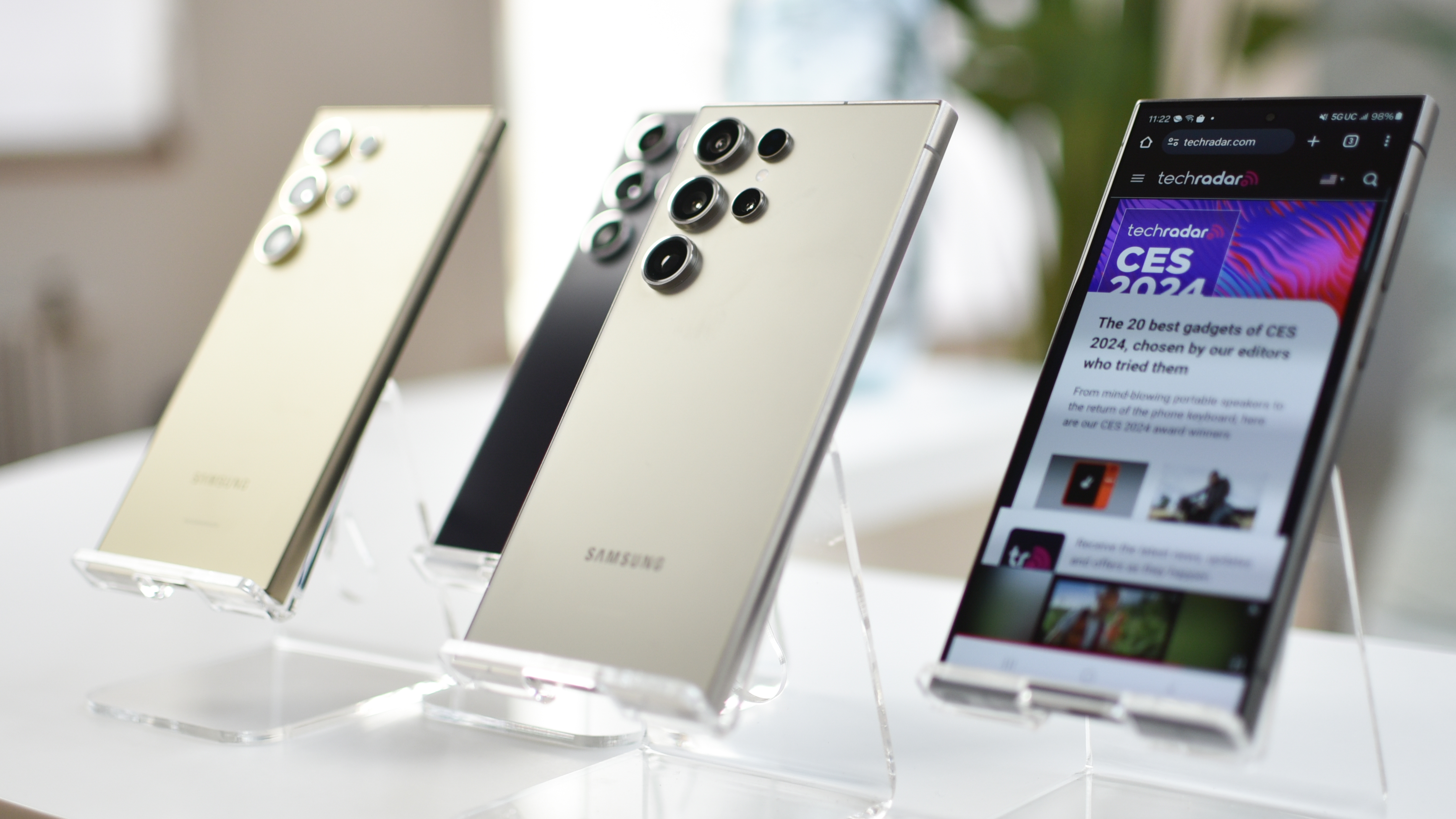
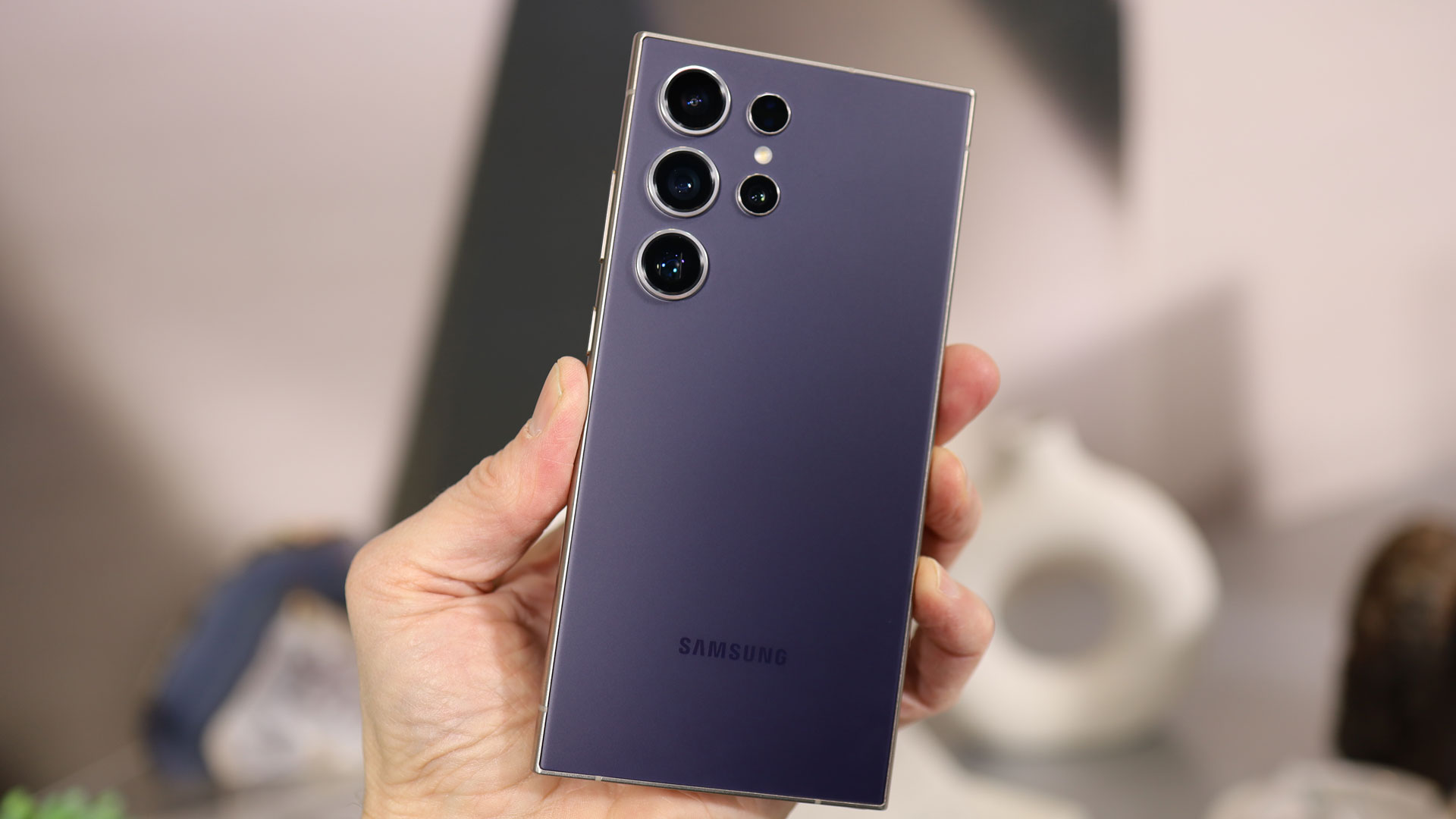
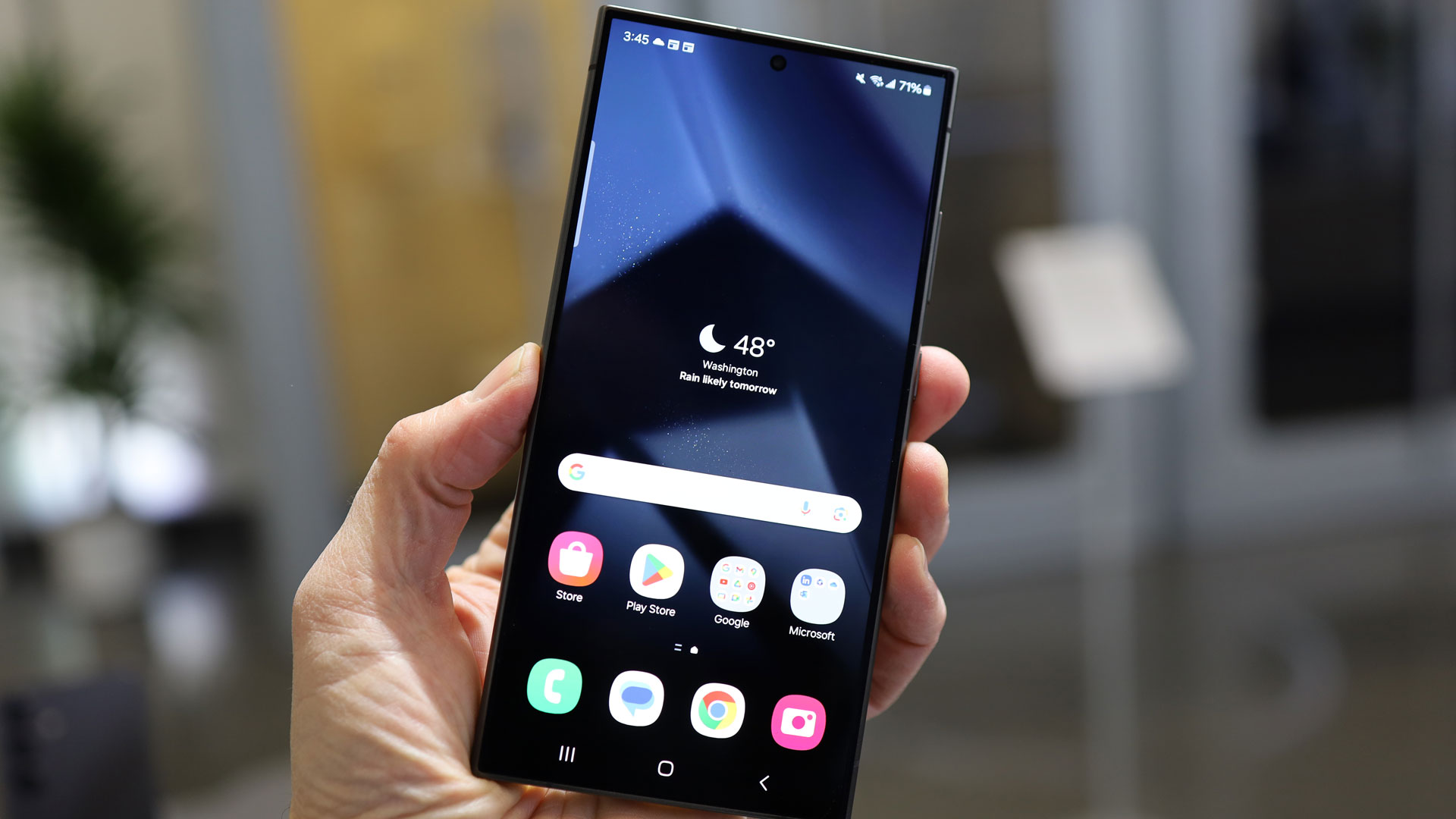
However, salvation may have come in the form of the Samsung Galaxy S24 Ultra.
Watching the recent Samsung Galaxy Unpacked event I noticed its impressive specs and began to wonder if my next gaming handheld should also be my next mobile phone.
I play Android games like Call of Duty: Mobile, Minecraft, and Genshin Impact on my mobile devices. And I recently bought a Retroid pocket 3+ to play both Android and emulated games, though this device runs on Android OS but has serious limitations to its CPU power.
Even the best gaming phones I’ve previously used felt clunky and limited, not quite managing to be a phone as well as being a gaming device. Conversely, all previous Samsung phones I’ve used at least provided a streamlined smartphone experience and decent gaming.
Heavy-hitting hardware
(Image credit: Future / Philip Berne)
The Samsung Galaxy S24 Ultra appears to outperform nearly all of my handhelds and most phones I’ve used due to the Samsung-specific overclocked 3.39GHz Snapdragon 8 Gen 3 chip, which should give the S24 Ultra an edge over even other Snapdragon 8 Gen 3 phones.
The onboard graphics chip is an Adreno 750 GPU which Samsung claims is 25% more powerful than its predecessor and 25% more efficient. It also includes 12GB RAM which is just behind the Steam Deck's 16GB LPDDR5 and much more than the Nintendo Switch’s 4GB of DDR4.
Storage on the Galaxy S24 Ultra could be an issue, as it comes with fixed internal storage in 256GB, 512GB, or 1TB configurations, However, the Nintendo Switch, Retroid Pocket, and Steam Deck can all have internal storage supplemented by microSD cards.
Displays on smartphones are much more sophisticated than even the best handhelds like the Steam Deck OLED and its 7.4-inch screen supports a resolution of 1200x800 and a 90Hz refresh rate. The Nintendo Switch uses a 7-inch OLED display that only supports and maximum resolution of 720p and a maximum refresh rate of 60Hz, but has the obvious benefit of being able to be easily connected to a TV.
Despite its slightly smaller 6.8-inch display, the Samsung Galaxy S24 Ultra dominates the others due to its higher QHD+ resolution and a panel that looks fluid and smooth thanks to its 120Hz refresh rate.
Outdoor gaming should be no issue due to the Galaxy S24 Ultra having one of the brightest displays on the market with 2,600 nits brightness and its adaptive display technology detects the lighting in your environment and adjusts accordingly.
Real ray tracing in smartphone
(Image credit: Samsung)
The Samsung S24 Ultra's graphical capabilities look to be more in line with a powerful gaming handheld than a smartphone due to its impressive hardware and the inclusion of hardware-acelrated ray tracing that's compatible with the Unreal 5 engine.
For the uninitiated, ray tracing is a graphically intensive process that mimics how light interacts with objects by following the path of individual rays of light to create realistic lighting, reflections and shadows in real time, creating more realistic and immersive games.
Mobile ray tracing may not be as complex or powerful as ray tracing implemented on expensive graphics cards and game consoles due to it only having a fraction of the amount of power to draw from compared with an Nvidia GeForce RTX 4080 pulling in 320W and the Xbox Series X using around 200W. However, it’s still remarkable technology has been miniaturized and incorporated into phones.
At the moment the selection of games on mobile that currently use this feature is limited. But in time more developers are likely to adopt this technology and we’ll hopefully see more realistic and immersive games than ever on a mobile platform. Some of the games that currently use this technology are PUBG Mobile, Rainbow Six Mobile, War Thunder Edge, Bright Memory Mobile, CarX Street, and Arena Breakout.
In comparison, the Nintendo Switch has no ray tracing support and the Steam Deck's ray tracing is rather limited.
Keeping cool but compact
(Image credit: Future / Lance Ulanoff)
All that power is no use if the device can’t use it for long and Samsung claims that the Galaxy S24 Ultra can sustain this high performance due to its redesigned cooling systems and larger vapor chamber.
If the Galaxy S24 Ultra can stay cool during long gaming sessions, then Samsung may have gone some way to overcome a pervasive issue of heat and performance throttling, which compact gaming devices like the Switch and especially the Steam Deck have been known to struggle with. But we'll have to see if this pans out in a full review and our own testing.
A glut of games
(Image credit: Call of Duty)
Cutting-edge hardware isn’t the only deciding factor when looking for a new gaming device, the selection of games can be even more important. The Nintendo Switch wins on this count, having around over 10,000 games, while the Steam Deck supports over 8,000 Steam Deck-verified and playable titles leaving me spoilt for choice.
The Google Play store has some options for the Galaxy S24 Ultra and there is also the possibility of playing classic titles using emulation.
However, the easiest and legally safer option would be to use game streaming options like Nvidia GeForce Now, Xbox Cloud Gaming, PS Remote Play, and Luna. These games streaming services have a large selection of games provided you have good enough connection speeds which should be covered by the 5G, LET, and Wi-Fi 6E connections and you are in an area with good enough reception.
So taking that into account, and the myriad of Android games available, the Galaxy S24 Ultra won't be short of things to play.
Chilling cost
(Image credit: Future / Lance Ulanoff)
The biggest disadvantage of the Samsung Galaxy S24 Ultra is its high price, starting at $1,299 / £1,249 / AU$2,199 it costs more than two Steam Deck OLEDs or four Nintendo Switch OLEDs and double the price of a PlayStation 5 console. The only handheld that comes close to its price tag is the Ayaneo Kun, which is closer to a handheld PC like the Steam Deck.
Of course, the Galaxy S24 Ultra can do a huge amount more than just gaming, with powerful cameras and a host of AI features (check our our Samsung Galaxy S24 AI FAQ) to justify its price, evne for a flagship phone.
So in short, the Samsung Galaxy S24 Ultra might just be the best non-gaming, gaming device that could become my next handheld 'console' of choice. And if it does deliver on ray tracing and consle-quality gaming, then it could be a singal for gaming handheld manufacturers to up their... game.
Update: We’ve heard from Nvidia and the company makes the point that the rumors aired by the YouTube leaker do not represent the full picture of RTX 4070 Super sales. Scan Computers in the UK is one retailer that offers up a different view to MLID’s sources, with CEO Elan Raja noting that: “The RTX 4070 Super has been a great launch at Scan. We’re pleased to have been able to get it in the hands of so many gamers.”
Original story follows below...
Nvidia’s RTX 4070 Super just came out yesterday, but day one sales might not have been what Team Green wanted to see, we’re told.
Moore’s Law is Dead (MLID) on YouTube chewed over the subject of the initial response to the first new Super revamp (two more are inbound), and the feedback from the leaker’s sources is pretty negative.
MLID quotes no fewer than six sources (at retailers and distributors) to give us a flavor for interest and sales levels with the RTX 4070 Super (along with others who didn’t want to be quoted).
The consensus? That the sales of this graphics card were relatively lackluster on the initial day of release, with stock remaining strong, even with the MSRP models that can often sell out pretty sharpish on launch day. So, that very much wasn’t the case with the RTX 4070 Super, and even on the Nvidia site, the Founders Edition model didn’t sell out.
At the time of writing, looking at Newegg for example, RTX 4070 Super stock still appears to be plentiful, with no models out of stock – and both the variants at the MSRP are still available to buy, too.
On top of that, RTX 4070 Super stock is rumored to be a bit lighter than expected – and only ‘decent’ inventory levels were anticipated by MLID’s various insiders in the first place. Meaning that not only is stock still on shelves – at MSRP – but this is with thinner on the ground shipments than expected.
Some of the quotes from MLID’s sources include that the RTX 4070 Super launch inventory is about half of what the RTX 4070 witnessed upon its release, and that sales of the new Super are “very low” and only MSRP models are really selling.
Other sources commenting on sales go even stronger on the negative side, with one person claiming sales are a “disaster” for day one, and another observing RTX 4070 Super figures were actually worse than the RTX 4080 sales for launch day (yes – ouch).
The source who made the disaster comment was from a graphics card maker, and also expressed some frustration at being told by Nvidia to push custom models which are priced over the MSRP, while Team Green sells its Founders Edition for the recommended price direct from its own website.
Analysis: Why the lack of interest? Let’s be careful here…
So, what’s going on with the RTX 4070 Super? Well, firstly we need to bear in mind that this is just chatter from the grapevine. It is, however, some pretty consistent chatter that’s largely in agreement, so these are very definitely worrying rumblings. And as noted, stock is visibly staying strong (certainly in the US) for now, so there clearly isn’t any huge rush of demand, that’s for sure.
The second thing to bear in mind is that these are just day one sales we’re talking about. Let’s give this graphics card a chance, shall we? Plus, January is traditionally a time when people are maybe struggling a bit more than usual financially (until that first pay packet rolls in).
It’s entirely possible that momentum will pick up for the RTX 4070 Super. As indeed MLID points out, the vanilla RTX 4070 was a bit slow out of the gate, but it went on to sell very well (and rank nicely on our list of the best graphics card, where it has now been succeeded by the 4070 Super, we should add). That could happen again here, but there are concerns with the apparent sluggishness of the RTX 4070 Super even at this early stage.
Exploring the reasons why PC gamers might not be so keen on Nvidia’s new graphics card, there’s a recurring theme around complaints online, which is that in 2024, 12GB seems like an even shakier loadout than it did with the RTX 4070 last year.
What many gamers wanted was an upgrade to 16GB, and the pricing of the RTX 4070 Super, which is upper-mid-range, is really leaving a bad taste in the mouth of some folks given that 12GB of video memory. It’s lacking in future-proofing, and as we point out in our review of the Founders Edition, the VRAM hampers this graphics card’s potential when it comes to 4K gaming.
What compounds all this on the value front is that AMD’s RX 7800 XT can now be had at around $500 in the US (again on Newegg), so it’s a clear hundred bucks cheaper than the RTX 4070 Super. Quite simply, that AMD graphics card makes more sense as a value proposition right now (assuming you don’t care about ray tracing, that is, where Nvidia reigns as the undisputed champ, of course).
We’ll just have to watch Nvidia’s RTX 4070 Super sales going forward, of course, but we’re already wondering whether pricing will need to be adjusted down the line. Is that something Team Green will be willing to look at if things pan out that way?
Well, we can only guess, but MLID also airs a worrying suggestion that future shipments of the RTX 4070 Super may be more skewed to custom models that are pitched above the MSRP – just another niggling doubt to add to the pile here for this revamped GPU. Another option might be to push the RTX 4070 Ti Super harder instead, with its 16GB of VRAM. (That GPU will supposedly have much lesser stock levels to begin with when it comes out, as per previous MLID rumors – allowing for the existing RTX 4070 Ti stock to be cleared).
The tech world never sleeps, and after CES 2024 last week we've had another big seven days headed up by the first Samsung Galaxy Unpacked of the year.
It’s no surprise if you’ve missed some of the latest tech news, then – and that’s why we’ve prepared this one-stop recap of all of this week’s biggest stories, so you can get caught up to speed on the latest announcements.
The big thing to watch out for in the coming weeks is the Apple Vision Pro launch – which is set for February 2. Vision Pro preorders went live yesterday (January 19), so if you’re still undecided about the new Apple headset you'll be able to check it out in person very soon. But that's still to come. Before that, here's what you missed this week.
8. ChatGPT’s AI store has been flooded with the chatbot girlfriends
(Image credit: OpenAI / Yang Jeong Hoon)
Another week, another example of AI being used in a way which wasn't intended. Seriously, we can't be trusted with anything. We'll always find a way to spoil it.
Anyway, despite ChatGPT’s new GPT Store stating quite clearly that, "We don’t allow GPTs dedicated to fostering romantic companionship or performing regulated activities", the Store is apparently awash with virtual girlfriends just seven days in – an issue which it has seemingly tried to mitigate by removing the search bar within the Explore tab.
Despite this, we were still able to find and click through to a selection of these virtual girlfriends on the official GPT Store via third-party sites. And provided you pay for either ChatGPT Plus (for $20 / £16 / AU$20 a month), Enterprise, or the new Teams plan, select users and official partners can still create and try out these romantically charged GPTs (read: Chat Generative Pre-trained Transformers – or AI bots).
There’s much to unpack here from a moral perspective, so forgive us for signing off with a glib remark. But it’s one way to counteract those January blues…
7. YouTube wasn’t to blame for CPU spikes, it was your ad blocker
(Image credit: Szabo Viktor/Pexels)
There was trouble in YouTube-land this week, with ad block users accusing the video platform of causing their PCs' CPU usage to spike as its latest method to get people to stop using them. That follows other strict tactics such as a three-strike video policy and annoying five-second delays on videos if the site detected an ad blocker was being used.
This wasn’t the case, however. In a statement, YouTube categorically denied throttling people’s PCs, saying the issues people were wrestling with were “not caused by our ad blocker detection efforts.” Instead, it turns out that some glitchy code in Ad Block and Adblock Plus was causing the problems. Awkward.
Thankfully, updates have now started rolling out for the software. Download Adblock 5.17.1 or Adblock Plus 3.22.1 and you shouldn’t experience any issues related to the bug.
6. Microsoft Edge got a fantastic new search feature
(Image credit: Shutterstock)
Microsoft hasn't given up on the browser wars just yet, and the latest feature introduced to Edge could even see it claw back some ground from Google's Chrome.
The option allows users to simultaneously search the internet using two engines, toggling between default settings. For instance, if Bing is the default, clicking the new search icon displays results from an alternative engine like Google.
That might seem like a relatively minor feature, but given how much time most of spend searching each day – and how poor Google's results have become over the past year or two – it's a welcome one all the same.
5. Xiaomi unveiled five new smartphones with some impressive specs
The Xiaomi Redmi Note 13 Pro Plus 5G(Image credit: Xiaomi)
Not content to let Samsung steal all the smartphone headlines this week, Xiaomi also had a little party of its own. And in one way it even outdid the Galaxy launch, revealing five Redmi Note 13 series phones to Samsung's three.
We were at the event, and spent a bit of time with the two premium models, the Redmi Note 13 Pro Plus 5G (great name) and the Redmi Note 13 Pro 5G – although 'premium' is probably pushing it slightly, as they're still closer to being mid-range and are priced accordingly.
The top-tier Pro Plus uses the Medatek Dimensity 7200 Ultra processor, features a slightly curved design, and uses 120W fast charging. In contrast, the Redmi Note 13 Pro 5G uses the respectable Snapdragon 7s Gen 2, has a more flat-edged look, and uses 67W charging.
The real stars were the cameras. Both pack a 200-megapixel main sensor, 8MP ultra-wide, and 2MP macro, and we were impressed with their low-light performance and versatility. They also get some AI-enhanced editing features, including a sky replacement tool, an object eraser tool, and a beautify mode, plus you can output 200-megapixel images to set aspect ratios; perfect for social media.
Even the most expensive of the five, the Pro Plus 5G, only costs £449 (roughly $570 / AU$860), and we'll be putting them through their paces soon in a full test.
4. QDEL arrived to take on OLED as the TV tech of the future
The Sharp QDEL display(Image credit: Digital Trends )
A lot of secret tech is shown behind closed doors at CES, and this year that included a tech that could one day be the new future of TVs.
QDEL stands for Quantum Dot Electroluminescent, and it takes the quantum dot tech of QLED TVs to their endgame. In QLED TVs, quantum dots are used to turn light into the different colors you see, but in the QDEL display (we hope you’re following these nearly identical acronyms) the quantum dots actually emit the light themselves. This makes it more like an OLED TV, with incredible per-pixel contrast, but with the promise of incredibly pure colors. It also, potentially, makes them much cheaper, because QDEL screens could be made with the same tech behind LCD TVs.
That’s all according to Sharp, which showed off a QDEL prototype at CES. There’s a long way to go before you’ll be buying a QDEL set, but the tech just went from theoretical to something that you need to know about.
The Apple Vision Pro spatial computing revolution officially kicked off this week with preorders for the $3,499 mixed-reality headset finally live as of yesterday (January 19). It’s a big moment for the long-in-development headset, for Apple – which is counting on people adopting this new form of immersive computing – and for consumers, who may have been wondering what all the fuss is about.
In the run-up to this big moment, Apple gave us one more hands-on experience. Our US Editor in Chief Lance Ulanoff is the lucky man who got to try it on, and he says that he's learned a little bit more each of the four times Apple’s let him don the 1 lb. visor. In his own words, it’s like peeling a mixed reality onion. What’s most interesting is that Apple has been making subtle software and even hardware tweaks to the headset since the June reveal at WWDC 2023.
This time, we found new wearability options and were finally able to tap into Siri and productivity features. Still, all these hands-on reports in the world won’t compare to trying it yourself. Expect lots of in-retail-store opportunities for curious consumers starting soon and full reviews to drop between now and when the headset ships on February 2.
The biggest announcement from Unpacked 2024 might not have been the Galaxy S24 phones (see below), but rather the surprise reveal of the Samsung Galaxy Ring in classic 'one more thing' style. Admittedly, all we really got was a brief teaser rather than a full showcase, but it was an exciting moment nonetheless.
Beyond this brief look at the design (it's a ring, what else were you expecting?) practically no other details have been released, but it might be coming fairly soon. After the reveal, Samsung shared a surprise update on the Galaxy Ring's availability, telling us that, “The hardware is ready and the product is beautiful," then adding that the release "will be a bit later in the year."
Hopefully, we'll hear more at the next Unpacked event, which is likely to land between July and August.
The Samsung Galaxy S24, S24 Plus, and S24 Ultra(Image credit: Samsung)
We're only a few weeks into the year but we've already had our first big launch. And it really was a big one.
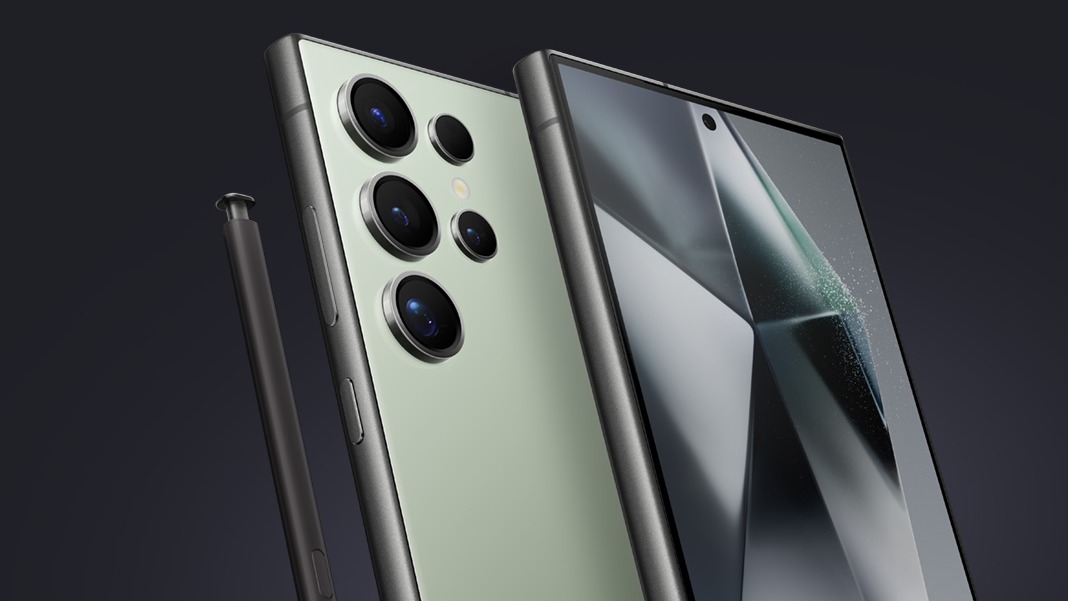
To the surprise of absolutely nobody, Samsung revealed the Galaxy S24 series at the the first Galaxy Unpacked of 2024. The trio of handsets comprise the standard model, Galaxy S24 Plus and Galaxy S24 Ultra, and all three look like strong contenders for our best phones guide.
Sure, at first glance these phones are merely refreshed versions of their predecessors, but look closer and there are some neat tweaks, such as the Standard and Plus models getting larger screens that can throttle down from 120Hz to 1Hz. Plus, all three phones come with the latest chips from Exynos and Qualcomm.
A bigger deal, though, is the Galaxy S24 family's use of generative AI. This smart tech enables all sorts of features, from the live translation of speech to the complete reworking of photos with no need for Photoshop skills. Many of these skills are inherited from the Google Pixel 8 phones, and they could make generative AI truly mainstream, given the larger audience for Samsung devices.
Developer MachineGames has shone a light on its upcoming Indiana Jones and the Great Circle game and its approach to the iconic character.
In a post on the official Lucasfilm website, game director Jerk Gustafsson talked about the upcoming game which is slated to launch on Xbox Series X|S and PC later this year. In the post, Gustafsson makes it quite clear that Indy - much like in the movies - isn't all-powerful.
"We based our philosophy of the gameplay around the character of Indiana Jones," Gustafsson says. "He is not a superhero, he is a very agile and tough archaeologist. When you overcome the numerous obstacles in your way, it takes a lot of effort and hard work, like a real human being."
Gustafsson goes on to explain the "sense of dread" players may feel while traversing the game's environments, as well as the "grounded and heavy" feeling of the combat. Both are approaches that I think fit the game well, especially considering that original trilogy of movies are full of scenes where Indy barely scrapes through by the skin of his teeth. Hopefully, MachineGames can translate that level of tension for The Great Circle.
Gustafsson also hints that there's probably going to be a strong sense of discovery in Indiana Jones and the Great Circle, stating: "A third major component is, of course, the discovery of all these historical moments hidden in the earth, or in the sand. Feeling like you are an expert archaeologist out on an adventure is perhaps the most important part of shaping the experience of being Indiana Jones."
Indiana Jones and the Great Circle is set to release sometime in 2024. And, as an Xbox Game Studios-developed title, it'll be available to download and play for Xbox Game Pass subscribers on day one of release.
So far, Apple has stated that the iPhone 12 and M2 MacBook Air are affected, but it’s likely older Apple products still hold the vulnerability; the researchers at Trail of Bits who originally uncovered the security flaw noted that the recently-released iPhone 15 and M3 MacBook Pro seem to have been patched to remove the issue, but there’s no concrete list of which products are currently still affected.
The security flaw, dubbed ‘LeftoverLocals’, allows hackers to read data that was previously processed by the device’s GPU. As the security researchers at Trail of Bits demonstrated, an attacker could steal information such as the results of a query given to an AI chatbot such as ChatGPT. It’s a remarkably simple process for hackers, too – the researchers were able to pull sensitive data from a target device with just 10 lines of code.
Beyond Apple’s hardware, the affected Qualcomm devices – which will presumably include dozens of Android phone and tablet models – have apparently now been patched, while AMD has stated it is working on a series of fixes that will be available in March.
Should we be worried about this?
Fortunately, there’s no need to panic straight away. As our Pro team noted yesterday, LeftoverLocals requires pre-existing access to a target device in order to work, meaning that the affected devices aren’t instantly vulnerable. That means the exploit will need to be used in conjunction with more conventional cyber-attacks (such as phishing emails) to be effective.
In other words, if you exercise the usual cybersecurity best practices – no clicking on dodgy links! – you should be fine. However, Trail of Bits did add that since the vulnerability exists at the GPU level, hackers don’t need specific access to individual user accounts: once they have any form of access to the device, they can steal data from any user.
With that in mind, it’s worth being extra careful when using devices with shared accounts right now. If you share a Chrome tablet with a child who has their own user account, for example, their profile being compromised could open up your account to a LeftoverLocals attack.
Naturally, you should be sure to download any available security patches if you’ve got a device with a Qualcomm, Apple, or AMD processor. If you’re running on Intel, Nvidia, or MediaTek hardware, then you don’t have to worry!
Like most technology conferences in recent months, Samsung’s latest Galaxy Unpacked event was dominated by conversations surrounding AI. From two-way call translation to gesture-based search, the Samsung Galaxy S24 launched with several AI-powered tricks up its sleeve – but one particular feature is already raising eyebrows.
Set to debut on the Galaxy S24 and its siblings, Generative Edit will allow users to artificially erase, recompose and remaster parts of an image in a bid to achieve photographic perfection. This isn’t a new concept, and any edits made using this generative AI tech will result in a watermark and metadata changes. But the seamlessness with which the Galaxy S24 enables such edits has understandably left some Unpacked-goers concerned.
Samsung, however, is confident that its new Generative Edit feature is ethical, desirable and even necessary in today’s misinformation-filled world. In a revealing interview with TechRadar, Samsung’s Head of Customer Experience, Patrick Chomet, defended the company’s position on AI and its implications.
“There was a very nice video by Marques Brownlee last year on the moon picture,” Chomet told us. “Everyone was like, ‘Is it fake? Is it not fake?’ There was a debate around what constitutes a real picture. And actually, there is no such thing as a real picture. As soon as you have sensors to capture something, you reproduce [what you’re seeing], and it doesn’t mean anything. There is no real picture. You can try to define a real picture by saying, ‘I took that picture’, but if you used AI to optimize the zoom, the autofocus, the scene – is it real? Or is it all filters? There is no real picture, full stop.”
All three Galaxy S24 phones have the Generative AI feature(Image credit: Samsung)
“But still, questions around authenticity are very important,” Chomet continued, “and we [Samsung] go about this by recognizing two consumer needs; two different customer intentions. Neither of them are new, but generative AI will accelerate one of them.
“One intention is wanting to capture the moment – wanting to take a picture that’s as accurate and complete as possible. To do that, we use a lot of AI filtering, modification and optimization to erase shadows, reflections and so on. But we are true to the user's intention, which was to capture that moment.
“Then there is another intention, which is wanting to make something. When people go on Instagram, they add a bunch of funky black and white stuff – they create a new reality. Their intention isn’t to recreate reality, it’s to make something new. So [Generative Edit] isn’t a totally new idea. Generative AI tools will accelerate that intention exponentially in the next few years [...] so there is a big customer need to distinguish between the real and the new. That’s why our Generative Edit feature adds a watermark and edits the metadata, and we’re working with regulatory bodies to ensure people understand the difference.”
On the subject of AI regulation, Chomet said that Samsung "is very aligned with European regulations on AI," noting that governments are right to express early concerns around the potential implications of widespread AI use.
"The industry needs to be responsible and it needs to be regulated," added Chomet, noting that Samsung is actively working on that. "Our new technology is amazing and powerful – but like anything, it can be used in good and bad ways. So, it’s appropriate to think deeply about the bad ways.”
As for how Generative Edit will end up being used on Samsung's new Galaxy phones, only time will tell. Perhaps the feature will simply help average smartphone users (i.e. those unfamiliar with Photoshop) get the photos they really want, rather than facilitate mass photo fakery. Indeed, it still remains to be seen whether generative AI tech as a whole will be a benefit or a hindrance to society as we know it.
Update: The updates to Adblock and Adblock Plus that fix the slowdown while watching YouTube and while browsing other sites have now rolled out with versions 5.17.1 and 3.22.1 respectively.
Eyeo, the group behind these ad blockers, says the updates are available in the Opera and Edge extension stores. It adds, "This means the problem is solved and AdBlock and AdBlock Plus users should not experience issues that are related to the fixed bug, as soon as their extension is updated to the new version. " (via Android Authority)
The original story continues below.
Original story: In recent days, YouTube has been accused of throttling the performance of its own platform as the latest tactic in its war against ad blockers. But YouTube says this categorically isn’t the case. Instead, it looks like the reason for the slowdown lies with the ad blockers themselves – and a fix is on the way.
In response to the criticism YouTube has released a statement (via PCGamer) saying categorically that any loading delays ad blocker users are experiencing “are not caused by our ad blocker detection efforts.”
Okay, so what gives? Taking YouTube at its word, does that mean some people are just imagining things when they say their PCs are having CPU troubles? No. There are definitely problems, they just aren’t YouTube’s fault – at least not this time.
Adblock Plus was having trouble
In a Twitter thread (now X) uBlock founder Raymond Hill explains that the performance issues are seemingly caused by Adblock Plus version 3.22 & AdBlock version 5.17 – the latest iterations of both software.
As he points out, the problems are exclusive to Adblock Plus spinoffs rather than all ad blockers (uBlock Origin for example was having no problems), and affect a wider array of sites than just YouTube.
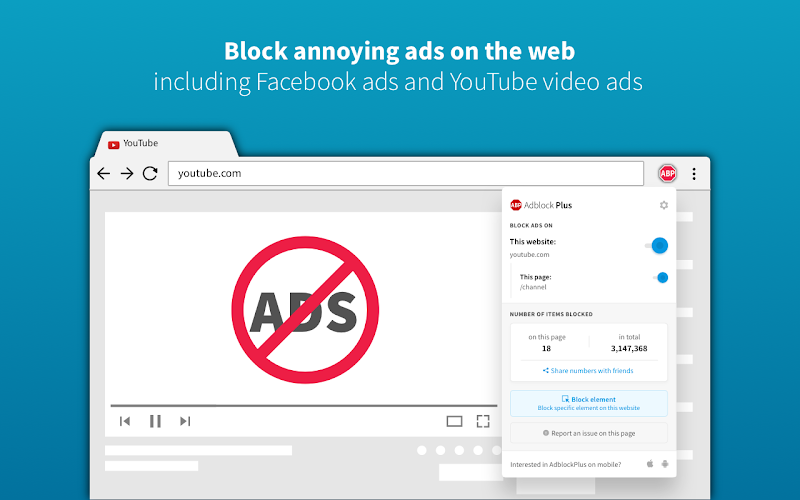
Adblock Plus is the source of the performance problems(Image credit: Adblock Plus)
The breakdown gets quite technical, but the short summary is that sites like YouTube and others that update dynamically are triggering “troublesome” code paths in Adblock and Adblock Plus.
When you boot up one of these sites the adblocking software starts performing actions that use an unnecessarily large amount of your CPU's processing power. Hill adds that the bug would hit people who use both AdBlock and Adblock Plus particularly hard as their individual issues would compound on one another.
So YouTube isn’t causing the problems, it’s just a very popular catalyst for setting off underlying issues that currently exist in AdBlock and Adblock Plus.
While you wait for the fix you can either disable the program, or try one of the other best ad blockers that’s unaffected by the glitch if you don’t want to put up with ads even for even a day or two.
















Follow Us
Were this world an endless plain, and by sailing eastward we could for ever reach new distances