Home Top Ad

Responsive Ads Here

Google's report reveals worrying adoption gaps among UK workers The Government should "guarantee AI training" for these wo...


  • Google's report reveals worrying adoption gaps among UK workers
  • The Government should "guarantee AI training" for these workers
  • Enabling the workforce to adopt AI effectively would account for half of the economic growth

A new report from Google has claimed the UK could potentially double its adoption of artificial intelligence, resulting in boosted productivity and an estimated £400 billion in economic growth.

The company's latest AI Works report plays into the role of human workers in the successful deployment of AI – effective workforce adoption could account for £200 billion, or half, of the gains.

However, as it currently stands, two in three UK workers have never used generative AI at work – a trend that's most prominent among "older women from lower socio-economic backgrounds."

Effective AI adoption

Google's report centers around the accessibility concerns surrounding artificial intelligence. Women over 55 are said to be four times less likely to use AI than men under 35, the report reveals.

It doesn't all need to be lost hope, though, with the tech giant spelling out a handful of key considerations businesses can explore to boost adoption across all workers.

The primary advisory is that workers need "permission to prompt" – giving workers explicit permission to use AI and setting out clear AI policies will help them to understand that AI's advantages are legitimate, fair and comparable to other internet-based tools.

Google also noted that AI habits are easy to form, revealing that just a few hours of training can double daily AI usage, which remains high several months after that initial lesson. Consequentially, this habit formation leads to further exploration and encourages ongoing learning.

Naturally, the report also explores how AI can save workers time – an average of 122 hours per year across all sectors, according to the figures, which exceeds the previously modelled 100-hour estimate.

Finally, Google says that supporting workers with upskilling efforts can help to narrow adoption gaps.

"We want these pilots to encourage more leaders to act now and seize this opportunity to equip everyone with the skills needed to unlock economic growth and change ways of working for the better," noted Google's EMEA President, Debbie Weinstein.

Google has also urged the UK Government to "guarantee AI training for all public sector workers."

Peter Kyle, Secretary of State for Science, Innovation and Technology, committed to supporting the UK workforce: "We will support workers to develop the skills they need for jobs in and with AI, so that all parts of society can benefit from this technology."

You might also like


from Latest from TechRadar US in News,opinion https://ift.tt/H172MlA

Hoo boy, it's almost time to deal with the fallout from last week's episode of The Last of Us season 2 . Indeed, with viewers pro...

Hoo boy, it's almost time to deal with the fallout from last week's episode of The Last of Us season 2.

Indeed, with viewers proclaiming that episode 2's shocking moment "ruined my entire week, month, and year", this season's third chapter is sure to be a solemn and anger-filled affair.

So, when will The Last of Us TV show's next episode be available to watch? And where will it be streamable in the US, UK, and Australia? You'll get the answers you seek in this article, as well as a complete rundown of season 2's full release schedule for the weeks ahead. Wipe away the last of those tears, dear reader, and proceed when you're ready.

What is the release date and time for The Last of Us season 2 episode 3 in the US?

Tommy standing in a room with bodies on tables in The Last of Us season 2 episode 3

Tommy is going to be hurting for many, many reasons in this season's third entry (Image credit: Liane Hentscher/HBO)

The next installment of The Last of Us' sophomore season will air at 6pm PT / 9pm ET on Sunday, April 27.

Just like this installment's first two episodes, you can watch it on Max if you're subscribed to one of the world's best streaming services. Alternatively, those who aren't can catch it on Warner Bros. Discovery's (WBD) linear TV channel – that being HBO.

Where can I watch The Last of Us season 2 episode 3 in the UK?

Dina standing outside in the daytime in The Last of Us season 2 episode 3

Ellie is going to need Dina more than ever after what happened to Joel in season 2's last episode (Image credit: Liane Hentscher/HBO)

UK fans can tune into Sky Atlantic and Now TV to watch episode 3 of The Last of Us' second season. It'll be a late night or very early morning for those of you who want to watch it as soon as it drops, too, with the show set to return on Monday, April 28 at 2am BST.

When does the next episode of The Last of Us season 2 air in Australia?

Jesse sitting with his arms folded in The Last of Us season 2 episode 3

Jesse is as unimpressed as the rest of us over the week-long wait for episode 3 (Image credit: Liane Hentscher/HBO)

One of the best Max shows will return for its latest chapter Down Under on Monday, April 28 at 11am AEST.

With WBD's main streaming platform launching in Australia last month, Max is now the primary home for The Last of Us TV series. However, anyone who's signed up to Foxtel can also stream HBO's live-action adaptation of Naught Dog's multi-award-winning video game series on this service, too.

When do new episodes of The Last of Us season 2 come out?

Ellie kneeling by Joel's grave at dusk in The Last of Us season 2 episode 3

So long, Joel (Image credit: Liane Hentscher/HBO)

There'll be four more episodes of The Last of Us season 2 to enjoy (if that's the right word to use) before the critically-acclaimed and hugely popular TV program leaves our screens once more. Here's when you can watch that quartet:

  • Episode 1 – out now
  • Episode 2 – out now
  • Episode 3 – April 27 (US); April 28 (UK and Australia)
  • Episode 4 – May 4 (US); May 5 (UK and Australia)
  • Episode 5 – May 11 (US); May 12 (UK and Australia)
  • Episode 6 – May 18 (US); May 19 (UK and Australia)
  • Episode 7 – May 25 (US); May 26 (UK and Australia)

You might also like


from Latest from TechRadar US in News,opinion https://ift.tt/xO1jVsc

From DeepSeek to Anthropic’s Computer Use and ChatGPT’s ‘Operator,’ AI tools have taken the world by storm, and this may be just the begin...

From DeepSeek to Anthropic’s Computer Use and ChatGPT’s ‘Operator,’ AI tools have taken the world by storm, and this may be just the beginning. Yet, as AI agents debut with remarkable capabilities, a fundamental question remains: how do we verify their outputs?

The AI race has unlocked groundbreaking innovations, but as development surges ahead, key questions around verifiability remain unresolved. Without built-in trust mechanisms, AI’s long-term scalability — and the investments fueling it — face growing risks.

The Asymmetry of AI Development vs. AI Accountability

Today, AI development is incentivized for speed and capability, while accountability mechanisms lag behind. This dynamic creates a fundamental imbalance: verifiability lacks the attention, funding and resources needed to keep pace with AI progress, leaving outputs unproven and susceptible to manipulation. The result is a flood of AI solutions deployed at scale, often without the safety controls needed to mitigate risks like misinformation, privacy breaches and cybersecurity vulnerabilities.

This gap will become more evident as AI continues to integrate into critical industries. Companies developing AI models are making remarkable strides — but without parallel advancements in verification, trust in AI risks being eroded. Organizations that embed accountability from the outset won’t just mitigate future risks; they’ll gain a competitive advantage in a landscape where trust will define long-term adoption.

AI’s rapid adoption is an incredible force for innovation, but with that momentum comes the challenge of ensuring robust verification without slowing progress. Rather than leaving critical concerns for later, we provide a seamless path to integrate verifiability from the start — so developers and industry leaders can move full speed ahead with confidence. The current AI gold rush has unlocked massive opportunities, and by closing the gap between capability and accountability, we ensure that this momentum not only continues but strengthens for the long term.

Verifiability as a Catalyst for AI’s Future

Recently, many were surprised when one of the largest tech companies in the world pulled the plug on its AI features. But as AI capabilities expand, should we really be caught off guard when verification challenges surface? As AI continues to scale, the ability to prove its trustworthiness will determine whether public confidence grows or diminishes.

Recent surveys indicate that skepticism is rising, with a significant portion of users expressing concern over AI’s reliability. The next evolution of AI requires accountability to grow in tandem with development, ensuring trust scales with innovation.

The future of AI needs to be reframed: The question is no longer just ‘Can AI do this or that?’ but rather ‘Can we trust AI’s outputs?’ By embedding trust and verification into AI’s foundations, the industry can ensure AI adoption continues to expand with confidence.

But to return to the fundamental question at hand: how? More precisely, how do you know if the information generated from AI is accurate? How can the privacy and confidentiality of that information be verified? Anyone using ChatGPT, Copilot, Perplexity or Claude, among countless others, has faced these questions. Addressing them requires leveraging the latest advancements in cryptographic verification.

Enter zkML: A Framework for AI Trust

AI’s ability to generate complex outputs is growing exponentially, but verifying the accuracy, security and trustworthiness of these outputs remains an open challenge. This is where zero-knowledge machine learning (zkML) presents a breakthrough solution.

Zero-knowledge proofs (ZKPs), originally developed for cryptographic security, provide a way to prove the validity of an AI-generated output without revealing the underlying data or model details. By applying these techniques to machine learning, zkML ensures that AI-generated outputs are produced as expected while preserving privacy and integrity.

Inference generated using zkML confirms that AI models operate as intended, while verifiable AI training ensures that the training data remains untampered. Additionally, private input protection allows AI to be leveraged securely without exposing sensitive information, and compliant, confidential AI helps meet regulatory requirements while preserving data confidentiality. This means AI systems can prove their outputs — without disclosing the full details of their processes, including model weights.

Unlike traditional verification methods that rely on centralized oversight or controlled environments, zkML enables decentralized, trustless verification. This allows AI developers to demonstrate the authenticity of their models without requiring external trust assumptions, paving the way for scalable and transparent AI verification.

The Future of AI Trust Hinges on Verifiability

AI’s credibility hinges on its ability to prove its outputs are trustworthy. The industry has an opportunity to integrate verifiability now — before trust erodes.

A future where AI operates without trust mechanisms will struggle to scale sustainably. By integrating cryptographic verification techniques like ZKPs, we can create an AI ecosystem where transparency and accountability are built in, not an afterthought.

Verifiable AI is more than a theoretical solution; it’s the next frontier of AI innovation. The shift toward verifiable AI is not only necessary — it’s the next step in ensuring AI’s long-term success. The time to act is now.

We've listed the best encryption software.

This article was produced as part of TechRadarPro's Expert Insights channel where we feature the best and brightest minds in the technology industry today. The views expressed here are those of the author and are not necessarily those of TechRadarPro or Future plc. If you are interested in contributing find out more here: https://www.techradar.com/news/submit-your-story-to-techradar-pro


from Latest from TechRadar US in News,opinion https://ift.tt/9SI5DCy

Apple sees €500m EU fine for forcing users to use its own App Store Google accused of not collecting genuine user consent, receives €200...


  • Apple sees €500m EU fine for forcing users to use its own App Store
  • Google accused of not collecting genuine user consent, receives €200m fine
  • The US has already imposed tariffs on EU goods, but the fines could make things worse

The European Union has issued €700 million in fines to Apple and Meta under the Digital Markets Act (DMA), making them the first two companies to receive fines under the legislation.

Both firms must comply within 60 days or they risk facing further penalties. Apple received €500 million in fines, while Meta was hit with a €200 million penalty.

Besides aiming to squash the dominance of big tech in the region, the EU's DMA fines may also cause further tensions between Europe and the US amid ongoing trade wars.

EU fines

In the case of Apple, the European Union has criticized the iPhone maker for restricting alternative app marketplaces on iOS, accusing it of reinforcing the dependence on the Apple Store for both app developers and consumers.

The EU says Apple must allow third-party app stores and sideloading on iOS, and naturally, Tim Cook's company isn't happy about the news, arguing that the EU is asking Apple to "give away our technology for free."

It has acknowledged that Apple has, "made it easier for users to change default settings for calling, messaging, call filtering, keyboards, password managers and translation services on iPhones."

For Meta, the European Union is accusing it of lacking genuine user consent in its 'consent or pay' model, violating DMA rules. In this business model, users had to allow data merging or pay a subscription to use Facebook/Instagram. Meta has accused the EU of "attempting to handicap successful American businesses," effectively imposing a multibillion-dollar tariff on the company and forcing it to offer an "inferior service."

More broadly, the US has already imposed tariffs on EU goods, citing unfair tech regulation. Europe's fines, totalling €700 million for just these two companies, is almost certainly going to ruffle some feathers.

TechRadar Pro has asked both companies to comment on the fines, but we didn't receive immediate responses.

You might also like


from Latest from TechRadar US in News,opinion https://ift.tt/aY3RnzI

Across the globe, 70% of data center facility leaders say their national power grid is being stretched to its limits. Now, the sustainabili...

Across the globe, 70% of data center facility leaders say their national power grid is being stretched to its limits. Now, the sustainability warning bells aren’t just ringing, they’re deafening.

Behind much of this growing concern is the surging energy demand driven by artificial intelligence (AI) in data centers. To quantify the use of AI, McKinsey’s latest survey highlights that 78% of respondents say their organizations already use AI tools in at least one business function. From workplace productivity gains to life-saving capabilities such as detecting illnesses, AI innovations are second to none.

Data centers, which house the computing power for AI, must now focus on supporting its growth sustainably, ensuring national grids are protected. If not, we might run out of power, leading to data center outages that affect communities and livelihoods. However, according to Cadence’s Innovation Imperative, while 88% of data center operators say they’re actively working to enhance energy efficiency, only three in ten (31%) believe that they’re doing enough.

The good news is that data centers can reduce their energy impact by harnessing AI in smarter ways. AI-powered digital twins—virtual replicas of facilities—help operators shrink their environmental footprint, prevent costly outages, and finally, boost sustainability.

Ultimately, the research shows that data center operators want to make a difference. The challenge is knowing where to start. The first step is uncovering where the real problems lie and what’s truly driving excess energy use.

Apprehension on Energy

Before beginning to invest in efficiency tactics, data centers must assess the challenges in their facilities.

Our latest research shows that almost two-thirds (60%) of facility leaders overprovision, which is allocating more resources to a system than necessary. This is due to concerns that scaling back will cause outages. While it’s understandable that facility leaders want reliable systems, it also wastes energy, drives up their footprint, and increases operational costs.

As energy needs rise to power AI, they lead to excessive overprovisioning, with immense energy waste.

Another challenge that Cadence uncovered is that many data centers struggle with stranded capacity. This is another unsustainable practice, where installed capacity in the data center cannot be used, and 29% of leaders reported stranded capacity as a constraint.

Picture stranded capacity like a game of Tetris, where data centers are playing five levels at the same time, trying to fit all the systems (blocks) into the data center. Operators are often unaware of doing this and can’t spot the available capacity. Thus, the facility fails to meet its design goals and has a costly impact on the planet.

Furthermore, while high-density servers are great for holding immense power, their high energy requirements can create several challenges for data centers. Currently, 59% of data center operators are using high-density servers, so it is important to make sure they run properly and effectively, with as little stranded capacity and over-provisioning as possible.

This is especially true with rack densities exceeding 100kW, and as high as 600kW, with the latest Rubin architecture that Nvidia presented at GTC.

Addressing These Matters is Not a “Nice-to-Have”

Tackling data center energy challenges is now critical, especially as regulatory factors come into play. This includes stricter reporting requirements, such as the EU’s Energy Efficiency Directive, which requires carbon emission reporting.

Local communities are increasingly opposing data center facilities. This is primarily due to claims that such facilities consume large quantities of energy, competing for energy resources and water with the population. Recently, this has become a concern in Virginia, where some residents will soon be neighbors to a 466,000-square-foot data center.

Addressing these issues requires a nuanced, multi-faceted approach. From energy reporting and thermal modeling to capacity planning and workload optimization, digital twins will play a critical role in tackling stranded capacity, reducing excessive energy use in data centers, and allowing them to trial renewable energies.

Reducing Inefficient Resource Allocation

By simulating real-time operations, digital twins enable operators to fully utilize available capacity, optimize energy consumption, and minimize the environmental impact on surrounding areas.

Minimizing overprovisioning is a good place to start to reduce energy consumption. Digital twins, enhanced by AI, offer a powerful solution. Through real-time data and historical trends, operators can create a virtual environment that mirrors the physical facility. This allows them to test different scenarios, evaluate the impact of resource allocation decisions, and identify potential areas of over-provisioning.

It also provides an excellent stranded capacity solution. By integrating sensors and data collection mechanisms, operators can continuously monitor the performance of various components, such as power consumption, cooling efficiency, and overprovisioning. This data can then be analyzed using predictive analytics to identify potential bottlenecks or areas of underutilization.

By proactively addressing these issues, operators can optimize resource allocation and reduce stranded capacity.

Reduce, Reuse, Recycle

The transformative capabilities of digital twins do not end here. Using these tools, data centers can capture and repurpose waste heat from cooling systems for other applications, such as heating buildings or industrial processes. To do so, digital twins can replicate the physical facility and help manage the implementation of technology. This will reduce energy waste and lower overall carbon emissions.

Repurposing wasted heat is important because the EU Energy Efficiency Directive mandates that data centers with a high level of energy input utilize waste heat or implement other waste heat recovery measures.

In addition, the increasing heat caused by growing server density puts cooling systems under significant strain. Digital twins allow operators to model the effectiveness of alternative cooling methods and explore how these systems interact with the entire infrastructure.

Evaluating Cooling Effectiveness

Re-evaluating data center cooling is an important strategy for reducing energy consumption. Cooling is one of the most energy-intensive elements of data center operations, particularly as AI workloads increase power demands. Digital twins are making it more feasible for data centers to adopt liquid cooling, which is gathering momentum.

At present, 45% of decision-makers use liquid cooling, and a further 19% plan to introduce it in the next year. This is largely because high-density server racks, intensive workloads, and increasing power densities are surpassing the capabilities of traditional air cooling. While air cooling can manage heat loads up to 20kW per rack, loads beyond 20–25kW are more efficiently and cost-effectively handled by a mix of liquid cooling and precision air cooling.

Using digital twins to implement liquid cooling, data center operators can examine factors that are otherwise difficult to detect or measure, such as overall cooling efficiency. They can assess the pros and cons of various liquid cooling options before investing in technology. The result is a customized solution tailored to the facility’s specific heat load requirements.

Transforming the Data Center Trajectory

Clearly, data centers are serious about improving their environmental impact. However, implementation remains the biggest hurdle. Digital twins are proving to be the sustainability game-changer the industry needs, helping operators move from ambition to action.

Even the process of deploying digital twins drives immediate value, forcing facilities to gather their data, surface blind spots, and build a clear picture of their operations. This alone creates the foundation for smarter, more sustainable decision-making.

Those that turn to digital twins won’t just optimize data center performance, they’ll unlock a roadmap to a greener, more efficient, and future-proofed data center industry.

We rate the best web hosting services.

This article was produced as part of TechRadarPro's Expert Insights channel where we feature the best and brightest minds in the technology industry today. The views expressed here are those of the author and are not necessarily those of TechRadarPro or Future plc. If you are interested in contributing find out more here: https://www.techradar.com/news/submit-your-story-to-techradar-pro



from Latest from TechRadar US in News,opinion https://ift.tt/NE7ue8D

Microsoft has finally made Recall available on Windows 11 for Copilot+ PCs – it’s rolling out with the April preview update Click to Do ...


  • Microsoft has finally made Recall available on Windows 11 for Copilot+ PCs – it’s rolling out with the April preview update
  • Click to Do is also generally available now, as is an AI-supercharged version of Windows 11’s basic search functionality
  • The latter improved search feature is what might interest many Copilot+ PC owners

Microsoft has finally unleashed its Recall feature on the general computing public after multiple misfires and backtracks since the functionality was first revealed almost a year ago now.

In case it escaped your attention – which is unlikely to say the least – Recall is the much talked about AI-powered feature that uses regularly saved screenshots to provide an in-depth, natural language search experience.

Microsoft announced that the general availability of Recall for Windows 11 is happening, with the feature now rolling out, albeit with the caveat that this is for Copilot+ PCs only. That’s because it requires a chunky NPU to beef up the local processing power on hand to ensure the search works responsively enough.

Alongside Recall, the Click to Do feature is also debuting in Windows 11 for Copilot+ PCs, which is a partner ability that offers up context-sensitive AI-powered actions (most recently a new reading coach integration is in testing, a nifty touch).

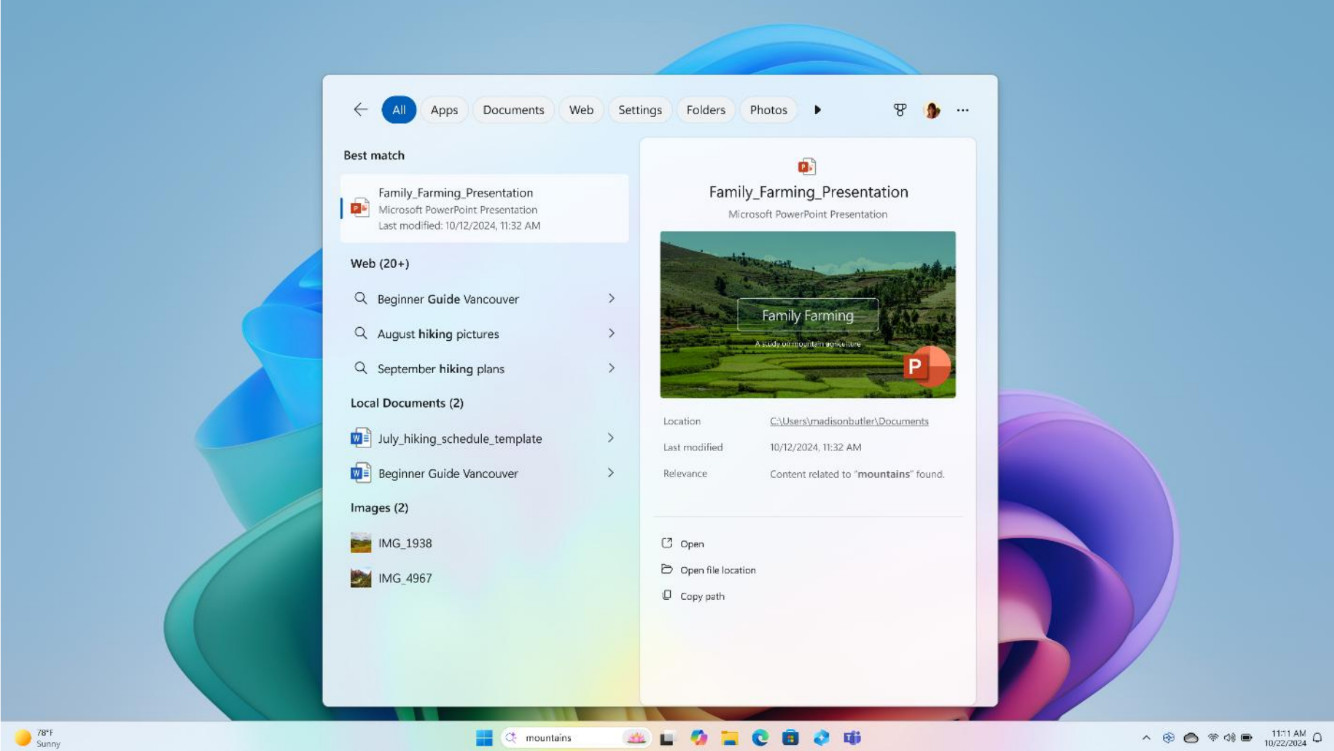
There’s also a boost for Windows 11 search in general on Copilot+ laptops, which now benefits from a natural language approach, as seen in testing recently. This means you can type a query in the taskbar search box to find images of “dogs on beaches” and any pics of your pets in the sand will be surfaced. (This also ties in cloud-based results with findings on your device locally).

Microsoft further notes that it has expanded Live Captions, its system-wide feature to provide captions for whatever content you’re experiencing, to include real-time translations in Chinese (Simplified) covering 27 languages (for audio or video content).

It’s Recall that’s the big development here, though, and while Microsoft doesn’t say anything new about the capability, the company underlines some key aspects (we were informed about in the past) regarding privacy.

Microsoft reminds us: “Recall is an opt-in experience with a rich set of privacy controls to filter content and customize what gets saved for you to find later. We’ve implemented extensive security considerations, such as Windows Hello sign-in, data encryption and isolation in Recall to help keep your data safe and secure.

“Recall data is processed locally on your device, meaning it is not sent to the cloud and is not shared with Microsoft and Microsoft will not share your data with third parties.”

Furthermore, we’re also reminded that Recall can be stripped out of your Copilot+ PC completely if you don’t want the feature, and are paranoid about even its barebones being present (disabled) on your PC. There are instructions for removing Recall in this support document that also goes into depth about how the functionality works.

All of these features are set to be rolled out to Copilot+ PCs starting with the April 2025 preview update, which is imminent (or should be). However, note that for certain regions, release timing may vary. The European Economic Area won’t get these abilities until later in 2025, notably, as Microsoft already told us.


Person using a laptop.

(Image credit: Shutterstock)

Analysis: The real gem for Copilot+ PC owners

The arrival of Recall is not surprising, because even though it’s been almost a year since Microsoft first unveiled the feature – and rapidly pulled the curtain back over it for some time, after the initial copious amounts of flak were fired at the idea – it was recently spotted in the Release Preview channel for Windows 11. That’s the final hurdle before release, of course, so the presence of Recall there clearly indicated it was close at hand.

I must admit I didn’t think it would be out quite so soon, though, and a relatively rapid progression through this final test phase would seem to suggest that things went well.

That said, Microsoft makes it clear that this is a ‘controlled feature rollout’ for Copilot+ PCs and so Recall will likely be released on a fairly limited basis to begin with. In short, you may not get it for a while, but if you do want it as soon as possible, you need to download the mentioned optional update for April 2025 (known as the non-security preview update). Also ensure you’ve turned on the option to ‘Get the latest updates as soon as they’re available’ (which is in Settings > Windows Update).

Even then, you may have to be patient for some time, as I wouldn’t be surprised if Microsoft was tentative about this rollout to start with. There’s a lot at stake here, after all, in terms of the reputation of Copilot+ PCs.

Arguably, however, the most important piece of the puzzle here isn’t Recall at all, although doubtless Microsoft would say otherwise. For me – if I had a Copilot+ PC (I don’t, so this is all hypothetical, I should make clear) – what I’d be really looking forward to is the souped-up version of Windows 11’s basic search functionality.

Recall? Well, it might be useful, granted, but I have too many trust issues still to be any kind of early adopter, and I suspect I won’t be alone. Click to Do? Meh, it’s a bit of a sideshow for Recall and while possibly handy, it looks far from earth-shattering in the main.

A better general Windows search experience overall, though? Yes please, sign me up now. Windows 11 search has been regarded as rather shoddy in many ways, and the same is broadly true for searching via the taskbar box in Windows 10. An all-new, more powerful natural language search could really help in this respect, and might be a much better reason for many people to grab a Copilot+ PC than Recall, which as noted is going to be steered clear of by a good many folks (in all likelihood).

Windows 11 AI enhanced search on the desktop

(Image credit: Microsoft)

Microsoft’s own research (add seasoning) suggests this revamped basic Windows 11 search is a considerable step forward. The software giant informs us that on a Copilot+ device, the new Windows search means it “can take up to 70% less time to find an image and copy it to a new folder” compared to the same search and shift process on a Windows 10 PC.

Of course, improved search for all Windows 11 PCs (not just Copilot+ models) would be even better – obviously – and hopefully that’s in the cards from an overarching perspective of the development roadmap for the OS. The catch is that this newly pepped up search is built around the powerful NPU required for a Copilot+ laptop, of course, but that doesn’t stop Microsoft from enhancing Windows search in general for everyone.

Naturally, Microsoft is resting a lot of expectations on Copilot+ PCs, though, noting that it expects the ‘majority’ of PCs sold in the next few years to be these devices. Analyst firms have previously predicted big things for AI PCs, as they’re also known, as well.

You may also like...


from Latest from TechRadar US in News,opinion https://ift.tt/QOgTrp1

Duda introduced the AI-powered Content Collection feature It claims collecting content from clients is a major headache for website deve...


  • Duda introduced the AI-powered Content Collection feature
  • It claims collecting content from clients is a major headache for website developers
  • The new tool simplifies and streamlines the process

Duda, one of the best website builders around, continues on its path of helping users build websites faster, by introducing another AI-powered feature. The AI-powered Content Collection tool aims to help agencies and freelancers quickly and easily gather business information and site assets from clients.

This new tool has been designed to solve, as Duda puts it, “one of the most common pain points in website development.”

“87% of content collection delays are caused by clients, according to a recent survey of 120 digital marketing agencies performed by Duda,” the company said in a press release shared with TechRadar Pro. “These delays include slow responses, poor-quality submissions, and confusion around requirements.”

With the AI-powered Content Collection tool, the process is streamlined and improved.

Pushing the boundaries

When the client submits the content, it is automatically added to the Duda platform, meaning no downloads, file transfers, or excessive communication.

"This launch is part of Duda's ongoing rollout of AI-powered features and tools designed to help agencies and web professionals work their way — faster than ever," said Amir Glatt, Duda's other co-founder and CTO. "From generating entire sites to simplifying content collection, Duda continues to push the boundaries of efficiency and automation."

Duda has been hard at work adding AI to different aspects of the website development process. It first introduced AI capabilities to its website builder platform in 2023 with the launch of its AI Assistant, and in May 2024, the company added two new tools to its AI Assistant: AI sections and AI alt text, both aimed at helping agencies streamline workflows and launch high-performance websites.

Most website builder platforms, including Wix, Squarespace, 10Web, and others, have added AI to different stages of the website building process.

You can learn more about what the platform has to offer with our full Duda review.

Comment from the expert

Unlike website building giants such as Wix and Squarespace, which target everyone from solopreneurs to business behemoths, Duda knows its audience and is on a mission to become the best website builder for agencies and freelancers.

This new AI-powered tool doesn't deviate from that mission. It has been developed with a clear focus on making the lives of agencies, freelancers, and website designers easier, minimizing the time they need to spend on collecting the assets and information they need to build great websites.

I like this tool, as it helps free up time and budget for creatives to do what they do best - create. I hope Duda continues to focus on leveraging the power of AI to the benefit of it's users.


More from TechRadar Pro


from Latest from TechRadar US in News,opinion https://ift.tt/wc5bphI

Dyson Airwraps don't come cheap. If you're looking to protect your investment by making yours last as long as possible, this articl...

Dyson Airwraps don't come cheap. If you're looking to protect your investment by making yours last as long as possible, this article is here to help.

It's also Sustainability Week here at TechRadar, and we're looking at ways you can make your gadget habit more eco-friendly. Finding ways to fix, upgrade or otherwise avoid having to purchase a whole new Airwrap isn't just a win for your bank balance, it's better for the planet, too.

We spoke to a Dyson spokesperson about the brand's approach to sustainability, and they told us its first priority is to make sure everything is built to last in the first place.

"During development, Dyson relies on extensive testing – products are dropped over 5,000 times, digital motors run for up to 20,000 hours, and machines undergo durability tests to ensure the machine remains uncompromised and is tough enough, testing to the point of failure," the spokesperson told us. "By focusing on longevity and supporting repairability through modular designs, Dyson helps customers keep their devices in use for longer."

Hopefully, then, your Airwrap should be built to stick around – we were certainly impressed with the build quality when we tested it for our Dyson Airwrap i.d. review. However, if you do want to upgrade, repair, replace or recycle it, read on for how to do so...

#1. Upgrade your accessories

If you had an older Airwrap and are dismayed to see better accessories appearing with newer models (for example, comparing Dyson Airwrap vs. Airwrap i.d., the latter has a new tapering curl barrel), you can pimp your original Airwrap by buying new add-ons separately. This is also a good shout if one of your attachments breaks.

For genuine Dyson parts you need to head direct to the accessories store within the Dyson site. Here, you can buy different shaped and sized curl barrels, or upgrade to a bi-directional one if you made your initial purchase when it was still separate clockwise and anticlockwise barrels. There are also different brush attachments, and even accessory bundles.

Dyson Airwrap i.d. with Dryer+Flyaway smoother attachment

(Image credit: Future)

As you might expect, the official Dyson accessories are rather pricey – although much cheaper (and more sustainable) than buying a whole new Airwrap. Note, too, that what's available will vary by country – the US and Australian stores are much better stocked than the UK store at time of writing.

  • Dyson accessories store: US / UK / AU

We have spotted some dupe accessories via sites like Amazon, but unless you're really desperate we'd recommend avoiding these and opting for the real thing. You're never quite sure what you're getting, and if it turns out to be rubbish quality or incompatible, then you'll be entering the Wild West of Amazon returns.

#2. Replace broken parts

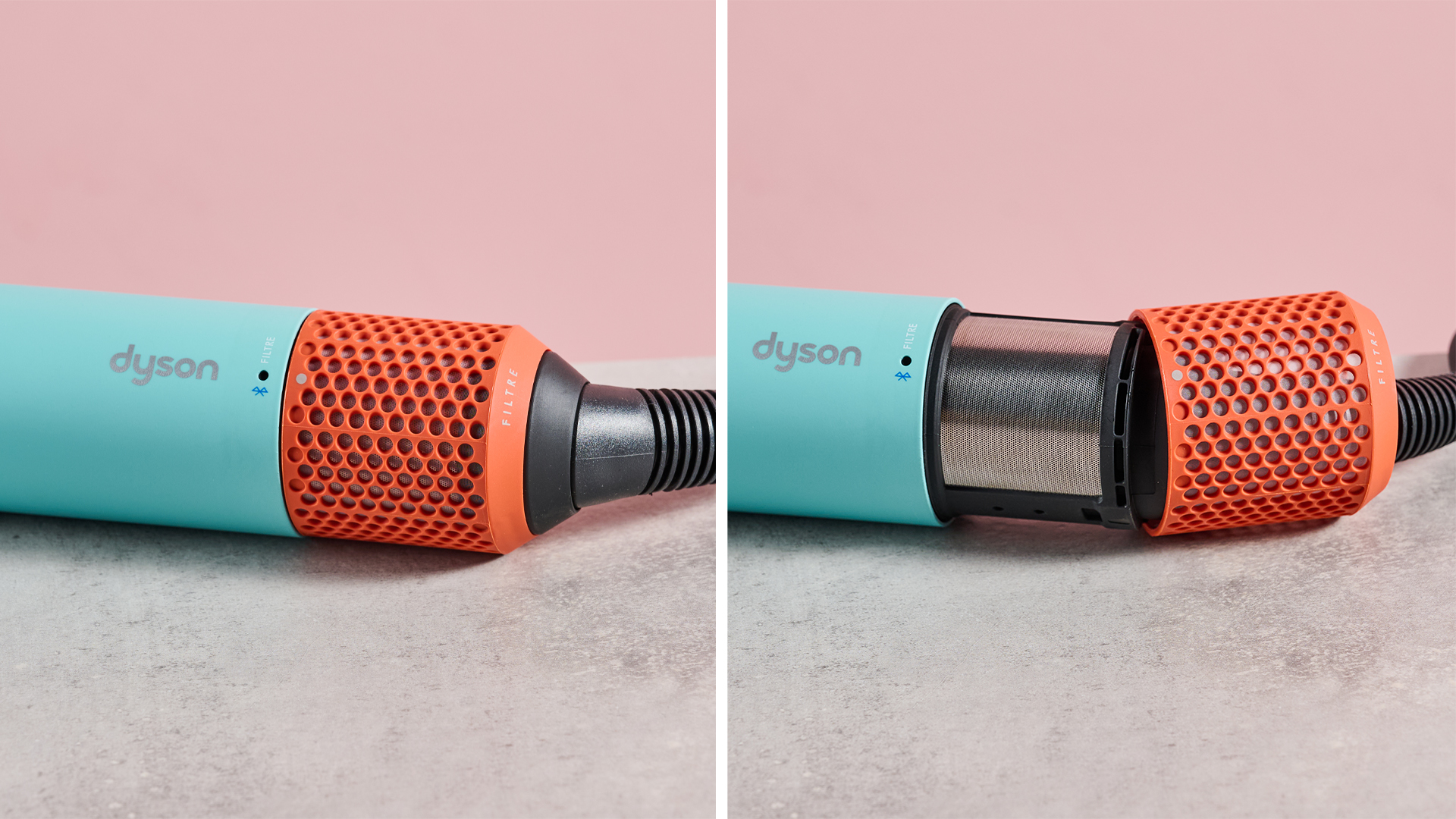
As well as an accessory store, Dyson also sells spare parts for many of its products. There actually aren't many moving parts to the Airwrap – aside from the accessories we've covered above – but you should be able to pick up a replacement filter cage if yours breaks.

Dyson Airwrap i.d. with filter grille removed

(Image credit: Future)

This is also the place to head if you want to pick up a case or travel wrap for your Airwrap. The former might be a good idea for protective purposes, if you don't have somewhere safe to store your styler, together with its accessories.

  • Dyson spare parts store: US / UK / AU

#3. Clean the filter monthly

According to Dyson, the cause of the vast majority of Airwrap issues is that you've neglected to keep the filter clean. You should be cleaning your filter, following the process detailed below, monthly – or failing that, when the LED filter warning light starts continuously flashing at you.

  1. Unplug the machine and leave it to cool down completely
  2. Slide the filter cage over the cord and open it
  3. Pass the C-brush through the power cord to begin cleaning
  4. Rotate the C-brush up and down the filter mesh or use a soft, dry toothbrush to remove dust and debris (don't use water or chemicals to clean the filter mesh itself)
  5. Wipe the C-brush gently to clean it
  6. Loosen debris from the filter cage using the dry C-brush
  7. Bring the filter cage to a sink (don't bring the rest of the machine with it – leave that well away from water)
  8. Rinse the filter cage and C-brush under warm running water
  9. Apply a pea-sized amount of clarifying shampoo to the C-brush
  10. Lightly scrub the filter cage using the C-brush in circular and up-and-down motions to remove stubborn buildup
  11. Rinse for 20 secs to ensure all shampoo is gone from the filter cage
  12. Shake the filter cage gently to remove excess water, then squeeze-dry with a paper towel
  13. Hold the filter cage up to the light to check it's completely clean
  14. Allow all parts, including the filter cage, to air-dry thoroughly before reassembling (don't reassemble the machine while any parts are still wet)
  15. Clip the filter cage back onto the machine.

#4. Troubleshoot any other issues

There's a Support section on the Dyson website designed to help if something goes awry. Here, you can download the user manual for various versions of the Airwrap.

There's also a click-through troubleshooting section, covering issues such as poor product performance, electrical faults, and unusual smells or noises. Some of the solutions offered are common sense, but it can still be useful to help make sure there's nothing obvious you might be missing.

If you need further assistance, there is a customer support line or you can access support via live chat or WhatsApp (UK only).

  • Dyson customer support: US / UK / AU

#5. Repair it

Yes... sort of. It seems to vary by product and by country.

In the UK, Dyson offers a repair service, where it'll pick up your machine, take it away and fix it for you. This is free if the machine is under guarantee (two years from purchase), or £99 otherwise.

On the Dyson UK website it's not clear if Airwraps are included – the page reads, "For more information on repairs and servicing for the Dyson hair care range (including hair dryers, straighteners, stylers) please contact us."

However, our Dyson spokesperson told us that repair was an option for Airwraps: "Repairs, replacements, and parts are covered free of charge for issues caused by normal use or manufacturing defects via the two-year guarantee. For out-of-warranty products, paid repair services with genuine Dyson parts are available. Registering your device with a MyDyson account lets you track your guarantee and access personalized support."

Airwrap i.d. with auto-wrap barrel attached

(Image credit: Future)

In the US, Dyson will cover repairs for products under guarantee, but it doesn't seen to be an option if it's after that period. Again, it's unclear if hair tools like the Airwrap are included, as all the language on the site focuses on vacuums.

In Australia, you also have the option to try the product for 45 days, and if you don't get on it with it, you can return it (with original packaging, in original condition) for free. We couldn't find any mention of repair options in Australia.

  • Dyson guarantee and repairs: US / UK

#6. Buy refurbished

If your current Airwrap is not salvageable, or you're seeking a more sustainability-conscious (and affordable) option for your first purchase, then consider buying a refurbished model.

"Dyson gives their machines a second life by extending their sustainability efforts through refurbished machines," the spokesperson told us. "They are thoroughly quality tested and use genuine Dyson replacement parts."

Screenshot of a refurbished Dyson Airwrap listing on eBay

(Image credit: eBay)

Occasionally you'll find refurbished Dyson products sold directly via Dyson, but a better place to look is the brand's official eBay refurb store. This generally has a wide range of certified refurbished appliances available, and there's also a relatively fast turnover of products – it's worth checking back if the Airwrap you want isn't available the first time you look.

eBay has a well established refurbishment system. Based on this writer's experience and other customer reviews, it's a reliable and straightforward place to pick up pre-loved electronics.

Can you recycle a Dyson Airwrap?

If you're buying a new Dyson Airwrap, and you have an old one you no longer want or need, you might be able to give your old one back to Dyson to recycle – in the UK at least.

"To recycle your old machine, you can bring it into a Dyson demo store within 28 days of purchase of your new Dyson machine, show us the receipt or order confirmation email, and it can be recycled free of charge," our UK spokesperson told us. "The machine being returned must be of similar type or have performed the same function as the new item being purchased."

You can also recycle old Airwraps in the same way you would other small electrical appliances. This will vary by country and area. If you're in the UK, this is a very useful tool to find your local recycle, donate or repair options for electricals (Airwraps aren't listed, but we suspect it'll be treated the same way a a blow dryer, which is).

Read more about Dyson UK's WEEE recycling policies here.

You might also like...


from Latest from TechRadar US in News,opinion https://ift.tt/HiFtqEm

Artificial intelligence is already playing a remarkable role in our response to the climate crisis. From predicting extreme weather events ...

Artificial intelligence is already playing a remarkable role in our response to the climate crisis. From predicting extreme weather events to optimizing renewable energy grids, AI is giving us tools we’ve never had before. It is helping us understand complex climate patterns, reduce waste, and rethink how industries operate at a fundamental level.

But this is just the beginning. The true power of AI is not just in making systems more efficient, but in expanding how we think, plan, and strategize in the face of environmental challenges. AI doesn’t just give us better answers—it gives us the ability to ask better questions, explore new pathways, and simulate possibilities at a scale no human could achieve alone.

So, how do we take AI’s incredible potential and push it even further? How do we ensure it is deployed in ways that maximize its impact, account for its challenges, and truly serve the climate cause?

AI’s Expanding Role in Climate Strategy

We are already seeing AI’s ability to enhance, accelerate, and scale climate solutions across industries:

Optimizing Renewable Energy Grids – AI is balancing wind and solar power on national grids, ensuring that clean energy is distributed where it’s needed most. Google’s DeepMind, for example, is using AI to predict wind energy availability 36 hours in advance, making renewable energy more reliable.

Precision Agriculture & Land Restoration – AI is helping farmers use less water, reduce pesticide waste, and improve soil health. It is also mapping deforestation at speeds 100 times faster than human analysis, helping conservationists protect ecosystems before damage becomes irreversible.

Disaster Response & Climate Resilience – AI-powered models can now predict hurricanes, droughts, and wildfires with greater accuracy, giving governments and emergency responders more time to prepare and adapt.

Decarbonization & Carbon Capture – AI-driven molecular simulations are unlocking breakthroughs in carbon sequestration, helping researchers design materials that could significantly reduce the energy cost of capturing CO₂ from the air.

These are not hypothetical solutions. They are happening right now. But the next step—the place where AI’s role becomes truly transformative—is in its ability to reshape how we plan for the future.

From Efficiency to Intelligence: AI as a Climate Strategist

Right now, AI tools are primarily being used to optimize existing systems—making buildings more energy-efficient, helping companies track their emissions, and improving climate models. But its greatest potential lies in its ability to help us think further ahead, test solutions before they exist, and make better long-term decisions.

Imagine if AI could:

  • Stress-test entire industries against different climate futures, allowing leaders to make informed choices about supply chains, infrastructure, and policy.
  • Model global cooperation scenarios, helping nations coordinate climate action without compromising sensitive economic data.
  • Redesign urban environments to maximize sustainability, using AI-generated simulations to predict how different city layouts could improve emissions, biodiversity, and resilience.

AI allows us to approach climate action in ways we’ve never been able to before—not just by predicting outcomes but by creating entirely new ways of thinking about the future.

One of the biggest barriers to climate action today is the limits of human perception and risk modeling. When decision-makers think about climate policy, infrastructure investments, or industry shifts, they are constrained by what they know, what they can model, and what they assume is possible. AI, however, can break through these limitations.

Instead of reacting to climate risks as they unfold, AI gives us the ability to map multiple futures, test different interventions, and choose paths that maximize long-term resilience. It allows us to model entire ecosystems of impact, showing how one change—such as shifting global shipping routes—could influence carbon emissions, ocean health, and economic stability all at once.

We’ve already seen early glimpses of this in action. AI-powered climate simulations have helped policymakers in the Netherlands redesign flood defenses that account for centuries of rising sea levels, rather than just the next decade. In emerging economies, AI models are helping predict how water scarcity will shift population movements, informing infrastructure decisions that anticipate future realities, rather than responding too late.

What if AI could help us fundamentally redesign industries before they become unsustainable? What if it could guide corporate and government decisions based on the best possible climate outcomes, rather than just incremental improvements?

This is the next frontier—not just AI as an optimizer, but AI as a strategic architect for a more sustainable world.

Addressing the Challenges, Without Limiting the Potential

Of course, AI is not a silver bullet. It comes with its own challenges, including energy consumption, data bias, and accessibility. These are real concerns that must be addressed with intentionality and innovation, but they should not overshadow the immense value AI can bring.

We need a dual approach—one that recognizes the need for sustainable AI infrastructure and governance, while also ensuring that we do not slow down the momentum of AI-driven climate action.

This means:

  • Investing in energy-efficient AI models that reduce computational waste.
  • Aligning AI development with climate-positive goals, ensuring that models are trained using renewable-powered data centers.
  • Building inclusive AI solutions that are accessible and relevant to communities in both developed and emerging economies.

The key is not to view AI as a problem to solve, but as a powerful tool that must be wielded responsibly.

A Future Built on AI-Climate Collaboration

AI is not here to replace human decision-making—it is here to enhance it. The best climate solutions will not come from AI alone, but from the collaboration between technology, governance, and human ingenuity.

We are at a moment where we can harness AI to not just react to climate change, but to fundamentally reshape how we address it. This requires leadership—from policymakers, businesses, researchers, and technology developers—to ensure that AI is deployed in ways that are scalable, ethical, and impactful.

The possibilities ahead are extraordinary. The question is not whether AI can help fight the climate crisis—it already is. The question is: How far are we willing to push the boundaries of what’s possible?

The future of climate action is being written right now—and AI is a crucial part of the story.

We've rated the best project management software.

This article was produced as part of TechRadarPro's Expert Insights channel where we feature the best and brightest minds in the technology industry today. The views expressed here are those of the author and are not necessarily those of TechRadarPro or Future plc. If you are interested in contributing find out more here: https://www.techradar.com/news/submit-your-story-to-techradar-pro


from Latest from TechRadar US in News,opinion https://ift.tt/QsWK4n1

The biggest challenges facing Channel stakeholders include performance concerns, as there's an ongoing desire for the latest technology...

The biggest challenges facing Channel stakeholders include performance concerns, as there's an ongoing desire for the latest technology and a perception that refurbished tech is inferior. Revenue is also a factor, as companies profit from selling new equipment and need to adapt to offering sustainable services.

Education remains crucial, as there's a need for a significant shift in consumer behavior from buying new to embracing the circular economy and considering the full product lifecycle, including disposal.

Increased environmental pressures and government legislation are driving demand for Channel stakeholders to explore new ways they can reduce their carbon footprint and tackle e-waste. With the Technology Channel placing sustainability near the top of its list of priorities, businesses are responding by automating roles, utilizing electric vehicles for logistics and reducing e-waste headed for landfills.

Channel operators should be adopting the ‘Repair, Rework, Reuse’ model, which aims to extend IT hardware lifecycles and reduce the carbon footprint of technology wherever possible. Through the development and implementation of robust sustainability initiatives, vendors, distributors, resellers and MSPs can play a leading role in helping to create a more circular economy and minimize e-waste.

What key strategies, policies and procedures should be adopted to meet net zero targets?

Developing a robust strategy is essential for Channel businesses to bolster their net zero, carbon offsetting and sustainability goals. Companies that aim to create a comprehensive e-waste strategy must align their initiatives with environmental regulations and industry standards while striving to minimize the impact of their operations on the environment.

To create a concise strategy, Channel organizations must analyze their current operations - from sourcing components to end-of-life disposal - to minimize waste generation at each stage of the supply chain. The importance of this was revealed in our recent Sustainability report, with 36% of respondents already implementing initiatives to become more sustainable, and a further 37% looking to roll out strategies within the next 12 months.

Businesses need to create a plan that aligns with their future growth trajectory and the impact that this will have on emissions. With that in mind, the best option is to reduce the carbon intensity of their operations by establishing reduction strategies and mobilizing infrastructure change. This can take effect across a number of areas in an organization, most predominantly in the business’ supply chain, which links back to the company’s scope 3 emissions.

Channel operators must also consider measures to extend the life of hardware beyond the typical manufacturer lifespan, whilst ensuring the necessary quality standards and warranties are met. By repairing, reworking and reusing IT hardware, organizations can also reduce their carbon footprint and that of customers, whilst reducing cost.

How can vendors build e-waste initiatives within their partner programs?

Consumers and businesses across the Channel sector are waking up to the importance of Environmental, Social and Corporate Governance (ESG) with supply chain transparency, sustainable finance and renewable energy sources and materials all key to helping industries meet their net zero, carbon offsetting and sustainability goals.

Vendors are now incorporating e-waste initiatives in processes to help streamline operations and boost efficiency for Channel partners. This not only enables significant environmental savings, but also an economical one for Channel partners and their end user clients.

By delivering white label maintenance, engineering services’ solutions and break-fix maintenance, Channel vendors can enable partner organizations to benefit from cost-effective, multi-vendor hardware maintenance services. This mitigates the need to dispose of mass hardware, allowing partners to extend product life cycles and reduce their carbon footprints through dedicated platforms like EcoVadis and by creating strategies internally, like a sustainability dashboard.

How is sustainability influencing customers and purchasing decisions?

It’s not for everyone – some customers are still very focused on price. Others see sustainability as a nice to have but would not be willing to pay considerably more. However, we are starting to experience a shift for ESG credentials to form part of the tender process, up to 30% of the total scoring for a partner in some cases. Also the frequency of being asked about sustainability is increasing.

As Channel vendors continue to scale their respective operations, they must consider their ESG strategies and goals and how best to meet the demands of customers, environmental legislation and compliance. They can also improve their sustainability approach by automating roles, utilizing electric vehicles for logistics and reducing electrical and electronic waste headed for landfills.

By investing in sustainable strategies, Channel partners gain a competitive edge, enabling them to improve business growth and strengthen stakeholder and consumer relationships while adhering to their sustainability principles.

How can data be leveraged to better understand and manage problems?

For Channel firms wanting to make their supply chain more sustainable, the process of collecting and sharing data is often seen as a key challenge. However, once the hard work of data collection is done, it is hugely beneficial for evaluating an organization's ESG performance.

Channel businesses, like many others, are relying heavily on data and analytics to make crucial business decisions. While this is seen as efficient, if decisions are being made based on data that is unreliable and inaccurate, the impact it can have could be huge. Accurate data collection is essential for tracking Scope 3 emissions, yet just 10% of the companies with under 100 employees surveyed for our research said they prioritize managing customer sustainability goals.

By leveraging digital solutions to aid visibility and transparency of both supply chains and in line with required sustainability metrics, companies can expect to deepen engagement with their customers, reduce risk and create trust with their supply chain stakeholders. Just as importantly, sustainability practices and corporate responsibility can deliver a positive impact both inside and outside of the business long term.

We've reviewed the best business computers.

This article was produced as part of TechRadarPro's Expert Insights channel where we feature the best and brightest minds in the technology industry today. The views expressed here are those of the author and are not necessarily those of TechRadarPro or Future plc. If you are interested in contributing find out more here: https://www.techradar.com/news/submit-your-story-to-techradar-pro


from Latest from TechRadar US in News,opinion https://ift.tt/V0hbImR

The road to net zero is a long one. For the UK to hit its 2050 target, there must be a unified effort across all sectors to decarbonize. Wh...

The road to net zero is a long one. For the UK to hit its 2050 target, there must be a unified effort across all sectors to decarbonize. While highly visible polluters such as heavy industry and transport make up the lion’s share of emissions, we can’t let the invisible activities of the online world off the hook. One polluter we encounter every day but may never consider a carbon culprit is digital advertising.

For years, there has been a concerted effort to optimize the supply chain that powers digital advertising, but the barriers are stubborn and steep: the lack of transparency, the vast number of adtech intermediaries, the spend wasted on low-quality placements. Each of these challenges also drive up emissions, for a global CO2 bill of 7.2 million tons a year, all just to put an ad on your screen.

Programmatic advertising — the automated process for buying and selling ads — is particularly inefficient. Advertisers pour money into the system for the sole purpose of easily reaching consumers at scale, but an audit by the Association of National Advertisers found only 36 cents of every dollar spent reaches its intended destination.

This presents a unique opportunity to the industry: cut bloat in the advertising supply chain and you kill two birds with one stone: increasing campaign performance and reducing emissions at the same time. If there’s nothing but benefits to such optimizations, why haven’t they been achieved yet? It’s simple, we didn’t have AI.

Cleaner, leaner programmatic advertising that delivers on its promise

At its heart, programmatic advertising is meant to streamline digital media buying by automating the process of placing ads in real-time. Instead of manually negotiating with individual publishers, advertisers use demand-side platforms (DSPs) to bid for ad placements as they become available across a vast network of websites and apps, who surface their available inventory on supply-side platforms (SSPs). This entire process happens in milliseconds.

Unfortunately, over time programmatic advertising has become a tangled web of intermediaries, inefficiencies, and hidden costs. The sheer number of players involved means budgets leak away before they reach publisher inventory, and every unnecessary transaction comes with its own little puff of CO2.

Worse still, the sheer volume of bid requests swarming the system is staggering; in the US alone, 647 times more bid requests are sent out every day than there are people in the country. And this pollution is not merely ‘digital’: audits have found that 60% of carbon emissions from programmatic advertising are generated during the ad selection process.

The signal-to-noise ratio is clearly way off, but machine learning and AI — perfectly suited to such messy mathematical challenges — can rebalance the scales. Instead of blindly spraying a “firehose” of requests — as the practice has been labelled — AI-powered bidding technologies take a more calculated approach. By “learning” from prior and real-time digital advertising campaign data, AI can map out the most efficient pathways for delivering ads, reducing unnecessary steps and ensuring more budgets are allocated to actual working media.

The best part? What’s good for the bottom line is also good for the planet: fewer wasted impressions mean lower costs and lower emissions; a rare win-win solution.

Emissions reductions aren’t just a happy accident of supply chain optimization, AI can also deliberately steer campaigns towards low-emission inventory using an array of real-time data signals. Factors like time of day, device type, Wi-Fi versus mobile connections, and even whether the local energy grid is running on renewables can all be accounted for; all without getting in the way of campaign KPIs.

AI’s predictive capabilities can even be trained to prevent unwanted and unintended downstream effects of optimization. For example, if you make the cost per impression cheaper, advertisers could by default buy more of them, causing a “rebound effect” where reducing costs ends up actually increasing overall emissions. AI can keep this unintended consequence in check, ensuring that absolute carbon emissions remain reduced.

Decarbonization so good even climate sceptics won’t resist

With AI taking over the number crunching, digital advertising can evolve beyond the inefficient, carbon-heavy machine it once was. Advertisers now have the means to make their campaigns work harder while using fewer resources. The old trade-off between performance and sustainability no longer applies.

For the first time, AI is enabling climate-conscious advertisers to set custom sustainability goals alongside traditional campaign metrics. Instead of just tracking cost-based performance or engagement metrics, brands can now measure carbon impact and actively work towards lower-emission media strategies without sacrificing results. But even if an advertiser doesn’t care about emissions, they’ll end up cutting them anyway in the pursuit of better performance and boosting the bottom line.

And the best is yet to come. AI isn’t a set and forget solution, it continuously learns and adapts, its scope and capabilities improving as it connects to more data sources, identifying patterns that humans would overlook. Over time, campaigns become even more efficient, with costs dropping and emissions shrinking further.

The impact of this technological revolution goes far beyond individual campaigns. As AI tools become more widespread, platforms and publishers will be incentivized to support more sustainable practices to avoid being left out of AI-optimized media plans. Demand for quality data to power this system will drag digital advertising towards total transparency, through which even more emissions savings can be uncovered.

The beauty of AI-driven programmatic optimization is that it makes doing the right thing the easy choice. As more brands and agencies realize that sustainability and profitability go hand-in-hand, the momentum will only grow. Thanks to AI, we finally have the tools to build a better, more sustainable future for digital media, one campaign at a time.

We've listed the best landing page creator.

This article was produced as part of TechRadarPro's Expert Insights channel where we feature the best and brightest minds in the technology industry today. The views expressed here are those of the author and are not necessarily those of TechRadarPro or Future plc. If you are interested in contributing find out more here: https://www.techradar.com/news/submit-your-story-to-techradar-pro


from Latest from TechRadar US in News,opinion https://ift.tt/hWcgLAr

Progress towards sustainability is rarely straightforward. Building a truly sustainable telecom network is a long and complex journey, one ...

Progress towards sustainability is rarely straightforward. Building a truly sustainable telecom network is a long and complex journey, one that requires balancing innovation, financial realities, and the constraints of existing infrastructure.

Telecom operators are discovering this first-hand as they strive for more sustainable networks. Compared to other key sectors like utilities or transportation, telecom operators were among the earlier adopters of net zero targets, led by major players like BT, Vodafone, Telia, and AT&T who helped set the pace.

These targets are admirable, but operators have a big challenge on their hands to hit them. As critical national infrastructure, telecom networks can't simply be de-installed or decommissioned and replaced from scratch. Sustainability goals must be balanced against two critical business priorities: competitiveness and financial viability. It’s a fine balance.

Balancing legacy with innovation

Even as they look to evolve their networks with more advanced (and often more eco-friendly) technology like 5G or fiber, operators are wrestling with a hidden beast – maintaining the network they already have. Telecoms is one of the longest-standing forms of what we still consider ‘modern’ technology.

It has evolved massively over time, but in the UK and US for example, some of these networks have existed for over a century. More importantly, even today, many still contain equipment that is up to fifty years old. If you flipped this around on the consumers that use these networks, it would be the same as still using the Nokia 3310 ‘brick’ or the first-ever laptop.

While older technology like copper-based DSL and PSTN infrastructure in fixed networks, along with 2G and 3G hardware in mobile, is being replaced by modern alternatives, this is a gradual process. Several major US carriers have already phased out 2G and 3G, but in the UK, VM02 is only just beginning its 3G phase-out.

Meanwhile, in the fixed space, BT, which has been preparing for its PSTN switch-off for several years, has now pushed the final deadline back from 2025 to 2027. Indeed, 81% of operators expect their copper network infrastructure to remain operational until at least 2028. Meanwhile, 60% say they’ll still be using 2G until around 2030 and beyond. The shift to modern networks is happening, but not at the same pace everywhere.

The legacy burden

This situation is a bit of a catch-22. Operators need to evolve their networks to improve their service, use less energy and drive revenue growth, but ageing infrastructure slows this down in a number of ways. The first is a financial drain. According to data from Omdia, around 50% of total operational expenditure (OpEx) is typically spent on maintaining and operating a network. This includes utilities, leasing real estate and infrastructure, and maintenance costs, with ageing equipment a big driver of this. While newer technology might demand more up-front investment, it is far more efficient in the long run, with lower day-to-day costs.

There are also more second-hand costs that come from legacy infrastructure. The ‘operational toil’ of maintaining, repairing, and replacing faulty equipment is invisible to consumers but demands significant time and resources. Outages on legacy networks are also remarkably common, with 96% of network managers in the US and UK reporting incidents. According to the same findings, the average annual impact of network downtime is £500K-£1M ($632K-$1.2M in the US), with very few respondents reporting losses below this range.

The result of all of this? Slower network evolution. This operational burden has huge implications for telcos trying to roll out new technology and services. 97% reported diverting resources from investing in new technologies like fiber or 5G to maintain legacy networks. Four out of five believe this has hindered their ability to roll out these new services versus newer greenfield operators.

The long road out

This ‘opportunity cost’ is significant, but it is not insurmountable. It just means that operators need to be as commercially and environmentally efficient as possible when decommissioning and evolving their networks.

On the financial front, the burden from legacy networks leaves such fine margins that delivering more cost-positive decommissioning projects is critical. But those ambitious net zero targets can’t be overlooked at this stage – we need to minimize the environmental impact of network evolution.

Modern equipment typically consumes between 20-50% less energy, but embedded emissions (upfront impact) for manufacturing new equipment like fiber cables or 5G radios are significant. So, while long-phase emissions are lower, the full impact depends on how long the equipment is used, how circular the supply chain is and how well the technology it replaces is phased out. Currently, many operators are running both new and old, temporarily adding to footprints rather than reducing them.

Going circular

To address this dual challenge, we are seeing operators increasingly leveraging the circular economy to minimize the environmental and financial impact of decommissioning. This means recovering, and recycling or reselling hardware and raw materials as much as possible.

According to recent research, 80% of respondents plan to resell copper infrastructure for fixed networks, while 72% intend to resell 2G or 3G equipment for mobile networks.

The market for the recycling and resale of copper is huge. At the time of writing, copper prices are at an all-time high, making ‘urban mining’ from telecom networks not just better for the environment, but also financially rewarding. For fixed network operators, this can free up resources that would normally go toward maintaining the network to reinvest in further decommissioning and accelerate timelines.

This isn’t just theoretical - BT’s infrastructure division, Openreach, has already recouped £105M in recycling old copper cables from its network. Telefónica Spain is also actively pursuing large-scale copper recovery as part of its national switch-off plans. On the mobile side, because certain markets (including the US, UK and the Nordics) are slightly ahead on network evolution, there is a market for selling refurbished equipment, but the window is closing.

While there is of course an environmental benefit to reusing and recycling old hardware, it is arguably the financial uplift that the circular economy can give operators that will be more influential in the industry’s journey towards net zero.

We list the best network monitoring tool.

This article was produced as part of TechRadarPro's Expert Insights channel where we feature the best and brightest minds in the technology industry today. The views expressed here are those of the author and are not necessarily those of TechRadarPro or Future plc. If you are interested in contributing find out more here: https://www.techradar.com/news/submit-your-story-to-techradar-pro



from Latest from TechRadar US in News,opinion https://ift.tt/fF80a1K

We can expect the Nothing Phone 3 in Q3 July seems a good bet based on previous launches We already have the Phone 3a and Phone 3a Pro ...


  • We can expect the Nothing Phone 3 in Q3
  • July seems a good bet based on previous launches
  • We already have the Phone 3a and Phone 3a Pro

We've been waiting a while for the Nothing Phone 3 – you may remember its launch was pushed back last year because Nothing wanted more time to work on its software and AI – but we now know it will definitely be arriving this year.

After opening up an 'ask me anything' session on X, Nothing CEO Carl Pei said that the Nothing Phone 3 would be launching in "Q3", the third quarter of this year. That puts the launch window as July, August, or September.

We didn't get any more details than that, unfortunately, so it remains to be seen exactly when the next flagship phone from Nothing will make an appearance. The Nothing Phone 2 was launched in July of 2023, which may give us a clue.

Back in November of last year we heard a tip that Nothing would launch three phones by the middle of this year, which means around June and July time – and the Nothing Phone 3a and the Nothing Phone 3a Pro were both unveiled in March 2025.

The story so far

If Nothing had stuck to a regular schedule, we would've seen the Nothing Phone 3 in July 2024. However, in June 2024, Pei announced that the handset's launched would be pushed back to this year, stressing the need to "get the product right".

Pei went on to say that "integrating hardware and AI in a way that is both useful and brings a smile to people's faces" was the aim with the next Nothing flagship phone, so we can expect to see a bundle of artificial intelligence features included.

As our Nothing Phone 3a Pro review will tell you, there's already plenty of AI on board the current Nothing handsets – but these features, including the Essential Space 'second memory', could still use some work. Improvements may arrive with the Nothing Phone 3.

From the leaks we've come across so far, it sounds as though the Nothing Phone 3 is going to be a significant upgrade on its predecessor, and quite possibly one of the phones of the year. In a few months time, we should know for sure.

You might also like


from Latest from TechRadar US in News,opinion https://ift.tt/hKGHIXk