Home Top Ad

Responsive Ads Here

Ransomware has become a defining cybersecurity threat, increasing in scale, sophistication, and cost. In the UK alone, recent months have ...

Ransomware has become a defining cybersecurity threat, increasing in scale, sophistication, and cost. In the UK alone, recent months have seen a wave of high-profile incidents disrupting everything from retail and logistics to public services – with consequences that reach far beyond the IT department.

Take the case of Marks & Spencer. A major breach in April 2025 exposed customer data, triggered widespread operational disruption, and is already slated to have cost the company £300 million – apart from the billion pounds or more the incident has wiped from the retailer’s stock market value.

At Co-op, a ransomware-linked outage halted critical systems. The Legal Aid Agency suffered a breach of sensitive legal and financial records. Meanwhile, even Harrods and logistics firm Peter Green Chilled weren’t spared. These are not isolated events - they’re signals of a broader shift.

The UK retail industry alone lost over £2.2 billion to shoplifting last year, according to the British Retail Consortium. And while theft may be an age-old problem, ransomware has become its digital cousin - often just as costly, but far harder to trace and recover from.

As businesses count the cost of downtime, data loss, and reputational fallout, one thing is clear: ransomware isn’t just a cybersecurity issue. It’s a business issue. In a digital world, ransomware has become nothing more than the cost of doing business online, just as shoplifting is to its bricks-and-mortar equivalent.

Realistically, the best cybersecurity efforts are more deterrent than panacea these days. And besides ensuring they do the necessary to secure the perimeter, the most logical thing for organizations to focus on is how to recover from the inevitable cyberattack - this, however, is a stumbling block for many businesses.

It now takes organizations an average of five weeks to fully recover from a cyberattack. In sectors where every hour offline can cost hundreds of thousands of pounds, that rate of loss is simply no longer sustainable. Yet, many still over-index on prevention, when it’s recovery speed, not perimeter defense, that ultimately defines the business impact of an attack. The question is no longer if you’ll be targeted, but how fast you can bounce back.

The reality of recovery: why time is the new risk factor

The longer data recovery takes, the more damage is done, and yet 72% of organizations take more than a week to restore operations after an attack. Manufacturing and healthcare average over six weeks.

These delays are not merely inconvenient. According to ITIC’s 2024 Hourly Cost of Downtime Report, more than 90% of mid-size and large enterprises say one hour of downtime now costs more than £220,000. Recovery timelines that stretch into days or weeks can translate into millions in lost revenue, disrupted services, and long-term damage to brand trust and shareholder confidence.

What hybrid cloud really means and why it matters

Hybrid cloud storage combines the performance of on-premises systems with the scalability and durability of the cloud. For instance, in hybrid cloud models, data can be cached locally for fast access, and every change can be stored in immutable cloud object storage in real time.

This architecture supports AI-readiness, multi-site collaboration, and petabyte-scale growth – but critically, it also bakes in ransomware resilience. Where traditional file servers and backups can be encrypted or deleted, hybrid cloud platforms maintain a centralized, tamper-proof record of every file version, stored securely and out of reach from attackers.

It’s why hybrid cloud storage is no longer a fringe technology – it’s becoming the standard for modern IT resilience.

Hybrid cloud’s secret weapon: file versioning and immutability

Ransomware attacks typically encrypt critical data and demand payment. More aggressive attackers now double down, leaking or selling sensitive data to increase leverage. But if your organization can roll back files to their clean state before the attack – in minutes – the threat loses its sting.

This ‘point-in-time’ recovery isn’t theoretical. A growing number of organizations are entrusting their file data to platforms that capture continuous, immutable snapshots, allowing them to restore affected files instantly. Some enterprises are now recovering in minutes, not weeks.

Legacy backup processes, with their reliance on daily or weekly windows, can’t keep pace with modern threats. That’s why many organizations are moving to continuous file versioning, with snapshot intervals as short as five minutes – enabling near-instant recovery, eliminating ransom payments, and removing the need for days of manual restoration.

IT teams no longer need to rebuild entire environments; they simply select a clean point in time and restore affected files with just a few clicks.

Recovery starts with readiness – and the right tools

Recovery speed matters, but containment is just as important. Modern hybrid cloud platforms often include built-in ransomware detection, monitoring for abnormal file activity, quarantining threats, and enabling surgical recovery.

It’s not surprising, then, that hybrid cloud users are 29% more likely to recover within a week than their non-hybrid peers. More importantly, they can isolate and restore only the affected regions or datasets – avoiding full outages and business-wide shutdowns.

But the technology alone isn’t enough. IT teams must be equipped with the right tools, processes, and authority to act fast when it matters. Hoping they’ll manage with legacy backups and wishful thinking is no longer tenable, and risks turning a contained incident into a company-wide crisis.

As one IT leader recently shared, having successfully restored operations after an attack: “The recovery was so fast, the conversation shifted entirely. It was no longer about recovering data – it was about cleaning affected endpoints and containing disruption.” In other words, recovery becomes a coordination exercise, not a catastrophe.

Cyber resilience gaps and how hybrid cloud bridges them

Despite ongoing modernization efforts, many organizations still face critical gaps in their ransomware response:

  • Data security and privacy concerns are significant barriers to adopting new technologies
  • There’s a stark lack of in-house skills to manage and secure transitions, and
  • Organizations themselves admit their data isn’t backed up, immutable, or easily recoverable

That’s a dangerous trio, and one that increases the risk of prolonged, expensive downtime.

Hybrid cloud platforms help close these gaps. They automate protection, centralize file versioning, and simplify recovery, even for lean IT teams. With immutable cloud snapshots and integrated monitoring, organizations can move from reactive crisis management to confident, controlled recovery.

Resilience is the real differentiator

Ransomware is now a fact of life – as inevitable as death and taxes, as the saying goes. And it’s becoming more targeted, more professional, and more destructive. The UK has already seen the consequences this year.

Hybrid cloud storage offers a practical and proven way to reduce both the risk and the impact of an attack. It turns recovery into a competitive differentiator – the difference between days of downtime and business as usual.

And let’s be honest: whether you’re protecting customer data or the availability of Percy Pigs, you can’t afford to get recovery wrong.

Check out out rankings of the best cloud backup platforms.

This article was produced as part of TechRadarPro's Expert Insights channel where we feature the best and brightest minds in the technology industry today. The views expressed here are those of the author and are not necessarily those of TechRadarPro or Future plc. If you are interested in contributing find out more here: https://www.techradar.com/news/submit-your-story-to-techradar-pro


from Latest from TechRadar US in News,opinion https://ift.tt/nJT3GPr

IT teams know the balancing act all too well. Security teams implement new protocols that generate a flood of user complaints. The IT help ...

IT teams know the balancing act all too well. Security teams implement new protocols that generate a flood of user complaints. The IT help desk is overwhelmed with tickets that could have been prevented.

Meanwhile, employees bypass carefully designed systems because they're too cumbersome. And today's increasingly distributed workforce only exacerbates this balancing act, creating a larger attack surface across more devices, locations, and applications.

While IT management may have accepted this as the inevitable reality, the challenges are only intensifying. AI-powered cyberattacks are becoming more sophisticated daily, capable of adapting faster than traditional security measures can respond. The old playbook of treating security, IT operations, and employee experience as separate functions has reached its breaking point.

A unified approach is needed, or IT leaders risk not only making their organization at risk for security vulnerabilities, but losing visibility and control of their organizations’ digital work environments.

The "self-driving car" of enterprise IT

Although the rise of new AI tools and devices has created headaches for IT, AI-powered digital environments, or an autonomous workspace, offer IT leaders a path to modernizing and knocking down the divisions that exist across employee experience, security and operations.

These environments self-configure, self-heal, and self-secure with minimal human intervention. Think of it as the "self-driving car" of enterprise IT.

Unlike traditional automated systems that follow preset rules and require constant human oversight, autonomous workspaces continuously learn from data patterns and user behaviors.

Because these environments monitor every aspect of the digital environment simultaneously, previous silos that plagued IT teams’ decision making are eliminated, offering IT teams full context of their organization’s digital environment.

For example, when a security anomaly emerges, the system doesn't just alert administrators; it automatically quarantines the threat while maintaining seamless user access to legitimate resources. When a device falls out of compliance, it self-corrects without user intervention.

And rather than looking at these issues in a vacuum, autonomous workspaces enable IT to connect dots across different factions of the workplace, understanding if an employee’s application performance issue is underpinned by a larger problem or vulnerability.

The strategic imperative for not only IT teams, but a businesses' bottom line

While an autonomous workspace can free IT teams from the endless cycle of firefighting, the benefits of adopting an autonomous workspace extend beyond just the IT team, ultimately providing a foundation for business resiliency and cost efficiency.

1. Security rigor

As generative AI tools become embedded in daily workflows, they also broaden the attack surface, and a reactive security approach is proving inadequate. Autonomous workspaces flip this model by implementing predictive zero-trust security. Instead of waiting for threats to manifest, these systems continuously analyze patterns and behaviors to identify potential risks before they materialize.

The system makes intelligent trust decisions in milliseconds, based on comprehensive understanding of user behavior, network conditions, and threat intelligence, helping equip a business for the increasingly sophisticated cyberattacks of today and future.

2. Employee experience benefits

Organizations that take a holistic approach to employees’ digital experience gain more than just operational benefits. A modern digital experience gives employees self-service access to the apps, resources and the support they need, when they need it.

This approach helps reduce disruptions and prevents issues before they can impact employee productivity. With secure access from anywhere, employees can stay focused and in control of how they work.

The result is stronger collaboration, higher employee satisfaction, and a significant advantage in attracting and retaining top talent in a growing hybrid work environment.

3. Streamlined resources

Think about the traditional approach to endpoint management. Security teams set protocols. IT operations teams install management tools to ensure compliance. And user experience teams try to minimize the performance impact. The result? Conflicting priorities, duplicated efforts, and frustrated users. Autonomous workspaces break down silos and integrate these different functions into a single, intelligent platform, streamlining IT resources and costs, while enhancing collaboration across teams.

The most successful implementations of autonomous workspaces share a common characteristic: they eliminate artificial boundaries between security, IT operations, and employee experience teams. This convergence isn't just about organizational structure—it's about creating technology ecosystems where security and IT enhance rather than complicate employee productivity and collaboration.

As the enterprise landscape continues to evolve, the organizations that thrive will be those that embrace autonomous workspaces not merely as a technology solution, but as the foundation of their digital work strategy.

We list the best IT documentation tool.

This article was produced as part of TechRadarPro's Expert Insights channel where we feature the best and brightest minds in the technology industry today. The views expressed here are those of the author and are not necessarily those of TechRadarPro or Future plc. If you are interested in contributing find out more here: https://www.techradar.com/news/submit-your-story-to-techradar-pro


from Latest from TechRadar US in News,opinion https://ift.tt/PnohrUA

Generative AI is a headline act in many industries, but the data powering these AI tools plays the lead role backstage. Without clean, cur...

Generative AI is a headline act in many industries, but the data powering these AI tools plays the lead role backstage. Without clean, curated, and compliant data, even the most ambitious AI and machine learning (ML) initiatives will falter.

Today, enterprises are moving quickly to integrate AI into their operations. According to McKinsey, in 2024, 65% of organizations reported regularly using generative AI, marking a twofold increase from 2023.

However, the true potential of AI and ML in the enterprise won’t come from surface-level content generation. It will come from deeply embedding models into decision-making systems, workflows, and customer-facing processes where data quality, governance, and trust become central.

Additionally, simply incorporating AI and ML features and functionality into foundational applications won’t do an enterprise any good. Organizations must leverage all aspects of their data to create strategic advantages that help them stand out from the competition.

To do this, the data powering their applications must be clean and accurate to mitigate bias, hallucinations, and/or regulatory infractions. Otherwise, they risk issues in training and output, ultimately negating the benefits that the AI and ML projects were initially meant to create.

The importance of good, clean data

Data is the foundation of any successful AI initiative, and enterprises need to raise the bar for data quality, completeness, and ethical governance. However, this isn’t always as easy as it sounds. According to Qlik, 81% of companies still struggle with AI data quality, and 77% of companies with over $5 billion in revenue expect poor AI data quality to cause a major crisis.

In 2021, for example, Zillow shut down Zillow Offers because it failed to accurately value homes due to faulty algorithms, leading to massive losses. This case highlights a critical importance – AI and ML projects must operate on good, clean data in order to produce the most accurate, best results.

Today, AI and ML technologies rely on data to learn patterns, make predictions and recommendations, and help enterprises drive better decision-making. Techniques like retrieval-augmented generation (RAG) pull from enterprise knowledge bases in real-time, but if those sources are incomplete or outdated, the model will generate inaccurate or irrelevant answers.

Agentic AI’s ability to act reliably hinges on consuming accurate, timely data in real time. For example, an autonomous trading algorithm reacting to faulty market data could trigger millions in losses within seconds.

Establishing and maintaining an environment of good data

In order for enterprises to establish and maintain an environment of good data that can be leveraged for AI and ML usage, there are three key elements to consider:

1. Build a comprehensive data collection engine

Effective data collection is essential for successful AI and ML projects, and modern data platforms and tools, such as those for integration, transformation, quality monitoring, cataloging, and observability, to support the demands of their AI development and output. They ensure the organization is getting the right data.

Whether the data be structured, semi-structured, or unstructured, any data collected should come from a variety of sources and methods to support robust model training and testing to encapsulate the different user scenarios that they may encounter upon deployment. Additionally, companies must ensure they follow ethical data collection standards. Whether the data is first-, second-, or third-party, it must be sourced correctly and with consent given for its collection and use.

2. Ensure high data quality

High-quality, fit-for-purpose data is imperative for the performance, accuracy, and reliability of AI and ML models. Given that these technologies introduce new dimensions, the data used must be specifically aligned with the requirements of the intended use case. However, 67% of data and analytics professionals say they don’t have complete trust in their organizations’ data for decision-making.

To address this, it's essential that enterprises have data that is representative of real-world scenarios, monitor for missing data, eliminate duplicate data, and maintain consistency across data sources. Furthermore, recognizing and addressing biases in training data is critical, as biased data can compromise outcomes and fairness and negatively impact customer experience and credibility.

3. Implement trust and data governance frameworks

The push for responsible AI has placed a spotlight on data governance. With 42% of data and analytics professionals saying their organization is unprepared to handle the governance of legal, privacy, and security policies for AI initiatives, it’s critical that there is a shift from traditional data governance frameworks to more dynamic frameworks.

In particular, with Agentic AI coming into significant prominence, it’s crucial to address why agents make specific decisions or take specific actions. Enterprises must have a sharp focus on Explainable AI techniques to build trust, assign accountability and ensure compliance. Trust in AI outputs begins with trust in the data behind them.

In summary

AI and ML projects will fail without good data because data is the foundation that enables these technologies to learn. Data strategies and AI and ML strategies are intertwined. Enterprises must make an operational shift that puts data at the core of everything they do – from technology infrastructure investment all the way to governance.

Those that take the time to put data first will see projects flourish. Those that don’t will be faced with ongoing struggles and competition biting at their heels.

We list the best data visualization tools.

This article was produced as part of TechRadarPro's Expert Insights channel where we feature the best and brightest minds in the technology industry today. The views expressed here are those of the author and are not necessarily those of TechRadarPro or Future plc. If you are interested in contributing find out more here: https://www.techradar.com/news/submit-your-story-to-techradar-pro


from Latest from TechRadar US in News,opinion https://ift.tt/kjOXWfV

Once the exclusive domain of legal and compliance, data privacy is now a major responsibility for IT. When privacy issues emerge, IT profe...

Once the exclusive domain of legal and compliance, data privacy is now a major responsibility for IT. When privacy issues emerge, IT professionals are on the spot, not necessarily as the team that absorbs privacy risk but the one accountable for the tools and visibility to proactively manage it.

When the board asks questions or when the auditors arrive, IT management must be ready with answers about checking the box for data privacy compliance, taking steps to mitigate third-party vendor risk, complying with reporting requirements and setting appropriate policies for data governance, especially around AI systems.

This is a tall order for data privacy and security and it’s compounded by the operational reality that available resources rarely match these expanding responsibilities.

Responsibilities and Reality

Several factors contribute to the disconnect between privacy expectations and operational capacities.

Privacy functions typically operate with minimal staffing while being organizationally siloed from IT operations. Yet IT leaders are expected to provide centralized accountability for privacy, yet they don’t always have the corresponding authority or visibility needed to support that responsibility.

Visibility. Data flows through IT systems, but its exact location and ownership often remain unclear. In other words, there’s no single source of data truth. Without unified monitoring of these complex pathways, privacy breaches become discoverable only after damage occurs.

Third Party Risk. Many privacy teams lack visibility into which vendors access personal data. This visibility gap creates compliance exposure that ultimately reflects on IT leadership and creates ownership confusion. Without protection and collaboration and shared visibility, things fall through the cracks.

Showing Proof. No one wants to get slammed with a violation for poor data handling. Authorities expect evidence that companies have taken steps to implement reasonable preventative measures –documentation many IT departments struggle to produce.

Dynamic data. Modern data environments create perpetual compliance challenges as data continuously streams in and throughout organizations. Maintaining accurate data inventories becomes nearly impossible through manual processes. Simultaneously, data subject requests (DSRs) are on the increase while records of processing activities (RoPAs) consume enormous legal and IT resources.

Furthermore, data integrations are a major concern. After all, who hasn't learned the hard way that not every catalog or pre-built integration supports every system, workflow, or business logic?

Best Practices

- Data mapping creates a dynamic data inventory that is direct and actionable for all involved to find clarity and purpose with enterprise data. Such an investor can facilitate the building joint workflows, clear responsibilities for data ownership so everyone is working through the same data inventory.

- Strive for more sophisticated automated behavior between tools and purpose. Automation helps to avoid repetitive tasks, delivers oversight, flags risks, track third party behavior and manages data integrations.

- In the aftermath of a breach, automation produces a record of that proves the checklist was complete, and appropriate steps were taken to avoid an incident. Auditors are less likely to issue steep fines for violations if IT can produce a report with this proof. Automation also frees up more time to analyze risk and refine processes.

- Take a no-code approach to integrations. No-code not only expands the number but enhances the quality of integrations. No-code enables each integration to be customized per the organization’s exact needs and on IT terms.

- Continue to focus on real-time visibility to enable the holy grail of the IT enterprise: monitoring and control

Helpful Capabilities

Data Mapping. Given the centralized role that CIOs and CISOs have for enterprise privacy, there’s a need strong collaboration and shared visibility with teams that are responsible for privacy yet have different priorities and reporting structures.

Data Mapping for inventory discovery and data classification are essential and typically done through a portal that provides a window on how data moves through the enterprises system and where personal data is accessed by which vendors.

By mapping and classifying data, a portal can enable one source of data truth for all aspects of privacy data and ensure that all privacy and legal teams are working with the same dynamic data inventory.

Automated Integrations. As more people exercise their data privacy rights, and more privacy mandates pass, the number of data subject requests has increased.

These requests are driving demand for automated processes that can keep pace with the time-consuming burden of foundational tasks like building and maintaining Records of Processing Activities (RoPAs) and Data Subject Requests (DSR). DSRs and ROPAs can result in data bottlenecks and constrained resources.

No Code Approach. Not only are privacy regulations complex and always changing, but the average organization also now connects to dozens of data sources, requiring big libraries of pre-built integrations and an API catalog rat race to build APIs.

When data reporting on this level starts to pile up, automated data integration becomes a game changer, so build data integrations that are easily facilitated with any backend system, platform, and SaaS apps. No-code integrations are a game changer in this respect. No-code allows IT teams to freely build, customize and maintain integrations that match internal systems, workflows, and logic - enabling faster deployment and easier maintenance of DSR handling, without developer overhead.

AI Agent. With all the complexity and intricacies of privacy management, there’s been an imbalance of resources and expectations, and it’s been ongoing for years. Automation has been helping to solve this imbalance, by cutting through the complexity. Now, core privacy tasks can be supported by an AI Assistant that can be purpose-built to automate core tasks, not just make suggestions.

AI agents are embedded with the privacy operations platform to intelligently analyze actual systems, how data is used and classified. It can help to build RoPAs automatically, freeing up valuable time for strategic initiatives. Beyond simply automating tasks, a privacy AI Agent can identify potential data risks, including shadow IT systems that lack necessary security controls to misclassified information.

Clear context on why these are risks along with actionable insights to help IT teams make informed decisions and mitigate potential issues proactively.

Summary

For IT, blind spots are not only a technical challenge but also organizational. Each exposure can be a chance to demonstrate strategic leadership by building greater trust with your team, users, privacy teams, and the board. Visibility also leads the way forward to getting ahead of regulatory changes.

Treating privacy blind spots seriously helps to build an agile, secure IT organization that is accountable, collaborative, and ready for growth. Forward-thinking IT leaders can turn compliance challenges into an operational advantage.

We've listed the best RPA software.

This article was produced as part of TechRadarPro's Expert Insights channel where we feature the best and brightest minds in the technology industry today. The views expressed here are those of the author and are not necessarily those of TechRadarPro or Future plc. If you are interested in contributing find out more here: https://www.techradar.com/news/submit-your-story-to-techradar-pro


from Latest from TechRadar US in News,opinion https://ift.tt/pegqYJ9

AI agents, the much-touted next phase of generative AI, have commanded enterprises’ attention. Right now, 61% of business leaders are activ...

AI agents, the much-touted next phase of generative AI, have commanded enterprises’ attention. Right now, 61% of business leaders are actively adopting AI agents, according to a recent survey by my organization – with ambitious plans to scale them organization-wide.

The fixation is justified: agents can work autonomously, navigate complex workflows, learn from experience, and leverage other software as tools. They are a step change from AI that talks with you, like chatbots, to AI that works for you. The result is major productivity: Gartner estimates that by 2028, agents will automate 15% of day-to-day business decisions.

But business leaders shouldn’t mistake agents’ sophistication with omnipotence. Agents can fall into the same traps as older, less sophisticated software – including dreaded IT silos.

Battling silos

For decades, IT professionals have battled silos: applications, databases, and other systems that aren't interoperable. In the 1980s and 1990s, enterprises struggled to connect disparate applications into a single ERP solution.

Accounting, procurement, and sales workstreams were stubbornly separate – squandering coveted cross-company insights. More recently, enterprises have struggled to unify crucial customer data across disparate CRMs, and have also labored to integrate data spread across on-premise locations and multiple cloud environments.

No matter the decade or technology, the result of silos is always the same: wasted time, wasted resources, and wasted potential. When agents become trapped in silos, the outcome is no different. Their return on investment plummets, too.

We are already seeing agentic silos take shape. Enterprises are using agents with rigid divisions – one agent for sales activities, another for procurement tasks, a third for CRMs – with little connective tissue between them. What if those agents need to work together to troubleshoot a complex problem, like a sudden and unexpected shift in product demand?

If they’re siloed, they cannot pool their abilities and function as a whole greater than the sum of their parts. Not orchestrating agents is like hiring several subcontractors to build a house but restricting their tools and communication. The result is a poorly built house – or jumble of agents with poor performance.

Agents and silos

Agents can also be siloed from the technology that enterprises already have in place. Imagine an HR Agent tasked with orchestrating employee PTO – but unable to access certain calendar applications and documents.

Imagine an IT Agent tasked with troubleshooting software problems – but unable to access troves of past incident reports and help desk tickets. These agents would fail to complete their fundamental tasks, and the time and resources that went into building them would be wasted.

There is something deeply ironic about siloed agents. Agents' value lies in their very ability to traverse the full enterprise stack, bridging tools and processes that require human time and talent. When agents get stuck, they are a victim of the very problem they are trying to solve. Businesses are investing in the problem, not the solution.

Siloed agents have an additional pitfall: they need to be governed and secured piecemeal. Relying on an ad hoc, patchwork approach to governance and security means an agentic use case is likely to fall through the cracks. If this occurs, agents’ most valuable asset – their autonomy – can quickly turn into a liability. Issues like bias, drift, and security vulnerabilities are amplified by agents’ access and independence.

Reaching potential

For agents to reach their full potential, business leaders must first fix the fragmentation underneath. Enterprises need a single data fabric that can unify the structured and unstructured data that powers agents. While many enterprises haven’t achieved this yet, a growing number understand the value: 72% of leaders view their organization’s proprietary data as key to unlocking the value of generative AI, according to my company’s most recent CEO Study.

Enterprises also need a hybrid control plane automating the sprawling landscape agents work across, unifying APIs, apps, events, files, and mainframe data. And enterprises should invest in a central nervous system for their agents. The future is multi-agent: It will be teams of agents, rather than a single agent, that tackle complex tasks. Enterprises need a single hub to supervise and route those agents. In other words, enterprises need a general contractor for all those subcontractors.

The need for orchestration

Better integrated and orchestrated agents also boost observability. Rather than governing and securing agents piecemeal, enterprises can apply comprehensive rules and oversight from a single point. This also allows AI security teams and AI governance teams to collaborate: if a shadow agent deployment is spotted by security tools, it can quickly and automatically steer the agent into the proper governance workstream.

Enterprises are rightfully investing in agents. But if they want that investment to translate into impact, they should be making equal commitments to agent integration and orchestration. Otherwise, they will end up with a whole that is less than the sum of its parts. In 2025 and beyond, it won't just be the businesses with the best agents that win. It will be the businesses with the most flexible ones.

I tried 70+ best AI tools.

This article was produced as part of TechRadarPro's Expert Insights channel where we feature the best and brightest minds in the technology industry today. The views expressed here are those of the author and are not necessarily those of TechRadarPro or Future plc. If you are interested in contributing find out more here: https://www.techradar.com/news/submit-your-story-to-techradar-pro


from Latest from TechRadar US in News,opinion https://ift.tt/nkL7UhM

AMD's Threadripper Pro 9995WX workstation processor hit 6GHz and set new world performance records ASUS overclockers took the 96-core...

  • AMD's Threadripper Pro 9995WX workstation processor hit 6GHz and set new world performance records
  • ASUS overclockers took the 96-core CPU to new heights with a liquid nitrogen cooling setup
  • New Threadripper 9000 series flagship combines extreme specs with unlocked overclocking potential

AMD’s new Threadripper Pro 9995WX is already proving itself to be the most powerful workstation CPU available.

The top-end offering in the freshly launched Threadripper 9000 series, the 9995WX features 96 cores, 192 threads, a 2.5GHz base clock, and boost speeds up to 5.4GHz.

It also supports 144 usable PCIe Gen5 lanes, 128MB of L3 cache, and 8-channel DDR5 ECC memory at up to 6400MT/s.

Breaking records

Now on sale, priced at an eye-watering $11,699 at Amazon and Newegg, the 9995WX is technically designed for high-end workstations, but it has already become a popular choice in the extreme overclocking scene.

Using liquid nitrogen and an ASUS Pro WS WRX90E-SAGE SE motherboard, ASUS overclocking team member CENS pushed the chip to nearly 6GHz across all 96 cores, reaching a Cinebench R23 score of 227,817, which is an all-time world record.

The CPU was cooled to -47°C during the session and powered by a 2,000W PSU.

Clock speeds held steady between 5,746MHz and 5,950MHz, allowing the chip to maintain full-core stability under sustained loads.

That performance beat the previous record of 210,000 points set by AMD’s earlier 7995WX chip, and positions the 9995WX firmly at the top of the HEDT segment.

In total, the 9995WX was part of eight new world records and first-place benchmark results across Cinebench, Geekbench, 7-Zip, HWBOT x265, and Y-cruncher.

ASUS overclockers CENS, OGS, SEBY, and others all used the same chip to take top spots in both global and hardware categories.

The 9995WX may be aimed at professionals, but its unlocked design and massive core count also make it a showcase for what current desktop CPU engineering can achieve.

Matched with a high-end board and liquid nitrogen cooling, ASUS demonstrates just how hard a workstation processor can be pushed.

AMD Ryzen Threadripper PRO 9995WX records

(Image credit: ASUS)

You may also like


from Latest from TechRadar US in News,opinion https://ift.tt/sSqozhR

Bots now dominate the threat landscape for travel platforms during peak booking periods Fake demand created by bots leads to inflated pri...

  • Bots now dominate the threat landscape for travel platforms during peak booking periods
  • Fake demand created by bots leads to inflated prices and fewer options for real users
  • SMS pumping attacks are draining funds and delaying key notifications for travelers

As summer travel hits its peak, a new concern is emerging that has little to do with rising fuel costs or demand-driven pricing.

A growing volume of automated traffic is now being blamed for driving up flight prices, disrupting bookings, and damaging the experience for travelers, experts have warned.

The 2025 Thales Bad Bot Report claims the travel sector accounted for 27% of all bot-related activity globally last year, making it the most targeted industry.

Travel sector emerges as the top target for automated bot attacks

The report outlines several ways bots are interfering with online travel platforms.

One key issue is “seat spinning,” where bots initiate the booking process but do not complete payment - by hoarding inventory temporarily, they reduce availability and may create a false perception of scarcity, which can influence pricing algorithms.

In some cases, bots resell the tickets they secure through “ticket scalping,” pushing genuine customers toward inflated prices or unavailable flights.

These attacks also exploit messaging systems through what is known as “SMS pumping," which involves triggering high volumes of text messages to premium-rate numbers, increasing costs for companies and potentially delaying important customer notifications.

“Bad bots aren’t just causing chaos online anymore, they’re hijacking holidays,” said Tim Ayling, cybersecurity specialist at Thales.

“Right now, travel websites are being overwhelmed by bots pretending to be real customers, snapping up tickets, scraping prices, and slowing everything down.”

As more transactions shift to mobile, the problem has become more visible, particularly for last-minute travelers relying on real-time updates.

The bots themselves are becoming easier to deploy, and there is a surge in simpler, more accessible bots, often driven by AI-based tools.

These are not the domain of sophisticated hackers alone. Low-skilled actors can now use basic scripts or free proxy setups to bypass traditional security.

Even the use of VPN and proxy services, typically associated with privacy, is sometimes manipulated to mask malicious traffic, giving bots the appearance of legitimate users accessing from different regions.

Another emerging problem is the targeting of APIs, which power search results, pricing engines, and loyalty programs.

Nearly half of all advanced bot attacks now focus on these areas, and they can interfere with backend functions, slowing down entire websites or even causing them to crash.

Attackers also use advanced techniques to mimic genuine human behavior, making it harder for traditional defenses to detect and block harmful traffic.

Methods such as CAPTCHA, once effective, are no longer reliable, often frustrating real users more than bots.

“Traditional defenses just aren’t cutting it. Travel companies need a smarter, layered approach, blocking credential stuffing attacks and securing vulnerable areas like logins and checkouts through continuous testing and threat monitoring.”

In a digital environment where automation now surpasses human web traffic, the challenge facing airlines and travel sites is less about visibility and more about precision.

You might also like


from Latest from TechRadar US in News,opinion https://ift.tt/Ea7tHXg

Public transit routes are buggy on Google Maps It seems to be affecting some but not all users Google hasn't yet made any comment on...

  • Public transit routes are buggy on Google Maps
  • It seems to be affecting some but not all users
  • Google hasn't yet made any comment on the issue

Millions of us rely on Google Maps to get from A to B every day, so when something goes wrong with the app it can cause a serious headache – as seems to have happened with a new bug that affects searching for public transit directions.

As noted by Android Police, a lengthy thread on Reddit documents the experiences of many users who are seeing the Google Maps app for Android crash when they search for public transit directions to a direction.

It's difficult to assess just how widespread the problem is at the moment: the Android Police team was able to replicate the bug on one of their phones, but it's not an issue I'm seeing on my own Google Pixel 9 at the moment.

What's certain is that it's frustrating for those people who are seeing it, leaving them unable to use Google Maps to plot a route to their destination. As yet, Google hasn't said anything officially about the problem or a potential fix.

What you can try

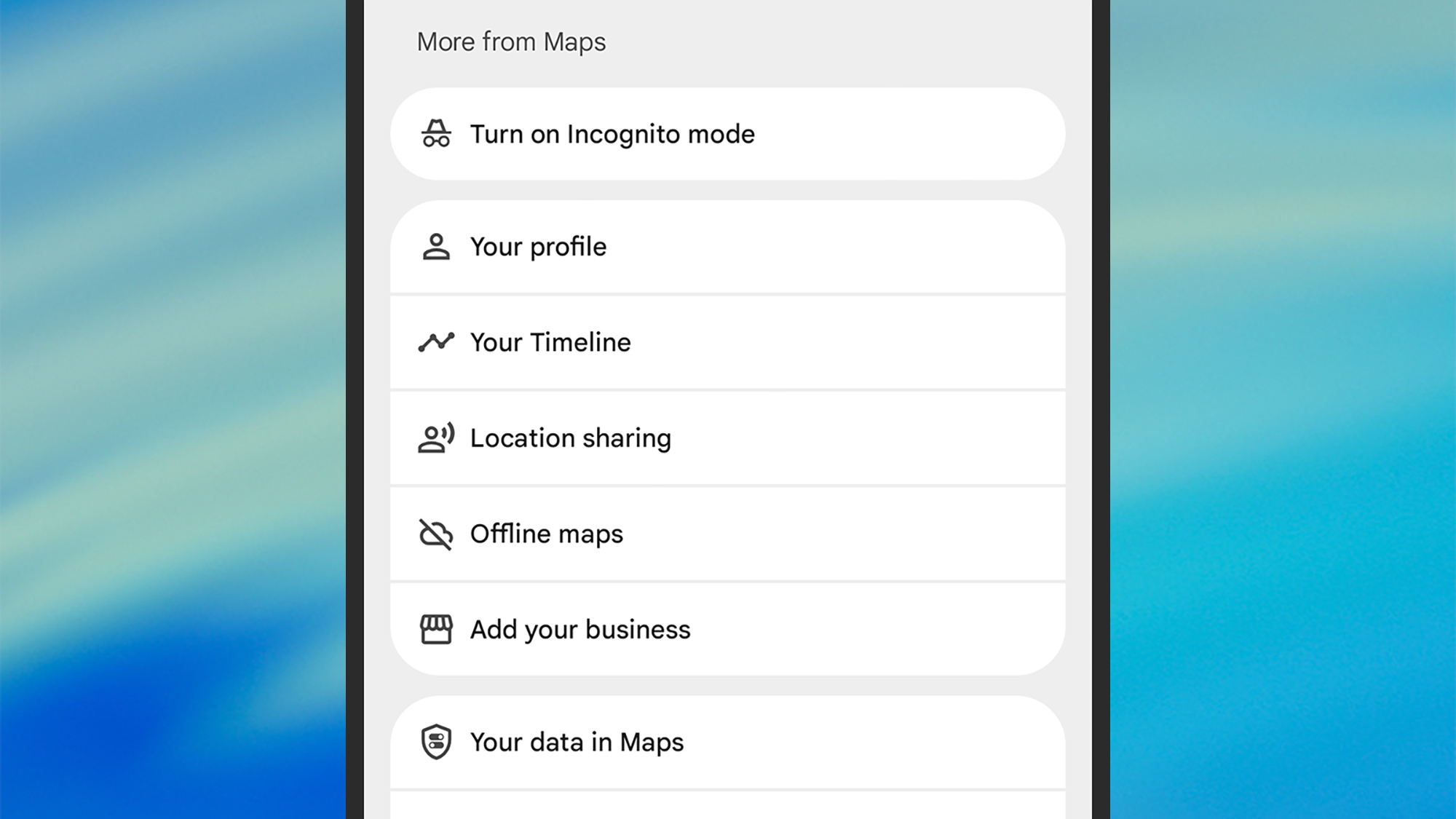
Google Maps incognito mode

Switching to incognito mode could help (Image credit: Future)

With no word from Google yet – and I'll update this article if there is – users are really left sitting and waiting for a fix. It sounds as though the issue has hit multiple Android phones, including those made by Google, Samsung, and Poco.

From the Reddit thread, it seems that putting Google Maps into incognito mode might help. You can do this by tapping your Google account avatar inside the app (top right), then choosing Turn on Incognito mode from the menu.

This apparently fixes the problem, though your searches and journeys obviously won't be saved in your Google account. It also suggests that the problem might be something to do with the way Google Maps is syncing to accounts.

It might also be worth your while checking out some of the alternative public transit apps available on Android, such as Citymapper and Moovit. There's also Apple Maps too of course, but this bug doesn't seem to affect Google Maps for iOS.

You might also like


from Latest from TechRadar US in News,opinion https://ift.tt/R5KCSt2

The Devil Wears Prada 2: key information - Filming began in July 2024 after the 2013 sequel script was shelved - Releasing May 1, 2026,...

The Devil Wears Prada 2: key information

- Filming began in July 2024 after the 2013 sequel script was shelved
- Releasing May 1, 2026, no trailer yet
- Production began on June 30, 2025
- Anne Hathaway, Meryl Streep, Emily Blunt and Stanley Tucci are all returning
- Kenneth Branagh, Simone Ashley, Lucy Liu, and Justin Theroux among newbies cast
- Plot follows Miranda Priestly's career decline as she faces off against Emily Charlton's luxury ad business

The Devil Wears Prada 2 is officially a go. Almost two decades after the release of the original movie, the sequel is actually happening.

I don't mean to be a hater, but Vanessa Williams keeping the IP alive through a musical just isn't cutting it for me. If you were a fellow tween in the 2000s, Disney's The Devil Wears Prada was one of the cinematic moments of the decade. You know all of Miranda Priestly's (Meryl Streep) iconic lines by heart, you watched the infamous Andy Sachs (Anne Hathaway) outfit transition scene more than you did your homework, and for the only time ever, you hated Emily Blunt because of her character (Emily Charlton).

I know, I can hear you saying: "why do we need another sequel of a by-gone classic that likely won't be as good?" I might be ever the optimist, but I firmly believe that this is the sequel that could end up being one of the best new movies of the decade.

Why? The original cast is all returning, the plot seems genuinely solid and the behind-the-scenes photos already prove that the outfits are as iconic as they were 20 years ago. Add to this the inevitable A-list cameos that will be coming our way, and we've got what has the making of an unmissable hit on our hands. I'm already so seated that I'm 10 months early, but thankfully we already know a lot about what The Devil Wears Prada 2 has in store.

The Devil Wears Prada 2 release date

Meryl Streep purses her lips with a woman holding up two cerulean belts behind her

The infamous cerulean belt scene in The Devil Wears Prada. (Image credit: 20th Century Studios)

It's official! The Devil Wears Prada 2 will be released on May 1, 2026. Amazingly, this is one weekend before the MET Gala, though it's pretty clear which will actually be the fashion event of the season. It's like we'll see some crossover here too, with the cast attending in or out of character amazing PR for the sequel.

The Devil Wears Prada 2 trailer: is there one?

It might feel as though all of these set clips are good enough to make a full trailer themselves, but alas, there is no The Devil Wears Prada 2 trailer as of writing.

The movie went into production on June 30, 2025, which means filming has only just begun, so we're a way off of seeing any footage yet. While we've got no way of knowing when production is supposed to wrap, we can guess that a trailer won't make itself unknown until at least early 2026.

The Devil Wears Prada 2: confirmed cast

Anne Hathaway and Emily Blunt stand next to each other looking concerned

Anne Hathaway (Andy) and Emily Blunt (Emily) in The Devil Wears Prada. (Image credit: 20th Century Fox)

It wouldn’t be The Devil Wears Prada without the charismatic and electric quartet of Anne Hathaway, Emily Blunt, Meryl Streep and Stanley Tucci, who will all be returning for the sequel. We also have a confirmed new co-stars with Kenneth Branagh, Simone Ashley, Lucy Liu, and Justin Theroux. Plus, an abundance of hidden cameos will likely come out of the woodwork as time goes on.

Here's the confirmed The Devil Wears Prada 2 cast so far:

  • Anne Hathaway as Andy Sachs
  • Meryl Streep as Miranda Priestly
  • Emily Blunt as Emily Charlton
  • Stanley Tucci as Nigel Kipling
  • Tracie Thoms as Lily Ravitz
  • Tibor Feldman as Irv Ravitz
  • Kenneth Branagh as Miranda’s husband
  • Patrick Brammal as Andy’s new love interest
  • Simone Ashley
  • Lucy Liu
  • Justin Theroux
  • B.J. Novak
  • Pauline Chalamet
  • Conrad Ricamora
  • Helen J. Shen
  • Caleb Hearon

Director David Frankel and writer Aline Brosh McKenna, who worked on the original film, are also returning for the sequel, alongside producer Karen Rosenfelt.

Hathaway's co-star in The Idea of You Nicholas Galitzine previously spoke about wanting to work with her and Streep in the sequel. "Listen, if Annie’s down for it, if they want to do a sequel of The Devil Wears Prada, I’ll be someone," the actor said in Elle's 2024 Hollywood Rising issue. "I’ll be the assistant who runs and gets coffee for everyone." Whether anything actually came from his pleas, however, remains to be seen.

Adrian Grenier, who played Andy’s boyfriend, Nate, will not be returning for the sequel.

The Devil Wears Prada 2: story rumors

Andy holds a phone to her ear while looking through a rail of clothes

Anne Hathaway (Andy) in The Devil Wears Prada. (Image credit: 20th Century Studios)

While Disney hasn't directly shared a synopsis for the sequel, Puck magazine reported: “The storyline being discussed focuses on Miranda Priestly, Streep’s Wintour-esque protagonist, at the end of her career, facing the decline of traditional magazine publishing. She’s forced to go head-to-head with her former assistant, Blunt’s Emily Charlton, now a high-powered executive at a Kering or LVMH-style luxury group, whose advertising dollars Priestly desperately needs.”

Of course, we know Hathaway's Andy is going to return too, but who Andy has grown up to be remains a mystery.

The sequel is likely to draw inspiration from the book Revenge Wears Prada, but with added elements not present in the original novel. In Revenge, Andy had recently turned 30 and was about to get married (we've seen a wedding ring on Hathaway's hand while filming). She'd become a successful magazine editor in her own right, working closely with her former Runway survivor Emily before Miranda re-enters her life.

It goes without saying that we all know Miranda is loosely based on Vogue Editor-in-Chief Anna Wintour, who has recently stepped down from her position after a 37-year tenure. If we'll see nods to this in the sequel remains to be seen, but giving how closely Wintour's exit times with filming, it's not impossible.

You might also like


from Latest from TechRadar US in News,opinion https://ift.tt/CKRWPz8

One of my biggest disappointments of the year so far was no new game footage or deep dive on Fable . About all we’ve heard is that the gam...

One of my biggest disappointments of the year so far was no new game footage or deep dive on Fable.

About all we’ve heard is that the game has been pushed back to 2026 – costing me a pint due to a lost bet with Hardware Writer Dash Wood. I had, maybe naively, thought that Fable would launch in the second half of the year with the goal of giving Xbox a big exclusive to finish 2025 on a high. But that wasn't to be.

Now I’m ok with delays if it means polishing a game to a fine shine. Starfield was delayed, and while that didn’t help make it a high watermark game for Bethesda, it launched without a load of bugs.

However, I’d been expecting to see Fable in action. While we’ve seen brief clips of what’s been touted as in-game footage in 2023, followed by a trailer with more game action in 2024, and then a short snippet of pre-alpha 'gameplay' about five months ago,

While the little bits of game footage I've seen so far has me optimistic, we’ve not had anything that properly details how the game plays, what new features it could bring to the table, or just a deep dive into a next-generation Fable now that it's under the wing of Playground Games.

Usually, with a game launching in around the next 12 months, we’ll have got a better idea of what to expect; even if it’s just brief snippets in trailers, like I remember was the case with Red Dead Redemption 2.

A fabled past

A flying fairy next to a sword hilt

(Image credit: Microsoft)

I remember way back when in E3 2007 when Fable 2 was some 14 months away from its 2008 release date, then boss of Lionhead Studios and gaming auteur Peter Molyneux did a dive into how the game will work with contextual one-button combat.

Like a good few of Molyneux's promises, I’m not sure this quite came to fruition in the final release.

Of course, Playground Games isn’t Lionhead, and with E3 more dead than ever, we may have gone beyond the era of post-showcase game deep dives.

As the developer of Forza Horizon, perhaps Playground Games prefers flashier, fast trailers that leave some of the actual game mechanics to the imagination and journalist hands-on previews.

Nevertheless, I’m still a bit surprised we didn’t have any fresh Fable information this year so far, beyond the delay and pre-alpha footage.

Awaiting Albion

So when can we expect to see such stuff? I’d hazard a guess that we could get something towards the end of the year, maybe to juice up interest for people to buy Xbox Series X consoles heading into the holidays.

Or we could hear more early-ish next year, with Microsoft looking to kick off the year with some Xbox positivity, perhaps in one of the developer-led games roundups it does.

But then a lot of that depends on when Fable will get launched next year. If it’s towards the end of the year, we may not hear much until the next Xbox Games Showcase in June 2026.

My hope is we get more information sooner than later. As it stands, I don’t feel we’ve seen a particularly strong year for Xbox exclusive titles (such as they are with PC releases too), with Avowed arguably being one of the biggest so far. Last year, Xbox rounded out the year strongly with Indiana Jones and the Great Circle, which despite being available on PS5 felt like an Xbox game gave its day one release on Game Pass.

Microsoft looks set to have some strong titles to propel the second half of the year, with Grounded 2, Gears of War: Reloaded, and Outer Worlds 2. But I’m not convinced any of these will have a big impact; Gears of War is a contender but Reloaded is just a remaster of the first Gears game. So a game footage-heavy Fable trailer or a bit of a deep dive into what we could expect from the game under its new stewardship could be the shot in the arm I feel Xbox might still need this year, especially as there’s no word on The Elder Scrolls 6.

However, I do have a niggling concern: given the upheaval in Microsoft Gaming’s studios and the cancelation of games like the reboot of Perfect Dark – something I was looking forward to – potentially down to development woes, I’m a little concerned that development of Fable could have stalled.

Playground Games has a solid track record, but effectively rebooting Fable for new hardware and to make in compelling in the face of hugely impressive, system-driven RPGs and adventure games like The Legend of Zelda: Tears of the Kingdom, Baldur’s Gate 3 and Elden Ring, while also retaining that sense of humor, style and sandbox elements of traditional Fable games, is likely a huge proposition.

I’d not be surprised if some information trickles out about Fable going through several iterations in its early development that perhaps means it’s not quite ready to be put in the preview limelight.

For what it’s worth, I have faith in the trailers I’ve seen so far and Playground Games’ ability to produce a compelling open-world game that’s also polished to a standard we’ve come to expect from the developer.

But I’ll need to hear something about Fable reasonably soon to ensure that faith remains burning away, rather than smoulder into nothing… along with my passion for Xbox.

You might also like...


from Latest from TechRadar US in News,opinion https://ift.tt/5cDquF6

Mayor of Kingstown season 4: key information - Officially renewed in December 2024 - Coming to Paramount+ in October - Main cast expec...

Mayor of Kingstown season 4: key information

- Officially renewed in December 2024
- Coming to Paramount+ in October
- Main cast expected to return
- New characters confirmed
- No official plot details
- Taylor Sheridan has seven seasons in mind

Mayor of Kingstown season 4 returns in October, which is no doubt excellent news for fans of the crime thriller. Spearheaded by Yellowstone's Taylor Sheridan alongside Hugh Dillon, it's one of the best shows on Paramount+ and there's plenty more where that came from.

Viewers have watched the McClusky family position themselves as power brokers acting as the go-between for police, criminals, inmates, prison guards and politicians. And leading the McClusky family? Mike (Jeremy Renner) as he navigates Kingstown, a place with a real lack of order, in hopes of digging his way out.

Here's everything we can expect from release date speculation, predicted cast, plot rumors, and more.

Full spoilers follow for Mayor of Kingstown seasons 1-3. Potential spoilers are also discussed for season 4.

Mayor of Kingstown season 4 release date prediction

While Mayor of Kingstown season 4 doesn't have an exact release date, it does have a release window – and that's October.

Thanks to an Instagram post by the show's co-creator, Hugh Dillon, it was revealed on June 10 that season 4 had officially wrapped on production and will start streaming on Paramount+ in October.

Mayor of Kingstown season 4 trailer speculation

Bunny and the Crips in Mayor of Kingstown

There's no Mayor of Kingstown season 4 trailer just yet (Image credit: Paramount Plus)

With filming wrapped on Mayor of Kingstown season 4 and an impending October release window in mind, I'd expect the trailer to arrive in September – and when it does, I'll post it here.

If we take a look at season 3's trailer release, it officially dropped on April 25 before the season arrived on June 2. That's just over a month before, which is the same gap as the trailer release to show launch of season 2.

Mayor of Kingstown season 4 confirmed cast

Spoilers follow for Mayor of Kingstown season 1 to 3.

The Mayor of Kingstown season 4 cast has been growing in size with returning cast and newcomers alike. Here's who we can expect to star this time round:

  • Jeremy Renner as Mike McLusky
  • Hugh Dillon as Ian
  • Tobi Bamtefa as Deverin 'Bunny' Washington
  • Nishi Munshi as Tracy
  • Taylor Handley as Kyle McLusky
  • Hamish Allan-Headley as
  • Derek Webster as
  • Clayton Cardenas as Deputy Warden Torres
  • Edie Falco as Nina Hobbs
  • Lennie James as Frank Moses
  • Laura Benanti as Cindy Stephens
  • Derek Rivera as Cortez

As mentioned, there's already been a few casting announcements for Mayor of Kingstown season 4 including Edie Falco, Lennie James and Laura Benanti all revealed in the official Instagram post above.

And, as per Deadline in January, Clayton Cardenas joined as Deputy Warden Torres: "the right-hand man to the prison's new warden at Anchor Bay Prison".

Another cast announcement, confirmed again by Deadline in June, is Derek Rivera. He'll be joining the cast for season 4 as Cortez: "a young, cold, and measured Colombian Sicario in a recurring role".

Mayor of Kingstown season 4 story synopsis and rumors

Tracy sits on the sofa in Mayor of Kingstown

Mayor of Kingstown season 4 picks up after a warring season 3 finale (Image credit: Paramount Plus)

Full spoilers follow for Mayor of Kingstown seasons 1-3. Potential spoilers for Mayor of Kingstown season 4.

The Mayor of Kingstown season 3 finale was tumultuous, to say the least. While a lot of issues were resolved, most importantly the Russian mafia which has had a chokehold on the McClusky family for three strong seasons, the stage is set for Mike to navigate new territory.

It also comes as no surprise really that new cast announcements have been made for Mayor of Kingstown season 4, considering the characters that were lost in season 3. There was Iris (Emma Laird) and Kareem (Michael Beach) met their untimely fates. And, Milo (Aidan Gillen), who seemingly returned from the dead to take over Konstantin, succeeding with the manipulation of Iris before being overpowered by Mike.

Milo's return made Mike's plan to finally rid Kingstown of its Russian problem in the season 3 finale a little tricky, but he managed it all the same. For season 4 though, co-creator Hugh Dillon told The Hollywood Reporter that the season 3 finale: "leaves a vacuum".

But, he adds: "And it will be filled, it's human nature". But, who's next to step into the criminal abyss left behind by the eradication of the Russian mafia, we'll have to wait and see.

Kyle holds up his gun in Mayor of Kingstown

What's next for Kyle after the bridge shootout? (Image credit: Paramount Plus)

Then, there was the shootout on the bridge during a confrontation with Bunny's game, which saw Kyle shoot at Robert to protect the innocent civilians around them.

While this subsequently led to Kyle's arrest, it leaves the door open for Robert's story in season 4 given Evelyn is still hellbent on looking into him, despite him recovering in hospital from Kyle's shooting.

It's all speculation for now as the Mayor of Kingstown season 4 plot is kept firmly under wraps. And I'd expect no less from a show filled with complicated dynamics and brutal exchanges.

Though, Dillon did say, when it comes to Mayor of Kingstown season 4: "The scripts are graet, the characters great. And that's what we want to do. We don't want to leave any strone unturned. This show is very much rock 'n' roll".

Will there be more seasons of Mayor of Kingstown?

Mike sits on a table in Mayor of Kingstown

Taylor Sheridan has seven seasons in mind (Image credit: Paramount Plus)

Mayor of Kingstown has a rather complicated relationship with renewals, especially after Jeremy Renner's serious accident in 2023 left the entire show hanging in the balance.

But, even after returning for season 3, it still took a few months to confirm the return of Mayor of Kingstown season 4 was happening. It appears though that the plan has always been for more.

In conversation with ScreenRant, Hugh Dillon reveals the aim has always been for multiple more seasons – with Taylor Sheridan already having planned an ending in season 7: "Well, Taylor's my mentor, he has been. He's coached me, this was the first thing he ever wrote, and he was my acting coach.

"He coached me on 100 episodes of TV, and we would talk about this all the time. And when we first mapped it out, he's the king of knowing where it ends. I like intros, and I like explosive intros. And he has an ending for it in season 7".

Dillon added: "So, our goal is to get to that season 7, because that's as far as we can get, because that's where he's always had it".

Whether the show makes it that far is one thing, but if Sheridan has plans to extend its run with a multi-year deal at Paramount+ already in place, there's some real hope for more Mayor of Kingstown. Watch this space.

For more Paramount+-based coverage, read our guide to the best Paramount+ shows.


from Latest from TechRadar US in News,opinion https://ift.tt/XzP0ySR

“It turned out that getting fired from Apple was the best thing that could have ever happened to me.” You wouldn’t expect to hear that fro...

“It turned out that getting fired from Apple was the best thing that could have ever happened to me.”

You wouldn’t expect to hear that from Steve Jobs, a man famous for his short temper and strong opinions. Yet as it turns out, being removed from his own company transformed Jobs, helping him grow into the creative force that, years later, would spawn world-changing products like the iPhone, the iPod, and the best Macs and MacBooks.

His ouster went down 40 years ago in 1985, and it’s worth looking back on what happened at that time and how it changed Jobs – and Apple, and perhaps even the wider computing world – for the better.

Far from being the end of the road for Jobs, this was just the beginning. After leaving Apple, he founded another computer company, NeXT, and later took the helm at Pixar. Under his watch, it became the foremost animation studio on the planet. In his absence, Apple lost its way, churning out uninspired products and coming within a hair’s breadth of going bankrupt.

Twelve years later, Jobs returned to Apple and led it to one of the most dazzlingly potent periods in its history. Yet that likely would never have happened had Jobs not been very publicly fired from his own company. Here, I want to show you why.

Showdown at Apple

Apple co-founder Steve Jobs with a Macintosh computer.

(Image credit: Apple)

By the mid-1980s, Steve Jobs was running the Macintosh division at Apple, taking the lead on a product that would go on to change the world of computing forever.

At the same time, Apple was searching for a new CEO, and Jobs thought he had found one in the form of Pepsi marketing chief John Sculley. After luring Sculley in with his famous powers of persuasion (“Do you want to spend the rest of your life selling sugared water, or do you want a chance to change the world?” Jobs asked him), the new hire was on board.

But after a year-long honeymoon period, cracks began to appear. Jobs felt Sculley was not a 'product person' and simply didn't get his way of thinking. For Sculley, Jobs was too obsessive and obnoxious.

The showdown came in 1985, when disappointing sales of the Macintosh and Jobs’s chaotic management style led to questions over his leadership abilities. Although it was suggested that Jobs could run a small “skunkworks” team developing exciting new moonshot devices, Jobs rejected the idea, leading Sculley to conclude that he had to be forced out of the company.

Eventually, Sculley convinced the board to remove Jobs from his role as head of the Macintosh division, a plan that was executed over a few days in May 1985.

Jobs was given the symbolic role of Chairman of the Board, but it was a position with no actual power and influence inside Apple. He had been trapped inside the airlock, unable to influence the company or the direction it took. Jobs recognized this, and in September 1985, he left to form his own computing company called, fittingly enough, NeXT.

He was 30 years old and exiled from the successful company he had founded ten years earlier. For many people, it would be a chance to leave the industry and never look back. But for Jobs, it was the beginning of a learning process that brought him back stronger than ever.

Finding focus

Image of Steve Jobs holding the first iPhone

(Image credit: Apple)

Jobs (unsurprisingly) took his firing very personally, feeling that he was both a personal failure and that he had let down those around him. Yet this didn't stop him from leading companies and getting hands-on with their operations.

At first, he exhibited some of his worst habits at NeXT. Released from the strictures of a board and CEO that didn’t look kindly on his antics, he indulged his taste for perfectionism at every turn, regardless of the cost or time implications.

As such, NeXT struggled to put out a competitive product on time and under budget. After a few years of little progress, it exited the hardware world altogether, instead focusing entirely on software. This would later prove to be a fortuitous decision.

But it was at Pixar that he truly turned things around. After becoming CEO, he took a more hands-off approach and focused on funding and dealing with Disney, with which Pixar had partnered to make films. Pixar was led by a team of artists and creatives – a class of people who Jobs truly admired – and he was happy to let them do their thing.

Pixar became the most important animation studio in the world, with a string of hits like Toy Story, Monsters Inc., and A Bug’s Life. Jobs could marry technology with art – the thing he believed he was doing at Apple, and an idea that would define how he worked later in his life. Jobs had found a way to be focused, creative, and productive without imploding.

The value of being fired

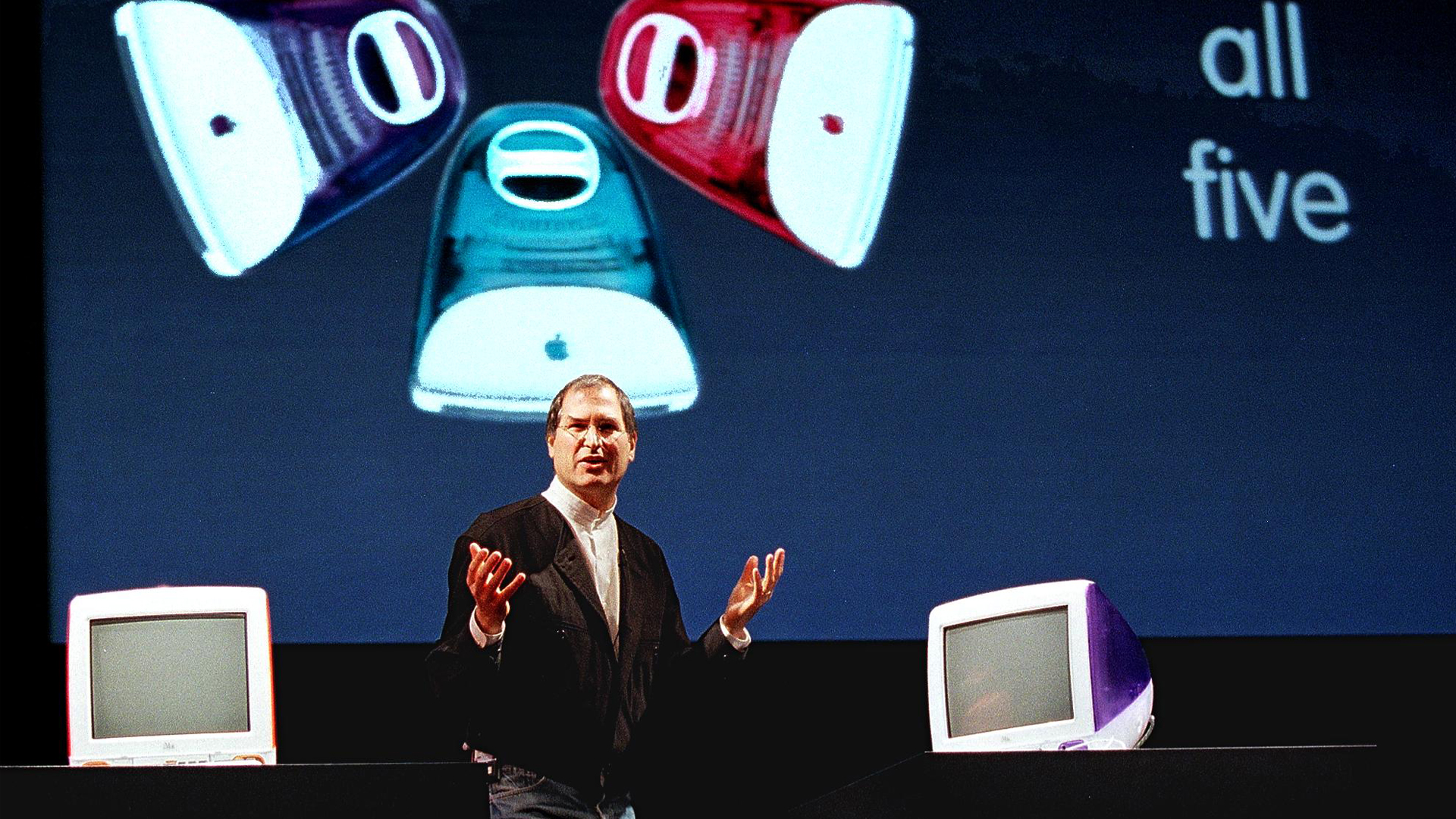
Steve Jobs unveils the iMac in 1998

(Image credit: Getty Images)

In the late 1990s, Sculley was gone and Apple was nearly bankrupt, but it had enough cash to buy NeXT and bring Jobs back on board, first as interim CEO, then as CEO in a full-time capacity. NeXT’s operating system – now part of Apple’s stable – went on to become the foundation of what we now know as macOS.

When Jobs returned to Apple, he was a changed man. Under his renewed leadership, the company went on an incredible creative tear: the iPhone, iMac, iPod, iTunes, and much more were produced under his watch. He not only brought Apple back from the dead, but made it one of the strongest – and hippest – tech companies in the business.

Yet Jobs believed that none of this could have happened if he had not been fired from Apple. As he said in the commencement address he gave at Stanford University in 2005, years after being ousted from his own company, “The heaviness of being successful was replaced by the lightness of being a beginner again, less sure about everything. It freed me to enter one of the most creative periods of my life.”

Perhaps the most important aspect was that Jobs realized he still loved what he was doing. “Your work is going to fill a large part of your life,” he said, “and the only way to be truly satisfied is to do what you believe is great work. And the only way to do great work is to love what you do.”

For Jobs, it took being fired from Apple to realize that. But things could have been very different if it had never happened at all.

You might also like


from Latest from TechRadar US in News,opinion https://ift.tt/s79OUow

There are over one billion smart meters already deployed across the world - 38 million in the UK alone. These are embedded IoT devices, des...

There are over one billion smart meters already deployed across the world - 38 million in the UK alone. These are embedded IoT devices, designed to have an ultra-small footprint and fitted with lightweight software that is constantly communicating with energy providers and the national grid.

The cybersecurity of embedded devices like these is weighed against their size and performance requirements - while we want smart meters to be secure, we also want them to operate smoothly, use up very little energy and space, and send the right data at the right time. Additional layers of encryption would increase the size of this data, potentially impacting the performance and cost of smart meter infrastructure.

But this encryption is something the energy sector, and the technology supply chain as a whole, now has to rethink. Last year, the US National Institute of Standards and Technology revealed its final standards for post-quantum cryptography (PQC) - a new form of encryption designed to protect data from potential quantum computer attacks.

Now, agencies across the US and Europe, including the NSA and NCSC, are recommending that the governments and businesses coordinate their migration to PQC so that every device is quantum-safe by 2035.

This the biggest cybersecurity transition in a generation, and a real challenge for the world’s 1B+ smart meters.

Why do smart meters need to be upgraded?

There are three main reasons for upgrading smart meters to PQC - risk, compliance, and market forces.

Risk is the word at the heart of every conversation around cryptography and cybersecurity. Every new iteration of an encryption algorithm or cybersecurity application is designed to stay one step ahead of the attackers and mitigate the chance of a breach. PQC is designed to mitigate the risk of an attack from future quantum computers, which experts anticipate will easily be able to crack current encryption standards.

When this cryptographically-relevant quantum computer emerges, critical national infrastructure (like the energy grid) will be a prime target for disruption. Therefore, energy networks need to act now to protect themselves and their data from this future risk. As vulnerable endpoints in the energy network - with the technical capability to cut off power supplies to households - smart meters need to be secured to ensure that infrastructure is protected from attack.

Providers should also have one eye on whether their smart meters comply with new regulations. Government guidelines are all recommending that hardware and software align with NIST’s PQC standards by 2035 at the latest - much sooner if your customer is the government itself. Simply put, the transition must take place, and is in fact already underway.

Finally, market forces will soon compel decision-makers still on the fence to upgrade smart meters to PQC. As migration deadlines approach, energy suppliers and hardware manufacturers who can promise PQC-enabled devices will be preferred for government and corporate contracts over those that have delayed their transition.

The challenge of upgrading smart meters

There are two parts to the smart meter PQC challenge - upgrading the millions of “brownfield” devices that are already deployed, and ensuring that the millions of “greenfield” devices currently on the production line are prepared for the upcoming PQC deadlines.

In most cases, already-deployed devices will require an over-the-air firmware update to become PQC-secure. This could be a major challenge for older memory-constrained models, and replacing this legacy hardware is likely to be the most costly part of the transition.

Where these upgrades are possible, there are physical challenges as well. Smart meters are small, embedded devices with minimal amounts of RAM and computing capacity. They are also limited on bandwidth - transmitting small amounts of data with every network communication they make. PQC implementations will need to work within these constraints, but some may run into issues.

For example, post quantum encryption keys are larger than RSA/ECC keys, meaning that a quantum-safe message is larger than those currently being sent by a smart meter.

Many smart meters rely on fixed-function hardware cryptography that is unchangeable, and cannot be upgraded in the field - this means that, on these devices, it’s not possible to update secure boot processes and maintain cryptographic agility (the ability to rapidly adapt the cryptography on a device).

Manufacturers don’t need to worry about over-the-air upgrades for “greenfield” smart meters that are still being designed, as they have a chance to protect devices before production. They will still face issues with memory and CPU, and will need to ensure that PQC is factored into their design process to ensure devices are compliant beyond 2035.

The next steps for smart meters

The first and most important step for the energy sector is to plan ahead thoroughly. 2035 is sooner than it seems - especially for large-scale digital transformation change projects - and this is a process that many companies will be hoping to finalize well ahead of that deadline.

The goal of the transition is to maintain the highest standards of security without compromising performance and without racking up unsustainable costs. Inevitably, the oldest models of smart meters that cannot receive over-the-air updates will need to be replaced - the ten-year transition timeline means that this can be factored into annual budgeting for hardware upgrades in the field, rather than through an impractical all-at-once rollout.

For all other devices - deployed and in production - manufacturers and energy providers need to identify where the most critical data on their device is transmitted from and focus on securing this as a priority. For smart meters, this means communication modules and the process by which they could trigger an energy shutoff, as these are the vectors that attackers will target first.

To navigate the challenges of migrating embedded and memory-constrained systems to PQC, smart meters will need low-footprint implementations of PQC, which are designed to apply NIST’s standards without exerting excessive demand on CPU and RAM. It’s worth bringing on PQC expertise to ensure that the right implementation for the right device is found - as robust as the PQC algorithms published by NIST are, they are also only as secure as the way they are implemented.

Manufacturers will need to factor PQC into their product roadmap. This sounds daunting, but as much as 80% of this transition will be handled in the supply chain - meaning that the vendors who supply the communication modules, HSMs, and microprocessors used in smart meters will themselves be responsible for upgrading vulnerable cryptography. The remaining 20% is the manufacturer’s responsibility - communications channels and metering software that needs to be upgraded in-house.

The key message for energy providers and device manufacturers is that this process needs to start as soon as possible. Smart meters are designed to have a long shelf life, and the risk of deploying devices in 2030 that are obsolete in 2035 is one that should be avoided.

We list the best antivirus software.

This article was produced as part of TechRadarPro's Expert Insights channel where we feature the best and brightest minds in the technology industry today. The views expressed here are those of the author and are not necessarily those of TechRadarPro or Future plc. If you are interested in contributing find out more here: https://www.techradar.com/news/submit-your-story-to-techradar-pro


from Latest from TechRadar US in News,opinion https://ift.tt/gedWXrM